
In This Article
Gate chains don’t care about your knuckles. Neither does frozen hay twine, a splintered fence rail, or a heifer who has decided today is not the day. Hands absorb the abuse on every working place, and whatever you pull on at 5 a.m. decides whether you finish the day with healthy calluses or a trip to urgent care. That’s why elkskin gloves for ranch and farm work keep ending up in the back pockets of people who’ve been burned by cheaper leather. They’re soft enough to buckle a halter and tough enough to shrug off a barb.
Here’s the twist most product listings skip. “Elkskin” in the glove trade doesn’t always mean what you’d guess. Museum conservators note that elkskin today often describes a soft, chamois-like tannage applied to calf or cow hides to imitate the original. Some makers do use genuine elk, and a few Scandinavian brands use what North Americans would call moose. Same word, three different materials. So this guide reads between the lines instead of repeating the marketing.
Inside, you’ll find seven real gloves across budget, mid-range and premium tiers. Every spec comes with a plain-English translation, and you’ll see what published reviews keep saying (and where I couldn’t verify anything). There’s also practical advice for the jobs that actually shred gloves: livestock handling, fencing and baling wire, and daily barn chores. A quick note on money: prices below are ranges as of October 2026, listings shift constantly, and availability varies by retailer. Always check current pricing before you buy.
Quick Comparison: Elkskin Gloves for Ranch and Farm Work at a Glance
Short on time? This table sorts all seven picks by what you’ll care about at the gate: lining, standout trait, price bracket and ideal job.
| Glove | Lining | Standout Trait | Price Range | Best For |
|---|---|---|---|---|
| Geier Heavy Elkskin 448 | Unlined | Heavy leather, outside finger seams | Around $80 and up | Wire, brush, rough work |
| Geier Elkskin Roper 509 | Unlined | Reinforced palm patch | Around $80 | Roping and mixed ranch chores |
| Ranch Hands Elkskin Gloves | Unlined | Keystone thumb, elastic wrist | Around $80 | Daily ranch use |
| Ranch Hands Elkskin Thinsulate Lined Gloves | Thinsulate fleece | Cold-weather version of the daily glove | Mid-$80s | Winter feeding and chores |
| Best Made Elkskin Unlined Roper Gloves | Unlined | Welted thumbs, washable per maker | Check current price | Dexterity-heavy work |
| Golden Stag Elkskin Winter Work Gloves 855 | Lined | Low-cost insulation | $20-$40 range | Budget winter chores |
| Hestra Elk Utsjö | Primaloft Gold | Scandinavian elk, insulated | Around $130 | Cold-climate premium |
Read the table sideways and a pattern jumps out: price tracks origin and construction more than it tracks the leather name. The U.S.-made options cluster around the $80 mark, the Golden Stag Elkskin Winter Work Gloves 855 undercuts them by half or more, and Hestra Elk Utsjö charges extra for Scandinavian leather and insulation. If wire and rough ground dominate your week, Geier Heavy Elkskin 448 is the pick on paper, but if cold mornings dominate, the lined options earn their premium.
💬 Just one click — help others make better buying decisions too!😊
Top 7 Elkskin Gloves for Ranch and Farm Work: Expert Analysis
Every glove below is a real, documented product. Ratings are as published on retailer or maker pages in autumn 2026, and sample sizes vary wildly. Where I couldn’t verify review data, I say so instead of filling the gap. Think of this as spec-sheet translation: what each feature means when you’re hauling a bale, not what the brochure hopes you’ll imagine.
1. Geier Heavy Elkskin 448 — built for wire and rough ground
The 448’s whole personality is weight. It sits at the thick, no-nonsense end of the elkskin spectrum, and you notice when you close a fist around a fence stretcher. The maker has been cutting gloves in Centralia, Washington since 1927. It uses the Gunn pattern, which moves the finger seams to the back of the hand, away from the pressure zones. Sizing runs in half sizes from 6½ to 12, so you can match your actual palm measurement instead of gambling on a “large.” On paper, that means fewer seam blowouts at the thumb and fingertips, which is where cheaper gloves die first.
Based on the spec comparison, this is a glove for people whose weeks involve wire, brush and rough lumber more than fine motor work. The thickness that protects you costs you some feel. Enthusiast forum threads steer farm and tool users toward it for barbed wire jobs, and one long-term owner reported nearly six years of mixed use with only a yearly rub of boot dressing before a thumb began wearing through. That’s one person’s report, not a lab test, and I couldn’t verify a large pool of star ratings for this exact model.
Pros:
- ✅ Heavy leather suited to wire and brush
- ✅ Outside finger seams reduce rubbing
- ✅ Half-size range allows a precise fit
Cons:
- ❌ Thickness trades away some fingertip feel
- ❌ Premium pricing versus ordinary cowhide
Pricing varies by seller, and U.S.-made Geier elkskin styles I found sat around $80, so expect this heavier model at or above that range (check current price). The value verdict: worth it if wire is your daily reality.
2. Geier Elkskin Roper 509 — palm patch for rope-handling wear
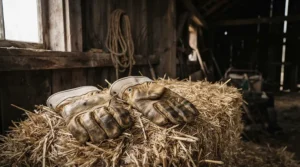
Where the 448 is a sledgehammer, the Roper is a good pair of pliers. It uses medium-weight elkskin in full-grain leather, built in the same Gunn pattern, with a reinforced palm patch. Retailers also point to the chrome-tanned western finish, which they say gives a particularly secure “western drag” grip on reins and tools.
Translate that: medium weight means better feel for lead ropes, buckles and cinches than the heavy 448. The patch armors the exact spot where a rope slides through your palm. It’s a smart design for horse-and-cattle people who need protection and dexterity in the same glove, and a decent option if you want farm hand leather gloves that still let you tie a clean knot.
Review data is thin here. I couldn’t find a deep ratings pool specific to this style, so lean on the maker’s track record and confirm the seller’s return terms before buying. One practical tip from the retailer: if you plan to add water-resistant dressing, test it on the back of a glove first, because dressing can change how the leather feels.
Pros:
- ✅ Palm patch resists rope and rein wear
- ✅ Medium weight keeps good dexterity
- ✅ Grip-friendly western finish
Cons:
- ❌ Limited independent ratings to lean on
- ❌ Not as armored as heavy-weight elkskin
Expect to pay around $80, which is fair for U.S.-made construction, and a good value for mixed ranch work if you value feel over maximum armor.
3. Ranch Hands Elkskin Gloves — the daily-driver benchmark
This is the glove most “ranch work gloves” shopping lists end up at, and the published numbers explain why. The maker describes extra-thick genuine elk hide, hand-sewn with a keystone thumb and an elasticized wrist. The keystone thumb is an arched construction that lets your thumb flex without dragging the whole glove across your palm. The elastic wrist keeps the glove seated when you reach into a feed bin. The gloves are made in the U.S. with imported materials, and the maker says to have a leather specialist dry clean them. That’s a practical flag: this isn’t a throw-it-in-the-wash glove.
Reviewers consistently report a soft, flexible feel and a fit that works right away. One buyer slipped wool liners inside for a Minnesota winter, which shows the unlined version can stretch into cold weather. Retailer pages show a 5.0 average across roughly a hundred reviews, and the maker’s own page shows 4.7 from 37 ratings. The one mild complaint that surfaced is the visible logo on the back, which matters only if you hate branding.
Pros:
- ✅ Soft feel with little break-in
- ✅ Keystone thumb helps flexibility
- ✅ Strong, consistent review themes
Cons:
- ❌ Dry clean only per the maker
- ❌ Visible logo on the back
At around $80, the value verdict is strong: it’s the safest all-round buy in this lineup for people who wear one pair most days.
4. Ranch Hands Elkskin Thinsulate Lined Gloves — winter warmth without marshmallow hands
Take the daily glove above and add Thinsulate fleece insulation. Thinsulate’s appeal is warmth without much bulk, but any insulation steals some dexterity, so expect to feel latches and snaps slightly less. Lined gloves also run snugger, and other makers recommend sizing up for linings, so check the maker’s sizing guidance before ordering.
What most buyers overlook is the “two-pair system.” Reviewers on retailer pages talk about owning a winter pair and a separate daily pair, and several describe not wanting to go back to other brands. That’s enthusiastic, but it’s also a retailer’s curated review feed, so weigh it accordingly. Retailer pages show a 5.0 average across 100-plus reviews. The glove ships only within the U.S., and the care instructions match the unlined version: leather specialist only.
If your winter involves breaking ice on troughs, pitching hay at dawn and handling cold steel, this is the glove built for it. If your cold is occasional, the unlined glove plus a thin liner is the cheaper, more flexible route.
Pros:
- ✅ Insulation without extreme bulk
- ✅ Same hand-sewn build as the unlined model
- ✅ Strong buyer satisfaction themes
Cons:
- ❌ Reduced fingertip feel in cold gear
- ❌ Domestic shipping only; dry clean care
Priced in the mid-$80s, it’s reasonable for a dedicated winter glove, and the verdict is good value if you’ll genuinely wear it five months a year.
5. Best Made Elkskin Unlined Roper Gloves — washable, welted and made in the U.S.A.
This one reads like a design-nerd’s roping glove, and the construction details back it up. It’s 100% elk leather with a seamless palm, fully welted thumbs, welt-tipped fingers and closed outseams. Welts are leather strips stitched into high-wear seams so the thread isn’t taking the abuse directly, which should reduce the thumb-and-fingertip failures that finish off lesser gloves. Closed outseams also reduce chafing, which you’ll appreciate after eight hours of fence work.
The unusual selling point is washability: the maker says warm water, mild soap and a flat dry away from heat. For anyone who handles manure, that’s a real convenience, though I’d still treat any elkskin glove as a leather product, not a laundry item. Sizing is by palm measurement, with the maker advising an extra size for long fingers.
One honest caution: the maker’s own page labels this an archive release from 2017, so availability may be inconsistent, and I couldn’t verify a pool of customer reviews. That makes it a less proven choice than the Ranch Hands or Geier options.
Pros:
- ✅ Welted thumbs and fingertips for wear
- ✅ Washable per the maker’s care guide
- ✅ Closed outseams reduce chafing
Cons:
- ❌ Availability may be spotty
- ❌ No verifiable review pool found
I couldn’t confirm a current price on the retailer listing, so check current price before you decide. The value verdict depends on what you find.
6. Golden Stag Elkskin Winter Work Gloves 855 — budget insulation for cold chores
If $80 gloves make you wince, this is the pick that won’t. It’s a lined elkskin winter glove with a price that typically lands in the $20-$40 range. The catch is the leather grade: the maker’s sibling driver glove is described as “economy” elkskin, which hints at where Golden Stag sits on the quality ladder. You’re likely getting thinner, less premium leather than the U.S.-made options above.
Published reviews are positive but tiny. One storefront shows 5.0 across just seven ratings, so treat it as a signal, not proof. Buyers mention a good fit for big hands, soft leather and durability across seasons, including one rancher’s spouse who said he won’t buy anything else. A firewood processor wished for a bit more insulation, which is the sort of detail worth believing.
On analysis alone, this is the glove for hobby farms, occasional winter chores, or a “beater pair” you won’t cry over when it snags on wire.
Pros:
- ✅ Very low cost for lined elkskin
- ✅ Soft leather and a forgiving fit
- ✅ Positive early review themes
Cons:
- ❌ Economy-grade leather likely
- ❌ Very small review sample
At the $20-$40 range, the value verdict is excellent as a budget winter glove, but don’t expect heirloom longevity.
7. Hestra Elk Utsjö — insulated Scandinavian elk for brutal winters
The Utsjö comes from a different world. Its leather is Scandinavian elk, which is Eurasian moose in zoological terms, so it’s a different animal from North American elk. It’s insulated with Primaloft Gold, finished with a brushed polyester lining, a press-stud closure and a ribbed cuff, and the pattern is pre-curved to follow the hand’s resting shape. Hestra describes the leather as thick, warm and supple with a rustic feel. It also marks easily with use, gaining a patina, so expect character, not showroom cleanliness.
What the spec sheet won’t tell you is that this is a premium winter work-and-wear glove, not a fence-line armor glove. The pre-curved fit helps in cold, repetitive gripping like driving a tractor or feed truck. I couldn’t verify ratings for this exact model, so its case rests on construction and the maker’s reputation. It makes sense for cold-climate ranchers who spend long hours in equipment and want one glove that also looks decent in town.
Pros:
- ✅ Premium Scandinavian elk leather
- ✅ Primaloft insulation for serious cold
- ✅ Pre-curved fit reduces hand fatigue
Cons:
- ❌ Expensive for hard daily abuse
- ❌ Patina and marks show quickly
Expect to pay around $130, with the value verdict being strong for cold-climate drivers and feeders and weak for wire work.
Side-by-Side Spec Breakdown
| Glove | Build Highlights | Insulation | Review Signal | Price Range | Best For |
|---|---|---|---|---|---|
| Geier Heavy Elkskin 448 | Heavy leather, outside finger seams | None | Enthusiast forum praise | Around $80 and up | Wire and brush |
| Geier Elkskin Roper 509 | Palm patch, medium weight | None | Limited ratings found | Around $80 | Rope and rein work |
| Ranch Hands Elkskin Gloves | Keystone thumb, hand sewn | None | 4.7 to 5.0 reported | Around $80 | Daily wear |
| Ranch Hands Elkskin Thinsulate Lined Gloves | Same build plus fleece | Thinsulate | 5.0 reported at retailer | Mid-$80s | Winter chores |
| Best Made Elkskin Unlined Roper Gloves | Welted thumbs, closed outseams | None | None verified | Check current price | Dexterity and washing |
| Golden Stag Elkskin Winter Work Gloves 855 | Lined, economy-grade leather likely | Lined | 5.0 on 7 ratings | $20-$40 range | Budget winter |
| Hestra Elk Utsjö | Scandinavian elk, pre-curved fit | Primaloft Gold | None verified | Around $130 | Cold-climate driving |
The comparison shows a clear split: the Ranch Hands pair has the strongest review evidence, the Geier pair has the strongest construction pedigree, and the budget and premium outliers each solve a narrower problem. If you can only buy one, Ranch Hands Elkskin Gloves is the lowest-risk choice, while Geier Heavy Elkskin 448 is the toughest on paper. Buyers watching spending should note that Golden Stag Elkskin Winter Work Gloves 855 is the only option here that costs less than a tank of diesel.
✨ Ready to Gear Up?
🔍 Take your elkskin gloves for ranch and farm work to the next level with these carefully selected pairs. Click on any highlighted glove above to check current pricing and availability. The right pair will keep your hands ready for whatever the day throws at them!
Break-In and Care Guide: Make Your Gloves Last
A great glove treated badly is just expensive trash. The good news is that elkskin forgives a lot, and a few habits stretch its life.
First 30 days. Start on lighter jobs like feeding, latches and stall work, and save wire and brush until the leather has softened around your hand. Don’t stack a brand-new pair on your hardest week.
Weekly. Knock off mud and let wet gloves air-dry. Geier notes that soaked gloves may stiffen but soften again with wear, and Best Made advises laying them flat away from heat. Never dry them on a heater, stove or truck vent.
Monthly or seasonally. Gloves that stay dry pick up enough skin oil to stay supple, and a farm-gear roundup claims regular oiling can stretch a pair from one year to three. A light coat of leather dressing helps in wet seasons, but test it on the back of a glove first because it can change the leather’s feel. Washing rules vary: Best Made Elkskin Unlined Roper Gloves are described as washable, while Ranch Hands Elkskin Gloves are labeled dry clean only, so always follow the tag.
Common first-month mistakes. Buying a lined glove in your unlined size (makers like Geier suggest sizing up 1 to 1½ inches for lined styles), ignoring sizing guidance on long fingers, and rotating nothing. Owning two pairs doubles the life of both.
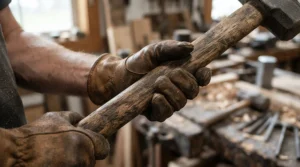
Real-World Scenarios: Matching the Glove to Your Life
Specs mean less than context. Here are three profiles with budget, environment and frequency.
The weekend hobby farmer. Twenty acres, hay and fence on Saturdays, $50 to spend, light use. The Golden Stag Elkskin Winter Work Gloves 855 covers cold mornings cheaply, and the low price means no grief if it snags. Pair it with a $15 cowhide glove for summer.
The full-time cow-calf rancher. Five or six days a week, cold winters, daily feeding. Here the two-pair system makes sense: Ranch Hands Elkskin Thinsulate Lined Gloves for subzero feed runs and Ranch Hands Elkskin Gloves for everything else. At roughly $165 for both, cost per working day stays low because both pairs rotate and last longer.
The fence builder. Wire, posts, brush and rough lumber all week. Geier Heavy Elkskin 448 is the strongest match, and the forum owner’s six-year report suggests a heavy pair pays back its price. Add cut-rated sleeves or gloves for the actual wire cutting.
Notice what these profiles share: nobody needs the single “best” glove, only the glove that fits their dominant hazard.
Problem → Solution Guide: Five Glove Headaches, Fixed
Problem: Gloves stiffen after getting soaked. Air-dry them away from direct heat and work them with your hands while damp. Most elkskin softens again with wear, according to the maker’s guidance.
Problem: Cold fingers on winter chores. Step up to Ranch Hands Elkskin Thinsulate Lined Gloves or add a thin wool liner to an unlined pair, as one reviewer did.
Problem: Seams failing at the thumb. Look for welted construction like Best Made Elkskin Unlined Roper Gloves, or the outside finger seams on Geier Heavy Elkskin 448, and make sure the glove isn’t too tight, since stress concentrates where leather is stretched.
Problem: Slippery rope or reins. Choose a western-finish elkskin like Geier Elkskin Roper 509 and avoid heavy waterproofing dressings that make leather slick.
Problem: Sweaty hands in summer. Switch to an unlined pair and rotate two pairs so each fully dries between shifts.
What Are Elkskin Gloves for Ranch and Farm Work?
Elkskin gloves for ranch and farm work are leather work gloves made from elk hide or from elk-finished leather, a thick, soft, chamois-like tannage prized for abrasion resistance, flexibility and grip. They protect hands from wire, rope, splinters, and rough gates while staying supple enough for latches, buckles, and fine chores.
Real elk, elk-finished, or Scandinavian “elk”
The label covers three situations, and it pays to know which you’re buying. Genuine elk gloves exist, and some makers say their hides are premium elk. Elk-finished cowhide is common and perfectly good if priced accordingly. And Scandinavian “elk” like Hestra Elk Utsjö is actually moose leather. Makers and retailers also claim elkskin beats cowhide and deerskin on toughness, but independent lab comparisons are scarce, so treat those claims as informed marketing, not gospel.
How to Choose Elkskin Gloves for Ranch and Farm Work
Follow these six steps and you’ll avoid most regrets:
- Name your main hazard. Wire punctures, rope burn and cold call for different gloves, and a systematic review of injuries among farmworkers reports that about a third of agricultural injuries in one country involved the upper limb. Match the glove to what actually hurts you.
- Pick weight by task. Heavy elkskin like Geier Heavy Elkskin 448 suits wire and brush, while medium weight like Geier Elkskin Roper 509 suits rope and halter work.
- Measure your palm. Most makers size by palm circumference in inches, and lined gloves usually need a larger size.
- Decide on lining. Unlined gives dexterity and breathability, lined gives warmth, and a thin liner gives flexibility.
- Check the seams. Welted thumbs, closed outseams and outside finger seams all point to longer wear.
- Read the care label. Washable and dry-clean-only gloves live very different lives.
Common mistakes buyers make
- Assuming “elkskin” guarantees genuine elk or heavy weight.
- Buying on price alone, then replacing cheap gloves three times a year.
- Ignoring that ranch work gloves also need to fit your hand, not just your budget.
Elkskin vs Cowhide, Pigskin and Goatskin
| Material | Durability | Dexterity | Wet Behavior | Best For |
|---|---|---|---|---|
| Elkskin, e.g. Ranch Hands Elkskin Gloves | High | Good once broken in | Stiffens when soaked, softens with wear | Wire, rough work, all-round |
| Pigskin, e.g. Kinco 1927KW | Good | Moderate | Handles moisture well per farm roundups | Wet general chores |
| Treated cowhide, e.g. Wells Lamont HydraHyde | Moderate | Good | Dries soft per roundups | Light, budget work |
| Goatskin, e.g. Ranch Hands Goatskin Gloves | Moderate to good | Excellent | Moderate | Dexterity and ropes |
Elkskin wins on abrasion and puncture toughness, but pigskin and treated cowhide win when wet weather is your main enemy. A farm-gear roundup calls Kinco 1927KW the benchmark general-purpose farm glove, while praising Wells Lamont HydraHyde for drying soft after soaking. Unless wire and rough ground dominate your week, the cheaper materials may serve better.
Farm hand leather gloves: when cheaper cowhide is fine
If your day is mostly stacking firewood, moving hay and clearing brush in dry weather, a treated cowhide pair like Wells Lamont HydraHyde, typically under $25, can serve as farm hand leather gloves without wasting money. Save elkskin for the jobs that punish thinner leather.
Livestock Handling Gloves: What to Expect in Pens and Chutes
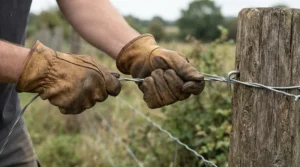
Livestock handling gloves face a specific cocktail of problems: rope burn, rail splinters, wet manure, and animals that pull. Elkskin’s grip advantage matters most here, and retailers like David Morgan credit Geier’s chrome-tanned western finish for a secure “western drag” on reins and tools. That’s why Geier Elkskin Roper 509 and Best Made Elkskin Unlined Roper Gloves are marketed to ropers.
The tradeoff is moisture. Wet manure and sloppy pens stiffen leather, so rotate two pairs and let each dry fully. In hot summer, choose unlined options over lined ones, since sweat softens leather in all the wrong ways. For calves and halter work, favor medium weight so you can feel buckles, and reserve the heavy leather for gate and chute repairs. A palm patch helps wherever a lead rope slides through your hand, but don’t expect any glove to stop a determined animal’s pull; fit matters more than armor.
Fencing and Baling Wire: What Elkskin Can and Can’t Do
Fencing and baling wire is where glove myths go to die. Elkskin is described by farm-gear roundups as more puncture-resistant than cowhide, and forum users recommend Geier Heavy Elkskin 448 for barbed wire tasks. That’s real value: thick leather blunts barbs and saves your palms from abrasion.
But here’s the honest limit. Elkskin work gloves generally aren’t sold with ANSI cut-level ratings, so they’re not the same as cut-resistant gloves. Freshly cut baling wire ends, sharp tin and razor-edged tools can still slice through leather. For wire cutting, add cut-rated sleeves or gloves, keep your pliers sharp so you don’t wrestle the wire, and wear long sleeves because barbs love forearms.
Thicker elkskin also costs dexterity when tying, so many fence builders keep a thinner pair in a pocket for fine work. Choose heavy leather for stretching and carrying, medium weight for tying and stapling, and replace any glove with thinning or hole-prone fingertips before they become a liability.
Barn Chores: The Daily Grind That Wears Gloves Out
Barn chores rarely injure you dramatically; they wear you down. Hay flakes, water buckets, stall latches, rakes, grain scoops and halters add up to hundreds of grips a day. A CDC-hosted study of hand problems in farmworkers lists repetition, force and pinch grips among common risk factors, which is a reminder that fit and flexibility matter as much as protection.
For most barn work, unlined medium-weight elkskin is the sweet spot. Ranch Hands Elkskin Gloves stay supple with little break-in, and the elastic wrist keeps chaff out better than an open cuff. In winter, Ranch Hands Elkskin Thinsulate Lined Gloves keep fingers working through frozen latches. Keep a dedicated barn pair, because dust, urine and moisture shorten leather life, and don’t wear your good pair into the muck.
✨ Quick tip: if barn chores leave your hands cramped, try sizing your glove so the fingertips have a few millimeters of room. An overly tight glove fights every grip you make.
Agricultural PPE: Where Gloves Fit in Your Safety Plan
Gloves are agricultural PPE, but they’re not magic. The federal rule for hand protection, 29 CFR 1910.138, says employers must select gloves based on the task, conditions, duration of use and hazards identified. It applies to general industry rather than every farm situation, so treat it as a smart benchmark rather than a legal checklist for your operation.
Applied to ranching, that logic means do a quick hazard assessment: what cuts, punctures, abrades, burns or freezes your hands, and how often? Leather gloves are generally recognized for protection against rough objects, sparks, blows and moderate heat, but they aren’t chemical gloves, so pesticide and veterinary-chemical work needs the right nitrile or neoprene gloves instead.
A sensible agricultural PPE kit includes elkskin gloves for general work, cut-rated protection for wire cutting, chemical-resistant gloves for sprays and meds, eye protection and sturdy boots. Replace gloves when leather cracks, seams open, or fingertips thin. The cheapest glove is the one that prevents a lost workday.
Long-Term Cost and Maintenance
Elkskin looks expensive until you do the math. The numbers below are illustrative scenarios, not lab-tested lifespans, since no independent source tracks glove longevity on working farms.
| Tier | Example | Price Range | Illustrative Lifespan | Rough Cost per Season | Best For |
|---|---|---|---|---|---|
| Budget | Golden Stag Elkskin Winter Work Gloves 855 | $20-$40 | One season | $20-$40 | Light or occasional use |
| Mid-range | Ranch Hands Elkskin Gloves | Around $80 | Two to three seasons with care | About $27-$40 | Daily ranch use |
| Premium work | Geier Heavy Elkskin 448 | Around $80 and up | Three-plus seasons with dressing | About $27 or less | Wire and rough work |
One long-term owner reported nearly six years from a heavy pair, and a farm-gear roundup suggests oiling can stretch gloves from one year to three. On those assumptions, spending more upfront often costs less per season, as long as you actually maintain the leather. Skip maintenance and the advantage evaporates.
FAQ
❓ How long do elkskin gloves last on a working ranch?
❓ Can you wash elkskin work gloves?
❓ Are elkskin gloves cut-resistant for barbed wire?
❓ Is elkskin tougher than deerskin for farm work?
❓ What size elkskin work gloves should I order?
Conclusion
Elkskin earns its reputation when the job is rough and the day is long. The best elkskin gloves for ranch and farm work aren’t about chasing one winner. They’re about matching leather weight, lining and construction to your dominant hazard. For wire and heavy brush, Geier Heavy Elkskin 448 has the strongest case on paper. For daily versatility, Ranch Hands Elkskin Gloves has the best-documented review support. For cold feed runs, Ranch Hands Elkskin Thinsulate Lined Gloves and the premium Hestra Elk Utsjö both deliver. And if money is tight, Golden Stag Elkskin Winter Work Gloves 855 keeps your fingers warm for the price of lunch.
Before you buy, remember three things: “elkskin” can mean several materials, so read the listing carefully; elkskin isn’t a cut-rated glove, so add cut protection for wire cutting; and a pair you maintain will outlast a pair you ignore. Check current pricing, measure your palm, and treat the glove as a tool, not an accessory.
✨ Ready to Protect Your Hands?
🔍 Click on any highlighted glove above to check current pricing and availability, then pick the pair built for your toughest job. Your hands do the work every single day, so give them gear that can keep up! 🧤🌾
Recommended for You
- Deerskin Work Gloves For Cold Weather: 7 Proven Picks (2026)
- Goatskin Vs Pigskin Work Gloves For Dexterity: 7 Best Picks 2026
- Cowhide Leather Work Gloves For Welding: 7 Best Picks (2026)
Disclaimer: This article contains affiliate links. As an Amazon Associate, I earn from qualifying purchases. If you purchase products through these links, we may earn a small commission at no additional cost to you.
✨ Found this helpful? Share it with your friends! 💬🤗
