
In This Article
Your hands are the cheapest piece of kit you’ll ever neglect and the most expensive one to replace. They get scraped on rock, pinched in tailgates, soaked by sideways rain, and asked to rack a slide or tie a bowline in the same afternoon. Goatskin gloves for tactical and outdoor use have quietly become the answer for people who refuse to choose between feel and toughness.

Goatskin earns that reputation through physics, not marketing. It’s naturally thinner than cowhide yet tightly grained and strong, so a glove can be slim without being fragile. That is why the same material shows up on duty-belt patrol gloves, ski-guide mitts, and farm-fence work gloves.
What Are Goatskin Gloves for Tactical and Outdoor Use?
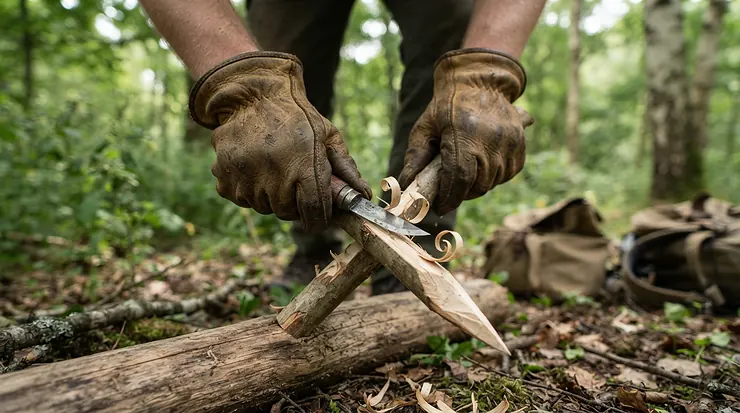
Goatskin gloves for tactical and outdoor use are hand protection built around thin, tightly grained goat leather, chosen for grip, abrasion resistance, and dexterity. Goatskin’s natural oils help it stay supple after getting wet, so these gloves handle range days, trail work, firewood, and foul weather without stiffening the way many leather alternatives can.
Here’s how this guide works. I researched seven real goatskin-palm or goatskin-leather gloves across budget, mid-range, and premium tiers. I checked their published specs and the reviewer sentiment available in roundups and retailer listings. Where I couldn’t verify a deep pool of buyer reviews, I say so instead of papering over it. Prices appear as ranges only, because they move constantly.
Quick Comparison: 7 Goatskin Gloves at a Glance
Before the deep dive, here’s the cheat sheet. Think of it as the menu before the meal.
| Glove | Best For | Price Range | Standout Trait |
|---|---|---|---|
| Magpul Patrol Glove 2.0 | Slim, high-feel tactical use | Mid-range, roughly $40-$60 | Articulated goatskin palm |
| First Tactical Lightweight Patrol Glove | Duty and range wear | Roughly $35-$55 | Skin-tight genuine goatskin palm |
| KEMIMOTO Tactical Gloves | Budget hard-knuckle protection | Roughly $20-$35 | Impact protection at a low cost |
| Hestra Army Leather Heli Ski | Cold, wet, high-alpine days | Premium, around $180-$200 | Army goat leather with removable liner |
| Wells Lamont HydraHyde Leather Hybrid | Yard, farm, and general utility | Roughly $15-$30 | Water-resistant goatskin palm |
| Wells Lamont HydraHyde Insulated Winter Glove (Style 1206) | Cold-weather work | Roughly $30-$40 | 100-gram Thinsulate insulation |
| Milwaukee Goatskin Leather Gloves (48-73-0013H) | Jobsite and device-friendly utility | Roughly $20-$30 | Touchscreen knuckle patch |
Notice the spread. The cheapest and most expensive gloves here differ by roughly ten times in price, but they don’t differ by ten times in purpose. The Hestra Army Leather Heli Ski solves a cold-weather problem the Magpul Patrol Glove 2.0 was never designed to touch. If you want the all-purpose bargain, the Wells Lamont HydraHyde Leather Hybrid and Milwaukee Goatskin Leather Gloves (48-73-0013H) sit in the sweet spot. If trigger feel is your religion, the two patrol gloves are your pews.
💬 Just one click — help others make better buying decisions too!😊
Top 7 Goatskin Gloves for Tactical and Outdoor Use: Expert Analysis
1. Magpul Patrol Glove 2.0 — best tactical feel in a slim goatskin glove
If you want a glove that disappears on your hand, the Magpul Patrol Glove 2.0 is the one to study. Its whole personality is restraint: thin leather, clean patterning, nothing flapping or clacking.
The listing highlights a goatskin palm, an articulated finger design, and touchscreen-capable thumbs. In practice, articulation means the fingers are pre-curved to match a grip, so you aren’t fighting fabric bunching at the knuckles. Touchscreen thumbs matter more than they sound, because you can check a map, a timer, or a ballistics app without stripping a glove in the cold.
Based on the spec comparison, this is a glove for people who value tactile feedback over armor. Review roundups consistently describe the goatskin as grippy and say it develops a patina with use. I couldn’t verify a large pool of individual buyer reviews for the 2.0 revision, so treat that sentiment as encouraging but thin.
Pros:
- ✅ Goatskin palm gives sensitive, grippy control
- ✅ Articulated fingers reduce bunching on the grip
- ✅ Touchscreen thumbs keep devices usable
Cons:
- ❌ Light build offers little impact protection
- ❌ Leather palms need a short break-in period
Expect a mid-range price, roughly in the $40-$60 range at the time of research (check current price). The value verdict: fair for the leather quality, and excellent if you shoot or train often enough to appreciate the feel.

2. First Tactical Lightweight Patrol Glove — skin-tight goatskin built for all-shift wear
The First Tactical Lightweight Patrol Glove is the glove for the person whose job involves hands, radios, and long shifts. It trades bulk for a close fit.
Several roundups point to a genuine goatskin leather palm, touchscreen compatibility, and a U-shaped gusset design. That gusset is the quiet hero, since it adds stretch where the hand flexes hardest so the leather isn’t fighting you every time you make a fist. A skin-tight cut also means less material to snag on a holster or door latch.
Here’s what to weigh: a snug glove rewards precise sizing and punishes guessing. Reviewers in the roundups I found describe the leather molding to the hand quickly and feeling comfortable out of the box. Again, those are aggregated comments from review sites rather than a verified mountain of buyer ratings, so read them as directional.
Pros:
- ✅ Genuine goatskin palm molds to your hand
- ✅ U-shaped gusset adds flex at the knuckles
- ✅ Touchscreen compatibility for phones and radios
Cons:
- ❌ Skin-tight fit makes sizing unforgiving
- ❌ Thin build isn’t meant for cold weather
Pricing lands around the $35-$55 range (prices may vary). Verdict: a strong duty-grade value if you can try your size before committing.
3. KEMIMOTO Tactical Gloves — hard-knuckle protection on a shoestring
Most goatskin gloves protect your palm. The KEMIMOTO Tactical Gloves also guard the back of your hand, and they do it at an entry-level price.
Roundups list a goatskin palm combined with hard-shell knuckle protection, aimed at shooting, airsoft, and multi-sport use. The hard knuckles absorb impact from banging a hand into a barricade or rock, which a thin patrol glove simply won’t. Goatskin on the palm keeps grip and abrasion resistance where the contact happens.
The analytical take: this is the “try tactical gloves without a financial commitment” option. One reviewer noted surprise at how close it performed to gloves costing about twice as much, which is a useful if subjective data point. What the spec sheet won’t tell you is long-term stitching durability, and I couldn’t verify enough long-run reviews to promise it.
Pros:
- ✅ Goatskin palm with real knuckle protection
- ✅ Very low entry price for tactical gloves
- ✅ Versatile across range, airsoft, and utility use
Cons:
- ❌ Long-term durability is less proven than pricier rivals
- ❌ Hard knuckles add bulk versus patrol gloves
Plan on roughly $20-$35 (check current price). Value verdict: the best low-risk entry point in this lineup.
4. Hestra Army Leather Heli Ski — the premium goatskin for brutal weather
Some gloves are tools. The Hestra Army Leather Heli Ski is closer to a piece of heirloom equipment, born for ski guides who needed hands that worked in Canadian winters.
The palm and thumb use Army goat leather, which the brand describes as its most durable leather, originally developed for military gloves and treated to resist moisture. The back of the hand uses windproof, water-resistant, breathable Triton polyamide, with G-Loft insulation and a removable Bemberg fleece liner. A removable liner means you can dry it overnight, replace it after years, or swap it for conditions. The long gauntlet cuff seals out snow.
For hikers and winter campers, that combination is the “all-weather durability” story in one glove. I couldn’t verify a large, current pool of Heli Ski reviews, so my confidence comes from the specs and the brand’s long track record rather than aggregated sentiment. Care matters: Hestra advises drying at room temperature, greasing the leather regularly, and not washing too often.
Pros:
- ✅ Army goat leather palms resist weather and wear
- ✅ Removable liner dries fast and can be replaced
- ✅ Long gauntlet cuff blocks snow and wind
Cons:
- ❌ Premium price puts it out of casual reach
- ❌ Too warm for mild-weather tactical work
Expect around $180-$200 (prices may vary). Value verdict: expensive per pair, but cheap per season if you wear it hard.
5. Wells Lamont HydraHyde Leather Hybrid — everyday goatskin utility without the sticker shock
The Wells Lamont HydraHyde Leather Hybrid is the glove you throw in the truck and forget about until it saves your knuckles.
Its goatskin leather palm and fingertips pair with a stretch spandex back, a Velcro wrist closure, and a leather-reinforced knuckle area. HydraHyde is Wells Lamont’s special tannage designed to resist water while staying breathable. The retailer is careful to note it’s water-resistant, not waterproof, which is an honest and important distinction. The spandex back keeps the glove cool and flexible, a good trade for yard and fence work.
A retailer listing showed roughly 4.5 stars across a couple hundred ratings. Buyers mentioned accurate sizing, repeat purchases, and use on fence work and farm tree work. The product copy positions it for low-abrasion tasks, so don’t expect it to survive a masonry crew’s week.
Pros:
- ✅ Goatskin palm stays flexible and comfortable
- ✅ Spandex back keeps hands cool and mobile
- ✅ Adjustable closure keeps debris out
Cons:
- ❌ Water-resistant only, not fully waterproof
- ❌ Best for light-to-moderate abrasion tasks
It typically sits in the $15-$30 range (check current price). Verdict: arguably the best value-per-dollar utility goatskin glove available.
6. Wells Lamont HydraHyde Insulated Winter Glove (Style 1206) — goatskin warmth for working outside in the cold
When the thermometer drops and the job doesn’t stop, the Wells Lamont HydraHyde Insulated Winter Glove (Style 1206) earns its keep.
The manufacturer lists grain goatskin HydraHyde leather, 100-gram 3M Thinsulate insulation, a fleece lining, a keystone thumb, and a knit wrist with a pull tab. The keystone thumb is a quiet comfort feature, since it mimics your hand’s natural resting position and reduces fatigue over repetitive tasks. Thinsulate gives warmth without the bulk of old-school liners.
Here’s the honest limit: Wells Lamont describes the leather as suited to medium-strength jobs, so this is a ranch, firewood, and snow-shoveling glove, not a heavy-duty demolition glove. Because insulation reduces fine feel, I wouldn’t pick it for precision tactical work. I couldn’t verify a robust set of independent reviews for this exact style, so lean on the specs.
Pros:
- ✅ 100-gram Thinsulate adds real cold-weather warmth
- ✅ Keystone thumb reduces hand fatigue
- ✅ Water-resistant HydraHyde goatskin palm
Cons:
- ❌ Insulation dulls fine tactile feedback
- ❌ Rated for medium-strength jobs only
Plan for roughly $30-$40 (prices may vary). Verdict: a smart, affordable winter workhorse.
7. Milwaukee Goatskin Leather Gloves (48-73-0013H) — jobsite goatskin that plays nice with your phone
The Milwaukee Goatskin Leather Gloves (48-73-0013H) are the pragmatic pick for people who work with tools and a screen in the same hour.
The listing describes top-grain goatskin construction, a keystone thumb, and SMARTSWIPE technology on the knuckle for touchscreen use. That knuckle-based touch zone is unusual, so the fingertips stay uncompromised for gripping while you tap a tablet with a knuckle. Top-grain goatskin is selected for its softness and abrasion resistance compared with standard cowhide, per the retailer’s copy.
My read: this is a hardware-store-grade workhorse for carpentry, landscaping, and general outdoor chores, with real convenience features. It isn’t a tactical shooting glove, and it doesn’t advertise weatherproofing. I couldn’t verify a deep review pool for this model, so treat my assessment as spec-driven.
Pros:
- ✅ Top-grain goatskin balances softness and durability
- ✅ Knuckle touchscreen patch keeps devices usable
- ✅ Keystone thumb eases repetitive gripping
Cons:
- ❌ Not designed for weatherproofing or insulation
- ❌ Limited impact protection for the back of the hand
Pricing runs around $20-$30 (check current price). Verdict: great value for mixed work and chores.
Spec Snapshot: Where the Goatskin Actually Is
| Glove | Goatskin Placement | Weather Handling | Touchscreen |
|---|---|---|---|
| Magpul Patrol Glove 2.0 | Palm | Light, uninsulated build | Thumbs |
| First Tactical Lightweight Patrol Glove | Palm | Light, uninsulated build | Yes |
| KEMIMOTO Tactical Gloves | Palm | Not specified | Check listing |
| Hestra Army Leather Heli Ski | Palm and thumb | Windproof back, insulated, removable liner | Not specified |
| Wells Lamont HydraHyde Leather Hybrid | Palm and fingertips | Water-resistant | Not specified |
| Wells Lamont HydraHyde Insulated Winter Glove (Style 1206) | Palm | Water-resistant, 100g Thinsulate | Not specified |
| Milwaukee Goatskin Leather Gloves (48-73-0013H) | Top-grain goatskin | Not specified | Knuckle patch |
Reading the table, the Hestra Army Leather Heli Ski is the only glove here with a clearly engineered, windproof weather system, while the two patrol gloves lean entirely on dexterity. The Wells Lamont HydraHyde Leather Hybrid and Wells Lamont HydraHyde Insulated Winter Glove (Style 1206) share the same water-resistant tannage, so choose between them purely by temperature. If you want touchscreen reliability, the First Tactical Lightweight Patrol Glove, the Magpul Patrol Glove 2.0, and the Milwaukee Goatskin Leather Gloves (48-73-0013H) are the clearest matches.
✨ Don’t Miss These Exclusive Deals!
🔍 Take your hand protection to the next level with these carefully selected gloves. Click on any highlighted item to check current pricing and availability. The right pair will help you work, hike, and train with confidence all year long!
How to Choose Goatskin Gloves for Tactical and Outdoor Use
Choosing well comes down to matching the glove to the hazard. Here are seven steps, in the order that saves the most regret.
- Define the main job. Shooting, trail work, and winter chores need different gloves. Start with the task, not the brand.
- Pick your insulation level. Uninsulated gloves preserve feel; insulated gloves like the Wells Lamont HydraHyde Insulated Winter Glove (Style 1206) trade feel for warmth.
- Check where the goatskin sits. Palm-only goatskin is cheaper and breathes well, while all-leather designs last longer under abuse. A good guide to choosing leather work gloves notes that grain leather lasts longest and that the cut of the hide affects durability.
- Prioritize fit above everything. A snug glove gives better control, but sizing mistakes ruin it, so measure around your palm and knuckles.
- Decide on knuckle protection. Impact guards like those on the KEMIMOTO Tactical Gloves help around rock and metal but add bulk.
- Look at the thumb and gusseting. Keystone thumbs and flex gussets cut fatigue over hours of use.
- Verify claims. If a glove advertises cut or impact protection, look for a stated rating rather than adjectives.
Applied honestly, those seven steps eliminate most bad purchases before you ever add to cart.

Goatskin vs Cowhide vs Synthetic: Which Wins in the Field?
Cowhide is the world’s default glove leather, and synthetic palms dominate the budget aisle. Goatskin sits between them with a different set of strengths.
| Factor | Goatskin | Cowhide | Synthetic Leather |
|---|---|---|---|
| Dexterity | Thin cut, high feel | Thicker, less feel | Varies, often good |
| After getting wet | Makers say it stays supple | Can stiffen after drying | Generally unaffected |
| Warmth and heat | Moderate | Warmer, more heat-resistant | Depends on build |
| Abrasion resistance | High for its thickness | High, thicker | Varies, can wear at seams |
| Best For | Precision plus toughness | Heavy-duty, hot work | Cheap, washable, impact gloves |
The practical takeaway: goatskin wins whenever you need to feel what your fingers are doing, since makers cut it thinner than cowhide without giving up much strength. Cowhide earns its place for heat and heavy abrasion. Synthetic options, like the impact-focused Mechanix Wear M-Pact, are washable and protective, though some reviewers report fabric wear after about a month of heavy use.
The honest nuance is the “lanolin” claim you’ll see on product pages. Sellers often attribute goatskin’s softness to natural lanolin, and some retailers say the natural oils help it dry soft rather than brittle. Treat that as a manufacturer talking point, and trust the wear patterns instead: if a glove stays supple after multiple soak-and-dry cycles, the leather is doing its job.
Tactical Leather Gloves and Tactical PPE: What the Standards Actually Say
“Tactical PPE” is a marketing phrase, not a regulated category. A glove becomes genuine personal protective equipment only when it’s tested and labeled to a standard that matches your hazard.
In the United States, the reference point is the ANSI/ISEA 105-2024 hand protection classification, which uses an A1 to A9 cut scale. Higher numbers mean more grams of force needed to cut through the material. A3, for example, covers 1,000 to 1,499 grams, and A9 exceeds 6,000 grams. Crucially, cut level only measures cuts. Puncture, abrasion, impact, and chemical performance are rated separately, and higher cut ratings usually cost dexterity.
What that means for tactical leather gloves: the goatskin gloves in this guide are chosen mainly for grip, abrasion resistance, and feel. In the listings and roundups I reviewed, none advertised an ANSI cut rating, so don’t assume one. If your job involves blades, glass, or sheet metal, buy a glove that states its rating, and treat goatskin as a comfort-and-abrasion layer rather than a cut shield. Also note that ANSI/ISEA 105 explicitly excludes welding, emergency response, and firefighter applications, so those fields have their own standards.
Some listings also carry California Proposition 65 warnings, which are routine disclosures rather than a defect. Read the label, and ask the seller if you have concerns.
Features That Actually Matter (And Those That Don’t)
Glove marketing is a buffet of buzzwords. Here’s how to separate nutrition from garnish.
Features that earn their keep:
- Touchscreen compatibility. Cold weather makes you check devices constantly, and removing gloves makes it worse.
- Keystone or articulated thumbs. They cut hand fatigue because the glove matches your resting hand shape.
- A real wrist closure. Velcro or knit wrists keep debris and snow out and keep the glove on.
- Gusseting at flex points. It prevents leather from fighting your grip.
Features that matter less than you’d think:
- Flashy logos and camouflage. They change nothing functionally.
- “Military-grade” language. It’s unregulated copy unless a standard is cited.
- Excess padding. Foam and plates dull feel, so add only what your hazards require.
- Hard knuckles for gentle tasks. They’re great near rock and equipment, and pure bulk at the range.
The pattern is consistent: features that preserve control and keep weather out outperform features that look intimidating. The First Tactical Lightweight Patrol Glove is a good example, since its gusset and fit do more for your day than any decoration could.
Weatherproof Leather Hand Gear: What All-Weather Durability Really Looks Like
“Weatherproof” is the most abused word in glove marketing. Real life sorts gloves into three tiers.
Water-Resistant Leather
Gloves like the Wells Lamont HydraHyde Leather Hybrid use treated goatskin to shed light moisture and dry soft. The retailer explicitly says HydraHyde is water-resistant, not waterproof, and that’s the honest label. Expect them to handle drizzle, wet grass, and damp firewood, not a morning of standing in a stream.
Weather-Engineered Systems
The Hestra Army Leather Heli Ski goes further by pairing proofed goat leather with a windproof, water-resistant, breathable back and insulation. This is genuine weatherproof leather hand gear: multiple layers, each doing a specific job.
Unprotected Utility
Gloves like the Milwaukee Goatskin Leather Gloves (48-73-0013H) don’t advertise weather resistance, so use them as dry-condition tools.
All-weather durability is a package, not a feature. Leather that resists moisture matters, but so do stitching, cuff design, and care. A weather-treated glove that’s never conditioned will age fast, while a plain glove cared for properly can outlast it. When wet gear matters, buy the weather system, then protect it.
Goatskin Gloves for Hiking and Camping Gear and Outdoor Utility Work
Outdoor utility gloves and trail gloves share more DNA than you’d guess. Both need grip, abrasion resistance, and breathability.
On the Trail
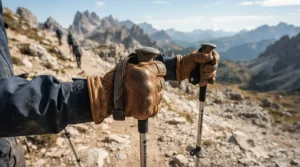
For hiking and camping gear, think about what your hands actually do: gripping trekking poles, handling cordage, wrestling tent stakes, and scrambling over rock. A slim glove like the Magpul Patrol Glove 2.0 or First Tactical Lightweight Patrol Glove gives you feel for knots and zippers while protecting palms from abrasion. Pack a pair of thin liners if your trips run cold.
Around the Campsite
Firewood is where goatskin shines. The Wells Lamont HydraHyde Leather Hybrid handles splinters and bark, while the Wells Lamont HydraHyde Insulated Winter Glove (Style 1206) handles frosty mornings and hot-pot handling better than bare hands. Avoid using leather gloves directly near open flames, since heat dries and stiffens leather.
Backyard and Property Work
For fencing, gardening, and chopping, the Milwaukee Goatskin Leather Gloves (48-73-0013H) and Wells Lamont HydraHyde Leather Hybrid offer inexpensive, replaceable protection. Buy two pairs, and rotate them so each dries fully between uses, which does more for lifespan than any premium feature.

Practical Usage Guide: Break-In, Care, and the First 30 Days
Most glove failures are care failures. Here’s the schedule that avoids them.
Week one: break-in. Wear new leather gloves around the house for short stretches. Goatskin molds quickly, and the First Tactical Lightweight Patrol Glove in particular rewards patience as it conforms to your hand.
After every soaking: dry slowly. Hestra advises drying gloves at room temperature, since high heat can damage the leather. Never park gloves on a radiator or near a campfire. Pull any removable liner out to dry separately, a real advantage of the Hestra Army Leather Heli Ski.
Monthly: condition. Hestra recommends greasing the leather regularly, and frequent washing removes natural protective oils. Use a conditioner appropriate for leather gloves, apply sparingly, and wipe off the excess.
Washing: read the label. Some goatskin-palm gloves are machine washable, while many leather gloves are not. When in doubt, spot-clean.
Common first-30-day mistakes:
- Buying one size too big “to be safe,” which kills control.
- Skipping drying time between wet days.
- Using insulated gloves for fine work and then blaming the gloves.
- Ignoring early stitching wear instead of repairing it.
Treat gloves like boots: they perform best when you maintain them before they complain.
Real-World Scenarios: Which Glove for Which Life
The Weekend Range Shooter on a Budget
You shoot twice a month and want protection without a big spend. The KEMIMOTO Tactical Gloves give hard-knuckle protection for rough ranges at a low price, while the Magpul Patrol Glove 2.0 is the upgrade if feel matters more than armor.
The Patrol Officer or Security Professional
Long shifts, radios, and cuffs call for a snug, dexterous glove. The First Tactical Lightweight Patrol Glove is built around that profile. If your workplace requires specific PPE, remember that employers must choose hand protection based on the hazards of the task. The OSHA hand protection standard says exactly that, so follow your employer’s requirements rather than this guide.
The Winter Hiker and Camper
You’re out for three days at 15°F with wet snow likely. The Hestra Army Leather Heli Ski is the serious pick, with its removable liner and long cuff. Pair it with a light backup pair so you always have a dry set.
The Homeowner With a Woodpile
You split firewood, fix fences, and maintain a yard. The Wells Lamont HydraHyde Leather Hybrid for most of the year and the Wells Lamont HydraHyde Insulated Winter Glove (Style 1206) for winter cover the whole calendar for a modest total spend.
Problem → Solution: Fixing Common Goatskin Glove Headaches
Problem: “My gloves fit wrong.” Goatskin gloves vary by brand. One retailer review of the MCR Safety Memphis Goatskin Drivers Glove 3611, sold by the dozen, warned that a medium ran closer to a small. Solution: measure your palm and knuckles, size up between sizes, and check the return policy.
Problem: “My gloves went stiff after a soaking.” Leather that dries too fast cracks. Solution: dry at room temperature, then condition lightly.
Problem: “I can’t use my phone.” Solution: pick touchscreen-capable thumbs like the Magpul Patrol Glove 2.0, or a knuckle patch like the Milwaukee Goatskin Leather Gloves (48-73-0013H).
Problem: “My hands are cold but I need dexterity.” Solution: use a thin liner under an uninsulated goatskin glove, or step up to the Wells Lamont HydraHyde Insulated Winter Glove (Style 1206) for lower-precision tasks.
Problem: “My palm wore through in a month.” Solution: match the glove to the task. Light-abrasion gloves like the Wells Lamont HydraHyde Leather Hybrid aren’t built for masonry.
Long-Term Cost: What a Goatskin Glove Really Costs Per Season
Sticker price is a poor predictor of cost. The relevant number is cost per season of use.
Consider the low end. A glove around $20-$30, like the Milwaukee Goatskin Leather Gloves (48-73-0013H), that lasts a season costs about as much per month as a coffee. Now the high end. The Hestra Army Leather Heli Ski at roughly $180-$200 needs to last several winters to match that, and a replaceable liner plus a repairable leather shell make that plausible, though I can’t promise it. For comparison, a boutique option like the Rail Riders Vermont Glove is hand-stitched from all goatskin at around $100, but its listing showed no reviews when I checked, so durability claims remain unverified.
Maintenance shifts the math too. Conditioning leather costs little and can extend life, while neglect can halve it. Rotation helps, since two pairs used alternately dry fully between uses and tend to outlast one pair worn continuously.
The ROI rule of thumb: buy cheap for dirty, low-stakes jobs, and spend more where weather or safety is on the line. For tactical work, fit and feel matter more than price, so the First Tactical Lightweight Patrol Glove often delivers more usable value than pricier gloves that fit worse.
FAQ
❓ Are goatskin gloves waterproof?
❓ Do goatskin gloves stretch over time?
❓ Can you machine wash goatskin gloves?
❓ How much should I spend on tactical goatskin gloves?
❓ Are goatskin gloves good for cold weather?
Conclusion
Goatskin earns its place in a tactical or outdoor kit for one simple reason: it lets you keep feel and toughness in the same glove. After comparing seven real options, the pattern is clear. The Magpul Patrol Glove 2.0 and First Tactical Lightweight Patrol Glove are the dexterity specialists, and the KEMIMOTO Tactical Gloves are the budget hard-knuckle entry. For weather, the Hestra Army Leather Heli Ski is the premium all-rounder, with the two Wells Lamont HydraHyde gloves covering affordable utility and winter. The Milwaukee Goatskin Leather Gloves (48-73-0013H) round things out as a smart jobsite glove with touchscreen convenience.
The most important lesson isn’t a brand. Match the glove to the hazard, size it carefully, and treat the leather well. Check current prices before you buy, since they shift often, and verify any protection rating you’re counting on rather than trusting adjectives.
✨ Ready to upgrade your hands?
🧤 Pick the glove that fits your real day, not your imagined one, and click through to check current pricing and availability. Your future self, miles from the trailhead with dry, capable hands, will thank you!
Recommended for You
- Split Leather Gloves For Heavy Duty Labor: 7 Tough Picks 2026
- Elkskin Gloves For Ranch And Farm Work: 7 Tough Picks For 2026
- Deerskin Work Gloves For Cold Weather: 7 Proven Picks (2026)
Disclaimer: This article contains affiliate links. As an Amazon Associate, I earn from qualifying purchases. If you purchase products through these links, we may earn a small commission at no additional cost to you.
✨ Found this helpful? Share it with your friends! 💬🤗
