
In This Article
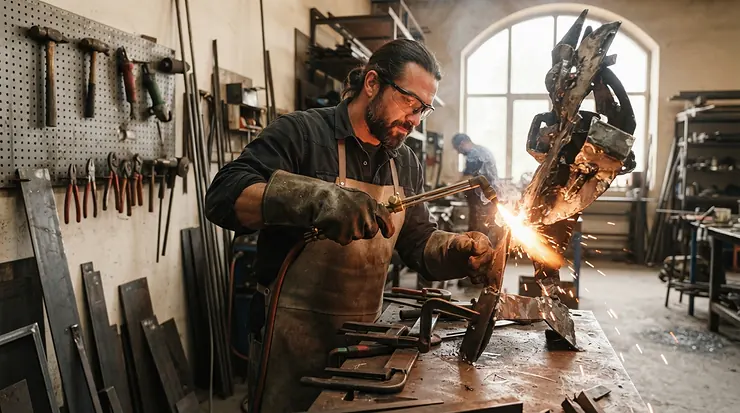
Cowhide leather work gloves for welding are heavy-duty gloves cut from bovine hide, usually split cowhide on the spatter-facing back and sometimes grain cowhide on the palm. They are built to block radiant heat, molten spatter and abrasion during MIG, stick and general fabrication work. In exchange, you give up some fingertip finesse.
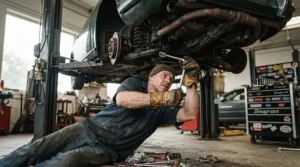
Welding punishes hands in ways most trades never see. There’s the radiant heat of the arc and the hot slag that skitters off a fresh bead. There’s the sharp edge of a freshly cut plate, and the fact that the same hand gripping a torch gun has to pick up a 400-degree workpiece ten seconds later. Cowhide earns its place because it is tough, widely available and forgiving on price.
The legal backdrop is simple. OSHA’s hand protection rule, 29 CFR 1910.138, says employers must pick gloves by weighing the task, the conditions, the duration of use and the hazards present. “Any glove” doesn’t qualify.
This guide ranks seven real, widely sold options. It decodes the labels printed on the cuff and covers heat, sparks, flame and torch work. It also gives you a break-in and care routine the product listings never mention.
A note on sourcing: pricing below is shown as ranges only, because prices change constantly. I could not verify a pooled Amazon star-rating breakdown for every glove here. Where a product’s review sentiment comes from editorial reviews rather than buyer reviews, I say so. Always check current price and sizing on the listing before you buy.
Quick Comparison: 7 Cowhide Welding Gloves at a Glance
| Glove | Best For | Construction (per listing) | Price Range |
|---|---|---|---|
| Tillman 50 | Daily MIG/stick welders who burn through pairs | Premium top-grain cowhide, 4-inch split cowhide cuff | Low-$30s |
| Lincoln Electric K2979-ALL | General fabrication, shops, vocational programs | 14-inch lined leather, Kevlar-stitched seams | High-$20s |
| Lincoln Electric K3806 DynaMIG HD | Production MIG with gun control | Professional-grade MIG construction | Mid-$30s |
| Black Stallion Top Grain Cowhide MIG | MIG welders wanting a supply-house classic | Top-grain cowhide, grain palm, split-leather back | High-$20s |
| Revco Black Stallion 320 | Budget stick welding and hobbyists | Split cowhide, comfort-lined | Roughly $11–$18 |
| Miller Electric 271889 | Shops standardized on one brand | Professional-tier MIG construction | Low-$40s |
| Caiman Goat Grain TIG/Multi-Task | Fitters who alternate welding and handling | Goat-grain palm, split cowhide back, 4-inch cuff | Low-$20s |
Looking at the table, the Revco Black Stallion 320 is the cheapest way into proper stick-welding leather. The Tillman 50 costs a few dollars more than the Lincoln Electric K2979-ALL and targets people who replace gloves monthly. The Caiman Goat Grain TIG/Multi-Task is the odd one out, built for feel rather than brute heat. If you do more than light TIG work, pick a gauntlet-style glove from the rows above it.
💬 Just one click — help others make better buying decisions too!😊
Top 7 Cowhide Leather Work Gloves for Welding: Expert Analysis
Every pick below was chosen from real, currently sold models. The analysis rests on published specs, editorial reviews and welding-safety guidance, not on invented hands-on stories. If you want the neutral framework before the shopping, the American Welding Society’s Safety and Health Fact Sheet on selecting gloves for welding and cutting is a short, sensible read.
1. Tillman 50 — top-grain hide for people who wear gloves out
Hide quality is the whole pitch here. The Tillman 50 pairs premium top-grain cowhide with a 4-inch split cowhide cuff. Top-grain leather is denser and stays supple through repeated heat cycles, while split leather on the cuff takes the abuse where spatter lands. That mix is why the glove tends to hold its flex longer than commodity leather.
On paper, this suits daily MIG and stick work. An editorial review from WC Safety in July 2026 scored it 4.6 out of 5 and framed it as the quality benchmark against its closest rival, the Lincoln Electric K2979-ALL. The same review points out that if a glove only sees a couple of hours a month, the premium buys you nothing. That is useful advice.
Reviewer sentiment, as summarized by that editorial source, centers on durability economics. A daily welder who replaces cheap gloves monthly can come out ahead within a quarter.
Pros:
- ✅ Premium top-grain cowhide holds flexibility longer
- ✅ Split cowhide cuff handles spatter-side abuse
- ✅ From a welding-first brand with stable model numbers
Cons:
- ❌ Wasted money for occasional weekend welders
- ❌ Size and color options live only on the Amazon listing
Price and value: low-$30s, check current price. Strong value if you weld weekly or more.
2. Lincoln Electric K2979-ALL — the dependable shop-floor workhorse
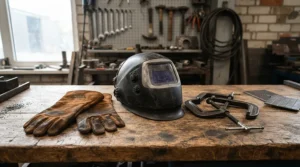
Think of the Lincoln Electric K2979-ALL as the volume standard. It is a 14-inch lined leather gauntlet with Kevlar-stitched seams. Seams are where welding gloves usually die first, because ordinary thread can burn through even when the leather survives. Kevlar thread resists that failure.
The 14-inch length shields the wrist and part of the forearm. That matters in overhead and out-of-position work, where sparks find sleeve gaps. The lining adds insulation against radiant heat and hot workpieces, though it also reduces feel.
Editorial coverage positions it for general fabrication, maintenance welding and vocational programs, which fits. If you teach a class or stock a toolroom, it is a safe default.
I could not find a verified aggregate of buyer reviews to quote here, so treat the editorial positioning as the main signal and read the listing’s recent reviews yourself.
Pros:
- ✅ Kevlar-stitched seams resist thread burn-through
- ✅ Long 14-inch cuff covers the wrist gap
- ✅ Lined for comfort against radiant heat
Cons:
- ❌ Lining cuts fine tool feel
- ❌ Plain leather hardens eventually and needs replacing
Price and value: high-$27s to high-$20s range, check current price. Excellent value for general use.
3. Lincoln Electric K3806 DynaMIG HD — heat protection that still lets you feel the gun
Gun control is the entire point. The Lincoln Electric K3806 DynaMIG HD is built as a professional MIG glove that balances heat resistance against trigger feel. Long production runs punish stiff gloves, because your hand fatigues from fighting the leather before the heat even becomes a problem.
That balance matters more than it sounds. A glove that is too thick makes you grip harder, which tires your forearm, which makes bead control sloppy. A glove that is too thin lets radiant heat through on a long vertical run. The Lincoln Electric K3806 DynaMIG HD aims for the middle.
Editorial positioning points it at daily production MIG welders and fab-shop crews who spend more hours welding than not. Verified buyer-review totals weren’t available for me to cite, so check recent reviews for sizing complaints, which are the most common issue with any MIG glove.
Pros:
- ✅ Designed around trigger and gun control
- ✅ Professional-grade construction for long shifts
- ✅ Good fit for production MIG work
Cons:
- ❌ Less insulated than heavy stick-welding gauntlets
- ❌ Overkill for occasional repair jobs
Price and value: mid-$30s, check current price. Good value for anyone logging full shifts.
4. Black Stallion Top Grain Cowhide MIG — the supply-house classic
Walk into any welding supply counter and this name comes up. The Black Stallion Top Grain Cowhide MIG uses a top-grain cowhide palm with a split-leather back. Putting the smooth, dense grain where you grip and the tougher split where sparks land is the standard smart layout for MIG gloves.
That layout means better dexterity than an all-split glove and better spatter tolerance than an all-grain one. It is essentially the compromise most MIG welders want, delivered at a price that doesn’t sting.
Editorial coverage describes it as the counter-standard MIG glove, aimed at welders who already know the Black Stallion name. Verified buyer-review figures were not available to me, so I won’t quote any.
If you want a comparison point, the Tillman 50 is the pricier, more durable alternative, and the Revco Black Stallion 320 is the cheaper stick-oriented sibling from the same family of gloves.
Pros:
- ✅ Grain palm improves grip and feel
- ✅ Split-leather back absorbs spatter
- ✅ Familiar, widely stocked design
Cons:
- ❌ Not as long-lasting as premium top-grain-throughout gloves
- ❌ Shorter cuff leaves more forearm exposed
Price and value: high-$20s, check current price. Solid mid-range value.
5. Revco Black Stallion 320 — the cheapest way into real stick-welding leather
Money is tight and you still need real protection? The Revco Black Stallion 320 is a split cowhide stick-welding glove with a comfort liner, sold by welding suppliers at a fraction of premium prices. Split cowhide is the traditional stick-welding choice because it tolerates heat and spatter better than thin grain leather.
Do not expect miracles. Cheap gloves harden sooner, and the lining is thinner than what you get in a high-end gauntlet. But for hobbyists, students or anyone building a basic PPE kit, it’s a reasonable start.
Honest caveat: I could not verify a trustworthy buyer-review aggregate for this specific model, and the supplier listings I found contained only product data. So there is no sentiment summary to offer beyond the construction, which is what I can stand behind.
Pros:
- ✅ Split cowhide handles stick-welding spatter
- ✅ Comfort lining for longer sessions
- ✅ Lowest cost of the seven
Cons:
- ❌ Hardens faster than premium hides
- ❌ Limited feel for fine work
Price and value: roughly $11–$18 depending on seller, check current price. Best entry-level value.
6. Miller Electric 271889 — for shops that standardize on one brand
Sometimes procurement logic beats spec-sheet logic. The Miller Electric 271889 is Miller’s professional-tier MIG glove, and editorial coverage frames it for shops already standardized on Miller machines and for welders who like their gear matching.
It sits at the pricier end of this list. The listing documents professional-grade MIG construction rather than a line-by-line material breakdown, so verify the leather type and cuff length on the current listing before you commit. That is a fair warning on any glove where the product page is light on specifics.
What you are paying for here is mostly brand consistency and a professional-tier build, not a unique technical trick. If your shop already buys everything from one manufacturer, that convenience has real value. If you are shopping purely on performance per dollar, the Lincoln Electric K3806 DynaMIG HD and Tillman 50 are strong rivals.
Pros:
- ✅ Professional-tier MIG construction
- ✅ Easy fit for brand-standardized shops
- ✅ Familiar manufacturer support
Cons:
- ❌ Highest price of the seven
- ❌ Listing details are thinner than rivals’
Price and value: low-$40s, check current price. Worth it only if brand matching matters to you.
7. Caiman Goat Grain TIG/Multi-Task — feel first, armor second
Not every welding task is a spatter storm. The Caiman Goat Grain TIG/Multi-Task combines a goat-grain palm with a split cowhide back and a 4-inch cuff, a layout that preserves feel while keeping cowhide on the surface that faces the heat.
Goatskin is thin and supple, which is why TIG welders favor it. Pair it with split cowhide on the back of the hand and you get a glove that can switch between welding, grinding, fitting and handling without constant glove swaps.
Editorial positioning points it at fabricators and repair welders whose work alternates between welding and handling. That is the right framing. It is not the glove for heavy stick work on thick plate.
As with the others, I couldn’t verify an aggregate of buyer reviews, so check the listing for fit notes.
Pros:
- ✅ Goat-grain palm gives real fingertip feel
- ✅ Split cowhide back adds spatter tolerance
- ✅ Light enough for all-day wear
Cons:
- ❌ Short cuff leaves forearms exposed
- ❌ Not suited to heavy stick welding
Price and value: low-$20s, check current price. Great value for TIG and multi-task work.
Break-In, Care and Retirement: Your First 30 Days
Most listings stop at “durable.” Here is what actually extends glove life, based on how leather behaves.
Week one: wear new gloves for light tasks first. Flex them, make fists and let the leather mold to your hand before a long session. Stiff new leather fights you and tires your grip.
Ongoing care: brush off slag and debris after each session. Do not machine-wash leather welding gloves, since water strips natural oils and accelerates hardening. Let damp gloves dry naturally, away from heat sources. A radiator or hair dryer cooks the leather and shortens its life.
Common mistakes in the first 30 days:
- Grabbing hot workpieces with the palm for “just a second.”
- Wearing sweat-soaked gloves, since moisture conducts heat faster than dry leather.
- Folding cuffs down, which opens a pocket for sparks.
Retirement signal: a hardened, stiff glove transmits heat it used to block, so stiffness is the signal most people miss. Retire any glove with a burned-through seam, a hole, or leather that cracks when flexed.
If you rotate two pairs, one drying while one works, both last longer than a single pair worn daily. That alone can shift the cost-per-use math in favor of premium hides like the Tillman 50.
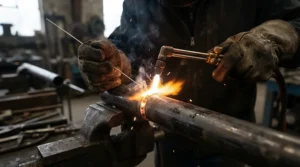
Problem → Solution: Fixing the Five Most Common Glove Complaints
Problem 1: Sparks drop inside the cuff. Solution: choose a longer cuff, such as the 14-inch Lincoln Electric K2979-ALL, and keep sleeves over the glove, not tucked into it, for overhead work.
Problem 2: Hands tire during long MIG sessions. Solution: fit matters more than thickness. A glove designed for gun control, like the Lincoln Electric K3806 DynaMIG HD, reduces the death-grip that causes fatigue.
Problem 3: Gloves harden in weeks. Solution: upgrade the hide. Premium top-grain like the Tillman 50 stays flexible longer, and drying gloves naturally slows the process.
Problem 4: No feel for TIG work. Solution: switch to a thinner goat-grain design such as the Caiman Goat Grain TIG/Multi-Task instead of forcing a thick gauntlet to do delicate work.
Problem 5: Gloves burn out at the seams. Solution: look for Kevlar-stitched seams, as on the Lincoln Electric K2979-ALL, because thread often fails before leather does.
Most “bad glove” complaints are really mismatch problems: the wrong glove for the process. Solve the match and the complaint usually disappears.
Real-World Scenarios: Which Glove for Which Welder
The weekend garage builder. Budget is tight, usage is occasional, work is mostly stick on mild steel. The Revco Black Stallion 320 gives real cowhide protection without waste. Spending more on premium hide makes little sense at two hours a month.
The full-time fab-shop MIG welder. Eight-hour shifts, constant gun work. The Lincoln Electric K3806 DynaMIG HD or Tillman 50 pays back quickly. If you replace budget gloves monthly, the premium option often costs less per week of use.
The repair welder who also grinds and fits. Switching between welding and handling all day. The Caiman Goat Grain TIG/Multi-Task reduces glove swapping and keeps fingertip feel for fit-up.
The vocational instructor. Many students, tight budgets, steady wear. The Lincoln Electric K2979-ALL is a sensible bulk choice because it is dependable and widely stocked.
The brand-loyal shop. Machines, helmets and consumables from one maker. The Miller Electric 271889 keeps your PPE matched, if the convenience justifies the price.
Run the numbers on your own usage, not on sticker price. Cost per week of protection is the figure that matters.
How to Choose Cowhide Leather Work Gloves for Welding
Use this order of operations. Each step filters the field before the next one.
- Match the process. Stick and heavy MIG want thick, lined gauntlets. TIG wants thin, supple leather. Using the wrong one is the number-one mistake.
- Check cuff length. Longer cuffs protect wrists and forearms from spatter, especially overhead. Short cuffs trade protection for mobility.
- Inspect the stitching. Kevlar thread outlasts ordinary thread in heat. Seams fail before leather does.
- Understand the leather. Grain leather is smooth and dexterous. Split leather is thicker and more abrasion-tolerant. The best designs put grain where you grip and split where sparks land.
- Get the fit right. Gauntlets should be roomy enough to shake off when a hot spark falls inside. TIG gloves should fit snug. Between sizes, TIG goes down and gauntlets go up.
- Verify the labels. Look for stated standards on the product page. If none are listed, treat protection claims cautiously.
- Calculate cost per use. A glove that lasts three times longer is cheaper at double the price.
Skip any step and you are guessing.
Heat Resistant Welding Gloves: What Actually Keeps Heat Out
Heat resistant welding gloves work by combining three things: thick leather that slows heat transfer, an insulating lining, and enough air or material between your skin and the hot surface. No single feature does the job.
Heat reaches your hand three ways. Radiant heat comes from the arc and the glowing weld pool. Contact heat comes from gripping hot metal. Convective heat comes from hot air rising around the work. Welding gloves have to manage all three, and no glove is equally good at each.
In European testing, contact heat is graded in levels, and level 1 means the glove has passed a basic test at a defined temperature for a set time. It is a floor, not a ceiling. Don’t read it as permission to hold hot metal.
Three practical rules matter more than any rating. Keep gloves dry, because wet leather conducts heat quickly and creates steam burns. Never grip hot workpieces longer than you must. And retire gloves once they stiffen, because leather that has been overheated gets harder and passes more heat through.
Lined gauntlets such as the Lincoln Electric K2979-ALL handle radiant load well. Thin-palmed designs like the Caiman Goat Grain TIG/Multi-Task trade heat margin for feel, so use them where the heat is modest.
Spark-Resistant Hand Protection: Spatter, Slag and Sleeve Gaps
Spark-resistant hand protection is about preventing three events: molten spatter sticking to the glove, slag burning through it, and sparks sneaking inside through the cuff. Material helps with the first two, and fit and technique handle the third.
Split cowhide is the traditional answer for spatter because its fibrous structure tolerates hot droplets without burning through quickly. That is why designs like the Black Stallion Top Grain Cowhide MIG use split leather on the back of the hand, where spatter lands.
Sleeve gaps cause more injuries than glove failures. If your cuff ends where your sleeve begins, sparks find the seam. Wear sleeves over the cuff for overhead work and keep gloves pulled up. A longer gauntlet, such as the one on the Lincoln Electric K2979-ALL, shrinks the gap.
Also manage what the glove can’t. Rolled cuffs create a catch pocket for sparks, so keep them extended. Pocket flaps and open collars do the same job elsewhere on your body, which is why hand protection is one layer of a system, not the whole system.
One caution from welding-safety guidance: leather welding gloves are not electrical insulators for energized-equipment work. Use properly rated insulating gloves where that hazard exists.
Welding PPE Standards: OSHA, EN 12477 and What US Labels Mean
Welding PPE standards come from two directions in the US market: regulation and product testing.
On the regulation side, OSHA requires employers to assess hazards and select suitable hand protection, and its general-industry rules also cover welding, cutting and brazing. On the product side, the most detailed glove standard is European. EN 12477 sets requirements for welder’s gloves, splitting them into Type A and Type B.
| Requirement | Type A | Type B |
|---|---|---|
| Burning behavior (EN 407) | Level 3 | Level 2 |
| Small molten metal splashes | Level 3 | Level 2 |
| Convective heat | Level 2 | Not required |
| Dexterity | Level 1 | Level 4 |
| Best For | General welding needing higher protection | TIG and fine work needing feel |
The table tells the tradeoff clearly. Type A demands higher flame and spatter performance and tolerates lower dexterity, so it fits MIG, stick and cutting. Type B relaxes protection to gain feel, so it fits TIG. Many US-sold gloves do not print EN codes, so if a product page lists no standard, you cannot assume compliance. Ask the seller or check the cuff label.
Also remember that plain welding leather generally carries no cut rating, so use rated cut-resistant gloves for sharp-edge handling and keep welding gloves for the arc.
Flame Resistance Rating: How to Read an EN 407 Code
A flame resistance rating on a welding glove usually appears as a short code beside a flame pictogram. Learning to read it takes about two minutes.
The EN 407 code is six characters, and each position is a different test, in this order: burning behavior, contact heat, convective heat, radiant heat, small molten metal splashes, large molten metal splashes. Higher numbers are better, and an “X” means that test was not performed.
For example, a European-market welding glove listing shows the code 413X4X. Reading it left to right: burning behavior level 4, contact heat level 1, convective heat level 3, radiant heat not tested, small splashes level 4, large splashes not tested. One glance tells you where it is strong and what the maker skipped.
For welding gloves, burning behavior and molten-metal splash scores matter most, since those mirror what actually happens at the bench. EN 12477 Type A needs burning behavior level 3 and small-splash level 3 as a minimum.
Two cautions. First, a high rating applies to the tested material, not to a worn-out, hardened glove. Second, flame resistance means the glove resists igniting and burning, not that it is fireproof. Treat it as a margin of safety.
Torch Work Safety: Oxy-Fuel, Cutting and Brazing
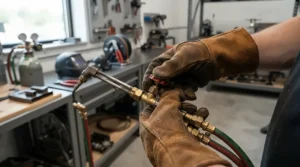
Torch work safety adds hazards that arc welding doesn’t have: open flame, hot slag showers from cutting, and fuel-gas hoses that can snag or leak. Gloves are only part of the picture.
For cutting and brazing, favor gauntlet-length gloves with lined construction. Heavier designs like the Lincoln Electric K2979-ALL suit these jobs, while thin goat-grain gloves such as the Caiman Goat Grain TIG/Multi-Task leave too little heat margin for sustained torch cutting.
Keep these habits in mind:
- Cuffs over sleeves, never tucked in.
- No oily or greasy gloves anywhere near oxygen equipment, since contamination is a fire risk.
- Check hoses and fittings before lighting, and keep the work area clear of combustibles.
- Follow hot-work permit rules where your workplace requires them.
The CDC’s NIOSH personal protective equipment resources are a good starting point for building a complete PPE plan. Gloves protect hands, but eyes, lungs and clothing need their own layers.
Cowhide vs Goatskin vs Deerskin: Choosing the Right Hide
| Hide | Strength | Feel | Best For |
|---|---|---|---|
| Split cowhide | Tough, abrasion-tolerant, spatter-friendly | Stiffer | Stick, heavy MIG, cutting |
| Grain cowhide | Dense, durable, better grip | Moderate | MIG palms, general fabrication |
| Goatskin | Light, supple | Excellent | TIG, precision work |
| Deerskin | Soft, heat-tolerant when insulated | Good | High-amp stick, hard-wearing use |
| Best For | Budget-conscious general use | Skilled fine work | Specialist tasks |
The table shows why cowhide remains the default. It sits in the middle on every axis, and it’s cheaper than the specialty hides. Goatskin wins on feel but gives up heat margin, and deerskin does well in heavy-duty insulated gloves but costs more.
For most readers, a cowhide-based glove like the Black Stallion Top Grain Cowhide MIG covers 80 percent of tasks. Add a goat-grain glove like the Caiman Goat Grain TIG/Multi-Task if you do precision work, and you have most situations handled.
✨ Don’t Miss These Welding Glove Deals!
🔍 Take your shop safety to the next level with these carefully selected gloves. Click on any highlighted item to check current pricing and availability. The right pair protects your hands and keeps you welding comfortably through the whole shift!
FAQ
❓ Can you machine wash cowhide welding gloves?
❓ How often should welding gloves be replaced?
❓ Are cowhide gloves good for TIG welding?
❓ Do welding gloves protect against cuts?
❓ Should welding gloves fit tight or loose?
Conclusion
Cowhide leather work gloves for welding aren’t glamorous, but they’re the most important hand-protection decision most welders make. The best pair is the one matched to your process, your hours and your budget, not the one with the biggest claims on the label.
Here is the quick version. For daily MIG and stick work, the Tillman 50 and Lincoln Electric K3806 DynaMIG HD reward heavy use. For general shop duty, the Lincoln Electric K2979-ALL and Black Stallion Top Grain Cowhide MIG are dependable all-rounders. For tight budgets, the Revco Black Stallion 320 gets you real protection cheaply. If brand matching matters, the Miller Electric 271889 fits. For fine work and handling, the Caiman Goat Grain TIG/Multi-Task is the feel-first option.
Whatever you choose, remember the basics: keep gloves dry, wear cuffs over sleeves, retire stiff leather, and verify labels instead of assuming. Prices and availability change, so check current price before you buy.
✨ Ready to Protect Your Hands?
🔥 Pick the glove that fits your process, check current pricing and sizing on the listing, and weld with confidence. Your hands will thank you for choosing wisely!
Recommended for You
- Grain Leather Gloves Vs Split Leather Gloves: 7 Best Picks 2026
- Driver’s Style Leather Work Gloves: 7 Proven Picks For 2026
- General Purpose Work Gloves: 7 Proven Picks For 2026
Disclaimer: This article contains affiliate links. As an Amazon Associate, I earn from qualifying purchases. If you purchase products through these links, we may earn a small commission at no additional cost to you.
✨ Found this helpful? Share it with your friends! 💬🤗
