
In This Article
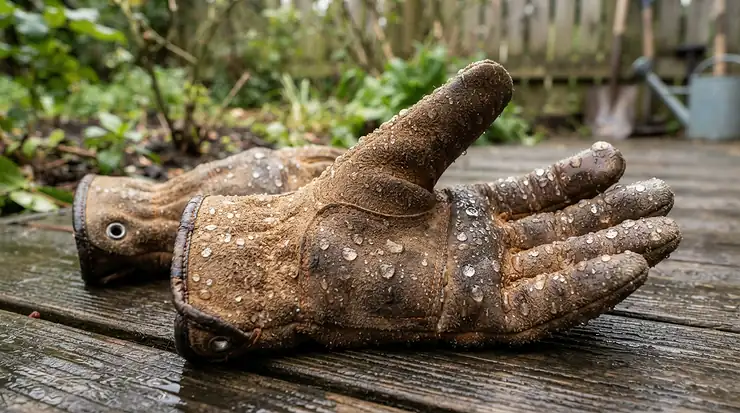
Pigskin work gloves for wet conditions are leather gloves, usually with grain pigskin on the palm and fingers. They are chosen because the hide’s porous structure stays soft and flexible after a soaking. They avoid the cardboard stiffness that ruins many other leathers once they dry. They trade total waterproofing for comfort, grip, and breathability.

Every crew has a story about the glove that went in supple and came out like a baked potato skin. Soak a standard leather glove, leave it on the dashboard, and it dries into a rigid claw. Pigskin plays by different rules. Manufacturers such as MCR Safety point to the hide’s larger pores, which help it breathe and let it stay pliable after getting wet.
That makes it a natural fit for anyone chasing water resistant leather gloves that still feel like gloves. Think rebar crews in drizzle, ranch hands in mud season, and deckhands hauling wet line.
Leather is a tanned animal hide, and the tanning and the hide itself decide how it handles water. This guide skips the brochure talk. It compares seven real gloves, explains what each spec means in practice, and shows how to keep them alive. It is built from spec sheets and published listings, and it is not based on personal hands-on testing. Prices are given as ranges because they move constantly.
Quick Comparison: Pigskin Work Gloves for Wet Conditions at a Glance
| Glove | Palm Leather | Lining / Warmth | Wet-Work Angle | Best For |
|---|---|---|---|---|
| Kinco 1927KW Lined Pigskin | Grain pigskin | Lined, knit wrist | Cold, damp mornings | Winter trades and driving |
| Kinco Hydroflector Hi-Viz Pigskin | Golden grain pigskin | Knit wrist | Soft after wetting, high visibility | Roadside and low-light jobs |
| MCR Safety 1925 Snort’n Boar | Premium grain pigskin | Fleece/jersey palm lining | Rubberized 2.5″ safety cuff | Rebar, steel, wet jobsites |
| MCR Safety 3410 Pigskin Driver | Premium grain pigskin | Unlined | Light and breathable | Driving, light wet handling |
| Tillman 1485 Thinsulate Pigskin | Top-grain pigskin | Thinsulate | Cold plus damp | Winter equipment work |
| Magid DuraMaster TB524E | Pig grain leather | Standard | Starched safety cuff | General wet labor |
| Wells Lamont HydraHyde Hybrid | Goatskin (treated) | Unlined | Water-resistant tannage | Benchmark for treated leather |
The table sorts the field by the real decision: how cold it is, how much cuff you need, and whether you want treated leather as a yardstick. The two Kinco models and the Tillman 1485 lean toward cold, damp days. The MCR Safety 1925 and Magid DuraMaster TB524E lean toward cuff protection for sloppy work. The Wells Lamont HydraHyde is not pigskin. It sits here as a treated-leather reference point, so you can see what you give up and gain by choosing pigskin.
💬 Just one click — help others make better buying decisions too!😊
Top 7 Pigskin Work Gloves for Wet Conditions: Expert Analysis
1. Kinco 1927KW Lined Pigskin — best all-round winter pair
The 1927KW pairs a grain pigskin shell with a knit wrist and a warm lining. A seller listing claims pigskin outlasts cowhide in abrasion, so treat that as a marketing claim. The bigger point is that the knit wrist seals out cold drizzle and slush that would otherwise run straight down a bare cuff. The lining adds warmth without turning the glove into a boxing mitt.
On paper this is a cold-and-damp glove, not a submersion glove. It suits truck drivers, snow-shovel crews, and anyone who touches wet surfaces in short bursts. Reviewer data is thin. A small set of ratings on one resale listing was uniformly positive. Buyers mentioned accurate sizing, thick leather, and winter comfort, and one said they applied a wax-type sealant for extra water-shedding. Treat that as one user’s workaround, and check manufacturer guidance first, because sealants can reduce breathability.
Pros:
- ✅ Warm lining without excess bulk
- ✅ Knit wrist keeps snow and drizzle out
- ✅ Pigskin palm stays supple when damp
Cons:
- ❌ Lined gloves dry slower than unlined ones
- ❌ Not suited to prolonged soaking
Price range: roughly in the $20-$30 neighborhood. It is good value for winter wet work.

2. Kinco Hydroflector Hi-Viz Pigskin — best for dark, drizzly shifts
Retail listings describe golden grain pigskin on the palm, a high-visibility nylon back, and a knit wrist with a leather pull-tab. They also note a wing thumb and shirred elastic for a snug fit. The pull-tab matters more than it sounds. Wet, cold hands are terrible at stretching knit cuffs, and a tab lets you tug the glove on without tearing seams.
Based on the spec comparison, this is the glove for roadside, utility, and early-morning dock crews who need to be seen. The porous pigskin keeps its softness after wetting, according to the retailer copy. The nylon back adds breathability but is not a membrane. Model numbers vary across sellers, so match the exact name before buying. I found no large verified review pool, so treat comfort claims as manufacturer-reported.
Pros:
- ✅ Hi-viz back improves low-light visibility
- ✅ Leather pull-tab protects the cuff seams
- ✅ Reinforced fingertip and finger-base welts
Cons:
- ❌ Fabric back is not waterproof
- ❌ Limited independent review data
Price range: around the high-$20s to low-$30s. Fair for the visibility upgrade.
3. MCR Safety 1925 Snort’n Boar — best cuff protection for sloppy jobsites
The 1925 uses premium A-grade grain pigskin on the palm, thumb, forefinger, and fingertips. It adds a fabric back, a shirred elastic back, a wing thumb, and a 2.5-inch rubberized safety cuff. MCR lists abrasion 4, puncture 4, and cut A2, which is solid for a leather palm glove. The rubberized cuff is the quiet hero, since it sheds splash and survives repeated washing.
What the spec sheet implies is a glove that handles pipe, rebar, and wet steel without the palm turning to plywood. Reviewer commentary was not available in the sources I could verify, so this assessment rests on specs. The fabric back is breathable, which helps in humid conditions but won’t keep out a downpour.
Pros:
- ✅ Rubberized cuff repels splash and runoff
- ✅ Strong puncture and abrasion ratings
- ✅ Breathable fabric back for humid jobs
Cons:
- ❌ Fabric back absorbs water in heavy rain
- ❌ Usually sold in multi-pair packs
Price range: budget-friendly per pair, especially in packs. Check current price.
4. MCR Safety 3410 Pigskin Driver — best light, breathable pair
The 3410 is an unlined premium-grade grain pigskin driver with a straight thumb and shirred elastic back. MCR lists abrasion 4, puncture 3, and contact heat 2. The simplicity is the feature. With no liner to soak up water, the glove stays lighter when wet and gives your hands some room to dry out.
This is for drivers, loaders, and warehouse crews moving between wet and dry zones all day. The open slip-on cuff means more splash entry, and there is no warmth to speak of. In winter, pair it with a thin liner. I could not verify a robust review base, so judge it on the spec sheet.
Pros:
- ✅ Unlined design stays light when damp
- ✅ Pigskin stays soft after wetting
- ✅ Straight thumb suits driving and handling
Cons:
- ❌ No insulation for cold work
- ❌ Open cuff lets in splash
Price range: low end of the market. Strong value for light wet work.
5. Tillman 1485 Thinsulate Pigskin — best for cold plus damp
Tillman pairs naturally moisture-resistant top-grain pigskin with a Thinsulate winter lining and a spandex back for fit. The rough-side-out double palm adds grip and life, while a reinforced thumb and leather-covered fingertips protect the stress points. According to the maker, the leather-and-spandex design should outlast all-synthetic high-dexterity gloves, which is a claim worth weighing against your own use.
This is a winter equipment glove. It is built for operators who need dexterity in the cold and are not submerging their hands. Spandex backs stretch well but are not a rain barrier. I found no verified review pool, so the assessment is spec-based.
Pros:
- ✅ Thinsulate lining for cold mornings
- ✅ Double palm extends wear life
- ✅ Spandex back gives a precise fit
Cons:
- ❌ Spandex back is not waterproof
- ❌ Heavier insulation reduces breathability
Price range: mid-range to premium. Check current price, since it varies by seller.

6. Magid DuraMaster TB524E — best budget cuff-and-grain combo
The TB524E has a pig grain leather palm, full leather index fingers, leather tips, a leather knuckle strap, a wing thumb, and a Gunn-cut pattern. Magid says grain leather repels liquid better than split leather in wet or outdoor use. That is a fair reading of how grain surfaces work. The starched safety cuff adds forearm protection and sheds some spray. Magid also calls the cuff water-proof, which I would read as water-shedding, since fabric cuffs do eventually soak through.
For general wet labor, this is practical, sturdy, and unglamorous. Reviewer data was unavailable, so I would sample one pair before buying a case.
Pros:
- ✅ Grain leather sheds liquid better than split
- ✅ Leather knuckle strap and fingertips
- ✅ Safety cuff protects the wrist
Cons:
- ❌ Starched cuff can feel stiff at first
- ❌ Usually sold in bulk
Price range: low per pair when bought in packs. Strong value for crews.
7. Wells Lamont HydraHyde Hybrid — the treated-leather benchmark
This is not pigskin. It uses a goatskin palm with a water-resistant HydraHyde tannage, a spandex back, an adjustable wrist closure, and a neoprene cuff. Wells Lamont says the treatment lasts the life of the leather, and the maker is clear that it is water-resistant, not waterproof.
Based on the spec comparison, it is the yardstick for what treated leather offers. Reviewers on a major retailer listing praised thickness and longevity, with one noting heavy farm tree work and a repeat purchase. One retailer rating sat around 4.5 stars on a few hundred reviews, though that is one store’s snapshot. Care guidance says to wipe with a damp cloth, dry vertically, and avoid machine washing.
Pros:
- ✅ Water-resistant tannage built into the leather
- ✅ Adjustable closure with pull tab
- ✅ Wide retail availability and strong reviews
Cons:
- ❌ Goatskin, not pigskin
- ❌ Spandex back is not waterproof
Price range: roughly $15-$30 depending on pack size. Excellent value.
How to Choose Pigskin Work Gloves for Wet Conditions
Picking the right pair comes down to a few honest questions.
- Define “wet.” Occasional splash, steady rain, and repeated submersion are three different problems. Pigskin handles the first two best. For submersion, you need a waterproof liner or a different glove category.
- Check the cuff. A rubberized or starched cuff sheds runoff, while a knit wrist seals out cold air. An open cuff is fine for light work but invites splash.
- Decide on lining. Lined gloves keep you warm but dry slowly. Unlined gloves breathe and recover faster. Match to the temperature, not just the weather.
- Look at the back material. A fabric back breathes but absorbs water. Leather backs resist more but sweat more.
- Read the ratings. An abrasion 4 and puncture 4 on the MCR Safety 1925 tells you more than adjectives do. Cut ratings matter if you handle sharp edges.
- Verify fit. A wet glove stretches, so a snug-but-not-tight dry fit works best. Sizing varies by brand, so check each chart.
- Plan for care. Gloves that you can wipe down and air dry will outlast ones that need special handling.
If you work wet daily, the Kinco 1927KW and Tillman 1485 suit cold. The MCR Safety 3410 suits mild.

Moisture Resistance: Water Resistant Leather Gloves vs Waterproof
“Waterproof” is the most abused word in the glove aisle. Real moisture resistance comes in three flavors: the hide itself, a treatment, or a membrane.
Pigskin relies on the first. Its porous structure and softness after wetting are inherent, not applied. Treated leather such as HydraHyde adds a tanning-stage treatment that the maker says lasts the life of the leather. Membranes, such as the aquaNOT barrier on some Kinco insulated gloves, add a waterproof layer inside. That layer blocks water but also reduces breathability, so your hands can sweat.
The honest takeaway is that water resistant leather gloves manage splash and damp. Waterproof gloves manage immersion. Unless you are submerging your hands, a breathable pigskin glove usually keeps you more comfortable than a sealed one. If you are submerging them, buy a different tool.
Pigskin vs Cowhide vs Synthetic: Which Handles Water Best?
| Material | Wet Behavior | Breathability | Best For |
|---|---|---|---|
| Pigskin (MCR Safety 3410) | Stays soft after wetting | High | Wet-dry cycling |
| Cowhide (untreated) | Can stiffen after drying | Moderate | Dry general work |
| Treated leather (Wells Lamont HydraHyde) | Water-resistant, stays soft | Good | Wet outdoor work |
| Synthetic leather | Sheds water, less durable | Varies | Light, lower-cost jobs |
Pigskin’s edge is its recovery. Untreated cowhide can stiffen after a wet-dry cycle, while pigskin’s open grain stays more pliant. Treated leather offers a similar benefit through chemistry, and synthetic options trade durability for water-shedding.
Looking at the comparison, pigskin is the natural choice when your day alternates between soaked and dry. Treated cowhide or goatskin is a solid alternative if you want a water-resistant surface rather than a breathable one. Synthetics make sense when budget outranks lifespan.
Quick-Drying Leather Gloves: What That Really Means
Here is the awkward truth. The best quick-drying leather gloves are not the ones you dry quickly. Leather punished with a heater, a radiator, or the sun cracks and shrinks. Care guidance from glove makers consistently says to air dry away from direct heat.
So what does “quick-drying” legitimately mean? Mostly it means construction. Unlined gloves like the MCR Safety 3410 have less material to hold water. Breathable fabric backs let vapor escape. Pigskin’s porous grain helps moisture move out. A knit liner or a removable one, where available, can be dried separately.
Practical tip: reshape and stand gloves upright while they dry, and rotate two pairs through a wet week. A spare pair is the cheapest form of quick-drying leather gloves you can own.
Wet Weather Hand Protection and OSHA Basics
For workplace use, hand protection is not optional when hazards exist. OSHA’s hand protection standard requires employers to select gloves based on an evaluation of the task, conditions present, duration of use, and potential hazards. Wet conditions are explicitly part of the “conditions present.”
In practice, wet weather hand protection means matching three things: the hazard (abrasion, puncture, cold), the wetness (splash versus immersion), and the duration (a quick job versus a ten-hour shift). Ratings such as those on the MCR Safety 1925 (abrasion 4, puncture 4, cut A2) help document why a glove was chosen. A glove with no published ratings is harder to defend in an assessment.
Remember too that pigskin is not insulation. For cold-wet work, the lined Tillman 1485 or Kinco 1927KW do more of the thermal job. Check your employer’s policy on what counts as approved PPE before buying.
Marine and Dock Work: Matching Gloves to the Waterfront
Marine and dock work is where gloves go to be tested: wet line, slick cleats, rough pilings, cold spray, and a steady drip of saltwater. Pigskin is a reasonable fit because wet rope and cleats punish stiff leather, and a glove that stays supple keeps your grip honest.
Here is how I would match the field to a few waterfront profiles, based on specs.
- Deckhand handling wet line in cool weather: The MCR Safety 1925 gives you a rubberized cuff for runoff and strong puncture and abrasion ratings for rope and hardware.
- Dock worker on early shifts: The Kinco Hydroflector Hi-Viz adds visibility on foggy mornings.
- Winter harbor crew: The Tillman 1485 or Kinco 1927KW adds insulation.
- Occasional boater or marina helper: The MCR Safety 3410 is light and affordable.
Saltwater care is the catch. Salt residue can leave leather stiff and crusty, so a quick rinse in fresh water, a gentle wipe, and slow air drying go a long way. If you routinely plunge arms to the elbow, no leather glove is the answer. Look at waterproof gauntlets instead.

Glove Maintenance: A Simple 30-Day Routine
Good glove maintenance is boring, cheap, and the difference between one season and three.
Week one, break-in. Wear new gloves for light tasks first. Pigskin softens with use, so give it a few shifts before heavy work.
After every wet day.
- Wipe off mud and salt with a damp cloth. For heavier grime, glove makers suggest mild soap sponged gently on the leather, not soaked.
- Dab off excess water with a clean towel.
- Stand gloves upright or lay them flat to air dry, away from radiators, hair dryers, and direct sun. Dents, a glove maker, also suggests putting the gloves on and flexing them as they dry to restore shape.
- Never machine wash. The Wells Lamont HydraHyde care label says to wipe and dry vertically.
Every few months. Apply a leather conditioner suited to work gloves, let it absorb, and let it dry naturally. Follow the manufacturer’s guidance first, especially for treated leathers.
Storage. Keep them cool and dry. A wet glove balled up in a toolbox grows mildew.
The most common failure is impatience, which usually means cooking gloves dry on a heater. Skip it.
Problem → Solution Guide for Wet-Weather Gloves
Problem: gloves dry stiff. Dry them slowly, flex them as they dry, and condition when fully dry. Choosing pigskin or treated leather helps from the start.
Problem: hands sweat and feel clammy. Choose breathable options like the MCR Safety 3410 or a fabric-back style, and avoid heavy membranes unless you need them.
Problem: water runs down the cuff. Move to a rubberized or starched cuff, as on the MCR Safety 1925 and Magid DuraMaster TB524E, or a knit wrist like the Kinco 1927KW.
Problem: cold, wet hands. Pick a lined glove like the Tillman 1485 and carry a second pair so one dries while you wear the other.
Problem: seams fail first. Look for reinforced fingertip welts and leather pull-tabs, as on the Kinco Hydroflector, and avoid forcing wet gloves on.
Problem: you can’t see in low light. Hi-viz backs and reflective details cost little and solve it.
Common Mistakes When Buying Pigskin Gloves for Wet Work
- Trusting the word “waterproof.” Check whether it is the leather, a coating, or a membrane doing the work. Even the Wells Lamont HydraHyde maker states water-resistant, not waterproof.
- Buying too tight. Wet leather and swollen hands need room, but not slop.
- Ignoring the cuff. A great palm with a leaky cuff is a wet glove in an hour.
- Skipping the second pair. One pair cannot dry between shifts.
- Overpaying for insulation you don’t need. If your wet work is in mild weather, an unlined glove like the MCR Safety 3410 is cooler and cheaper.
- Forgetting ratings. If hazards matter, buy gloves with published abrasion, puncture, and cut numbers.
Features That Actually Matter (And Those That Don’t)
Matter: a supple grain surface, a cuff matched to your water exposure, reinforced fingertips and seams, an accurate size chart, and published ratings. Wing and keystone thumbs improve flex, and a leather pull-tab saves seams.
Don’t matter as much: flashy colors (unless you need visibility), marketing words like “extreme,” and extra insulation in mild weather. Likewise, a long feature list does not beat a well-chosen glove with one or two features that suit your task.
Long-Term Cost and Maintenance
Cost-per-use favors the boring path. A budget pair like the MCR Safety 3410 or Magid DuraMaster TB524E that survives a season of careful drying beats an expensive pair cooked on a radiator in a month.
Consider total cost of ownership. A lower-priced glove replaced twice a season may cost more than a mid-priced Kinco 1927KW that lasts a winter or two. Two pairs in rotation also reduce wear, since each pair rests and dries fully. Glove makers such as Hestra stress that water dries leather out and that reconditioning afterward preserves suppleness.
Add conditioner (a small recurring cost) and your cost-per-use drops further. In short, buy to your wetness level, rotate pairs, and maintain them.

FAQ
❓ Are pigskin gloves waterproof?
❓ Do pigskin gloves stiffen after getting wet?
❓ Can I machine wash pigskin work gloves?
❓ Which is better for rain: pigskin or treated goatskin?
❓ How often should I condition leather work gloves?
Conclusion
Wet work is a leather glove’s hardest exam, and pigskin handles the retake better than most. The right pick comes down to your exposure. For cold and damp, the Kinco 1927KW Lined Pigskin and Tillman 1485 lead. For visibility, the Kinco Hydroflector Hi-Viz earns its place. For sloppy jobsites and cuff protection, the MCR Safety 1925 and Magid DuraMaster TB524E are sensible. For light, breathable days, the MCR Safety 3410 is simple and cheap. And if you want treated leather as a reference point, the Wells Lamont HydraHyde is the benchmark.
Remember the limits. These are water-resistant, not waterproof, and slow drying plus regular care will matter more than any brand name. Match the glove to the water, rotate two pairs, and your hands will thank you.
✨ Ready to upgrade your wet-weather kit?
🔍 Click any highlighted product to check current pricing and availability, then pick the pair that matches your job. Your hands will stay supple, protected, and ready for whatever the forecast throws at you! 🧤
Recommended for You
- Goatskin Gloves For Tactical And Outdoor Use: 7 Best Picks 2026
- Split Leather Gloves For Heavy Duty Labor: 7 Tough Picks 2026
- Elkskin Gloves For Ranch And Farm Work: 7 Tough Picks For 2026
Disclaimer: This article contains affiliate links. As an Amazon Associate, I earn from qualifying purchases. If you purchase products through these links, we may earn a small commission at no additional cost to you.
✨ Found this helpful? Share it with your friends! 💬🤗
