
In This Article
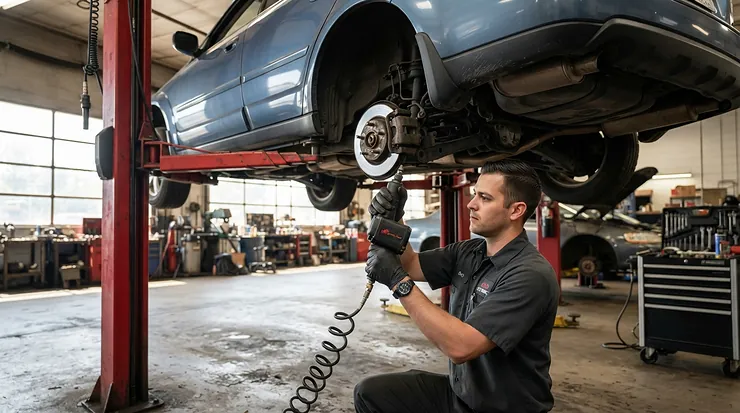
Heavy duty mechanic gloves vs automotive mechanic gloves comes down to armor versus feel. Heavy duty pairs add molded knuckle guards, thicker palm padding, and tougher reinforcement for impact-prone work, while automotive pairs prioritize a thin, form-fitting palm for fastener control. Most garage work sits somewhere between the two, which is exactly where choosing gets tricky.
Here’s why it matters. Hand injuries are a costly line item in workplace safety. OH&S magazine’s breakdown of BLS data counted roughly 140,000 lost-time hand injury cases in 2013 alone, with a median of six days away from work. Anyone who turns wrenches knows the territory. Scraped knuckles are the cheap version of the problem. A finger pinched between a control arm and a frame rail is the expensive one.
A confession before we go further: neither label is a regulated category. Manufacturers use “heavy duty” and “automotive” loosely, so a glove can wear both badges and deliver neither. This guide leans on spec sheets, manufacturer documentation, and aggregated buyer reviews rather than hands-on testing. You’ll read “reviewers report” instead of invented war stories, which is the honest route and, frankly, the more useful one. By the end, you’ll know whether your garage needs armor, feel, or a smart split between both in the heavy duty mechanic gloves vs automotive mechanic gloves debate.
Quick Comparison: Seven Gloves From Light Automotive to Heavy Duty
Think of the table below as a ladder. The lightest, most tactile pairs sit at the top, and the armored ones climb down from there.
| Glove | Style | Knuckle Armor | Documented Impact Rating | Price Range | Best For |
|---|---|---|---|---|---|
| Ironclad GUG General Utility | Standard-plus | Thermoplastic knuckle | None stated | Around $15-$20 | Budget armor, shop crews |
| Mechanix Wear Hi-Viz FastFit | Automotive | None | None | Around $15-$22 | Quick on/off, dim bays |
| Mechanix Wear The Original | Automotive | None | None | Around $18-$25 | Fastener feel, brake and electrical jobs |
| Ironclad EXO Motor Impact | Hybrid | TPR back-of-hand | None stated | Around $20-$30 | Automotive work with frequent knuckle knocks |
| Mechanix Wear M-Pact | Heavy duty | TPR knuckles and fingers | None stated | Around $30-$50 | Suspension, heavy equipment |
| Ergodyne ProFlex 925F(x) | Heavy duty | Full TPR armor plus foam | ANSI/ISEA 138 Level 2 (per Ergodyne) | Around $30-$45 | Sites that require documented ratings |
| Mechanix Wear Material4X M-Pact | Heavy duty, premium | TPR plus Impact Guard | None stated | Around $50-$60 | Daily pro use, wear resistance |
Read this as a ladder, not a leaderboard. The Mechanix Wear The Original and Mechanix Wear Hi-Viz FastFit sit at the automotive end with zero knuckle armor. The Ironclad GUG General Utility and Ironclad EXO Motor Impact hold the middle. The Mechanix Wear M-Pact, Ergodyne ProFlex 925F(x), and Mechanix Wear Material4X M-Pact carry the heavy duty banner. Only the Ergodyne ProFlex 925F(x) documents a numbered impact level, which matters if a safety manager is checking labels. Prices may vary, so check current price before you buy.
💬 Just one click — help others make better buying decisions too!😊
Top 7 Mechanic Gloves: Expert Analysis
1. Ironclad GUG General Utility — most knuckle armor per dollar
The standout here is thermoplastic knuckle coverage at a price that makes a drawer full of spares realistic.
Reinforced fingertips and a saddle patch over the high-wear web between thumb and index finger do the heavy lifting. A hook-and-loop cuff keeps the glove planted when you’re leaning into a breaker bar. The terry-cloth sweat wipe on the thumb sounds gimmicky until you’re upside down under a dash. The padded inner palm trims fatigue on long sessions, and the whole glove is machine washable.
Based on the spec comparison, this is a “standard-plus” glove. It has more armor than a plain automotive pair and far less bulk than true heavy duty gloves. It suits weekend DIYers and shop crews who buy by the dozen. It has no documented ANSI/ISEA 138 impact level, so treat the knuckle piece as bump protection, not certified armor.
Reviewers commonly describe a comfortable fit out of the box. Some note it runs slightly large and doesn’t match Mechanix sizing. Durability reports lean positive for normal use, though one buyer reported a pair surviving only a month or two of extreme daily abuse.
Pros:
- ✅ Knuckle protection at a bargain price
- ✅ Reinforced fingertips and thumb saddle
- ✅ Machine washable with sweat-wipe thumb
Cons:
- ❌ No documented impact rating
- ❌ Sizing differs from Mechanix patterns
Expect roughly $15-$20 at the time of research. Verdict: a strong first armored pair.
2. Mechanix Wear Hi-Viz FastFit — one-handed on and off
The standout is an elastic cuff you can yank on with one hand, which matters when your other hand is holding a socket in a tight spot.
The palm is synthetic leather with a stretch back and a two-piece design meant to reduce material bunching. Bunching matters because folds in the palm are a common source of wear and of that “gloved golf ball” feeling when you’re threading a small bolt. The fluorescent color keeps hands visible in a dim bay or near traffic.
Here’s the trade-off. This glove carries no impact protection, and WC Safety’s review notes the elastic cuff holds less securely than hook-and-loop under constant torque. On paper, that makes the Mechanix Wear Hi-Viz FastFit a diagnostic and quick-service glove. It suits inspections, tire rotations, fluid checks, and light tune-ups where gloves come off every few minutes. It’s a poor match for a day of fighting seized fasteners.
The retail review pool is small. Buyers praise quick donning and comfort, while one wished the wrist could be tightened.
Pros:
- ✅ One-handed elastic cuff for fast swaps
- ✅ Hi-vis color for dim bays
- ✅ Light, dexterous synthetic palm
Cons:
- ❌ No knuckle or finger armor
- ❌ Elastic cuff loosens under heavy torque
Price sits around $15-$22. Verdict: great convenience for the money.
3. Mechanix Wear The Original — the fit benchmark
Mechanix reportedly started the mechanics-glove category in 1991, and the Mechanix Wear The Original is still the pattern rivals get measured against.
It pairs a synthetic leather palm with a breathable TrekDry back and a hook-and-loop closure. Retailer listings cite ANSI abrasion Level 3 and touchscreen-capable fingertips. A double-stitched index finger targets the spot that usually fails first. In practice, you get a glove that disappears on your hand, so you can feel a thread start on a bolt.
This is the automotive end of the spectrum. With no armor, your knuckles are on their own against bay edges. That makes it ideal for brake work, electrical diagnosis, fuel-system jobs, and anything where fine motor control beats shock absorption.
Retailer listings aggregate tens of thousands of ratings averaging in the mid-4s at the time of research. Praise centers on fit and dexterity. The recurring complaint is durability, with some buyers reporting fingertip wear within weeks and others getting seasons of use.
Pros:
- ✅ Excellent dexterity for small fasteners
- ✅ Wide size range and consistent fit
- ✅ Machine washable and touchscreen capable
Cons:
- ❌ Zero impact protection
- ❌ Fingertip wear is a common complaint
Expect around $18-$25. Verdict: the default for precision-first mechanics.
4. Ironclad EXO Motor Impact — automotive-tuned impact armor
The standout is TPR protection on a lighter chassis that still feels like a dexterity glove.
Listings describe open-cell memory foam palm pads for vibration, a 16-point fit system, a synthetic leather palm, and a TPR cuff puller. The foam matters because impact-wrench and ratchet vibration is what fatigues hands over a long shift. The cuff puller matters because armored gloves are slower to pull on.
Think of it as the bridge in the heavy duty mechanic gloves vs automotive mechanic gloves argument. It gives you back-of-hand armor without full heavy duty bulk. No ANSI/ISEA 138 level is stated, so it’s bump armor rather than certified protection. Padding always trades some fingertip feedback, so expect to relearn small fasteners.
Reviewers report a comfortable fit with no break-in period. One buyer noted intact stitching and no finger holes after about two months of heavy use. The review pool is smaller than for the Mechanix models, so treat that as a signal, not a verdict.
Pros:
- ✅ TPR knuckle armor on a lighter build
- ✅ Palm foam reduces vibration fatigue
- ✅ TPR cuff puller eases donning
Cons:
- ❌ No documented ANSI/ISEA 138 level
- ❌ Palm padding dulls fine fastener feel
It runs roughly $20-$30. Verdict: a smart middle step for automotive work.
5. Mechanix Wear M-Pact — the heavy duty go-to
The standout is molded TPR guards over the knuckles and fingers on the same form-fitting chassis as the Original.
Versions vary, but listings describe an EVA “Impact Guard” over the first knuckle, palm padding (D3O on many models), a TrekDry back, and touchscreen fingertips. What this means in practice is that the back of your hand takes the hit instead of your skin. Demolition, rigging, heavy equipment, and suspension work are where this glove earns its keep.
One caution: retailers describe it as impact-resistant without listing a certified ANSI/ISEA 138 level. WC Safety’s review also flags added bulk versus bare-knuckle gloves and says it’s not suited to precision work.
Reviewers consistently describe a snug fit that doesn’t hinder grip, and many say the knuckle padding works. The complaints are specific. Some report stitching opening near the thumb V, and others report fabric wear or holes after about a month of regular use.
Pros:
- ✅ Molded TPR knuckle and finger guards
- ✅ Snug fit without wrecking dexterity
- ✅ Palm padding dampens shock
Cons:
- ❌ Bulkier than the Original
- ❌ Stitching and fabric wear complaints
Expect roughly $30-$50 depending on version and size. Verdict: the benchmark heavy duty pick.
6. Ergodyne ProFlex 925F(x) — documented Level 2 back-of-hand armor
The standout is paperwork. Ergodyne lists this model as ANSI/ISEA 138-2019 Level 2 with EN 388 4121XP.
It uses full-finger TPR armor over the knuckles and fingers, backed by technical foam, in a hi-vis shell. Level 2 sits mid-scale, and the lower of the knuckle and finger test results sets the final level. This is an impact glove, not a cut glove. For rigging, pipe work, and anything where dropped tools and pinch points dominate, that documentation gives safety managers something concrete to check.
The honest limitation is bulk. The dorsal frame is chunkier than a slim mechanics glove, so precision work suffers. Insulated and waterproof variants exist, but they’re separate models.
Review data is thin. Retailer pages show only a handful of ratings, split between five-star and middling scores. That’s too small to draw conclusions, so lean on the documentation instead.
Pros:
- ✅ Documented ANSI/ISEA 138 Level 2
- ✅ Full TPR coverage over knuckles and fingers
- ✅ Hi-vis shell for visibility
Cons:
- ❌ Bulkier than mechanics-style gloves
- ❌ Very small review pool
Pricing runs around $30-$45. Verdict: worth it when documentation matters.
7. Mechanix Wear Material4X M-Pact — premium wear resistance
The standout is Material4X reinforcement inside the fingers, meant to resist tearing and abrasion where cheaper gloves fail first.
Listings add TPR knuckle guards, an Impact Guard, D3O palm padding, Armortex fingertips, and a 90-day manufacturer warranty. It’s the “buy once, cry once” attempt in this lineup. The extra layers add stiffness and heat, so expect a less tactile glove than the Original.
At least one retailer lists no safety certifications, so don’t count on a numbered impact level. This is a daily-driver glove for pros who burn through cheaper pairs.
Aggregated reviews praise fit, protection, and durability. Grip feedback is mixed, and some buyers report tearing or stitching failures. One retailer reviewer described palm tearing and a finger hole despite the “toughest glove” reputation.
Pros:
- ✅ Reinforced fingers and Armortex tips
- ✅ TPR plus D3O padding combo
- ✅ Manufacturer warranty coverage
Cons:
- ❌ Highest price in this lineup
- ❌ Mixed grip and stitching reports
Budget around $50-$60. Verdict: worth it only if durability reports match your use.
Mechanic Glove Comparison: The Top 7 Side by Side
A good mechanic glove comparison separates what’s documented from what’s marketed. The table below sticks to the first category and flags the review signal honestly.
| Glove | Palm & Reinforcement | Back-of-Hand Armor | Aggregated Review Signal | Price Range | Best For |
|---|---|---|---|---|---|
| Ironclad GUG General Utility | Reinforced fingertips, saddle patch | Thermoplastic knuckle | Comfortable; sizing runs large | $15-$20 | Budget crews |
| Mechanix Wear Hi-Viz FastFit | Synthetic leather, two-piece palm | None | Quick on/off; small pool | $15-$22 | Light service |
| Mechanix Wear The Original | Synthetic leather, double-stitched index | None | Strong fit; durability mixed | $18-$25 | Precision work |
| Ironclad EXO Motor Impact | Synthetic leather, memory foam | TPR | Comfortable; smaller pool | $20-$30 | Hybrid automotive |
| Mechanix Wear M-Pact | Padded palm, TrekDry back | TPR knuckles and fingers | Good fit; some stitching issues | $30-$50 | Heavy equipment |
| Ergodyne ProFlex 925F(x) | Grip palm | Full TPR plus foam | Too few reviews to judge | $30-$45 | Documented protection |
| Mechanix Wear Material4X M-Pact | Material4X, Armortex, D3O | TPR plus Impact Guard | Durable; some tearing reports | $50-$60 | Daily wear |
The data tells a consistent story: armor and dexterity trade off almost one-for-one. The Mechanix Wear The Original wins on feel, and the Mechanix Wear Material4X M-Pact wins on wear resistance. The Ironclad EXO Motor Impact quietly offers the best compromise for people who’d rather not carry two pairs.
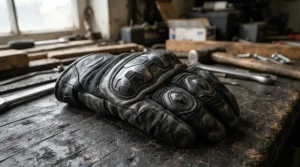
How to Choose Between Heavy Duty Mechanic Gloves vs Automotive Mechanic Gloves
The short answer: choose armor for jobs where your hand takes hits, and choose feel for jobs where your fingers do the thinking. Here’s how to decide in six steps.
- Map your hazards first. Knuckle strikes, pinch points, and swinging tools call for armor. Small-fastener work calls for feel.
- Decide how much feedback you can lose. Every layer of padding dulls fingertip sensitivity, so match it to the hardest task you do weekly.
- Look for documented ratings. If your employer or insurer cares, only a listed ANSI/ISEA 138 level counts as proof.
- Check the closure. Hook-and-loop holds under torque, while elastic wins on speed.
- Size by the maker’s chart. Mechanix and Ironclad patterns differ, and mixed-brand crews report fit complaints.
- Plan the replacement cycle. Review data shows wear varies wildly, so budget for spares.
Impact Protection Zones: Where the Armor Actually Goes
Not all armor is equal, because location decides everything. The key impact protection zones on a mechanic glove are the knuckles, the backs of the fingers, and the thumb. Palm padding is a separate story, since it manages vibration rather than strikes.
ANSI/ISEA 138-2019 formalized this. As OH&S magazine reported, it was the first North American standard addressing impact hazards to the hands, with an agreed test method, three performance levels, a pictogram, and accredited lab testing. The test measures knuckle and finger zones, and the lower-performing result sets the glove’s level. Level 3 transmits the least force, so higher means more protection.
Most retail mechanic gloves with TPR guards, including the Mechanix Wear M-Pact and Ironclad EXO Motor Impact, don’t list a level. That doesn’t make them useless. It means you’re buying “probably helpful,” not “proven at Level 2.” The Ergodyne ProFlex 925F(x) is the only pick here with a manufacturer-listed level. When pinch points and dropped tools are the risk, proven zones beat assumed ones.
Glove Reinforcement: What Extra Layers Buy You (and Cost You)
Glove reinforcement is where “heavy duty” claims either mean something or don’t. The useful spots are the thumb saddle, the index fingertip, and the thumb-to-index web, because that’s where mechanics grip, push, and drag. The Ironclad GUG General Utility reinforces fingertips and saddle, and the Mechanix Wear Material4X M-Pact adds reinforcement inside the fingers.
Every layer has a bill attached. Extra material adds heat, stiffness, and a bit of numbness around small fasteners. Seams become the new weak point, and reviews bear this out. Multiple buyers report stitching opening near the thumb on Mechanix models, and others mention fingertip wear.
So read glove reinforcement claims like a mechanic reads a torque spec: where, how much, and at what cost. Double-stitched high-wear zones matter more than a thick back panel. If you wear through index fingertips every month, a reinforced fingertip beats a heavier knuckle guard. If your knuckles take the beating, the reverse is true.
Heavy Duty vs Standard Gloves: Features That Actually Matter (And Those That Don’t)
When comparing heavy duty vs standard gloves, marketing noise drowns out the few specs that count.
What matters:
- Knuckle and finger guard coverage that matches where you actually get hit.
- Palm reinforcement where you grip, not just thicker material everywhere.
- A closure that survives torque.
- Washability. Grease-glazed palms lose grip, and WC Safety’s care guidance for the Ironclad line is to wash cold with the cuff closed and air dry.
What doesn’t:
- Camouflage patterns and “tactical” branding, which say nothing about protection.
- Touchscreen fingertips. They’re pleasant, not protective.
- Raw thickness numbers. A thin glove can fit better than a thick one and last longer.
The cleanest way to frame heavy duty vs standard gloves is by the job’s worst moment. If the worst moment is a slipped wrench into a bay edge, buy armor. If it’s dropping a washer into the crossmember, buy feel.
Engine Bay Work: Problems and Solutions
Engine bay work throws five predictable problems at your hands. Here’s a fix for each, matched to the gloves above.
Problem: knuckles meet sharp bay edges. Grab armor. The Ironclad EXO Motor Impact gives you TPR on a lighter chassis, and the Mechanix Wear M-Pact adds heavier guards.
Problem: small bolts vanish when you’re wearing bulky gloves. Drop armor for feel. The Mechanix Wear The Original keeps fingertips sensitive enough to start threads.
Problem: gloves keep coming off between checks. The Mechanix Wear Hi-Viz FastFit pulls on one-handed, and the hi-vis color helps in dim engine bay work.
Problem: hot exhaust or manifolds. Mechanic gloves aren’t heat or welding gear. WC Safety’s guidance says as much, so use heat-rated gloves or let the engine cool.
Problem: razor-sharp sheet metal. These gloves aren’t cut-rated. If blades are a risk, add a separate cut-resistant pair rather than assuming armor covers it.
Each fix targets a single hazard. That’s the point. No single glove solves five problems, so many mechanics keep two pairs.
✨ Ready to Gear Up?
🔍 Take your engine bay work to the next level with these carefully selected gloves. Click on any highlighted product to check current pricing and availability. These picks will help you finish every job with confident, comfortable hands!
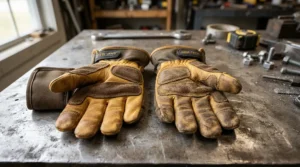
Real-World Scenarios: Three Garage Profiles
The weekend DIYer. Two or three hours a week in a home garage, oil changes and brake pads, a budget under $30. The Ironclad GUG General Utility covers knuckle bumps cheaply. Pairing it with a Mechanix Wear The Original for brake and electrical work is a smart, still-affordable split.
The independent technician. Eight hours a day, mixed suspension, exhaust, and drivetrain work, with gloves washed weekly. The Mechanix Wear M-Pact protects knuckles on the heavy jobs. The Ironclad EXO Motor Impact is a lighter daily option. Based on the review patterns, keep a spare pair because stitching and fabric wear show up in reports.
The fleet or heavy equipment mechanic. Rough environments, employer rules, and pinch points everywhere. The Ergodyne ProFlex 925F(x) documents Level 2, which gives a safety manager something to point at. For daily wear resistance, the Mechanix Wear Material4X M-Pact is the premium choice, though its reviews are mixed enough that the warranty matters.
Budget, environment, and frequency drive these picks more than brand loyalty does. A DIYer doing weekend oil changes doesn’t need Level 2 paperwork. A fleet tech probably does.
Practical Usage Guide: Your First 30 Days and Care Routine
New gloves deserve a deliberate start.
Week one: confirm fit. Use the manufacturer’s size chart, not your last brand’s size. There should be no pinching at the fingertips and no loose material at the palm. Don’t ignore a wobble in the knuckle guard. Misaligned armor protects nothing.
Weeks two to four: watch the stress points. Check the thumb V, index fingertip, and saddle seams every few days. Reviews show those are common early-failure spots, and catching a loosening seam early may save the pair.
Wash right. Machine wash cold with the cuff closed and air dry, per WC Safety’s care guidance for Ironclad models. Clean palms grip better than grime-glazed ones.
Common mistakes in the first month:
- Wearing armored gloves for micro-fastener work and blaming the glove.
- Using gloves near hot parts.
- Storing them wet or in a hot car, which can degrade padding and glue.
- Leaving gloves on after they’ve soaked through with solvent.
Rotate two pairs if you can. Alternating lets each dry fully, and it spreads wear.
Automotive Hand Protection: Standards, Hazards, and Compliance
Automotive hand protection rests on a short list of rules and ratings. For employers, OSHA 29 CFR 1910.138 requires hand protection selected after evaluating the task, conditions, duration of use, and identified hazards. Your home garage isn’t covered, but the logic transfers: match the glove to the hazard.
Two separate rating systems matter. ANSI/ISEA 105 rates cut resistance from A1 to A9. ANSI/ISEA 138 rates back-of-hand impact in Levels 1 to 3. A glove can have one, both, or neither. WC Safety notes that mechanic gloves with TPR guards often lack a numbered 138 level, so sites that require one should buy a rated glove, such as the Ergodyne ProFlex 925F(x).
For good automotive hand protection, consider the hazard stack: impact, cut, heat, chemicals, and vibration. A mechanic glove handles abrasion, light impact, and grip. It doesn’t handle blades, hot surfaces, or heavy solvent exposure. Pair it with the right supplement for those hazards.
Long-Term Cost & Maintenance
Sticker price lies. What matters is cost per month of useful life, and reviews show lifespans vary a lot.
Here’s an illustrative calculation, not a measured result. A glove around $20 that lasts three months costs roughly $7 a month. A pair around $55 would need to last about eight months to match that. Reviews of the Mechanix Wear Material4X M-Pact suggest some buyers get that and some don’t, so the warranty and stitching quality matter. The Ironclad GUG General Utility is the cost-per-month underdog, since one buyer reported one to two months under extreme use but much longer in normal use.
Maintenance stretches every dollar. Wash on schedule, rotate pairs, and retire gloves when palm material thins or armor detaches. A glove with a failed knuckle guard is a liability, because it can mislead you into taking a hit it can’t absorb. Factor in your hourly time too. A cheaper glove that makes you remove it constantly costs minutes you’ll never recover.
Mechanic Gloves vs Nitrile and Leather: Benefits vs Traditional Alternatives
| Option | Dexterity | Impact Protection | Oil and Solvent Handling | Best For |
|---|---|---|---|---|
| Bare hands | Excellent | None | None | Quick checks only |
| Disposable nitrile | Very good | None | Strong barrier | Messy fluid jobs |
| Leather work gloves | Moderate | Some padding | Absorbs oil | General labor |
| Armored mechanic gloves (Mechanix Wear M-Pact, Ironclad EXO Motor Impact) | Good | TPR back-of-hand | Washable but not a barrier | Heavy wrenching |
Nitrile wins when fluids are the enemy, but it offers no impact protection and tears under stress. Leather absorbs oil and loses feel. Mechanic gloves strike a middle path with decent grip, washability, and impact options, but they don’t seal against solvents.
Many mechanics layer nitrile under a mechanic glove for messy jobs, though some find the combination hot. The Mechanix Wear The Original pairs well with that approach because of its thin profile, while the bulkier Mechanix Wear Material4X M-Pact gets cramped under nitrile.
FAQ
❓ Are heavy duty mechanic gloves worth it for a home garage?
❓ Can you machine wash mechanic gloves with TPR knuckle guards?
❓ How do I know if a glove's impact rating is legitimate?
❓ Do armored mechanic gloves protect against cuts?
❓ How often should I replace mechanic gloves?
Conclusion
So where does the heavy duty mechanic gloves vs automotive mechanic gloves question land? It depends on the worst moment of your typical job. If it’s a slipped wrench and a bay edge, armor earns its bulk. If it’s starting a thread on a recessed bolt, feel wins.
For most garages, the smartest answer is a split. Keep a thin Mechanix Wear The Original for precision work. Add an armored pair for rough jobs, either the budget-friendly Ironclad GUG General Utility, the hybrid Ironclad EXO Motor Impact, or the heavier Mechanix Wear M-Pact. Add the Mechanix Wear Hi-Viz FastFit if you swap gloves constantly. Reach for the Ergodyne ProFlex 925F(x) when documented Level 2 protection matters, and the Mechanix Wear Material4X M-Pact if wear resistance is your main complaint.
Remember what the research shows. Industry reporting on injury data found that about 70 percent of workers with hand injuries weren’t wearing gloves, and the other 30 percent wore gloves that were inadequate, damaged, or wrong for the hazard. The right glove is the one that matches your hazard, fits properly, and actually stays on your hand.
✨ Gear Up and Protect Your Hands!
🔍 Take your next project to the next level with these carefully selected gloves. Click on any highlighted product to check current pricing and availability. These picks will help you work comfortably and finish every job with confidence!
Recommended for You
- Waterproof Coated Work Gloves For Cold Storage Workers: 7 Best (2026)
- Cut Resistant Coated Gloves For Glass Handling: 7 Best Picks 2026
- Fully Coated Rubber Gloves For Chemical Handling: 7 Best Picks (2026)
Disclaimer: This article contains affiliate links. As an Amazon Associate, I earn from qualifying purchases. If you purchase products through these links, we may earn a small commission at no additional cost to you.
✨ Found this helpful? Share it with your friends! 💬🤗
