
In This Article
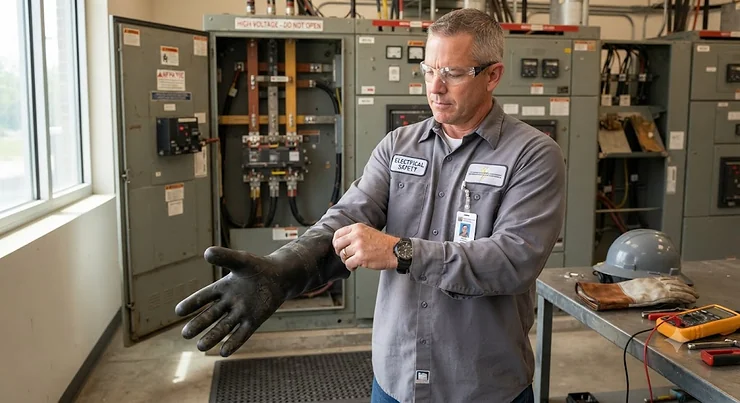
Here’s an uncomfortable truth: the thing standing between an electrician’s hands and a fatal shock is often a few millimeters of vulcanized rubber. That’s it. No circuit breaker, no lockout tag, no amount of experience changes the physics once skin meets a live conductor. This is why rubber insulating gloves for electricians aren’t just another line item on a tool truck inventory — they’re the last physical barrier when everything else in the safety chain has already failed. According to workplace electrical injury data compiled by the Electrical Safety Foundation International, thousands of workplace fatalities from contact with electricity have occurred over the past decade and a half — and a startling share of those victims weren’t even in electrical trades, they were people who assumed a circuit was dead.
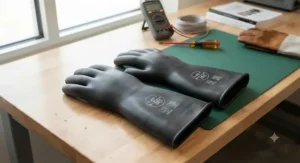
So what actually are these gloves? Rubber insulating gloves are voltage-rated, dielectric hand protection made from natural or synthetic rubber compounds, manufactured and tested under ASTM D120 in six classes — 00 through 4 — each rated for a specific maximum working voltage, from 500 volts up to 36,000 volts. They are not the same as the $12 “insulated” work gloves sold at hardware stores, and confusing the two has ended careers.
This guide skips the marketing fluff and gets into what actually matters: real products, real voltage classes, and the maintenance habits that keep a $90 pair of gloves from becoming a $9,000 workers’ comp claim. We’ll walk through seven genuine, currently available gloves spanning budget Class 00 pairs to premium Class 4 sets, explain the ASTM D120 standard in plain English, and cover the un-sexy but career-saving stuff — air testing, glove bag storage, and maintenance schedules that OSHA actually enforces.
Quick Comparison: Rubber Insulating Gloves for Electricians at a Glance
| Product | Class / Max AC Voltage | Length | Best For |
|---|---|---|---|
| Salisbury by Honeywell E0011B | Class 00 / 500V | 11″ | Budget low-voltage panel work |
| Ansell ActivArmr RIG011B | Class 0 / 1,000V | 11″ | Fine-motor, dexterity-heavy jobs |
| Salisbury by Honeywell E114B | Class 1 / 7,500V | 14″ | Service entrance & underground splicing |
| Cementex IG2-14 | Class 2 / 17,000V | 14″ | All-around distribution work |
| NSA ArcGuard KITGC2 | Class 2 / 17,000V | 14″ (kit) | Crews wanting a complete kit |
| Cementex IG3-16 | Class 3 / 26,500V | 16″ | Substation & switchgear techs |
| Novax 155-4-16 | Class 4 / 36,000V | 16″ | Transmission-level high-voltage work |
Look at that spread for a second, because it tells the real story: voltage class, not brand name, should drive nearly every buying decision here. A lineman working transmission structures and a maintenance electrician swapping breakers in a 480V panel have almost nothing in common in terms of glove needs, even though both technically buy “rubber insulating gloves.” Price climbs steeply with class too — a Class 00 pair runs a fraction of what a Class 4 pair costs, partly because the rubber walls get thicker and the proof-testing gets more rigorous as voltage protection increases. The kit option from NSA ArcGuard KITGC2 deserves a special mention here: bundling leather protectors, an FR knit liner, and a glove bag into one purchase usually beats buying components separately, especially for crews outfitting several employees at once.
💬 Already know your voltage class? Jump straight to the pick that matches your job.
Top 7 Rubber Insulating Gloves for Electricians: Expert Analysis
1. Salisbury by Honeywell E0011B — lightest option for low-voltage panel work
The Salisbury by Honeywell E0011B is where a lot of electricians start, and for good reason: it’s the lowest-voltage class on the market that’s still genuinely useful for panel and control-circuit work. This Class 00 glove carries a maximum use voltage of 500V AC (750V DC), proof-tested to 2,500V AC — numbers that sound modest until you remember most residential and light commercial panels sit well under that ceiling. Built from Type I natural rubber and stamped with its test date per OSHA marking requirements, it’s a seamless-process glove, meaning there’s no bonded seam to fail under stress. Based on the spec comparison across low-voltage classes, this is the glove for electricians who spend most of their day around 120/240V residential and light commercial systems and want dexterity without sacrificing certified protection — it’s genuinely not the right call for anyone regularly exposed to 480V three-phase gear, where Class 0 is the realistic minimum. Reviewers on industrial safety marketplaces consistently note that the thinner Class 00 wall makes small connector and wire-nut work noticeably easier than bulkier higher-class gloves, though several also flag that the thinner rubber shows nicks faster and demands more careful daily inspection.
Pros:
- ✅ Thinnest, most flexible class for fine motor work
- ✅ Lowest price point in the entire glove-class lineup
- ✅ Seamless natural rubber construction meets ASTM D120
Cons:
- ❌ Limited to 500V AC — unsuitable for most commercial panels
- ❌ Thinner wall means faster wear and more frequent replacement
Priced in the under-$100 range, the Salisbury by Honeywell E0011B is the easy budget pick, but only if your actual voltage exposure genuinely stays that low.

2. Ansell ActivArmr RIG011B — best dexterity for fine-motor, EV, and automotive work
The Ansell ActivArmr RIG011B targets a specific niche: workers who need Class 0 protection (up to 1,000V AC) but spend their day doing intricate work where bulky gloves slow everything down — think EV battery technicians, automotive electrical work, and utility meter techs. Ansell markets this as an “ultra-lightweight” line, and what most buyers overlook about that description is it’s not just marketing — the glove’s profile is genuinely thinner through the fingers than comparable Class 0 gloves from other manufacturers, without dropping below the 5,000V/20,000V AC proof-test threshold that defines the class. On paper this means faster, more accurate work on connectors, terminals, and small hardware; in practice, reviewers consistently report that the tradeoff is a slightly shorter glove lifespan under repeated flexing compared to heavier-walled competitors. That’s a fair trade for plenty of buyers, but not everyone. This is a glove for the electrician who values feel over bulk and is disciplined enough to inspect and retire gloves on schedule rather than push them past their comfortable working life.
Pros:
- ✅ Noticeably thinner profile improves tactile feedback
- ✅ Full Class 0 protection to 1,000V AC
- ✅ Well-suited to EV, automotive, and utility meter work
Cons:
- ❌ Shorter practical lifespan than heavier-walled Class 0 gloves
- ❌ Premium pricing relative to standard Class 0 offerings
Expect to pay in the $75-$100 range for the Ansell ActivArmr RIG011B, which is competitive for a name-brand Class 0 glove with this level of finish.
3. Salisbury by Honeywell E114B — reliable step-up for service entrance & underground work
Once you’re regularly exposed to service-entrance conductors, transformers, or underground residential distribution splicing, Class 1 becomes the realistic floor, and the Salisbury by Honeywell E114B is a standard choice in that category. Class 1 gloves carry a maximum use voltage of 7,500V AC, proof-tested to 10,000V AC and 40,000V DC under ASTM D120 — a substantial jump from Class 0 that reflects thicker rubber walls and more rigorous dielectric testing. The 14-inch length also matters more than it might seem: it extends coverage further up the forearm, which is exactly where sleeve rollback during overhead reaching tends to expose skin. Here’s what the spec sheet won’t tell you, but field reports suggest: the extra length and thickness noticeably reduce hand fatigue on all-day jobs compared to shorter Class 0 gloves stretched into Class 1 duty (which, to be clear, isn’t how classes work — voltage rating isn’t transferable). Buyers consistently flag the rolled cuff design as a practical touch, since it resists tearing when gloves are pulled on and off repeatedly through a shift.
Pros:
- ✅ 7,500V AC rating covers most service-entrance work
- ✅ 14″ length extends forearm coverage
- ✅ Rolled cuff resists tearing during repeated use
Cons:
- ❌ Noticeably less dexterous than Class 00/0 options
- ❌ Requires leather protectors for full-duty use, adding cost
The Salisbury by Honeywell E114B typically lands in the $150-$220 range depending on size, and it’s a genuinely solid mid-tier value once you factor in the voltage headroom it buys you.
4. Cementex IG2-14 — best all-around distribution-voltage workhorse
For distribution-level work — the 4kV to 15kV range that dominates utility and industrial maintenance — Class 2 is the standard, and the Cementex IG2-14 is a workhorse option in that class. Rated to 17,000V AC max use (25,500V DC), with a proof test of 20,000V AC and 50,000V DC, it’s built from chlorinated natural rubber for a smoother feel against skin and reduced hand fatigue over a shift. Cementex’s anatomical shaping is a small but meaningful detail here — pre-curved fingers reduce the constant micro-tension that flat-pattern gloves put on hand muscles during repetitive gripping. Based on the spec comparison against Salisbury and NSA equivalents in the same class, the numbers are essentially identical (as they must be under ASTM D120), so the real differentiator becomes fit, feel, and price. Reviewers on industrial supply platforms frequently mention that Cementex’s Class 2 line runs a bit more true-to-size than some competitors, which matters more than people expect — a glove that’s even a half-size off compromises both dexterity and the seal against the leather protector cuff.
Pros:
- ✅ Full 17,000V AC distribution-voltage protection
- ✅ Anatomical shaping reduces hand fatigue
- ✅ Competitive pricing within the Class 2 category
Cons:
- ❌ Requires leather protectors for OSHA-compliant field use
- ❌ Not compliant with telecom-specific 1910.268 unless separately tested
The Cementex IG2-14 generally sits in the $150-$200 range, making it one of the stronger value plays in mid-voltage protection.
5. NSA ArcGuard KITGC2 — best complete kit for crews and new hires
If you’re outfitting a new hire, or you’re simply tired of buying leather protectors, liners, and a storage bag as three separate transactions, the NSA ArcGuard KITGC2 solves that with a bundled Class 2 kit: 14-inch rubber voltage gloves, 10-inch leather protectors, an ArcGuard FR knit liner, and a glove bag, all in one box. The rubber gloves carry the same 17,000V AC/25,500V DC rating as any Class 2 glove under ASTM D120, and the kit as a whole is built to meet NFPA 70E-2015 and CSA Z462-15 arc-flash compliance, along with ASTM F1506 for the FR liner. What most buyers overlook about kits like this is the liner isn’t just comfort — an FR knit layer under a rubber glove absorbs sweat, which extends the working life of the rubber by reducing prolonged moisture contact, and it adds a layer of arc-rated protection underneath. Reviewers consistently note that the included glove bag, while basic, is genuinely functional for daily storage — a detail that matters because gloves stored loose in a tool bag degrade faster from friction, folding, and exposure to ozone-generating equipment.
Pros:
- ✅ Complete kit eliminates separate component purchases
- ✅ FR knit liner adds comfort and moisture management
- ✅ Meets NFPA 70E-2015 and CSA Z462-15 arc-flash standards
Cons:
- ❌ Higher upfront cost than gloves purchased alone
- ❌ Included glove bag is basic compared to dedicated storage cases
Expect to pay in the $300-$340 range for the full NSA ArcGuard KITGC2 kit — steep alone, but reasonable once you price out the components separately.
6. Cementex IG3-16 — best for substation & switchgear technicians
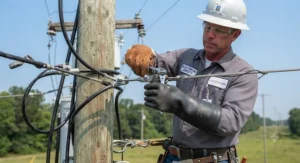
Class 3 territory starts where most Class 2 users stop, and the Cementex IG3-16 is built for it: a 26,500V AC max use rating (39,750V DC), proof-tested to 30,000V AC and 60,000V DC, in a 16-inch length that gives substantial forearm coverage for reaching into switchgear cabinets and around bus work. The extra two inches of length over the Class 2 option isn’t cosmetic — ASTM leather-protector fit rules actually require a wider gap between the top of the rubber glove and the top of the leather protector as class increases, and the added length accommodates that spec. This is a glove for substation technicians, switchgear maintenance crews, and anyone regularly working inside medium-voltage equipment enclosures, not for general maintenance electricians who’ll rarely see this voltage range. Based on the spec comparison with Class 4 gloves, the dexterity tradeoff at Class 3 is noticeably smaller than the jump between Class 2 and Class 3 in raw rubber thickness would suggest, which reviewers attribute to Cementex’s anatomical finger shaping carrying through the higher classes rather than being reserved for lighter-duty gloves.
Pros:
- ✅ 26,500V AC coverage for medium-voltage switchgear work
- ✅ 16″ length meets extended leather-protector clearance needs
- ✅ Anatomical shaping carries over from lower-class Cementex gloves
Cons:
- ❌ Significant price jump over Class 2 options
- ❌ Overkill (and non-compliant on flexibility) for lower-voltage daily tasks
The Cementex IG3-16 typically runs $350-$450, reflecting the thicker rubber and more extensive proof-testing required at this class.
7. Novax 155-4-16 — best for transmission-level extreme-voltage work
At the top of the voltage ladder sits Class 4, and the Novax 155-4-16 represents that category: a 36,000V AC max use rating (54,000V DC), proof-tested to a formidable 40,000V AC and 70,000V DC, in a 16-inch length. This is genuinely specialized equipment — transmission-line technicians, high-voltage substation crews, and utility linemen working near or on energized transmission structures are the realistic buyer here, not general electricians. The rubber wall thickness at Class 4 is substantially greater than lower classes, which is exactly why dexterity drops noticeably; reviewers consistently describe Class 4 gloves as requiring a deliberate adjustment period for anyone stepping up from Class 2 or 3 work. Here’s what the spec sheet won’t tell you: at this voltage class, the leather protector isn’t optional in any practical sense — OSHA’s minimum approach distance rules assume the rubber-and-leather combination is worn as a system, and skipping the leather protector at Class 4 voltage isn’t a minor compliance gap, it’s a genuine hazard. Buyers researching this class should budget for leather protectors and a proper glove bag as non-negotiable companion purchases, not optional add-ons.
Pros:
- ✅ Highest voltage protection commercially available (36,000V AC)
- ✅ Rigorous 40,000V/70,000V proof-test margin
- ✅ Purpose-built for transmission and high-voltage substation work
Cons:
- ❌ Steepest price point of any class in this lineup
- ❌ Reduced dexterity demands an adjustment period for new users
Pricing for the Novax 155-4-16 generally falls in the $400-$500 range, which is fair given the specialized manufacturing and testing this class requires.
Full Spec Comparison: All 7 Gloves Side by Side
| Product | Class | Max AC Voltage | Proof Test AC | Length | Price Range |
|---|---|---|---|---|---|
| Salisbury by Honeywell E0011B | 00 | 500V | 2,500V | 11″ | Under $100 |
| Ansell ActivArmr RIG011B | 0 | 1,000V | 5,000V | 11″ | $75-$100 |
| Salisbury by Honeywell E114B | 1 | 7,500V | 10,000V | 14″ | $150-$220 |
| Cementex IG2-14 | 2 | 17,000V | 20,000V | 14″ | $150-$200 |
| NSA ArcGuard KITGC2 | 2 | 17,000V | 20,000V | 14″ (kit) | $300-$340 |
| Cementex IG3-16 | 3 | 26,500V | 30,000V | 16″ | $350-$450 |
| Novax 155-4-16 | 4 | 36,000V | 40,000V | 16″ | $400-$500 |
Reading across this table, the price-per-volt-of-protection actually gets more efficient as you climb classes, which seems counterintuitive until you consider the fixed costs of proof-testing and certification are spread across a smaller, more specialized buyer pool at the top end. The NSA ArcGuard KITGC2 looks expensive next to the Cementex IG2-14 at the same voltage class, but that comparison is misleading — one is a bare glove, the other is a complete system. If you’re pricing gloves alone against gloves alone, Class 2 options from Cementex and Salisbury sit within a similar band, and the deciding factor usually comes down to fit and brand preference rather than protection level.
💬 Just one click — help others make better buying decisions too! 😊
Insulating Glove Maintenance: Practical Usage Guide
Nobody tells new electricians this clearly enough: insulating glove maintenance is not optional housekeeping, it’s the difference between a glove that protects you on day 400 and one that quietly fails. Start with cleaning — warm water and mild soap, never solvents or petroleum-based cleaners, which attack the rubber compound and create micro-cracking invisible to the naked eye. A small amount of chlorine bleach in the wash water is commonly used to disinfect gloves that see multiple users, but they need to be thoroughly rinsed and air-dried afterward, never left in direct sun or near ozone-generating equipment like arc welders and large electric motors, both of which accelerate rubber degradation dramatically.
The first 30 days matter more than people expect. New gloves should be inspected before every single use during the break-in period, not just when something feels off, because that’s when workers are still learning their gloves’ quirks — how they wrinkle, where they naturally fold, what “normal” wear looks like versus a developing defect. A common early mistake is folding gloves for storage instead of laying them flat or hanging them in a glove bag; folding creates permanent crease lines that become stress points and, eventually, failure points. Another frequent error: skipping the leather protector “to save time” on a quick job, which is exactly the scenario OSHA’s rules were written to prevent, since a puncture or abrasion during unprotected use requires the glove to be pulled from service and retested before reuse.
Real-World Scenarios: Matching Gloves to the Job
Picture three electricians, same trade, wildly different glove needs. First, a residential service tech who spends her day in 200-amp panels and the occasional 480V three-phase commercial job — she needs a Class 0 or Class 1 glove, prioritizes dexterity for tight panel work, and realistically replaces gloves more often due to daily flexing rather than voltage exposure. The Ansell ActivArmr RIG011B or Salisbury by Honeywell E114B fits that profile well depending on her actual voltage ceiling.
Second, a utility distribution lineman working overhead 13.2kV circuits daily — Class 2 is his non-negotiable minimum, and given how often his gloves see abrasion from wire work, a complete kit like the NSA ArcGuard KITGC2 makes sense so leather protectors and a proper bag are built into the purchase from day one rather than an afterthought.
Third, a substation technician doing switchgear maintenance on 25kV gear a few times a month rather than daily — for him, the Cementex IG3-16 at Class 3 makes sense precisely because his exposure, while less frequent, involves higher voltage than the lineman’s daily distribution work. Matching class to actual voltage exposure, not job title, is the entire game here.

How to Choose Rubber Insulating Gloves for Electricians
Picking the right pair comes down to working through these criteria in order, and skipping steps is exactly how people end up under-protected or overpaying:
- Identify your maximum voltage exposure first. Not your typical job, your worst-case exposure — if you occasionally touch 15kV gear even once a month, that sets your class floor, not your everyday 480V work.
- Confirm ASTM D120 and current test-date stamping. A glove without a visible test date isn’t verifiably in-service compliant, full stop.
- Match length to reach requirements. Overhead work and deep panel reaching favor 14-16 inch gloves; tight enclosure work sometimes favors shorter lengths for maneuverability.
- Decide between a bare glove and a kit. If you don’t already own leather protectors and a glove bag, a kit is almost always the better value.
- Size correctly using knuckle circumference, not glove-size guesswork. An ill-fitting glove compromises both dexterity and the leather-protector seal.
- Budget for the 6-month test cycle from day one. OSHA requires re-testing every six months once gloves are in service, and that recurring cost belongs in your total ownership math, not treated as a surprise later.
Dielectric Rubber Gloves vs Natural Rubber Electrical Gloves: What’s the Difference?
This is a source of genuine confusion, so let’s clear it up. “Dielectric rubber gloves” is really an umbrella term describing any rubber-based glove engineered to resist electrical current — it’s a functional description, not a specific material or class designation. “Natural rubber electrical gloves,” on the other hand, refers to the actual compound: gloves made from Type I natural rubber latex, as opposed to Type II synthetic, ozone-resistant compounds. Every rubber insulating glove that’s genuinely dielectric is, by definition, insulating — but not every dielectric-rated glove uses natural rubber as its base material.
Why does this matter practically? Natural rubber generally offers superior flexibility and tactile feedback, which is why most of the Class 00 through Class 2 gloves in this guide use it. The tradeoff is reduced resistance to ozone exposure, which is why Type II synthetic compounds exist for environments with heavy ozone-generating equipment — think switchgear rooms with significant arcing history, or industrial settings near large electric motors. When you see a “Type I” or “Type II” marking stamped inside a glove, that’s telling you exactly which of these two paths the manufacturer chose, and it should factor into your buying decision if you work around ozone-heavy equipment regularly.
ASTM D120 Standard: What Every Electrician Should Know
Every glove in this guide, and effectively every legitimate rubber insulating glove sold in the U.S., is manufactured and tested under the ASTM D120 specification for rubber insulating gloves, which governs manufacturing and testing standards for electrical shock protection. The standard organizes protection into six voltage classes — Class 00 through Class 4 — and two material types, Type I (non-ozone-resistant) and Type II (ozone-resistant). OSHA doesn’t invent its own voltage-class testing criteria from scratch; the agency’s electrical protective equipment rules build directly on these ASTM manufacturing and marking requirements, including the class-specific stamps you’ll find inside every compliant glove.
What this means practically: when a glove is marked “Class 2, Type I,” that’s not marketing language, it’s a specific, testable, legally meaningful claim about maximum use voltage and material composition. Buying gloves from unfamiliar sellers without visible ASTM D120 markings and a test-date stamp is a genuine risk — there’s no way to verify protection level without that documentation, and OSHA inspectors will ask for it.
Glove Air Testing: How to Spot a Failure Before It Costs You
Air testing is the single cheapest, fastest safety check available to any electrician, and it takes about thirty seconds. Here’s the method: roll the glove cuff tightly downward toward the fingers, trapping air inside, then bring it close to your face and squeeze — listen and feel for escaping air, and visually scan the inflated glove for bulges, pinholes, or thin spots that show up more clearly under pressure. Under OSHA’s electrical protective equipment standard, 29 CFR 1910.137, insulating equipment must be inspected before each day’s use and immediately following any incident that could have caused damage — and insulating gloves specifically must be given an air test as part of that inspection.
What you’re actually looking for: pinhole leaks (often invisible until inflated), swelling or softening of the rubber (a sign of chemical contamination), and any hardening or stickiness in the material, which indicates ozone or heat damage breaking down the compound. A glove that fails an air test doesn’t get patched and reused — it gets pulled from service immediately, no exceptions, and the six-month formal electrical retest doesn’t substitute for this daily field check. Skipping this step because “the gloves look fine” is precisely how pinhole failures go undetected until the worst possible moment.
Glove Bag Storage: Protecting Your Investment
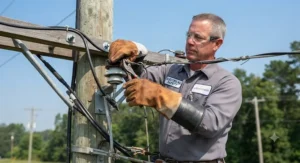
A $400 pair of Class 4 gloves stuffed loose into the bottom of a tool bag next to wrenches and wire strippers is a slow-motion failure waiting to happen. Proper glove bag storage means keeping gloves unfolded and flat, or hung, inside a dedicated canvas or vinyl glove bag, stored in a cool, dry location away from direct sunlight and away from ozone-producing equipment. Sunlight degrades rubber through UV exposure over time, and heat accelerates that process further — a glove bag left on a truck dashboard in summer is doing real, measurable damage every single day it sits there.
The glove bag itself matters less than the habit of actually using it consistently. Leather protectors should be removed from rubber gloves during storage rather than left on, since trapped moisture between the two layers promotes degradation of both materials. For crews managing multiple sets across a fleet, labeling each bag with the test date and employee assignment prevents the common problem of gloves silently aging past their six-month window because nobody was tracking which pair belonged to which cycle.
Common Mistakes When Buying Rubber Insulating Gloves
The single most frequent mistake is buying by job title instead of actual voltage exposure — “I’m an electrician, I need Class 2” is a guess, not a spec. The second is skipping leather protectors to save money upfront, not realizing that unprotected rubber glove use pulls the glove from certified service until retested, effectively voiding the protection until that’s done. Third, buyers frequently underestimate sizing precision, ordering “medium” or “large” the way they would for regular work gloves rather than measuring actual knuckle circumference, which compromises both fit and the protector seal. Fourth, some buyers assume higher class always means better protection and buy Class 3 or 4 gloves for Class 0 work — this actually reduces dexterity and increases fatigue for zero practical benefit at that voltage level. Finally, plenty of buyers skip budgeting for the recurring six-month retest cycle entirely, treating the initial purchase price as the total cost when it’s really just the entry fee.
Long-Term Cost & Maintenance: Total Cost of Ownership
The sticker price on rubber insulating gloves is genuinely misleading if you don’t factor in the full ownership cycle. Beyond the initial purchase, budget for leather protectors (if not included), a glove bag, and — critically — the recurring six-month electrical retest that OSHA requires once gloves enter service. Retesting typically runs a modest per-pair fee through a certified lab, but skipping it isn’t a cost-saving option; it’s a compliance failure that also happens to leave workers unknowingly exposed.
| Cost Factor | Budget Glove (Class 0-1) | Premium Glove (Class 3-4) |
|---|---|---|
| Initial purchase | $75-$220 | $350-$500 |
| Leather protectors (if separate) | $25-$40/pair | $40-$60/pair |
| 6-month retest (per cycle) | Modest, per-pair fee | Modest, per-pair fee |
| Best For | Daily low-voltage tasks | Infrequent high-voltage tasks |
Looking at this breakdown, the real long-term cost driver isn’t the class of glove at all — it’s the retest cycle, which applies regardless of voltage class and repeats every six months for the working life of the equipment. That’s worth internalizing before sticker shock at a $450 Class 3 pair scares anyone off; over a two-year service life, the retest and protector costs often narrow the gap between budget and premium options more than people expect.
Features That Actually Matter (And Those That Don’t)
Voltage class, ASTM D120 marking, and test-date stamping matter enormously — these are the non-negotiable, legally meaningful specs. Length matters for reach requirements, and fit matters more than most buyers initially credit. What matters far less than marketing suggests: color. Black, red, and yellow gloves offer identical protection within the same class; color exists for visual identification and crew organization, not performance. Similarly, “anatomical shaping” and ergonomic finger curves genuinely reduce fatigue over a shift, but they’re a comfort feature layered on top of the certified protection, not a substitute for correct class selection — a beautifully shaped Class 0 glove is still a Class 0 glove.
Buyer’s Decision Framework
If your daily voltage exposure tops out around 480V three-phase or lower, choose Class 0 or Class 1 because the dexterity gain outweighs unnecessary protection headroom. If you regularly work 4kV-17kV distribution systems, choose Class 2 because that’s the realistic industry floor for that voltage band. If your work involves substations or switchgear in the 15kV-26kV range, choose Class 3, and budget for the reduced dexterity that comes with it. If you’re working transmission-level voltage above 26kV, Class 4 isn’t optional — it’s the only legitimate choice, and leather protectors become mandatory rather than recommended. Across every tier, if you’re outfitting more than one or two employees, a complete kit almost always beats piecing together components separately.

Frequently Asked Questions
❓ What voltage class do most electricians need?
❓ How often must rubber insulating gloves be tested?
❓ Can rubber insulating gloves be used without leather protectors?
❓ What's the difference between Type I and Type II gloves?
❓ Do rubber insulating gloves expire?
Conclusion
Rubber insulating gloves for electricians aren’t a commodity purchase where brand loyalty or aesthetics should drive the decision — they’re a voltage-matched safety system where the class rating is the only spec that actually matters first. Whether you land on the budget-friendly Salisbury by Honeywell E0011B for low-voltage panel work, the dexterity-focused Ansell ActivArmr RIG011B, the reliable mid-tier Salisbury by Honeywell E114B or Cementex IG2-14, the all-in-one convenience of the NSA ArcGuard KITGC2, or step up into the specialized territory of the Cementex IG3-16 and Novax 155-4-16, the same rule applies: match the class to your actual worst-case voltage exposure, budget for the recurring retest cycle from day one, and treat daily air testing as non-negotiable rather than optional. Get those fundamentals right, and the rest — color, brand, kit versus bare glove — is genuinely just preference.
Recommended for You
- High Voltage Insulating Gloves: 7 Trusted Picks for 2026
- Arc Flash Gloves for Electrical Work: 7 Life-Saving Picks (2026)
- Electrician Work Gloves Under $50: 7 Best Picks for 2026
Disclaimer: This article contains affiliate links. As an Amazon Associate, I earn from qualifying purchases. If you purchase products through these links, we may earn a small commission at no additional cost to you.
✨ Found this helpful? Share it with your friends! 💬🤗
