
In This Article
Grain leather gloves vs split leather gloves comes down to which layer of the hide you trust with your knuckles. Grain leather is the smooth, tight-fibered outer layer. Split leather is the fibrous underside, with a suede-like nap on both faces. Grain usually brings feel and water resistance. Split brings thickness, heat tolerance and a lower price.

Here’s the twist most buying guides skip: the sources disagree. Some insist grain is tougher. Safety-industry guides argue split wins on abrasion, puncture and chemical resistance. A welding supplier’s guide points out that split is the standard shell for stick welding gloves. They’re all partly right, because the “better” glove depends on the job. Even the tanning chemistry matters, since chrome and vegetable tanning change how leather feels, wears and ages.
So this guide does the sorting for you. You’ll get seven real, specific pairs across budget, mid-range and premium. You’ll also get a plain-English look at leather grades, tanning, abrasion ratings, cost and glove longevity. Think of it as a field guide, not a catalog.
One caution up front: I can’t claim to have worn these pairs to shreds myself. Everything below comes from published specs, manufacturer details and aggregated reviewer sentiment, and I’ll flag where the data is thin.
Quick Comparison Table: Grain vs Split at a Glance
Before the deep dive, here’s the cheat sheet. Bookmark it, screenshot it, tattoo it on your forearm. Your call.
| Factor | Grain Leather Gloves | Split Leather Gloves | Best For |
|---|---|---|---|
| Surface & feel | Smooth, supple, molds to the hand | Rough, suede-like, stiffer at first | Grain: feel. Split: rugged grip |
| Water resistance | Generally better | Dries out and stiffens faster | Grain for wet outdoor work |
| Heat & spatter | Moderate | Strong; standard for stick welding | Split for hot work |
| Typical cost | Mid to premium | Budget-friendly | Split for bulk buying |
| Example pair | Wells Lamont 1132 | WZQH Cowhide | Budget shoppers |
Read this table as a trade, not a ranking. Grain buys you dexterity and weather tolerance, and split buys you heat tolerance and a smaller bill. If your day involves wet fences and fiddly latches, lean grain, such as the Wells Lamont 1132. If it involves sparks and sheet metal, a split pair like the WZQH Cowhide or a welding-specific model makes more sense.
💬 Just one click — help others make better buying decisions too!😊
Top 7 Grain Leather Gloves vs Split Leather Gloves: Expert Analysis
Seven pairs, three tiers, both leather families. The “reviewer sentiment” lines reflect aggregated roundups and listings I found, not invented quotes.
1. Wells Lamont 1132 — cheapest way to try real grain
This is the entry ticket. The glove is 100% grain cowhide with a reinforced palm patch and a ball-and-tape wrist closure. A medium weighs about 4.8 ounces, so it’s light enough to forget you’re wearing it.
The ball-and-tape closure is better than it sounds. It lets you cinch the cuff against debris without a stretchy elastic that dies in a season. On paper, grain cowhide gives you decent puncture and abrasion resistance for yard work, fencing and light construction.
The catch is longevity. One ranching roundup puts budget cowhide gloves like this at roughly one to four months of daily use. A small listing sample shows strong satisfaction and a recurring theme: people love them, then wear them out fast. That’s honest budget-leather behavior.
Pros:
- ✅ Real grain cowhide at a bargain price
- ✅ Reinforced palm patch where wear concentrates
- ✅ Lightweight with a snug adjustable wrist
Cons:
- ❌ Short life under daily heavy use
- ❌ No published abrasion or EN 388 rating
Price: roughly the $10-$15 range, so check the current price. Verdict: superb as a “buy three, rotate them” glove, but not a heirloom.

2. OZERO Flex Grip — thin grain for real finger feel
Thickness is the secret here. Reviewers note this pair uses thin grain cowhide measured at 1.0-1.2mm, noticeably slimmer than most work gloves. That’s why it earns “best dexterity” mentions in ranch and yard roundups.
What does thin mean in practice? You can thread a bolt, pull a zip tie or untangle a hose without peeling the glove off. The tradeoff is margin. A thinner shell gives up some brute-force wear life against a thick-hide competitor, though it keeps the basic abrasion resistance of real leather.
I’d steer this toward gardeners, drivers, light-assembly folks and anyone who hates clumsy hands. Reviewer sentiment, as summarized in roundups, centers on comfort, grip and protection from thorns and sharp sticks. I couldn’t verify a trustworthy individual-review count, so treat the praise as directional.
Pros:
- ✅ Slim grain shell keeps fingertip sensitivity
- ✅ Good thorn and splinter protection for yard work
- ✅ Multi-pack options lower the per-pair cost
Cons:
- ❌ Thin hide won’t survive rebar or rigging
- ❌ Less water tolerance than treated leather
Price: typically under $25, with multi-pack options. Verdict: best value for dexterity-first buyers.
3. Ironclad Ranchworx RWG2 — premium goatskin with Kevlar reinforcements
Goatskin is grain leather’s overachiever. The Ironclad Ranchworx RWG2 uses premium goatskin with Kevlar reinforcements and RollTop seamless double-layer fingertips. It’s also machine washable and EN 388 rated, which is rare in leather.
Those RollTop fingertips matter more than they sound. Seams are where gloves die, and removing them from the fingertip pad removes a failure point and a pressure point at once. Multiple roundups name this their overall top pick for ranch and general heavy work.
One durability roundup estimates premium gloves in this class last six to eighteen months of daily professional use. Treat that as a reasoned estimate, not a lab result. The Ironclad Ranchworx RWG2 costs three times the budget pair, yet it can cost less per month of wear.
Pros:
- ✅ Goatskin balances toughness with flexibility
- ✅ Kevlar-reinforced wear zones and seamless fingertips
- ✅ Machine washable and EN 388 rated
Cons:
- ❌ Highest upfront cost of the grain options
- ❌ Overkill for occasional weekend tasks
Price: around the $25-$45 range; check current price. Verdict: the best long-haul grain pick here.
4. Wells Lamont HydraHyde 1168L — treated leather that shrugs off wet-dry cycles
Leather’s classic sin is the wet-then-dry crunch. Marketed HydraHyde treatment is designed to resist exactly that stiffening and cracking, and one durability roundup credits treatments like it with extending leather life.
For you, that means farm chores, wet firewood, rinse-and-hang cleanup and mornings with dew-soaked fences. The glove keeps its flex after a soaking instead of turning into a leather mitten shaped like your last grip. That’s the practical difference between “water resistant” on a spec sheet and a glove you can reuse tomorrow.
Reviewers in durability roundups rate it highly for all-weather work, positioned between budget and premium. I couldn’t verify a large pool of individual reviews, so weigh that lightly. As a middle-ground grain choice, it’s the pair I’d hand to someone who works outdoors in unpredictable weather.
Pros:
- ✅ Treatment resists stiffening after getting wet
- ✅ Grain cowhide shell with strong abrasion character
- ✅ Mid-range cost for all-weather use
Cons:
- ❌ Thicker feel than thin-grain competitors
- ❌ Not as long-lived as top-tier goatskin
Price: roughly the $18-$25 range. Verdict: smart middle ground for wet-weather work.
5. WZQH Cowhide — cotton-lined split cowhide for budget comfort
Here’s where the split side of the debate begins. This pair is 100% split cowhide with a cotton lining, marketed as thorn-resistant. That lining is a quiet upgrade, because split leather can feel abrasive against bare skin, and cotton buffers it and soaks up sweat.
The honest downside is stiffness. Split cowhide is stiffer than grain, so expect a longer break-in and less finger sensitivity. It also tends to dry out and stiffen faster after soaking. If your work stays mostly dry, that matters less.
Value-pack buyers like the pricing, and review roundups repeatedly list it as a best-value multi-pack. I’d pick this for firewood, brush clearing, hauling lumber and general rough handling where grip beats finesse.
Pros:
- ✅ Thick split shell takes rough handling
- ✅ Cotton lining improves comfort and sweat control
- ✅ Multi-pack pricing is easy on budgets
Cons:
- ❌ Stiff break-in and reduced finger feel
- ❌ Stiffens quickly after repeated soaking
Price: generally under $20 for multi-packs, so check current pricing. Verdict: the budget workhorse for dry, rough work.
6. Lincoln Electric Traditional MIG/Stick K2979 — shoulder split built for heat
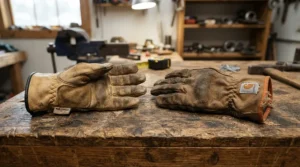
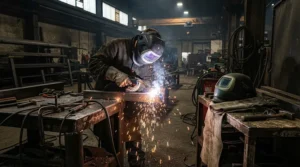
Heat is where split earns its reputation. The Lincoln Electric Traditional MIG/Stick K2979 is made of heat and flame resistant shoulder split cowhide, with Kevlar stitching, welted seams, a thumb pad in the high-wear spot and a full cotton sock lining.
Shoulder split is the middle tier of split leather, durable and slightly more economical than the best side split. Welted seams push the stitching away from the heat, and the extra thumb pad guards the spot where welders wear gloves out first. It’s one-size-fits-most with a 5-inch cuff, which suits a bigger-handed crowd better than small hands.
Welding reviewers frame it as a great value for DIY use. Remember it’s not machine washable, so care means brushing and air-drying. If you stick weld, grill or handle hot forged steel, this is the logic of split in action.
Pros:
- ✅ Heat and flame resistant shoulder split shell
- ✅ Kevlar stitching with welted seams lasts longer
- ✅ Extra thumb pad where welders wear gloves out
Cons:
- ❌ One-size fit may feel loose on smaller hands
- ❌ Bulky for fine, delicate tasks
Price: under $25 range at the time of research; prices may vary. Verdict: the clearest example of when split beats grain.
7. Lincoln Electric DynaMIG Traditional — hybrid top grain and split
Why choose when you can combine? The Lincoln Electric DynaMIG Traditional uses white top grain and grey split cowhide for the exterior, with a soft fleece cotton liner and three-ply Kevlar thread.
Here’s the logic: top grain panels deliver feel and a cleaner grip where you hold a torch or gun, while split panels handle heat and wear on the exposed zones. It’s a design answer to the very question this article asks. Sizes run from medium through 2XL, which is friendlier to varied hand sizes.
I couldn’t confirm a reliable review count for this specific model, so judge it on construction logic. Welders who want comfort for long sessions without paying for exotic hides should find it appealing. Check current price, as it generally sits above the basic split pair.
Pros:
- ✅ Top grain feel with split-leather heat tolerance
- ✅ Multiple sizes from medium to 2XL
- ✅ Three-ply Kevlar thread for seam strength
Cons:
- ❌ Costs more than basic split welding gloves
- ❌ Overbuilt for general yard work
Price: check current price; typically above the basic Lincoln pair. Verdict: the best “both worlds” welding option.
Let’s line them up. The table below keeps product names bold for easy scanning.
| Product | Leather | Standout | Price Range | Best For |
|---|---|---|---|---|
| Wells Lamont 1132 | Grain cowhide | Cheapest real grain | ~$10-$15 | Light yard work |
| OZERO Flex Grip | Thin grain cowhide | Dexterity | Under ~$25 | Gardening, driving |
| Ironclad Ranchworx RWG2 | Goatskin | Kevlar, washable | ~$25-$45 | Ranch, heavy labor |
| Wells Lamont HydraHyde 1168L | Treated grain | Wet-weather flex | ~$18-$25 | Outdoor, wet work |
| WZQH Cowhide | Split cowhide | Lined comfort | Under ~$20 | Rough, dry tasks |
| Lincoln Electric Traditional MIG/Stick K2979 | Shoulder split | Heat protection | Under ~$25 | Stick/MIG welding |
| Lincoln Electric DynaMIG Traditional | Top grain + split | Hybrid build | Check current price | Long welding sessions |
Looking across the table, the Ironclad Ranchworx RWG2 wins on all-round capability, while the Wells Lamont 1132 wins on price. The two Lincoln pairs are specialists, so don’t buy them for gardening and expect miracles. For wet outdoor days, the Wells Lamont HydraHyde 1168L is the quiet standout.
Leather Tanning Process: How a Hide Becomes a Glove
Tanning is why leather doesn’t rot, and it shapes how your glove behaves. The two big routes are vegetable and chrome tanning. Vegetable tanning uses plant tannins and, by one source’s account, can take 30 to 60 days for the tanning step alone. Chrome tanning is a mineral process that can finish in about a day, with the whole raw-hide-to-leather journey taking only days.
Why should a glove buyer care? Chrome-tanned leather tends to be softer, more uniform and more water resistant, and it dominates the glove aisle because it’s quick and economical. Vegetable-tanned leather develops patina and can feel firmer. It’s also generally more biodegradable, though it takes more water and tanning agent.
Now the split angle. After the hide is tanned, it’s separated into layers: the top becomes grain leather, and the underlayer becomes split. Treatments, such as the water-repellent finishes on pairs like the Wells Lamont HydraHyde 1168L, are applied afterward and change the story again. In other words, the tanning process sets the base, and finishing writes the personality.
Here’s what the spec sheet won’t tell you: most work gloves don’t state their tanning method. If you see a glove that stays soft after getting wet and dried, that’s usually chemistry plus finish, not magic. When labels are silent, judge by the feel and the treatment claims.
Leather Grade Comparison: Full Grain, Top Grain and Split Explained
A proper leather grade comparison starts with the hide’s cross-section. Full grain is the outer surface left intact, with its natural fibers and imperfections. Top grain is that same outer layer sanded or buffed to remove flaws, which smooths the look but slightly reduces the natural fiber structure. Split is everything underneath.
Split itself has tiers. One safety-glove guide ranks side split as the most durable and most expensive, shoulder split as slightly cheaper but still durable, and belly split as the most economical and least durable. That’s the hidden spread inside “split leather” on a product page.
| Grade | Where It Comes From | Character | Best For |
|---|---|---|---|
| Full grain | Intact outer surface | Tough, develops patina | Premium grain gloves |
| Top grain | Sanded outer layer | Smoother, more uniform | Feel-first gloves |
| Side/shoulder split | Under-layer cuts | Thick, heat tolerant | Welding, rough work |
| Belly split | Thin, lower-grade cut | Cheapest, least durable | Disposable use |
Reading this, the lesson is that grade labels are not a single ladder. A well-made shoulder split can beat a thin top grain for sparks and abrasion, while a premium goatskin like the Ironclad Ranchworx RWG2 beats nearly everything for flexible toughness. Always ask what grade, what cut and what thickness.
Top Grain Glove Durability: What Reviews and Specs Suggest
Top grain glove durability depends heavily on thickness and treatment, not just the label. Several buyer guides argue grain cowhide is the best general work leather because it balances toughness, abrasion resistance and molds to your hand over time. Others note that top grain, soft from day one, prioritizes feel over brute-force wear resistance.
Both can be true. A soft, thin top grain pair such as the OZERO Flex Grip (1.0-1.2mm) is a precision tool, not a rebar-hauling machine. A thicker, adjustable-wrist grain pair like the Wells Lamont 1132 gives more shield but still wears out under constant daily abuse.
Industry sources add another wrinkle. Some safety guides credit split with higher abrasion resistance, while others rank top grain as lasting longest. As HexArmor’s abrasion guide explains, abrasion is measured by test method and scale, so real-world wear and lab rating can diverge. My take: treat “top grain is more durable” as a tendency in dry, outdoor, flex-heavy work and not a law.
For buyers, the practical rule is this. If you’re flexing your hands thousands of times a day, grain’s pliability usually helps it last. If you’re dragging, scraping and hauling, a thick split or goatskin shell is the safer bet.
Abrasion Resistance Rating: Reading ANSI/ISEA 105 Without a Headache
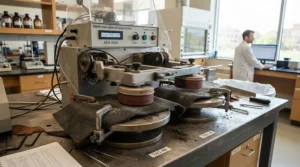
An abrasion resistance rating tells you how many rubbing cycles a glove material survives in a lab. Under the current ANSI/ISEA 105-2024 classification, abrasion runs from level 0 to 6. The U.S. standard uses Taber-based methods, while the European EN 388 uses a Martindale test with a top level of 4, so the numbers aren’t interchangeable.
| Level | Cycles to Wear Through | What It Means | Best For |
|---|---|---|---|
| 0 | Under 100 | Minimal | Light handling |
| 1 | 100+ | Basic | Occasional tasks |
| 2 | 500+ | Moderate | General chores |
| 3 | 1,000+ | Solid | Concrete, metal parts |
| 4 | 3,000+ | Strong | Daily construction |
| 5 | 10,000+ | Very high | Heavy abrasion |
| 6 | 20,000+ | Maximum | Extreme wear |
Here’s the reality check: most budget leather gloves, including the Wells Lamont 1132, publish no rating at all. The Ironclad Ranchworx RWG2 is listed as EN 388 rated, which is a meaningful trust signal. The 2024 revision also introduced a pentagon marking that shows abrasion, cut and puncture ratings together, so look for it on the glove.
The analysis: a rating is useful when you need documented performance for an employer or job site. For home use, it’s a bonus, not a requirement. Don’t assume an unrated pair is weak, but don’t assume a leather label alone equals a tested level either.
Split Leather Glove Cost: Why the Sticker Price Misleads
Split leather glove cost is lower for a clear reason: it’s the underlayer of the hide. It’s also thicker and rougher, so manufacturers can cut sturdy gloves at modest prices. That’s why you’ll find pairs like the WZQH Cowhide in value multi-packs.
But sticker price isn’t total cost. A pair that stiffens after repeated soaking may crack sooner, and that erases the savings. A split welding glove such as the Lincoln Electric Traditional MIG/Stick K2979 earns its price because it solves a real heat problem, and you’d pay more for a specialist alternative.
Ask three questions before buying. First, what’s the job: heat favors split, wet and flex favor grain. Second, how often will you wear them? Third, can you rotate two pairs? Rotation lets leather dry between uses, which stretches its life.
| Product | Price Range | Reported Life (Daily Use) | Best For |
|---|---|---|---|
| Wells Lamont 1132 | ~$10-$15 | ~1-4 months (roundup estimate) | Light-duty |
| Ironclad Ranchworx RWG2 | ~$25-$45 | ~6-18 months (roundup estimate) | Heavy-duty |
| WZQH Cowhide | Under ~$20 | No verified figure | Rough, dry jobs |
As an illustration, a pair around $12 that lasts two months costs about $6 per month. A pair around $35 that lasts nine months costs about $4 per month. Those are rough midpoints from published estimates, so use them as reasoning, not guarantees.
Glove Longevity: Cost Per Month and the Care That Stretches It
Glove longevity is the sum of leather, construction and care. A thick shell with reinforced stitching will outlast a thin one, and a treated pair like the Wells Lamont HydraHyde 1168L resists the wet-dry cycle that destroys untreated hides. Quality seams matter too. That’s why the Lincoln Electric DynaMIG Traditional advertises three-ply Kevlar thread.
Roundups give a useful frame. Budget cowhide pairs may last a month or four of daily work, while premium pairs may last six to eighteen months of daily professional use. Weekend users can multiply those numbers considerably.
What kills gloves early? Soaking and baking them dry on a heater, ignoring torn stitching, and using a light-duty pair for heavy-duty work. What extends life? Rotation, air-drying, and matching the glove to the job.
My practical rule: if you replace a pair more than every three months, step up a tier. The math usually favors it, and your hands get a better deal too.
How to Choose Grain Leather Gloves vs Split Leather Gloves
Use these seven steps and you’ll narrow the field fast.
- Define the hazard. Heat and sparks point to split. Wet, flex-heavy or fine-motor tasks point to grain.
- Check thickness. Thin hides (around 1.0-1.2mm) like the OZERO Flex Grip give feel. Thicker hides give protection.
- Look at the finish. Water-repellent treatments, as on the Wells Lamont HydraHyde 1168L, save you from stiffening.
- Inspect construction. Reinforced palms, keystone thumbs and Kevlar stitching extend life, as on the Ironclad Ranchworx RWG2.
- Seek ratings if required. Check for ANSI/ISEA 105 or EN 388 markings when your job demands documentation. The Wikipedia overview of cut-resistant gloves is a handy primer on how these standards work.
- Mind the cuff and closure. Ball-and-tape or hook-and-loop closures keep debris out.
- Match budget to frequency. Occasional users can buy cheap, daily users should invest.
Notice what’s missing from the list: brand worship. Spec logic beats logos every time.
Break-In and Care Guide: Getting More Life From Either Leather
Even the best leather needs a little love. Here’s a maintenance schedule that works for both families.
First week: Wear grain pairs for light tasks to let them mold. Split pairs such as the WZQH Cowhide need longer to loosen, so expect stiffness and don’t force heavy work immediately.
After wet jobs: Shake out moisture, reshape the fingers and air-dry away from direct heat. Heater-drying cracks leather and undoes the finish.
Monthly: Brush off grit. If leather feels dry, apply a small amount of leather conditioner to grain pairs. Skip heavy conditioning on welding split like the Lincoln Electric Traditional MIG/Stick K2979, which is care-labeled “do not wash” and built for heat.
Washing: Only wash what’s labeled washable. The Ironclad Ranchworx RWG2 is machine washable, but most traditional leather isn’t, so check the tag.
Common first-30-day mistakes: Using thin gloves for heavy hauling, soaking untreated split, and ignoring loose stitching until it’s a hole. Fixing a seam early costs minutes, while replacing the glove costs money.
Real-World Scenarios: Which Glove for Which Person
Let’s make this concrete with three profiles.
The weekend gardener: Budget is small, tasks are light, and thorns are the enemy. The OZERO Flex Grip gives feel and protection, and a spare pair handles muddy days.
The hobby farmer in a wet climate: Mornings are damp and fences are long. A Wells Lamont HydraHyde 1168L keeps flexibility after soaking, and a Wells Lamont 1132 can serve as the cheap backup pair for dry chores.
The garage welder: Sparks, heat and cheap sessions. A Lincoln Electric Traditional MIG/Stick K2979 covers general stick and MIG work affordably. If long sessions are your norm, the Lincoln Electric DynaMIG Traditional‘s hybrid build adds comfort.
The full-time ranch hand: Daily, brutal, constant. The Ironclad Ranchworx RWG2 is the logical investment, and its cost per month beats replacing budget pairs repeatedly.
The pattern is simple: match leather to hazard, then match price to frequency.
FAQ
❓ Are grain or split leather work gloves better for heavy-duty jobs?
❓ How long do leather work gloves usually last?
❓ Can you machine wash leather work gloves?
❓ Does a higher abrasion rating mean longer glove life?
❓ Is split leather a cheap, low-quality material?
Conclusion
So, who wins the grain leather gloves vs split leather gloves showdown? Neither, and both. Grain wins on feel, weather tolerance and flexibility. Split wins on heat, thickness and price. The smartest buyers don’t pick a side. They pick a job.
If I had to give a short list, I’d say Wells Lamont 1132 for cheap everyday chores, OZERO Flex Grip for dexterity, Ironclad Ranchworx RWG2 for serious daily work, Wells Lamont HydraHyde 1168L for wet weather, WZQH Cowhide for rough dry tasks, Lincoln Electric Traditional MIG/Stick K2979 for stick and MIG welding, and Lincoln Electric DynaMIG Traditional for hybrid comfort.
Check thickness, finish, stitching and ratings before you buy, rotate two pairs, and let them dry properly. Do that and you’ll spend less, protect more and stop thinking about your gloves entirely, which is the highest compliment a glove can earn.
✨ Ready to Choose Your Pair?
🧤 Click any highlighted product above to check current pricing and availability. Your hands do the hard work, so give them the right leather!
Recommended for You
- Driver’s Style Leather Work Gloves: 7 Proven Picks For 2026
- General Purpose Work Gloves: 7 Proven Picks For 2026
- Jersey Work Gloves For Assembly Line Workers: 7 Best Picks 2026
Disclaimer: This article contains affiliate links. As an Amazon Associate, I earn from qualifying purchases. If you purchase products through these links, we may earn a small commission at no additional cost to you.
✨ Found this helpful? Share it with your friends! 💬🤗
