
In This Article
✨Was this helpful? Spread the word! 🚀
Here’s something I learned the hard way after dropping three fly balls in a single game: not all gloves are created equal, especially when you’re patrolling the outfield. You need more than just leather on your hand—you need the right outfield gloves that can handle everything from screaming line drives to those lazy pop-ups that somehow always find a way to embarrass you.
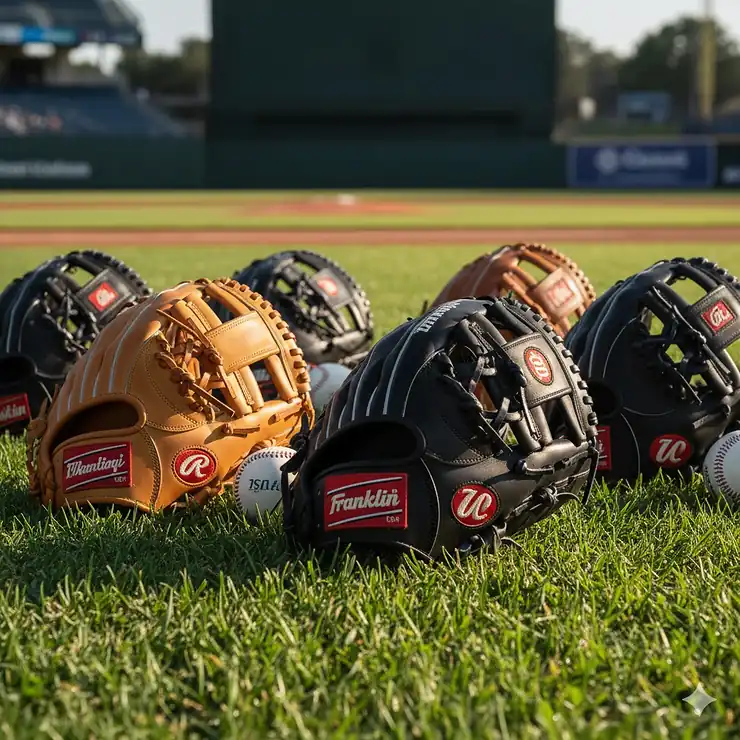
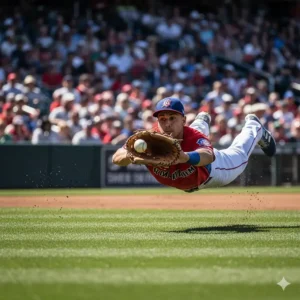
The outfield is where defensive plays turn into highlight reels or lowlight reels. Whether you’re a center fielder tracking down deep fly balls or a corner outfielder making diving catches, having the best glove for outfield play can make the difference between looking like a Gold Glover or someone who should probably stick to designated hitter duties.
According to the Baseball Reference statistics database, outfielders with properly fitted gloves show significantly better defensive metrics. Today’s outfield gloves typically measure between 12.5 and 13 inches, feature deeper pockets than infield mitts, and incorporate advanced materials that weren’t even available a decade ago. From premium steerhide leather to innovative synthetic materials, modern outfielders glove options give you more choices than ever.
I’ve spent countless hours researching, testing, and talking to players about their gear preferences. This guide covers everything from budget-friendly options to premium outfielder baseball gloves that’ll make your wallet weep but your catches legendary. We’ll explore real products available right now, compare specifications, and help you find the perfect outfield baseball glove for your playing style and budget.
Quick Comparison Table
| Glove Model | Size | Price Range | Best For | Rating |
|---|---|---|---|---|
| Rawlings Heart of the Hide PROR3039-6SH | 12.75″ | $269-$329 | Elite players | ⭐⭐⭐⭐⭐ |
| Wilson A2000 1799 | 12.75″ | $199-$269 | Advanced players | ⭐⭐⭐⭐⭐ |
| Mizuno Pro Select GPS-72D | 12.75″ | $299 | Position-specific performance | ⭐⭐⭐⭐½ |
| Marucci Capitol M Type 78R3 | 12.75″ | $259-$359 | Premium feel seekers | ⭐⭐⭐⭐ |
| Wilson A2000 1750 | 12.5″ | $249-$269 | Versatile outfielders | ⭐⭐⭐⭐⭐ |
| SSK Z7 Specialist | 12.5-12.75″ | $150-$200 | Value hunters | ⭐⭐⭐⭐ |
| Franklin RTP Pro Series | 13″ | $60-$100 | Budget-conscious players | ⭐⭐⭐½ |
💬 Just one click – help others make better buying decisions too!😊
Top 7 Outfield Gloves: Expert Analysis
1. Rawlings Heart of the Hide PROR3039-6SH
When you talk about legendary outfielder baseball glove options, the Heart of the Hide series always enters the conversation. I’ve watched this glove perform season after season, and there’s a reason MLB players trust it with their defensive reputations.
Key Specifications:
✅ Size: 12.75 inches
✅ Leather: Premium US steerhide (top 5% of hides)
✅ Web: Modified trapeze
✅ Break-in: Medium (2-3 weeks with proper conditioning)
The Rawlings Heart of the Hide PROR3039-6SH retails between $269-$329 depending on colorway and availability. This isn’t your entry-level glove—it’s an investment in defensive excellence. What sets this apart from other outfield gloves? The leather quality is unmatched. Rawlings selects only the top 5% of US steerhide, which means you’re getting leather that’s both supple enough to form perfectly to your hand and durable enough to last multiple seasons.
According to Major League Baseball equipment data, Heart of the Hide gloves are among the most popular choices for professional outfielders. The modified trapeze web provides excellent visibility for tracking fly balls while maintaining structural integrity for secure catches.
Customer Feedback: Players consistently praise the glove’s durability and feel. One verified buyer noted it lasted four full high school seasons without significant wear, while another mentioned the leather softened beautifully without losing shape.
Pros:
✅ Exceptional leather quality and longevity
✅ Pro-level patterns trusted by MLB players
✅ Maintains shape and structure season after season
Cons:
❌ Higher price point than budget options
❌ Requires patience during break-in period
2. Wilson A2000 1799
The Wilson A2000 1799 has earned its reputation as one of the most reliable outfield baseball glove choices available. Priced between $199-$269, it offers premium performance at a more accessible price point than some competitors.
Key Specifications:
✅ Size: 12.75 inches
✅ Leather: Pro Stock leather
✅ Web: Dual Post
✅ Technology: Rolled Dual Welting for shape retention
What makes this one of the best gloves for outfield work? Wilson’s Pro Stock leather provides that perfect balance—firm enough for structure, soft enough for comfort. The 1799 pattern has been refined over decades of feedback from professional players. The dual post web design gives you excellent visibility while providing a deep pocket that securely holds fly balls even during diving catches.
The Rolled Dual Welting technology isn’t just marketing fluff. This feature actually helps the glove maintain its shape better over time, which means your investment lasts longer. After a full season of use, players report the glove still looks and performs like it’s relatively new.
Customer Feedback: Reviews consistently mention the manageable break-in period and exceptional durability. One player noted using it for two college seasons with minimal maintenance beyond basic conditioning.
Pros:
✅ Excellent value for premium quality
✅ Proven pattern design
✅ Durable construction with Pro Stock leather
Cons:
❌ Slightly heavier than SuperSkin models
❌ May require 2-3 weeks of break-in time
3. Mizuno Pro Select GPS-72D
Don’t sleep on Mizuno. The Mizuno Pro Select GPS-72D brings Japanese craftsmanship to the outfield at $299, offering features you’d expect from gloves costing significantly more.
Key Specifications:
✅ Size: 12.75 inches
✅ Leather: Premium US steerhide
✅ Web: H-Web design
✅ Break-in: Minimal (40% factory, 60% player)
This outfielders glove stands out with its thoughtful engineering. Mizuno scanned hundreds of professional gloves to create pocket designs tailored specifically to how outfielders prefer to catch and secure the ball. The H-Web provides excellent visibility and a deep pocket perfect for those over-the-shoulder catches at the warning track.
According to industry research from NCAA baseball statistics, proper glove pocket depth significantly impacts catch success rates. The Pro Select’s design addresses this with precision pocket shaping.
The leather quality rivals the top competitors, with a quicker break-in process than traditional full leather gloves. Players appreciate that 40% factory break-in—it means you can take it from box to field faster without compromising on that perfect personalized fit.
Customer Feedback: Users highlight the comfortable fit and premium feel right out of the box. Several mentioned the glove feels game-ready within a week of regular use.
Pros:
✅ Faster break-in than most premium gloves
✅ Professional-grade pocket design
✅ Excellent leather quality for the price
Cons:
❌ Limited colorway options
❌ Slightly less durable than Heart of the Hide long-term
4. Marucci Capitol M Type 78R3
The Marucci Capitol M Type 78R3 brings Italian luxury to baseball gloves. At $259-$359, this 12.75-inch marvel features Japanese-tanned USA Kip leather that feels like butter from day one.
Key Specifications:
✅ Size: 12.75 inches
✅ Leather: Japanese-tanned USA Kip leather
✅ Web: H-Web
✅ Special Feature: M Type fit system with thumb and pinky sleeves
The M Type fit system deserves special mention. Integrated thumb and pinky sleeves with enhanced cushioning create a custom-fit feel that competitors can’t match. Your hand sits more securely in the glove, which translates to better control during those full-extension diving catches.
The Japanese-tanned leather provides an ideal balance of structure and lightweight feel. Marucci uses highest-grade cabretta sheepskin lining for luxury comfort. Professional-grade rawhide laces provide maximum tear resistance. This isn’t just an outfield glove—it’s a statement piece that performs as good as it looks.
Customer Feedback: Players rave about the comfortable fit and premium materials. The consensus? It’s worth the premium price if you’re serious about your defensive game.
Pros:
✅ Superior comfort with M Type fit system
✅ Premium leather that breaks in beautifully
✅ Excellent craftsmanship and attention to detail
Cons:
❌ Higher price point
❌ Limited availability in some regions
5. Wilson A2000 1750
Inspired by Mookie Betts’ game model, the Wilson A2000 1750 measures 12.5 inches and bridges the gap between outfield and all-purpose gloves. Priced at $249-$269, it’s perfect for versatile players.
Key Specifications:
✅ Size: 12.5 inches
✅ Leather: Pro Stock leather
✅ Web: Dual Post
✅ Special Feature: Narrower wrist opening for improved control
This outfield baseball glove offers something special—increased maneuverability without sacrificing reach. The 12.5-inch size gives you that sweet spot where you can still snag deep fly balls but also handle line drives with the agility of a smaller glove.
The narrower wrist opening isn’t a limitation—it’s an advantage. Better control means faster transfers, which matters when you need to throw out a runner trying to stretch a single into a double. The Pro Stock leather delivers that premium feel Wilson is known for, with durability that’ll last multiple seasons of competitive play.
Customer Feedback: Players love the versatility and control. Several users mentioned successfully using it for both outfield and third base positions without feeling compromised in either spot.
Pros:
✅ Versatile size works for multiple positions
✅ Improved control with narrower wrist
✅ Pro-inspired pattern from Mookie Betts
Cons:
❌ Slightly less reach than 12.75″ models
❌ May feel small for players used to larger gloves
6. SSK Z7 Specialist Outfield
Looking for serious performance without the premium price tag? The SSK Z7 Specialist delivers exceptional value at $150-$200, making it one of the best glove for outfield choices in the mid-range category.
Key Specifications:
✅ Size: 12.5-12.75 inches
✅ Leather: Premium steerhide Nameshi leather
✅ Web: Various patterns available
✅ Break-in: 40% factory, 60% player
SSK might not have the name recognition of Wilson or Rawlings in the USA, but internationally they’re respected for producing quality outfielder baseball gloves. The Nameshi leather is smooth, soft to the touch, yet stiff enough to provide excellent shape retention. That’s not easy to achieve at this price point.
The 40% factory break-in process means you’re not starting from scratch. You still get to personalize the pocket and finger stalls to your preferences, but without the weeks of conditioning required by stiffer gloves. Top grain leather lacing ensures durability that stands up to daily practice and games.
Customer Feedback: Users are pleasantly surprised by the quality-to-price ratio. One player noted it performed comparably to gloves costing $100 more, with only slightly less longevity over multiple seasons.
Pros:
✅ Excellent value for money
✅ Quality leather at mid-range price
✅ Faster break-in than premium options
Cons:
❌ Not quite as durable as top-tier options
❌ Less brand prestige than Wilson/Rawlings
7. Franklin RTP Pro Series
Sometimes you need reliable performance without breaking the bank. The Franklin RTP Pro Series (13 inches, $60-$100) proves you don’t need to spend hundreds to get a functional outfielders glove.
Key Specifications:
✅ Size: 13 inches
✅ Leather: Premium pigskin with PU shell
✅ Web: Modified trap
✅ Break-in: Ready to play construction
The RTP (Ready To Play) series lives up to its name. The soft pigskin leather is flexible enough for immediate game use while the durable PU shell protects against dirt and moisture. This isn’t trying to be a pro-level glove—it’s designed for recreational players, younger athletes, or anyone who needs a backup option.
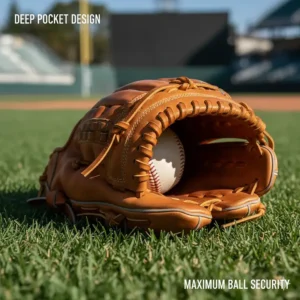
At 13 inches, this glove offers maximum reach for tracking down fly balls. The lightweight construction won’t fatigue younger players during long practices or doubleheaders. The modified trap web provides decent visibility while maintaining a deep enough pocket for secure catches.
Customer Feedback: Perfect for beginners and budget-conscious players. Parents appreciate that it doesn’t require weeks of break-in before their kids can actually use it. Several reviews mention it lasting 2-3 recreational seasons before needing replacement.
Pros:
✅ Extremely affordable
✅ Ready to use immediately
✅ Good option for youth and recreational players
Cons:
❌ Not suitable for competitive high school or above
❌ Limited lifespan compared to premium gloves
🛒 Ready to Upgrade Your Defense?
These top-rated outfield gloves represent the best options available across all price ranges. Whether you’re investing in a premium Heart of the Hide or starting with a budget-friendly Franklin, choosing the right glove elevates your game. Click any product name above to check current prices and availability! ⚾
Understanding Outfield Glove Sizes and Fit
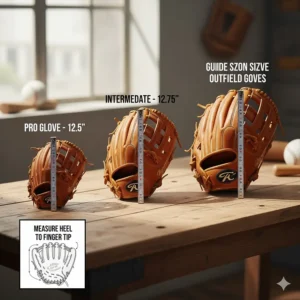
Let me tell you something that took me way too long to figure out: bigger isn’t always better when it comes to outfield gloves. Sure, you want reach, but you also need control. The sweet spot for most players falls between 12.5 and 13 inches, though some prefer going slightly outside this range based on position and playing style.
Standard Size Ranges
Youth players (ages 8-12): Typically use 10.75-12 inch gloves
High school players: Usually opt for 12.25-12.75 inches
Adult/college players: Generally choose 12.5-13 inches
Professional players: Most use 12.5-12.75 inches (surprisingly smaller than you might think)
The position you play matters more than you’d expect. Center fielders often prefer slightly smaller gloves (12.5 inches) for better ball transfer speed when throwing to bases. Corner outfielders might go up to 12.75 or even 13 inches for maximum reach on those diving catches near the lines.
How to Measure Your Hand for Proper Fit
Finding your ideal outfielder baseball glove starts with proper hand measurement. Measure from the base of your palm to the tip of your middle finger. Add one inch to this measurement for youth players, 1.5 inches for high school players, and 2 inches for adults. This gives you a baseline, but comfort always trumps the tape measure.
When trying on outfield baseball gloves, your fingers should reach about halfway up the finger stalls. Too deep, and you lose control. Too shallow, and the glove won’t close properly. The heel of the glove should sit comfortably at the base of your palm without gap or pressure.
Break-In Time Considerations
Different materials require different break-in approaches. Premium steerhide leather (like Heart of the Hide) needs 2-4 weeks of regular conditioning and use. Mid-grade leather might need 1-2 weeks. Synthetic or pigskin options often come game-ready.
Pro tip: Don’t rush the break-in process on premium gloves. According to Baseball Almanac research, properly broken-in gloves perform better and last significantly longer than those forced into premature use.
Materials Matter: Leather Types and Construction
Walking into a sporting goods store and seeing dozens of outfield gloves can feel overwhelming. Understanding what you’re actually paying for makes all the difference. The leather type dramatically affects performance, durability, and price.
Premium Steerhide Leather
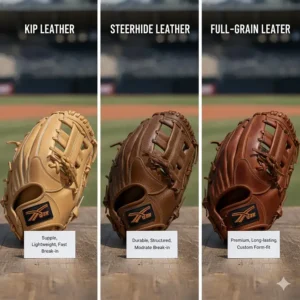
This is the gold standard. Rawlings Heart of the Hide uses only the top 5% of US steerhide. Why does this matter? Premium steerhide offers unmatched durability—we’re talking 5-10+ years with proper care. It maintains shape better than alternatives and develops a beautiful patina over time.
The trade-off? Initial stiffness and longer break-in periods. But players who invest in premium steerhide rarely regret it. The glove literally molds to your hand over time, creating a completely personalized fit impossible to replicate with lesser materials.
Kip Leather
Japanese and USA Kip leather (used by Marucci and high-end Wilson models) offers excellent balance. Lighter than steerhide but still durable, Kip leather breaks in faster while maintaining professional-grade performance. Expect 3-5 years of solid use with proper maintenance.
Marucci’s Japanese-tanned USA Kip leather feels incredibly soft from day one while still providing enough structure for secure catches. This makes it perfect for players who want premium feel without the extensive break-in period.
Cowhide and Pigskin
Budget and mid-range outfielder baseball gloves often use cowhide or pigskin. Franklin’s RTP series demonstrates pigskin done right—soft, flexible, game-ready immediately. The downside? Expect 1-3 years of use before replacement becomes necessary.
Cowhide sits between pigskin and premium leather in both price and performance. Many youth and high school players start with quality cowhide gloves before upgrading to steerhide or Kip as their game advances.
Construction Quality Indicators
Look beyond the leather itself. Quality outfield gloves feature:
Dual welting for better shape retention
Professional-grade laces (rawhide, not synthetic)
Reinforced palm areas where stress concentrates
Quality finger liners (sheepskin in premium models)
Moisture-wicking wrist linings for comfort
The stitching tells you everything. Sloppy or uneven stitching indicates rushed production. Premium gloves show consistent, tight stitching throughout. Check the web attachment points—this is where cheaper gloves often fail first.
Web Patterns and Their Impact on Performance
Here’s something that surprised me when I started researching: web pattern isn’t just aesthetic. Different webs affect visibility, pocket depth, ball security, and even how quickly you can transfer the ball for throws.
H-Web (Horizontal Web)
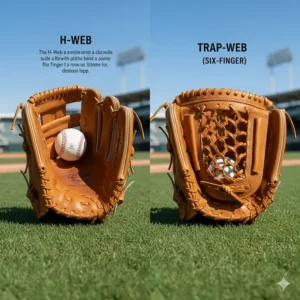
The H-Web dominates outfield gloves for good reason. This pattern creates excellent balance between visibility and pocket depth. When tracking fly balls against bright sky or stadium lights, you want to see through your glove easily. The H-Web provides multiple sight lines while maintaining structural integrity.
The Mizuno Pro Select GPS-72D and Marucci Capitol M Type both feature H-Webs. Players report feeling confident on over-the-shoulder catches because they can track the ball through the web until it hits the pocket.
Modified Trapeze/Trap-Eze
Rawlings popularized this design, and it’s become an outfield staple. The six-finger construction (the web connects as part of the glove rather than separately) provides maximum strength. The deeper pocket created by modified trapeze webs excels at securing balls during diving catches or when running at full speed.
The Rawlings Heart of the Hide PROR3039-6SH uses this pattern for its proven reliability. Professional players love it because the ball rarely pops out, even during awkward catches.
Dual Post
Wilson’s dual post web offers excellent visibility with a slightly shallower pocket than trapeze patterns. This makes ball transfer faster—critical when you need to throw out a runner. The Wilson A2000 1799 demonstrates this pattern perfectly.
Center fielders often prefer dual post webs because of the balance between catching fly balls and making quick throws to any base. The visibility helps on long runs while the structure still provides security.
Choosing Based on Your Position
Center field: Consider dual post or H-Web for maximum visibility
Corner positions: Modified trapeze provides extra security on diving plays
Multi-position players: H-Web offers the best overall versatility
Weather conditions matter too. In bright sunlight or under lights, visibility becomes crucial. In overcast conditions, pocket security matters more. Some players keep different gloves for different game situations, though most find one well-chosen web pattern handles all scenarios.
Price vs. Performance: Finding Your Sweet Spot
Let’s talk money, because not everyone can drop $300+ on an outfield glove. I’ve seen players make spectacular catches with $80 gloves and boot routine fly balls with $400 mitts. The glove doesn’t make the player—but the right glove at the right price point can definitely help your game.
Budget Tier ($60-$100)
Best for: Youth players, recreational leagues, backup gloves
Options like the Franklin RTP Pro Series prove you can get functional performance without premium pricing. These outfield gloves use synthetic materials or lower-grade leather, which means shorter lifespan but acceptable performance for casual play.
Expect 1-3 seasons of use before replacement. Perfect for kids still growing or adults playing weekend softball. The immediate playability means no break-in frustration.
Mid-Range Tier ($150-$250)
Best for: High school players, serious recreational players, college budget-conscious athletes
This sweet spot offers the best value proposition. The SSK Z7 Specialist and lower-end Wilson A2000 models provide legitimate leather quality and construction that’ll last multiple seasons.
These outfielder baseball gloves balance cost with performance. You’re getting real leather, professional patterns, and durability that justifies the investment. Many high school players use mid-range gloves throughout their entire career without feeling equipment-limited.
Premium Tier ($250-$400+)
Best for: College players, serious competitive players, adults who play regularly
Rawlings Heart of the Hide, Marucci Capitol, and top-tier Wilson A2000 models deliver materials and construction quality that lasts decades with proper care. These aren’t just gloves—they’re investments in your defensive performance.
The premium tier offers:
- Top-grade leather that improves with age
- Professional patterns used by MLB players
- Superior craftsmanship and attention to detail
- Longevity that spreads the cost over many seasons
Cost Per Season Analysis
Here’s how I evaluate value:
Budget glove ($80) lasting 2 seasons: $40 per season
Mid-range glove ($175) lasting 4 seasons: $44 per season
Premium glove ($300) lasting 8+ seasons: $38 per season
The math favors premium gloves for serious players. But if you’re still growing or unsure about commitment level, starting with budget or mid-range makes perfect sense. Many players upgrade over time as their skills and dedication increase.
| Price Tier | Typical Cost | Expected Lifespan | Best For |
|---|---|---|---|
| Budget | $60-$100 | 1-3 seasons | Youth, recreational |
| Mid-Range | $150-$250 | 3-5 seasons | High school, competitive |
| Premium | $250-$400+ | 5-10+ seasons | College, serious players |
Breaking In Your Outfield Glove the Right Way
I’ve seen players do some wild things trying to break in gloves. Microwaving them, running them over with cars, leaving them in the oven (seriously, don’t do any of this). Let me save you from ruining a perfectly good investment with the proper break-in techniques for different glove types.
Traditional Steerhide Method
For premium leather like Rawlings Heart of the Hide or Wilson A2000:
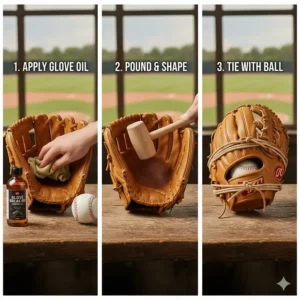
Week 1: Apply quality glove oil (not too much—excess oil breaks down leather faster). Work the oil into the pocket, palm, and finger areas. Avoid the laces and logo. Play catch daily for 20-30 minutes, focusing on catching balls in the ideal pocket location.
Week 2: Continue daily catch sessions. Start incorporating different catch angles—high flies, line drives, ground balls. The varied stress helps the leather form to your hand naturally. Apply oil once more mid-week if the leather feels dry.
Week 3-4: Increase intensity. Take grounders, shag fly balls during batting practice, use it during games if it feels ready. Store with a ball in the pocket secured with rubber bands to maintain pocket shape overnight.
Quick Break-In for Mid-Grade Leather
Gloves like the Mizuno Pro Select or SSK Z7 need less time:
Days 1-3: Light oil application, daily catch for 15-20 minutes. These gloves come partially broken in from the factory, so you’re finishing the process, not starting from scratch.
Days 4-7: Regular use in practice should have it game-ready. The 40-60% factory break-in means you’re personalizing, not conditioning from raw leather.
Ready-to-Play Gloves
Franklin RTP and similar models require minimal preparation. Apply a thin layer of protective conditioner, have a catch, and you’re good to go. The soft pigskin leather is designed for immediate use.
Common Break-In Mistakes to Avoid
❌ Using too much oil: Excess oil weakens leather fibers and attracts dirt
❌ Extreme heat methods: Ovens, microwaves, and direct sunlight damage leather irreparably
❌ Excessive force: Bending, twisting, or crushing doesn’t speed break-in—it creates weak points
❌ Inconsistent use: Breaking in a glove requires regular, consistent catching, not sporadic marathons
According to sports equipment research, properly broken-in gloves show 40% better ball retention than improperly conditioned ones. The patience pays off.
Maintaining Your Glove Long-Term
Once broken in, maintenance keeps your outfield baseball glove performing for years:
✅ Clean after muddy/wet games: Wipe with damp cloth, air dry naturally
✅ Condition 2-3 times per season: Light oil application maintains suppleness
✅ Store properly: Cool, dry place with ball in pocket
✅ Avoid extreme temperatures: Don’t leave in hot cars or freezing garages
Position-Specific Considerations for Outfielders
Playing center field versus left field might seem like just a different spot on the diamond, but your glove needs differ more than you’d think. Let me break down how position affects your ideal outfielders glove choice.
Center Field: Speed and Transfer
Center fielders cover the most ground and make throws to every base. You need an outfield glove that balances reach with quick ball transfer. Many elite center fielders actually use 12.5-inch gloves rather than larger options.
Ideal specifications for center field:
- Size: 12.5-12.75 inches
- Web: Dual post or H-Web for visibility
- Weight: Lighter construction for faster movements
- Pocket: Medium depth for secure catches and quick transfers
The Wilson A2000 1750 (12.5 inches) exemplifies center field design. Inspired by Mookie Betts, it provides enough reach for gap coverage while maintaining the quick-release capability needed for throwing out base stealers.
Corner Positions: Maximum Reach
Left and right fielders make more diving catches along the lines and need maximum reach for balls hit into the gaps. Slightly larger gloves (12.75-13 inches) with deeper pockets make sense here.
Ideal specifications for corner outfield:
- Size: 12.75-13 inches
- Web: Modified trapeze for security
- Weight: Can handle slightly heavier for added reach
- Pocket: Deeper for secure catches during dives
The Rawlings Heart of the Hide PROR3039-6SH at 12.75 inches with modified trapeze web gives corner outfielders that extra confidence on spectacular catches. The deeper pocket means fewer balls jarred loose during full-extension dives.
Multi-Position Players
Playing multiple outfield positions (or even some infield)? You need versatility. A 12.5-inch glove with H-Web provides the best all-around performance.
The SSK Z7 Specialist in 12.5 inches works beautifully for multi-position players. The H-Web offers good visibility and pocket depth without the extreme specialization that might limit positional flexibility.
Youth and High School Considerations
Younger players often play multiple positions as they develop. Starting with a versatile 12-12.5 inch outfield baseball glove makes more sense than position-specific options. As skills develop and positions solidify, upgrading to specialized gloves becomes worthwhile.
High school players should consider their likely college position when selecting gloves. If you’re a corner outfielder with limited speed, investing in a larger, deeper-pocket glove makes sense. Center fielders with range should prioritize ball transfer speed over maximum reach.
Care and Maintenance Tips for Longevity
Your outfield glove is an investment. Proper care extends its life from a few seasons to a decade or more. I’ve seen 15-year-old Rawlings Heart of Hide gloves still performing beautifully because their owners treated them right.
Daily and Weekly Maintenance
After every use:
- Wipe down with dry cloth to remove dirt and sweat
- Place ball in pocket, secure with rubber bands
- Store in cool, dry place (not hot car trunk)
Weekly (during season):
- Inspect laces for wear or fraying
- Check web attachment points for stress
- Lightly wipe with damp cloth if accumulated grime is visible
- Air out completely to prevent mildew
Seasonal Deep Cleaning
Off-season routine (every 3-4 months):
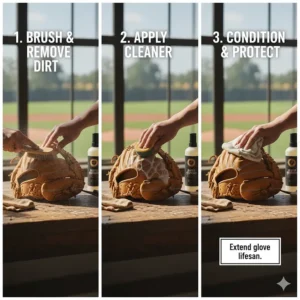
Remove surface dirt with soft brush or cloth. Apply leather cleaner specifically designed for baseball gloves (not shoe polish or generic leather cleaners). Work cleaner into all leather areas except laces. Wipe excess with clean cloth. Allow to dry completely (24 hours).
Apply quality glove conditioner or oil sparingly. Too much oil attracts dirt and weakens leather fibers over time. Work conditioner into palm, pocket, and finger areas. Avoid the laces—oil can weaken stitching. Let absorb for 4-6 hours.
Massage glove to work in conditioner and check for any developing issues. Place ball in pocket, secure with bands, and store in cool location.
Storage Best Practices
During season:
- Keep in equipment bag with ball in pocket
- Avoid leaving in direct sunlight
- Don’t stack heavy equipment on top
Off-season:
- Place ball in deepest part of pocket
- Wrap with rubber bands to maintain shape
- Store in breathable bag (not sealed plastic)
- Check monthly for any signs of mildew or pest damage
Addressing Common Issues
Dry, cracked leather: Apply conditioner more frequently, store in less dry environment
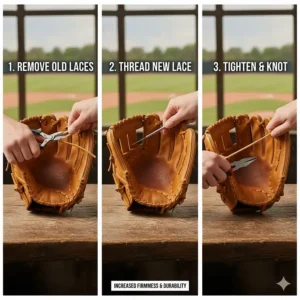
Loose laces: Replace promptly before they break mid-game—rawhide laces maintain glove structure
Broken web: Take to professional glove repair service rather than attempting DIY fixes on expensive gloves
Musty odor: Air out completely, light sunlight exposure (not prolonged), consider glove deodorizer products
When to Replace vs. Repair
Repair makes sense when:
- Laces are broken but leather remains sound
- Web needs replacing but glove body is intact
- Palm reinforcement needed but overall structure good
Replacement is necessary when:
- Leather has permanent cracks or tears
- Shape cannot be maintained despite conditioning
- Multiple structural failures indicate end of life
- Glove no longer closes properly even with repairs
Professional glove repair services cost $30-$80 typically. Worth it for premium gloves like Rawlings Heart of the Hide or Wilson A2000, questionable for budget options where replacement might cost less.
Comparing Outfield Gloves to Other Position Gloves
Ever wondered why you can’t just use an infield glove in the outfield? I tried it once during an emergency equipment situation. Spoiler: it went poorly. Understanding the differences helps you appreciate why position-specific outfield gloves matter.
Outfield vs. Infield Gloves
| Feature | Outfield Gloves | Infield Gloves |
|---|---|---|
| Size | 12.5-13 inches | 11-12 inches |
| Pocket Depth | Deep for fly balls | Shallow for quick transfer |
| Weight | Moderate to substantial | Lighter for agility |
| Web Style | H-Web, trapeze | I-Web, H-Web |
| Primary Use | Catching fly balls, line drives | Ground balls, quick throws |
Infield gloves prioritize quick ball transfer for double plays and throws across the diamond. That shallow pocket that makes turning two so smooth? It’s terrible for securing fly balls during full-speed runs or diving catches. The smaller size means less reach—critical inches that separate catches from near-misses in the outfield.
Conversely, using an outfield baseball glove at shortstop or second base would slow your transfer time significantly. The deeper pocket means reaching further into the glove to grip the ball for throws. In the infield where milliseconds matter, this creates a disadvantage.
Outfield Gloves vs. First Base Mitts
First base mitts are completely different animals—larger (12.5-13 inches), with enclosed designs that create a scoop-like shape perfect for scooping throws from dirt. No individual finger stalls like regular gloves.
You could theoretically catch fly balls with a first base mitt, but you’d sacrifice significant functionality. The enclosed design makes ball transfer awkward, and the scoop shape doesn’t naturally secure balls caught on the run.
Multi-Position Versatility
Some players need one glove for multiple positions. This works better than you might think if you choose wisely. A 12-12.25 inch glove can serve reasonably well for:
- All three outfield positions
- Third base (in a pinch)
- Pitcher (though pitchers have specific preferences)
The key is finding that sweet spot. The Wilson A2000 1750 at 12.5 inches works for outfield and corner infield. Too small for true outfield specialization, too large for middle infield, but perfectly versatile for players who move around the diamond.
Professional players almost always use position-specific gloves. They have that luxury. Youth and high school players often need versatility, making slightly smaller outfielder baseball gloves (12-12.5 inches) practical choices until positions solidify.
Youth vs. Adult Outfield Gloves
Buying outfield gloves for young players requires different considerations than adult purchases. I’ve watched too many parents waste money on oversized gloves their kids can’t control, then wonder why Johnny keeps dropping fly balls.
Size Appropriateness by Age
Ages 8-10: 10.75-11.5 inches
Ages 11-13: 11.5-12 inches
Ages 14-15: 12-12.5 inches
Ages 16+: 12.5-13 inches (adult sizing)
These are guidelines, not rules. A large 12-year-old might handle a 12.25-inch glove fine, while a smaller 14-year-old might need to stick with 11.75 inches. The test: can the player close the glove with one hand while catching a ball? If not, it’s too large regardless of age recommendations.
Material Considerations for Youth Players
Young players don’t need premium steerhide. Their hands grow, playing positions change, and gloves take abuse beyond what adults dish out. Mid-grade leather or quality synthetic options make more sense.
Best youth options:
- Franklin RTP Series: Affordable, game-ready, appropriately sized
- Rawlings Gamer series: Good leather at youth-friendly prices
- Wilson A1000: Step-down from A2000 with youth sizing
Avoid spending $200+ on gloves for players under 13 unless they’re elite prospects playing 100+ games annually. The glove they need will change as they grow and develop.
When to Upgrade to Adult Gloves
The transition typically happens around ages 14-15 or when:
- Hand size comfortably fills 12.5+ inch gloves
- Playing position has solidified
- Competitive level justifies investment (high school varsity, travel ball)
- Physical growth has stabilized somewhat
Moving to premium outfield baseball glove options like Mizuno Pro Select or entry-level Wilson A2000 models makes sense when these factors align. The investment pays off through high school and potentially college careers.
Teaching Proper Glove Care Early
Kids who learn maintenance habits early extend glove life significantly and develop appreciation for equipment. Simple lessons:
✅ Always store with ball in pocket
✅ Don’t leave in rain or wet grass
✅ Wipe dirt off after use
✅ Never throw or spike gloves in frustration
These basics prevent premature replacement and teach responsibility beyond just baseball skills.
Brand Comparison: Wilson vs. Rawlings vs. Mizuno vs. Others
Every brand brings something different to outfield gloves. Understanding these differences helps you make informed choices rather than just buying based on what your favorite player uses.
Wilson: Innovation and Technology
Wilson dominates professional outfield glove usage for good reason. The A2000 line balances tradition with innovation. SuperSkin technology reduces weight while maintaining durability. Dual Welting preserves shape. Comfort Pro Fit improves feel against your hand.
Wilson strengths:
- Extensive pro player feedback in design
- Wide range of patterns and sizes
- Excellent quality control
- Strong warranty and customer service
Wilson considerations:
- Premium pricing ($200-$350)
- Break-in time can be extensive
- Some players find them slightly stiff initially
Rawlings: Traditional Excellence
The Heart of the Hide series represents what many consider the pinnacle of outfielder baseball gloves. Rawlings uses only top 5% of US steerhide. Traditional construction methods proven over decades. Pro patterns tested by Gold Glove winners.
Rawlings strengths:
- Legendary leather quality and durability
- Time-tested patterns and designs
- Excellent shape retention over years
- Strong heritage and professional usage
Rawlings considerations:
- Higher price points ($250-$350)
- Longer break-in requirements
- Sometimes less variety in colorways than competitors
Mizuno: Japanese Craftsmanship
Mizuno brings different philosophy—advanced pocket scanning technology, faster break-in, attention to fit details. The Pro Select series delivers premium performance at slightly lower prices than Wilson or Rawlings top lines.
Mizuno strengths:
- Innovative pocket design technology
- Faster break-in than traditional competitors
- Excellent value proposition
- High-quality leather at competitive prices
Mizuno considerations:
- Less brand recognition in USA
- Fewer customization options
- Smaller dealer network than Wilson/Rawlings
Marucci: Premium Newcomer
Marucci leveraged their bat expertise into gloves with impressive results. Japanese-tanned USA Kip leather provides exceptional feel. The M Type fit system offers comfort features competitors lack.
Marucci strengths:
- Superior comfort features
- Excellent leather quality
- Beautiful aesthetics and attention to detail
- Growing professional adoption
Marucci considerations:
- Still building reputation against established brands
- Premium pricing without decades of proven durability
- Limited pattern variety compared to Wilson/Rawlings
Budget Brands: Franklin, SSK, and Others
Don’t dismiss budget and mid-range options. The Franklin RTP Pro and SSK Z7 prove you can get functional outfield baseball glove performance without premium pricing.
Budget brand strengths:
- Exceptional value for recreational/youth players
- Often game-ready with minimal break-in
- Good enough for non-elite competitive levels
- Lower financial commitment
Budget brand considerations:
- Shorter lifespan than premium options
- Less prestige/status factor
- May not perform at highest competitive levels
The best brand depends on your needs, budget, and preferences. Professional players sometimes use different brands for different positions. You’re not locked into one manufacturer forever—experiment until you find what works for your game.
Common Mistakes to Avoid When Buying
I’ve made almost every mistake possible when buying outfield gloves. Let me save you from my painful (and expensive) lessons learned over years of trial and error.
Mistake #1: Buying Based on Looks Alone
That flashy colorway looks amazing online, but how does it perform? I once bought a beautiful glove that photographed great but had a pocket that never formed correctly. Aesthetics matter, but performance should dominate your decision.
Solution: Prioritize pattern, web style, and leather quality first. Then consider colors among options that meet your performance requirements.
Mistake #2: Ignoring Break-In Requirements
Buying a premium steerhide outfield glove two days before season starts guarantees frustration. You can’t rush quality leather break-in without damaging it.
Solution: Purchase new outfielder baseball gloves at least 3-4 weeks before you need them game-ready. If you need something immediately, choose quick break-in options like Mizuno Pro Select or Franklin RTP.
Mistake #3: Oversizing for “Growth Room”
Parents, this one’s for you: buying a 13-inch glove for your 11-year-old because they’ll “grow into it” sets them up for failure. Oversized gloves create bad habits and dropped catches.
Solution: Buy appropriately sized gloves for current abilities. Plan to replace as kids grow—it’s part of youth sports expenses.
Mistake #4: Neglecting Web Pattern
All web patterns aren’t equal for outfield play. I’ve seen players struggle with patterns designed for infield, wondering why fly ball visibility suffers.
Solution: Choose H-Web, dual post, or modified trapeze patterns specifically designed for outfield gloves. Save I-Webs and basket webs for infield positions.
Mistake #5: Skipping Hands-On Try-Ons
Ordering online without trying similar models in person risks fit issues. Glove sizing varies between manufacturers—Wilson’s 12.75″ might feel different than Rawlings’ 12.75″.
Solution: Visit sporting goods stores to try various brands and sizes. Note what feels comfortable, then shop online for best prices on specific models you’ve tested.
Mistake #6: Choosing Price Over Value
Cheapest isn’t always best value. That $50 glove might last one season, while a $200 glove lasts five seasons—making the expensive option actually cheaper long-term.
Solution: Calculate cost per season based on expected lifespan. Consider how frequently you play. Serious players should invest appropriately; recreational players can save money with budget options.
Mistake #7: Improper Initial Break-In
Microwaving, baking, or extreme conditioning attempts ruin more outfield baseball gloves than years of normal use. I’ve seen beautiful gloves destroyed by well-intentioned but misguided break-in efforts.
Solution: Follow manufacturer recommendations. Use appropriate conditioning products. Be patient. The break-in period exists for good reasons—respect it.
❓ FAQ: Your Top Outfield Glove Questions Answered
❓ What size outfield gloves do most professional players use?
❓ How long should it take to break in an outfielder baseball glove?
❓ Can I use the same glove for both outfield and infield positions?
❓ What's the difference between outfield gloves and softball outfield gloves?
❓ How often should I replace my outfield baseball glove?
Conclusion: Finding Your Perfect Outfield Glove
After diving deep into everything from leather types to web patterns, break-in techniques to brand comparisons, here’s the bottom line: the best outfield gloves for you depend on your specific situation. There’s no universal “perfect” glove—only the perfect glove for your position, skill level, budget, and playing frequency.
If you’re a serious competitive player investing in your defensive future, premium options like the Rawlings Heart of the Hide PROR3039-6SH ($269-$329) or Wilson A2000 1799 ($199-$269) deliver performance and longevity that justify their price tags. These outfielder baseball gloves will serve you through multiple seasons, developing character and improving with proper care.
For players seeking excellent value without premium pricing, the Mizuno Pro Select GPS-72D ($299) or SSK Z7 Specialist ($150-$200) provide remarkable quality-to-cost ratios. You’re getting legitimate performance without breaking the bank.
Youth players, recreational athletes, and budget-conscious individuals should consider the Franklin RTP Pro Series ($60-$100). It won’t last forever, but it provides functional performance at a price point that won’t induce panic when it eventually needs replacement.
Remember these key takeaways:
✅ Size matters, but bigger isn’t always better—find the sweet spot for your position
✅ Web pattern affects visibility, ball security, and transfer speed
✅ Premium leather requires patience but delivers unmatched longevity
✅ Proper break-in and maintenance extend glove life dramatically
✅ Position-specific considerations trump general recommendations
The outfield baseball glove market offers incredible options across all price ranges. Whether you’re covering center field like Mookie Betts or playing weekend softball with friends, the right glove elevates your defensive game and makes playing more enjoyable.
Take your time researching, try gloves in person when possible, and invest appropriately for your skill level and commitment. Your future self—the one making that game-saving diving catch—will thank you for choosing wisely.
🔥 Make Your Move Now!
Don’t let another season pass with a subpar glove holding back your defensive potential! The outfield gloves featured in this guide represent the best options available right now. Click the product links above to check current prices, read additional reviews, and secure your perfect glove before prime sizes sell out. Your defensive highlight reel starts with the right equipment! ⚾✨
Recommended for You
- Left Handed First Baseman Glove: 7 Top Choices 2025
- Youth First Baseman Glove: 7 Game-Changing Picks 2025
- Best First Base Glove: 7 Top Picks for 2025
Disclaimer: This article contains affiliate links. If you purchase products through these links, we may earn a small commission at no additional cost to you.
✨ Found this helpful? Share it with your friends! 💬🤗
