
In This Article
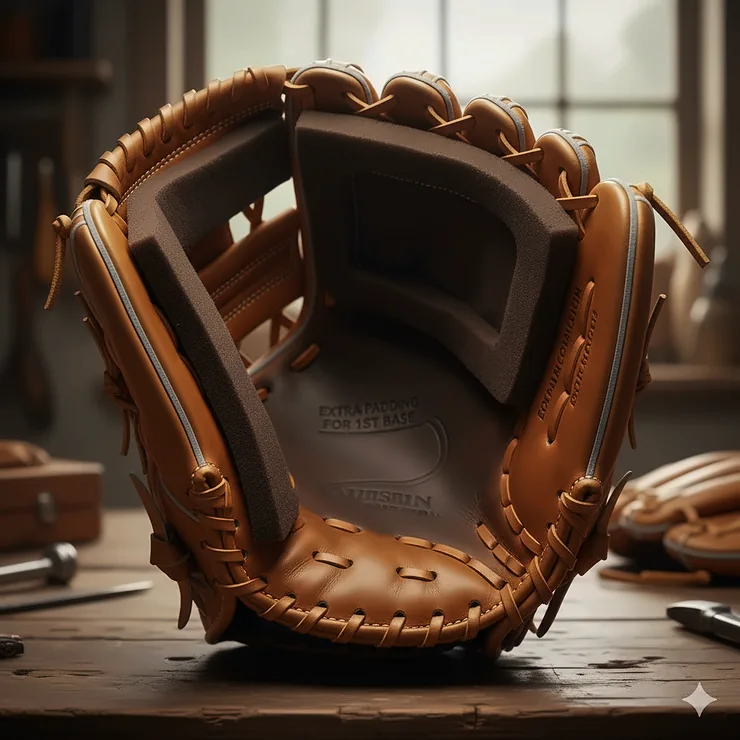
The best first base glove is a purpose-built mitt, usually 12.25 to 13 inches long, with a deep pocket, a stiff scooping edge, and a closed web, matched to your hand size, level of play, and budget. It lets a first baseman receive off-line throws, hold the ball on short hops, and keep the sting down.
First base is where everyone else’s mistakes go to die. The shortstop airmails one? Yours. The third baseman bounces it in the dirt? Still yours. As Wikipedia’s overview of the position explains, the first baseman fields the area nearest the bag and handles most of the plays there. That makes the mitt on your hand the most important piece of equipment you’ll buy for this spot.
This guide is built from published spec sheets, retailer listings, and the customer-review data I could verify as of October 2026. I haven’t field-tested these mitts and won’t pretend otherwise. What I can do is translate specs into what they mean on a dusty infield, flag where reviews are thin, and match each mitt to a real kind of buyer.
Maybe you typed 1st base glove baseball into a search bar at midnight. Maybe you’re a parent squinting at a size chart in a sporting-goods aisle. Either way, the sections below will narrow the field fast, starting with a side-by-side look at all seven picks.
Best First Base Glove Comparison at a Glance
Here are all seven mitts in one scannable view. Price ranges reflect what retailers listed at the time of research and shift often, so check current price before you buy.
| Product | Size | Tier | Price Range | Best For |
|---|---|---|---|---|
| Rawlings Heart of the Hide 13″ DCT | 13″ | Premium | $300-$350 range | Varsity, college, and serious adult players |
| Wilson A2000 1620 | 12.5″ | Premium | $240-$260 range | Players who want a durable, dual-welted pocket |
| Rawlings Heart of the Hide ContoUR | 12.25″ | Premium | Low-to-mid $300s | Quick transfers and snugger hands |
| Mizuno MVP Prime | 12.5″ | Mid-range | $150-$200 range | Step-up players who like a firm, shapeable pocket |
| Wilson A1000 1620 | 12.5″ | Mid-range | $130-$150 range | Budget-minded upgraders |
| Rawlings R9 12.5″ | 12.5″ | Mid-range | $130-$140 range | Teens and adults who want a soft, fast break-in |
| Rawlings Player Preferred | 12.5″ | Budget | $55-$85 range | New first basemen and rec-league regulars |
Looking at the table, the Rawlings Player Preferred is the clear value play, costing a fraction of the premium trio. The Wilson A1000 1620 and Rawlings R9 12.5″ share a price band but chase different buyers: one leans on a famous pattern name, the other on a soft, game-ready shell. If maximum reach is the priority, the Rawlings Heart of the Hide 13″ DCT is the only mitt here at the legal ceiling, and you pay for it.
💬 Just one click — help others make better buying decisions too!😊
Top 7 Best First Base Glove Picks: Expert Analysis
Every pick below gets the same treatment: what the specs mean in practice, who the mitt suits, and what verifiable reviewers say. Where the review data is thin, I say so rather than invent a consensus.
1. Rawlings Heart of the Hide 13″ DCT — maximum legal reach for serious scoopers
At 13 inches, the Rawlings Heart of the Hide 13″ DCT sits right at the legal length limit for the pro game, and that’s the whole sales pitch. Rawlings builds it from steer-hide Heart of the Hide leather in the DCT pattern, which the brand says many professional first basemen prefer. In practice you get a long, firm scooping edge that lets you stay anchored to the bag while a throw sails wide. Series-level features include a thinner heel pad for easier closing, a moisture-wicking thermoformed wrist lining, and a padded thumb sleeve.
Based on the spec comparison, this is a mitt for players with the hand strength to control a big, premium-leather frame: varsity, college, and serious adult leagues. Younger or smaller-handed players will wrestle the length instead of enjoying the reach.
On reviews, I couldn’t find a deep, verifiable set for this exact model. Retailer pages showed only a couple of ratings. One 2026 buyer’s roundup named it the top first-base mitt, but treat that as an editorial signal, not crowd consensus.
Pros:
- ✅ Longest legal reach for off-line throws
- ✅ Premium steer-hide leather built for long seasons
- ✅ Comfort-focused wrist lining and padded thumb sleeve
Cons:
- ❌ Premium price and a stiff, long break-in
- ❌ Too big and heavy for smaller hands
Expect the $300-$350 range. It’s worth it if you play a lot and have the hands for it, and overkill if you don’t.
2. Wilson A2000 1620 — dual-welted pocket that holds its shape
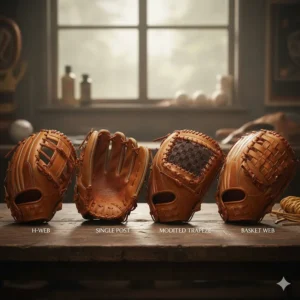
The Wilson A2000 1620 shows how a 12.5-inch frame can compete with a 13-inch one. Wilson calls 12.5 inches the largest in its first base lineup. The listing details Pro Stock Select American steerhide, a Double Horizontal Bars web, flat finger binding, and Dri-Lex wrist lining. The standout is dual welting: two strips of leather along each finger back, which Wilson says builds a durable pocket and a long-lasting break-in.
Here’s my analysis of what that means. Welting adds structure, so the pocket should resist collapsing after a few hundred hard throws. The trade-off is a slower break-in than a soft-shell mitt. Wilson’s SuperSkin back is marketed as a lighter alternative to full leather, which is welcome over nine innings of scooping.
Reviewer data is small and mixed. One retailer’s page showed about a dozen reviews averaging three stars, while a separate listing showed a 4.9 average across just seven ratings. That’s too little to call a trend, so lean on the build details instead.
Pros:
- ✅ Dual welting supports a durable pocket
- ✅ Breathable Dri-Lex wrist lining keeps hands drier
- ✅ Closed web design suits first base work
Cons:
- ❌ Small, inconsistent review pool
- ❌ Premium-tier price for 12.5 inches
Plan on the $240-$260 range. That’s fair for the construction, provided you’re patient through break-in.
3. Rawlings Heart of the Hide ContoUR — compact frame for faster transfers
Not every first baseman wants a shovel. The Rawlings Heart of the Hide ContoUR runs 12.25 inches and pairs a Single Post Double Bar web with Rawlings’ ContoUR Fit, a snugger shape for a hand-hugging feel. Rawlings pitches it as firm enough to handle throws from any angle yet light enough to wield easily.
What does that mean at the bag? A shorter frame gets the ball out of the pocket sooner, which helps when you’re firing to second or throwing to a covering pitcher. You give up a little reach compared with the 13-inch Rawlings Heart of the Hide 13″ DCT, but you gain control. It’s a smart fit for first basemen who also field a lot of grounders, or whose hands run narrower than average.
Verifiable reviews were sparse. The retailer listings I found carried few or no written reviews, so the evidence is the brand’s spec sheet rather than crowd feedback. Confirm the fit with a size chart or a try-on, since a snug design punishes the wrong hand size.
Pros:
- ✅ Shorter frame speeds up transfers
- ✅ Single Post Double Bar web for a secure pocket
- ✅ Snug ContoUR Fit improves control
Cons:
- ❌ Less reach than the 13-inch option
- ❌ Premium price with few verifiable reviews
Expect the low-to-mid $300s. Worth it for a transfer-speed player, not for someone chasing every wide throw.
4. Mizuno MVP Prime — center-pocket design that simplifies shaping
The Mizuno MVP Prime is the “serious player, not-yet-pro budget” mitt. At 12.5 inches, it uses Mizuno’s Center Pocket Designed patterns, which naturally position the pocket under the index finger. Add Bio Soft Leather, pro-level lace, a PlusGrip padded thumb slot, a two-piece closed web, and an open back for breathability. Retailers position it for high school through adult players.
On paper, the center-pocket layout is a gift to anyone who has ever fought a pocket that wanted to form in the wrong spot. It gives you a more predictable break-in, and the lace is the same durable stuff Mizuno uses higher up its line.
One flag: retailer descriptions disagree on stiffness. One calls it stiff and in need of break-in, while another says it needs next to none. Treat it as moderately firm and plan for some work.
I couldn’t verify a meaningful review count on the listings I checked, so I won’t claim a customer verdict.
Pros:
- ✅ Center-pocket pattern makes shaping predictable
- ✅ Pro-level lace for long-term durability
- ✅ Open back adds breathability
Cons:
- ❌ Conflicting break-in claims across retailers
- ❌ Few verifiable customer reviews
Prices ran roughly $150-$200, with older colorways discounted lower. A solid step-up choice if you like a firm feel.
5. Wilson A1000 1620 — famous pattern name at a friendlier price
The Wilson A1000 1620 is the budget-friendlier sibling of the Wilson A2000 1620, sharing the 12.5-inch size and the 1620 pattern designation. Wilson’s A1000 line is its step below the A2000 in leather tier, so confirm the exact leather and web details on the specific colorway you’re buying, since listings vary.
Why care? You get a proven first base shape and a recognizable brand without paying premium rent. For a growing player, that’s the logic: learn the pattern now, upgrade to the A2000 later.
Reviews are the weak spot. One listing showed two reviews averaging 3.5 stars, and another showed a single one-star review. That’s far too thin to draw a conclusion, so weigh price and fit over star ratings here. Wilson’s pro-level reputation helps, but I’d want a larger sample before calling this a safe bet.
Pros:
- ✅ Same 12.5-inch pattern name as the flagship
- ✅ Lands in the mid-price band
- ✅ Clear upgrade path to the A2000 later
Cons:
- ❌ Review pool too thin to trust
- ❌ Specs vary by colorway and listing
Expect the $130-$150 range. Good value if the specific listing checks out; read the details carefully.
6. Rawlings R9 12.5″ — game-ready leather straight out of the box
The Rawlings R9 12.5″ is built for players who’d rather catch than condition. Listings describe a soft, durable all-leather shell, a 302 pattern with Pro H web, a reinforced palm pad, a padded thumb loop, padded fingerback liners, and an adjustable pull-lace wrist. Retailers also describe the shell as needing minimal break-in.
That adjustable wrist matters more than it sounds. A glove that slides on your hand changes how you catch, and a snug, tunable fit helps keep the pocket where you expect it. The reinforced palm pad should take some of the sting out of hard throws, though padding can only do so much against a bad catch.
Check the variant before you buy. Some R9 12.5-inch listings are built with a narrower “Pro Taper Fit” for youth hands, and sizing details differ between sellers. As for reviews, one retailer showed strong seller ratings on the 13-inch R9 DCT variant, but the 12.5-inch listings I found had barely any.
Pros:
- ✅ Soft shell needs minimal break-in
- ✅ Reinforced palm pad cuts impact sting
- ✅ Padded thumb loop and finger liners add comfort
Cons:
- ❌ Soft leather may lose structure sooner than premium hides
- ❌ Narrow-fit versions can pinch bigger hands
Plan on the $130-$140 range. A strong pick for a teen moving to first base mid-season.
7. Rawlings Player Preferred — the budget mitt reviewers keep praising
The Rawlings Player Preferred is the value king of this list. The 12.5-inch mitt uses oiled full-grain leather, all-leather laces, and a single-post, double-bar web. A zero shock palm pad and Double Ca-Thud padding are there to soften impact, and the shell is designed for a quick break-in. Rawlings backs it with a one-year warranty.
Oiled leather is the key to the price-to-performance story. It reaches a usable pocket quickly, which is exactly what a new first baseman or weekend-league player needs. It’s a recreational-grade mitt, so don’t expect Heart of the Hide longevity, but for under-$100 budgets the build is hard to fault.
Reviews are the most useful of the seven. Buyers on Rawlings’ own site report a deep pocket and fast break-in, with one noting that a day of malleting and a few days of catch got it game-ready. A long-time owner reported heavy use over several years. The one complaint I saw was cosmetic, a missing emblem on one unit.
Pros:
- ✅ Oiled full-grain leather breaks in fast
- ✅ Deep pocket for the price
- ✅ Zero shock palm pad softens impact
Cons:
- ❌ Recreational-grade leather won’t match premium longevity
- ❌ Sized for adult hands, too large for youth players
Expect the $55-$85 range. For most newcomers, it’s the smartest first purchase.
Side-by-Side Spec Breakdown
This table puts the construction details from all seven picks together, including what the review data can and can’t tell us.
| Product | Web Type | Leather/Shell | Break-In | Review Signal | Best For |
|---|---|---|---|---|---|
| Rawlings Heart of the Hide 13″ DCT | DCT pattern | Steer-hide | Long | Few verifiable reviews | Elite reach |
| Wilson A2000 1620 | Double Horizontal Bars | Pro Stock Select steerhide + SuperSkin | Moderate-long | Small, mixed pool | Pocket durability |
| Rawlings Heart of the Hide ContoUR | Single Post Double Bar | Top-grade steer-hide | Moderate-long | Few verifiable reviews | Fast transfers |
| Mizuno MVP Prime | Two-piece closed | Bio Soft Leather | Conflicting claims | Not verified | Firm, shapeable feel |
| Wilson A1000 1620 | Varies by listing | Check listing | Check listing | Very thin | Budget upgrade |
| Rawlings R9 12.5″ | Pro H | Soft all-leather | Minimal | Strong on 13″ variant | Fast break-in |
| Rawlings Player Preferred | Single Post Double Bar | Oiled full-grain | Quick | Positive, real buyer notes | Value |
Read together, the table says something the star ratings can’t. The premium trio buys you durability and reach, while the three cheaper mitts trade longevity for speed to game-ready. The Rawlings Player Preferred is the only one with a review trail I’d call genuinely useful, and the Wilson A1000 1620 is the one most in need of a closer look at the specific listing.
How to Break In Your First Base Mitt (Without Ruining It)
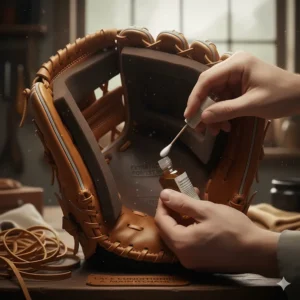
Break-in is where mitts are made or murdered. Here’s a practical routine that works for most leather mitts, though you should always check the manufacturer’s care notes first.
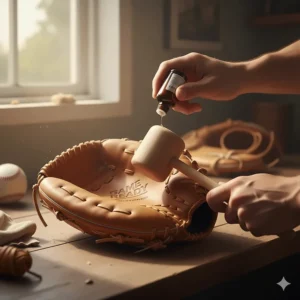
Step 1: Condition lightly. Use a thin coat of glove conditioner, not a soaking. Over-oiling softens leather past the point where it holds a pocket.
Step 2: Mallet the pocket. Spend five to ten minutes a day pounding the center of the pocket with a glove mallet. One Rawlings Player Preferred reviewer reported that a day of malleting plus a few days of catch got theirs game-ready, though stiffer mitts like the Rawlings Heart of the Hide 13″ DCT will take longer.
Step 3: Play catch. Nothing replaces real throws. Aim for 100 or so a session, catching the ball in the same spot every time so the pocket forms where you actually catch.
Step 4: Store it shaped. Put a ball in the pocket and wrap the mitt with a band overnight. Don’t store it flat in a gear bag.
Mistakes to avoid in your first 30 days:
- ✅ Don’t microwave, bake, or soak the mitt; heat and water damage leather
- ✅ Don’t leave it in a hot car trunk
- ✅ Don’t skip the catch sessions and expect the pocket to form on its own
The Rawlings R9 12.5″ is described as nearly game-ready, so it needs the gentlest routine. A firmer mitt like the Wilson A2000 1620 deserves patience, because the dual-welt construction pays off in the long run.
Real-World Scenarios: Matching the Best First Base Glove to Your Game
Specs only matter when they meet a real player. Here are three hypothetical buyer profiles and the mitts I’d steer them toward.
Profile 1: The new-to-first high schooler (budget around $100). A sophomore who just got moved to first base from the outfield plays three or four games a week in spring. A soft shell with palm padding is the priority. The Rawlings R9 12.5″ or the Rawlings Player Preferred fits, since both break in quickly and cushion impact. Check the R9’s fit variant first, because the narrow-fit version suits smaller hands.
Profile 2: The adult rec-leaguer (budget under $150). This player works a desk job and plays two nights a week, about 25 games a season. Long-term durability matters less than a mitt that works right away. The Rawlings Player Preferred is the cost-per-game winner. If you want a bit more structure, the Wilson A1000 1620 is the step up, with the caveat that you should read the listing carefully.
Profile 3: The tall college prospect (budget flexible). Sixty-plus games a year with travel ball plus spring means serious wear. Reach and longevity win here. The Rawlings Heart of the Hide 13″ DCT gives maximum legal length, while the Wilson A2000 1620 offers a durable dual-welted pocket in a more compact frame. If transfer speed matters more than reach, the Rawlings Heart of the Hide ContoUR is the smarter fit.
The pattern across all three: match the mitt to how often you play and how big your hand is, not to what a pro endorses.
Problem-Solution Guide: Fixing Common First Base Mitt Headaches
Even the right mitt can give you grief. Here are four common problems and what to do about them.
Problem 1: Stingers on hard throws. Palm sting is the first base tax. Choose a mitt with real palm padding, like the zero shock pad on the Rawlings Player Preferred or the reinforced pad on the Rawlings R9 12.5″, and focus on catching with the pocket, not the heel.
Problem 2: The ball pops out on short hops. Usually the pocket hasn’t formed properly. Return to the mallet-and-catch routine and make sure you’re receiving the ball in the same spot every time. A closed web, as on the Mizuno MVP Prime, adds ball security.
Problem 3: The mitt feels like a plank. Stiffness is normal in premium leather like the Wilson A2000 1620. Condition lightly, mallet regularly, and resist the urge to over-oil. If you want less work, pick a softer shell.
Problem 4: The mitt slides on your hand. A loose fit changes how you receive throws. An adjustable wrist, like the pull-lace on the Rawlings R9 12.5″, helps, as does a snugger design like the Rawlings Heart of the Hide ContoUR.
It also helps to understand why the mitt takes such abuse. Baseball-Reference’s Bullpen entry on first basemen lists receiving throws from infielders, fielding bunts, and taking pickoff throws from the pitcher as core duties. Each one stresses a different part of the glove.
How to Choose the Best First Base Glove
Start here: pick the length that fits your hand and level, then choose a web, a leather tier, and a fit you can live with. Here’s the full process.
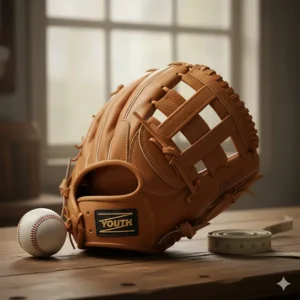
- Start with your level and hand size. Rawlings’ size chart lists youth first base at 11.5 to 12 inches and adult first base at 12 to 13 inches. Begin in your age band.
- Pick your length. A 12.5-inch mitt is the safe default for most adults. Go 13 inches only if you want maximum reach and can control the weight.
- Study the web and pocket. Closed webs and double-bar designs give ball security; deeper pockets help with scooping.
- Match the leather to your patience. Soft shells like the Rawlings R9 12.5″ are ready sooner, while premium hides like the Rawlings Heart of the Hide 13″ DCT reward longer break-in.
- Check padding and fit. Look for palm padding and an adjustable wrist, then confirm the throwing hand.
- Set your budget by seasons, not days. If you play year-round, a pricier mitt can spread its cost over many seasons.
Follow those six steps and the field of “best first base glove” candidates usually shrinks to two or three.
1st Base Glove Baseball Sizing: Youth, High School, and Adult
Sizing a 1st base glove baseball players can actually use is mostly about matching the frame to the hand. Too big, and you can’t close it. Too small, and you lose the reach that makes the position easier.
Youth Players (Roughly Ages 7-12)
Rawlings lists 11.5 to 12 inches for youth first base. At this age, comfort and control beat reach. A mitt that’s too large teaches bad habits like catching with one hand and flinching on hard throws.
High School Players
This is where it gets interesting. A 12.5-inch pattern like the Rawlings Player Preferred is the standard adult first base size, and retailer Q&A pages describe it as suitable for a high school player. One buyer’s roundup even says to skip 12.5-inch adult patterns for youth players, because the sizing is built for adult hands. High schoolers with smaller hands can look at narrow-fit options, like the narrower variants of the Rawlings R9 12.5″.
Adult Players
Adults generally land between 12 and 13 inches. The Wilson A2000 1620 and Mizuno MVP Prime are 12.5-inch picks, the Rawlings Heart of the Hide ContoUR runs 12.25 inches, and the Rawlings Heart of the Hide 13″ DCT is the long option.
One caution: league rules differ, and sizes vary by brand. When in doubt, try the mitt on, or check the retailer’s size guide before buying a 1st base glove baseball season depends on.
First Basemen Glove vs Fielder’s Glove: What Actually Changes
It’s tempting to think a first basemen glove is just a big fielder’s glove. It isn’t. A first base mitt is a different tool built for a different job.
| Feature | First Basemen Glove | Standard Fielder’s Glove |
|---|---|---|
| Shape | Mitt with a thumb section and one finger section | Individual finger stalls |
| Length | Typically 12-13 inches for adults | Adult infield 11.25-12 inches |
| Web | Closed, deep scoop web | Varies by position |
| Primary Job | Receive throws and scoop low ones | Field grounders and make quick throws |
| Best For | First base only | Infield, outfield, or pitcher |
A first basemen glove trades finger dexterity for reach and a deep catching surface. Looking at the table, that makes it a poor choice for fielding grounders far from the bag but ideal for scooping. If you play multiple positions, a standard glove keeps you flexible, while a dedicated mitt makes you better at one spot.
The rulebook has opinions too. MLB Rule 3.05 allows a first baseman’s glove up to thirteen inches long and eight inches across the palm, with limits on the web and the thumb-to-finger gap. That’s why 13 inches is the practical ceiling for the Rawlings Heart of the Hide 13″ DCT.
Features That Actually Matter (And Those That Don’t)
Marketing copy loves buzzwords. Here’s what deserves your attention.
What matters:
- ✅ Length and pattern. This is your reach and your fit. Get it wrong and nothing else saves you.
- ✅ Pocket and web. A closed, deep web adds security. The Mizuno MVP Prime and Rawlings Player Preferred both use designs aimed at a secure catch.
- ✅ Palm padding. Sting is real. Look for dedicated palm pads rather than vague “comfort” claims.
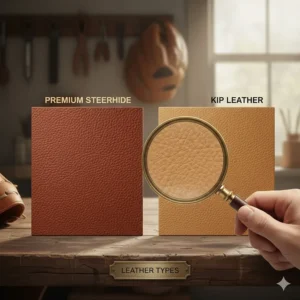
- ✅ Leather quality. It decides how fast the mitt breaks in and how long the pocket holds.
- ✅ Wrist and fit adjustment. An adjustable wrist keeps the pocket in place.
What doesn’t:
- ❌ Colorways and logos. A cool colorway doesn’t catch anything.
- ❌ Pro-model endorsements. A famous name doesn’t change your hand size.
- ❌ Fancy backing materials. Features like Wilson’s SuperSkin back, marketed as lighter, are nice but secondary to fit.
Which feature wins depends on your level. Beginners should prioritize fit and fast break-in, which points toward the Rawlings Player Preferred or Rawlings R9 12.5″. Advanced players should prioritize leather and pocket structure, which is where the Wilson A2000 1620 and the Rawlings Heart of the Hide 13″ DCT earn their keep.
First Base Glove Rules and Regulations You Should Know
Nothing ruins a good scoop like an umpire holding up your mitt with a tape measure. Under MLB rules, a first baseman’s mitt can be up to thirteen inches long and eight inches wide across the palm. The web can’t exceed five inches, and the space between thumb and finger sections is capped. The glove can also be any weight.
There are enforcement details worth knowing. According to the MLB umpire manual’s glove-measuring procedures, umpires may measure a questionable glove, or the opposing manager may request it, with a limit of two requests per game. Measurements happen between innings. An illegal glove can be confiscated, and a player who refuses to comply can be ejected.
Another wrinkle: a first baseman’s mitt is only for the player actually positioned at first. MLB guidance says the umpire should instruct the fielder to switch to a regular glove if another fielder is positioned there. The scorer’s rules, meanwhile, treat the player holding the runner as the first baseman.
Youth, high school, and amateur leagues often use different dimensions, so check your league’s rulebook. For most buyers, any of the seven mitts here stays legal at their listed sizes, though I’d still verify with your league before ordering a 13-inch model.
✨ Don’t Miss These Exclusive Deals!
🔍 Take your first-base game to the next level with these carefully selected mitts. Click on any highlighted item to check current pricing and availability. These picks will help you scoop cleaner, stretch farther, and save your infielders from their own throws!
Long-Term Cost and Maintenance: What a First Base Mitt Really Costs
Sticker price is the wrong number. The right one is cost per season. Here’s how the tiers compare.
| Tier | Typical Price Range | Products | Value Angle | Best For |
|---|---|---|---|---|
| Budget | $55-$85 range | Rawlings Player Preferred | Lowest entry cost, fast break-in | New and casual players |
| Mid-range | $130-$200 range | Wilson A1000 1620, Rawlings R9 12.5″, Mizuno MVP Prime | Balance of build and price | Teens and committed adults |
| Premium | $240-$350 range | Wilson A2000 1620, Rawlings Heart of the Hide ContoUR, Rawlings Heart of the Hide 13″ DCT | Durability and reach | Serious, high-volume players |
Here’s the illustrative math. If a mitt in the $300-$350 range lasts eight seasons, that works out to roughly $38-$44 per season. A mitt in the $55-$85 range replaced every three seasons costs about $18-$28 per season. These are hypotheticals, since real lifespan depends on use and care. The takeaway is that cheaper isn’t automatically more economical for heavy players, and premium isn’t automatically smarter for casual ones.
Maintenance keeps any tier alive longer:
- ✅ Wipe off dirt and moisture after games
- ✅ Condition sparingly a couple of times a season
- ✅ Store it in a cool, dry place with a ball in the pocket
- ✅ Re-lace or replace worn laces before they snap mid-game
Lace quality is one place to look. The Mizuno MVP Prime uses pro-level lace, per its listing, which is a small but real durability advantage.
Common Mistakes When Buying a First Base Glove
Most bad purchases come from a handful of predictable errors.
Buying too big. A larger mitt feels like more reach, but if you can’t control it, you’ll miss more throws, not fewer. This hits younger and smaller-handed players hardest.
Buying for looks. Colorway and logo shouldn’t beat fit. A great-looking glove you can’t close is a very expensive paperweight.
Ignoring the throwing hand. Listings are labeled by throwing hand. A right-handed thrower wears the mitt on the left hand, so check the label before you click.
Skipping the variant check. The Rawlings R9 12.5″ exists in different fits, and the Wilson A1000 1620 appears in multiple listings with different details. Read the specific listing.
Overpaying for features you won’t use. A recreational player gains little from the premium leather in the Rawlings Heart of the Hide 13″ DCT.
Underestimating break-in. Buying a stiff mitt the week before the season and expecting game-ready performance ends badly. Give firm mitts a few weeks.
Dodge those six and you’re ahead of most buyers.
FAQ: Best First Base Glove Questions Answered
❓ How much should I spend on the best first base glove?
❓ Is a 13-inch first basemen glove too big for high school?
❓ Do left-handed throwers need a special 1st base glove baseball players use?
❓ Can I use a first base mitt for softball?
❓ How long does it take to break in a first base mitt?
Conclusion: Picking Your Best First Base Glove
Here’s the short version. If you want maximum reach and have the hands and the budget, the Rawlings Heart of the Hide 13″ DCT is the legal-length heavyweight. If you want a durable, dual-welted pocket in a more compact frame, the Wilson A2000 1620 is the better bet. If transfer speed is your thing, the Rawlings Heart of the Hide ContoUR earns a look.
In the middle, the Mizuno MVP Prime, Wilson A1000 1620, and Rawlings R9 12.5″ each trade something for price, with the R9 winning on break-in speed. And for the largest group of buyers, the Rawlings Player Preferred remains the smartest first purchase. Reviewers consistently praise how fast it comes alive.
The honest truth about the best first base glove is that there isn’t one winner. There’s the one that fits your hand, your level, and the number of times you’ll squat into a stretch this season. Check sizes against the 1st base glove baseball charts, confirm your throwing hand, and give the mitt time to form its pocket.
A well-fitted mitt makes ugly throws look easy. Pick yours, break it in properly, and let your infielders keep making things interesting.
✨ Don’t Miss These Exclusive Deals!
🔍 Ready to upgrade your first-base game? Click on any highlighted mitt above to check current pricing and availability. The right glove is waiting, and your infielders will thank you for it!
Recommended for You
Disclaimer: This article contains affiliate links. As an Amazon Associate, I earn from qualifying purchases. If you purchase products through these links, we may earn a small commission at no additional cost to you.
✨ Found this helpful? Share it with your friends! 💬🤗
