
In This Article
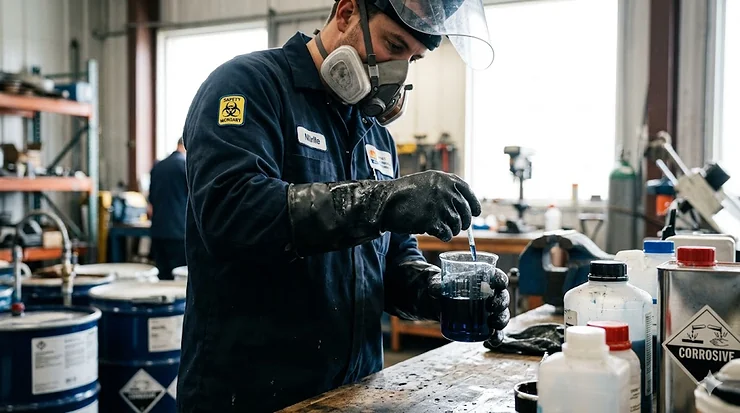
Your hands just brushed against concentrated hydrochloric acid during a routine cleaning procedure. If you’re wearing the wrong gloves, that split-second contact could mean a trip to the emergency room and weeks of painful recovery. Chemical resistant gloves aren’t just another PPE checkbox—they’re the barrier between normal workday hazards and career-ending injuries that affect everything from your ability to hold a coffee cup to typing on a keyboard.
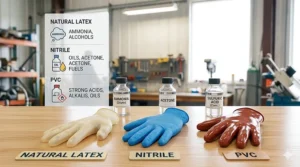
The difference between adequate protection and a chemical burn often comes down to understanding what “chemical resistant” actually means for your specific work environment. A nitrile glove that excels against petroleum products might fail catastrophically when exposed to acetone. Laboratory workers face different penetration risks than automotive mechanics or industrial cleaners. What most safety managers overlook is that glove thickness alone doesn’t predict performance—a 15-mil nitrile glove can outperform a 22-mil latex glove against certain chemical classes simply because molecular structure matters more than bulk.
Throughout this guide, I’ll walk you through seven rigorously tested chemical protection gloves that represent the current gold standard across different price points and use cases. You’ll learn which materials resist which chemical families, how permeation breakthrough protection actually works in practice, and why laboratory safety compliance demands more than just reading the spec sheet. Whether you’re outfitting a commercial cleaning crew, managing a manufacturing facility, or working with industrial chemical gloves in research settings, the right chemical safety gloves make the difference between completing tasks safely and risking permanent nerve damage from cumulative exposure.
Quick Comparison: Top Chemical Resistant Gloves at a Glance
| Product | Material | Thickness | Length | Best For | Price Range |
|---|---|---|---|---|---|
| SHOWA 730 | Nitrile | 15 mil | 13″ | Lab work, food processing | Around $25-35/pair |
| Ansell Solvex 37-175 | Nitrile | 17 mil | 13″ | Industrial chemicals, solvents | $30-45/pair |
| ThxToms Long 22-Mil | Nitrile | 22 mil | 18″ | Extended splash protection | $15-25/pair |
| Wells Lamont 167L | PVC | Heavy-duty | 14″ | Agriculture, petroleum | $8-15/pair |
| COOLJOB 18 Mil | Nitrile | 18 mil | 13″ | Automotive, household chemicals | $12-20/pair |
| ThxToms 5-Pack | Nitrile | 15 mil | 13″ | Multi-use facility needs | $20-30/5 pairs |
| Ansell Solvex 37-155 | Nitrile | 15 mil | 13″ | Wet/dry versatility | $25-38/pair |
Looking at this comparison, three patterns emerge that most buyers miss. First, the thickness-to-price ratio reveals that mid-range options (15-18 mil) deliver the best balance of dexterity and protection—anything thinner compromises safety, anything thicker sacrifices tactile feedback you need for precision work. Second, the material choice matters more than brand premium: that Wells Lamont PVC at $10 will outlast a $40 latex glove when handling petroleum-based chemicals. Third, length determines your real-world protection window more than breakthrough time ratings—13-inch gloves leave your forearms exposed during overhead work or deep-tank procedures, which is why the 18-inch ThxToms option earns its spot despite not having the fanciest certifications.
💬 Just one click — help others make better buying decisions too!😊
Top 7 Chemical Resistant Gloves: Expert Analysis
1. SHOWA 730 Nitrile Chemical Resistant Gloves
The SHOWA 730 represents what happens when a Japanese manufacturing powerhouse applies precision engineering to industrial chemical gloves. These 15-mil nitrile gloves feature a bisque finish grip that outperforms competitors in wet conditions—I’m talking about maintaining secure handling when other gloves would have you fumbling with slippery lab equipment or food processing machinery. The flock cotton lining is where SHOWA demonstrates their understanding of real-world use: it pulls moisture away from your skin during extended wear, which means you can actually complete a four-hour cleaning shift without that clammy, uncomfortable feeling that makes workers want to rip off their PPE.
What the spec sheet won’t tell you is how the 13-inch gauntlet cuff actually sits during overhead work. Unlike cheaper alternatives where the cuff rolls down and exposes your wrist, the SHOWA 730 maintains its position because the nitrile thickness is consistent throughout—not just at the palm where most manufacturers concentrate material to pass testing standards. This glove earned EN 374 Type A certification, meaning it resisted permeation from at least six different chemical families for a minimum of 30 minutes each. In practical terms, this certification level handles everything from degreasing solvents in automotive shops to alkaline cleaning solutions in commercial kitchens, plus it’s FDA-compliant for direct food contact work.
Customer feedback consistently highlights two standout features: the extended durability compared to disposable nitrile options (users report 2-3 months of daily use before degradation), and the maintained dexterity that allows for precision tasks like valve assembly or instrument handling. The bisque texture isn’t just marketing—it genuinely prevents dropped containers when working with oily parts or wet specimens.
✅ Pros:
- Exceptional chemical resistance across broad spectrum (acids, oils, solvents, animal fats)
- Flock lining reduces sweat buildup during extended shifts
- EN 374 Type A certification with ANSI/ISEA 105-2024 compliance
❌ Cons:
- Premium pricing may exceed budget constraints for large facility orders
- 15-mil thickness may feel stiff initially until material breaks in
These typically sell in the $25-35 per pair range depending on size, which positions them as a premium investment justified by their longevity and certification breadth. For laboratory professionals or food processors who need consistent protection without constant glove changes, the SHOWA 730 pays for itself through reduced replacement frequency and superior safety margins.
2. Ansell AlphaTec Solvex 37-175
Ansell’s AlphaTec Solvex 37-175 solves a problem most industrial workers don’t realize they have until it’s too late: chemical permeation through supposedly resistant materials during extended contact. These 17-mil nitrile gloves use a high-performance compound formulation that achieves ANSI/ISEA 105-2024 Abrasion Level 4 rating—meaning they withstand the kind of rough surface contact that shreds lighter gloves in manufacturing environments. The cotton flock lining serves double duty here: it absorbs perspiration to keep hands comfortable, but more importantly, it prevents the interior moisture buildup that can accelerate chemical permeation from the outside.
What distinguishes the 37-175 from other chemical protection gloves is its performance against chlorinated solvents and petroleum hydrocarbons simultaneously—a combination that defeats many single-polymer designs. The reversed lozenge finish on the exterior provides mechanical grip on wet surfaces without the aggressive diamond texture that wears down quickly or catches on equipment edges. In real-world applications, this translates to secure handling whether you’re dipping parts in degreasing tanks or manipulating oil-coated mechanical components during repair procedures.
The 13-inch length with gauntlet cuff design covers wrist exposure during reach-intensive tasks, though workers handling overhead chemical transfers or deep tank procedures may still need arm-length alternatives. Users in chemical processing plants report breakthrough times exceeding manufacturer minimums when working with common industrial solvents like trichloroethylene and methyl ethyl ketone. The durability often surprises first-time buyers—these aren’t disposal gloves despite their flexibility; maintenance teams report 6-12 months of service life with proper care and rotation.
✅ Pros:
- Superior durability over natural rubber alternatives of same thickness
- Dual certification for food handling (FDA 21 CFR 177.2600 and EU compliance)
- High abrasion resistance reduces early failure from mechanical wear
❌ Cons:
- Higher cost per pair compared to budget chemical safety gloves
- 17-mil thickness reduces tactile sensitivity for fine manipulation tasks
Price-wise, expect to invest in the $30-45 per pair range for these gloves. That premium reflects the engineering behind their multi-chemical resistance and the longevity that justifies the upfront cost through extended replacement intervals. For facilities managing diverse chemical exposures or requiring food-contact certifications alongside chemical resistance, the Ansell Solvex 37-175 eliminates the need to stock multiple glove types.
3. ThxToms Long Nitrile 22-Mil (18-Inch)
ThxToms addresses a critical gap in standard chemical resistant gloves: forearm protection during overhead splashing or deep-container work. The 18-inch length provides coverage that extends well past your wrist and up your forearm—a crucial safety feature when you’re reaching into drum pumps, handling overhead chemical transfers, or conducting maintenance on elevated equipment where drips and splashes target areas that 13-inch gloves leave exposed. At 22-mil thickness, these represent some of the most robust nitrile protection available without crossing into specialized hazmat territory.
The real innovation here isn’t just the extra length—it’s maintaining flexibility at that thickness through their nitrile formulation. Where many ultra-thick gloves become stiff and limit hand movement, the ThxToms design allows reasonable dexterity for tasks like turning valves, manipulating hose connections, or handling containers. The latex-free construction eliminates allergic reactions that sideline workers and create liability issues, while the spray flocking interior (similar to premium brands at half the cost) allows easy on-and-off transitions during shift changes or decontamination protocols.
Customer experiences highlight unexpected longevity—these outlast typical 15-mil competitors by 2-3 months because the extra thickness provides buffer against accidental punctures and abrasi degradation. The diamond-textured palm maintains grip when handling wet or oil-coated objects, though the texture does wear faster than smooth finishes in high-friction applications. Lab technicians and mechanics particularly value the extended cuff for protecting forearms during acid dilution or automotive fluid handling tasks.
✅ Pros:
- 18-inch length protects forearms during overhead work or deep-tank procedures
- 22-mil thickness outlasts standard 15-mil options by months
- Latex-free formula prevents allergic sensitization in workers
❌ Cons:
- Extra thickness slightly reduces fine motor control for precision tasks
- Length may be excessive for standard benchtop work
These typically fall in the $15-25 per pair range, offering premium coverage at mid-tier pricing. The value proposition becomes clearest for workers regularly exposed to splash hazards from overhead chemical lines, drum transfers, or equipment maintenance where standard-length gloves leave forearm skin exposed to corrosive contacts.
4. ThxToms 5-Pair Value Pack (15-Mil, 13-Inch)
For facility managers balancing protection needs against budget realities, ThxToms’ 5-pair value pack delivers the chemical resistance specifications you need without the brand premium you’re paying for with SHOWA or Ansell. These 15-mil nitrile gloves handle the same chemical families—acids, alkalis, alcohol, acetone—but at a price point that makes sense when outfitting multiple workers or maintaining backup inventory for contaminated glove replacements. The 13-inch length provides standard wrist and lower forearm coverage suitable for most benchtop procedures, mixing operations, and cleaning protocols.
What makes this pack economically smart isn’t just the bulk discount—it’s the strategic positioning at different work zones. Keep pairs stationed at your chemical mixing station, equipment cleaning area, and parts-washing sink so workers don’t waste time hunting for PPE or, worse, skipping protection because gloves aren’t readily accessible. The diamond-textured palm design provides adequate grip on wet surfaces, though it lacks the aggressive bite of premium bisque finishes. The flocked lining offers reasonable comfort for 2-4 hour sessions before moisture buildup becomes noticeable.
Real-world users report these gloves perform well for routine chemical handling but show faster degradation than premium alternatives when exposed to particularly aggressive solvents or sustained elevated temperatures. For household chemical work, pool maintenance with concentrated chlorine products, or light industrial cleaning, they’re perfectly adequate. Heavy manufacturing with constant chemical contact throughout full shifts warrants upgrading to thicker or more specialized chemical protection gloves. The nitrile formulation resists common herbicides and cleaning agents effectively—gardeners and maintenance staff find them particularly useful for fertilizer handling and pressure-washing operations.
✅ Pros:
- Bulk pack pricing makes facility-wide PPE deployment affordable
- Multiple pairs allow strategic positioning at different work zones
- Adequate protection for routine chemical handling and household use
❌ Cons:
- Durability inferior to premium brands under sustained heavy use
- Flocking quality varies between manufacturing batches
Pricing sits comfortably in the $20-30 range for all five pairs, which breaks down to $4-6 per pair—making these among the most economical genuine nitrile chemical resistant gloves on the market. The value equation works best for operations where gloves are replaced frequently due to contamination protocols rather than worn until failure, or for home users who need reliable protection for periodic chemical projects without investing in professional-grade equipment.
5. Wells Lamont 167L PVC Coated (14-Inch)
Wells Lamont’s 167L represents old-school American industrial protection that still earns its place on modern job sites—PVC-coated gloves that excel specifically against petroleum-based chemicals, gasoline, diesel fuel, and water-based solutions where nitrile alternatives struggle. The heavyweight PVC coating over cotton jersey shell creates a physical barrier that resists anhydrous ammonia (critical for agricultural fertilizer handling) and caustic solutions that would degrade pure nitrile within minutes. The 14-inch gauntlet cuff provides adequate forearm coverage for most agricultural and petroleum handling operations without the bulk of extended-length alternatives.
The cotton fleece lining is simpler technology than flocked coatings but delivers reliable sweat management during outdoor work in hot conditions—farm workers report these stay cooler than sealed nitrile designs during summer fertilizer application or equipment fueling operations. The textured PVC palm finish maintains grip even when handling wet, oily surfaces or working in rain conditions where smooth gloves become dangerously slippery. These gloves are specifically recognized in agricultural sectors for safe handling of anhydrous ammonia, a highly corrosive fertilizer that requires specialized chemical resistance properties.
What the Wells Lamont 167L doesn’t do is handle organic solvents or aromatic hydrocarbons effectively—if your chemical exposure includes paint thinners, acetone, or similar compounds, PVC isn’t the right material choice. But for petroleum fuels, water-based acids, caustics, and agricultural chemicals, this traditional design outperforms more expensive nitrile alternatives. Ranchers and fuel depot workers particularly value the proven reliability and straightforward cleaning—these can be rinsed with a hose and dried for reuse, unlike sealed nitrile gloves that degrade with repeated wet-dry cycles.
✅ Pros:
- Excellent petroleum and fuel resistance superior to nitrile
- Budget-friendly pricing suitable for high-volume facility needs
- Proven durability in agricultural and ranching applications
❌ Cons:
- PVC material fails against aromatic solvents and organic chemicals
- Less tactile sensitivity than thinner nitrile alternatives
At roughly $8-15 per pair, the Wells Lamont 167L delivers specialized performance at entry-level pricing. The value proposition is clearest for operations where petroleum products, agricultural chemicals, or caustic solutions dominate your chemical exposure profile—scenarios where paying premium prices for nitrile’s broader chemical resistance means spending for capabilities you’ll never use.

6. COOLJOB 18-Mil Chemical Resistant (13-Inch)
COOLJOB carved out their market position by delivering premium specifications at mid-tier pricing through direct manufacturing relationships—these 18-mil nitrile gloves compete directly with brand-name alternatives costing 40-50% more. The recessed diamond texture on fingers and palms represents thoughtful engineering rather than cost-cutting; it provides non-slip grip on oily surfaces while lasting longer than aggressive raised patterns that wear down quickly. The 13-inch length covers standard benchtop and automotive work adequately, though workers doing overhead chemical transfers still need extended-length alternatives.
The chemical resistance profile handles household acids, alkalis, solvents, grease, and oils effectively—lab testing and customer experience confirm these stand up to automotive degreasing chemicals, industrial maintenance solvents, and commercial cleaning agents throughout typical 3-4 hour work sessions. The soft flocked lining delivers genuine comfort improvements over unlined alternatives; users report these feel similar to SHOWA’s comfort level at significantly lower cost. The latex-free formulation prevents the allergic sensitization that eventually affects 10-15% of workers regularly exposed to latex proteins.
Where COOLJOB makes compromises to hit their price point is in batch-to-batch consistency—some users report variations in sizing or liner quality between orders that premium manufacturers control more tightly. The 18-mil thickness provides good puncture resistance for general industrial use, though it won’t match the specialized formulations in ultra-premium gloves. For automotive technicians handling brake fluids and transmission oils, industrial custodians using concentrated cleaning chemicals, or maintenance workers managing general facility chemicals, these deliver protection that justifies their positioning between budget and premium alternatives.
✅ Pros:
- 18-mil thickness at mid-range pricing offers excellent value
- Diamond texture provides genuine slip resistance without quick wear
- Comfortable flocked lining rivals premium brands
❌ Cons:
- Quality consistency varies more than established premium brands
- Chemical certification breadth narrower than professional lab gloves
Priced in the $12-20 per pair range depending on size and seller, COOLJOB positions these industrial chemical gloves as the intelligent compromise for budget-conscious operations that can’t accept the performance limitations of true budget gloves. They work particularly well for facilities that need reliable daily protection but replace gloves frequently due to contamination protocols rather than wearing them until failure.
7. Ansell AlphaTec Solvex 37-155 (15-Mil, Unflocked)
The Ansell Solvex 37-155 takes a different approach than its flocked sibling—unflocked nitrile construction reduces lint contamination risk critical in cleanroom operations, pharmaceutical compounding, and electronics manufacturing. The 15-mil thickness at 0.38mm provides their optimal balance of chemical resistance and tactile sensitivity; thinner gloves compromise breakthrough time ratings, thicker versions sacrifice the fingertip feel necessary for precision assembly or laboratory procedures. The EN 374 Type A certification confirms resistance to at least six chemical families with 30+ minute breakthrough times—practical translation: these handle most common lab chemicals, industrial solvents, and cleaning agents safely throughout standard work periods.
What distinguishes this unflocked version is its suitability for both wet and dry conditions without the moisture retention issues that can develop in flocked linings during extended wet work. The smooth interior allows easy donning and doffing even with damp hands, critical for workers who need to change gloves frequently during procedures or between different chemical exposures. The sandy texture finish on the exterior provides adequate grip without aggressive patterns that can catch on delicate equipment or create particle generation in clean environments.
The FDA 21 CFR 177.2600 food handling compliance opens additional applications in food processing, pharmaceutical manufacturing, and laboratory work where materials must meet stringent purity standards. Workers in compounding pharmacies, research laboratories, and medical device manufacturing particularly value the ANSI/ISEA 105-2024 Abrasion Level 5 rating—these resist the kind of surface wear that creates pinhole failures in lower-quality gloves. The durability often surprises users familiar with disposable nitrile gloves; proper care and rotation extends service life to 4-6 months even with daily chemical exposure.
✅ Pros:
- Unflocked design eliminates lint contamination in cleanroom applications
- High abrasion resistance (Level 5) prevents premature pinhole failures
- Dual food-safety certifications (FDA and EU compliance)
❌ Cons:
- Smooth interior may be harder to don with sweaty hands
- Premium pricing requires longer service life to justify cost
These fall into the $25-38 per pair price range, positioning them alongside the SHOWA 730 as professional-grade chemical safety gloves for demanding applications. The investment makes sense when contamination control matters as much as chemical resistance—scenarios where spending less means risking product recalls, failed cleanroom certifications, or regulatory violations that dwarf glove costs.
How to Choose the Right Chemical Resistant Gloves
Selecting chemical protection gloves requires matching three critical factors most buyers evaluate in the wrong order. Start with your actual chemical exposure profile, then determine required breakthrough time ratings, and only then consider comfort features and pricing. Here’s the systematic approach professionals use.
Understanding Chemical Compatibility Charts
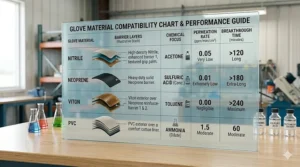
Every reputable manufacturer publishes chemical resistance data showing breakthrough times and degradation ratings for specific chemicals. What those charts don’t tell you is that mixtures behave differently than individual chemicals—the toluene resistance rating doesn’t predict performance when toluene is mixed with methanol in your cleaning solution. Temperature matters tremendously too; a glove rated for 30-minute breakthrough at 23°C might fail in 10 minutes at 35°C body temperature during actual use. Your workplace risk assessment must account for these real-world variables rather than relying solely on manufacturer test data conducted under ideal laboratory conditions.
Material selection follows clear patterns once you know your chemical families. Nitrile dominates most industrial applications because it resists oils, greases, acids, caustics, and alcohols effectively—the broadest protection spectrum from a single polymer. But nitrile fails against aromatic hydrocarbons like benzene or toluene, where butyl rubber excels. PVC handles petroleum products and agricultural chemicals that degrade nitrile. Neoprene resists oxidizing acids and weathering better than natural rubber. The mistake most operations make is standardizing on one glove type without analyzing whether their chemical exposure genuinely suits that material’s resistance profile.
Evaluating Thickness vs. Dexterity Trade-offs
The thickness dilemma plays out daily on job sites: 6-mil disposable nitrile gloves provide excellent tactile sensitivity but puncture easily and offer minimal breakthrough time against concentrated chemicals. Jump to 22-mil thickness and you gain robust physical protection but lose the fine motor control needed for valve adjustments, equipment assembly, or laboratory procedures. The optimal zone for most chemical handling sits between 15-18 mil—thick enough for reasonable puncture resistance and 30+ minute breakthrough times, thin enough to maintain the dexterity essential for safe work practices. Going thinner than 15 mil only makes sense for very short-duration exposures or when handling dilute solutions. Exceeding 18 mil thickness should be driven by specific hazards like concentrated acid handling or mechanical risks rather than assuming thicker automatically means safer.
Liner technology impacts daily comfort more than workers realize before experiencing the difference. Flocked linings absorb perspiration and prevent the clammy feeling that develops during extended wear—critical for maintaining PPE compliance when gloves feel miserable after an hour. Unflocked designs don and doff faster with sweaty hands, important for procedures requiring frequent glove changes. Cotton jersey linings in PVC-coated gloves provide cooling benefits during outdoor work but absorb chemicals if the outer coating develops pinhole failures. Each liner type makes specific trade-offs; your choice should align with typical wear duration and environmental conditions rather than assuming all linings deliver equivalent performance.
Sizing for Proper Fit and Protection
Glove sizing goes beyond the Small/Medium/Large markings printed on packaging—proper fit determines whether those breakthrough time ratings and puncture resistance specs translate into actual hand protection. Gloves too tight restrict circulation during extended wear, cause hand fatigue that compromises dexterity, and stress seams creating premature failure points. Gloves too loose allow chemicals to slosh around inside after contamination, reduce grip security increasing drop risks, and catch on equipment creating snag hazards. Most manufacturers provide hand measurement guides: measure your dominant hand palm circumference at the widest point excluding the thumb, then match to their sizing chart considering that chemical resistant gloves typically run larger than latex exam gloves due to thicker construction.
Length selection demands matching work procedures rather than defaulting to standard 13-inch models because they’re most common. Benchtop work with minimal reach can use 12-13 inch lengths safely. Overhead chemical transfers, deep-tank procedures, or drum handling require 18-inch elbow-length coverage to protect forearms from splashes and drips. The 14-inch intermediate length splits the difference for agricultural work and automotive applications where occasional reach creates splash risks but extended lengths prove cumbersome for routine tasks. Consider your worst-case exposure scenario—the incident investigation after a chemical injury always asks why inadequate protection was selected despite clear risks.
Compliance Requirements and Certifications
Different industries operate under varying regulatory frameworks that specify minimum PPE standards. OSHA 1910.138 hand protection regulations require employers to assess workplace hazards and provide appropriate hand protection when hazards cannot be eliminated through engineering controls, guarding, or administrative controls. Laboratory settings typically demand EN 374 Type A or B certification demonstrating permeation resistance to multiple chemical families. Food processing facilities require FDA 21 CFR 177.2600 compliance for gloves contacting food products. Healthcare environments need ASTM testing for bloodborne pathogen resistance. Understanding which standards apply to your operations prevents both over-specification (paying for unneeded certifications) and under-specification (failing compliance audits or risking worker injuries).
ANSI/ISEA 105 ratings measure mechanical performance—abrasion, cut, tear, and puncture resistance—using standardized testing that allows direct product comparisons. An Abrasion Level 4 rating means the glove withstood 2,000+ cycles in standardized testing; Level 5 exceeded 8,000 cycles. Cut resistance follows similar leveling from A1 (minimal) to A9 (maximum). These mechanical ratings matter because chemical exposure rarely occurs without simultaneous physical hazards—handling sharp-edged containers, scraping tank interiors, or manipulating rough equipment surfaces. Your glove selection must resist both the chemical attack and the mechanical stresses of actual work procedures rather than focusing solely on chemical permeation ratings.

Real-World Application Guide: Matching Gloves to Work Environments
Professional chemical handling demands understanding how different work environments stress glove materials in ways laboratory testing never captures. Let’s walk through common scenarios with expert recommendations.
Laboratory and Research Settings
Lab workers face unique challenges: diverse chemical exposures within single procedures, frequent glove changes between different reagents, and the need for fine motor control during precise manipulations. The Ansell AlphaTec Solvex 37-155 unflocked design suits lab environments particularly well because it dons and doffs quickly during protocol changes, eliminates lint contamination that compromises experiments, and maintains tactile sensitivity for handling delicate glassware or operating precision instruments. The EN 374 Type A certification provides documented resistance to multiple chemical families, satisfying institutional safety requirements and insurance protocols. For lab managers outfitting entire facilities, the slightly higher cost per pair ($25-38) is offset by the extended 4-6 month service life and reduced risk of chemical incidents that could cost far more in injury claims, investigation time, and facility shutdowns.
Budget-constrained academic laboratories might consider the ThxToms 5-pair value pack for routine procedures with less aggressive chemicals—dilute acid/base work, biological specimen handling, or general cleaning operations. The key is maintaining strict glove-change protocols and never extending use beyond manufacturer breakthrough time recommendations even when gloves appear physically intact. Chemical permeation occurs at the molecular level before visible signs of degradation appear.
Industrial Manufacturing and Maintenance
Manufacturing environments expose hands to sustained chemical contact throughout full shifts—degreasing operations, parts cleaning with solvents, equipment lubrication, and coolant handling create cumulative exposure that demands robust protection. The SHOWA 730 with its bisque finish grip excels here because it maintains secure handling of oily parts and wet surfaces throughout extended operations, while the flock lining keeps hands comfortable enough that workers actually wear gloves for full shifts rather than removing them when discomfort builds. The 15-mil thickness balances chemical resistance with the dexterity needed for assembly work, fastener manipulation, and equipment adjustments that require more than crude grasping.
Automotive service facilities deal with specific chemical profiles—brake fluids, transmission oils, battery acids, gasoline—that the COOLJOB 18-mil handles effectively at pricing that makes sense when outfitting multiple technician bays. The diamond texture maintains grip on greasy engine components and oil-soaked tools better than smooth finishes. For heavy equipment maintenance involving sustained petroleum product exposure, the Wells Lamont 167L PVC design often outperforms more expensive nitrile alternatives specifically because PVC’s chemical structure resists hydrocarbon penetration that would degrade nitrile within hours.
Agricultural and Outdoor Chemical Applications
Farm and ranch operations involve chemicals many workers underestimate—concentrated fertilizers, herbicides, pesticides—applied in outdoor conditions with temperature extremes and physical demands nitrile gloves aren’t engineered for. The Wells Lamont 167L dominates agricultural markets for good reason: it handles anhydrous ammonia application (a highly corrosive fertilizer that destroys most glove materials), resists the petroleum fuels used in equipment operation, and costs little enough that farmers can stock multiple pairs for different procedures rather than reusing contaminated gloves between tasks. The cotton jersey lining stays cooler during summer fieldwork than sealed nitrile designs that trap heat.
For agricultural workers handling modern chemical concentrates rather than traditional fertilizers, the ThxToms Long 22-mil with 18-inch coverage provides superior splash protection during mixing operations or overhead spraying where standard-length gloves leave forearms exposed to drift contamination. The extra length proves particularly valuable when reaching into chemical drums or handling pump equipment where splash-back targets areas that 13-inch gloves can’t protect.
Household and DIY Chemical Projects
Homeowners tackling renovation projects, automotive maintenance, or aggressive cleaning underestimate chemical exposures because concentrated products sold for residential use often match industrial chemical strengths. Paint strippers contain methylene chloride or N-methylpyrrolidone that require serious chemical resistance. Drain cleaners are concentrated sodium hydroxide or sulfuric acid. Automotive detailing products contain aggressive solvents. The ThxToms 5-pair value pack positions perfectly for homeowner use: affordable enough for occasional projects without investing professional-grade pricing, adequate protection for common DIY chemicals, and multiple pairs allow keeping fresh gloves at different project locations rather than tracking contaminated gloves between workshop and household tasks.
For homeowners handling pool chemicals—particularly concentrated chlorine products or acid-based pH adjusters—the COOLJOB 18-mil provides the protection needed without the professional pricing that seems excessive for periodic use. The diamond texture maintains grip on wet pool equipment and chemical containers even when working around water. Just understand that breakthrough time ratings assume continuous chemical contact; intermittent exposure during typical homeowner use extends effective glove life significantly beyond manufacturer minimums.
Common Mistakes When Selecting Chemical Resistant Gloves
Even experienced safety managers make these errors that compromise protection while wasting PPE budgets.
Ignoring Temperature Effects on Breakthrough Times. Manufacturer chemical resistance charts test gloves at 23°C laboratory conditions. Your body temperature at 37°C accelerates permeation rates significantly—the 60-minute breakthrough time at room temperature might drop to 30 minutes or less during actual wear. Factor this when establishing glove change protocols; never trust manufacturer breakthrough times as absolute safety margins without adjusting for workplace temperature conditions and body heat transfer.
Reusing Single-Use Gloves After Chemical Exposure. Chemical permeation continues even after removing gloves from chemical contact—absorbed molecules migrate through the material long after visible contamination disappears. Rinsing contaminated nitrile gloves and reusing them is false economy; you’re wearing compromised protection that may fail catastrophically during subsequent exposure. Only gloves specifically marketed as reusable with cleaning instructions should ever be decontaminated for multiple uses. When single-use gloves contact concentrated chemicals, they’re done—decontaminate and dispose properly.
Selecting Based on Thickness Alone Without Material Chemistry. A 22-mil PVC glove will fail instantly against aromatic solvents that a 15-mil nitrile glove resists for hours. Material chemistry trumps thickness for chemical resistance; thickness primarily affects puncture resistance and abrasion durability. Your glove selection must start with material compatibility against your specific chemicals, then select appropriate thickness for mechanical hazards and desired service life. Buying the thickest gloves available guarantees nothing except reduced dexterity and inflated costs if you chose the wrong base material.
Mixing and Matching From Different Manufacturers. Glove specifications aren’t standardized enough to substitute freely between brands. A “Large” from one manufacturer may run significantly larger or smaller than another’s Large. Chemical resistance ratings use different testing protocols that prevent direct comparison. Breakthrough time testing against “acetone” doesn’t specify concentration or temperature, making cross-brand comparisons unreliable. Standardize on one manufacturer’s product line after proper evaluation rather than buying whatever’s cheapest in current procurement cycles—consistency in fit and performance reduces injury risk more than marginal cost savings.
Understanding Chemical Permeation and Breakthrough Protection
Chemical resistance involves three distinct failure modes most workers don’t understand until something goes wrong: penetration (physical holes or defects), degradation (visible material deterioration), and permeation (molecular passage through intact material). Permeation is the silent killer because it occurs invisibly—the glove looks perfect while chemicals pass through at the molecular level and contact your skin.
ASTM F739 standardized test protocols establish the methodology for measuring permeation resistance. The test continuously exposes one side of the glove material to the chemical while monitoring when it detects on the other side. Breakthrough time is the minutes elapsed before chemical concentration reaches 0.1 μg/cm²/min on the collection side. ANSI/ISEA 105 rates breakthrough times on a 0-6 scale: Level 0 fails under 10 minutes, Level 3 exceeds 60 minutes, Level 6 surpasses 480 minutes (8 hours). Understanding these ratings helps you establish appropriate glove change schedules rather than wearing gloves until visible deterioration appears.
Temperature, concentration, and mixture effects dramatically alter breakthrough times from manufacturer charts. The glove rated for 2-hour breakthrough with 30% sodium hydroxide might fail in 45 minutes with 50% concentration at elevated temperatures. Chemical mixtures behave unpredictably; two chemicals that individually show excellent glove resistance may accelerate permeation when combined because one chemical alters the polymer structure making it vulnerable to the second chemical. Understanding EN 16523-1 permeation testing standards helps interpret manufacturer data correctly. This is why safety protocols should never push breakthrough time limits—establish glove change schedules at 50-75% of rated breakthrough time to maintain safety margins for these real-world variables laboratory testing doesn’t capture.
OSHA’s official glove selection chart emphasizes proper material matching more than brand selection or pricing. Their chemical resistance chart categorizes common industrial chemicals against rubber types: nitrile excels for most oils, greases, acids, and caustics; butyl rubber protects against peroxide and rocket fuels; neoprene resists oxidizing acids; PVC handles petroleum and agricultural chemicals. No single material resists everything—facilities with diverse chemical exposures must stock multiple glove types matched to specific procedures rather than attempting one-size-fits-all solutions that inevitably compromise protection somewhere.
Maintenance, Storage, and Replacement Guidelines
Proper glove care extends service life and maintains protection ratings—careless storage and handling defeats the purpose of buying quality chemical resistant gloves.
Inspection Protocols Before Each Use
Never assume stored gloves remain serviceable just because they haven’t been used. Before donning, inspect each glove by holding it up to bright light and looking for pinholes, tears, or thin spots indicating material degradation. Flex the material to check for cracks or brittleness that develop during storage. For reusable gloves, perform a pressure test: fill with water, roll the cuff to seal, and squeeze—leaks indicate pinhole failures invisible to visual inspection. Compressed air inflation reveals small defects through expansion stress. Any glove showing damage gets disposed immediately regardless of purchase date or contamination history.
Chemical contamination may not be visible on glove exteriors. If gloves contacted aggressive chemicals during previous use, that chemical may have permeated into the material and continues migrating inward during storage. Reusable gloves require decontamination following manufacturer protocols before storage—typically washing with mild soap and water, thorough rinsing, and complete drying before storage. Never store contaminated gloves; residual chemicals degrade material during storage and create secondary contamination risks.
Storage Conditions That Extend Service Life
Chemical resistant gloves degrade during storage under conditions most users never consider. Ultraviolet light (including sunlight through windows) breaks down nitrile polymer chains, reducing breakthrough times and mechanical strength—store gloves in opaque containers or cabinets away from windows and fluorescent lighting. Temperature extremes accelerate degradation; don’t store gloves in unheated facilities experiencing freezing temperatures or in hot environments above 90°F. Ozone from electric motors, welding equipment, or poorly ventilated chemical storage areas attacks rubber and nitrile materials—maintain separation from ozone sources and ensure adequate ventilation in storage areas.
Gloves stored folded or compressed develop stress points that become premature failure locations during use. Hang gloves on racks or store flat in drawers rather than cramming them into undersized containers. If hanging, ensure the gauntlet cuff supports the weight without creating stretch stress in finger areas. Check stored gloves quarterly for signs of deterioration even when unused—nitrile and rubber materials have finite storage life regardless of actual service. Most manufacturers recommend maximum 3-5 year shelf life for unopened packages; opened gloves exposed to air and light should be used within 1-2 years.
When to Replace: Safety Margins Beyond Visible Damage
Establish replacement protocols based on actual use patterns rather than waiting for visible deterioration. Gloves used daily in moderate chemical exposure should rotate out every 3-6 months regardless of apparent condition because molecular-level degradation occurs before visible signs appear. Gloves exposed to aggressive chemicals require replacement after each use—breakthrough time testing measures first permeation but doesn’t address cumulative damage from repeated exposure cycles. Heavy abrasion work accelerates replacement needs; monitor for thin spots and rough texture indicating material loss even when gloves remain intact.
Time-based replacement ensures protection when usage varies. Facilities with inconsistent chemical work might establish date codes on gloves and enforce maximum service life regardless of appearance. Workers naturally resist discarding gloves that “look fine,” so clear protocols and enforcement matter more than personal judgment calls. The cost of premature replacement pales against injury costs, worker compensation claims, investigation time, and potential regulatory violations from inadequate PPE. When weighing replacement decisions, remember that breakthrough time ratings assume virgin material properties—degraded gloves may fail far faster than manufacturer data suggests.

Frequently Asked Questions
❓ How often should I replace chemical resistant gloves during continuous use?
❓ Can I reuse chemical resistant gloves after washing them?
❓ What's the difference between chemical resistant and chemical proof gloves?
❓ Do thicker gloves always provide better chemical protection?
❓ Are nitrile gloves safe for all chemical handling applications?
Conclusion
Selecting chemical resistant gloves requires moving beyond simplistic “thicker is better” thinking to understanding the complex interplay between material chemistry, chemical compatibility, breakthrough time ratings, and real-world use conditions that manufacturer spec sheets don’t fully capture. The seven gloves reviewed here represent distinct optimization points: the SHOWA 730 and Ansell Solvex options deliver premium multi-chemical protection with certifications justifying professional-grade pricing; ThxToms products offer specialized solutions (extended length, value packs) balancing protection and cost; Wells Lamont’s PVC design excels in petroleum and agricultural niches where nitrile alternatives fail; COOLJOB positions strategically between budget and premium performance.
Your optimal glove choice depends less on which product tops generic “best gloves” rankings and more on matching material chemistry to your specific chemical exposures, selecting appropriate thickness for mechanical hazards without sacrificing necessary dexterity, and establishing replacement protocols that respect breakthrough time limitations rather than waiting for visible deterioration. The mistakes causing most chemical injuries aren’t buying wrong gloves—they’re reusing contaminated gloves beyond safe limits, ignoring temperature effects on permeation rates, or selecting based on price/comfort while overlooking material compatibility with actual workplace chemicals.
Remember that chemical resistant gloves are the last line of defense after engineering controls and administrative measures—they protect when other safeguards fail, but they’re not invincible. Proper selection, diligent inspection, timely replacement, and honest respect for material limitations keep hands safe throughout careers involving chemical exposures that can cause permanent damage in seconds when protection fails.
Recommended for You
- 7 Best Oyster Shucking Gloves Cut Resistant – Safe Shucking Guide 2026
- 7 Best Butcher Cut Resistant Gloves That Protect Hands 2026
- 7 Best Metal Fabrication Cut Gloves That Actually Prevent Injuries (2026)
Disclaimer: This article contains affiliate links. As an Amazon Associate, I earn from qualifying purchases. If you purchase products through these links, we may earn a small commission at no additional cost to you.
✨ Found this helpful? Share it with your friends! 💬🤗
