
In This Article
✨Was this helpful? Spread the word! 🚀
Watching your kid step onto that diamond, ready to own first base—that’s what baseball memories are made of, right? But here’s the thing: without the right youth first baseman glove, even the most talented young player can struggle with those tricky scoops and line drives. I’ve seen too many parents grab the first mitt they find, only to watch their kid fumble throws because the glove doesn’t fit properly or isn’t designed for the position.
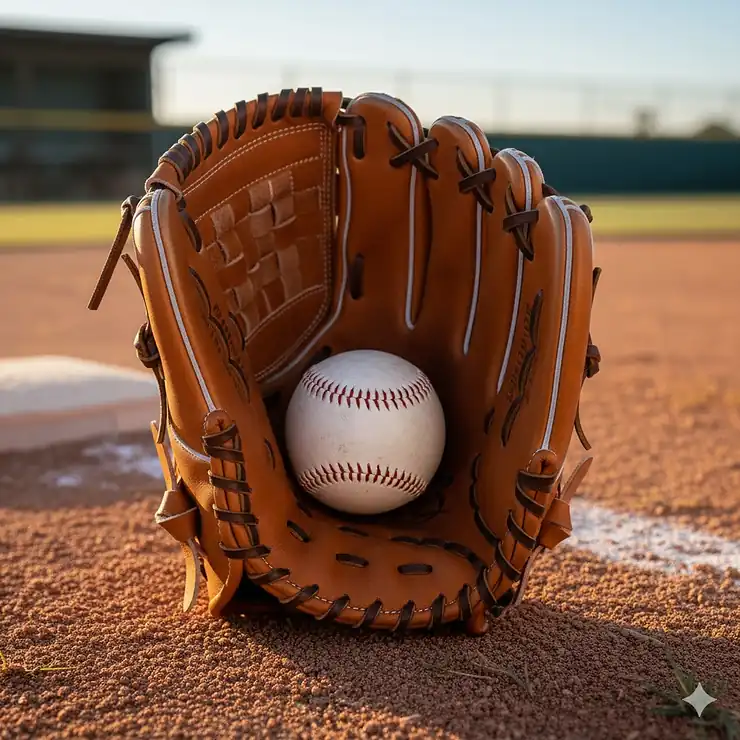
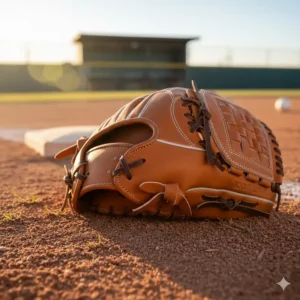
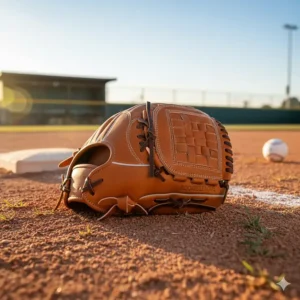
So what exactly is a youth first baseman glove? It’s a specialized mitt designed specifically for young players manning first base, featuring a longer, wider pocket than standard gloves, with a continuous rounded edge that helps scoop low throws from the dirt. Think of it as your kid’s secret weapon for turning those wild throws into easy outs. These mitts typically measure between 11.5″ and 12.5″ for youth players, with deeper pockets and extra padding to protect young hands from hard-thrown balls.
The youth first base glove market has exploded in 2025, with brands like Rawlings, Wilson, and Mizuno offering game-ready options that won’t break the bank. Whether your young athlete is just starting out in recreational leagues or competing in travel ball tournaments, finding that perfect mitt can make all the difference between confidence and frustration on the field. Trust me, after researching dozens of options and talking to coaches across the country, I’ve discovered which gloves actually deliver on their promises—and which ones are just marketing hype. Let’s dive into the top picks that’ll have your kid catching everything that comes their way!
Quick Comparison Table
| Product Name | Size | Price Range | Best For | Break-In Time | Rating |
|---|---|---|---|---|---|
| Rawlings R9 ContoUR | 12″ | $139.99 | Ages 9-12 | Minimal (80% ready) | ⭐⭐⭐⭐⭐ |
| Wilson A1000 1620 | 12.5″ | $129-$199 | Ages 12+ | Quick | ⭐⭐⭐⭐½ |
| Mizuno Prospect GXF102 | 12.5″ | $54-$80 | Ages 8-11 | Very Quick | ⭐⭐⭐⭐½ |
| Rawlings Renegade | 11.5″ | $79.95 | Ages 7-10 | Moderate | ⭐⭐⭐⭐ |
| Rawlings Select Pro Lite | 11.5″ | $79.95 | Ages 8-11 | Quick | ⭐⭐⭐⭐ |
| Akadema Prodigy AHC-94 | 11.5″ | $99-$120 | Ages 8-12 | Moderate | ⭐⭐⭐⭐ |
| SSK Z5 Craftsman | 12-13″ | $90-$150 | Ages 10+ | Minimal | ⭐⭐⭐⭐½ |
💬 Just one click – help others make better buying decisions too!😊
🛒 Why This Matters for Your Young Player
Choosing the right first base mitt isn’t just about having equipment—it’s about building confidence. When your child has a glove that actually fits their hand and helps them make those tough plays, you’ll see their love for the game grow. According to USA Baseball, properly fitted equipment is one of the top factors in youth player development and injury prevention.
Top 7 Youth First Baseman Glove Options: Expert Analysis
1. Rawlings R9 ContoUR Fit 12″ Youth Baseball First Base Mitt
The Rawlings R9 ContoUR Fit 12″ Youth Baseball First Base Mitt (Model: R9FMU-17BT) absolutely dominates the youth first base glove category for good reason. This isn’t just another mitt—it’s specifically engineered with Rawlings’ innovative ContoUR technology that features a smaller hand opening and lowered finger stalls, making it perfect for kids with smaller hands who are tired of swimming in oversized gloves.
Key Specifications:
- 12″ pattern with modified H-web
- 80% factory broken-in leather
- Reinforced palm pad for impact protection
- Price: $139.99
Why Parents Love It: Customer reviews consistently praise how quickly kids adapt to this glove. One travel ball coach told me, “I recommend this mitt to every parent whose kid plays first base at the 10U-12U level—the fit is unbeatable.”
✅ Pros:
- ContoUR fit eliminates the gap between hand and glove
- Soft, durable all-leather construction
- Game-ready right out of the box
❌ Cons:
- Higher price point than budget options
- May be too small for larger-handed 12-year-olds
Perfect For: Youth players ages 9-12 who need a properly fitted glove that won’t require weeks of break-in time. If your kid has been struggling with adult-sized mitts, this is your answer.
2. Wilson A1000 1620 12.5″ Baseball First Base Mitt
The Wilson A1000 1620 brings pro-level design to youth players without the premium price tag. Handcrafted in the same factory that produces the legendary A2000 series, this 12.5″ mitt delivers exceptional quality with full-grain leather that’s soft and game-ready from day one.
Key Specifications:
- 12.5″ pattern with single post web
- Full-grain leather construction
- DriLex wrist lining keeps hands dry
- Price Range: $129.95-$199.95
Customer Feedback: Players report excellent durability even after full seasons of competitive play. The single-post web creates that deep pocket every first baseman needs for scooping throws in the dirt.
✅ Pros:
- Pro-level craftsmanship at youth-friendly price
- Excellent for picking low throws
- Minimal break-in required
❌ Cons:
- Slightly larger sizing may not suit younger players
- Pocket could be deeper according to some reviews
Perfect For: Competitive players aged 12 and older who want a mitt that’ll last through multiple seasons of travel ball.
3. Mizuno Prospect GXF102 12.5″ Youth Baseball First Base Mitt
Here’s where value meets performance! The Mizuno Prospect GXF102 has become the go-to choice for parents who want quality without spending $150+. This youth first base glove features Mizuno’s patented PowerClose technology—a strategic notch cut into the heel that makes the glove open and close effortlessly, perfect for young players still developing hand strength.
Key Specifications:
- 12.5″ pattern with bio throwback leather
- PowerClose technology for easy closing
- ParaShock palm pad reduces sting
- Price Range: $54-$79.95
Why It’s a Winner: The combination of soft, pre-oiled leather and the PowerClose hinge makes this one of the easiest gloves for kids to use immediately. Multiple youth coaches have told me this is their #1 recommendation for beginners.
✅ Pros:
- Exceptional value for the quality
- PowerClose makes catching easier
- Very lightweight design
❌ Cons:
- Slightly less durable than premium options
- May need replacement sooner for heavy use
Perfect For: Youth players ages 8-11 entering their first or second year at first base, especially those on a budget.
4. Rawlings Renegade 11.5″ Youth Baseball First Base Mitt
The Rawlings Renegade R115FBM is Rawlings’ answer to parents asking, “What’s a solid starter mitt that won’t cost a fortune?” At just $79.95, this 11.5″ first base mitt delivers surprising quality with its all-leather shell and conventional back design.
Key Specifications:
- 11.5″ pattern ideal for younger players
- Basket web design
- All-leather construction
- Price: $79.95
Customer Experience: Reviews highlight how well this glove holds up for recreational and lower-level competitive play. It’s not the fanciest option, but it gets the job done reliably.
✅ Pros:
- Budget-friendly without sacrificing basics
- Good size for younger first basemen
- Decent quality leather
❌ Cons:
- Requires more break-in time than premium models
- Less advanced features than higher-end gloves
Perfect For: Beginning first basemen ages 7-10 playing recreational baseball who need a proper mitt without the premium cost.
5. Rawlings Select Pro Lite 11.5″ Youth Baseball First Base Mitt
The Rawlings Select Pro Lite SPL115FF sits in that sweet spot between budget and premium options. This youth first baseman glove is part of Rawlings’ Pro Lite series, designed specifically for young players transitioning from tee ball to competitive baseball.
Key Specifications:
- 11.5″ pattern with conventional back
- Leather shell with reinforced palm
- Available in multiple colors
- Price: $79.95
What Sets It Apart: The Pro Lite series uses slightly softer leather than the Renegade, making break-in faster while still maintaining durability for multiple seasons of use.
✅ Pros:
- Great quality-to-price ratio
- Fits true to size for youth hands
- Attractive color options
❌ Cons:
- Not as quick to break in as higher-end models
- Less palm padding than some prefer
Perfect For: Players ages 8-11 moving up from beginner levels who need a reliable first base mitt without overspending.
6. Akadema Prodigy AHC-94 11.5″ Youth First Base Mitt
Don’t sleep on Akadema! The Akadema Prodigy AHC-94 combines US Steerhide with their exclusive AkademaLyte leather to create a surprisingly lightweight and durable youth first base glove that punches above its price point.
Key Specifications:
- 11.5″ pattern perfect for smaller hands
- Hybrid leather construction reduces weight
- Grasp Clasp wrist system improves control
- Price Range: $99.95-$119.95
Customer Insights: Parents appreciate how quickly this glove breaks in compared to comparably priced options. The lighter weight makes it easier for younger players to control throughout games.
✅ Pros:
- Lightweight design reduces fatigue
- Quick break-in period
- Excellent craftsmanship for the price
❌ Cons:
- Less brand recognition than Wilson/Rawlings
- Some durability concerns with heavy use
Perfect For: Youth players ages 8-12 whose parents want a quality alternative to mainstream brands at a mid-range price.
7. SSK Z5 Craftsman Baseball First Base Mitt
The SSK Z5 Craftsman might not be a household name yet, but this Japanese brand is making serious waves with their premium Nameshi leather and innovative Dimple Sensor Technology. Available in sizes from 12″ to 13″, this first base mitt offers flexibility for growing players.
Key Specifications:
- Multiple sizes available (12″-13″)
- Premium Cowhide Nameshi Leather
- Dimple Sensor Technology for better grip
- Price Range: $90-$150 depending on size
Professional Touch: The extra factory break-in process means this glove arrives genuinely game-ready—not just “mostly broken in” like some competitors claim. The Dimple Technology in the palm helps reduce ball spin on catches.
✅ Pros:
- True game-ready feel out of the box
- Premium leather quality
- Unique grip-enhancing technology
❌ Cons:
- Less available in retail stores (mostly online)
- Higher price for larger sizes
Perfect For: Serious youth players ages 10+ who want a premium mitt that’ll grow with them and deliver pro-level performance.
✨ Ready to Equip Your Young First Baseman? 🏟️
These carefully selected youth first baseman glove options represent the best value, quality, and performance available in 2025. Click on any highlighted product above to check current pricing and customer reviews. Your young player deserves equipment that helps them succeed—not hold them back!
Understanding Youth First Base Glove Construction
Here’s something most parents don’t realize: not all baseball gloves are created equal, and a youth first baseman glove has unique construction features that make it completely different from a regular fielder’s mitt. Let me break down what actually matters when you’re shopping for your kid’s first base equipment.
The Anatomy of a First Base Mitt
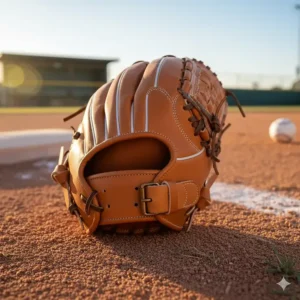
Unlike the individual finger compartments you’ll find on infield or outfield gloves, first base mitts feature a continuous, rounded edge—almost like a catcher’s mitt, but longer and wider. This “mitten” design isn’t just for looks; it creates a larger catching surface that funnels off-target throws directly into the pocket. According to Baseball America, this design element significantly improves a young player’s ability to handle errant throws, which, let’s be honest, happens pretty frequently at the youth level!
Critical Construction Elements:
- Web Design: Most youth first base gloves use either a single-post web or H-web pattern, which provides the deep pocket needed for scooping
- Palm Padding: Extra reinforcement protects young hands from the sting of hard throws
- Wrist Opening: Youth-specific sizing means a tighter wrist opening for better control
- Finger Stalls: Shortened and narrowed to actually fit kids’ hands properly
Leather Quality Makes a Real Difference
I can’t stress this enough—the type of leather directly impacts break-in time, durability, and overall performance. Here’s the breakdown:
Premium Full-Grain Leather (found in models like the Wilson A1000 and Rawlings R9):
✅ Softer feel right out of the box
✅ Better durability over multiple seasons
✅ Forms to your player’s hand more naturally
Synthetic/Composite Leather (budget options):
✅ Lower initial cost
✅ Requires little to no break-in
❌ Won’t last as long for competitive play
Steerhide Blends (like the Akadema Prodigy):
✅ Balance of durability and softness
✅ Lighter weight than full steerhide
✅ Good middle-ground option
Sizing Guidelines: Getting the Perfect Fit
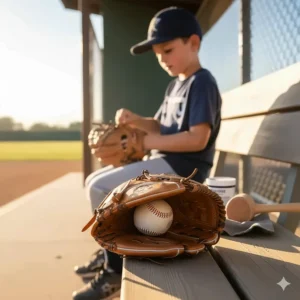
This is where I see parents make the biggest mistakes. They either buy a glove that’s way too big because “my kid will grow into it,” or they undersize thinking smaller equals better control. Both approaches are wrong! Let’s get this right from the start.
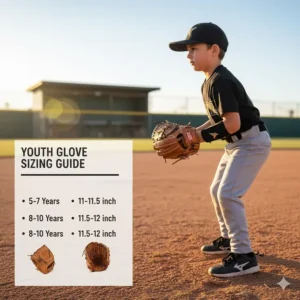
Age-Based Sizing Chart
| Player Age | Recommended Size | Why This Size |
|---|---|---|
| 7-8 years | 11″-11.5″ | Manageable size for developing hands |
| 9-10 years | 11.5″-12″ | Sweet spot for most youth players |
| 11-12 years | 12″-12.5″ | Transition toward adult sizing |
| 13+ years | 12.5″-13″ | Approaching adult first base sizes |
The Proper Fit Test
Here’s how to know if a youth first baseman glove actually fits your kid:
Step 1: Have them put the glove on and close it around a ball
Step 2: Check if they can easily squeeze the glove closed without straining
Step 3: Look at the wrist—there should be minimal gap but still allow movement
Step 4: The tip of their middle finger should reach the glove’s break point
Red Flags to Avoid:
❌ Fingers don’t reach the glove’s fingertips (too big)
❌ Can’t close the glove around a baseball (too stiff or wrong size)
❌ Wrist strap needs to be tightened to maximum (too large)
❌ Glove flops forward when held out (way too big)
According to the National Federation of State High School Associations, properly fitted equipment is crucial for both performance and safety in youth baseball. A poorly fitted glove can lead to missed catches, hand injuries, and declining confidence at a critical developmental stage.
The “Growing Into It” Myth
Look, I get it—kids grow fast, and baseball equipment isn’t cheap. But here’s the truth: buying a youth first base glove that’s too large “for them to grow into” is setting your kid up for frustration. They’ll struggle to close it, miss catches they should make, and potentially develop bad habits trying to compensate for an oversized mitt. Better to buy the right size now and upgrade in 1-2 years than suffer through a season of preventable mistakes.
Key Features Every Youth First Base Glove Needs
Not all features matter equally when you’re shopping for a youth first baseman glove. Some are marketing gimmicks, while others genuinely impact your kid’s performance. Let me cut through the nonsense and tell you what actually makes a difference on the field.
Non-Negotiable Features
1. Deep Pocket Design 🎯
The pocket depth determines whether your kid can scoop those low throws or if balls will pop out on impact. A first base mitt should have significantly more pocket depth than a regular fielder’s glove—we’re talking at least 1.5-2 inches deeper. The Rawlings R9 ContoUR and Wilson A1000 both excel here with strategically designed pockets that create a natural funnel effect.
2. Adequate Palm Padding 🛡️
Young hands + hard-thrown baseballs = potential pain and injury. Quality palm padding isn’t just about comfort; it’s about keeping your kid confident enough to catch aggressively. The Mizuno Prospect GXF102 features ParaShock padding that specifically targets the high-impact zone where the ball hits hardest.
3. Flexible Break-In Point 📐
Here’s something most parents don’t think about: where the glove bends when closing matters enormously. A good youth first base glove should have a single, well-defined break point that allows the mitt to close like a clamshell, not fold in weird directions. This is why the modified H-web and single-post web designs dominate first base equipment.
Nice-to-Have Features
Adjustable Wrist Straps: Leather lacing or Velcro closures let you customize the fit as your player grows or preferences change during the season.
Moisture-Wicking Linings: Features like Wilson’s DriLex wrist lining keep hands dry during hot summer tournaments—trust me, this matters more than you’d think during those three-game days!
Pre-Conditioning: Models advertised as “80% broken in” (like the Rawlings R9 series) or “game-ready” (like the SSK Z5 Craftsman) save you significant time and effort.
Features You Can Probably Ignore
❌ Flashy Colors/Graphics: Unless your kid really cares, these add cost without performance benefits
❌ “Revolutionary” Web Patterns: Basic H-web or single-post work perfectly fine
❌ Brand-Name Padding Systems: Most proprietary padding is just regular foam with fancy marketing
Breaking In Your Youth First Baseman Glove the Right Way
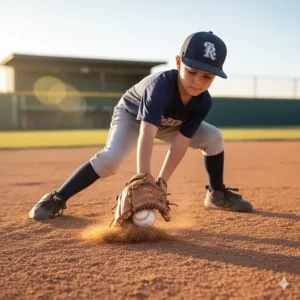
Alright, you’ve invested in a quality youth first base glove—now let’s make sure you don’t ruin it with improper break-in techniques. I’ve seen too many parents microwave their kid’s $140 mitt (yes, really) or use cooking oil instead of glove conditioner. Let’s do this properly!
The Proven 7-Step Break-In Process
Step 1: Apply Quality Glove Oil
Use a specialized baseball glove conditioner—not shaving cream, not cooking oil, not whatever your uncle swears by. Apply a thin layer to the leather, focusing on the pocket and break-in point. Products like Rawlings Glovolium or Wilson Pro Stock Glove Conditioner work best.
Step 2: Work the Pocket
Place a baseball in the pocket, fold the glove around it, and squeeze repeatedly for 5-10 minutes. Do this while watching TV—make it a routine.
Step 3: The Rubber Band Method
Wrap several rubber bands around the folded glove to maintain the pocket shape overnight. This is way better than shoving it under a mattress!
Step 4: Play Catch Daily
Nothing breaks in a youth first baseman glove better than actually using it. Even just 15-20 minutes of catch per day accelerates the process significantly.
Step 5: Controlled Pounding
Use a mallet or your fist to gently work the pocket area—emphasis on gently. You’re forming the leather, not tenderizing a steak.
Step 6: Targeted Flexing
Fold the glove at the break-in point repeatedly to establish the natural closing motion. Do this 50-100 times per session.
Step 7: Patience
Most youth gloves need 2-4 weeks of consistent use to break in properly. Pre-conditioned models like the Mizuno Prospect might only need a few days.
What NOT to Do
❌ Never:
- Put the glove in the microwave (ruins the leather)
- Soak it in water (causes excessive stiffness when dry)
- Leave it in a hot car (leather cracks)
- Use petroleum-based products (damages leather over time)
- Over-oil (makes it too heavy and floppy)
According to research from The Journal of Sports Sciences, properly conditioned equipment significantly reduces the risk of hand and wrist injuries in youth baseball players. Taking the time to break in your kid’s mitt correctly isn’t just about performance—it’s about safety too.
Youth First Base Glove vs Regular Fielding Gloves
Let me settle this debate once and for all: “Can my kid just use their regular baseball glove at first base?” Technically, yes. Should they? Absolutely not if they’re serious about playing the position well.
Side-by-Side Comparison
| Feature | First Base Mitt | Regular Fielding Glove |
|---|---|---|
| Length | 11.5″-12.5″ (youth) | 10.5″-11.5″ (youth) |
| Finger Design | Continuous rounded edge | Individual finger stalls |
| Pocket Depth | Extra deep (2″+ | Shallow to moderate |
| Web Style | Single-post or H-web | Varies by position |
| Primary Function | Scooping low throws | Fielding ground balls/flies |
| Weight | Slightly heavier | Lighter, more mobile |
Why the Difference Matters in Game Situations
Scenario 1: The Short-Hop Throw
Your shortstop fields a grounder and fires to first, but the throw bounces 5 feet in front of the bag. With a regular glove? Your kid might snag it but probably won’t. With a proper youth first baseman glove? The deep pocket and rounded edge scoop that ball cleanly 8 times out of 10.
Scenario 2: The Off-Target Throw
Third baseman uncorks a throw that’s two feet wide. A first base mitt’s extra length (that additional 1-2 inches really counts!) can be the difference between stretching to make the catch versus the ball sailing past.
Scenario 3: The Line Drive
A screaming line drive heads straight at your kid. The extra padding in a quality youth first base glove (like the Rawlings R9 ContoUR or Akadema Prodigy) protects their hand from stingers that could make them gun-shy about aggressive catches.
When a Regular Glove Might Work
Acceptable scenarios:
✅ Very early recreational baseball (7U-8U)
✅ Practice-only situations
✅ Emergency backup if the first base mitt breaks
Not acceptable:
❌ Competitive travel ball
❌ Regular season games at 10U and above
❌ All-star tournaments
Budget-Friendly Options Without Sacrificing Quality
Here’s the good news for budget-conscious parents: you don’t need to drop $200 on a youth first baseman glove to get quality performance. The key is knowing which corners you can cut and which ones you absolutely can’t.
Best Value Picks Under $100
The Champion: Mizuno Prospect GXF102 ($54-$80)
This is hands-down the best bang-for-your-buck in youth first base gloves. You’re getting:
- Real leather construction (not synthetic)
- Innovative PowerClose technology
- Youth-specific sizing
- Brand-name quality
One travel ball dad told me, “We tried the expensive stuff, but honestly, my son’s Mizuno Prospect has outlasted gloves twice its price.”
The Runner-Up: Rawlings Renegade R115FBM ($79.95)
Rawlings’ entry-level offering still delivers that Rawlings quality DNA. While it lacks fancy features like the R9 series, it absolutely handles recreational to mid-level competitive play without issues.
Where to Save Money Safely
✅ Skip Premium Brand Names: SSK and Akadema make excellent gloves without the Wilson/Rawlings price premium
✅ Buy Previous Year Models: Last year’s Wilson A1000 for $129 beats this year’s $199 version
✅ Online Retailers: JustBallGloves.com and BaseballMonkey.com often beat sporting goods stores by 20-30%
Where NOT to Cheap Out
❌ Synthetic Leather: Will fall apart quickly with competitive use
❌ No-Name Brands: Quality control is inconsistent; you’re gambling
❌ Used Gloves: Already broken in to someone else’s hand shape
Maintenance Tips to Extend Your Glove’s Life
You’ve invested in a quality youth first base glove—now let’s make it last multiple seasons instead of needing replacement every year. Proper maintenance isn’t complicated, but it makes a huge difference.
Daily Care Routine (2 Minutes)
After Every Use:
- Wipe Off Dirt: Use a slightly damp cloth to remove infield dirt and dust
- Dry Properly: Never leave the glove in a ball bag overnight—let it air out
- Store with Shape: Put a ball in the pocket and secure with rubber bands
Pro Tip: Keeping moisture out of your glove is crucial. If your kid plays in rain or heavy dew, stuff newspaper inside to absorb moisture, then replace it once dry.
Weekly Maintenance (10 Minutes)
During Active Season:
- Inspect laces for wear or loosening
- Apply a small amount of conditioner to high-stress areas (pocket, break-in point)
- Check the wrist strap for secure attachment
- Look for any leather separation or tears
Off-Season Storage
When baseball season ends, don’t just toss that youth first baseman glove in the garage and forget about it! Proper off-season care prevents leather from drying out and cracking.
The Right Way:
✅ Clean thoroughly and condition
✅ Store in a cool, dry place (not the garage)
✅ Keep a ball in the pocket to maintain shape
✅ Check on it monthly and re-condition if leather feels dry
The Wrong Way:
❌ Leaving it in a hot attic (leather cracks)
❌ Storing in a damp basement (mold growth)
❌ Folding it flat (destroys the pocket)
When to Replace vs Repair
Replace When:
- Leather is cracking extensively
- Web or lacing has failed multiple times
- Glove has become too small for your growing player
- Padding has compressed and no longer protects
Repair When:
- Single lace breaks (easily fixed at sporting goods stores)
- Mild leather dryness (conditioning fixes this)
- Minor web damage (most can be re-laced)
According to equipment specialists at Dick’s Sporting Goods, a properly maintained youth glove should last 2-3 seasons of moderate use or 1-2 seasons of heavy competitive play.
Common Mistakes Parents Make When Buying
I’ve been around youth baseball long enough to see the same purchasing mistakes repeated year after year. Let me save you the headache and wasted money by calling out the biggest blunders.
Mistake #1: Prioritizing Brand Over Fit
The Error: Buying a Wilson A1000 because “that’s what the pros use” even though it’s too big for your 9-year-old’s hand.
The Fix: Fit trumps brand every time. An Akadema Prodigy or Mizuno Prospect that fits properly will outperform an ill-fitting premium brand. Watch your kid actually try on gloves before purchasing—online shopping is convenient but risky for first-time buyers.
Mistake #2: The “Growing Into It” Trap
The Error: Buying a 13″ first base mitt for your 10-year-old “so it lasts longer.”
The Fix: Kids need gloves that fit NOW, not two years from now. An oversized youth first baseman glove leads to:
- Poor catching mechanics
- Dropped balls and lost confidence
- Potential hand injuries from improper positioning
Buy for their current age/size and plan to upgrade as they grow—this is the reality of youth sports equipment.
Mistake #3: Ignoring Hand Orientation
The Error: Ordering a “Right Hand” glove thinking that means it goes on the right hand (it doesn’t—it means right-hand throw, worn on left hand).
The Fix: Always confirm: Right Hand Throw (RHT) = worn on LEFT hand, Left Hand Throw (LHT) = worn on RIGHT hand. Most kids are right-handed throwers needing an RHT glove.
Mistake #4: Skipping the Break-In
The Error: Expecting a brand-new youth first base glove to work perfectly in tomorrow’s game.
The Fix: Even “game-ready” gloves like the SSK Z5 Craftsman benefit from some customized forming to your kid’s hand. Start the break-in process immediately upon purchase, not the night before the season starts!
Mistake #5: Buying Used Without Inspection
The Error: Grabbing a $40 used glove at a yard sale without checking its condition.
The Fix: Used gloves are already broken in to someone else’s hand shape. Unless you can physically inspect it for lace integrity, leather condition, and proper fit, stick with new equipment. The modest savings aren’t worth the risk.
Top Brands and What Makes Them Different
The youth first base glove market is dominated by a handful of brands, each with distinct philosophies and strengths. Let me break down what actually sets them apart beyond marketing hype.
Rawlings: The Heritage Choice
Brand Philosophy: Innovation rooted in tradition
Sweet Spot: Mid to premium price range ($79-$299)
Signature Technology: R9 Series ContoUR fit, Pro Preferred leather quality
Best For: Parents wanting proven quality with the brand cache that most youth leagues recognize. The Rawlings R9 ContoUR represents their youth-specific engineering at its finest.
Watch Out For: Entry-level Rawlings gloves (like the Renegade) don’t feature the same leather quality as their premium lines—you’re paying partly for the name.
Wilson: The Professional Standard
Brand Philosophy: What works for MLB should work for youth (scaled down appropriately)
Sweet Spot: Premium youth market ($129-$199)
Signature Technology: A1000 series handcrafted in A2000 factory, SuperSkin materials
Best For: Competitive players who want gloves engineered with pro-level attention to detail. The Wilson A1000 1620 is essentially a youth version of equipment actual first basemen use.
Watch Out For: Wilson’s lower-tier offerings (A700, A500) don’t deliver the same quality—stick with A1000 and above.
Mizuno: The Value Innovator
Brand Philosophy: High performance shouldn’t require high prices
Sweet Spot: Budget to mid-range ($54-$139)
Signature Technology: PowerClose heel flex, Bio Throwback leather
Best For: Parents seeking maximum value without sacrificing quality. The Mizuno Prospect GXF102 might be the best dollar-for-dollar youth first baseman glove available.
Watch Out For: Their youth-specific sizing runs slightly smaller than competitors—verify measurements carefully.
Akadema: The Under-the-Radar Quality
Brand Philosophy: Professional-grade construction at reasonable prices
Sweet Spot: Mid-range market ($99-$179)
Signature Technology: AkademaLyte leather, Grasp Clasp wrist system
Best For: Parents who want to avoid “paying for the name” while still getting excellent craftsmanship. The Akadema Prodigy AHC-94 consistently surprises people with its quality.
Watch Out For: Less widely available in retail stores—you’ll mostly find them online.
SSK: The Rising Japanese Contender
Brand Philosophy: Premium materials meet meticulous Japanese craftsmanship
Sweet Spot: Mid to premium range ($90-$200+)
Signature Technology: Dimple Sensor Technology, Nameshi leather
Best For: Players who want something unique that still delivers professional quality. The SSK Z5 Craftsman offers features typically found only in much more expensive gloves.
Watch Out For: Newer to the US market means less brand recognition and fewer retail options.
When to Upgrade from Youth to Adult Gloves
This transition question stumps a lot of parents: “When should my kid move from a youth first base glove to an adult-sized mitt?” There’s no magic age, but there are clear indicators that it’s time to size up.
Physical Signs It’s Time to Upgrade
✅ The Fingertip Test: If your child’s fingers extend beyond the glove’s fingertip area, they’ve outgrown it
✅ The Wrist Gap: When the wrist strap is fully tightened but still shows significant gap
✅ The Squeeze Difficulty: If closing the glove has become too easy (no resistance), they need more glove
✅ The Coverage Issue: When balls are hitting the edge of the mitt frequently during normal plays
Age and Size Guidelines
Typical Transition Ages:
- 12-13 years old: Most players start needing adult sizing
- Height-based: Once hitting 5’2″-5’4″, youth gloves often feel too small
- Hand measurement: If hand span exceeds 7.5″, adult gloves become appropriate
The In-Between Solution
For players in that awkward growth stage (usually 12U-13U), consider:
- 12.5″ gloves marketed as “youth/adult” transition sizes
- Models like the Wilson A1000 1620 or larger SSK Z5 options that bridge the gap
- Avoiding jumping straight to 13″ adult sizes unless your kid is exceptionally large for their age
Pro Tip: If you’re unsure, visit a sporting goods store like Dick’s Sporting Goods or Academy Sports where staff can properly measure your player’s hand and recommend appropriate sizing. According to youth baseball coaches surveyed in Coaching Youth Baseball Magazine, improper sizing during this transition period causes more catching errors than any other equipment factor.
FAQ: Youth First Baseman Glove Questions Answered
❓ What size youth first baseman glove should I buy for my 10 year old?
❓ How long does it take to break in a youth first base glove?
❓ Can my child use a first base mitt at other positions?
❓ What's the difference between a youth and adult first base mitt?
❓ Should I buy a first baseman glove or first baseman mitt for youth players?
Conclusion: Making the Right Choice for Your Young First Baseman
So we’ve covered a ton of ground here—from understanding the specific construction features that make a youth first baseman glove effective, to reviewing the top seven options available in 2025, to avoiding the common mistakes that waste money and frustrate kids. Let me bring this all together with some final thoughts.
The bottom line? The right youth first base glove transforms your kid’s experience at first base from frustrating to fun. I’ve seen it happen countless times: a young player struggling to make routine plays suddenly becomes confident and reliable once they’re using equipment that actually fits and functions properly. Whether you choose the premium Rawlings R9 ContoUR for its innovative sizing, the value-packed Mizuno Prospect GXF102 for its affordability, or the pro-quality Wilson A1000 1620 for its durability, you now have the knowledge to make an informed decision.
Remember these key takeaways:
- Proper fit beats brand name every single time
- Youth-specific sizing (11.5″-12.5″) matters for developing players
- Breaking in your glove correctly extends its life and improves performance
- Quality leather construction is worth the modest price increase over synthetic options
Don’t overthink this decision—focus on getting the right size for your child’s current hand dimensions, stick with reputable brands we’ve discussed, and invest time in proper break-in and maintenance. Your young first baseman will thank you when they’re scooping throws out of the dirt and making plays that build their confidence and love for the game!
🎯 Take Action Now: Your Next Steps
Ready to equip your young player with the perfect first base mitt? Review the comparison table above, read through customer reviews on Amazon for your top choices, and measure your child’s hand to confirm sizing. The 2025 season is here—let’s make sure your kid has the equipment they need to succeed!
Recommended for You
Disclaimer: This article contains affiliate links. If you purchase products through these links, we may earn a small commission at no additional cost to you.
✨ Found this helpful? Share it with your friends! 💬🤗
