
In This Article
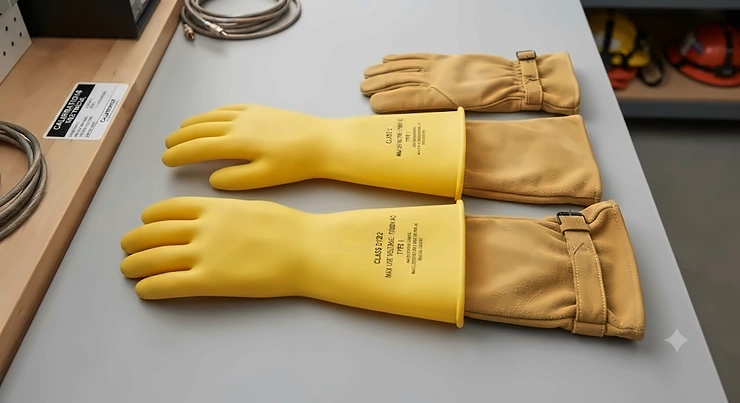
Grab the wrong gloves for the wrong job and you’re not just uncomfortable — you’re gambling with your hands, or worse. That’s the blunt truth underneath every spec sheet in this guide. Class 2 high voltage gloves for lineman work are the mid-tier workhorse of rubber insulating PPE, rated for jobs where Class 00 or Class 0 gloves simply won’t cut it and where a Class 4 glove would be unnecessary overkill (and a pain to work in all day). Put simply: what is a class 2 high voltage glove for lineman? It’s a natural rubber insulating glove certified under ASTM D120 to a maximum use voltage of 17,000 volts AC, designed to be worn under leather protectors while a qualified worker performs energized or near-energized distribution work.
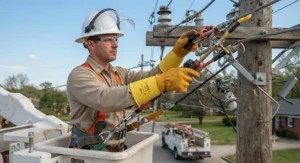
We dug into real product listings, manufacturer spec sheets, and OSHA’s own regulatory language to put together this comparison — not a rehash of an Amazon listing, but an actual breakdown of what separates a $70 straight-rubber glove from a $200 cold-rated kit. You’ll get honest analysis of seven real gloves from Salisbury, Cementex, National Safety Apparel, NOVAX, and Ansell, plus the buying criteria, certification rules, and retest schedules that actually matter once these gloves leave the box. If you’re comparing 17000 volt insulating gloves for a crew, a solo contractor gig, or your own locker, this is built to get you to a confident decision fast.
Quick Comparison Table
Before the deep dive, here’s the short version for anyone skimming on a lunch break. This table covers the standout pick in each category — budget, kit-value, and premium — so you can jump straight to a product section if one catches your eye.
| Glove | Class / Max Voltage | Price Range | Best For |
|---|---|---|---|
| Cementex IG2-14 | Class 2 / 17,000V AC | $70–$100 | Budget-conscious buyers who already own protectors |
| NOVAX 150-SK-2/10-KIT | Class 2 / 17,000V AC | $140–$190 | Mid-range crews wanting a complete kit |
| Salisbury E214RB | Class 2 / 17,000V AC | $90–$130 | Utilities standardizing on a trusted brand |
| Ansell ActivArmr RIG214B | Class 2 / 17,000V AC | $110–$160 | Cold-climate and arc-flash-conscious crews |
Looking at this snapshot, the pattern is clear: Cementex IG2-14 wins on raw price-per-pair, but it’s a standalone glove, not a kit — you’ll need protectors separately. The NOVAX 150-SK-2/10-KIT and similar bundled kits close that gap by rolling leather protectors and a storage bag into one purchase, which is often the smarter buy for someone building a kit from scratch. Salisbury and Ansell sit at the premium end, and as you’ll see in the full breakdown below, that premium buys you things a spec sheet alone won’t tell you about.
💬 Already know which class you need? Check current pricing on today’s top pick before it sells out of your size.
Top 7 Class 2 High Voltage Gloves for Lineman: Expert Analysis
Here’s the full lineup, spanning straight rubber gloves for buyers who already own leather protectors, complete kits for people building a setup from zero, and premium options for crews who work in cold climates or want extra arc-flash headroom. All seven are rated Class 2 under ASTM D120, meaning a maximum use voltage of 17,000 volts AC — but as you’ll see, “Class 2” is where the similarities largely end.
| Product | Length | Format | Price Range | Best For |
|---|---|---|---|---|
| Salisbury E214RB | 14″ | Straight glove | $90–$130 | Brand loyalty / utility fleets |
| Cementex IG2-14 | 14″ | Straight glove | $70–$100 | Budget buyers with existing protectors |
| Cementex IGK2-14 Kit | 14″ | Full kit | $130–$180 | New crews needing everything at once |
| NSA/ArcGuard KITGC212 | 11″ | Full kit | $140–$190 | Utility-spec test-dated documentation |
| Enespro GC2B08 | 14″ | Standalone glove | $85–$120 | Widest size range availability |
| NOVAX 150-SK-2/10-KIT | 14″ | Full kit | $140–$190 | Cowhide-protector durability |
| Ansell ActivArmr RIG214B | 14″ | Straight glove | $110–$160 | Cold-weather and arc-flash certification |
Every row above reflects real spec sheets, not marketing copy — but the numbers only tell part of the story. What actually separates these gloves in the field comes down to cuff design, rubber formulation, and how each brand handles the cut-layer contrast that lets a foreman spot a compromised glove before it becomes a hospital trip. That’s the analysis below.
1. Salisbury by Honeywell E214RB — contrast-layer safety indicator
The Salisbury E214RB is the glove most utility safety managers picture when they hear “Class 2 lineman glove,” and the reason comes down to one deliberately unglamorous feature: contrasting inner and outer rubber colors. When the glove stretches or takes a nick, the underlying layer shows through in a different shade, giving a visual defect check that doesn’t require lab equipment.
The 14-inch straight cuff is built from Type I natural rubber, rated to a 17,000-volt AC maximum use voltage with a 20,000-volt proof test, matching the ASTM D120 Class 2 spec exactly. Sizes run 7 through 12, with half sizes available, so palm-circumference fit isn’t a guessing game. Based on the spec comparison against Salisbury’s own Class 1 and Class 3 lines, the E214RB sits in the sweet spot for distribution-level work — thick enough for real dielectric margin, thin enough that most linemen don’t complain about lost dexterity after a full shift.
Reviewers consistently report that the black/red two-tone construction makes pre-use air testing faster, since a compromised spot is easier to spot against the contrasting base layer. A common complaint in user reviews centers on price relative to Cementex or generic alternatives — you’re paying a premium for the Honeywell name and documented QA process, which matters more to fleet buyers who need consistent, auditable equipment than to a solo contractor watching every dollar.
Pros:
- ✅ Contrast-layer rubber makes defect inspection genuinely faster
- ✅ Half sizes available for a more precise palm fit
- ✅ Widely stocked, so replacement pairs are easy to source
Cons:
- ❌ Priced above most Cementex and generic Class 2 alternatives
- ❌ Sold without leather protectors — a separate purchase
At around $90–$130 per pair before protectors, the Salisbury E214RB lands in the mid-to-premium range — a reasonable trade if your organization already standardizes on Honeywell PPE, less so if you’re pricing out a first kit from scratch.
2. Cementex IG2-14 — best all-around budget straight glove
The Cementex IG2-14 is what most contractors reach for when they need a straightforward Class 2 glove without kit extras. It’s built from chlorinated natural rubber with a rolled cuff edge, and it’s certified against ASTM D120, OSHA 1910.137, OSHA 1910.268, NFPA 70E, and CSA Z462 — a compliance list that covers both general industry and utility-specific requirements in one glove.
The 17,000-volt AC max use rating and 20,000-volt AC proof test voltage match the ASTM Class 2 spec on the nose, and the anatomically shaped fingers are meant to cut down on the hand fatigue that builds up over an 8-to-10-hour shift. What most buyers overlook about this model is that the chlorinating process isn’t just cosmetic — it reduces the tacky surface feel of raw natural rubber, which makes donning and doffing meaningfully faster when you’re re-gloving multiple times a day on a hot job site.
Aggregated feedback across electrical-supply retailers points to strong value-for-money sentiment, with buyers frequently noting the glove performs comparably to pricier brands in daily use, though a smaller number flag thinner-feeling material at the fingertips compared to Salisbury’s line. If you can’t verify a specific batch’s third-party review count, treat that as a reason to buy from an established electrical-supply distributor rather than a marketplace reseller with unclear sourcing.
Pros:
- ✅ Full compliance stack: ASTM D120, OSHA, NFPA 70E, CSA Z462
- ✅ Chlorinated finish speeds up donning and doffing
- ✅ Consistently the lowest price point among straight Class 2 gloves
Cons:
- ❌ No leather protectors or bag included
- ❌ Some users report thinner feel at the fingertips vs premium brands
Priced around $70–$100 per pair, the Cementex IG2-14 is the value anchor of this list — check current price before assuming it’s always the cheapest option, since availability shifts by size and color.
3. Cementex IGK2-14 Kit — complete kit value for new crews
If you’re outfitting a new hire or building a first kit from zero, the Cementex IGK2-14 Kit solves the “what else do I need” problem in one purchase. It bundles the same Class 2 rubber glove as the standalone IG2-14 with matching leather protectors and a canvas storage bag — everything ASTM F696 recommends pairing with a rubber insulating glove for mechanical protection.
Here’s what to weigh: buying the kit versus assembling pieces separately usually saves a modest amount versus sourcing each item individually, but the bigger win is fit-matching. Leather protectors sized specifically to pair with the glove reduce the gap between rubber cuff and protector cuff, which ASTM specifications require to be at least one inch per 10,000 volts of proof-test voltage. Get that gap wrong buying mismatched pieces separately, and you’ve technically created a compliance issue.
Reviewers on electrical-supply sites note the canvas bag is basic but functional — it won’t survive being thrown in a truck bed uncovered for years, but it does the job of keeping gloves out of direct sunlight and away from oils and solvents that degrade rubber, both of which OSHA’s storage guidance specifically calls out as service-life killers.
Pros:
- ✅ Rubber gloves, protectors, and bag all correctly size-matched
- ✅ Meets ASTM cuff-gap requirement out of the box
- ✅ Simplifies purchasing for first-time buyers
Cons:
- ❌ Canvas bag is basic and not built for rough long-term storage
- ❌ Slightly less rubber-formulation flexibility than premium brands
Expect a price in the $130–$180 range for the full kit — a reasonable mid-range value verdict for anyone who doesn’t already own compatible protectors.
4. National Safety Apparel / ArcGuard KITGC212 — test-date-stamped kit
The National Safety Apparel KITGC212 (sold under the ArcGuard brand) leans hard into one specific selling point: every pair ships newly tested and stamped with a visible test date. For safety managers who get audited on documentation, that stamp isn’t a nice-to-have — it’s the difference between a five-second compliance check and a scramble through paperwork.
The kit pairs 11-inch Class 2 rubber gloves with matching 10-inch leather protectors and a storage bag, rated to the same 17,000V AC / 25,500V DC max-use spec as the rest of this list, and certified against NFPA 70E-2015 arc flash requirements plus CSA Z462-15 for Canadian crews. Based on the spec comparison, the shorter 11-inch cuff length trades some upper-forearm coverage for a lighter, less bulky glove — a reasonable call for distribution work where full 14-to-18-inch sleeves aren’t the norm, less ideal if your job regularly brings your forearm closer to energized conductors.
A common thread in aggregated feedback is appreciation for the documentation-first approach — reviewers specifically call out the printed test date as saving time during OSHA-driven equipment audits, which lines up with 1910.137’s requirement that employers certify and date-track glove testing.
Pros:
- ✅ Visible test-date stamp simplifies compliance audits
- ✅ NFPA 70E-2015 and CSA Z462-15 arc flash certified
- ✅ Complete kit with protectors and storage bag included
Cons:
- ❌ Shorter 11-inch cuff offers less forearm coverage than 14-inch options
- ❌ Premium pricing relative to Cementex’s comparable kit
At roughly $140–$190, the National Safety Apparel KITGC212 earns its price primarily through documentation and audit-readiness rather than raw rubber performance.
5. Enespro GC2B08 — widest size range for crew fitting
The Enespro GC2B08 (manufactured under the National Safety Apparel umbrella) is a standalone 14-inch Class 2 rubber glove sold across sizes 8 through 12, which matters more than it sounds like it should when you’re fitting an entire crew rather than one person. Ill-fitting insulating gloves aren’t just uncomfortable — loose material bunches at the fingertips and reduces the tactile feedback linemen rely on to work small connectors by feel.
Rated to the standard 17,000V AC / 25,500V DC max use voltage and compliant with NFPA 70E-2015 and ASTM D120, the GC2B08’s core spec sheet doesn’t differ dramatically from its competitors — what most buyers overlook is that it’s explicitly designed and marketed as a component glove, meant to pair with Enespro’s separately sold leather protectors and FR knit liners rather than being locked into one bundled configuration. That modularity is a real advantage for organizations with an existing protector inventory who just need to restock rubber gloves in specific sizes.
Aggregated review sentiment across safety-supply retailers is generally positive on comfort and sizing accuracy, with a recurring theme that palm-circumference sizing charts run true, reducing return/exchange headaches — a practical, if unglamorous, win for procurement teams ordering in bulk.
Pros:
- ✅ Full 8–12 size range simplifies crew-wide fitting
- ✅ Sold as a modular component, not locked to one kit configuration
- ✅ Sizing charts reported as accurate, reducing exchanges
Cons:
- ❌ Requires separately purchased protectors for compliant use
- ❌ Fewer bundled-kit options than Cementex or NOVAX
Priced around $85–$120 per pair, the Enespro GC2B08 is best suited to buyers restocking or standardizing sizes across a crew rather than someone building a single kit from nothing.
6. NOVAX by PIP 150-SK-2/10-KIT — cowhide protector durability
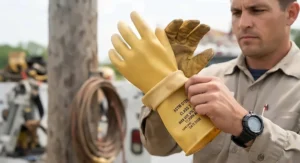
The NOVAX 150-SK-2/10-KIT bundles a Class 2 rubber glove with cowhide leather protectors — a step up from the split cowhide or lighter-weight leather used in some budget kits — plus a nylon glove bag rather than canvas. Cowhide’s tighter grain structure holds up better against repeated abrasion from conduit edges, pole hardware, and rough switchgear enclosures, which is exactly the kind of mechanical wear that eventually punches through a protector and exposes the rubber glove underneath.
Here’s what the spec sheet won’t tell you, but reviewers note: the nylon bag, while less “classic” than canvas, actually resists moisture better in humid climates, which matters for rubber longevity since trapped humidity accelerates degradation. Based on the spec comparison against Cementex’s canvas-bag kit, this is a genuine, if modest, durability edge for buyers working in the Gulf Coast, Southeast, or other high-humidity regions.
Reviewer sentiment on PIP/NOVAX products broadly skews positive for value, with buyers frequently comparing it favorably against Salisbury on a price-to-performance basis, though the brand carries less name recognition among older-generation linemen who grew up on Salisbury and Cementex specifically.
Pros:
- ✅ Cowhide protectors outlast lighter leather in abrasive environments
- ✅ Nylon bag resists moisture better than canvas alternatives
- ✅ Strong value-for-money sentiment in aggregated reviews
Cons:
- ❌ Less established brand recognition among veteran crews
- ❌ Sizing runs slightly differently than Salisbury — check the chart
Expect to pay around $140–$190 for the full kit, putting it directly against the Cementex and NSA kits on price while offering a genuine leather-durability edge for humid climates.
7. Ansell ActivArmr RIG214B — cold-weather and arc-flash certified
The Ansell ActivArmr RIG214B is the technical standout on this list, and it’s worth understanding why before writing it off as “just the expensive one.” Beyond the standard 17,000V AC / 25,500V DC touch-voltage rating, it carries EN Category R certification, Category C cold-resistance certification, and an arc-flash rating of APC 2 when paired with Ansell’s 96-003 leather gloves — translating to an Arc Thermal Performance Value of 14 cal/cm² and an Energy Breakopen Threshold of 33 cal/cm² in that configuration.
Based on the spec comparison, the cold-resistance certification is the detail that actually changes buying behavior for northern-climate utilities: rubber that stays flexible and crack-resistant in sub-freezing conditions isn’t a marketing footnote, it’s a genuine safety variable, since brittle rubber loses its dielectric integrity risk profile in ways a room-temperature test won’t catch. The ergonomic hand-at-rest shape with non-splayed fingers is a real, if subtle, fatigue reducer during long shifts — reviewers consistently mention reduced hand cramping compared to older straight-finger glove designs.
Aggregated feedback trends positive on comfort and cold performance specifically, with a recurring theme among buyers in northern states valuing the glove’s flexibility in low temperatures compared to standard-formulation competitors — though the price premium draws consistent comment from budget-focused reviewers.
Pros:
- ✅ Certified cold-resistant rubber for sub-freezing conditions
- ✅ APC 2 arc-flash rating when paired with matching leather gloves
- ✅ Ergonomic hand-at-rest design reduces fatigue on long shifts
Cons:
- ❌ Highest price point among the gloves on this list
- ❌ Arc-flash rating requires purchasing Ansell’s specific leather gloves too
At approximately $110–$160 per pair, the Ansell ActivArmr RIG214B justifies its premium primarily for cold-climate crews and anyone prioritizing a documented, stackable arc-flash rating over raw cost savings.
Practical Usage Guide: Getting Your Class 2 Gloves Job-Ready
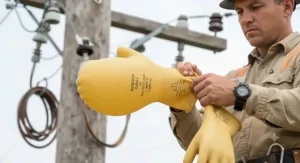
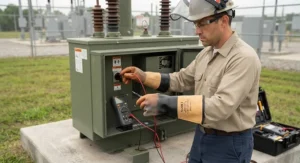
Buying the right glove is half the job — using it correctly is the other half, and it’s the half most product listings skip entirely. Before a new pair ever touches an energized conductor, air-test it: roll the cuff to trap air inside, then squeeze and listen or feel for escaping air at any point, checking closely around the fingers and seams where pinholes typically form. Do this before every single use, not just when the gloves are new — OSHA’s own guidance treats pre-use air testing as a daily, non-negotiable step, not a onetime unboxing ritual.
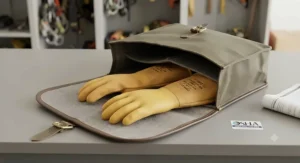
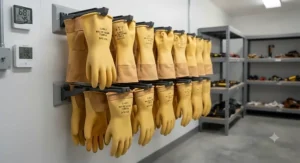
Storage is where most premature glove failures actually start. Keep gloves in their bag or canister, away from direct sunlight, ozone sources (like running motors or transformers), and any petroleum-based products — even hand lotion residue can degrade natural rubber over time. Never fold gloves for storage; folding creates permanent stress creases that become failure points under dielectric load. A surprising number of first-30-days mistakes come down to exactly this: a new hire tosses gloves loose in a truck door pocket, and three months later they’ve got sun-baked, ozone-cracked rubber that fails a routine inspection.
On the hot stick work side, remember that Class 2 rubber gloves and insulated hot sticks serve overlapping but distinct roles — hot sticks keep the worker’s whole body outside the minimum approach distance for higher-voltage work, while insulating gloves protect hands during work that brings them closer to energized parts within established limits. Many distribution crews use both in combination: sticks for the initial energized connection or disconnection, gloves for any closer-proximity work that follows. Always confirm your leather protectors are rated and sized to match your glove class — a mismatched protector doesn’t just look sloppy, it can compromise the mechanical protection the rubber glove depends on.
✨ Ready to build out your kit? Compare current pricing on today’s featured picks before you head to the job site.
Real-World Scenarios: Matching Gloves to the Job
Not every buyer on this page has the same job, budget, or climate, so here’s how three common profiles typically shake out. A journeyman lineman doing daily distribution-voltage maintenance for a municipal utility usually wants documented, audit-ready gear — something like the National Safety Apparel KITGC212‘s test-stamped kit fits that need directly, since utility safety departments frequently require visible test dates during spot inspections.
An independent electrical contractor working occasional 17,000-volt distribution jobs alongside lower-voltage commercial work has different priorities: value and versatility matter more than brand prestige. The Cementex IG2-14 paired with separately sourced protectors, or the bundled IGK2-14 Kit if starting from zero, covers that need without over-investing in features a part-time high-voltage worker won’t use often enough to justify.
A utility crew based in a northern climate — think Minnesota, Montana, or upstate New York — faces a genuinely different risk profile: rubber that stiffens or cracks in cold weather isn’t a theoretical concern, it’s a recurring winter maintenance headache. That’s the exact scenario the Ansell ActivArmr RIG214B‘s Category C cold-resistance certification was built for, and it’s a case where paying the premium is a defensible operational decision rather than just a brand preference.
Problem → Solution: Common Class 2 Glove Issues
Problem: Gloves feel stiff and uncomfortable after a few months. This is often a storage issue rather than a defect — ozone exposure and improper folding are the two leading causes of premature stiffening. Solution: switch to proper canister or bag storage away from motors, transformers, and direct sun, and never fold gloves flat for extended periods.
Problem: Uncertainty about whether gloves are still safe to use. Visual and air inspection catches obvious damage, but dielectric integrity can degrade invisibly. Solution: follow the retest schedule detailed in the certification section below, and don’t put gloves back into service past their documented test window regardless of how they look.
Problem: Leather protectors wearing out faster than the rubber gloves underneath. Protectors take the brunt of mechanical abrasion by design. Solution: inspect protectors separately from gloves at every use, and consider a cowhide option like the NOVAX 150-SK-2/10-KIT‘s protectors if you’re in a high-abrasion environment and burning through lighter leather too fast.
Problem: Sizing feels off despite ordering the “right” size. Sizing varies slightly between manufacturers even at the same nominal number. Solution: measure palm circumference directly per the manufacturer’s chart rather than assuming your size carries over from a different brand — this is a specific pain point called out in reviews of the NOVAX line relative to Salisbury’s sizing.
Problem: Gloves keep getting damaged by simple punctures. Most punctures trace back to skipped or rushed air testing that missed a small pre-existing weak spot. Solution: build the full-cuff-roll air test into the actual daily routine, not just a once-a-week habit, and retire any glove immediately at the first sign of a pinhole rather than hoping it holds.
How to Choose Class 2 High Voltage Gloves for Lineman
Here’s a practical, step-by-step framework for narrowing this decision down fast:
- Confirm the voltage class matches your actual job exposure. Class 2 covers up to 17,000 volts AC — if your work regularly exposes you to distribution voltages above that, you need Class 3 or Class 4, not a Class 2 glove pushed past its rating.
- Decide between a standalone glove and a full kit. If you already own compatible leather protectors and a storage bag, a standalone glove like the Cementex IG2-14 saves money; if you’re starting from zero, a kit avoids compliance gaps from mismatched components.
- Check cuff length against your actual reach requirements. 11-inch cuffs are lighter and less bulky; 14-to-18-inch cuffs offer more forearm coverage for work closer to energized conductors.
- Weigh climate conditions into rubber selection. Crews in cold-weather regions should prioritize cold-resistance certification, like the Ansell ActivArmr RIG214B carries, rather than treating it as an optional upgrade.
- Verify the compliance stack matches your regulatory environment. Look for explicit ASTM D120, OSHA 1910.137/1910.268, and NFPA 70E language on the listing — Canadian crews should also confirm CSA Z462 compliance.
- Factor in test-date documentation needs. If your organization gets audited on PPE records, a pre-stamped kit like the National Safety Apparel KITGC212 removes a paperwork step.
- Size using palm circumference, not assumed brand carryover. Every manufacturer above publishes a sizing chart — use it directly rather than guessing based on a different brand’s fit.
Common Mistakes When Buying High-Voltage Lineman Gloves
The single most common mistake is buying rubber gloves without factoring in leather protectors at all — a rubber-only setup isn’t just under-protected against mechanical damage, it’s often a straight-up compliance violation, since OSHA 1910.269 explicitly requires insulating gloves to be worn “in combination with leather protectors” for qualified employees within minimum approach distance. A close second is assuming a lower-voltage glove “should be fine” for occasional higher-voltage exposure — Class 1 gloves cap out at 7,500 volts AC, and pushing that rating past its limit “just this once” is exactly the kind of decision safety audits exist to catch before it becomes an incident report.
Buyers also frequently underestimate how much storage habits affect real-world service life, treating the glove purchase as a one-time decision rather than an ongoing maintenance commitment. And a subtler mistake: assuming all Class 2 gloves are functionally interchangeable because they share a voltage rating. As the seven products above make clear, cuff length, cold-resistance, arc-flash stacking, and kit completeness vary meaningfully within the same ASTM class — the rating tells you the floor, not the whole story.
Class 2 Gloves vs Other Insulating Glove Classes
Understanding where Class 2 sits relative to its neighbors clarifies why it’s the default choice for so much distribution work. Class 0 tops out at 1,000 volts AC — fine for low-voltage electrical work but far short of distribution-line exposure. Class 1 reaches 7,500 volts AC, adequate for some lower-distribution scenarios but undersized for standard 15kV-class circuits common across U.S. utilities. Class 2 steps up to 17,000 volts AC, directly matching the voltage range most residential and commercial distribution lines actually run at. Class 3 and Class 4 push to 26,500 and 36,000 volts respectively, intended for sub-transmission and select transmission-adjacent work where Class 2 would leave a dangerous margin gap.
| Glove Class | Max Use Voltage (AC) | Typical Use Case | Best For |
|---|---|---|---|
| Class 0 | 1,000V | Low-voltage electrical, control panels | General electricians, not linemen |
| Class 1 | 7,500V | Lower-distribution voltage work | Some commercial/industrial crews |
| Class 2 | 17,000V | Standard distribution line voltage | Most utility lineman work |
| Class 3 | 26,500V | Sub-transmission voltage | Higher-voltage specialty crews |
| Class 4 | 36,000V | Transmission-adjacent work | Rare, specialized applications |
The takeaway from this table is straightforward: buying above your actual voltage exposure adds cost and dexterity loss without a safety benefit, while buying below it is a genuine hazard, not a shortcut. For the overwhelming majority of U.S. distribution line voltage work — the 12kV to 15kV range most utilities run — Class 2 is the correctly matched, not the conservative, choice.
What to Expect: Real-World Performance on Distribution Lines
Spec sheets describe dielectric properties in a vacuum; real job sites add heat, sweat, repeated flexing, and time pressure. In practice, most linemen report that a well-fitted Class 2 glove feels noticeably bulkier for the first several shifts and then becomes close to second nature — the learning curve is real but short. Expect reduced fine-motor dexterity compared to bare hands or low-voltage gloves; tasks like threading small hardware take longer and often benefit from practiced technique rather than fighting the glove.
Heat buildup inside the glove during summer shifts is a consistently reported friction point across brands, which is part of why some crews layer thin cotton glove liners underneath — check with your specific manufacturer, since not all Class 2 gloves are rated for liner use without affecting fit or air-test results. On the positive side, once broken in, the better-reviewed gloves in this comparison — particularly the Salisbury E214RB and Ansell ActivArmr RIG214B — get consistent praise for maintaining flexibility through a full shift rather than stiffening up, a detail that matters more on an 8-hour pole-climbing day than any single spec number.
Mid-Voltage Electrical PPE: Where Class 2 Gloves Fit in Your Kit
Class 2 rubber gloves are one piece of a broader mid-voltage electrical PPE system, and treating them as a standalone purchase misses the bigger picture. A complete mid-voltage kit typically pairs the insulating gloves with matched leather protectors, arc-rated clothing sized to the anticipated incident energy, insulated hand tools, and — depending on the work — rubber sleeves covering the upper arm when shoulders come within minimum approach distance of energized parts.
The gloves themselves sit at the center of that system because hands are statistically the body part most frequently exposed during energized or near-energized work. But mid-voltage electrical PPE is only as strong as its weakest matched component: pairing a premium Class 2 glove with expired or mismatched leather protectors, or wearing arc-rated clothing not sized correctly for actual exposure, undercuts the protection the gloves alone provide. Buyers assembling a full PPE kit for the first time should budget for the complete system, not just the glove line item, and should verify every component’s certification date independently rather than assuming a bundled kit stays compliant indefinitely.
Lineman Glove Certification & Regulatory Compliance
Lineman glove certification runs through two connected but distinct frameworks: manufacturing standards and in-service testing requirements. On the manufacturing side, ASTM D120 governs how rubber insulating gloves are built and initially tested, covering six glove classes — Class 00 through Class 4 — differentiated by their electrical characteristics and proof-test voltages. Every glove in this comparison is manufactured and certified to that specification.
On the in-service side, OSHA 29 CFR 1910.137 sets the legal requirements employers must follow once gloves are actually in use — including pre-use inspection, periodic electrical retesting, and record-keeping obligations. For utility-specific work, OSHA 1910.269 layers on additional requirements specific to electric power generation, transmission, and distribution work, including the rule that qualified employees within minimum approach distance must wear insulating gloves paired with leather protectors — not gloves alone. NFPA 70E and, for Canadian operations, CSA Z462 round out the arc-flash and electrical-safety-program side of the compliance picture. Employers should keep test certifications on file and available for inspection, since 1910.137 explicitly requires that certification to identify both the equipment tested and the date of testing.
Glove Retest Date: Testing, Inspection, and Service Life
The glove retest date is where a lot of otherwise-diligent crews slip up, mostly because the rules sound simple but have real nuance. OSHA and ASTM F496 require electrical retesting of rubber insulating gloves at intervals not exceeding six months while in active service — but that clock has a specific starting point that trips people up: it’s measured from the date of first issue, not the date of manufacture or purchase. OSHA has specifically clarified that “first issue” means the moment gloves are removed from their original manufacturer packaging, even if they’re tested and then returned to storage without being worn on the job.
There’s a second rule layered on top: gloves that have been tested but not yet issued cannot be placed into service if more than twelve months have passed since that test, regardless of the six-month in-service interval. In practice, this means a pair tested in January but not issued until October must still come off the retest clock based on the original test date — not a fresh six months from October. Beyond scheduled electrical retesting, gloves also require daily inspection before use and immediate testing after any incident that could reasonably have caused damage. Organizations working with high call volume or frequent glove use sometimes test monthly as a best practice rather than waiting for the six-month maximum, particularly for crews doing daily energized work. See the OSHA eTool on insulating gloves and sleeves for the full inspection and testing breakdown.
Long-Term Cost & Maintenance: The Real ROI of Class 2 Gloves
Sticker price is a poor proxy for total cost of ownership on this category of PPE, because retesting, protector replacement, and premature failure from poor storage all factor into what a glove actually costs over its working life. A cheaper straight glove paired with neglected storage habits and skipped retests isn’t actually cheaper — it’s a compliance and safety liability wearing a lower price tag.
| Cost Factor | Straight Glove (e.g. Cementex IG2-14) | Full Kit (e.g. NOVAX 150-SK-2/10-KIT) | Best For |
|---|---|---|---|
| Upfront price | $70–$100 | $140–$190 | Straight glove wins on day-one cost |
| Protector replacement | Separate, ongoing cost | Bundled initially, still ongoing | Kit simplifies first purchase |
| Retest cost (every 6 months) | Similar across both | Similar across both | Tie — retesting is class-driven, not brand-driven |
| Expected working life with proper storage | 2–4 years typical | 2–4 years typical | Tie — storage habits matter more than brand |
Reading the table, the honest verdict is that upfront price differences matter less over a multi-year ownership window than storage discipline and consistent retesting do. A well-stored Cementex IG2-14 with diligent air-testing habits can realistically outlast a premium glove that gets left in direct sunlight in a truck cab. Third-party electrical testing services typically cost a modest fraction of a new glove’s price, making regular retesting a clear financial no-brainer compared to unplanned replacement after a failed field inspection.
🔍 Compare current prices across today’s featured Class 2 gloves and build a kit that fits your budget.
Frequently Asked Questions
❓ What voltage do class 2 high voltage gloves for lineman cover?
❓ How often do 17000 volt insulating gloves need to be retested?
❓ Can I wear class 2 gloves without leather protectors?
❓ What's the difference between mid-voltage electrical PPE and low-voltage gear?
❓ Do I need a lineman glove certification to buy Class 2 gloves?
Conclusion
Picking the right Class 2 glove really comes down to matching the product to your actual working conditions rather than chasing the “best” glove in the abstract — there isn’t one. Budget-focused buyers who already own protectors do well with the Cementex IG2-14; anyone starting from scratch benefits from a bundled kit like the NOVAX 150-SK-2/10-KIT or Cementex IGK2-14 Kit; utilities that live and die by audit documentation should look hard at the National Safety Apparel KITGC212‘s test-stamped approach; and cold-climate crews have a genuinely strong case for paying the premium on the Ansell ActivArmr RIG214B.
What matters more than any single product choice is the system around it — correctly matched leather protectors, disciplined storage, honest daily air testing, and a retest schedule you actually follow rather than track loosely. Class 2 gloves rated to 17,000 volts AC are exactly matched to the distribution line voltage most U.S. lineman work involves, which is precisely why getting the details right — fit, climate rating, kit completeness, and certification paperwork — matters more here than in almost any other PPE category.
⚡ Ready to Gear Up?
🔍 Take your electrical safety setup to the next level with one of the seven gloves compared above. Click through to check current pricing and availability, confirm your size against the manufacturer’s chart, and make sure your leather protectors and storage plan are sorted before your next shift.
Recommended for You
- Leather Protector Gloves vs Rubber Insulating Gloves: 7 Picks (2026)
- Arc Flash Gloves for Utility Workers: 7 Best Picks for 2026
- Rubber Insulating Gloves for Electricians: 7 Best Picks (2026)
Disclaimer: This article contains affiliate links. As an Amazon Associate, I earn from qualifying purchases. If you purchase products through these links, we may earn a small commission at no additional cost to you.
✨ Found this helpful? Share it with your friends! 💬🤗
