
In This Article
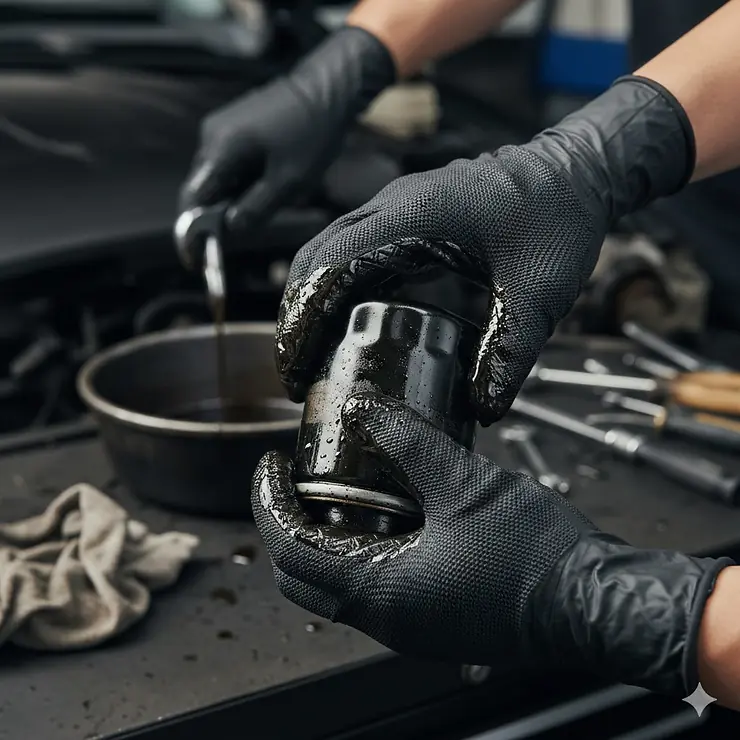
You’re lying underneath your car, oil dripping onto your forearms, and your hands are getting that familiar greasy, black coating that takes three washes to remove. Sound familiar? I’ve been there more times than I can count. After years of oil changes and testing countless gloves, I can tell you that the best mechanic gloves for oil changes are game-changers. They transform a messy chore into a clean, efficient task where you can actually feel what you’re doing without sacrificing hand protection.
Whether you’re a weekend warrior maintaining your own vehicle or a professional mechanic handling dozens of oil changes weekly, having the right oil resistant mechanic gloves makes all the difference. These aren’t your grandpa’s cotton work gloves that soak up oil like a sponge. Modern automotive mechanic gloves combine petroleum resistance with incredible dexterity, allowing you to thread that tricky oil filter without fumbling or contaminating your skin with harmful chemicals.
The challenge? Finding gloves that offer genuine grease resistant work gloves performance while maintaining tactile sensitivity. Some gloves are so thick you can’t feel anything. Others tear at the first sign of a sharp edge. The sweet spot lies in understanding which oil-proof material works best for your specific needs, whether that’s disposable nitrile for quick changes or durable reusable gloves for professional use. In this comprehensive guide, I’ll walk you through the seven best options for 2026, along with everything you need to know about protecting your hands during oil changes.
Quick Comparison Table
| Product | Type | Thickness | Best For | Price Range |
|---|---|---|---|---|
| Mechanix Wear 8 Mil Nitrile RDT | Disposable | 8 mil | Heavy-duty professional use | $25-35/100 |
| GLOVEWORKS HD Orange 8 Mil | Disposable | 8 mil | Maximum grip in oily conditions | $20-30/100 |
| Grease Monkey Disposable Nitrile | Disposable | 5-6 mil | Budget-friendly home mechanics | $12-18/100 |
| Venom Steel Industrial 6 Mil | Disposable | 6 mil | Two-layer rip resistance | $15-25/100 |
| Mechanix Wear Specialty Grip | Reusable | Medium | Oily/wet conditions | $20-28/pair |
| Ironclad General Utility GUG | Reusable | Medium | All-purpose automotive work | $18-25/pair |
| DEX FIT FN320 Nitrile Coated | Reusable | Light | Precision work, touchscreen use | $12-20/3 pairs |
💬 Just one click – help others make better buying decisions too! 😊
Top 7 Best Mechanic Gloves for Oil Changes: Expert Analysis
1. Mechanix Wear 8 Mil Nitrile RDT Disposable Gloves
If you’re serious about oil changes, the Mechanix Wear 8 Mil Nitrile RDT gloves are the gold standard. These heavy-duty disposable gloves feature a Raised Diamond Texture (RDT) that channels oil and liquids away from your palm, ensuring you maintain grip even when working with the slickest engine components.
Key Specifications:
- 8 mil thickness for puncture resistance
- Latex-free and powder-free nitrile construction
- Rolled cuffs prevent tearing during donning
The standout feature is that textured surface. I’ve used these while wrestling with oil-soaked drain plugs, and the grip performance is remarkable. The orange color makes it easy to spot if you’ve accidentally left one in the engine bay. At around $25-35 for a 100-pack on Amazon, they’re an investment, but professionals report getting through far fewer gloves per job compared to thinner alternatives.
Customer Feedback: Mechanics praise these for holding up to wire wheel use and maintaining integrity through full oil changes without tearing.
✅ Pros:
- Exceptional oil and grease resistance
- Superior grip with RDT pattern
- Durable enough for demanding tasks
❌ Cons:
- Higher price point than budget options
- Can feel bulky for very fine work
2. GLOVEWORKS HD Orange Nitrile 8 Mil
The GLOVEWORKS HD Orange gloves bring the same 8 mil heavy-duty protection with their own raised diamond texture design. These orange nitrile gloves are beloved by BBQ enthusiasts and mechanics alike, which speaks to their versatility and chemical resistance.
Key Specifications:
- 8 mil nitrile with raised diamond grip
- Petroleum and carburetor cleaner resistant
- Available in boxes of 100 or cases of 1000
What sets GLOVEWORKS apart is their attention to grip technology. The raised diamond pattern effectively displaces liquids, giving you reliable traction on tools and parts even when everything’s coated in 10W-30. One customer mentioned using them for cleaning animal skulls—if they can handle that, your oil change is a walk in the park. Price-wise, they’re competitive at $20-30 per 100-count box.
Customer Feedback: Users love the thickness and puncture resistance, noting they can withstand multiple uses if you’re careful removing them.
✅ Pros:
- Excellent chemical resistance to petroleum products
- High-visibility orange color
- Strong enough for reuse if careful
❌ Cons:
- Some users find sizing runs tight
- Not ideal for precision fastener work
3. Grease Monkey Disposable Nitrile Gloves
For the home mechanic who changes oil twice a year, the Grease Monkey Disposable Nitrile gloves offer fantastic value. These are the gloves I keep a box of in my garage for quick jobs—affordable, effective, and touchscreen compatible so you can check that YouTube tutorial without removing them.
Key Specifications:
- 5-6 mil nitrile construction
- Touchscreen compatible fingertips
- 100-count box for extended use
Don’t let the budget-friendly price ($12-18 per box) fool you. These gloves provide solid chemical and water resistance for typical oil change scenarios. They’re latex-free, making them suitable for those with sensitivities. The textured grip works well on dry and moderately oily surfaces, though they’re not quite as grippy as the 8 mil heavy-duty options when things get really greasy.
Customer Feedback: Landscapers and warehouse workers report getting a week of daily use from a single pair, which is impressive durability for the price.
✅ Pros:
- Excellent value for money
- Touchscreen compatible
- Good for sensitive skin (latex-free)
❌ Cons:
- Thinner material less puncture-resistant
- Can tear more easily than premium options
4. Venom Steel Industrial Nitrile 6 Mil
The Venom Steel Industrial gloves are engineered with two layers of nitrile, providing 70% more thickness than standard gloves. This dual-layer construction makes them exceptionally rip-resistant, which is crucial when you’re dealing with sharp edges around engine components.
Key Specifications:
- Dual-layer 6 mil nitrile construction
- Fully textured for enhanced grip
- Black color hides dirt and oil stains
These gloves excel at defending your hands from grime, grease, oil, and fuels. The fully textured surface gives you confident grip control, and because they’re black, they maintain a professional appearance even after several uses. At $15-25 for 100 gloves, they sit nicely in the mid-range pricing tier. One Jaguar owner mentioned these slip on easily thanks to an inner lining and protect beautifully during engine work.
Customer Feedback: Users appreciate the two-layer construction for added protection without excessive bulk.
✅ Pros:
- Two-layer protection increases durability
- Excellent for heavy automotive use
- Professional black appearance
❌ Cons:
- Slightly less tactile feel than thinner gloves
- Black color can make it hard to spot contamination
5. Mechanix Wear Specialty Grip Work Gloves
Moving into reusable territory, the Mechanix Wear Specialty Grip gloves feature Armortex material designed specifically for maintaining grip in oily conditions. Unlike disposable gloves, these are built for repeated use and machine washable for easy cleaning.
Key Specifications:
- Textured Armortex palm material
- Form-fitting TrekDry backing
- Hook and loop closure for secure fit
The Armortex technology actively displaces liquids, making these incredibly effective for oil changes where you need both protection and grip. The TrekDry material on the back provides evaporative cooling, keeping your hands comfortable during longer jobs. They’re not meant for high-abrasion tasks like box handling, but for precision automotive work, they’re exceptional. Expect to pay $20-28 per pair.
Customer Feedback: Users note these work great for oil changes, tire changes, and fluid replacements where grip is paramount.
✅ Pros:
- Reusable and machine washable
- Excellent grip in wet and oily conditions
- Breathable for extended wear
❌ Cons:
- Not suitable for highly abrasive tasks
- Higher initial cost than disposables
6. Ironclad General Utility Gloves (GUG)
The Ironclad General Utility gloves represent the all-purpose automotive glove that belongs in every home garage. These synthetic leather gloves combine durability with machine washability, making them perfect for mechanics who want long-term hand protection.
Key Specifications:
- Synthetic suede palm reinforcements
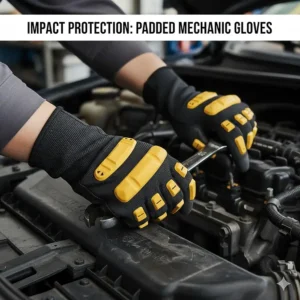
- TPR (thermoplastic rubber) knuckle protection
- Terry cloth sweat wipe on thumb
What makes these special is the attention to real-world details. That terry cloth on the thumb? Game-changer when you’re sweating through a summer oil change. The reinforced palm areas provide excellent durability, and multiple users report these lasting through hundreds of uses. The TPR knuckle protection guards against those inevitable bumps and scrapes. At $18-25 per pair, they’re a solid investment.
Customer Feedback: Home mechanics praise the fit and durability, with many reporting years of use from a single pair.
✅ Pros:
- Machine washable for easy maintenance
- Excellent dexterity for detailed work
- Knuckle protection prevents injuries
❌ Cons:
- Not as oil-resistant as nitrile options
- Can absorb oil over time despite washing
7. DEX FIT FN320 Nitrile Coated Work Gloves
For those who value dexterity above all else, the DEX FIT FN320 gloves offer an ultra-thin profile with nitrile coating on the palm and fingers. These are perfect for tasks requiring precision, like threading oil filter gaskets or handling small fasteners.
Key Specifications:
- 15-gauge seamless knit construction
- Touchscreen compatible fingertips
- Breathable nylon shell
The genius of these gloves lies in their 3D comfort knitting technology, which creates a snug, second-skin fit. They’re grippy on greasy tools and wet surfaces while being thin enough that you forget you’re wearing them. The touchscreen compatibility means you can check torque specs on your phone mid-job. At $12-20 for three pairs, they’re incredibly economical.
Customer Feedback: Warehouse workers, gardeners, and mechanics all praise the comfort and breathability for all-day wear.
✅ Pros:
- Exceptional dexterity and tactile feel
- Machine washable and reusable
- Great value (3 pairs per pack)
❌ Cons:
- Thinner coating offers less chemical protection
- Not ideal for heavy-duty puncture hazards
Understanding Oil Resistance in Mechanic Gloves
When shopping for automotive mechanic gloves, the term “oil resistant” gets thrown around liberally. But what does petroleum resistance actually mean in practical terms? According to OSHA’s hand protection guidelines, employers must select gloves based on the specific hazards present, including skin absorption of harmful substances.
The Science Behind Oil-Proof Materials
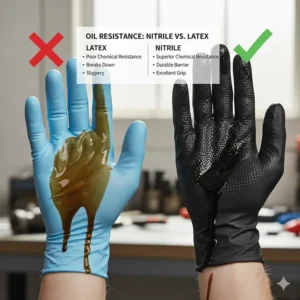
Nitrile rubber stands out as the premier oil-proof material for several compelling reasons. Unlike latex, which can degrade when exposed to petroleum-based products, nitrile maintains its integrity even with prolonged exposure to engine oil, transmission fluid, and brake fluid. The molecular structure of nitrile creates a barrier that prevents oil molecules from penetrating through to your skin. CDC research on nitrile gloves demonstrates that nitrile provides superior chemical resistance to petroleum products compared to latex or vinyl alternatives.
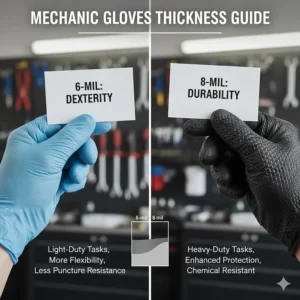
This matters more than you might think. Motor oil contains additives and contaminants that can cause dermatitis with repeated skin contact. Quality grease resistant work gloves create a protective barrier while still allowing your hands to breathe. The thickness measurement (in mils) indicates how much protection you’re getting—thicker isn’t always better, but for oil changes, 5-8 mil strikes the right balance.
Comparing Glove Materials for Oil Changes
Nitrile tops the list for oil resistance, offering three times the puncture resistance of latex while resisting petroleum chemicals, brake cleaners, and carburetor fluids. It’s hypoallergenic and provides excellent tactile sensitivity.
Latex offers good flexibility and feel but breaks down when exposed to oils and petroleum products. Unless specifically treated, latex gloves are poor choices for oil changes despite their comfort.
Vinyl represents the budget option but provides minimal protection against oils and chemicals. These are better suited for light cleaning tasks rather than automotive work.
Synthetic leather (like on Mechanix and Ironclad gloves) provides mechanical protection and some oil resistance, but it will eventually absorb oil. Machine washability helps extend their life.

How to Choose the Right Mechanic Gloves for Your Needs
Selecting the best mechanic gloves for oil changes requires considering several factors beyond just oil resistance. Here’s how to find your perfect match:
1. Assess Your Frequency of Use
If you’re changing oil every 3-6 months, disposable gloves make perfect sense. There’s no washing, no storage concerns, and you always have fresh protection. Professional mechanics handling multiple oil changes daily benefit more from reusable gloves that can be washed and reused, despite the higher initial investment. OSHA’s Personal Protective Equipment guidelines emphasize selecting hand protection based on the specific tasks performed and duration of exposure.
2. Consider Your Dexterity Requirements
Are you just removing drain plugs and filters, or are you also working with tiny crush washers and precision fasteners? Thicker 8 mil gloves offer maximum protection but reduce fine motor control. Thinner 5-6 mil gloves or the DEX FIT coated options preserve tactile sensitivity for detailed work.
3. Evaluate Your Budget
Quality automotive gloves range from $0.12 per use (bulk disposables) to $20+ per pair for premium reusable options. Calculate cost per use rather than just upfront price. Those $25 Ironclad gloves that last two years offer better value than $15 gloves you replace every three months.
4. Factor in Additional Features
Modern mechanic gloves often include bonus features: touchscreen compatibility lets you reference repair videos without removing gloves; textured grips enhance control on oily parts; machine washability extends glove life; and reinforced areas prevent common failure points.
5. Test for Proper Fit
Ill-fitting gloves cause more problems than they solve. Too tight and you lose circulation plus dexterity. Too loose and you lose grip control while increasing snag risks. Quality manufacturers provide detailed sizing guides—measure your hand circumference at the widest point and compare to their charts.
The Hidden Dangers of Improper Hand Protection
Many DIY mechanics skip gloves entirely, viewing them as unnecessary hassle. This mindset carries real health risks that compound over time. Engine oil isn’t just messy—it contains harmful chemicals that absorb through your skin.
Skin Absorption and Defatting
Motor oil strips natural oils from your skin through a process called defatting. This leads to dry, cracked hands that are more susceptible to chemical absorption. Motor oil contains complex hydrocarbons including additives like zinc dithiophosphate and detergents that can be absorbed through skin with prolonged exposure. Over years of unprotected exposure, this cumulative damage can contribute to serious skin conditions. The Occupational Safety and Health Administration recognizes petroleum products as hazardous substances requiring appropriate hand protection.
Thermal Hazards
Engine components remain dangerously hot even after the vehicle sits for a while. A quality pair of oil resistant mechanic gloves provides some thermal protection, reducing burn risks when you accidentally brush against the exhaust manifold or engine block. While not designed as heat-resistant gloves, the material barrier offers more protection than bare hands.
Cut and Puncture Protection
Sharp edges abound in engine bays—from sheet metal oil pans to jagged undercarriage components. Disposable nitrile gloves won’t stop major cuts, but they do prevent minor lacerations and protect against tetanus risks from rusty surfaces. Thicker gloves and those with reinforced palms offer even better mechanical protection.
Chemical Burns from Additives
Modern engine oils contain complex additive packages including detergents, anti-wear agents, and friction modifiers. Some of these chemicals are caustic at high concentrations. Brake fluid, commonly encountered during oil changes when topping off fluids, is particularly harsh on skin. Proper gloves create a barrier against these chemical exposures.
Disposable vs. Reusable: Which Makes Sense for You?
This question trips up many first-time glove buyers. Both disposable and reusable options have legitimate use cases for oil changes.
When Disposable Gloves Win
Convenience factor: Pull fresh gloves from the box, complete your oil change, dispose of the contaminated gloves. No washing, no storage odor, no cleanup. For occasional home mechanics, this simplicity is hard to beat.
Hygiene benefits: Every oil change starts with pristine protection. You’re never working with gloves that still smell like last month’s engine oil or harbor bacteria from previous uses.
Cost-effectiveness for light use: At $0.15-0.35 per pair, disposable gloves make economic sense if you’re only changing oil a few times yearly. The convenience outweighs the per-use cost.
When Reusable Gloves Excel
Professional applications: Mechanics going through dozens of disposable gloves weekly benefit from durable reusable options. The initial $20-30 investment pays for itself within weeks.
Environmental considerations: Reusable gloves generate far less waste over their lifetime. If sustainability matters to you, quality washable gloves significantly reduce your environmental footprint.
Superior protection for complex jobs: Many reusable gloves offer features disposables can’t match—knuckle protection, wrist support, better abrasion resistance, and integrated tool grips. If you’re doing more than basic oil changes, these features justify the investment.
Better value for frequent use: That $20 pair of Mechanix Specialty Grip gloves lasting 100+ oil changes costs $0.20 per use. Compare that to $0.25-0.35 for premium disposables, and the economics favor reusables for frequent users.

Proper Glove Care and Maintenance Tips
Getting maximum life from your mechanic gloves requires proper care, whether disposable or reusable.
Extending Disposable Glove Life
While marketed as single-use, quality disposable gloves can often survive multiple oil changes if handled carefully. Remove them slowly, turning them inside-out as you peel them off to keep oil contained. Rinse with degreasing dish soap, spray the inside with disinfectant, and air dry thoroughly. This works best with thicker 8 mil gloves—thinner options tear too easily for reuse.
Washing Reusable Gloves Correctly
Most quality reusable gloves tolerate machine washing, but technique matters. Rinse off heavy oil and grease under running water first, treating heavily soiled areas with degreasing soap. Machine wash in cool water—hot water can break down synthetic materials over time. Avoid bleach, which degrades both leather and synthetic materials. Air dry rather than using a dryer to prevent shrinkage and material degradation.
Storage Best Practices
Store gloves away from direct sunlight and heat sources, both of which accelerate material breakdown. Keep them in a clean, dry location where they won’t absorb garage odors or chemicals. I keep my reusable gloves in a sealed container with a moisture-absorbing packet to prevent mildew. Disposable gloves remain in their original box to protect against dust and contamination.
Knowing When to Replace
Disposables should be replaced at the first sign of tears, punctures, or significant thinning. For reusable gloves, watch for these replacement indicators: persistent oil absorption even after washing, cracking in the palm areas, holes developing in fingertips, or loss of grip texture. Don’t compromise your protection by nursing damaged gloves too long.
Common Mistakes to Avoid When Using Mechanic Gloves
Even experienced DIY mechanics make glove-related errors that compromise protection and performance.
Wearing the Wrong Size
This tops the list of avoidable mistakes. Gloves that are too large bunch up, reducing dexterity and increasing snag hazards. Too-small gloves restrict circulation, cause hand fatigue, and tear more easily. Take two minutes to measure your hand and consult the manufacturer’s sizing chart—your hands will thank you.
Reusing Heavily Contaminated Disposables
Yes, I mentioned you can reuse disposable gloves, but there’s a limit. Gloves saturated with oil provide diminishing protection and can transfer contaminants to clean surfaces. If the glove looks more black than its original color, it’s time for a fresh pair.
Skipping Gloves for “Quick” Tasks
The “I’ll just check the oil level real quick” mentality leads to unexpected messes. Keep a box of gloves in your garage or trunk so you’re never tempted to skip protection for supposedly quick jobs. Those drain plugs have a way of being tighter than expected.
Ignoring Chemical Compatibility
Not all gloves resist all chemicals equally. While nitrile excels with petroleum products, it offers less protection against certain solvents. If you’re using brake cleaner or carburetor cleaner during your oil change, verify your gloves provide adequate chemical resistance. Check manufacturer specifications or reference OSHA’s chemical resistance charts from the Department of Energy Technical Reference Manual to ensure proper protection.
Failing to Inspect Before Use
A quick visual inspection before donning gloves takes five seconds and prevents contamination disasters. Check for holes, tears, or thin spots that could allow oil penetration. This is especially important with reusable gloves that may have developed damage during previous uses or washing cycles.
Professional Tips for Maximum Grip in Oily Conditions
Even the best oil resistant mechanic gloves can feel slippery when everything’s coated in 10W-40. Here are techniques professionals use to maintain control:
The Double-Glove Technique
Some mechanics wear thin disposable nitrile gloves under thicker reusable work gloves. This creates a moisture barrier while preserving the mechanical protection and grip of the outer glove. When the outer glove gets too oily, remove it to reveal clean underlayer gloves for precision work.
Strategic Glove Changing
Rather than struggling with increasingly slippery gloves, professional mechanics often change gloves mid-job. After removing the drain plug and filter (the messiest steps), fresh gloves restore full grip for installing the new filter and torquing the drain plug properly.
Using Glove-Friendly Degreasers
Keep shop towels dampened with citrus-based degreaser nearby. A quick wipe of gloved hands between steps removes accumulated oil while preserving glove integrity. Avoid harsh chemical degreasers that can damage nitrile.
Choosing Textured Over Smooth
When possible, opt for gloves with textured grips—raised diamonds, micro-roughened surfaces, or patterned palms. These features channel liquids away from contact surfaces, maintaining friction even when wet or oily.
Environmental Considerations and Disposal
The automotive industry generates significant waste, and used gloves contribute to this problem. Here’s how to minimize environmental impact:
Proper Disposal of Contaminated Gloves
Gloves saturated with motor oil should not go in regular household trash. Many municipalities classify oil-contaminated materials as household hazardous waste. Check with your local waste management facility about proper disposal procedures. Some automotive service centers accept oil-contaminated gloves along with used oil for proper recycling or disposal.
Reducing Glove Waste
Choose gloves sized appropriately for the task—don’t use heavy 8 mil gloves for light work where 5 mil suffices. Consider reusable options if you change oil frequently. Even extending disposable glove life by one or two additional uses significantly reduces annual waste.
Eco-Friendly Alternatives
Several manufacturers now produce biodegradable nitrile gloves using Eco Best Technology (EBT). These gloves maintain normal protection during use but break down into natural compounds when disposed of in active landfills. SHOWA’s N-DEX line exemplifies this technology, though at a premium price point.
❓ Frequently Asked Questions
❓ How thick should mechanic gloves be for oil changes?
❓ Can you reuse disposable nitrile gloves for oil changes?
❓ What's better for oil changes: latex or nitrile gloves?
❓ How do you keep mechanic gloves from getting too slippery?
❓ Are touchscreen-compatible mechanic gloves worth it?
Final Thoughts: Protecting Your Hands Is an Investment
After testing dozens of gloves across hundreds of oil changes, I’ve learned that best mechanic gloves for oil changes aren’t about finding the most expensive option—they’re about matching glove characteristics to your specific needs. The weekend warrior changing oil twice yearly has different requirements than the professional mechanic handling daily services.
For most home mechanics, I recommend starting with a box of Grease Monkey Disposable Nitrile gloves for their excellent value and performance. Keep a pair of Ironclad General Utility gloves on hand for jobs requiring more dexterity and mechanical protection. This combination covers 95% of typical automotive maintenance scenarios.
Professional mechanics should seriously consider the Mechanix Wear 8 Mil Nitrile RDT disposables for their exceptional durability and grip, supplemented by Mechanix Wear Specialty Grip reusables for extended jobs where breathability matters.
Remember, your hands are irreplaceable tools. Protecting them from petroleum chemicals, thermal hazards, and mechanical injuries isn’t just about comfort—it’s about preserving your long-term health and capability. The small investment in quality automotive mechanic gloves pays dividends every time you crawl under your vehicle with confidence, knowing your hands are properly protected.
✨ Don’t Miss These Exclusive Deals!
🔍 Take your automotive maintenance to the next level with these carefully selected products. Click on any highlighted item to check current pricing and availability. These tools will help you create authentic results your family will appreciate!
Recommended for You
- 7 Best Mechanic Gloves for 2026: Protection That Works
- 7 Best Touchscreen Compatible Polyurethane Gloves 2026
- 7 Best Nitrile Coated Gloves for Cold Weather (2026 Expert Guide)
Disclaimer: This article contains affiliate links. If you purchase products through these links, we may earn a small commission at no additional cost to you.
✨ Found this helpful? Share it with your friends! 💬🤗
