
In This Article
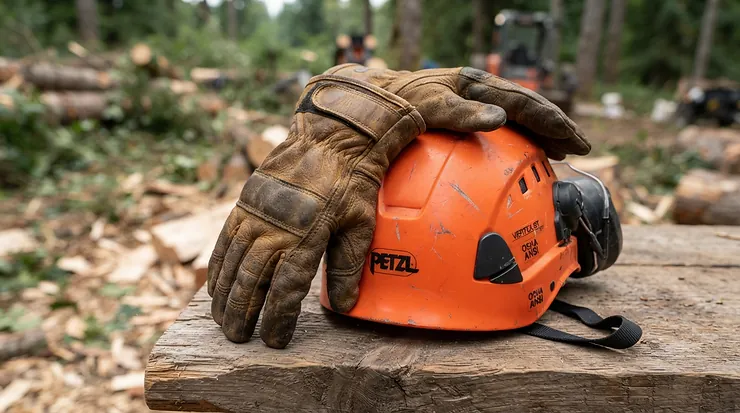
Leather work gloves for chainsaw operators combine a tough leather palm, usually goatskin or cowhide, with cut-resistant layers on the back of the hand that are rated against a moving chain. They grip a vibrating saw, shrug off bark and splinters, and can buy you a fraction of a second if a chain ever bites.
Now the sobering part. Penn State researchers estimated 127,944 emergency department visits for chainsaw injuries in the U.S. between 2018 and 2022, and Penn State Extension names kickback as a leading cause. Hands and forearms live right in the splash zone. A solid pair of chainsaw safety gloves won’t make you invincible, because nothing will. But it’s the cheapest insurance in your kit, and it protects the part of you that does all the work.
This guide ranks seven real pairs worth a look in 2026, from a budget first pair to premium logging hand protection. One honest note up front: I haven’t worn any of these, so you won’t find invented “field tests” here. What you will find is spec-by-spec analysis, aggregated review sentiment from published sources, and plain-English advice on who each glove suits.
Whether you’re clearing storm debris, feeding a wood stove, or building a full forestry PPE loadout, the right pair depends on your saw, your workload, and your climate. 🪵
Quick Comparison: 7 Leather Work Gloves for Chainsaw Operators at a Glance
| Glove | Palm Leather | Chain Protection | Price Range | Best For |
|---|---|---|---|---|
| Husqvarna Functional | Goatskin | Class 0 (16 m/s), left hand | $30–$45 | Value-minded homeowners |
| Husqvarna Technical | Double crust goatskin | Class 1 (20 m/s) | $40–$80 | Frequent users stepping up |
| STIHL Pro Mark Dynamic | Full-grain tanned leather | Multi-layer Dyneema/Avertic Pro; class not stated in listings | $85–$100 | Daily pros wanting durability |
| STIHL Function Protect MS | Cowhide + textile back | Class 0, both hands | $25–$50 | Cold-weather, occasional cutting |
| Oregon Left-Hand Leather | Smooth leather | Class 0, left hand (per listing) | $20–$35 | Budget first pair |
| VGO 12-Layer | Goatskin | 12-layer left-hand patch | Under $50 | Most layers per dollar |
| Youngstown Kevlar-Lined | Goatskin + Kevlar liner | No chainsaw class listed | $65–$95 | Wood handling and cold |
Prices are approximate ranges at the time of research and may vary. Check current pricing before you buy.
Look at the table and one pattern jumps out: protection class climbs with price, but not in a straight line. Husqvarna Technical offers Class 1 protection at a fraction of the STIHL Pro Mark Dynamic price, while Oregon Left-Hand Leather undercuts everyone for first-timers. Youngstown Kevlar-Lined is the odd one out. It’s a leather glove with a Kevlar liner, not a chainsaw-class glove, and it belongs on the list as a partner pair, not a replacement.
💬 Just one click — help others make better buying decisions too!😊
Top 7 Leather Work Gloves for Chainsaw Operators: Expert Analysis
Each pick below combines manufacturer specs, retailer listings, and published review sentiment, then asks the question the spec sheet won’t: what does this mean in your hands?
1. Husqvarna Functional Chainsaw Gloves — soft goatskin comfort for all-day sawing
The standout here is feel. The goatskin palm is thin enough that you still sense the saw’s rhythm through the handle. Husqvarna lists EN ISO 11393-4:2019 Class 0 (16 m/s) saw protection in the left glove, a reinforced palm and trigger finger, a foam-laminated spandex back, neoprene-nylon knuckles, and a touchscreen-friendly index knuckle.
In plain English, Class 0 is the entry rung of the ladder. Think of these as sensible protection for homeowner-scale work, not a license to get cocky. Goat leather’s natural oils also give it good moisture resistance, which matters when you’re bucking wet wood.
Independent roundups keep singling this model out for comfort and tactile control, and one testing site ranked it among the most comfortable pairs it tried. A recurring caution from forum users: saw gloves wear fast if you also haul and stack wood in them, so keep a cheap second pair for chores.
Pros:
- ✅ Supple goatskin gives excellent saw-handle feel
- ✅ Reinforced trigger finger and double thumb stitching
- ✅ Touchscreen-friendly knuckle for quick phone checks
Cons:
- ❌ Class 0 is the lowest protection rung
- ❌ Wears quickly if used for wood handling
Price range: roughly $30–$45, which makes it a strong value verdict for light-to-moderate use.
2. Husqvarna Technical Saw Protection Gloves — a step up to Class 1 protection
This is the glove for people who’ve outgrown the entry level. Husqvarna lists a double crust goat leather palm, a laminated spandex back, a neoprene-nylon cuff, and certification to EN ISO 11393-4:2019 Class 1 (20 m/s) plus EN 388:2016. Some versions add a hook-and-loop closure and a touchscreen index finger.
That extra 4 m/s over Class 0 is a bigger deal than it sounds. It’s added margin, and margin is the whole point of protective gear. Hook-and-loop closures let you cinch the wrist so debris stays out and the glove doesn’t slide around during long limbing sessions. Husqvarna markets the line as professional chainsaw work wear.
Here’s what I couldn’t verify: independent review volume for this exact model was thin in my research, so I won’t pretend to summarize it. Roundups describe the Husqvarna professional range as robust, and the spec sheet supports that.
Pros:
- ✅ Class 1 (20 m/s) gives a real protection upgrade
- ✅ Double crust goatskin palm resists moisture and abrasion
- ✅ Secure closure keeps chips and slop out
Cons:
- ❌ Costs noticeably more than the Functional line
- ❌ Limited independent reviews to confirm durability
Price range: roughly $40–$80 depending on version, so check current price. The verdict is solid value for frequent users.
3. STIHL Pro Mark Dynamic Gloves — premium multi-layer fabrics for daily use
STIHL builds this pair around a full-grain tanned leather palm and inner fingers, with multiple cut-retardant layers of Avertic Pro and Dyneema fabrics by Engtex. The back is orange rip-stop nylon, and the glove is water repellent, breathable, and closes with hook-and-loop.
What does that mean on a cold, damp morning? Full-grain leather generally outlasts split leather, and Dyneema-class fibers are chosen to stay thin, so you keep dexterity without wearing oven mitts. Roundups call it a noticeable step up in quality and durability, and one site names it STIHL’s best and priciest pair.
A buyer’s caveat: the retail listings I reviewed don’t state an EN protection class, and one retailer flags it as not ANSI certified. If compliance matters for your job, check the label on the box for the class before you commit.
Pros:
- ✅ Full-grain leather palm built for heavy use
- ✅ Multiple cut-retardant layers without extra bulk
- ✅ Water repellent yet breathable
Cons:
- ❌ Premium price tag
- ❌ Protection class not stated in listings reviewed
Price range: roughly $85–$100. It’s worth it for daily users and overkill for a few cords a year.
4. STIHL Function Protect MS Gloves — lined warmth with protection on both hands
Most chainsaw gloves protect only the left hand. This one puts cut protection in the back of both gloves and adds a lined interior for cold work. STIHL specifies Class 0 (16 m/s), a cowhide-and-textile build, an elastic knit cuff, and EN 388 ratings of abrasion 2, cut 1, tear 3, puncture 1.
The both-hands design is the real analysis point. It won’t stop a chain on the palm, but if your right hand drifts toward the work during awkward limbing, there’s something between skin and steel. Meanwhile, that EN 388 cut score of 1 is modest, so don’t treat these as blade-handling gloves. STIHL’s own spec notes they aren’t waterproof.
Retailers pitch them at hobbyists and occasional users. I couldn’t verify a meaningful pool of independent reviews, so treat the comfort claims as manufacturer-stated.
Pros:
- ✅ Cut protection on the back of both hands
- ✅ Lined for cold-weather cutting
- ✅ Knit cuff blocks dirt and wood chips
Cons:
- ❌ Only Class 0 protection
- ❌ Not waterproof
Price range: roughly $25–$50. It’s good value for chilly, occasional work.
5. Oregon Left-Hand Protection Leather Gloves — budget-friendly, high-visibility first pair
Oregon makes chains for a living, so a glove from them has a certain logic. The listing describes smooth leather palms, chainsaw protective material on the back of the left hand, water-repellent nylon backs, and knitted wrists. Current listings cite EN ISO 11393-4 Class 0, while older ones cite the predecessor, EN 381-7. A bright high-visibility finish means a dropped glove is easy to spot in leaf litter.
Here’s the practical read: this is a “right-hand saw, left-hand protection” layout, and a left-handed variant exists, so check which you’re ordering. Roundup sites tag it as a value pick.
Review sentiment is small but positive. One retailer listing shows a 5.0 average from just seven ratings, and buyers describe thick-but-soft leather that stretched to a comfortable fit after a couple of days. Forum users add the familiar warning: they last years if you don’t handle wood in them.
Pros:
- ✅ Soft, thick leather with good comfort reports
- ✅ High-visibility color is easy to find
- ✅ Lowest price on this list
Cons:
- ❌ Entry-level Class 0 protection only
- ❌ Uninsulated for cold days
Price range: roughly $20–$35, a solid value verdict for a first pair.
6. VGO Chainsaw Gloves (12-Layer) — most protective layers per dollar
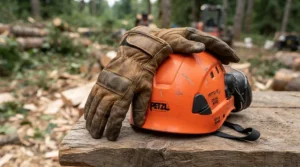
VGO’s pitch is simple: 12 layers of cut-resistant fabric on the back of the left hand, goatskin leather palms with PVC grip patches, a high-visibility stretch spandex back, pre-curved fingers, and a neoprene cuff.
One analytical flag before the applause. Layer count is a marketing number, not a rating. Check the packaging for the actual EN class rather than assuming twelve layers equals a particular chain speed.
Review sentiment is the strongest on this list by volume. Retailer mirrors I reviewed show roughly 4.3–4.5 stars across thousands of ratings at the time of research. Reviewers praise comfort, grip, and dexterity, and one describes using them for hurricane cleanup. The recurring complaints: some find the right glove snug, a few doubt durability under repeated use, and one reviewer found the left-hand patch slightly bulky.
Pros:
- ✅ Thick 12-layer left-hand protective patch
- ✅ Goatskin palms with grippy PVC patches
- ✅ High-visibility, pre-curved design
Cons:
- ❌ Sizing runs snug for some buyers
- ❌ Some reviewers question long-term durability
Price range: under $50. The value verdict is excellent if you confirm the rating label.
7. Youngstown Leather Utility Glove Lined with Kevlar — Kevlar-lined leather for wood handling and cold
Full disclosure: this is not a chainsaw-class glove, and I wouldn’t sell it as one. The Youngstown line uses goatskin leather in a 3D form-fit pattern, with a Kevlar liner for 360° cut resistance, and it’s flame resistant. Manufacturer materials emphasize ANSI cut ratings, not the EN chainsaw standards.
So why include it? Because it fills a real gap. It’s the pair you wear while stacking, splitting, and hauling, the work that shreds dedicated saw gloves. Reviewers are split in an informative way. Some call it a go-to for chainsaw work and wood splitting in wet weather, while others say it’s not super heavy duty, wears out in rough environments, or costs too much. If you wear it near a running saw, understand there’s no chainsaw certification behind it.
Pros:
- ✅ Kevlar liner throughout the glove
- ✅ Leather exterior suits rough wood handling
- ✅ Wide cuff and form-fit pattern
Cons:
- ❌ No chainsaw protection class listed
- ❌ Priced above several certified saw gloves
Price range: roughly $65–$95. It’s good as a partner pair, not a primary saw glove.
✨ Ready to gear up before the next cut?
🔍 Take your saw work from “hope for the best” to “protected by design.” Click any highlighted glove above to check current pricing and availability, and match the pair to your workload, not just your budget. Your hands will thank you!
Head-to-Head: Protection Class, Palm Leather and Value
| Glove | Protection | Palm | Closure | Price Range | Best For |
|---|---|---|---|---|---|
| Husqvarna Functional | Class 0, left hand | Goatskin | Knit cuff | $30–$45 | Light-to-moderate use |
| Husqvarna Technical | Class 1 | Double crust goatskin | Hook-and-loop on some versions | $40–$80 | Frequent operators |
| STIHL Pro Mark Dynamic | Multi-layer; class unstated | Full-grain leather | Hook-and-loop | $85–$100 | Daily professionals |
| STIHL Function Protect MS | Class 0, both hands | Cowhide/textile | Knit cuff | $25–$50 | Cold-weather work |
| Oregon Left-Hand Leather | Class 0 (per listing) | Smooth leather | Knit wrist | $20–$35 | Budget buyers |
| VGO 12-Layer | 12-layer patch | Goatskin + PVC | Neoprene cuff | Under $50 | Value seekers |
| Youngstown Kevlar-Lined | None listed | Goatskin | Wide cuff | $65–$95 | Wood handling |
Read the table and the buying logic gets clear fast. If chain protection class is your top priority, Husqvarna Technical is the standout for the money. If you want maximum warmth plus coverage on both hands, STIHL Function Protect MS is the only pick here that offers it. VGO 12-Layer wins on price-to-patch ratio, but its rating needs verifying on the box.
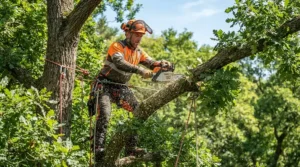
How to Choose Chainsaw Safety Gloves
Picking chainsaw safety gloves comes down to seven decisions.
- Check protection class and design. The old EN 381-7 glove standard was replaced by EN ISO 11393-4, which maps classes to chain speeds: Class 0 is 16 m/s, Class 1 is 20, Class 2 is 24, and Class 3 is 28. Higher classes buy more margin.
- Know Design A versus B. Design A covers the back of the hand; Design B adds the four fingers.
- Pick leather by workload. Goatskin is thin and supple, while cowhide leans tougher and heavier.
- Decide left-only or both hands. Most gloves protect only the left, which covers the typical exposure.
- Match the climate. Lining and water repellency matter in winter; breathability matters in summer.
- Prioritize dexterity details. Reinforced trigger fingers and pre-curved fingers reduce hand fatigue.
- Buy a second pair. Use a cheap leather glove for wood handling so your saw pair lasts.
Kickback Safety: What Gloves Can and Cannot Do
Let’s be blunt. Gloves do nothing to prevent kickback. That job belongs to technique, chain brakes, and keeping the bar tip out of the cut. Penn State Extension calls kickback a leading cause of chainsaw injuries, and summaries of OSHA’s logging standard stress inspecting chain brakes and nose shielding before every shift.
What gloves do is limit the damage when something goes wrong. The back of the left hand takes most chainsaw hand injuries, from chain contact during limbing and from thrown debris. That’s exactly where the protective patch sits.
Some forum arborists call chainsaw gloves a half-measure because only the back of the left hand carries the cut layer, and any decent glove protects the rest equally. They’re partly right. Palms and fingers on most models aren’t chain-rated. That’s why the sensible approach to kickback safety stacks protections: a chain brake that works, good stance, chaps, a face screen, and then gloves as the last line of defense. Leather work gloves for chainsaw operators are the seatbelt, not the brakes.
Leather Work Gloves vs Standard Work Gloves vs Kevlar-Lined Alternatives
| Glove Type | Chain Protection | Dexterity | Wood-Handling Durability | Best For |
|---|---|---|---|---|
| Chainsaw-rated leather (Husqvarna Functional) | Certified, left hand | High | Moderate | Saw work |
| Standard leather work gloves | None | High | High | Hauling, stacking |
| Kevlar-lined leather (Youngstown Kevlar-Lined) | None listed | Moderate | High | Cold, rough handling |
| Mechanic-style synthetic gloves | None certified | Very high | Low–moderate | Light tasks |
The table makes one thing clear: no single glove does everything. Standard leather work gloves offer virtually no defense against a moving chain, which is why a certified saw glove earns its place. Youngstown Kevlar-Lined adds cut resistance to a leather exterior, but resisting a kitchen knife and stopping a chain are different jobs. Mechanic-style gloves have fans among hobbyists for dexterity, yet nothing on their label promises chainsaw protection. Pair a certified saw glove for cutting with a tough leather glove for the chores, and you cover both bases.
Forestry PPE and Logging Hand Protection: What the Rules Actually Say
OSHA’s logging operations standard (29 CFR 1910.266) applies to all types of logging. It requires employers to provide hand protection against puncture wounds, cuts and lacerations for anyone handling wire rope, along with eye and face protection and heavy-duty, ankle-covering footwear. Summaries of the rule also list head, hearing, and leg protection for chainsaw operators.
The U.S. Forest Service’s own safety handbook goes further and calls for leather gloves on chain saw operations. So for logging hand protection, the professional baseline is leather and cut protection.
Homeowners aren’t covered by OSHA, but copying the forestry PPE list is smart. A Penn State analysis found that most fatal chainsaw-related occupational injuries came from falling trees and limbs, which no glove can stop. That’s why hard hats and a planned escape path matter as much as hand gear.
The products in this guide cite European EN standards rather than a single U.S. glove standard, so read labels closely. I’m not a lawyer, so check requirements with your employer or state before relying on any of this.
Features That Actually Matter (And Those That Don’t)
What matters: a legitimate protection class on the label, a leather palm suited to your workload, and a fit that doesn’t force you to over-grip. Cuff security also matters more than it looks, because loose gloves slip at the worst moment. Reinforced trigger fingers pay off for anyone running long sessions.
What doesn’t: layer counts without a rating, for one. A touchscreen knuckle is a nice convenience, and it won’t save a finger. Fashion colors are harmless, though high-visibility trim does help you find a dropped glove.
A few marketing phrases deserve a skeptical squint:
- “Professional-grade” with no class number attached
- Cut ratings from unrelated tests, such as ANSI levels, quoted as if they covered chainsaws
- “Kevlar” as a headline without an EN chainsaw class behind it
The question that cuts through hype is simple: what does the label say about chain speed? If the answer is silent, treat the glove as a good leather glove, not a chainsaw safety glove.
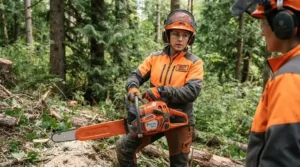
Practical Usage Guide: Fit, Break-In and Care
Sizing. If you’re between sizes, size up and wear a thin liner glove in winter, so you don’t lose protection to a too-tight fit.
First 30 days. Break leather in on easy cuts before a long limbing day. The common mistakes are hauling wood in your saw gloves, drying them on a heater (heat hardens leather and invites cracking), and scrubbing sap off with harsh detergent.
Care routine:
- Wipe off sap and oil with a mild leather cleaner.
- Air-dry away from heat sources.
- Store flat, away from fuel and chain oil spills.
Before every cut, inspect:
- Stitching along the thumb and trigger finger
- The protective patch for tears or thin spots
- Cuff closure strength
Replacement rule. Once the protective layer is compromised, replace the gloves. Patching chainsaw gloves isn’t reliable, and a glove that’s been cut through has already done its one job. These habits stretch the life of any of the pairs above and keep the protection you paid for intact.
Real-World Scenarios: Matching Gloves to Your Workload
The weekend firewood cutter. A homeowner dropping a few cords a year on a modest saw doesn’t need pro gear. Oregon Left-Hand Leather or Husqvarna Functional covers the saw hand, while a cheap leather pair handles stacking.
Storm-cleanup crew of one. After a hurricane or ice storm, you’ll be cutting unpredictable, tangled wood. VGO 12-Layer has earned fans in exactly that setting, including one reviewer who used it on hurricane debris, though confirm the label’s rating first.
The full-time arborist or logger. Long days, bigger saws, higher stakes. Husqvarna Technical offers Class 1 at a sensible price, and STIHL Pro Mark Dynamic suits those prioritizing durability. An older NIOSH safety profile of logging chainsaw work points to limbing as a phase where kickback injuries clustered, which is where left-hand protection earns its keep.
The cold-climate cutter. Winter morning, numb fingers, rising risk. STIHL Function Protect MS adds lining and both-hand protection, and Youngstown Kevlar-Lined handles the splitting and stacking afterward.
Problem → Solution Guide
Problem: My hand cramps after an hour. Chainsaw gloves can force a tighter grip. Move to a supple goatskin pair like Husqvarna Functional and confirm the size isn’t too snug, a complaint some VGO 12-Layer buyers raised.
Problem: Gloves soak through. Goat leather’s natural oils help, and water-repellent models like STIHL Pro Mark Dynamic resist wet better. Remember that STIHL Function Protect MS isn’t waterproof.
Problem: They wear out in weeks. Saw gloves aren’t hauling gloves. Keep Youngstown Kevlar-Lined or a plain leather pair for wood handling.
Problem: Sap and oil build up. Use a mild leather cleaner, never harsh detergent.
Problem: I can’t tell if my glove is rated. Check the label for EN ISO 11393-4 and a class number. If the listing only says “cut-resistant,” don’t assume.
Long-Term Cost & Maintenance: Gloves in Your Tree-Cutting Equipment Budget
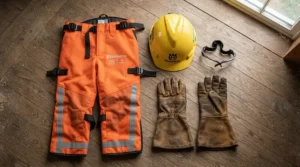
Treat your gloves as one line in a larger tree-cutting equipment budget that also covers chaps, a helmet with face screen, hearing protection, and boots. Gloves are the smallest line item and the one you replace most often.
Here’s the cost-per-use logic with illustrative numbers. A pair in the $85–$100 range that lasts three seasons works out to roughly $30 a season. A pair in the $20–$35 range replaced every season lands in the same neighborhood. The cheaper pair wins if you cut rarely; the premium pair wins if you cut daily and value durability and comfort.
Maintenance stretches both. Clean sap off promptly, dry gloves away from heat, and keep a dedicated wood-handling pair. And remember that the real total cost of ownership includes the one thing no price tag captures: what a hand injury costs in medical bills, downtime, and lost use.
FAQ
❓ How much should I spend on chainsaw safety gloves?
❓ Are goatskin or cowhide leather work gloves for chainsaw operators better?
❓ Can I use my chainsaw gloves for splitting and stacking firewood?
❓ Do I need Class 1 gloves, or is Class 0 enough?
❓ Where can I check a glove's protection class before buying?
Conclusion
If there’s one takeaway, it’s this: match the glove to the work, then verify the rating. Husqvarna Functional and Oregon Left-Hand Leather make smart entry points. Husqvarna Technical is the best step up for frequent operators, STIHL Pro Mark Dynamic is the premium durability play, and STIHL Function Protect MS handles cold days with both-hand coverage. VGO 12-Layer brings the strongest value story, as long as you confirm the label, and Youngstown Kevlar-Lined earns its keep as the tough partner pair for wood handling.
Gloves won’t prevent kickback, stop falling limbs, or replace training. Leather work gloves for chainsaw operators are one layer in a system: chaps, helmet, face screen, hearing protection, boots, and sound technique. Used that way, they’re cheap, simple, and genuinely useful insurance for the hands you rely on.
Recommended for You
- Pigskin Work Gloves For Wet Conditions: 7 Best Picks For 2026
- Goatskin Gloves For Tactical And Outdoor Use: 7 Best Picks 2026
- Split Leather Gloves For Heavy Duty Labor: 7 Tough Picks 2026
Disclaimer: This article contains affiliate links. As an Amazon Associate, I earn from qualifying purchases. If you purchase products through these links, we may earn a small commission at no additional cost to you.
✨ Found this helpful? Share it with your friends! 💬🤗
