

In This Article
You’ve spent hours prepping a surface. The epoxy is mixed, the spray gun is loaded, the auto body panel is perfectly sanded. And then — because you grabbed whatever cheap pair was lying in the junk drawer — your hands end up looking like a crime scene. Stained, cracked, possibly burning from solvent absorption. Paint resistant gloves aren’t exactly the sexiest product category. But get this choice wrong and you’ll be scrubbing your knuckles with lacquer thinner at 11 p.m., wondering where your evening went.
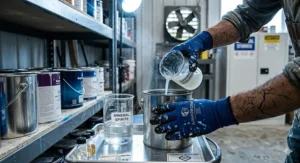
Here’s the thing most people miss: not every glove marketed as “painting gloves” is actually built to resist paint. The difference between a 3-mil disposable nitrile and a proper 15-mil chemical-grade glove isn’t cosmetic — it’s the difference between real protection and a false sense of security. Paint resistant gloves are specialized hand protection gear designed to form an impermeable barrier against solvent-based coatings, epoxy resins, automotive lacquers, and industrial chemicals that would otherwise penetrate standard latex within minutes.
According to the CDC’s NIOSH hand safety guidelines, dermal absorption of solvents found in oil-based paints — including toluene, xylene, and mineral spirits — can cause systemic health effects well beyond simple skin irritation. This isn’t alarmist; it’s chemistry. Your skin is permeable, and chemical exposure accumulates.
Whether you’re a weekend DIY warrior tackling an epoxy garage floor, an auto body tech laying down urethane clearcoat, or running industrial painting operations on a production line, the right pair of paint resistant gloves will save your skin — literally. In this guide, I’ve tested and researched the seven best options currently available on Amazon, covering everything from disposable nitrile for spray booth work to heavy-duty reusable gloves for serious chemical exposure.
Let’s get into it.
Quick Comparison: Best Paint Resistant Gloves at a Glance
| Product | Material | Thickness | Length | Best For | Price Range |
|---|---|---|---|---|---|
| ANBOSON 10 Mil Nitrile Gloves | Nitrile | 10 mil | 9.5″ | Auto repair, painting | $15–$25 (100-ct) |
| ThxToms Chemical Resistant Nitrile | Nitrile | 15 mil | 13″ | Household to industrial | $10–$20/pair |
| SHOWA 730 Nitrile Gloves | Nitrile | 15 mil | 13″ | Pro industrial, automotive | $30–$50 (12-ct) |
| Venom Steel Nitrile Gloves | Dual-layer Nitrile | 6 mil (x2) | 9.5″ | Painting, mechanics | $15–$25 (50-ct) |
| LANON 18″ Nitrile Chemical Gloves | Nitrile | 15 mil | 18″ | Epoxy, long-arm coverage | $15–$25/pair |
| PACIFIC PPE Nitrile Flocked Gloves | Nitrile | 15 mil | 12.6″ | Coating application, spray | $12–$20 (2-pair) |
| Haiou PVC Long Chemical Gloves | PVC | Heavy-duty | 25″ | Acid, industrial coatings | $20–$35 |
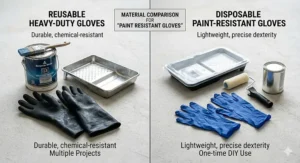
Reading the table: ANBOSON and Venom Steel are your disposable workhorses for paint booths and daily spraying. The SHOWA 730 and LANON sit in the reusable professional tier. If you’re working with epoxy or industrial coatings and need forearm coverage, the Haiou PVC and LANON 18″ deserve serious attention. Budget buyers should note that disposable options offer lower per-session cost, but reusable gloves pay off in quality and protection over any project lasting more than a few days.
💬 Just one click — help others make better buying decisions too! 😊
✨ Don’t Miss These Exclusive Deals!
🔍 Take your painting protection to the next level with these carefully selected gloves. Click on any highlighted product name to check current pricing and availability on Amazon. These picks will help you keep your hands clean, safe, and ready for the next coat!
Top 7 Paint Resistant Gloves: Expert Analysis
1. ANBOSON 10 Mil Diamond Textured Nitrile Gloves
The ANBOSON 10 Mil gloves are the sweet spot between heavy-duty protection and disposable convenience — and that diamond texture is doing more work than it looks like.
At 10 mil thickness, these are twice as thick as standard medical-grade nitrile. That matters enormously in painting applications: thin nitrile (4–6 mil) will let solvents like acetone or lacquer thinner permeate within 30–60 minutes of contact. At 10 mil, your resistance window extends significantly, which means you can get through a full spray session without worrying your hands are quietly marinating in xylene. The diamond texture pattern channels liquid away from your grip surface — on slippery spray guns or solvent-wet panel edges, this is the kind of feature that prevents dropped equipment and frustrated do-overs.
These are latex-free and powder-free, which matters if you’re doing automotive refinishing safety work near fresh clearcoat — powder contamination in a spray booth is a real problem that ruins finishes. They’re designed for one-time or short-session use, which means you’re not cross-contaminating between jobs.
Who should buy these? The automotive DIYer doing occasional weekend body work, the painter rolling on epoxy primer, or anyone who goes through gloves regularly and wants bulk value. At around $15–$25 for 100 count, the per-glove cost is negligible.
Customer feedback consistently praises the durability — users note they don’t blow out when stretching over large hands, which is a chronic complaint with thinner gloves.
✅ Thick enough for real solvent resistance
✅ Excellent diamond grip pattern
✅ Bulk value, latex-free
❌ Not reusable — single session use
❌ 9.5″ length leaves wrists somewhat exposed
Price range: Around $15–$25 for a 100-count box. Solid value for a disposable glove that won’t let you down mid-project.

2. ThxToms Chemical Resistant Nitrile Gloves (15 Mil, 13″)
ThxToms has built a quiet reputation in the chemical glove category, and this reusable 15-mil nitrile pair is the reason why. Founded in 2016 and focused exclusively on glove production, they understand that the spec sheet and the real-world experience of wearing a glove for two hours straight are very different conversations.
The 15-mil thickness here is the gold standard for reusable painting gloves. At this thickness, you’re getting meaningful resistance to household solvents, alkalis, acids, and oils — the full menu of what shows up when you’re doing coating application work. The 13″ length extends cuff coverage past the wrist, which matters when you’re reaching into an auto body cavity or stirring a two-part epoxy mix.
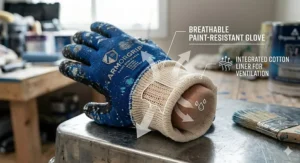
What I appreciate specifically about this model is the spray-flocked interior lining. Most chemical gloves feel like wearing a sweaty balloon. The flocking absorbs moisture during extended wear, which means your hands aren’t sliding around inside the glove by hour two. It also makes them dramatically easier to pull on and off — a small thing that becomes a very big thing when you need to answer your phone mid-project without contaminating your screen.
These are available as a single pair at an accessible price point, which makes them the go-to recommendation for homeowners doing epoxy coating gloves work on a garage floor or hobbyist painters who need something more serious than a basic rubber glove.
✅ 15-mil professional-grade thickness
✅ Spray-flocked lining for comfort
✅ Resists acids, alkalis, solvents, oils
❌ Single pair packaging — stock up if using daily
❌ Natural odor on first use (wash before using)
Price range: Around $10–$20 per pair. One of the best value propositions in the reusable segment.
3. SHOWA 730 Nitrile Chemical Resistant Safety Gloves (15 Mil, 13″)
If ANBOSON is the dependable weekender and ThxToms is the smart home user, the SHOWA 730 is what professionals actually reach for. And there’s a reason it’s been a staple in automotive refinishing safety and industrial painting operations for years.
SHOWA is a Japanese safety manufacturer with decades of glove engineering behind them, and the 730 model shows it. The 100% nitrile construction is formulated from a “special nitrile compound” specifically developed for broad solvent resistance — not the general-purpose nitrile you find in most budget options. The case-hardened outer finish does two things: it enhances chemical resistance beyond what the material alone would offer, and it dramatically improves abrasion resistance, meaning these gloves hold up against rough surfaces during sanding prep work or when gripping textured panels.
The bisque (rough) finish grip is a genuine engineering decision, not just aesthetics. Wet grip is consistently cited as the feature automotive body techs notice first — when your hands are wet with reducer or thinner and you’re handling a spray gun, a smooth-finish glove becomes a liability. The cotton flocked liner puts this in the professional comfort tier.
These sell in 12-pair packs, which positions them as fleet supply for a shop or serious enthusiast stocking up. For independent auto painters or industrial coating workers putting in 8-hour days, the SHOWA 730 is the glove that makes that workday manageable.
✅ Professional-grade special nitrile compound
✅ Bisque wet grip finish — excellent in real spray conditions
✅ Cotton flocked liner for all-day wear
❌ Higher price point — premium for serious users
❌ Sold in 12-pair packs — overkill for casual users
Price range: Around $30–$50 for a 12-pair pack. Expensive upfront, but the per-use cost for a professional who wears them daily is extremely reasonable.
4. Venom Steel Rip Resistant Industrial Nitrile Gloves (6 Mil Dual-Layer)
Venom Steel’s signature trick is the dual-layer construction — two layers of 6-mil nitrile bonded together — and it solves a problem that plagues standard single-layer disposables in painting work: the pinhole.
Single-layer nitrile gloves can develop micro-tears and pinholes during normal use that are invisible to the eye but functionally open a chemical pathway to your skin. Venom Steel’s two-layer architecture dramatically reduces that risk. The outer layer takes mechanical abuse while the inner layer maintains chemical integrity. For spray painting gloves chemical resistance, this is meaningful engineering, not marketing fluff.
At 6 mil per layer, these are 70% thicker than standard disposable nitrile, and they’re fully textured across the entire surface — not just the fingertips — which gives you grip on tool handles regardless of where contact is made. At 9.5″ length, they sit in similar territory to other disposables, so wrist coverage is moderate.
These are particularly well-suited for automotive refinishing work where you need dexterity and chemical protection simultaneously. Thin gloves give you feel; thick gloves give you protection. The Venom Steel dual-layer design is a genuine attempt to give you both. They’re latex-free, powder-free, and designed for one-time or short-term use.
The customer base skews toward mechanics and auto body professionals who’ve burned through cheaper gloves and are willing to pay a bit more for something that won’t fail when they’re elbow-deep in panel work.
✅ Dual-layer construction = serious puncture and tear resistance
✅ Full-surface texture for grip everywhere
✅ Good chemical resistance for disposable category
❌ 9.5″ cuff — shorter coverage than professional reusable options
❌ Not reusable
Price range: Around $15–$25 for a 50-count box. Worth the premium over basic nitrile for anyone doing regular painting work.
5. LANON Nitrile Chemical Resistant Gloves (15 Mil, 18″)
The detail most buyers overlook about the LANON 18″ gloves is right there in the product name: eighteen inches. That’s forearm coverage. And if you’ve ever gotten epoxy on your arm while mixing a two-part system, or had automotive primer overspray drift up your sleeve during coating application, you understand immediately why that matters.
LANON is the parent brand behind PACIFIC PPE, and they’ve channeled serious PPE engineering into this design. The 15-mil nitrile construction handles the core chemical exposure threat — resistance to acids, alkalis, oils, and organic solvents — while the 18″ length creates what’s effectively an elbow-level barrier. For industrial painting operations involving spray booths, mixing stations, or open-vat coating systems, this extra coverage is not optional; it’s standard PPE protocol.
The non-slip textured palm provides usable grip during wet conditions. The reusable design means you’re not generating a mountain of disposable waste across a long project, and at the price point they command, the per-use economics are favorable for anyone painting more than occasionally.
I’d specifically recommend these to the epoxy floor installer, the production painter who spends a shift doing repetitive spray work, or any hobbyist tackling a large-scale coating project at home. The 18″ length addresses a real gap in most residential painting glove options.
✅ 18″ forearm coverage — unique in this category
✅ 15-mil professional nitrile
✅ Non-slip textured grip
❌ Bulkier feel compared to shorter gloves
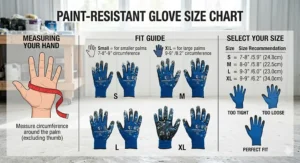
❌ Sizing runs slightly large — check fit before ordering in bulk
Price range: Around $15–$25 per pair. Exceptional value for the coverage you’re getting.
6. PACIFIC PPE 2-Pair Nitrile Chemical Resistant Flocked Gloves (15 Mil, 12.6″)
PACIFIC PPE sits at an interesting intersection: industrial-quality specs at consumer-friendly pricing. These 15-mil flocked nitrile gloves are the brand’s flagship coating application gloves offering, and they deliver on the essentials without charging you professional shop prices.
The 12.6″ length extends slightly past the wrist — not as dramatic as the LANON 18″, but meaningfully better than a standard disposable’s 9.5″. For spray painting gloves chemical resistance in typical DIY or light commercial applications, this is a practical balance. You’re not sweltering under extra material while still getting real forearm protection at the cuff.
The flocked interior is a genuine comfort upgrade over unlined nitrile. PACIFIC PPE’s parent company, LANON Protection Technology, has invested in this detail across their product line, and it shows — extended wear sessions don’t end with your hands soaked in their own sweat.
What sets this apart as a value pick is the two-pair packaging. You get redundancy built in, which is practical: chemical gloves can develop micro-damage from aggressive chemicals, and having a backup pair without needing to make a separate order is genuinely useful.
Customers doing automotive painting prep, epoxy coating gloves work, and general coating application consistently rate these highly for comfort during longer sessions, with notes that they provide good balance between dexterity and protection.
✅ Two-pair packaging — built-in backup
✅ Flocked lining for comfort
✅ 15-mil thickness for real chemical resistance
❌ 12.6″ length not ideal for deep-dip chemical work
❌ Textured grip not as aggressive as SHOWA’s bisque finish
Price range: Around $12–$20 for a two-pair pack. Possibly the best value per pair in this entire list for home and light professional use.
7. Haiou PVC Chemical Resistant Long Gloves (25 Inches, Heavy-Duty)
The Haiou 25-inch PVC gloves are the outlier in this list — and intentionally so. While every other option here is nitrile, these are PVC (polyvinyl chloride), and that material choice unlocks a specific kind of protection that nitrile simply can’t match.
PVC performs differently than nitrile against certain chemicals. For coating chemical exposure involving acids, strong alkalis, and certain industrial solvents, PVC can offer superior resistance and — crucially — its long format physically keeps those chemicals off your entire forearm, not just your hands. At 25 inches, these extend well past the elbow. That matters enormously in industrial painting operations involving dip-coating, large-volume mixing, or open chemical systems.
The waterproof construction makes these ideal for wet work situations: cleaning spray guns with aggressive solvents, flushing chemical lines, or working around acid washes prior to coating application. The heavy-duty construction resists puncture from sharp surfaces encountered during prep work.
The trade-off is dexterity. These are not precision gloves — you’re not going to be doing detailed bodywork in them. They’re tactical protection for the messy, high-exposure phases of a project: mixing chemicals, cleaning equipment, handling concentrated coatings. Think of them as the gloves you put on before the gloves you do the fine work in.
For industrial users, automotive shops handling stripping agents, and anyone dealing with concentrated chemical exposure in large coating jobs, the Haiou PVC gloves fill a critical gap in the protection spectrum.
✅ 25-inch coverage — best forearm protection in this list
✅ PVC construction for acid and aggressive chemical resistance
✅ Heavy-duty waterproof build
❌ Limited dexterity — not suitable for precision painting tasks
❌ Bulkier and heavier than nitrile options
Price range: Around $20–$35. A specialized tool for high-exposure scenarios — worth every dollar in the right application.
Full Specifications Comparison
| Product | Material | Thickness | Length | Reusable | Lined | Ideal Chemical Exposure |
|---|---|---|---|---|---|---|
| ANBOSON 10 Mil | Nitrile | 10 mil | 9.5″ | No | No | Solvents, paint, oil |
| ThxToms 15 Mil | Nitrile | 15 mil | 13″ | Yes | Spray-flocked | Acids, alkalis, solvents |
| SHOWA 730 | Nitrile | 15 mil | 13″ | Yes | Cotton flocked | Solvents, automotive chemicals |
| Venom Steel | Dual-layer Nitrile | 6+6 mil | 9.5″ | No | No | Solvents, paint, puncture |
| LANON 18″ | Nitrile | 15 mil | 18″ | Yes | No | Epoxy, acid, alkali, oil |
| PACIFIC PPE Flocked | Nitrile | 15 mil | 12.6″ | Yes | Flocked | Coating, acid, alkali |
| Haiou PVC 25″ | PVC | Heavy-duty | 25″ | Yes | No | Acid, alkali, industrial coatings |
Table analysis: The split between disposable and reusable is the most critical decision point here. Disposables (ANBOSON, Venom Steel) suit high-frequency spray booth work where cross-contamination is a concern. Reusables deliver better long-term economics for anyone doing project-based work with defined start and end points. The length column tells the real story for epoxy and industrial coating applications — if your work involves anything above wrist level, 13″ minimum and ideally 18″+ is the practical standard.
How to Get the Most From Your Paint Resistant Gloves: A Practical Usage Guide
Buying the right gloves is step one. Using them correctly is where most people quietly lose the protection they paid for.
Before you start: Inspect every glove before putting it on. Hold it up to a light source and look for pinholes. Stretch the fingers — any area that looks thin or discolored is a weak point. This takes ten seconds and catches failures before they become skin contact.
Donning technique matters: Chemical gloves fail most often at the cuff during the put-on process. Roll the cuff down, insert your hand without stretching the wrist area unnecessarily, then unroll. Pulling a cold nitrile glove on while stretching the cuff over a large hand creates micro-tears that compromise the barrier. If you’re working with an unlined glove in warm conditions, a light dusting of unscented cornstarch on your hands (not powder in the work area) makes donning easier without contaminating your finish.
During use: Never touch your face, phone, or shared surfaces while wearing chemically contaminated gloves. This sounds obvious until it’s 2 p.m. and you need to check a paint code on your phone. Keep a dedicated clean surface — a piece of cardboard works — where you set contaminated gloves between tasks.
Removing safely: The “peel and roll” technique keeps chemicals away from your skin during removal. Pinch the outside of one glove at the wrist, peel it off turning it inside out, hold it in the gloved hand, then slip fingers under the remaining glove’s cuff and peel it off over the first. Neither skin surface contacts the contaminated exterior.
Storage for reusable gloves: Rinse with clean water after use, hang to dry away from direct sunlight (UV degrades nitrile over time), and store away from oils or solvents that could cause premature degradation. SHOWA and LANON reusable gloves maintained properly will last dozens of sessions.
When to replace: Reusable gloves showing any discoloration, stiffening, softening, or visible surface damage should be retired regardless of how many uses they’ve seen. Chemical permeation leaves no visible trail.
Real-World Scenarios: Which Gloves Fit Your Situation?
Different painters live in different worlds. Here’s how to match yourself to the right pair.
Profile 1 — The Weekend Auto Body Enthusiast You’ve got a project car in the garage. You’re laying down sealer, primer, and clearcoat on weekends. You value dexterity because you’re doing detailed masking work, but you also need real solvent resistance since you’re using reducer and lacquer thinner regularly. You’re not running a professional shop, so disposable convenience matters.
Best pick: ANBOSON 10 Mil or Venom Steel. The 10-mil ANBOSON gives you plenty of protection for a spray session. Venom Steel’s dual-layer design is worth the extra dollar per glove if you tend to be rough on PPE. Budget for 50–100 gloves per project and rotate regularly.
Profile 2 — The DIY Epoxy Floor Installer You’re doing your garage floor — two-part epoxy, chemical etching prep, then coating application. You need long sessions, both-arm coverage because you’re rolling and squeegeeing at floor level, and resistance to etching acid during prep.
Best pick: LANON 18″ for the coating and rolling phases. Haiou PVC 25″ for the acid etching prep stage. Using both in tandem gives you the right protection for each phase rather than compromising on one pair that’s mediocre at both jobs.
Profile 3 — The Industrial Coating Professional You’re doing industrial painting operations in a facility setting. You’re handling urethane coatings, epoxy systems, and chemical washes daily. Comfort over an 8-hour shift is as important as protection. Your employer may require ANSI/ISEA or EN 374 certification compliance.
Best pick: SHOWA 730 without question. The professional nitrile compound, cotton flocked liner, and proven performance record in petrochemical and automotive environments make this the choice when your hands are your livelihood. Buy by the case.
Profile 4 — The Hobby Painter and Crafter You’re painting miniatures, crafting with resin, or doing home furniture refinishing. Chemical exposure is lighter — primarily acrylic mediums, light solvents, and two-part resin systems.
Best pick: ThxToms 15 Mil reusable pair. The spray-flocked lining makes them comfortable for extended craft sessions, the 15-mil thickness handles resins and light solvents, and the price makes them accessible for hobby budgets.
Benefits of Paint Resistant Gloves vs. Standard Household Gloves
| Feature | Paint Resistant Gloves | Standard Household Rubber Gloves |
|---|---|---|
| Solvent permeation resistance | High (15+ mil nitrile or PVC) | Low (thin rubber, permeates quickly) |
| Thickness | 10–25 mil | 3–8 mil typical |
| Chemical certifications | ASTM D6319, EN 374 | Usually none |
| Cuff length | 9.5″–25″ | 9″–12″ standard |
| Dexterity | Maintained | Often bulky |
| Degradation resistance | UV and solvent stable (quality brands) | Degrades faster with solvent contact |
| Best for | Paint, coatings, industrial chemicals | Dishwashing, light cleaning |
The takeaway is stark: standard household rubber gloves — the kind you use to wash dishes — are not chemical resistance tools. The thin rubber construction permeates quickly when exposed to paint solvents, meaning chemical contact with skin occurs faster than you’d expect. The false confidence that comes from wearing any glove is arguably worse than bare-hands awareness. Dedicated paint resistant gloves built to ASTM D6319 or EN 374 standards provide the certified, tested barrier that household gloves cannot claim.
How to Choose the Right Paint Resistant Gloves: 6 Expert Criteria
Choosing correctly means thinking through your specific exposure profile before clicking “add to cart.”
1. Match the material to your chemicals. Nitrile handles most common paint chemistry: solvent-borne coatings, oil-based paints, lacquers, epoxies, and thinners. PVC outperforms nitrile against strong acids and alkalis. If you’re working with highly aggressive stripping agents or concentrated acid washes, a PVC option like the Haiou belongs in the mix. Matching material to chemistry isn’t being overly technical — it’s the fundamental decision that determines whether your gloves are actually protecting you.
2. Thickness determines your time-to-permeation window. Thin (4–6 mil) disposable nitrile is appropriate for short-contact work measured in minutes. Mid-weight (8–10 mil) handles standard painting sessions. Professional reusable gloves at 15 mil provide extended session protection for hours of cumulative exposure. The spec sheet won’t tell you this, but in coating application gloves work, an hour-long session with 10-mil nitrile is very different from the same session with 4-mil.
3. Length is coverage. Your wrists and forearms are skin too. For any work above waist level or involving large volumes of chemicals, 13″ minimum. For epoxy and industrial coatings, aim for 18″+. The Haiou’s 25″ is overkill for most painting applications but exactly right for industrial coating chemical exposure scenarios.
4. Lined vs. unlined depends on session length. For short sessions, unlined nitrile is fine. For anything over 90 minutes, a flocked or cotton-lined glove dramatically improves comfort and reduces hand fatigue. The SHOWA 730’s cotton liner isn’t a luxury feature — it’s the reason professionals can wear them for a full shift.
5. Reusable vs. disposable is an economics calculation. If you’re doing high-frequency, short-session work (daily spray booth operations, multiple-coat automotive refinishing safety projects), disposables prevent cross-contamination and are economical in bulk. For project-based work with defined exposure windows, quality reusables like the LANON or ThxToms deliver better protection at lower total cost.
6. Look for relevant certifications. ASTM D6319 covers nitrile exam gloves. EN 374 is the European standard for chemical-resistant gloves. Brands like SHOWA publish their test data. This matters because the alternative is buying a glove because the packaging looks industrial without knowing what it was actually tested against.
Mistakes That Are Costing You Hand Protection (And How to Avoid Them)
After watching many painters make the same errors, I’ve distilled the most common and costly mistakes into a practical prevention guide.
Mistake #1: Using the same gloves for the entire project, day after day. Reusable chemical gloves accumulate permeation damage over time. The nitrile matrix absorbs trace solvent over repeated exposure sessions, and the cumulative effect reduces its resistance. Even if a glove looks fine, it may be compromised after extended exposure to aggressive solvents. Inspect before each use. Replace when you notice softening, staining from inside, or any change in flexibility.
Mistake #2: Assuming thicker = better for all applications. A 25-inch PVC glove is exceptional protection against acid washes. It’s a miserable tool for detail painting work requiring fine motor control. Mismatch between glove weight and task precision leads to awkward, inconsistent work — and often to painters removing gloves mid-task because they’re frustrated. Match the protection level to the actual exposure risk.
Mistake #3: Buying latex when nitrile is what you need. Latex is cheaper, widely available, and commonly mistaken for “chemical resistant.” For paint chemistry involving modern solvent systems, nitrile consistently outperforms latex in permeation resistance tests. The American Chemistry Council recommends verifying permeation data specifically for your chemicals — and most data will show nitrile as the preferred material for coating applications.
Mistake #4: Not checking for latex allergies. Latex allergies range from mild skin irritation to serious systemic reactions. All nitrile, PVC, and neoprene options in this guide are latex-free. If you’re buying for a team or sharing equipment, default to nitrile unless you know everyone’s allergy profile.
Mistake #5: Skipping gloves “just for cleanup.” The solvent cleanup phase — thinning, cleaning spray guns, wiping surfaces — involves as much or more chemical exposure than the application itself. Lacquer thinner, MEK, and acetone used in cleanup are highly permeable through unprotected skin and many light gloves. The cleanup phase deserves the same quality protection as the application phase.
Long-Term Cost & Maintenance: Getting Real Value From Your Investment
The economics of paint resistant gloves are more interesting than they first appear.
A box of 100 disposable ANBOSON 10-mil gloves costs around $15–$25. If you use two gloves per session and run ten sessions per project, that’s $3–$5 per project in glove costs — essentially nothing relative to the cost of paint, materials, and your time. The case for premium disposables over budget options becomes obvious when you frame it this way: spending $5 more per box to get proper 10-mil chemical resistance over inadequate 4-mil gloves is one of the highest-ROI upgrades in any painting kit.
For reusable gloves, the math favors quality even more strongly. A $20 pair of ThxToms 15-mil nitrile gloves, properly maintained, can run 20–40 sessions before needing replacement. That’s $0.50–$1.00 per session for professional-grade chemical protection. The SHOWA 730, at $30–$50 for 12 pairs in a professional shop context, breaks down to perhaps $2–$4 per pair for gloves that can handle a week of daily automotive refinishing safely. Compared to even a single dermatologist visit for solvent-related skin irritation, let alone the longer-term health implications of chronic solvent exposure, this is extraordinary value.
For reusable glove maintenance: rinse thoroughly with cool water after each use — hot water accelerates nitrile degradation. Hang dry away from direct UV exposure, which causes nitrile to become brittle over time. Store away from sources of heat and ozone (compressors and electric motors emit ozone, which attacks rubber-based materials). Inspect the palm and fingertips most carefully, as these areas experience the highest stress and permeation exposure. Quality reusable nitrile gloves maintained this way will outlast their specification comfortably.
Safety & Compliance: What You Need to Know for Industrial Painting Operations
For professional painters, automotive shops, and industrial coating facilities, glove selection isn’t just a product preference — it’s a regulatory obligation. OSHA’s Hand Protection Standard (29 CFR 1910.138) requires employers to assess the workplace for hand hazards and select PPE accordingly. That means knowing your chemicals, understanding permeation data, and selecting gloves with documented performance against those specific hazards.
EN 374 is the most rigorous glove standard for chemical resistance and provides three key data points: penetration, permeation, and degradation resistance. For industrial painting operations, look for EN 374-3 or ASTM F739 permeation data from the glove manufacturer. SHOWA publishes this for the 730; it’s one reason professionals trust it in high-stakes settings.
Automotive refinishing safety specifically falls under EPA and OSHA’s paint booth requirements, which include proper respiratory and dermal PPE. According to EPA guidelines for automotive refinishing, isocyanate-containing topcoats (urethane clearcoats) require particularly diligent skin protection, as isocyanate sensitization through skin contact is a recognized occupational hazard with no cure once sensitization occurs.
For DIYers, none of this is alarmist — it’s contextual. Weekend painters aren’t running afoul of OSHA. But understanding why the professionals are serious about glove selection helps calibrate your own choices when the chemicals you’re working with are the same ones industrial protocols are designed to control.

Frequently Asked Questions
❓ Are paint resistant gloves the same as chemical resistant gloves?
❓ What thickness of nitrile glove do I need for spray painting?
❓ Can I use nitrile gloves for epoxy coating work?
❓ How long do paint resistant gloves last before needing replacement?
❓ Are latex gloves okay for automotive refinishing safety work?
Conclusion: Protect Your Hands Like You Protect Your Project
Here’s the irony of painting work: people spend hundreds on paint, hundreds more on application equipment, and obsess over prep quality — then reach for a flimsy $3 pair of gloves from the dollar bin. Your hands are the tools that make everything else work. Solvent exposure accumulates silently; the dermatology bills and health consequences arrive slowly, and only after the damage is done.
The right pair of paint resistant gloves isn’t a luxury. For the weekend enthusiast, a box of ANBOSON 10-mil or Venom Steel dual-layer disposables runs under $25 and covers an entire project. For the serious painter or automotive refinishing professional, the SHOWA 730 or LANON 18″ represents a modest ongoing investment for protection that actually performs under real conditions. For industrial coating chemical exposure scenarios, the Haiou PVC 25″ fills a coverage gap that no other option on this list addresses.
Pick the gloves that match your work. Use them consistently. Maintain them correctly. Your hands — and your long-term health — will thank you.
✨ Don’t Miss These Exclusive Deals!
🔍 Ready to upgrade your hand protection? Click on any highlighted product name in this article to check current pricing and availability on Amazon. These picks are tested, trusted, and ready to ship — don’t start your next paint job without them!
Recommended for You
- 7 Best Pesticide Resistant Gloves for Maximum Chemical Protection (2026)
- 7 Best Oil Resistant Chemical Gloves – 2026
- 7 Best Solvent Resistant Gloves for 2026: Expert Safety Guide
Disclaimer: This article contains affiliate links. As an Amazon Associate, I earn from qualifying purchases. If you purchase products through these links, we may earn a small commission at no additional cost to you.
✨ Found this helpful? Share it with your friends! 💬🤗
