
In This Article
Your hands are the first thing to go numb the second the temperature drops below 40°F, and no amount of grit gets you through an eight-hour shift with fingers that refuse to cooperate. That’s the entire reason fleece lined work gloves under $30 exist in the first place — they split the difference between flimsy knit gloves that do nothing and bulky insulated mitts that make picking up a drywall screw feel like defusing a bomb wearing oven mitts. This isn’t a niche complaint, either. Anyone who’s fumbled a socket wrench with stiff fingers in a garage, on a loading dock, or in a backyard on a frosty October morning knows exactly what’s at stake.

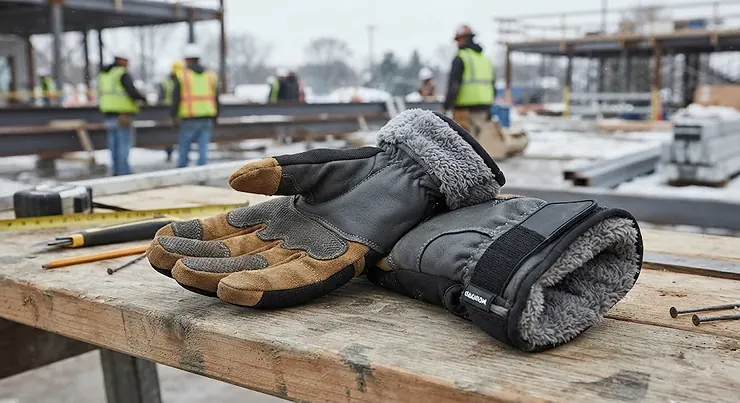
So what is a fleece lined work glove, exactly? It’s a work glove built with a soft, brushed-fleece interior — usually acrylic or polyester — sandwiched between an outer shell (leather, synthetic leather, or treated nylon) and your skin, designed to trap body heat without sacrificing grip or breathability during active, hands-on labor.
The budget matters more than it might seem. Spend too little and you get thin acrylic fuzz that mats down after three washes. Spend without a plan and you end up with a $70 extreme-cold mitt when what you actually needed was a light, breathable layer for 35-degree mornings. According to OSHA’s cold stress guide, insulated gloves — water resistant where necessary — are one of the core layers of personal protective equipment for anyone working outdoors in cold conditions, right alongside proper boots and a hat.
Below, I’ve researched seven real, currently available products that either land under or right around that $30 mark, pulling from actual manufacturer specs and aggregated review sentiment rather than recycled listing copy. Whether you’re after fleece work gloves budget picks for weekend yard work or lightweight cold weather gloves for a daily commute, there’s a real option here for you. Let’s get into it.
Quick Comparison Table
| Glove | Best For | Insulation | Price Range |
|---|---|---|---|
| DEWALT DPG740 | Mild climate work gear | Brushed fleece shell | Under $15 |
| Firm Grip Deerskin Fleece | Fleece work gloves budget pick | 40g Thinsulate | $15-$20 range |
| Carhartt Flexer A729 | Everyday winter work gloves | Fleece-lined spandex | $20-$25 range |
| Ergodyne ProFlex 814 | Touchscreen daily use | Insulated fill | Around $25 |
| Wells Lamont HydraHyde 1206 | Heavy-duty leather durability | 100g 3M Thinsulate | $25-$30 range |
| Youngstown Waterproof Winter Plus | Wet, windy jobsites | 60g 3M Thinsulate | Mid-$30s |
| Kinco 901 | Splurge-worthy premium pick | Heatkeep thermal lining | Mid-$50s |
Looking at the lineup, there’s a clear pattern: the lighter, more breathable options like the DEWALT DPG740 cluster at the bottom of the price range, while genuine waterproofing and heavier leather construction — as seen in the Youngstown Waterproof Winter Plus and Kinco 901 — push costs closer to or past the $30 ceiling. If your work stays mostly dry and mild, you don’t need to spend more; if you’re facing wet slush or sub-freezing wind chill regularly, the extra few dollars for the Wells Lamont HydraHyde 1206 or Youngstown Waterproof Winter Plus buys real weather resistance you’ll actually notice.
💬 Bookmark this comparison — it’s the fastest way to find your match before you scroll further!😊
Top 7 Fleece Lined Work Gloves: Expert Analysis
1. DEWALT DPG740 — lightest option for mild climate work gear
The DEWALT DPG740 was purpose-built for exactly the kind of weather most of us actually work in most of the year: not brutal, just cold enough to bite. Specs-wise, you’re looking at a wind- and water-resistant fleece outer shell, synthetic leather palm overlays, and reinforced fingertips for grip, all wrapped in a package that DEWALT explicitly markets as a “mild condition” glove rather than a deep-winter one. In practice, that distinction matters: a heavier 100g Thinsulate glove will actually make your hands sweat and go clammy once you’re moving boxes or hauling lumber in 45°F weather, while the DEWALT DPG740‘s lighter fleece breathes and regulates temperature instead of trapping it. Based on the spec comparison with heavier competitors on this list, this is the pick for anyone doing active, moving-around labor rather than standing-still-in-the-cold work. Reviewers consistently note that the glove holds up well over repeated wear and stays flexible even after it’s been through the wash, with several long-term users mentioning they “take quite a beating” without falling apart at the seams.
Pros:
- ✅ Machine washable fleece shell holds up over time
- ✅ Breathable enough for active outdoor labor
- ✅ Reinforced fingertips improve small-object grip
Cons:
- ❌ Not warm enough for sustained sub-freezing work
- ❌ Offers no real waterproofing in wet conditions
At under $15, the DEWALT DPG740 delivers outsized value if your definition of “cold” tops out around the 30-45°F range.
2. Firm Grip Fleece Deerskin Suede — best budget pick for genuine 40g insulation
The Firm Grip Fleece Deerskin Suede glove pairs a soft deerskin suede palm with 40-gram 3M Thinsulate insulation, which puts it a notch warmer than the DEWALT above while still staying well within fleece work gloves budget territory. What most buyers overlook about deerskin as a palm material is that it stays supple in cold temperatures where thicker cowhide tends to stiffen up, which directly affects how well you can still feel a hammer handle or a wrench at 6 a.m. The 40g Thinsulate fill is a genuinely useful middle ground — warm enough to matter, thin enough that you’re not fumbling with zipper pulls or small hardware. This is the glove for the person who wants one pair that covers most of the winter without owning three different weights of gloves. Aggregated customer sentiment on this style trends positive around dexterity and softness, though a recurring theme in user reviews is that sizing runs slightly generous, so many buyers suggest ordering a size down from your usual glove size.
Pros:
- ✅ Deerskin suede stays soft in cold temperatures
- ✅ 40g Thinsulate balances warmth and dexterity
- ✅ Priced well under the $30 budget ceiling
Cons:
- ❌ Sizing runs large according to most reviewers
- ❌ Suede requires more care than synthetic shells
In the $15-$20 range, the Firm Grip Fleece Deerskin Suede is arguably the best value-per-dollar entry on this whole list.
3. Carhartt Flexer A729 — most flexible for everyday winter work gloves
The Carhartt Flexer A729 is built from fleece-lined spandex rather than a rigid shell, which is a genuinely different approach from the leather-and-fleece formula most of this list follows. That stretch fabric means the glove moves with your hand instead of fighting it, and Carhartt backs it with a waterproof insert to keep out light snow and slush without adding the bulk of a full leather shell. Here’s what the spec sheet won’t tell you, but the design implies: a low-profile, stretchy glove like this trades some abrasion resistance for dexterity, so it’s a better fit for someone running errands, doing light maintenance, or working a loading dock than someone hauling rebar all day. Synthetic leather reinforcement at the palm and fingers covers the highest-wear zones, which is a smart compromise rather than armoring the whole hand. This is squarely an everyday winter work glove — something you’d genuinely reach for daily rather than saving for the coldest week of January.
Pros:
- ✅ Spandex fleece shell stretches for full dexterity
- ✅ Waterproof insert blocks light snow and slush
- ✅ Hook-and-loop closure keeps debris out
Cons:
- ❌ Less abrasion resistance than leather-shell gloves
- ❌ Not rated for heavy-duty demolition work
At $20-$25, the Carhartt Flexer A729 earns its keep as the glove you’ll actually grab first, day after day.
4. Ergodyne ProFlex 814 — best touchscreen glove for daily convenience
The Ergodyne ProFlex 814 leans into a detail a lot of competitors treat as an afterthought: touchscreen-capable thumb and index fingertips. Its insulated fill traps body heat while letting moisture escape, which on paper means less of that clammy, damp feeling that comes from cheaper insulated gloves during active work. The reinforced synthetic leather palm stays flexible in cold temps rather than going stiff, and the gathered elastic wrist cuff is roomy enough to layer over a jacket sleeve. Based on the spec comparison, this glove positions itself as a genuine multi-use option — Ergodyne markets it for cold storage, construction, and outdoor recreation alike, and the shared design language across those uses suggests real all-around competence rather than a jack-of-all-trades compromise. What most buyers overlook is how much friction touchscreen fingertips save over the course of a workday when you’re constantly checking a phone for a delivery code or a text from a job site.
Pros:
- ✅ Touchscreen fingertips work without removing gloves
- ✅ Insulated fill wicks moisture while trapping heat
- ✅ Elastic cuff fits comfortably over jacket sleeves
Cons:
- ❌ Bulkier fit than lighter fleece-only alternatives
- ❌ Palm grip softens slightly once fully saturated
Around $25, the Ergodyne ProFlex 814 is a smart pick for anyone whose job and phone never stop competing for attention.
5. Wells Lamont HydraHyde 1206 — most durable leather palm under $30
The Wells Lamont HydraHyde 1206 brings full-grain saddletan goatskin leather to the palm, treated with Wells Lamont’s proprietary HydraHyde process to resist water while staying breathable — a combination that matters because untreated leather either soaks through or turns stiff as cardboard once it dries. Underneath that palm sits 100-gram 3M Thinsulate insulation, noticeably heavier than the fleece-only shells earlier on this list, and a fully fleece-lined interior throughout. The breathable spandex back panel is doing real work here too: it’s the part of the glove that keeps your hand from overheating while the leather palm handles abrasion and grip. On paper, this means you get leather-glove durability without sacrificing the flexibility that pure leather work gloves are notorious for lacking in winter. Reviewers consistently point to the reinforced, fully wrapped first finger — a detail that prevents the most common failure point on cheaper gloves, where seams unravel exactly where your index finger bends the most.
Pros:
- ✅ Full-grain leather palm resists water and abrasion
- ✅ 100g Thinsulate delivers real cold-weather warmth
- ✅ Reinforced first finger prevents common seam failure
Cons:
- ❌ Heavier feel reduces fine-motor dexterity
- ❌ Leather requires periodic conditioning to stay supple
Sitting in the $25-$30 range, the Wells Lamont HydraHyde 1206 is the glove to buy if you want one pair to survive an entire construction season.

6. Youngstown Waterproof Winter Plus — best for wet, windy jobsites
The Youngstown Waterproof Winter Plus steps just past the strict $30 ceiling, landing in the mid-$30s, but it earns the splurge with genuine triple-layer construction: a form-fit synthetic leather outer shell, a waterproof and windproof inner membrane, and 60-gram 3M Thinsulate resting directly against the hand. That’s meaningfully more insulation than anything else on this list, and the membrane layer is the real differentiator — fleece alone slows heat loss, but it does nothing to stop wind or standing water from soaking straight through. Here’s what most buyers overlook about “waterproof windproof” claims: the difference between water-resistant and genuinely waterproof usually comes down to a taped or bonded membrane, which is exactly what this glove’s inner layer is doing. The non-slip reinforcement at the palm, fingers, and thumb also holds up in wet-and-dry conditions rather than just one or the other, which matters if your job swings between hosing down equipment and handling dry tools in the same shift.
Pros:
- ✅ True waterproof, windproof membrane construction
- ✅ 60g Thinsulate outperforms fleece-only competitors
- ✅ Non-slip grip holds in both wet and dry conditions
Cons:
- ❌ Priced above the strict $30 budget ceiling
- ❌ Bulkier fit sacrifices some fine dexterity
At around $38, the Youngstown Waterproof Winter Plus is worth stretching the budget for if your work regularly involves rain, slush, or standing water.
7. Kinco 901 — splurge-worthy premium pick with genuine craftsmanship
The Kinco 901 is the clear outlier here, priced in the mid-$50s, and I’m including it deliberately as the ceiling comparison point — the glove that shows you exactly what you’re giving up (and gaining) by staying under $30. Constructed from premium golden grain pigskin on the palm and suede pigskin on the back of the hand, it uses Kinco’s Heatkeep thermal insulation laminated into a soft TR2 inner lining, plus foam padding and a neoprene-thermal layer for extra reinforcement. Pigskin’s porous structure is the standout feature worth expanding on: unlike cowhide, it stays soft and flexible even after getting wet, which is a real advantage over stiffer, cheaper leather blends. What most buyers overlook about a glove at this price point is that the value isn’t really about warmth — several gloves on this list are nearly as warm — it’s about longevity and how the leather ages. Reviewers consistently describe these as gloves that outlast multiple cheaper pairs, which changes the actual cost-per-wear math even though the sticker price is higher.
Pros:
- ✅ Premium pigskin stays soft and flexible when wet
- ✅ Heatkeep thermal lining offers standout warmth
- ✅ Reputation for outlasting multiple budget pairs
Cons:
- ❌ Nearly double the budget of most picks on this list
- ❌ Overkill for mild-climate or occasional use
In the mid-$50s, the Kinco 901 isn’t for everyone’s budget, but it’s the honest premium benchmark against which every $30-and-under glove on this list gets measured.
Top 7 Products: Full Specs Comparison
| Glove | Insulation | Shell Material | Best For | Price Range |
|---|---|---|---|---|
| DEWALT DPG740 | Brushed fleece | Fleece + synthetic leather | Mild climate work gear | Under $15 |
| Firm Grip Fleece Deerskin Suede | 40g 3M Thinsulate | Deerskin suede palm | Fleece work gloves budget | $15-$20 range |
| Carhartt Flexer A729 | Fleece-lined spandex | Stretch spandex + leather | Everyday winter work gloves | $20-$25 range |
| Ergodyne ProFlex 814 | Insulated fill | Synthetic leather palm | Touchscreen daily use | Around $25 |
| Wells Lamont HydraHyde 1206 | 100g 3M Thinsulate | Full-grain goatskin | Heavy-duty durability | $25-$30 range |
| Youngstown Waterproof Winter Plus | 60g 3M Thinsulate | Waterproof synthetic leather | Wet, windy jobsites | Mid-$30s |
| Kinco 901 | Heatkeep thermal | Premium pigskin | Splurge/longevity pick | Mid-$50s |
The pattern across this table tells its own story: insulation weight climbs steadily as price increases, but so does bulk, meaning the “warmest” glove on paper isn’t automatically the best glove for your actual job. If dexterity matters more than raw warmth — think detail work, tool handling, or frequent phone use — the lighter end of this table (the DEWALT DPG740 and Ergodyne ProFlex 814) will likely outperform heavier options in daily satisfaction even though they’re rated less warm.
Practical Usage Guide: Getting the Most From Your Gloves
Buying the right glove is only half the equation — how you break it in and maintain it determines whether it lasts one season or five. On first use, resist the urge to immediately treat leather-palmed options like the Wells Lamont HydraHyde 1206 with heavy oils or waxes; most HydraHyde-treated leather is already factory-treated for water resistance, and over-conditioning early can actually soften the fibers prematurely. Instead, wear the gloves dry for the first few outings to let the leather flex naturally around your hand shape.
Maintenance-wise, fleece-shell gloves like the DEWALT DPG740 are genuinely machine washable, but skip the dryer — heat breaks down the fleece’s loft over time, so air-drying preserves warmth retention far longer. For leather-palmed gloves, a light leather conditioner every 4-6 weeks of regular winter use prevents the classic failure mode: cracking at the finger creases where the material flexes most. A common mistake in the first 30 days is storing damp gloves in a closed toolbox or truck cab, which traps moisture against the fleece lining and encourages odor-causing bacteria; a simple fix is hanging them by the cuff somewhere with airflow after each use.
One optimization trick that doesn’t show up on any Amazon listing: rotate two pairs if your budget allows it. Alternating the Firm Grip Fleece Deerskin Suede with a second pair lets each fully dry between wears, which meaningfully extends the lifespan of the insulation and prevents the compacted, flattened-fleece feeling that develops when one pair gets worn wet, damp, and dry in a repeating cycle without a break.

Real-World Scenarios: Which Glove Fits Your Day
Picture three different people heading out the door on the same 38°F morning. The first is a part-time landscaper in a mild-climate coastal region who’s moving constantly — raking, loading a trailer, running a blower. For this person, the DEWALT DPG740 is the clear match: mild climate work gear that breathes during sustained activity beats a heavier glove that would leave their hands damp with sweat by 9 a.m.
The second scenario is a maintenance technician working a mixed indoor-outdoor shift, checking equipment outside and then heading back in to type notes on a tablet. Here, the Ergodyne ProFlex 814‘s touchscreen fingertips and moderate insulation solve a specific, everyday friction point that a purely warm-but-clumsy glove never would.
The third is a fencing contractor working full days outdoors through a wet Pacific Northwest winter, budget around $30-35, handling wire, tools, and the occasional soaking downpour. For this profile, the Youngstown Waterproof Winter Plus justifies its slightly higher price — the genuine waterproof membrane is doing real protective work that a fleece-only shell simply can’t replicate once conditions turn from “cold” to “cold and wet.”
Problem → Solution: Fixing Common Winter Glove Complaints
Problem: Hands sweat inside the gloves during active work. The fix is almost always insulation weight, not the gloves themselves — swap a heavier 100g Thinsulate option for a lighter fleece shell like the DEWALT DPG740, which breathes rather than traps heat during movement.
Problem: Fingertips go numb despite “warm” ratings. This usually points to a fit issue rather than an insulation issue; a glove sized too large traps excess air that your body then has to work harder to heat, so sizing down — as several reviewers recommend for the Firm Grip Fleece Deerskin Suede — often solves it outright.
Problem: Grip disappears the moment tools get wet or icy. Non-slip palm reinforcement matters here more than raw warmth; the Youngstown Waterproof Winter Plus and Wells Lamont HydraHyde 1206 both include palm treatments designed specifically to hold grip through wet-to-dry transitions.
Problem: Gloves stop being touchscreen-usable after a few washes. Conductive threads in fingertip panels degrade with repeated washing and drying on heat, so hand-washing and air-drying gloves like the Ergodyne ProFlex 814 preserves that feature far longer than tossing them in a machine dryer.
Problem: Leather palms crack within one season. This is almost always a maintenance gap rather than a manufacturing defect — a light conditioner applied every several weeks prevents the drying-out cycle that leads to cracking at flex points on gloves like the Kinco 901.
How to Choose Fleece Lined Work Gloves
- Match insulation weight to your actual activity level. Active jobs need less insulation than stationary ones, since movement generates its own body heat.
- Decide whether you need genuine waterproofing. A membrane-backed glove like the Youngstown Waterproof Winter Plus costs more but earns it in wet conditions; fleece-only shells are fine for dry cold.
- Prioritize palm material based on your grip needs. Leather palms like the Wells Lamont HydraHyde 1206 hold up better under repeated tool contact than fabric palms.
- Check for touchscreen fingertips if you’re on your phone often. It’s a small feature that saves real friction across a workday, as seen on the Ergodyne ProFlex 814.
- Size down if reviews consistently mention loose fit. A snugger fit traps less cold air and improves both warmth and dexterity.
- Factor in machine-washability for hygiene and longevity. Fleece shells that survive regular washing, like the DEWALT DPG740, stay fresher over a full season of daily use.
- Set your true budget ceiling before shopping, not after. Deciding in advance whether $30 is a hard cap or a soft target — as with the Kinco 901 — keeps you from either overspending or under-protecting your hands.
Common Mistakes When Buying Cold Weather Work Gloves
The single most common mistake is buying based on insulation weight alone, without accounting for activity level — a 100g Thinsulate glove sounds warmer on paper than a fleece-only shell, but if you’re moving constantly, the heavier glove can leave you sweatier and, ironically, colder once that moisture cools. A second frequent misstep is ignoring palm material entirely and focusing purely on warmth claims; a warm glove with a slick or thin palm becomes a liability the moment you’re gripping a wet tool handle. Buyers also tend to skip checking whether a glove is genuinely waterproof versus merely water-resistant, two claims that sound similar in marketing copy but perform very differently in an actual downpour. Finally, many shoppers order their normal dress-glove size instead of consulting the specific brand’s sizing chart, which is exactly why several products on this list — including the Firm Grip Fleece Deerskin Suede — carry consistent reviewer feedback about sizing running large.
Fleece Lined Work Gloves vs. Traditional Insulated Work Gloves
| Factor | Fleece-Lined Gloves | Traditional Heavy Insulated Gloves |
|---|---|---|
| Breathability | High — ideal for active work | Lower — can trap moisture |
| Bulk/Dexterity | Slim profile, better grip | Bulkier, reduced fine motor control |
| Best Temperature Range | 20°F-45°F | Below 20°F, extreme cold |
| Best For | DEWALT DPG740, Carhartt Flexer A729 | Kinco 901, extreme-cold mitts |
Traditional heavy insulated gloves win on raw warmth in genuinely extreme cold, but that advantage comes at a real cost to dexterity and breathability that most people underestimate until they’re fumbling with a tool zipper in a glove that’s simply too thick for the job. Fleece-lined options, by contrast, are built around the reality that most winter work happens in that 20-45°F range where staying dry and mobile matters more than maximum insulation. For most everyday winter work gloves use cases described throughout this article, the fleece-lined category is the more practical choice — the exception being sustained sub-20°F exposure, where something closer to the Kinco 901‘s heavier construction earns its place.
✨ Ready to Gear Up Before the Cold Hits?
🔍 Take your winter workwear to the next level with these carefully researched picks. Click on any highlighted glove above to check current pricing and availability. The right pair means fewer numb fingers and more actual work getting done.
What to Expect: Real-World Performance
Specs only tell part of the story, so here’s what actually happens once these gloves hit real conditions. In the 40-50°F range, lighter fleece shells like the DEWALT DPG740 perform noticeably better than their “mild condition” label might suggest to skeptics — the breathability genuinely prevents the clammy, sweaty-hand feeling that heavier gloves cause during active work. Drop into the 25-35°F range, and gloves with 40-60g Thinsulate, like the Firm Grip Fleece Deerskin Suede and Youngstown Waterproof Winter Plus, start to show their value; fingers stay functional for sustained periods of standing or slower-paced work where body heat alone can’t compensate. Below that, especially with wind chill factored in, only the heaviest options on this list — the Wells Lamont HydraHyde 1206 and Kinco 901 — maintain comfortable hand temperature for more than an hour or two of continuous outdoor exposure. Dexterity follows a near-inverse pattern: the warmer the glove, generally the less fine motor control you retain, which is exactly why matching glove weight to actual task type matters more than chasing the highest warmth rating available.
Fleece Work Gloves for Mild Climate Work Gear
If you live somewhere winters rarely dip below freezing — much of the American South, coastal California, or the Pacific Northwest’s lower elevations — most of the heavier gloves on this list are simply more than you need. Mild climate work gear calls for breathability and flexibility over raw insulation weight, since the primary discomfort in these conditions is wind chill and morning dampness rather than sustained deep cold. The DEWALT DPG740 was explicitly designed around this use case, and its wind- and water-resistant fleece shell handles the kind of damp, blustery 45-55°F mornings that define a mild-climate winter far better than a bulkier 100g-insulated glove would. The Carhartt Flexer A729‘s stretch spandex construction is a strong secondary option here too, since its flexibility suits the kind of varied, hands-on tasks — gardening, light construction, general maintenance — that dominate mild-climate outdoor work.

Glove Breathability: Why It Matters More Than You Think
Breathability gets far less marketing attention than warmth, but it arguably has a bigger impact on how a glove actually feels after hours of wear. A glove that traps moisture against your skin — even a genuinely warm one — will eventually feel colder than a breathable glove rated for a slightly higher temperature range, because damp skin loses heat faster than dry skin. This is precisely why the spandex-and-fleece construction on the Carhartt Flexer A729 and the brushed fleece shell on the DEWALT DPG740 consistently outperform expectations during active labor: they’re moving moisture away from your hand instead of sealing it in. According to background provided by Polar fleece’s material profile, the fabric was originally developed specifically for its combination of warmth, light weight, and moisture-wicking performance relative to wool — the same properties that make it such a natural fit for active work gloves rather than purely stationary cold-weather wear. If you’re choosing between two similarly rated gloves, lean toward the one with better airflow claims; your hands will likely thank you faster than the thermometer would suggest.
Fleece Lined Work Gloves for Casual Outdoor Labor
Not every use case is a full workday on a job site — a huge share of buyers are looking for casual outdoor labor gloves for weekend yard work, dog walks, firewood stacking, or clearing a driveway. For this crowd, the calculus shifts slightly: you’re less concerned with all-day durability under heavy abrasion and more concerned with convenience, easy on-and-off, and not needing a dedicated storage routine. The Firm Grip Fleece Deerskin Suede fits this niche well, since its softer deerskin palm and moderate 40g insulation suit intermittent, shorter bursts of outdoor activity without the stiffness some heavier work gloves develop in cold storage between uses. The Ergodyne ProFlex 814‘s touchscreen capability is also a genuine convenience win for casual use, since weekend tasks are far more likely to be interrupted by a phone call or a text than a structured workday would be.
Long-Term Cost & Maintenance
Thinking purely in terms of upfront price misses the real math of glove ownership. A $12 pair of the DEWALT DPG740 that needs replacing every single season technically costs more over three years than a $28 pair of the Wells Lamont HydraHyde 1206 that’s properly maintained and lasts through all three winters. That said, replacement frequency depends heavily on use case — occasional casual outdoor labor puts far less wear on a glove than daily jobsite use, so the economics shift depending on how hard and how often you’re actually using them.
| Glove | Approx. Price | Expected Lifespan (Regular Use) | Cost-Per-Season Estimate |
|---|---|---|---|
| DEWALT DPG740 | Under $15 | 1 season | ~$15/season |
| Firm Grip Fleece Deerskin Suede | $15-$20 range | 1-2 seasons | ~$10-$18/season |
| Wells Lamont HydraHyde 1206 | $25-$30 range | 2-3 seasons | ~$9-$14/season |
| Kinco 901 | Mid-$50s | 3-5 seasons | ~$11-$18/season |
The takeaway here is that leather-palmed, better-maintained gloves often land at a similar or lower cost-per-season than cheaper fleece-only options replaced annually — the difference is that the higher upfront cost is visible immediately, while the savings only show up over time. If you genuinely maintain your gloves following the care steps outlined earlier in this article, spending slightly more upfront on something like the Wells Lamont HydraHyde 1206 is very often the better long-term financial decision.
Safety and Regulatory Guidance for Cold-Weather Hand Protection
Hand protection in cold environments isn’t purely a comfort issue — it’s a documented occupational safety concern. Per OSHA’s own standard interpretation on hand protection, employers are expected to base glove selection on an evaluation of performance characteristics relative to the tasks being performed, the conditions present, and the hazards involved, using manufacturer data and employee feedback as part of that assessment. In practice, that means there’s no single “correct” glove for every cold-weather job — the right choice depends on your specific combination of temperature, moisture exposure, and task type, which is exactly the framework this article has walked through product by product. Frostbite and reduced grip strength are the two most immediate hand-safety risks in cold conditions, and both are meaningfully reduced by matching insulation and waterproofing to actual working conditions rather than defaulting to whatever glove happens to be cheapest or warmest-sounding on the shelf.
Buyer’s Decision Framework
If you work mostly outdoors in temperatures above 40°F and stay active most of the shift, choose a light fleece shell like the DEWALT DPG740, because breathability will matter more to your comfort than raw insulation weight. If your work regularly involves rain, slush, or standing water, choose a genuinely waterproof membrane glove like the Youngstown Waterproof Winter Plus, because fleece alone won’t stop moisture from soaking through. If you need one durable pair to last multiple seasons of heavy tool use, choose a leather-palmed option like the Wells Lamont HydraHyde 1206, because the reinforced palm will outlast fabric alternatives under repeated abrasion. If budget is your top priority and your use is occasional or casual, choose the Firm Grip Fleece Deerskin Suede, because it delivers real 40g insulation at the lowest realistic price point on this list.

Frequently Asked Questions
❓ Are fleece lined work gloves warm enough for winter?
❓ How do I know what size fleece lined work gloves to order?
❓ Can fleece lined work gloves get wet?
❓ Are fleece lined gloves machine washable?
❓ What's the difference between fleece lined and Thinsulate insulated work gloves?
Conclusion
Choosing between fleece lined work gloves under $30 really comes down to matching insulation and material to how you actually work, not just how cold it feels outside. The DEWALT DPG740 and Carhartt Flexer A729 cover mild-climate, active-labor days beautifully, while the Wells Lamont HydraHyde 1206 and Youngstown Waterproof Winter Plus step up for heavier, wetter, or more demanding conditions. The Firm Grip Fleece Deerskin Suede remains the strongest pure value pick on this entire list, and the Ergodyne ProFlex 814 solves a specific, everyday convenience problem that a lot of buyers don’t think to prioritize until they’re standing outside trying to answer a text with numb fingers. If your budget stretches a little further, the Kinco 901 shows exactly what premium construction buys you in longevity, even outside the strict $30 range this article centers on.
Whichever pair you land on, the underlying principle holds: warmth without breathability just trades one kind of discomfort for another, and dexterity is worth protecting just as much as temperature. Match the glove to the job, size it correctly, and maintain it the way it’s built to be maintained, and a single $20-$30 pair can realistically carry you through several winters of real, hands-on work.
Recommended for You
- Freezer Gloves for Warehouse Workers: 7 Picks That Actually Work (2026)
- 7 Best Waterproof Winter Work Gloves Under $40 (2026)
- Class 00 Electrical Gloves for Residential Electricians: 7 Picks (2026)
Disclaimer: This article contains affiliate links. As an Amazon Associate, I earn from qualifying purchases. If you purchase products through these links, we may earn a small commission at no additional cost to you.
✨ Found this helpful? Share it with your friends! 💬🤗
