
In This Article
You’re halfway through a framing job when your palm starts tingling from the relentless vibration of your pneumatic nailer. Sound familiar? I’ve watched countless carpenters power through projects with inadequate hand protection, only to deal with blisters, impact injuries, and reduced grip strength by day’s end.
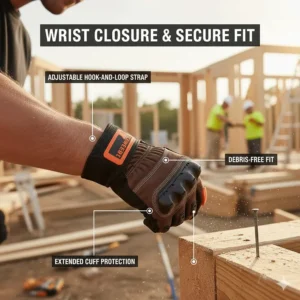
Framing gloves for nail guns aren’t just another accessory—they’re your frontline defense against the unique hazards of high-speed nail driving. Unlike regular work gloves, these specialized carpenter framing gloves feature reinforced trigger fingers, vibration-dampening technology, and strategic open-finger designs that let you maintain precise control while your hands stay protected. According to the U.S. Bureau of Labor Statistics, hand injuries account for over 238,000 nonfatal workplace incidents annually, with construction workers facing particularly high risk.
Whether you’re building deck frames or framing an entire house, the right nail gun safety gloves can transform your workflow. This guide cuts through the marketing hype to reveal which gloves actually deliver on their promises for pneumatic tool use.
Quick Comparison Table
| Glove Model | Best For | Finger Design | Price Range | Rating |
|---|---|---|---|---|
| Ironclad Framer FUG-04 | Trigger control | 3-finger open | $25-32 | ⭐⭐⭐⭐⭐ |
| Mechanix M-Pact Leather Framer | Impact protection | 3-finger open | $36-45 | ⭐⭐⭐⭐½ |
| DEWALT DPG24 Premium Framer | All-day comfort | 3-finger covered | $18-24 | ⭐⭐⭐⭐ |
| Klein Tools 40072 | Electricians/framers | Full finger | $15-20 | ⭐⭐⭐⭐ |
| HANDLANDY Framer | Budget-friendly | 3-finger open | $12-17 | ⭐⭐⭐⭐ |
| Wells Lamont FX3 | Extreme durability | Full finger | $28-35 | ⭐⭐⭐⭐½ |
| NoCry CutGuard+ | Cut resistance | 3-finger reinforced | $22-29 | ⭐⭐⭐⭐ |
💬 Just one click – help others make better buying decisions too! 😊
✨ Don’t Miss These Exclusive Deals!
🔍 Take your nail driving protection to the next level with these carefully selected products. Click on any highlighted item to check current pricing and availability. These gloves will help you create authentic professional results your clients will appreciate!
Top 7 Framing Gloves for Nail Guns: Expert Analysis
1. Ironclad Framer FUG-04 Series – The Industry Standard
If there’s one glove that’s earned legendary status on job sites across America, it’s the Ironclad Framer. This open-finger design has been the go-to choice for professional framers since its introduction, and for good reason.
Key Specifications:
- Duraclad reinforced palm (8x more durable than synthetic leather)
- Open thumb, index, and middle fingers for maximum dexterity
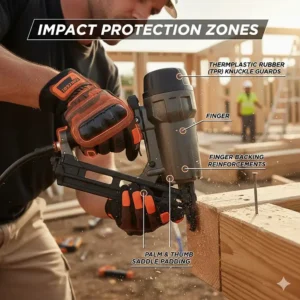
- Thermoplastic rubber knuckle protection
The magic lies in that signature fingerless design. You get direct skin contact on your trigger finger for precise nail gun control, while the rest of your hand stays armored against impact and abrasion. The terry cloth sweat wipe on the thumb might seem like a small touch, but when you’re working through a summer afternoon, you’ll appreciate not having to strip off your gloves every ten minutes.
Customer Feedback: Framers consistently praise the balance between protection and feel. One verified buyer noted these gloves lasted through three major residential projects before showing significant wear. However, some users with larger hands find the fit runs slightly small.
Pros:
✅ Exceptional trigger finger control for nail guns
✅ Machine washable for extended use
✅ Excellent palm grip on pneumatic tools
Cons:
❌ May run small for XXL hands
❌ Limited weather protection in cold conditions
Price: $25-32 | Best For: Professional framers prioritizing trigger control
2. Mechanix Wear M-Pact Durahide Leather Framer – Premium Impact Protection
When you need serious hand protection without sacrificing dexterity, the Mechanix M-Pact Leather Framer delivers professional-grade performance. This isn’t your average work glove—it’s engineered specifically for carpenters who spend all day swinging hammers and running pneumatic nailers.
Key Specifications:
- D3O palm padding that reacts on impact
- Durahide leather construction
- EN 388 rated impact protection on knuckles
That D3O technology is genuinely impressive. Unlike static foam padding, D3O molecules lock together upon impact to absorb and dissipate energy, then immediately flow back to their flexible state. Translation? Your palms stay protected from pneumatic tool vibration without feeling like you’re wearing hockey gloves.
Customer Feedback: Construction professionals report significantly reduced hand fatigue during extended framing sessions. The breathable TrekDry material prevents the swamp-hand syndrome that plagues cheaper alternatives.
Pros:
✅ Superior vibration dampening for nail driving protection
✅ Breathable design prevents moisture buildup
✅ Professional-grade durability
Cons:
❌ Higher price point
❌ Break-in period needed for optimal fit
Price: $36-45 | Best For: Professionals seeking maximum impact protection
3. DEWALT DPG24 Premium Framer Performance Gloves – Balanced Performance
DEWALT brings their tool-making expertise to hand protection with the DPG24 Premium Framer, offering a slightly different approach to the carpenter glove game. Instead of fully open fingers, these feature 3/4-length finger coverage with nylon gussets.
Key Specifications:
- PVC palm overlays (water and oil-resistant)
- High-density memory foam on heel of hand
- Three-finger design with reinforced overlays
The partial finger coverage gives you more protection than fully open designs while maintaining excellent dexterity for trigger finger operations. The memory foam strategically placed at the heel of your hand absorbs impact from nail gun recoil—a thoughtful detail that shows DEWALT actually consulted with framers during development.
Customer Feedback: Users appreciate the oil-resistant grip when working with pneumatic tools. However, durability reports are mixed, with some experiencing seam failures within a month of heavy use.
Pros:
✅ Excellent grip on oily/wet surfaces
✅ Comfortable memory foam padding
✅ More finger protection than fully open designs
Cons:
❌ Durability concerns from some users
❌ Sizing can be inconsistent
Price: $18-24 | Best For: Framers who want balanced protection and dexterity
4. Klein Tools 40072 Electricians Gloves – Versatile Crossover Option
Don’t let the “electrician” label fool you—the Klein Tools 40072 has become a favorite among carpenters who need reliable full-finger protection for varied tasks. These gloves prove that sometimes a simple, well-executed design beats over-engineered alternatives.
Key Specifications:
- Spandex material for breathability
- Extended cuff for easy on/off
- Wrapped index finger for durability
Klein Tools designed these with wire-pulling in mind, which translates perfectly to nail gun use. The slip-resistant palm material provides excellent grip on pneumatic tools, while the breathable spandex prevents the hand-sweat buildup that makes other gloves unbearable after a few hours.
Customer Feedback: Buyers consistently mention the comfortable fit and reasonable durability. These gloves strike a middle ground between the ultra-specialized framing gloves and general-purpose work gloves.
Pros:
✅ Comfortable for all-day wear
✅ Good grip on power tools
✅ Affordable price point
Cons:
❌ Not as durable as premium options
❌ Limited impact protection
Price: $15-20 | Best For: Budget-conscious carpenters needing versatile gloves
5. HANDLANDY Framer Work Gloves – Best Budget Pick
If you’re looking for solid performance without the premium price tag, the HANDLANDY Framer delivers surprising value. These gloves won’t win awards for revolutionary design, but they nail the fundamentals that matter for framing work gloves.
Key Specifications:
- Foam-padded palm patch
- U-wrist design works with watches
- Hi-viz color blocking for job site visibility
That U-shaped wrist closure is more clever than it sounds. It lets you keep your watch on while wearing gloves—a small convenience that saves time throughout the day. The foam padding provides decent vibration protection for nail gun safety gloves at this price point, though it doesn’t match the advanced materials in premium options.
Customer Feedback: DIYers and occasional professionals praise the value proposition. The gloves hold up well for moderate use, though daily professional framers report needing replacement after 2-3 months.
Pros:
✅ Excellent price-to-performance ratio
✅ Innovative wrist design
✅ Good entry-level option
Cons:
❌ Lower durability than premium brands
❌ Foam padding compresses over time
Price: $12-17 | Best For: DIY enthusiasts and occasional use
6. Wells Lamont FX3 Extreme Dexterity – Maximum Durability
Wells Lamont has been making work gloves since 1907, and their FX3 Extreme Dexterity represents over a century of glove-making expertise. These full-finger gloves prioritize long-term durability without turning your hands into inflexible clubs.
Key Specifications:
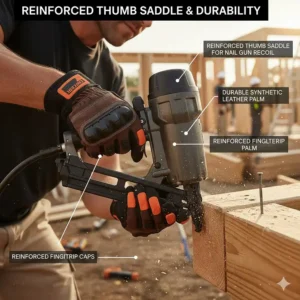
- D3O technology for impact absorption
- TPR knuckle padding
- Synthetic leather construction with reinforced palm
The combination of D3O palm padding and TPR knuckle protection creates a glove that excels at protecting against the dual threats of pneumatic tool vibration and accidental hammer strikes. The synthetic leather balances flexibility with abrasion resistance—crucial for carpenter framing gloves that encounter rough lumber all day.
Customer Feedback: Professional contractors report these gloves lasting 4-6 months under daily use conditions. The fit runs slightly generous, which some users prefer for layering in cold weather.
Pros:
✅ Exceptional long-term durability
✅ Superior impact and vibration protection
✅ Comfortable for extended wear
Cons:
❌ Higher price point
❌ May feel bulky initially
Price: $28-35 | Best For: Professionals demanding maximum durability
7. NoCry CutGuard+ Reinforced Cut Resistant Gloves – Ultimate Protection
When your framing project involves handling sharp metal connectors alongside your nail gun, the NoCry CutGuard+ offers protection that standard framing gloves can’t match. These aren’t traditional carpenter gloves, but they’ve found a devoted following among framers working with metal studs and sharp materials.
Key Specifications:
- Level 5 cut resistance certification
- Stainless steel thread reinforcement on three fingers
- Nitrile-coated palm for superior grip
The stainless steel thread reinforcement targets the thumb, index, and middle fingers—exactly where you’re most likely to encounter cuts during nail gun operation and material handling. The nitrile coating provides excellent grip even when tools are wet or oily, a common scenario on active job sites.
Customer Feedback: Users appreciate the dual-purpose functionality for both power tool use and handling sharp materials. Some note the reinforced areas can feel stiff initially but break in after a few days of use.
Pros:
✅ Exceptional cut and puncture resistance
✅ Food-safe and machine washable
✅ Versatile for multiple tasks
Cons:
❌ Less dexterity than open-finger designs
❌ Not specifically designed for trigger control
Price: $22-29 | Best For: Framers working with metal and sharp materials
Understanding Trigger Finger Design in Nail Gun Gloves
The trigger finger is where the rubber meets the road—or more accurately, where your finger meets the nail gun trigger. This seemingly simple feature makes or breaks a framing glove’s real-world performance.
Why Open-Finger Designs Dominate Professional Circles
Walk onto any active framing site, and you’ll notice most experienced carpenters wearing gloves with exposed fingertips. There’s sound reasoning behind this preference. Your trigger finger needs direct tactile feedback to control nail depth and firing timing with precision. Even the thinnest glove material creates a barrier that reduces sensitivity.
The Ironclad Framer and Mechanix M-Pact both employ the three-finger open design that has become the industry standard. Your thumb, index, and middle fingers remain bare for maximum control, while your ring and pinky fingers—less critical for tool operation—stay fully protected.
The Full-Finger Alternative
Some carpenters prefer complete finger coverage, particularly when working in cold conditions or when hand protection from debris outweighs the dexterity trade-off. The Klein Tools 40072 and Wells Lamont FX3 represent this philosophy well. Modern thin-material construction has improved trigger feel in full-finger designs, though they still can’t quite match the direct feedback of open fingers.
Hybrid Solutions
Gloves like the DEWALT DPG24 split the difference with 3/4-length finger coverage. You get protection over most of your finger while maintaining exposed fingertip contact with the trigger. This hybrid approach appeals to framers who want more protection than open designs offer but better feel than traditional full-finger gloves provide.
Pneumatic Tool Use: Protection Beyond the Basics
Pneumatic nailers operate at incredible speeds, driving nails through solid lumber in milliseconds. This power creates specific hand protection challenges that general work gloves weren’t designed to address.
Vibration Management
According to OSHA regulations on hand protection, employers must provide appropriate protection against vibration hazards. Prolonged exposure to power tool vibration can lead to Hand-Arm Vibration Syndrome (HAVS), a serious occupational health concern.
Quality framing work gloves incorporate vibration-dampening materials strategically placed in high-impact zones. The D3O technology in the Mechanix M-Pact and Wells Lamont FX3 represents the current gold standard, though even basic foam padding in budget options like the HANDLANDY Framer provides measurable protection.
Impact Protection Areas
Your palm bears the brunt of nail gun recoil with each shot. Over hundreds or thousands of nails per day, this repetitive impact adds up. Look for gloves with reinforced palm patches—the thicker and more advanced the material, the better the protection.
The heel of your hand also deserves attention. This area contacts the nail gun body during operation and absorbs vibration with each firing. The memory foam placement in the DEWALT DPG24 directly addresses this specific stress point.
Grip in Various Conditions
Framing happens in all weather conditions, and your gloves need to maintain reliable grip whether tools are dry, wet, or covered in construction dust. Textured palm materials like the PVC overlays on the DEWALT DPG24 or the nitrile coating on the NoCry CutGuard+ significantly improve tool control in less-than-ideal conditions.
Nail Driving Protection: What Really Matters
Every nail you drive creates a chain reaction of forces that your hands must manage. Understanding these forces helps you select gloves that protect what matters most.
Recoil Management
Unlike low-powered brad nailers, framing nailers pack serious recoil. Some pneumatic framers deliver up to 3-1/2 inch nails through solid lumber, creating substantial kickback. Your palm position during firing determines where you’ll feel this impact most.
Strategic padding placement makes the difference between comfortable all-day use and aching hands by lunch. The Ironclad Framer positions its Duraclad reinforcement exactly where most framers naturally grip their tools, providing protection without bulk.
Accidental Strike Protection
Even careful carpenters occasionally miss their mark. The back-of-hand and knuckle protection featured in gloves like the Mechanix M-Pact prevents painful (and productivity-killing) impacts when hammers or nail gun bodies make contact with your hands instead of the target.
The thermoplastic rubber (TPR) guards common in modern carpenter framing gloves flex with hand movement while hardening on impact—similar to the D3O technology but at a lower price point. This smart material responds to force rather than remaining rigidly protective all the time.
Trigger Control Under Pressure
When you’re racing against a deadline, trigger control becomes even more critical. Gloves that maintain sensitivity while protecting your hands prevent double-firing mistakes and improve nail placement accuracy.
This is why the open-finger design remains dominant despite offering less coverage. The direct skin contact with your trigger gives you precise control over firing timing, essential when working near edges or in tight spaces where misplaced nails create major problems.
Material Science: What Makes Quality Gloves Different
Not all work glove materials perform equally for framing work. Understanding the key differences helps you spot genuine quality versus marketing hype.
Leather vs. Synthetic Options
Traditional leather gloves offer excellent abrasion resistance and develop a broken-in feel over time. The Mechanix M-Pact’s Durahide leather technology modernizes this classic material with enhanced flexibility and breathability.
Synthetic materials like the Duraclad in Ironclad Framers counter with superior durability claims (8x more durable than standard synthetic leather) and easier maintenance. They’re also typically machine washable, a major advantage for gloves that accumulate job site grime daily.
The honest answer? Both materials work well for nail gun safety gloves. Your choice comes down to personal preference and specific job requirements. Leather tends to perform better in cold weather, while synthetics often provide better moisture management in hot conditions.
Breathability Matters More Than You Think
You can’t maintain precision with sweaty, slipping hands. Breathable materials like the TrekDry fabric in Mechanix gloves or the spandex construction of Klein Tools 40072 make extended wear tolerable.
Look for gloves with mesh panels on the backs of hands or perforated palm areas. These design elements promote airflow while maintaining structural integrity where protection matters most.
The Padding Revolution
Generic foam padding dominated work gloves for decades, but modern materials like D3O have transformed hand protection. This “smart” material flows freely during normal use, maintaining flexibility and comfort. Upon impact, the molecules lock together to form rigid protection, then immediately return to their flexible state.
The practical difference is significant. Old-school padded gloves felt like wearing oven mitts—protective but clumsy. D3O-equipped gloves like the Wells Lamont FX3 protect just as effectively while maintaining the flexibility needed for detailed work.
Sizing and Fit: Getting This Right Matters
The best-engineered glove becomes useless if it doesn’t fit properly. Too tight, and you’ll experience hand fatigue and restricted movement. Too loose, and you lose dexterity while the glove shifts around during use.
Measuring Your Hand Correctly
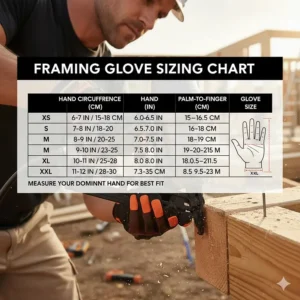
Most manufacturers provide sizing charts based on hand measurements. To measure accurately:
- Use a flexible tape measure
- Measure around your dominant hand at the widest point (excluding thumb)
- Measure from the base of your palm to the tip of your middle finger
- Compare both measurements to the manufacturer’s chart
Different brands fit differently even when labeled with the same size. The Ironclad Framer typically runs true to size but slightly snug, while the Wells Lamont FX3 runs more generously.
The Break-In Factor
Quality gloves like the Mechanix M-Pact may feel stiff out of the package. This is normal for premium materials. Give them 2-3 days of use before judging the fit. Leather and high-quality synthetics both conform to your hand shape with wear, creating a custom fit that improves over time.
If gloves feel restrictive in the fingers or palm after the break-in period, size up. You need free movement for precise nail gun control.
When to Replace Your Gloves
Even the best framing work gloves don’t last forever. Watch for these signs it’s time to replace:
- Worn-through palm areas where your hand contacts tools
- Separated seams or torn stitching
- Compressed padding that no longer absorbs impact
- Loss of grip on palm surfaces
Professional framers running nailers daily might replace gloves every 2-4 months. Weekend warriors could get years from the same pair. The Wells Lamont FX3 and Ironclad Framer typically last longest under heavy use.
Weather Considerations for Framing Gloves
Framing doesn’t stop for weather, and neither should your hand protection. Different conditions demand different glove strategies.
Hot Weather Strategies
Summer framing creates the sweat-and-slip challenge. Breathable designs become essential, not just comfortable. The mesh backing on the HANDLANDY Framer and perforated areas on the Mechanix M-Pact significantly improve air circulation.
Some framers rotate between multiple pairs throughout the day, allowing one set to dry while wearing the other. This practice extends glove life and maintains consistent grip.
Cold Weather Challenges
Open-finger designs lose appeal when temperatures drop. Your exposed fingertips on the trigger become painful in cold conditions, compromising both comfort and safety.
Consider switching to full-finger gloves like the Klein Tools 40072 or Wells Lamont FX3 during winter months. The slight dexterity trade-off beats numb fingers that can’t control your nail gun properly. Some carpenters layer thin liner gloves under their framing gloves for added warmth without excessive bulk.
Wet Conditions
Rain-soaked lumber and damp tools create grip challenges. Water-resistant palm treatments like the PVC overlays on the DEWALT DPG24 or nitrile coating on the NoCry CutGuard+ maintain tool control when conditions turn soggy.
Even the best gloves eventually soak through in sustained rain. Having a backup pair prevents the misery of putting on wet gloves for day two of a rainy job.
Brand Reputation and Warranty Comparison
The glove market includes both established heritage brands and newer innovators. Understanding what different manufacturers prioritize helps predict how their gloves will perform.
Heritage Brands
Wells Lamont traces its roots to 1 907, building a reputation on leather work gloves. Their modern designs like the FX3 blend traditional craftsmanship with contemporary materials. Expect conservative designs focused on durability and straightforward functionality.
Klein Tools started making tools for electricians in 1857 and maintains that specialized focus. Their gloves like the 40072 emphasize comfort and practical features over flashy innovations. Reliability defines the brand.
Performance-Focused Innovators
Mechanix Wear originated in the professional racing industry, where hand protection matters intensely. They bring a performance engineering mindset to construction gloves. The M-Pact series showcases their willingness to incorporate advanced materials and technologies.
Ironclad disrupted the market by challenging the assumption that protective gloves must sacrifice dexterity. Their Framer line specifically targets professional carpenters with features directly addressing nail gun use.
Emerging Value Players
HANDLANDY and NoCry represent newer brands offering competitive features at lower price points. Quality varies more than established brands, but their best offerings deliver impressive performance-to-price ratios.
Warranty Considerations
Most work glove warranties are limited, typically covering manufacturing defects rather than wear and tear. The Ironclad Framer offers a limited lifetime warranty—unusual in the glove market and a testament to their durability confidence.
NoCry provides a limited lifetime warranty on their cut-resistant gloves, while most other brands offer 30-90 day defect coverage. Read warranty terms carefully; many exclude “normal wear” that occurs naturally during glove use.
Safety Standards and Certifications Explained
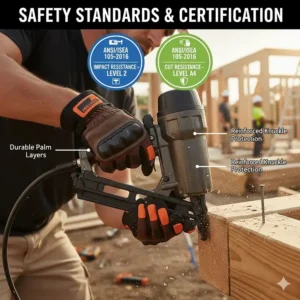
Official certifications help identify gloves that meet specific protection standards. Understanding what these ratings mean prevents relying on marketing claims alone.
ANSI/ISEA Standards
The American National Standards Institute publishes hand protection standards that many manufacturers reference. ANSI 105 addresses cut resistance, with levels ranging from A1 (lowest) to A9 (highest). The NoCry CutGuard+ achieves Level 5 certification, indicating serious cut protection.
Impact protection follows ANSI 138 standards, though fewer manufacturers pursue this certification for construction gloves. When you see impact ratings, they indicate tested and verified protection rather than marketing claims.
EN Standards (European)
Many gloves display EN 388 ratings, particularly European-manufactured options like some Mechanix models. This standard rates cut resistance, tear resistance, puncture resistance, and abrasion resistance on a numerical scale.
A rating of “4544” means maximum scores in all categories except cut resistance. These ratings provide objective comparison points between different gloves.
OSHA Compliance
While OSHA doesn’t certify individual glove models, their regulations require employers to select appropriate hand protection based on identified hazards. Quality framing gloves for nail guns should address the specific risks of pneumatic tool operation, including vibration, impact, and abrasion.
Employers bear responsibility for ensuring glove selection matches job hazards. Simply providing any work glove doesn’t fulfill OSHA requirements if the glove doesn’t protect against specific identified risks.
Maintenance and Care for Maximum Glove Life
Proper maintenance significantly extends glove longevity and performance. A $30 pair of gloves lasting six months beats replacing $15 gloves every month.
Cleaning Strategies
Machine-washable gloves like the Ironclad Framer and NoCry CutGuard+ simplify maintenance. Wash in cool water on gentle cycle and air dry—never use a dryer’s heat, which can degrade materials and shrink gloves.
For gloves not labeled machine washable, hand wash with mild soap and cool water. The Mechanix M-Pact’s leather construction benefits from occasional leather conditioner to maintain suppleness.
Daily Care Habits
At day’s end, remove debris from glove palms and fingers. Sawdust and dirt accelerate material breakdown when left embedded in gloves. A quick brush-off adds minimal time but extends glove life noticeably.
Store gloves in a dry location with good airflow. Damp, enclosed spaces promote bacterial growth and material degradation. If your gloves get soaked, dry them before storing—stuffing wet gloves in a tool bag guarantees premature failure.
Extending Lifespan
Rotate between multiple pairs if you work daily. Alternating gloves allows materials to fully dry and recover between uses, significantly extending overall life.
The padded areas in gloves compress with use. Occasionally reshape padding by hand to restore loft. This simple step maintains impact protection effectiveness longer.
When Repairs Make Sense
Small tears in non-critical areas can be patched with flexible fabric adhesive, extending glove life. However, compromised protection areas—palm reinforcement, finger padding, or trigger finger zones—warrant replacement rather than attempted repair.
Never continue using gloves with failed palm protection. The cost of replacement beats dealing with hand injuries from inadequate protection.
Frequently Asked Questions
❓ What makes framing gloves for nail guns different from regular work gloves?
❓ Should I choose open-finger or full-finger carpenter framing gloves?
❓ How often should nail gun safety gloves be replaced?
❓ Do cut-resistant gloves work well for pneumatic tool use?
❓ What size framing work gloves should I buy if I'm between sizes?
Making Your Final Decision: Which Gloves Fit Your Needs?
You’ve seen the options, understood the technology, and learned what separates marketing hype from genuine performance. Now comes the practical decision: which gloves belong in your tool bag?
For professional framers running nailers daily, the Ironclad Framer FUG-04 or Mechanix M-Pact Leather Framer represent the sweet spot between protection and performance. Yes, you’ll pay more upfront, but the combination of durability, vibration dampening, and precise trigger control pays dividends through every nail you drive.
Budget-conscious buyers and DIY enthusiasts will find the HANDLANDY Framer or DEWALT DPG24 deliver solid performance at prices that won’t cause sticker shock. They might not last as long as premium options, but they protect your hands effectively while you’re wearing them.
If your framing work involves significant metal fabrication or sharp materials, the NoCry CutGuard+ adds a safety dimension that standard framing gloves can’t match. The cut resistance complements rather than replaces impact protection.
The honest truth? You’ll probably end up owning multiple pairs as your experience grows. Most seasoned carpenters keep open-finger gloves for precision work, full-finger options for cold weather, and specialized pairs for specific tasks. Building your glove collection over time lets you match protection to circumstances rather than compromising with one-size-fits-all thinking.
Your hands are your livelihood in this trade. The right framing gloves for nail guns protect that investment while making your work more comfortable and precise. Start with one quality pair that addresses your primary needs, then expand as you discover what works best for your specific situation.
Whatever you choose, make sure it actually protects your trigger finger while allowing the control that separates professional work from amateur results. Everything else is just details.
Recommended for You
- 7 Best Carpentry Gloves Amazon 2026
- 7 Best Work Gloves for Construction 2026 | Top-Rated Protection
- 7 Best Breathable Mechanic Gloves for Summer 2026 (Stay Cool!)
Disclaimer: This article contains affiliate links. If you purchase products through these links, we may earn a small commission at no additional cost to you.
✨ Found this helpful? Share it with your crew! 💬🤗
