

In This Article
Your hands take the first hit and get the last thought. Then a splinter, a scorching tailgate, or a frost-slicked steering wheel at 6 a.m. reminds you. Driver’s style leather work gloves are the quiet fix. They are a slim, flexible, one-piece leather glove that guards your palms without turning your fingers into sausages. Skip the bulky gauntlets. Skip the glued-on synthetic patches that peel by March.
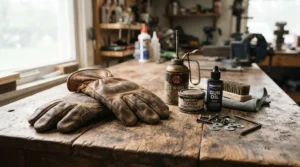
The pattern is old. The driving glove appeared in the 1890s as a way to improve grip and protect the hands. The work-grade cousin kept the best parts: the keystone thumb, the short cuff, and the leather palm that grips. It swapped thin dress leather for tougher cowhide, buffalo, or deerskin. Today, affordable leather driving gloves run from the low teens to about $30. That makes this one of the cheapest upgrades in any toolbox.
Here’s the catch. Not every pair labeled “driver” earns the name. Hide type, thumb construction, cuff style, and the glove break-in period vary a lot from model to model. Those differences decide whether you love a pair or abandon it in a truck door pocket.
This guide compares seven real models. It leans on spec sheets, manufacturer documentation, and the review text visible on retail listings. It is not based on hands-on testing. Where review details couldn’t be verified, I say so. You’ll get plain-English interpretation of every spec and a clear view of who each glove suits. You’ll also get a practical plan for turning a budget pair into dependable everyday carry gear.
Quick Comparison Table: Driver’s Style Leather Work Gloves at a Glance
| Glove | Hide | Cuff | Best For | Price Range |
|---|---|---|---|---|
| Wells Lamont 1132 | Grain cowhide | Ball-and-tape | All-purpose value | ~$12-$20 |
| Kinco 50BT | Suede cowhide | Ball-and-tape | Tightest budget, soft feel | ~$10-$20 |
| Kinco 81 | Grain buffalo | Easy-On elastic | Abrasion-heavy chores | ~$12-$22 |
| Wells Lamont HydraHyde | Treated cowhide (varies by version) | Elastic wrist | Damp or wet work | ~$15-$27 |
| Mechanix Wear Durahide Cow Driver | Top-grain cowhide | Stretch elastic | Dexterity with water resistance | ~$22-$30 |
| Kinco 51PL | Suede cowhide, pile-lined | Easy-On elastic | Cold-weather driving and chores | ~$20-$26 |
| Kinco 90 | Grain deerskin | Easy-On elastic | Fine-motor, lighter jobs | ~$28-$32 |
Prices are ranges seen across retail listings at the time of research. They vary by size, color, and seller, so check current price before buying.
Looking at the table, Wells Lamont 1132 and Kinco 50BT anchor the budget leather work gloves end, and both cost less than a fast-food combo. Kinco 81 buys you tougher hide for a few dollars more. Wells Lamont HydraHyde and Mechanix Wear Durahide Cow Driver are the picks for wet weather, while Kinco 51PL handles the cold and Kinco 90 handles delicate work.
💬 Just one click — help others make better buying decisions too!😊
Top 7 Driver’s Style Leather Work Gloves: Expert Analysis
Seven gloves, three price tiers, four leather types. Each entry below translates the spec sheet into real-world meaning and summarizes what reviewers say, where verifiable.
1. Wells Lamont 1132 — adjustable-wrist classic that fits most hands
The 1132 is the glove other budget gloves get measured against. Its standout feature is the ball-and-tape wrist closure. You cinch the cuff to your wrist instead of trusting an elastic band to keep its grip.
It’s built from grain cowhide with a reinforced palm patch, a Gunn cut, and a keystone thumb. Grain cowhide keeps the tough outer surface of the hide, which is why the listing emphasizes abrasion and puncture resistance. The Gunn cut moves seams away from the palm’s wear zones. The separately stitched keystone thumb lets your thumb pivot instead of fighting the fabric.
On balance, this is a generalist’s glove for driving, hauling firewood, fencing, and yard work. The adjustable cuff suits narrow or wide wrists. It also suits anyone wearing the glove over a jacket sleeve. What the spec sheet won’t tell you is that grain cowhide generally starts stiffer than suede, so expect a short break-in stretch.
Reviewers on retail listings describe the gloves as tough, and one buyer called them a must-have for truck driving. A couple of reviewers flag snug sizing and an odd thumb fit. Another notes that leather can wear through at the fingers if it gets wet.
Pros:
- ✅ Adjustable ball-and-tape wrist closure
- ✅ Reinforced palm patch where wear hits first
- ✅ Handles driving, yard work, and light construction
Cons:
- ❌ Stiffer out of the package than suede
- ❌ Wet-and-dry cycles can age the leather faster
Price range: roughly $12-$20, so check current price. Verdict: the best all-round value in this lineup.
2. Kinco 50BT — softest feel at the lowest price
If you’re hunting affordable leather driving gloves, the 50BT is the obvious starting point. Its golden full suede cowhide feels supple fast. Suede leathers generally trade some surface toughness for early comfort, and that trade suits light and medium work.
The listing details are more thoughtful than the price implies. There’s a leather welt at the base of the middle and ring fingers, which is a classic failure point for seams. There’s an out-seam index finger, which moves the seam to the outside so nothing bunches against your skin. The adjustable ball-and-tape cuff and keystone thumb round out the package. The glove is unlined, and retail listings note it is not machine washable and not ANSI certified.
My read: this is a deliver-packages, garden, and toolbox-spare glove. The out-seam and Gunn cut make it feel more refined than its price suggests, which matters if you grip tools for an hour at a time.
Retail listings show a sizable review pool, but I couldn’t verify individual review themes. Treat durability expectations as moderate and grounded in the construction, not in confirmed long-term feedback.
Pros:
- ✅ Soft feel with minimal stiffness at first
- ✅ Out-seam index finger removes inside rub points
- ✅ Adjustable cuff for a custom fit
Cons:
- ❌ Suede generally dislikes repeated soaking
- ❌ Not machine washable
Price range: about $10-$20, so check current price. Verdict: the budget leather work gloves pick for spare pairs and light duty.
3. Kinco 81 — highest abrasion rating in this lineup
The Kinco 81 uses rust-colored full grain buffalo. Kinco’s own tech sheet rates the hide “best” for abrasion resistance and “fair” for dexterity and for drying soft and flexible. That is an honest tradeoff, and it tells you what this glove is.
The build includes an Easy-On cuff with shirred elastic, a keystone thumb, a finger welt, a Gunn cut, and an out-seam index finger. One retailer lists it as made in the USA, though you should confirm on the listing you buy from. Kinco recommends it for construction, farm and ranch work, and wood chopping.
Think of it as the pick for abrasive, repetitive chores such as stacking lumber, dragging brush, and hauling stone. If your gloves usually die at the palm, this is the hide to try. If your work needs delicate finger feel, look at deerskin instead. The elastic cuff also makes this glove fast to pull on between tasks.
I couldn’t verify customer review text for this model. Retailer pages show review counts, but the content wasn’t accessible during research, so judge it by the manufacturer’s own ratings.
Pros:
- ✅ Buffalo hide rated best for abrasion resistance
- ✅ Welt reinforces a classic seam failure point
- ✅ Quick-on elastic cuff
Cons:
- ❌ Dexterity rated only fair by the manufacturer
- ❌ May dry stiffer after getting wet
Price range: roughly $12-$22, so check current price. Verdict: the toughness pick for abrasive work.
4. Wells Lamont HydraHyde — water-resistant leather that stays softer
The HydraHyde line uses a specially tanned leather that Wells Lamont describes as both water resistant and breathable. The claim is that it stays drier, softer, and more comfortable over its life than standard leather. Retail listings also mark it machine washable.
Specs include a keystone thumb, elasticized wrist, and an oversize extra-wear palm patch. Hide type varies by version, as some listings say grain cowhide and others say suede cowhide. Read the product page for the exact version you’re buying.
My take: leather’s weak spot is the wet-dry cycle, which can leave it stiff and cracked. If your gloves meet dew, hose water, or rain weekly, treated hide is the smartest upgrade at a small premium. The driver pattern keeps the glove slim and lets you feel the tools.
The review text I could access for HydraHyde listings was short and generic, mostly “good gloves” notes. I found no detailed durability reports to cite, so rely on the stated spec.
Pros:
- ✅ Water-resistant, breathable treated leather
- ✅ Extra-wear palm patch
- ✅ Machine washable per retail listings
Cons:
- ❌ Hide type differs between versions
- ❌ Detailed durability feedback is thin
Price range: about $15-$27, so check current price. Verdict: the best choice for damp conditions.
5. Mechanix Wear Durahide Cow Driver — marketed as ready to wear, no break-in
The Durahide Cow Driver is Mechanix Wear’s take on the classic driver. The manufacturer says its Durahide DRY top grain cowhide is water resistant, breathable, and ready to work with no break-in time. That is a marketing claim, so test it on a small task before you commit.
It has stretch elastic cuffs, a keystone thumb, and a Gunn cut that repositions vulnerable seams. Retail listings show it as machine washable and not ANSI certified. A women’s version exists in brown, so fit isn’t an afterthought.
The analysis: this is the glove for people who hate stiff leather and still want cowhide. If the glove break-in period is what kills your enthusiasm for leather work gloves, this one is built to shorten it. The premium goes to the brand and the water-resistant leather, so weigh it against Wells Lamont HydraHyde.
One retailer-affiliated editorial review praises its feel-first dexterity. That is an editorial opinion, not aggregated customer feedback. I couldn’t verify detailed customer reviews.
Pros:
- ✅ Manufacturer claims no break-in required
- ✅ Water-resistant yet breathable top-grain hide
- ✅ Women’s sizing available
Cons:
- ❌ Costs more than the budget leader
- ❌ Not ANSI certified
Price range: roughly $22-$30, so check current price. Verdict: the premium comfort pick if you hate stiff gloves.

6. Kinco 51PL — cold-weather warmth without the bulk
The Kinco 51PL is the lined suede cowhide driver. Its thermal pile lining adds warmth while keeping the slim driver profile. Kinco pitches it as ideal for jobs in cold conditions.
Features include suede cowhide palm patches over high-wear areas, an Easy-On cuff with shirred elastic, and a pieced fabric hem. Retail listings classify it as medium weight. Those palm patches matter because lined gloves usually fail where your palm meets the tool.
For commuters, delivery drivers, and anyone starting a truck in the cold, this solves the “gloves too thin, mittens too clumsy” problem. It is not a Arctic glove, and it isn’t meant to be. It’s a shoulder-season and mild-winter workhorse. Because the lining is attached, don’t expect it to dry quickly.
I couldn’t verify specific customer review themes for this model, so the verdict rests on construction and the manufacturer’s description.
Pros:
- ✅ Thermal pile lining keeps hands warm
- ✅ Palm patches protect high-wear areas
- ✅ Easy-On cuff slips on over cold fingers
Cons:
- ❌ Too warm for spring and summer
- ❌ Lining slows drying after a soak
Price range: about $20-$26, so check current price. Verdict: the sensible choice for cold mornings.
7. Kinco 90 — the most supple leather for fine-motor work
The Kinco 90 is the glove for people who feel overlooked in the heavy-duty aisle. Its golden full grain deerskin is naturally soft and supple, which Kinco says offers ample dexterity and pliability for continuous wear.
It has an Easy-On cuff with shirred elastic, a keystone thumb, an out-seam index finger, and a turned leather hem. Kinco positions it for lighter jobs such as roofing, maintenance, driving, gardening, and hand tool use. That positioning is honest. Deerskin trades some brute durability for feel.
The take: if you drive daily, handle small tools, or do detail work, this is the pair that disappears on your hand. It also suits gardeners who want leather feel without cowhide stiffness. A lined version exists for colder weather. For rough hauling, step up to Kinco 81.
Retail pages show a small review pool for this model, and I couldn’t verify the review text. Treat it as a feel-first specialist and not as an all-day abuse glove.
Pros:
- ✅ Naturally soft, supple full grain deerskin
- ✅ Quick-on elastic cuff
- ✅ Great fit for driving and detail work
Cons:
- ❌ Not the toughest option for rough hauling
- ❌ Highest price in this group
Price range: roughly $28-$32, so check current price. Verdict: a worthwhile splurge for feel-first users.
What Are Driver’s Style Leather Work Gloves?
Driver’s style leather work gloves are unlined or lightly lined leather gloves built on the classic driver pattern. They have a keystone thumb, a short cuff (elastic or ball-and-tape), and a single leather shell. They protect the hand from abrasion, splinters, and rough surfaces while preserving enough feel for steering, tools, and everyday tasks.
The lineage is easy to trace. Early motorists wore thick gauntlets, and The Henry Ford’s collection documents a pair from 1910-1920 that kept drivers’ hands warm and blocked cold air from rushing up the sleeves. As cars gained heaters and lighter steering, the glove got thinner and tighter. The work-grade version borrowed that slim pattern and beefed up the leather.
That history explains the modern design. Short cuffs keep your wrist free, and a keystone thumb stitched separately into the palm allows full movement. Leather on both sides keeps the glove a single, simple piece. It’s the reason a driver pattern feels less like equipment and more like part of your hand.
How to Choose Driver’s Style Leather Work Gloves
Follow these six steps. Each one narrows your options with a specific reason.
- Match the hide to the work. Leather varies by animal and by how much of the hide is used. Buffalo prioritizes abrasion resistance, deerskin prioritizes feel, and cowhide sits in between at the lowest cost.
- Decide grain or suede. Grain keeps the tough outer surface, while suede feels softer early. Pick grain for abrasion and suede for comfort.
- Choose a cuff. Ball-and-tape lets you adjust, while elastic is faster to pull on. If you wear gloves over sleeves, adjustability pays off.
- Check water behavior. If your work is damp, look for treated leather such as the water-resistant options above.
- Size by your palm. Kinco suggests measuring the circumference of your palm with a pliable tape, then converting using the brand’s chart. Don’t guess by T-shirt size.
- Set a budget ceiling. Budget leather work gloves in the teens work for spares and light duty. Move toward the $25-$30 range only if feel or water resistance matters.
Features That Actually Matter (And Those That Don’t)
Some features earn their keep. The keystone thumb stitched separately into the palm is the most ergonomic thumb design, per Kinco’s own tech sheet, and it reduces hand fatigue on repetitive grips. The Gunn cut reduces seams between fingers and shifts them out of palm wear zones. A welt at the base of the middle and ring fingers reinforces a classic failure spot. An out-seam index finger removes the bunched interior seam.
Features that matter less: marketing adjectives like “premium” and “heavy duty,” and fancy colors. Those don’t change how the glove behaves. The real separators are hide type, cuff style, and lining.
| Glove | Hide | Lining | Cuff | Water Handling (Manufacturer Claim) | Best For |
|---|---|---|---|---|---|
| Wells Lamont 1132 | Grain cowhide | Unlined | Ball-and-tape | Not advertised | General use |
| Kinco 50BT | Suede cowhide | Unlined | Ball-and-tape | Not advertised | Budget spares |
| Kinco 81 | Grain buffalo | Unlined | Easy-On elastic | Not advertised | Abrasive chores |
| Wells Lamont HydraHyde | Cowhide (varies) | Unlined | Elastic wrist | Water-resistant, breathable | Wet work |
| Mechanix Wear Durahide Cow Driver | Top-grain cowhide | Unlined | Stretch elastic | Water-resistant, breathable | Comfort-first |
| Kinco 51PL | Suede cowhide | Thermal pile | Easy-On elastic | Not advertised | Cold weather |
| Kinco 90 | Grain deerskin | Unlined | Easy-On elastic | Not advertised | Fine-motor tasks |
The pattern is clear in the table. Only Wells Lamont HydraHyde and Mechanix Wear Durahide Cow Driver advertise water handling, while Kinco 51PL is the only lined option. If your needs fall outside those two attributes, the cheaper Wells Lamont 1132 or Kinco 50BT gives you most of the benefit for less.
Driver’s Style Leather Work Gloves vs Traditional Alternatives
How does this glove style compare with the other options in your drawer? The short version: it’s the middle path between feel and protection.
| Glove Type | Dexterity | Abrasion/Puncture | Cost | Break-In | Best For |
|---|---|---|---|---|---|
| Driver’s style leather | High | Good | Low to mid | Short to moderate | All-purpose work and driving |
| Synthetic-palm mechanics gloves | Very high | Moderate | Mid | None | Tool-heavy, oily work |
| Cotton or jersey gloves | High | Low | Very low | None | Light gardening, dust |
| Heavy gauntlet-style leather | Low | High | Mid | Long | Fencing, rough handling |
Driver’s style leather sits in the sweet spot. You give up the ultra-fine feel of thin synthetic gloves and the tank-like coverage of gauntlets. In return, you get a pair that works for driving, hauling, and tool use without swapping gloves. Leather also resists punctures and abrasion better than fabric. Don’t assume it resists cuts, though, because that needs a dedicated, rated glove.
Affordable Leather Driving Gloves: Long-Term Cost and Value
Affordable leather driving gloves are only a bargain if they last. Cost per use is the honest measure, and the math is easy to run.
| Glove | Price Range | Hide | Value Take |
|---|---|---|---|
| Wells Lamont 1132 | ~$12-$20 | Grain cowhide | Best all-round value |
| Kinco 50BT | ~$10-$20 | Suede cowhide | Cheapest entry, soft feel |
| Kinco 81 | ~$12-$22 | Grain buffalo | Best durability per dollar |
| Wells Lamont HydraHyde | ~$15-$27 | Treated cowhide | Pays off in wet use |
| Mechanix Wear Durahide Cow Driver | ~$22-$30 | Top-grain cowhide | Premium for comfort |
| Kinco 51PL | ~$20-$26 | Suede, lined | Seasonal value |
| Kinco 90 | ~$28-$32 | Grain deerskin | Priced for feel |
Here’s a simple example. If a $15 pair lasts six months, you’re paying about $2.50 a month. A $30 pair would need to last a full year to match. That’s a hypothetical, but it shows why budget leather work gloves often win on cost unless a premium feature solves a real problem for you. For abrasive work, Kinco 81 could beat both. For wet work, Wells Lamont HydraHyde is more likely to repay its premium.
Care also stretches value. Some listings say machine washable, including Wells Lamont HydraHyde and Mechanix Wear Durahide Cow Driver, while Kinco 50BT is listed as not machine washable. Follow the label on your pair.
✨ Ready to Upgrade Your Hands?
🔍 Take your work and driving routine to the next level with these carefully selected gloves. Click on any highlighted product name to check current pricing and availability. A good pair of hands-first protection will make your next job smoother and safer. 🧤
Common Mistakes When Buying Driver’s Style Leather Work Gloves
A few mistakes cause most of the regret.
Buying on price alone. The cheapest pair is great as a spare, but a pair that doesn’t match your work will die early, such as suede in a wet job.
Guessing the size. Leather doesn’t stretch forever, and a too-tight pair can pinch at the thumb. Measure your palm.
Treating them as rated safety gear. Retail listings for Kinco 50BT and Mechanix Wear Durahide Cow Driver list them as not ANSI certified. Both are great for ordinary work, but not for hazards that need rated protection.
Skipping a spare. A second pair in the truck means a wet glove never ruins a day.
Drying them wrong. Leather and direct heat don’t mix, so air-dry at room temperature.
Ignoring the cuff. An elastic cuff that stretches out or a tape closure that gets lost is a small flaw that becomes a daily annoyance.

Safety and Compliance: Driver-Style Hand Protection and What OSHA Expects
Driver-style hand protection is ordinary work protection, not a certified safety solution. Under OSHA’s hand protection standard, employers must select hand protection based on the hazards present, including severe cuts, abrasions, punctures, chemical and thermal burns, and temperature extremes. The standard also requires matching the glove to the task, conditions, and duration of use.
What does that mean for you? If you’re a homeowner or hobbyist, a driver glove is a sensible tool for abrasion, splinters, and rough surfaces. If you work in an environment with defined hazards, it’s your employer’s job to evaluate those hazards. The listings reviewed here don’t claim ANSI ratings, which means you shouldn’t assume cut, chemical, or heat resistance.
A simple rule applies. Use driver-style hand protection for friction and rough handling, and use purpose-rated gloves for sharp, hot, or chemical hazards. Leather will not make a good welding glove, and it shouldn’t be pressed into that role.
Glove Break-In Period: A Practical 30-Day Plan
The glove break-in period is where leather gloves win or lose your loyalty. The good news: you can steer it.
Days 1-3: short sessions. Wear them 20 to 30 minutes on light tasks like driving or sweeping. Flex your fingers and make fists often. Pay attention to the thumb and base of the fingers.
Days 4-10: real work. Move to moderate chores. If a seam rubs, note where, because that’s often a sizing issue and not a break-in issue.
Days 11-30: normalize. Alternate between pairs if you own two so each dries fully between uses.
Expect differences by model. Suede like Kinco 50BT and deerskin like Kinco 90 typically soften faster, while buffalo like Kinco 81 takes longer. Mechanix Wear Durahide Cow Driver claims no break-in at all. If you condition leather, follow the maker’s care guidance first and test on a small area.
Everyday Carry Gear: Real-World Scenarios for Driver’s Style Leather Work Gloves
A good glove becomes everyday carry gear the moment it lives where you need it. Three scenarios show how to match the pair.
The cold-morning commuter. Budget: under $25. Environment: car and curb. Frequency: daily. Pick Kinco 51PL for winter and keep a Wells Lamont 1132 in the glove box for the other seasons.
The weekend DIYer. Budget: under $20. Environment: garage and yard, 2-3 hours a week. Pick Kinco 50BT for the toolbox. It’s cheap enough to own two pairs, so one is always dry.
The damp-climate homeowner. Budget: about $25. Environment: hoses, wet wood, and mud. Pick Wells Lamont HydraHyde and let the treated leather do its job.
Where you store them matters as much as which pair you pick. Everyday carry gear works when it’s within arm’s reach. Try a door pocket, a tool bag side pocket, or a bike frame bag. Keep one pair in each place you’re likely to need them. Because they’re slim, driver gloves pack flat and weigh little.
Problem-Solution Guide: Fixing Common Leather Glove Headaches
Problem: stiff after drying. Leather can dry stiff after a soaking. Try air-drying at room temperature, then flex the gloves by hand. Consider treated leather like Wells Lamont HydraHyde if it keeps happening.
Problem: sweaty hands. Unlined leather breathes better than lined. Switch to unlined options like Kinco 90 or Wells Lamont 1132 in warm weather.
Problem: seams wearing at the fingers. Look for a welt and Gunn cut, which Kinco 81 and Kinco 50BT both list.
Problem: cuff won’t stay snug. Choose the ball-and-tape closure of Wells Lamont 1132 or Kinco 50BT, which adjusts to your wrist.
Problem: always losing one glove. Buy a second pair and keep one in each bag or vehicle. Cheap pairs make that realistic.

FAQ
❓ Are driver's style leather work gloves good for winter?
❓ What is the best budget leather work gloves option?
❓ How do I choose the right size for leather driving gloves?
❓ Can I wash leather work gloves?
❓ Where can I check current prices for these gloves?
Conclusion
Driver’s style leather work gloves hit a rare sweet spot: protective enough for real work, slim enough to feel what your hands are doing, and cheap enough to own in pairs. The right choice depends on your hands and your work, not on a single “best.”
Here’s the short version. Wells Lamont 1132 is the dependable all-rounder. Kinco 50BT is the cheapest way into soft leather. Kinco 81 is for abrasive jobs, Wells Lamont HydraHyde and Mechanix Wear Durahide Cow Driver are for wet-weather comfort, Kinco 51PL is the cold-weather pick, and Kinco 90 is the feel-first specialist.
Before you buy, check the hide, the cuff, and the lining against your actual work. Measure your palm, plan for the glove break-in period, and keep a spare pair within reach as part of your everyday carry gear. If your job involves cuts, chemicals, or heat, choose purpose-rated protection instead.
Recommended for You
- General Purpose Work Gloves: 7 Proven Picks For 2026
- Jersey Work Gloves For Assembly Line Workers: 7 Best Picks 2026
- String Knit Gloves For Produce Handling: 7 Best Picks (2026)
Disclaimer: This article contains affiliate links. As an Amazon Associate, I earn from qualifying purchases. If you purchase products through these links, we may earn a small commission at no additional cost to you.
✨ Found this helpful? Share it with your friends! 💬🤗
