
In This Article
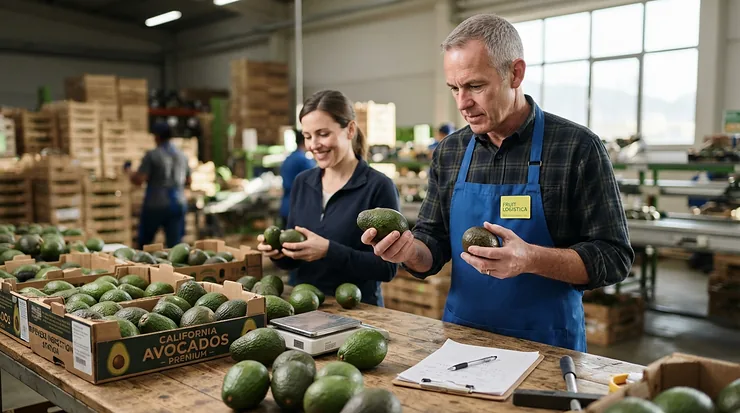
String knit gloves for produce handling are seamless, machine-knit cotton or polyester-cotton gloves that pickers, packers, and stockers wear to shield their hands from abrasion, splinters, and mild cold. They still leave the fingertips free enough to sort fruit and vegetables. They’re reusable, washable, and cheap. They are not the same thing as single-use food-service gloves.
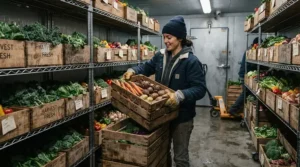
Hands are the busiest tool on any produce line. They pick, pinch, hoist, flip, and wipe, and by the end of a shift they’ve taken more punishment than the crates they’re moving. A good knit glove is the cheapest insurance against cardboard cuts, splintery wooden bins, and the slow scrape of harvest-day abrasion.
The category is also confusing. Some pairs are gossamer-thin, and others feel like a sweater sleeve. Some have PVC dots and some don’t. “Food-safe work gloves” is a phrase that gets tossed around far too loosely. Regulators draw sharper lines. As Penn State Extension’s glove guidance explains, single-use gloves aren’t required when you’re handling raw agricultural products or washing whole produce. That doesn’t make any old knit glove automatically fine anywhere near food.
This guide sorts it out. You’ll get seven real products from budget to premium and an honest read on what their specs mean in practice. There are also dedicated sections on food safety standards, cold storage handling, grocery stocking gloves, and farm labor gear.
A transparency note: I haven’t worn these gloves. Everything here comes from spec sheets, retailer listings, and published safety guidance. Where I couldn’t verify customer reviews, I say so instead of guessing. Prices are ranges only, so check current price and availability before you buy.
Quick Comparison: String Knit Gloves for Produce Handling at a Glance
Here’s the fast version before we dig into the details.
| Product | Weight / Grip | Best For |
|---|---|---|
| Wells Lamont 513 | Medium, uncoated | All-round picking and sorting |
| Kinco 1775 | Heavy 7-gauge, uncoated | Crate and bin handling |
| PIP 35-C2113 | Light 13-gauge, uncoated | Delicate fruit and fine sorting |
| PIP 35-CB604 | Extra heavy, extended cuff | Cool-weather harvest, forearm coverage |
| West Chester 708SK | Medium, one-side PVC dots | Budget stocking and lifting |
| Safety Zone GSBD | Medium, two-sided PVC dots | Two-handed case handling |
| Showa Thermo 451 | Coated, cold-resistant | Cooler and loading-dock shifts |
Read this table as a ladder from “most feel” to “most protection.” The PIP 35-C2113 sits at the sensitive end, and the Kinco 1775 and PIP 35-CB604 sit at the rugged end. The Showa Thermo 451 is the odd one out, a coated cold-weather glove rather than a plain knit. It’s included because cold storage handling is where plain knits run out of road.
💬 Just one click — help others make better buying decisions too!😊
Top 7 String Knit Gloves for Produce Handling: Expert Analysis
1. Wells Lamont 513 String Knit Gloves — the ambidextrous crop-picking staple
The hook is the reversible pattern. Every glove fits either hand, so one lost glove never orphans its partner. Over a shift of sorting peppers or restocking apples, that saves a surprising amount of fumbling.
The listings describe a medium-weight knit with an over-edged elastic wrist, sold as 12 pairs in white under model numbers like 513SZ, 513MZ, and 513LZ. Most listings say polyester-cotton, but at least one retailer lists 100% polyester, so read the label on your pack. The snug cuff keeps dust and leaf debris out. The medium weight leaves enough fingertip feel to handle soft fruit gently, though there’s no coating, so don’t expect warmth or water resistance.
Based on the specs, this is the sensible default for dry days: harvest, sorting, and light stocking. Its slim profile also makes it a popular liner under heavier gloves, which helps if you move between a warm packing room and a chilly cooler.
Review sentiment: I couldn’t retrieve verifiable review text for this listing, so I won’t characterize it. Skim the most recent low-star reviews for sizing and durability patterns before ordering.
Pros:
- ✅ Ambidextrous pattern means no matching pairs
- ✅ Snug over-edged wrist blocks dust and debris
- ✅ Slim enough to double as a glove liner
Cons:
- ❌ Uncoated knit soaks through on wet produce
- ❌ Fiber content differs between listings
Price range: roughly $10–$20 for a 12-pair pack at retailers I checked; check current price. Verdict: an easy value baseline.
2. Kinco 1775 String Knit Gloves — heavyweight feel with color-coded sizing
Kinco’s color-coded hem lets a crew supervisor sort sizes at a glance instead of squinting at tags. That’s a small detail, but it pays off on any team bigger than three.
The specs are a white 7-gauge heavyweight polyester-cotton knit shell, a continuous knit wrist with elastic and a colored overlock hem, a flexible wing thumb, and a seamless ambidextrous pattern. Kinco lists it as machine washable. Seven-gauge is a chunky knit, which means more abrasion resistance and a bit of insulation but less fingertip sensitivity. The wing thumb gives your grip room to work on crate handles.
My read is that this glove belongs on crews who move bins, crates, and rough cartons more than they pick delicate fruit. The manufacturer’s own copy positions it for jobs ranging from farm labor to warehouse work.
Review sentiment: I couldn’t verify review text for this glove, so check the live listing. Confirm the exact pack size too, since configurations vary by seller.
Pros:
- ✅ Heavyweight knit resists abrasion from crates
- ✅ Color-coded hem speeds crew size sorting
- ✅ Machine washable for repeated rotation
Cons:
- ❌ Thick knit dulls feel on delicate fruit
- ❌ Pack configurations vary by seller
Price range: I couldn’t confirm a current price. Comparable 12-pair string knit packs sat roughly in the $10–$25 range. Verdict: worth it for heavy-handling crews.
3. PIP 35-C2113 Light Weight Knit Gloves — 13-gauge feel for fine sorting
This is the closest thing to working bare-handed while still wearing a glove. The 13-gauge knit is fine enough that you can feel a soft spot on a peach.
The specs are a seamless cotton/polyester shell in natural, a knit wrist, and a reversible pattern that also works as a liner. The retailer listing says the small size fits women well and claims compliance with FDA food-handling requirements under 21 CFR Part 177. Treat that as a claim to verify. Ask the manufacturer for documentation instead of assuming it covers your use. Higher gauge means thinner yarn and tighter stitching, so you gain sensitivity and lose abrasion protection.
That makes it ideal for grocery displays, herb bunches, berries, and sorting lines. It’s poor for hauling crates. Layered under a heavier glove, it also earns its keep as a thin warmth layer.
Review sentiment: I couldn’t verify customer reviews, so read recent feedback on durability. Thin knits are usually the first to wear through at the fingertips.
Pros:
- ✅ Thin knit preserves fingertip sensitivity
- ✅ Reversible design replaces one glove at a time
- ✅ Works as a liner under heavier gloves
Cons:
- ❌ Limited abrasion protection for rough work
- ❌ Food-handling claim needs manufacturer verification
Price range: under about $15 per dozen at retailers I checked; check current price. Verdict: great value for sorting-heavy jobs.
4. PIP 35-CB604 Extra Heavy Weight Knit Gloves — extended cuff for forearm cover
The extended cuff is the story here. It bridges the gap between glove and sleeve, exactly where crate edges and scratchy plant leaves like to bite.
The specs are a seamless extra-heavy cotton/polyester shell in white, a knit wrist, and a reversible design that can also serve as a liner. The same retailer listing repeats the 21 CFR Part 177 compliance claim, so the same verify-it-yourself caution applies. The extra weight adds warmth and abrasion resistance. The cost is dexterity, so picking small items will feel clumsy.
I’d point this glove at cool-weather harvests and packing-shed lifting, where forearm scrapes and chilly mornings are the real enemies. If you’re buying farm labor gear for a crew, it makes a good “heavy day” pair alongside a lighter sorting glove.
Review sentiment: I couldn’t retrieve verifiable review text. Before buying, check whether recent buyers comment on cuff length and sizing.
Pros:
- ✅ Extended cuff covers wrist-to-forearm gap
- ✅ Extra-heavy knit adds warmth and durability
- ✅ Reversible design doubles as a liner
Cons:
- ❌ Bulky for delicate picking
- ❌ Warmer than ideal in hot sheds
Price range: low-to-mid teens per dozen at retailers I checked; check current price. Verdict: solid value for heavy handling.
5. West Chester 708SK PVC-Dotted String Knit Gloves — budget grip on the palm side
This is the “just add friction” upgrade. The dots turn a slippery melon or a taped case into something you can actually hold.
The specs are a medium-weight natural-white cotton/polyester knit with PVC dots on one side and a knit wrist. Airgas lists it for manufacturing, general labor, material handling, shipping and receiving, and agriculture. Because the dots sit on one side only, the back of the hand stays breathable. The listings I reviewed make no food-contact claims about the dots, so use it for whole produce, crates, and cartons, not ready-to-eat items.
On paper, this is the strongest budget pick for grocery stocking gloves. Backroom shifts involve cardboard, cases, and slick surfaces, and dots pay off on all three.
Review sentiment: I couldn’t verify customer reviews. Look for comments on dot wear, since dots can flake over time on heavily abraded palms.
Pros:
- ✅ Dots add grip on smooth, round produce
- ✅ One-sided coating keeps the back breathable
- ✅ Low cost per pair in dozens or cases
Cons:
- ❌ Dots not marketed for food contact
- ❌ Uncoated knit still absorbs moisture
Price range: under about $15 per dozen at retailers I checked; check current price. Verdict: outstanding value for stocking.
6. Safety Zone GSBD Double-Sided Dotted String Knit Gloves — grip on both sides
Palm-up or palm-down, you get grip. That helps when you’re scooping bagged potatoes onto a display and flipping your hands constantly.
The specs, per a distributor listing (Mfr# GSBD-MN-2C-20), are polyester string knit with PVC dots on both sides, in black and natural, sold in 12-count packs. Double-sided coating means more grip but less breathability and a stiffer feel than one-sided designs.
I’d choose these for two-handed case lifting and bin work where either hand-side might contact the load. They’re less suited to fine sorting. I found this listing through a business-supply distributor, so verify the Amazon listing and seller before buying.
Review sentiment: I couldn’t verify customer reviews. Read recent feedback on fit, since coated knits often run snug.
Pros:
- ✅ Dots on both sides grip either way
- ✅ Polyester knit stretches for a snug fit
- ✅ Good for heavy, awkward loads
Cons:
- ❌ Warmer and less breathable than one-sided dots
- ❌ Amazon listing needs independent verification
Price range: comparable 12-pair dotted packs ran roughly $13–$16 at retailers I checked; check current price. Verdict: fair value for grip-heavy jobs.
7. Showa Thermo 451 Cold-Resistant Gloves — the cold storage upgrade
Plain knits are gloves for weather that’s merely rude. This one is for shifts where the cooler door keeps opening.
The listing I found describes a polyurethane-coated, cold-resistant cotton/poly glove in gray, sold in 24-pair packs. To be clear, this isn’t a plain string knit. It’s included as the premium step-up for cold storage handling. A coated palm typically adds wet grip and wind resistance over bare knit. I couldn’t verify the temperature rating or lining, so check the manufacturer’s spec sheet before relying on it in a freezer.
Based on specs alone, this suits cooler, dock, and cold-room shifts where hands are cold but you still need control. Layer a thin liner beneath if your workplace allows it.
Review sentiment: I couldn’t verify customer reviews. Check the live listing for comments on warmth and fit.
Pros:
- ✅ Coated palm improves wet and slick grip
- ✅ Cold-resistant build suits cooler shifts
- ✅ 24-pair packs suit shared team supplies
Cons:
- ❌ Pricier per pair than plain knits
- ❌ Temperature rating unverified in my research
Price range: roughly $60–$70 for 24 pairs at one retailer at time of research; check current price. Verdict: premium, but worth it for cold work.
Side-by-Side Spec Comparison
| Product | Knit / Weight | Grip Feature | Price Range | Best For |
|---|---|---|---|---|
| Wells Lamont 513 | Medium | Uncoated | ~$10–$20 (12 pr) | Everyday picking |
| Kinco 1775 | Heavy 7-gauge | Uncoated | ~$10–$25 (12 pr) | Crate handling |
| PIP 35-C2113 | Light 13-gauge | Uncoated | Under ~$15 (12 pr) | Delicate sorting |
| PIP 35-CB604 | Extra heavy | Uncoated, long cuff | Low-mid teens (12 pr) | Cool-weather harvest |
| West Chester 708SK | Medium | One-side PVC dots | Under ~$15 (12 pr) | Budget stocking |
| Safety Zone GSBD | Medium | Two-sided PVC dots | ~$13–$16 (12 pr) | Case lifting |
| Showa Thermo 451 | Coated cold-resistant | PU-coated palm | ~$60–$70 (24 pr) | Cold rooms |
I left ratings out on purpose. I couldn’t verify current review scores, and quoting stale numbers would mislead you. Judged on price alone, the West Chester 708SK and PIP 35-C2113 win the budget lane. The Showa Thermo 451 costs several times more per pair but is the only option here built for cold. If you need one glove for mixed duty, the Wells Lamont 513 is the safest starting point.
Practical Usage Guide: Your First 30 Days With Produce Handling Gloves
Buying the glove is half the job. Here’s how to keep it working.
Assign produce-only pairs. Keep them separate from trash runs, chemicals, and shop chores. A glove that touched cleaning solvent at 2 p.m. shouldn’t touch tomatoes at 3.
Wash hands before gloving up. Kansas State’s produce worker training handout lists this rule and adds that gloves in use must be kept sanitary and replaced when necessary.
Rotate three pairs. One on your hands, one in the wash, one drying. Kinco lists its 1775 as machine washable, and Wells Lamont says washable gloves last longer, but follow each pack’s care label. In general, cool-to-warm water, mild detergent, and air drying are the gentlest routine, since high heat can shrink cotton blends.
Set retirement triggers. Retire a pair for holes, stretched cuffs, stains that won’t wash out, or a sour smell that survives laundry.
Avoid the classic first-month mistakes:
- Wearing gloves to wipe your face or check a phone.
- Wearing the same pair through a restroom break.
- Setting them on the floor, then back on your hands.
- Using one pair for both washing and packing.
Treat this routine as your own mini-SOP. Write it on a laminated card by the glove bin, and compliance goes up.

Real-World Scenarios: Which Gloves for Which Job
These are hypothetical profiles built from the specs above, not case studies from real testing.
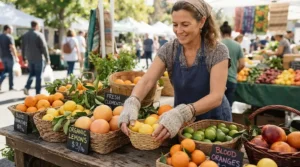
Scenario A: The weekend farmers-market vendor. Fifteen hours a week, dry stand, budget around $15. A 12-pair pack of Wells Lamont 513 covers a full season of rotation. Add a dozen PIP 35-C2113 only if soft fruit sorting dominates.
Scenario B: The overnight grocery stocker. Five shifts a week, split between a dry backroom and a cooler. Use West Chester 708SK for cases and boxes. Add PIP 35-C2113 as a liner for cold spells, and consider the Showa Thermo 451 for long cooler stints. Check your store policy first, since ready-to-eat items usually require single-use gloves.
Scenario C: The small farm crew of six. Dry harvest, then crate loading. The Kinco 1775 handles bins, the Safety Zone GSBD handles two-handed lifting, and the PIP 35-CB604 covers cool mornings. Wet wash-station work is a gap. Knit gloves soak through, so look at coated or waterproof options there.
The pattern across all three is to buy for the environment first and the price second.
Problem → Solution Guide for Produce Handling Gloves
Problem: gloves soak through on wet produce. Plain knit absorbs water. Keep a dry spare in your pocket and swap when damp, or move to a coated glove like the Showa Thermo 451.
Problem: waxy apples and smooth melons slip. Choose dotted options like the West Chester 708SK or Safety Zone GSBD.
Problem: numb fingertips at the cooler door. Layer a thin PIP 35-C2113 underneath and take warming breaks. Section 10 covers why.
Problem: rubbing and blisters. Seamless construction helps, and so does right sizing. The Kinco 1775 color-coded hem makes sizing errors easy to spot.
Problem: loose fibers ending up on displayed produce. Knit fabric can shed fibers, especially when worn out. If you see lint on the produce, retire that pair.
✨ Ready to Gear Up the Smart Way!
🔍 Take your string knit gloves for produce handling setup to the next level with these carefully selected products. Click on any highlighted product name to check current pricing and availability. These picks will help you build a comfortable, hygienic handling routine your whole crew will stick with!
How to Choose String Knit Gloves for Produce Handling
- Start with moisture. Dry work suits plain knit. Wet work demands coating.
- Match gauge to dexterity. Thirteen-gauge suits fine sorting, and seven-gauge suits heavy handling.
- Decide on dots. Add them for slick or boxed loads, skip them for delicate fruit.
- Check the cuff. Elastic wrists keep debris out, and extended cuffs protect forearms.
- Verify documentation. If a listing makes food-contact claims, ask the manufacturer for paperwork.
- Do the pack math. Twelve pairs suit an individual, and 24 or more suit crews.
- Size carefully. A loose glove bunches and slips, and a tight one fatigues your hand.
Run through these seven steps and your shortlist drops from seven products to two or three.
Food-Safe Work Gloves and Food Safety Standards: What the Rules Actually Say
“Food-safe work gloves” sounds like a certification. It usually isn’t one.
The FDA Food Code, which most state codes follow, says food employees shouldn’t touch exposed ready-to-eat food with bare hands, with an exception for washing fruits and vegetables. Barriers can include utensils, deli tissue, tongs, or single-use gloves. Reusable string knit gloves aren’t single-use gloves, so they don’t replace disposables for salads, cut fruit, or deli work.
Oregon’s health authority adds that disposable gloves shouldn’t be washed and reused, and that latex is discouraged because of allergen risk. Those are food-service rules. On farms, the FSMA Produce Safety Rule (21 CFR Part 112) sets worker hygiene and training requirements, and gloves, if used, must be kept sanitary and replaced when necessary.
What should you do in practice?
- Use knit gloves for raw, whole produce and boxes.
- Use single-use gloves for ready-to-eat handling.
- Request manufacturer documentation for any “food-safe” claim.
- Confirm local requirements with your health department.
This is general information, not legal advice. Rules differ by state and operation.
Cold Storage Handling: Can String Knit Gloves Keep Up?
Not on their own, but they can be a useful layer.
Cold rooms are an overlooked hazard. NIOSH’s case study of an airline food-catering facility found workers in roughly 40°F rooms for long shifts. Discomfort came from drafts, gloves left unworn because of dexterity worries, and a lack of training. NIOSH suggested thin fingertip-less liner gloves under required plastic gloves, a glove replacement schedule, worker rotation, hand warmers outside the room, and less fine-dexterity work in the cold. Note that the suggestion was for fingertip-less liners, so full-finger knits are better viewed as a warmth layer for less delicate tasks.
More broadly, CDC and NIOSH recommend that employers run a cold-related illness prevention program with engineering controls, work/rest schedules, training, and appropriate cold-weather gear. OSHA has no specific cold stress standard, according to a professional safety article, and the ACGIH suggests 10-minute warming breaks between short work periods.
In practice, the Wells Lamont 513 or PIP 35-C2113 works as a liner, and the Showa Thermo 451 is the step-up for real cold storage handling. Layer, rotate, and take those breaks.
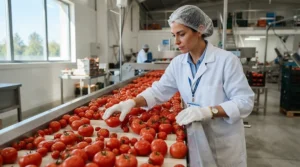
Grocery Stocking Gloves: Fast Hands, Clean Cases
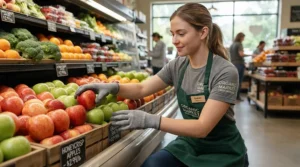
A produce department is a rough-and-tumble place. You’re breaking down corrugated cases, pulling price tags, and reaching into misted displays, often all in one hour.
For that work, grocery stocking gloves need grip and abrasion resistance more than sensitivity. The West Chester 708SK and Safety Zone GSBD fit the backroom. For front-of-store display work with loose fruit, the PIP 35-C2113 gives you more feel. Many stockers carry two pairs, one dotted for cases and one light for display.
The compliance line is simple. Whole produce and cases are one thing, and cut, packaged, or prepared items are another. If your store handles ready-to-eat items, its policy will likely require single-use gloves for those. Ask your manager before you assume knit gloves are fine.
Farm Labor Gear: Building a Glove Kit for Field and Packing Shed
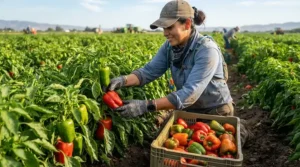
Farm work isn’t one job. It’s five, and they don’t all need the same glove.
Think in layers. A light sorting glove like the PIP 35-C2113 handles picking. A heavy Kinco 1775 or extended-cuff PIP 35-CB604 handles bins and cool mornings. A dotted Safety Zone GSBD covers loading. A coated glove handles wet stations.
Regulation matters here. Virginia Tech Extension explains that the Produce Safety Rule sets standards for growing, harvesting, packing, and holding produce, including worker health, hygiene, and training. If you use gloves at all, treat them as part of that hygiene system: clean, replaced, and never a substitute for handwashing.
Budget-wise, farm labor gear adds up fast. Plan on at least three pairs per worker and buy in dozens.
String Knit Gloves vs Disposable Nitrile and Leather: Which Wins?
| Glove Type | Dexterity | Wet Performance | Reusable | Best For |
|---|---|---|---|---|
| String knit (Wells Lamont 513) | High | Low | Yes | Dry picking and sorting |
| Dotted knit (West Chester 708SK) | Medium | Low–medium | Yes | Stocking, case handling |
| Coated cold glove (Showa Thermo 451) | Medium | Better | Yes | Cooler shifts |
| Disposable nitrile | High | High | No | Ready-to-eat contact |
| Leather palm | Lower | Medium | Yes | Thorns, heavy lifting |
Each type fills a different niche instead of competing directly. Disposable nitrile wins where food safety rules demand a single-use barrier. Leather wins on brute protection, and knit wins on cost, comfort, and dexterity for raw produce.
The practical takeaway is that most operations end up with a combination. Knit gloves handle the raw, physical work, and disposables handle anything ready to eat.
Long-Term Cost & Maintenance: The Real Price per Shift
Sticker price misleads. What matters is cost per wear.
A 12-pair pack in the $10–$20 range works out to roughly $0.85–$1.70 per pair. The 24-pair Showa Thermo 451 pack at $60–$70 lands around $2.50–$2.90 per pair.
Here’s an illustrative example, not tested data. If a $1 pair survives eight washes, that’s nine wears, or about 11 cents per shift. If it survives only three, it’s about 25 cents. A cheap pair that dies fast can cost more per use than a sturdier one.
Maintenance costs are small: detergent, drying time, and a rotation habit. The bigger hidden cost is replacement discipline. Set a rule, such as “retire at holes or stains,” and stick to it. Replace a PIP 35-C2113 more often than a Kinco 1775, since thinner knits wear faster at the fingertips.
FAQ
❓ Are string knit gloves for produce handling considered food-safe?
❓ How often should I wash reusable produce handling gloves?
❓ What gauge is best for fine produce sorting?
❓ Do PVC dots make gloves unsafe around food?
❓ Can I wear string knit gloves under disposable gloves?
Conclusion
The best string knit gloves for produce handling depend on the job, not the brand. For everyday picking and sorting, the Wells Lamont 513 is the safest baseline. For crates and bins, the Kinco 1775 and PIP 35-CB604 bring the weight. For delicate fruit, the PIP 35-C2113 keeps your fingertips honest. For stocking, the dotted West Chester 708SK and Safety Zone GSBD add grip. For cold rooms, the Showa Thermo 451 is the upgrade.
Remember the rules underneath the gear. Reusable knit gloves suit raw, whole produce, but ready-to-eat food calls for single-use gloves under food safety standards. Wash your hands before gloving up, rotate pairs, and retire worn ones early.
Whatever you choose, verify the live listing, the pack size, and the current price. Then build a simple routine around it. Good gloves matter, but a good habit matters more.
Recommended for You
- Canvas Gloves For Painting And Staining: 7 Picks That Actually Survive The Job In 2026
- 7 Best Lightweight Work Gloves For Delivery Drivers (2026)
- 7 Best Cotton Work Gloves For Hot Weather Outdoor Work (2026)
Disclaimer: This article contains affiliate links. As an Amazon Associate, I earn from qualifying purchases. If you purchase products through these links, we may earn a small commission at no additional cost to you.
✨ Found this helpful? Share it with your friends! 💬🤗
