
In This Article
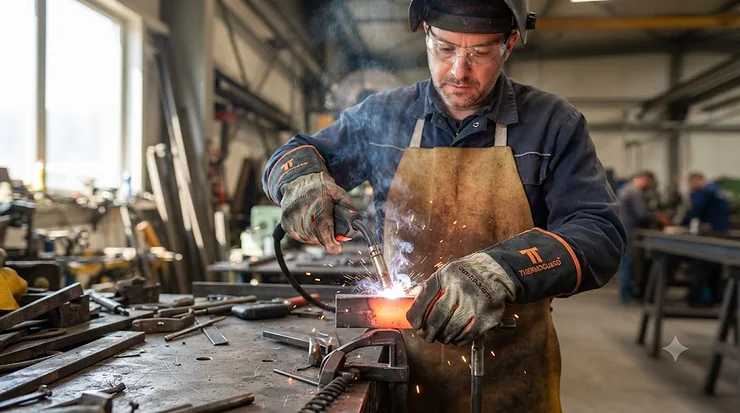
Pick up something at 1,000°F and you have about two seconds before your nerve endings file a formal complaint. That’s the blunt reality behind extreme heat resistant gloves, and it’s why picking the wrong pair isn’t a minor shopping mistake — it’s a trip to the burn unit waiting to happen. Extreme heat resistant gloves are protective hand coverings built from materials like Kevlar, aluminized fabric, or vermiculite-treated aramid that shield skin from radiant heat, molten splash, and direct contact temperatures far beyond what ordinary work gloves can handle. Whether you’re pouring bronze in a backyard foundry, pulling billets from an industrial furnace, or just tired of singeing your knuckles on the wood stove, this guide walks through what actually works.
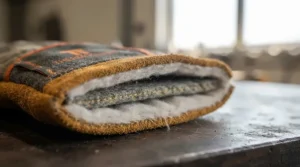
We spent hours digging through spec sheets, safety standards, and real buyer feedback so you don’t have to. You’ll get a side-by-side comparison, a deep dive into seven genuinely solid products spanning budget to professional-grade, and the practical know-how — care routines, buying mistakes, cost math — that turns a glove into actual protection instead of expensive false confidence. Under OSHA’s hand protection standard, employers are required to match glove selection to the specific thermal hazard present, and that same logic applies whether you’re running a factory floor or a one-person garage forge. Let’s get your hands covered properly.
Quick Comparison: Extreme Heat Resistant Gloves at a Glance
Before we go deep on all seven, here’s the short version for anyone in a hurry. This table ranks our picks by heat rating, materials, and who they suit best — useful if you already know your temperature range and just want a fast recommendation.
| Glove | Heat Rating | Material | Best For |
|---|---|---|---|
| RAPICCA 16″ Forge Gloves | Up to 932°F | Leather + aluminized foil + Kevlar | Everyday forge & fireplace use |
| MXBAOHENG 1000° Gloves | Up to 1000°F | Carbon fiber + Kevlar felt | Budget foundry radiant protection |
| TICONN Welding Gloves | Up to 1000°F | Leather + Kevlar stitching | First-time buyers, occasional use |
| SpecxArmor Graywolf | Up to 1472°F | Aluminized top + 360° Kevlar | Serious MIG welding & forge work |
| Steel Grip Molten Metal Glove | Certified per ASTM F955 | Aluminized carbon/Kevlar | Industrial foundries, daily molten splash |
| 18″ Furnace Glove (Melting/Casting) | Rated to ~1800°F contact | Heavy PP/Kevlar composite | Extended reach into furnaces & kilns |
| Newtex ZetexPlus 200 Series | Up to 1500°F continuous / 2000°F peak | Vermiculite-coated Zetex | Continuous high-radiant industrial exposure |
Notice the spread here: three genuinely budget-friendly options handle occasional radiant heat just fine, while the last three are built for people who stand near molten metal for a living. That’s the real dividing line — not the marketing copy, but whether the glove is rated for sustained exposure or just brief contact. If your job involves daily furnace work, don’t shop the top of this table; shop the bottom.
💬 Already know which category fits your job? Jump down to see current pricing and availability!
💬 Just one click — help others make better buying decisions too!😊
Top 7 Extreme Heat Resistant Gloves: Expert Analysis
Here’s the full rundown — budget picks, mid-range workhorses, and the professional-grade gear that shows up on actual foundry floors. Each one earned its spot for a specific reason, so pay attention to the “who it’s for” section rather than just the temperature number on the label.
1. RAPICCA 16″ Forge & Welding Gloves — best all-rounder for everyday heat exposure
RAPICCA built its reputation on gloves that don’t feel like oven mitts stapled to your wrists, and the 16-inch forge gloves are the brand at its most versatile. The construction layers fire-resistant leather over an insulating aluminum foil sheet and tops it with a flame-retardant cotton liner, rated to handle temperatures up to 932°F (500°C). In practice, that foil layer is doing the heavy lifting: it reflects radiant heat before it ever reaches your palm, which is exactly the mechanism foundry-grade aluminized gloves rely on, just in a lighter, more affordable package. The 7.5-inch gauntlet sleeve covers a meaningful chunk of forearm, which matters more than people expect — sparks and radiant heat don’t stop at the wrist.
Based on the spec comparison, this pair sits in a sweet spot: hot enough for wood stoves, fire pits, MIG/TIG welding, and casual forge work, but not overbuilt (or overpriced) for someone who isn’t pouring metal five days a week. Reviewers consistently report solid comfort during extended wear and note the cotton lining manages sweat better than cheaper leather-only alternatives, though a few mention the leather needs a short break-in period before it stops feeling stiff.
Pros:
- ✅ Reflective foil layer meaningfully boosts radiant heat protection
- ✅ Long gauntlet sleeve protects forearms from sparks and radiant spillover
- ✅ Comfortable enough for extended wear at moderate temperatures
Cons:
- ❌ Not rated for direct molten metal contact
- ❌ Leather requires a short break-in period for full flexibility
Expect a price in the $20-$30 range, and for anyone doing home forging, fireplace work, or hobby welding, that’s genuinely good value — check current price and availability before buying.
2. MXBAOHENG 1000-Degree High Temperature Gloves — most budget-friendly foundry-grade option
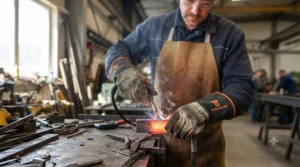
If your search is specifically for 1000 degree heat gloves, this is the pair most likely to show up first, and for good reason. MXBAOHENG uses a high-density carbon fiber and Kevlar combination on the back of the hand, backed by a felt insulation filling designed to block heat penetration rather than simply slow it down. The palm gets a reinforced, cut-resistant layer, which is a nice bonus if you’re also handling sharp casting flash or scrap metal edges alongside the heat hazard.
What most buyers overlook about this model is that it’s marketed for glass manufacturing and foundry applications specifically — not general BBQ or fireplace duty — meaning the insulation is tuned for sustained radiant exposure rather than brief flame contact. That’s a meaningful distinction: a glove optimized for radiant blocking can feel different in the hand than one optimized for direct-contact heat, and this one leans toward the former. Aggregated buyer feedback frequently praises the heat-blocking performance for the price point, with some noting the fit runs slightly large and benefits from a snugger wrist closure for precision tasks.
Pros:
- ✅ Kevlar felt insulation specifically targets radiant heat blocking
- ✅ Reinforced palm adds cut and puncture resistance
- ✅ Priced well below most foundry-grade competitors
Cons:
- ❌ Sizing runs generous, reducing dexterity for fine work
- ❌ Single-layer wrist closure less secure than gauntlet-style designs
Typically found in the $15-$25 range, this is the pick for anyone who wants foundry-grade materials without a foundry-grade budget — check current price for the latest.
3. TICONN 16″ Welding Gloves — easiest entry point for first-time buyers
TICONN’s welding gloves round out the budget tier with a straightforward 1000°F rating built on heat-resistant leather reinforced with Kevlar stitching at every stress point. There’s nothing flashy here, and that’s actually the appeal — it’s the glove equivalent of a reliable used pickup truck. The stitching detail matters more than it sounds: standard cotton thread is often the first thing to fail on a heat glove, since it can scorch and unravel well before the leather itself gives out, so Kevlar-reinforced seams meaningfully extend usable life.
Here’s what to weigh if you’re new to heat protection gear: TICONN offers this glove in L, XL, and XXL sizing, which solves a common headache — a lot of “one-size” heat gloves fit like a boxing mitt on smaller hands. Reviewers commonly cite this as their first welding glove purchase and report it holding up fine for hobbyist MIG welding, forge work, and stovetop duty, with the expected caveat that it’s not intended for sustained molten metal contact.
Pros:
- ✅ Kevlar-reinforced seams resist the scorching that kills stitching first
- ✅ True size range (L/XL/XXL) improves fit accuracy
- ✅ Straightforward, no-frills design at an entry-level price
Cons:
- ❌ Basic gauntlet offers less forearm coverage than premium options
- ❌ Not certified for industrial molten metal handling
Priced in the $15-$20 range, this is a smart low-risk starting point if you’re not yet sure how much glove you actually need — check current price before ordering.
4. SpecxArmor Graywolf Kevlar Aluminized Welding Glove — best for serious forge and MIG welding work
Step up into the mid-premium tier and you get the Graywolf, SpecxArmor’s flagship for people who weld or forge often enough that “budget glove” starts meaning “replacement glove every few months.” The top of the hand is fully aluminized, reflecting roughly 95% of radiant heat — a genuinely different mechanism than the leather-only gloves further down this list — while a 360-degree Kevlar and foam lining wraps the rest of the glove for flame and spark resistance. The manufacturer rates it to 1472°F, and while that number describes brief radiant exposure rather than sustained contact with something that hot, it puts this glove in a different performance class than the sub-$30 leather options.
What the spec sheet won’t tell you, but reviewers note, is how much the aluminized backing changes the feel of prolonged work near an open forge — hands simply stay cooler over a multi-hour session, which reduces the fatigue that leads to dropped hot stock. Premium split leather construction and Kevlar-stitched seams round out a glove built to survive daily abuse rather than occasional weekend use.
Pros:
- ✅ Aluminized backing reflects roughly 95% of radiant heat
- ✅ 360° Kevlar and foam lining adds flame and spark resistance
- ✅ Built for daily-use durability, not occasional hobby sessions
Cons:
- ❌ Bulkier profile reduces fine-motor dexterity versus thin leather gloves
- ❌ Premium pricing puts it out of reach for casual hobbyists
Expect to pay in the $35-$50 range — solid value if you’re forging or welding several times a week, so check current price and stock before your next session.
5. Steel Grip High Heat Molten Metal Glove — best for certified industrial foundry protection
This is where “extreme heat resistant gloves” stops being a marketing phrase and starts being an engineering spec. Steel Grip built the back-of-hand from 14oz aluminized carbon/Kevlar fabric specifically tested per ASTM F955 for molten aluminum and iron splash, alongside an ISO 11612 rating covering both limited flame spread (“D3”) and convective heat (“E3”). The palm gets a heavier 15oz carbon/Kevlar layer independently tested to ANSI/ISEA 105 Level 5 heat resistance — genuinely one of the higher scores available in a work glove.
Based on the certification stack alone, this is the glove foundries actually specify for workers handling molten metal handling tasks on a daily basis, not the one marketed loosely with a scary temperature number and no third-party testing behind it. An 11oz wool lining adds comfort without sacrificing the thermal barrier, and the 14-inch cuff (18-inch available made-to-order) with a split-leather wing thumb design keeps dexterity reasonable given how much protection is packed in. Aggregated industrial-buyer feedback consistently highlights the certified molten-splash performance as the differentiator versus uncertified “high heat” gloves at lower price points.
Pros:
- ✅ ASTM F955-tested against molten aluminum and iron splash
- ✅ ANSI/ISEA 105 Level 5 palm heat resistance — near the top of the scale
- ✅ Wool lining balances comfort with serious thermal protection
Cons:
- ❌ Premium industrial pricing reflects the certification testing behind it
- ❌ Overkill (and overpriced) for casual fireplace or BBQ use
Typically priced in the $60-$90 range depending on length, this is the glove to budget for if your job description includes the words “pouring” or “tapping” — check current price before your next shift.
6. 18″ Furnace Glove for Melting, Casting & Foundry Work — best extended reach for kiln and furnace tasks
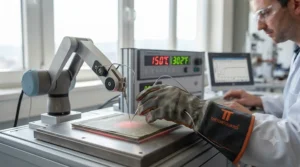
Sometimes the hazard isn’t just heat — it’s depth. Reaching into a furnace or kiln means your entire forearm is in the danger zone, and this 18-inch furnace glove is built around that specific problem. Constructed from a heavy composite (roughly 1.4 lb per pair) combining thick insulating layers with Kevlar-reinforced stitching, it’s explicitly marketed for melting, casting, and foundry environments rather than general-purpose use — and the extra length is the whole point.
Here’s what to weigh: this glove trades dexterity for coverage and bulk for thermal mass. Reviewers who use it for backyard foundry pours and metal casting consistently report reliable performance in reported working environments in the 1600-1800°F range, though several also note the thickness makes fine manipulation difficult and the interior lining runs a bit coarse against skin during long sessions. That’s a fair trade for anyone whose job is genuinely reaching toward that kind of heat rather than working near it from a comfortable distance.
Pros:
- ✅ 18-inch length covers forearm exposure other gloves miss
- ✅ Reported reliable use in reported 1600-1800°F working conditions
- ✅ Purpose-built for melting, casting, and foundry tasks specifically
Cons:
- ❌ Thick, heavy construction limits fine dexterity
- ❌ Interior lining feels coarse during extended wear
Look for this pair in the $25-$40 range — a genuine specialist tool rather than an everyday glove, so check current price and confirm sizing before ordering.
7. Newtex ZetexPlus 200 Series Gloves — best for continuous extreme thermal environments
For the top of the performance ladder, Newtex’s ZetexPlus 200 Series is built from a vermiculite-coated Zetex fabric, and the coating is doing something the leather and aluminized-foil gloves above simply can’t: it boosts continuous operating resistance up to roughly 1500°F, with peak/brief exposure tolerance climbing toward 2000°F. That’s a genuinely different category of ultra high temperature gloves, designed for workers who spend entire shifts near furnaces, kilns, or glass-melting operations rather than making brief, occasional contact.
On paper this means Newtex is aiming squarely at industrial buyers who need documented, repeatable performance rather than a general “heat resistant” claim — the vermiculite treatment specifically improves resistance to the kind of degradation that ordinary aramid fabric experiences after repeated thermal cycling. This isn’t a glove most home hobbyists need, and Newtex doesn’t really market it that way; it’s built for people whose entire workday happens inside extreme thermal environments where lesser gloves simply wear out.
Pros:
- ✅ Vermiculite coating extends continuous-use temperature resistance
- ✅ Peak tolerance rated toward 2000°F for brief exposure
- ✅ Built specifically for daily industrial glass and metal operations
Cons:
- ❌ Premium industrial pricing well above consumer welding gloves
- ❌ Bulk and stiffness reduce dexterity for detailed handwork
Expect a price well into the premium bracket — often $80 and up depending on configuration — reflecting genuinely specialized industrial-grade materials; check current pricing directly given how much specs vary by order.
Practical Usage Guide: Getting the Most from Your Gloves
A brand-new pair of extreme heat resistant gloves is only as good as the habits you build around them, and most of the damage happens in the first month. Start by flexing leather-based gloves through a few dozen open-and-close motions before first use — this softens stiff fibers along stress points before heat does it for you unevenly. Store gloves somewhere dry between uses; moisture is the quiet killer of thermal protection because trapped sweat converts to steam against your skin the moment real heat hits, which is exactly the mechanism experienced foundry workers warn about most.
Inspect the palm and finger seams before every session — a fraying Kevlar thread or thinning aluminized patch is your glove telling you it’s aging out of its rated protection, and no temperature number on a tag survives a compromised seam. For aluminized gloves specifically, avoid balling them up in a tool bag; the reflective layer can crease and lose effectiveness if crushed repeatedly in the same spot. A simple 30-day habit — quick visual check, air-dry after use, gentle flex before wear — adds real months to a glove’s useful life and, more importantly, keeps its protection rating honest.
Real-World Scenarios: Molten Metal Handling & Foundry Exposure
Picture three different people shopping this list. First is a hobbyist blacksmith working a backyard forge on weekends — moderate, intermittent radiant heat, budget-conscious, dexterity matters more than maximum rating. The RAPICCA or TICONN gloves cover this scenario comfortably, since the actual hazard rarely exceeds 900°F and sessions last a couple of hours at a time.
Second is a small metal-casting shop owner doing regular molten metal handling — pouring bronze or aluminum into molds several times a week. This is where foundry temperature exposure becomes a daily, not occasional, hazard, and it’s exactly the gap the 18-inch furnace glove and SpecxArmor Graywolf are built to fill: enough coverage and radiant reflection to handle splash risk without industrial-grade pricing. Third is an industrial foundry employee handling molten iron or aluminum on a shift schedule, facing sustained radiant exposure and genuine splash risk hour after hour. For that person, certified protection isn’t optional — the Steel Grip Molten Metal Glove’s ASTM F955 rating and the Newtex ZetexPlus’s continuous 1500°F tolerance exist precisely because uncertified “heat resistant” gloves fail exactly when the stakes are highest.
✨ Match your scenario to your glove — check current pricing on the pair that fits your actual working conditions!
Problem → Solution: Fixing Common Heat Glove Failures
Problem: Hands overheat inside the glove during long sessions. This is usually a moisture and airflow issue, not a material failure — trapped sweat conducts heat faster than dry air. Solution: choose a model with a breathable cotton or wool liner (the RAPICCA and Steel Grip gloves both handle this reasonably well) and swap to a fresh pair mid-shift if you’re working continuously.
Problem: Leather stiffens and cracks after repeated heat exposure. Leather naturally dries out under thermal cycling. Solution: apply a light leather conditioner between sessions (never while the glove is warm) and avoid soaking gloves in water to clean them, which accelerates cracking.
Problem: Reflective aluminized coating starts flaking. This typically comes from folding or crushing the glove repeatedly along the same crease. Solution: store aluminized gloves flat or hung, never balled up, and replace the pair once flaking exposes the base fabric underneath.
Problem: Fit is too loose for precision tasks like MIG welding. Solution: size down where the manufacturer offers multiple sizes (TICONN and SpecxArmor both do), and reserve looser, bulkier gloves like the 18-inch furnace model for reach-and-grab tasks rather than fine manipulation.
Choosing Maximum Heat Protection Gloves for Extreme Thermal Environments
- Match the rating to the actual hazard, not the marketing number. A glove rated to 1000°F for brief radiant exposure isn’t the same as one certified for sustained molten contact — read what the number actually measures.
- Identify your primary hazard type. Radiant heat, direct contact, and molten splash each demand different materials; aluminized fabric excels at radiant reflection while thick leather or composite layers handle direct contact better.
- Check for third-party certification if the stakes are industrial. ASTM F955 and ANSI/ISEA 105 ratings, like those on the Steel Grip glove, mean the claim was independently tested rather than self-reported.
- Prioritize sleeve length based on reach, not just hand coverage. Furnace and kiln work demands forearm coverage that fireplace or BBQ gloves simply don’t need.
- Weigh dexterity against protection deliberately. More insulation almost always means less fine motor control — don’t over-buy protection for tasks that need precision.
- Factor in duration of exposure per shift. Occasional users can reasonably choose lighter, cheaper gloves; daily industrial exposure justifies premium, continuously-rated materials like vermiculite-coated Zetex.
- Budget for replacement, not just purchase. Even the best glove degrades under repeated thermal cycling — build replacement cost into your total planning rather than treating one purchase as permanent.
1000 Degree Heat Gloves: When You Need Maximum Radiant Protection
The “1000 degree heat gloves” category deserves its own explanation because the number gets thrown around loosely in product listings. In practical terms, a glove genuinely rated for 1000°F radiant exposure — like the MXBAOHENG or TICONN models covered above — is typically built with Kevlar felt or carbon-fiber-reinforced backing designed to block infrared radiation rather than survive direct skin-searing contact for any meaningful duration. That distinction matters enormously in a foundry setting: standing near a 1000°F furnace mouth is a radiant-heat problem these gloves solve well, while actually gripping a 1000°F object with bare-handed pressure is a different, far more dangerous problem no glove fully solves.
Reviewers and industry forums consistently echo this point — experienced foundry workers routinely note that even well-rated gloves shouldn’t be treated as a substitute for tongs or mechanical handling when true molten-temperature contact is involved. Treat a 1000-degree rating as “keeps radiant heat off your hands while you work nearby,” not “lets you casually pick up 1000-degree metal,” and you’ll get far more realistic, and safer, use out of the gear.
Common Mistakes When Buying Extreme Heat Resistant Gloves
The single biggest mistake is buying based on the highest number on the label rather than the actual hazard you face — a 2000°F-rated industrial glove is wasted money (and unnecessary bulk) for someone doing occasional fireplace duty. A close second: skipping sleeve length entirely and buying a short glove for a job that requires forearm reach into a furnace or kiln. Buyers also frequently overlook that “heat resistant” and “flame resistant” aren’t identical claims — some materials handle sustained radiant heat well but ignite or melt on direct flame contact, so check both specs if your work involves open flame.
Another common error is assuming any Kevlar-branded glove offers equal protection; Kevlar content, weave density, and layering all affect actual performance, and a thin single-layer Kevlar glove is not comparable to the 360-degree lined construction on something like the SpecxArmor Graywolf. Finally, buyers often skip checking for third-party certification (ASTM, ANSI/ISEA, ISO 11612) when the job genuinely involves molten metal — a self-reported “extreme heat” claim on an uncertified product is not the same guarantee as an independently tested rating.
Ultra High Temperature Gloves vs Standard Welding Gloves
Standard welding gloves — the kind sold in most hardware stores — are typically rated somewhere between 300°F and 600°F and built primarily from cowhide leather with minimal additional insulation. Ultra high temperature gloves, by contrast, add engineered layers specifically designed to push that ceiling higher: aluminized fabric for radiant reflection, Kevlar felt for insulation density, or vermiculite coatings for sustained thermal cycling resistance. The Kevlar fiber at the core of most high-heat gloves was originally developed for industrial and ballistic applications precisely because of its exceptional strength-to-weight ratio and thermal stability, which is why it shows up across nearly every product on this list in some form.
| Feature | Standard Welding Glove | Ultra High Temperature Glove |
|---|---|---|
| Typical Heat Rating | 300°F-600°F | 900°F-2000°F+ |
| Radiant Heat Reflection | Minimal to none | Aluminized layers reflect 90%+ |
| Sleeve Coverage | Often short (10-12″) | Extended (14-18″+) |
| Best Use Case | General welding, grilling | Foundry, molten metal, furnace work |
The takeaway from this comparison is straightforward: a standard welding glove is fine for someone doing occasional MIG welding in a garage, but it will not hold up against sustained radiant exposure near a furnace mouth or molten metal splash. If your work genuinely qualifies as an extreme thermal environment, spending more upfront on an ultra high temperature glove is cheaper than a single emergency room visit.
Long-Term Cost & Maintenance
Cost-per-use is where budget gloves quietly lose their advantage. A $20 leather glove replaced every two months under heavy foundry use costs roughly $120 a year, while a $70 certified industrial glove that lasts a full year under the same conditions works out cheaper overall — and comes with documented protection the budget option can’t match. Maintenance costs stay low across the board (a leather conditioner runs a few dollars and lasts many applications), so the real long-term cost driver is replacement frequency, not upkeep.
| Glove Tier | Approx. Price Range | Typical Lifespan (Heavy Use) | Effective Annual Cost |
|---|---|---|---|
| Budget (RAPICCA, MXBAOHENG, TICONN) | $15-$30 | 2-4 months | $60-$150 |
| Mid-Range (SpecxArmor Graywolf) | $35-$50 | 6-9 months | $60-$90 |
| Industrial (Steel Grip, Newtex) | $60-$150+ | 12+ months | $60-$120 |
Interestingly, the annual math often lands in a similar range across tiers once replacement frequency is factored in — which means the real deciding factor should be your actual hazard level and certification needs, not a false assumption that budget gloves are automatically cheaper long-term.
💬 Ready to invest in the right pair for your budget? Compare current prices before you decide!
Safety, Regulations & Compliance Guide
If you’re buying for a workplace rather than personal use, OSHA’s heat exposure standards require employers to assess hazards and select appropriate PPE, including hand protection matched to the specific thermal risk present — a self-selected “heat resistant” glove without documented testing may not satisfy that obligation for genuinely hazardous tasks. For workers facing prolonged exposure, the CDC’s NIOSH guidance on occupational heat stress also emphasizes that PPE itself can contribute to heat storage in the body, meaning glove selection should balance thermal protection against added heat burden rather than simply maximizing insulation.
For anyone handling molten metal specifically, look for gloves independently tested against ASTM F955 (molten metal splash) or carrying an ISO 11612 rating, both referenced earlier for the Steel Grip glove. These aren’t marketing badges — they represent standardized third-party test protocols, and relying on them rather than a manufacturer’s self-reported temperature figure gives you a genuine safety margin rather than an optimistic guess.
Features That Actually Matter (And Those That Don’t)
Features that matter: sleeve/gauntlet length relative to your actual reach into heat sources, third-party certification for molten metal or industrial use, breathable interior lining to manage sweat, and reinforced seam stitching that resists scorching before the main fabric does. Features that matter less than marketing suggests: an extremely high peak temperature number with no context on duration (brief flash exposure tolerance isn’t the same as working temperature), flashy exterior colors or branding, and “one-size-fits-all” claims that often mean mediocre fit for everyone rather than a genuine universal solution.
If you remember one filtering rule from this whole guide, make it this: a glove’s real-world value comes from matching construction to your specific hazard, not from chasing the single biggest number on the packaging.
FAQ
❓ What temperature can extreme heat resistant gloves withstand?
❓ Are heat resistant gloves safe for handling molten metal directly?
❓ What's the difference between heat resistant and flame resistant gloves?
❓ How often should I replace my heat resistant gloves?
❓ Do aluminized gloves work better than leather for foundry work?
Conclusion
The right extreme heat resistant gloves come down to matching real hazard exposure to real material science — not chasing the biggest number on a listing. Casual forge hobbyists and weekend welders are well served by the RAPICCA, MXBAOHENG, or TICONN gloves covered above, all of which deliver genuine protection at accessible prices. Anyone doing regular molten metal handling or facing daily foundry temperature exposure should look harder at the SpecxArmor Graywolf, Steel Grip Molten Metal Glove, the 18-inch furnace glove, or the Newtex ZetexPlus 200 Series — options built and, in some cases, independently certified for sustained extreme thermal environments.
Whatever you choose, remember that a glove is one part of a larger safety picture that includes proper technique, tongs and mechanical handling for true molten contact, and regular inspection for wear. Buy for your actual job, not your worst-case daydream, and your hands will thank you for decades of forge sessions, furnace shifts, or backyard pours to come.
🔥 Find Your Perfect Heat-Resistant Gloves Today!
Ready to protect your hands the right way? Click through on any pair above to check current pricing and availability, and gear up before your next high-heat project!
Recommended for You
- 7 Best Plasma Cutting Gloves in 2026: Safety & Dexterity Guide
- 7 Best Multipurpose Welding Gloves for 2026
- 7 Best MIG Welding Gloves in 2026: Pro Picks & Buyer’s Guide
Disclaimer: This article contains affiliate links. As an Amazon Associate, I earn from qualifying purchases. If you purchase products through these links, we may earn a small commission at no additional cost to you.
✨ Found this helpful? Share it with your friends! 💬🤗
