
In This Article
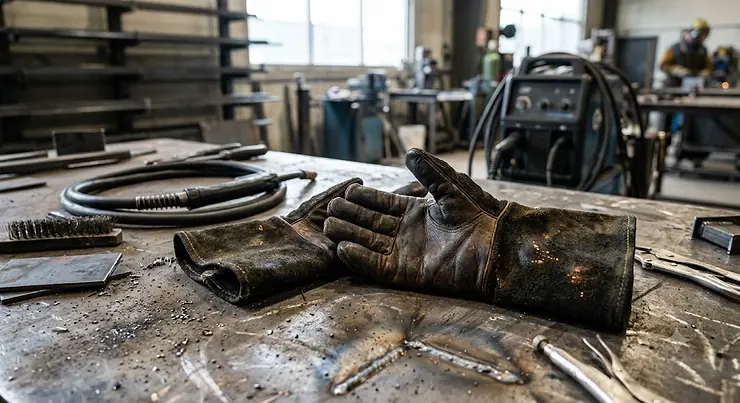
If you’ve ever pulled off a glove mid-bead because your fingers were cooking, you already know that not all welding gloves are built the same. MIG welding gloves are hand protection designed specifically for gas metal arc welding (GMAW) — they balance heat and spark resistance with enough dexterity to feed wire, control a trigger, and feel the torch angle, which is exactly what separates a clean bead from a sloppy one.
Stick welding gloves are thick and built to survive heavy spatter. TIG gloves are thin and built for surgical control. MIG gloves sit in the middle, and that middle ground is harder to get right than it sounds. Too stiff, and you lose feel for the gun. Too thin, and a stray spark turns into a blister.
This guide breaks down seven real, currently available MIG welding gloves spanning budget, mid-range, and premium tiers — based on manufacturer specs, ANSI ratings where published, and recurring patterns across verified buyer feedback. We’ll also walk through how to actually choose the right pair, the mistakes that send people back to the store within a month, and what nobody tells you about long-term glove maintenance.
🔥 Whether you’re running a 140-amp hobbyist MIG at home or spending eight hours a day under a hood in a production shop, there’s a pair on this list built for your situation.
Quick Comparison Table
| Product | Tier | Best For | Price Range |
|---|---|---|---|
| Black Stallion (Revco) GM1611-WT | Best Overall | All-around shop use, daily wear | $25–$35 |
| Lincoln Electric Traditional K2979-ALL | Best Value | Beginners, occasional welders | $20–$30 |
| Tillman 1350 | Pro Favorite | Dexterity-focused fabrication | $20–$30 |
| Lincoln Electric Premium K2980-L | Premium | Extended sessions, higher amperage | $30–$45 |
| Miller Electric 271889 | Premium | Brand-loyal Miller shops | $35–$50 |
| RAPICCA 16″ Heat Resistant | Budget Heavy-Duty | Forearm coverage, flux-core MIG | $15–$25 |
| YESWELDER Leather Forge 16″ | Budget | Casual/garage MIG welders | $15–$25 |
Looking at this lineup, the spread isn’t really about “good vs. bad” — it’s about matching glove thickness and cuff length to how you actually weld. The Black Stallion and Tillman options lean toward dexterity for fine MIG work, while the RAPICCA and YESWELDER picks trade some feel for extra forearm protection on flux-core or higher-spatter jobs. If you’re running a small benchtop MIG a few hours a week, the budget tier is genuinely fine — you don’t need pro-shop gloves to weld a bike rack.
💬 Just one click — help others make better buying decisions too!😊
✨ Don’t Miss These Exclusive Deals!
🔍 Take your MIG welding setup to the next level with these carefully selected gloves. Click on any highlighted item to check current pricing and availability. The right pair will get you through every long shift in the shop without nursing a burned knuckle.
Top 7 MIG Welding Gloves: Expert Analysis
1. Black Stallion (Revco) GM1611-WT Cowhide MIG Gloves
Black Stallion’s GM1611-WT stands out for one specific design choice: it puts grain cowhide (the durable, smooth outer layer of the hide) on the palm and lighter split cowhide on the back.
✅ That combination matters in practice — the palm holds up to the abrasion of handling wire spools and metal stock, while the thinner back keeps your hand from overheating during long sessions. The reinforced patches on the palm, thumb, and index finger target exactly where MIG gloves wear out first: gripping the gun and feeding wire.
What tends to come up across buyer feedback is fit consistency and the DragPatch side padding, which protects the glove when you rest your hand against the workpiece while running a bead — a habit almost every MIG welder has, whether they admit it or not. This is the pick for someone who wants one solid all-purpose glove rather than switching pairs for different tasks.
✅ Pros: Reinforced high-wear zones, good heat-to-dexterity balance, Kevlar-stitched seams
❌ Cons: Less insulated than fully lined gauntlet-style gloves, sizing runs slightly large
Price range: $25–$35 — a fair middle price for a glove built to outlast cheaper cowhide pairs by a wide margin.
2. Lincoln Electric Traditional MIG/Stick Gloves (K2979-ALL)
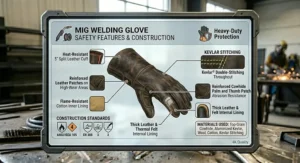
The Traditional K2979-ALL is built from heat-resistant split leather with a full cotton liner, which is the detail that actually matters here: that liner does double duty, insulating against radiant heat and soaking up sweat during longer welds. The 14-inch length and welted, Kevlar-stitched seams give it more coverage than most gloves at this price.
This is the glove to grab if you’re new to MIG welding or only weld occasionally — it’s forgiving on fit, doesn’t demand a break-in period, and won’t make you wince at the price if you outgrow it or burn through it learning. It’s not the most dexterous option on this list, but for a beginner the trade-off toward heat protection is the right call.
✅ Pros: Strong value, good heat insulation, durable seams
❌ Cons: Less fine-motor feel than unlined gloves, bulkier fit
Price range: $20–$30 — consistently the budget pick recommended across multiple independent welding-gear comparisons.
✨ Don’t Miss These Exclusive Deals!
🔍 Find the right balance of protection and price for your shop. Check current availability and pricing on any pair below — your hands will thank you after the first long weld.
3. Tillman 1350 MIG Welders Gloves
The Tillman 1350 is unlined on purpose, and that’s the whole point of the glove. Pearl top-grain cowhide on the palm and fingers gives it an ANSI Level 4 rating for both abrasion and puncture resistance, while skipping the lining keeps tactile feedback high — you can actually feel the trigger and torch angle, which matters more for weld quality than people expect.
This is a long-standing favorite among working fabricators specifically because it doesn’t sacrifice control. If you do detailed sheet-metal or auto-body MIG work where feel matters more than raw heat protection, this is probably the best-suited glove on this list. It’s less ideal if you’re running high amperage for long stretches, since the unlined design transmits more heat than a lined glove would.
✅ Pros: Excellent dexterity, ANSI Level 4 abrasion/puncture rating, seamless forefinger reduces wear points
❌ Cons: Unlined means less heat buffer, no insulation for cold shop conditions
Price range: $20–$30 — strong value for a glove this widely used in professional fabrication settings.
4. Lincoln Electric Premium Leather MIG/Stick Gloves (K2980-L)
Lincoln’s Premium K2980-L is the step up from the Traditional line, built with heavier-duty leather for situations where you’re welding at higher amperage or for longer uninterrupted stretches. The thicker construction means more heat buffer between your hand and the arc, at a small cost to fine dexterity compared to the unlined Tillman option above.
If you’ve already burned through a budget pair and know you weld often enough to justify the upgrade, this is a sensible next step rather than jumping straight to a specialty glove. It suits someone running a home shop seriously, several hours a week, rather than someone welding a handful of times a year.
✅ Pros: Heavier-duty construction for sustained heat, trusted brand consistency, solid seam durability
❌ Cons: Costs more than the Traditional line, less nimble than thinner premium options
Price range: $30–$45 — reasonable for a step-up glove if you’re past the casual-use stage.
5. Miller Electric MIG Welding Gloves (271889)
The Miller 271889 earns its spot through brand consistency more than any single standout feature — Miller-brand gloves come up repeatedly in welding forums as the pair people switch back to after trying cheaper alternatives, citing softness that holds up over time rather than stiffening like some cowhide gloves do after repeated heat exposure.
This pair makes sense for someone who already runs Miller welding equipment and wants matched gear, or for anyone who’s tried a few budget gloves and wants to stop replacing them every few months. It’s a premium price, and the value case depends on how many hours a week you’re actually welding.
✅ Pros: Stays supple longer than many cowhide alternatives, consistent comfort reported over repeated use, lined for added heat buffer
❌ Cons: Premium price point, less widely stocked than Lincoln or Tillman options
Price range: $35–$50 — justified mainly by longevity if you weld frequently; harder to justify for occasional use.
6. RAPICCA 16″ Fire/Heat Resistant Welding Gloves
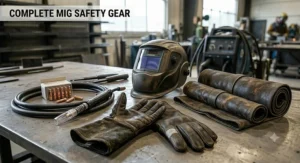
The RAPICCA 16-inch glove extends well past the wrist, which is the feature that actually matters for flux-core MIG or any job throwing more spatter than usual — that extra length protects the forearm in a way standard 4-inch-cuff MIG gloves don’t. The leather is rated for high heat resistance, and the gauntlet style trades some fine dexterity for that added coverage.
This is a smart pick if you’re doing flux-core MIG outdoors, welding overhead, or just tend to get spatter on your forearms regularly. It’s less suited to precision sheet-metal work where you need the trigger feel of an unlined glove like the Tillman 1350.
✅ Pros: Extended forearm coverage, high heat rating, good value for the length
❌ Cons: Bulkier fit reduces fine dexterity, longer cuff can feel restrictive for detailed work
Price range: $15–$25 — one of the better value picks if forearm protection is your priority.
7. YESWELDER Leather Forge MIG Welding Gloves (16″)
The YESWELDER 16-inch glove rounds out the budget tier with Kevlar-stitched seams and a reinforced palm at a low price point. One thing worth flagging before you buy: some marketplace listings advertise a higher heat rating than the manufacturer’s own spec sheet states, so it’s worth checking the current listing details rather than assuming the highest number quoted is accurate.
For casual garage welders running a small MIG setup a few times a month, this is an adequate, low-risk way to get reasonable protection without a big investment. It’s not the glove to reach for if you’re welding production-volume hours, where the thinner budget leather will wear faster than the cowhide options above.
✅ Pros: Low price, decent reinforcement for the cost, long cuff coverage
❌ Cons: Reported spec discrepancies between listings, less durable under heavy daily use
Price range: $15–$25 — fine for occasional use; budget for a replacement sooner if you weld often.
Practical Usage Guide
Getting the most out of any MIG welding glove comes down to a few habits most people skip:
- Break them in before a real job. Flex new gloves, grip your MIG gun a few times, and let the leather soften slightly before a long session — stiff leather straight out of the package reduces trigger feel.
- Keep them dry between uses. Sweat and moisture break down leather fibers over time; let gloves air out fully rather than stuffing them straight into a tool bag.
- Avoid resting them directly on hot metal. Even “fireproof” leather degrades faster with repeated direct contact with a hot workpiece — use the workbench, not your glove, as a heat sink.
- Rotate two pairs if you weld daily. Letting one pair fully dry and recover while using the other roughly doubles usable lifespan for production-level use.
- Re-tighten or replace at the first seam fray, not after it’s already split — a small fix now beats a hand injury later.
✨ Don’t Miss These Exclusive Deals!
🔍 Pair the right gloves with good habits and they’ll last far longer than the listing photos suggest. Check current pricing on any of the seven picks above to get set up properly.
Buyer’s Decision Framework
Before scrolling back up to compare specs, it helps to know which category you actually fall into:
- If you weld a few hours a week as a hobbyist → prioritize comfort and value over heavy-duty rating. The Lincoln Traditional K2979-ALL or YESWELDER pair covers this fine.
- If you do detailed fabrication or auto-body MIG work → prioritize dexterity. The Tillman 1350’s unlined design is the better fit here.
- If you weld flux-core outdoors or get heavy spatter → prioritize forearm coverage. The RAPICCA 16″ gauntlet style is built for this.
- If you weld 20+ hours a week in a production shop → prioritize durability and heat buffer over raw dexterity. The Black Stallion GM1611-WT or Miller 271889 hold up better long-term.
- If you’re upgrading from a worn-out budget pair → the Lincoln Premium K2980-L is a reasonable mid-step before jumping to specialty gear.
How to Choose MIG Welding Gloves
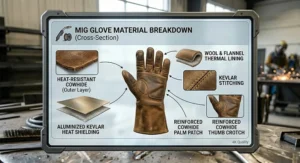
- Match the leather to your heat exposure. Cowhide balances durability and heat resistance; goatskin and deerskin trade some heat protection for better dexterity.
- Check the cuff length against your welding style. Standard 4-inch cuffs suit clean MIG work; extended gauntlets suit flux-core or overhead welding with more spatter.
- Decide if you need lining. Lined gloves add heat buffer for high-amp or long sessions; unlined gloves maximize trigger feel for detailed work.
- Look for reinforced high-wear zones. Palm, thumb, and index finger reinforcement extends usable life significantly.
- Confirm seam material. Kevlar-stitched seams resist heat failure far better than standard cotton thread.
- Size for fit, not bulk. Oversized gloves reduce control more than thinner-but-correctly-sized gloves reduce heat protection.
- Factor in how often you weld. Occasional users can prioritize price; daily users should prioritize durability and rotate two pairs.
Common Mistakes When Buying MIG Welding Gloves
- Buying TIG gloves for MIG work. TIG gloves are too thin for sustained MIG heat exposure and spatter — they’ll wear out fast and won’t protect you the way a real MIG glove will.
- Going oversized “for safety.” A loose glove reduces trigger control more than it adds protection, and increases fatigue over a long shift.
- Ignoring cuff length for the job. Flux-core and overhead welders consistently underestimate how much forearm exposure they’re getting with a short-cuffed glove.
- Assuming higher price always means more heat resistance. Price often reflects durability and comfort more than raw heat rating — check the actual spec, not just the price tag.
- Skipping break-in time. Stiff new leather straight out of the package reduces dexterity on day one, which can affect weld quality right when you need consistency most.
MIG Welding Gloves vs. TIG and Stick Gloves
| Feature | MIG Gloves | TIG Gloves | Stick Gloves |
|---|---|---|---|
| Lining | Light to moderate | Usually unlined | Heavy lining/foam |
| Cuff Length | Medium (4″) | Short | Long gauntlet |
| Dexterity | Balanced | Highest | Lowest |
| Heat Resistance | Moderate-high | Lowest | Highest |
| Best For | Wire-feed welding, moderate spatter | Precision filler-rod feeding | Heavy spatter, high heat exposure |
The short version: TIG gloves prioritize feel above everything else, which makes them a poor substitute for MIG work where sustained heat and more frequent spatter are involved. Stick gloves go the opposite direction — thick, insulated, and built for spatter you can’t avoid, but too bulky for the wire control MIG welding demands. MIG sits deliberately in the middle, needing a balance of protection and feel that neither of the other two categories is designed to provide.
Long-Term Cost & Maintenance
A $20 glove that lasts three months and a $40 glove that lasts a year cost roughly the same per month of use — which is why “cheapest” and “best value” aren’t always the same glove. Hobbyists welding a few hours weekly can typically expect 6–12 months from a mid-tier MIG glove, while daily production welders may go through a pair monthly regardless of price point, simply due to wear volume.
Maintenance costs are low but matter: storing gloves flat or hanging (not balled up), keeping them away from prolonged moisture, and avoiding direct contact with hot workpieces between passes all extend usable life more than any single product choice does. If you’re welding daily, budgeting for two rotating pairs is usually cheaper long-term than buying one expensive pair and running it into the ground.
MIG Welding Gloves for Different Skill Levels
Beginners generally do better starting with a moderately lined, forgiving glove like the Lincoln Traditional — it tolerates inconsistent technique and the occasional accidental touch to hot metal better than an unlined precision glove. Intermediate hobbyists who’ve found their groove often shift toward something like the Tillman 1350 for the dexterity gain once their technique no longer needs the safety margin of heavier lining. Production-level welders tend to land on durability-first options like the Black Stallion or Miller picks, where the cost-per-month math favors a tougher, longer-lasting glove over a cheaper one replaced more often.
Safety, Standards & Compliance Notes
Hand protection for welding in the U.S. falls under general PPE guidance from the Occupational Safety and Health Administration, which requires appropriate protective gloves for arc welding tasks where heat, sparks, and metal handling pose a hand-injury risk. Glove performance — abrasion and puncture resistance specifically — is often rated against ANSI/ISEA hand protection standards, which is where you’ll see ratings like “Level 4 abrasion resistance” referenced on certain product spec sheets, including the Tillman 1350 above. For a deeper technical breakdown of how MIG welding itself works and why glove dexterity matters so much for wire-feed control, the Wikipedia overview of gas metal arc welding is a solid plain-language starting point, and the American Welding Society publishes broader safety guidance for welders at any skill level.
Frequently Asked Questions
❓ What is the best glove for MIG welding?
❓ How long do MIG welding gloves last?
❓ Are MIG welding gloves different from TIG welding gloves?
❓ What size welding gloves should I buy?
❓ Can MIG welding gloves be used for stick welding?
Conclusion
There’s no single “best” MIG welding glove — there’s a best glove for how you actually weld. Casual hobbyists are well served by the Lincoln Traditional or YESWELDER picks. Detail-focused fabricators will likely prefer the Tillman 1350’s unlined dexterity. Production welders putting in long daily hours get more long-term value out of the Black Stallion or Miller options, even at a higher upfront cost.
The biggest mistake isn’t picking the “wrong” glove from this list — it’s picking based on price alone without matching cuff length, lining, and leather type to your actual welding habits. Get that match right, and any of these seven will protect your hands and last a reasonable amount of time doing it.
✨ Don’t Miss These Exclusive Deals!
🔍 Ready to upgrade your hand protection? Check current pricing and availability on any of the seven MIG welding gloves above — your next long shift in the shop will feel noticeably different.
Recommended for You
- TIG Welding Gloves: 7 Best Picks for Precision and Safety in 2026
- 7 Best Stick Welding Gloves in 2026: Tested for Heat & Grip
- 7 Best Heat Resistant Gloves in 2026 (BBQ to Industrial)
Disclaimer: This article contains affiliate links. As an Amazon Associate, I earn from qualifying purchases. If you purchase products through these links, we may earn a small commission at no additional cost to you.
✨ Found this helpful? Share it with your friends! 💬🤗
