
In This Article
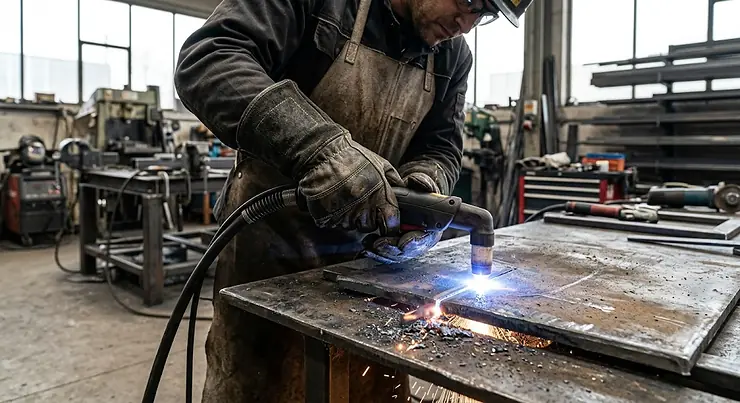
Plasma cutting is brutal on hands. You’ve got a 25,000°F arc a few inches from your fingers, molten spatter that doesn’t care where it lands, and a trigger that needs precise, repeated pressure for hours at a time. Most people grab whatever welding gloves are lying around the shop and assume that’s good enough — and most of the time, it technically is, right up until it isn’t.
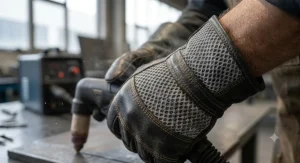
The right plasma cutting gloves solve a problem that generic “heat resistant” gloves don’t: they balance heat and spark protection with enough trigger-finger feel that you’re not white-knuckling the torch all day. Too thick, and you lose control and develop hand fatigue. Too thin, and you’re one spark away from a burn that sidelines you for a week.
This guide breaks down seven gloves currently sold on Amazon — from a pair built by the plasma cutter manufacturer itself to budget options that punch above their price. Each one gets a real look at who it’s actually built for, not just a spec dump. By the end, you should know exactly which pair matches your torch, your amperage, and how you actually work.
What Is Plasma Cutting and Why Hand Protection Matters
Plasma cutting is a metal-cutting process that uses an accelerated jet of electrically ionized gas — plasma — to cut through conductive materials like steel, aluminum, and copper. An electric arc ionizes compressed gas blown through a nozzle, creating a channel hot enough to melt metal in a narrow, fast-moving line.
That heat doesn’t stay contained to the cut line. Operators deal with radiant heat from the arc, flying dross and slag, and direct UV/IR exposure — all within inches of their hands. OSHA’s hand protection standard (29 CFR 1910.138) requires employers to match glove selection to the specific hazards of the task, which for plasma work means thermal burns, sparks, and abrasion all at once — not just one of them.
Quick Comparison Table: 7 Best Plasma Cutting Gloves
| Glove | Material | Best For | Approx. Price Range |
|---|---|---|---|
| Hypertherm Hyamp Cutting & Gouging Gloves | Goatskin/suede, insulated | Purpose-built plasma cutting | $55–$65/pair |
| Tillman 24C Premium Kidskin TIG Gloves | Top grain kidskin | Precision torch control | $15–$25 |
| Black Stallion T50 Tigster TIG Glove | Goatskin + FR cotton | TIG/plasma crossover work | $20–$30 |
| Revco Black Stallion 35K TIG Gloves | Premium grain kidskin | Extra wrist/forearm coverage | $18–$26 |
| Black Stallion GM1611 MIG Gloves | Top grain cowhide | Heavy-duty gouging | $15–$22 |
| Lincoln Electric K2981 TIG Gloves | Goatskin + split cowhide | Trusted mid-range pick | $25–$35 |
| ARCCAPTAIN 932°F Heat Resistant Gloves | Split cowhide, 4-layer | Budget, long-sleeve coverage | $15–$20 |
Looking at the spread, only one glove on this list — the Hypertherm — was actually engineered around plasma cutting and gouging specifically; everything else is a TIG or MIG welding glove that happens to work well for plasma because of thin leather and good trigger-finger feel. Budget buyers gravitate toward the ARCCAPTAIN and GM1611 for their long cuffs and low cost, while anyone doing precision sheet metal work will want the kidskin options for the extra dexterity. Note that all prices are approximate and fluctuate on Amazon, so always check current pricing before buying.
💬 Just one click — help others make better buying decisions too!😊
✨ Don’t Miss These Exclusive Deals!
🔍 Take your hand protection to the next level with these carefully selected plasma cutting gloves. Click on any highlighted item to check current pricing and availability — your hands will thank you. 🧤
Top 7 Plasma Cutting Gloves: Expert Analysis
Before diving into each pair, here’s how they stack up on paper:
| Glove | Cuff Length | Lining | Trigger-Finger Design | Rating Tier |
|---|---|---|---|---|
| Hypertherm Hyamp | Extended | Insulated, padded | Seamless, gun-cut palm | Premium |
| Tillman 24C | 4″ | Unlined | Straight thumb | Mid-range |
| Black Stallion T50 | Standard | FR cotton, unlined palm | Seamless index finger | Mid-range |
| Revco 35K | Long cuff | Unlined | Standard | Mid-range |
| Black Stallion GM1611 | 5″ | Lined | Seamless forefinger | Budget |
| Lincoln Electric K2981 | 4″ | Unlined, padded palm | Welted thumb | Mid-range |
| ARCCAPTAIN 932°F | 16″ extra-long | Cotton insulated | Straight thumb | Budget |
The table makes one thing obvious: cuff length and trigger-finger design vary more than most buyers expect, and that variation matters more for plasma work than for stick or MIG welding, where your hand position relative to the heat source is different. A short-cuffed glove that’s perfectly fine for MIG can leave your wrist exposed when you’re crouched low over a plasma table.
1. Hypertherm Hyamp Cutting and Gouging Gloves
The Hypertherm Hyamp Cutting and Gouging Gloves stand apart because Hypertherm — one of the biggest names in plasma cutting equipment — designed them specifically for this job, not adapted them from a general welding glove. The fire-resistant goatskin and suede construction with a gun-cut palm means your hand sits in a more natural gripping position for a torch handle than a standard welding glove allows.
The seamless trigger finger is the detail that matters most in practice: most welding gloves have a seam right where your finger meets the trigger, and that seam is exactly where dexterity and durability both suffer first. Removing it means less hand fatigue on long cutting sessions and one less failure point for sparks to work through.
One verified buyer who tested these outside their intended use — handling cryogenic transfer hoses — found them adequate but not ideal for that job, which is a useful confirmation that Hypertherm built these around plasma work specifically rather than as an all-purpose glove.
Pros: Purpose-built for plasma/gouging; seamless trigger finger; extended cuff
Cons: Highest price on this list; overkill for occasional hobbyist use
Best for shops running plasma cutters daily where the gloves earn their price back in reduced burns and downtime.
Verdict: worth the premium if plasma cutting is your primary job, not a side task.
2. Tillman 24C Premium Top Grain Kidskin TIG Gloves
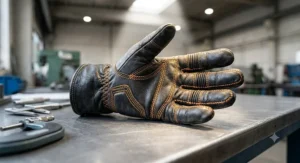
The Tillman 24C Premium Top Grain Kidskin TIG Welding Gloves (sold as 24CM, 24CL, and 24CXL by size) are built from top grain kidskin — thinner and softer than cowhide, which is exactly why TIG welders favor it for feel. That same quality is what makes it work well for plasma torches that demand a light, responsive grip on the trigger.
The unlined palm and straight thumb design improve fingertip sensitivity, which translates into better control when you’re following a cut line freehand rather than running a CNC table. The 4-inch cuff with Kevlar thread locking stitch adds a layer of seam durability that thin gloves often lack.
Reviews for kidskin TIG gloves in this price bracket consistently mention a short break-in period before the leather softens to the hand — budget for a few uses before judging fit.
Pros: Excellent dexterity; Kevlar-stitched seams; comfortable break-in
Cons: Thinner leather means less heat margin for heavy gouging; 4″ cuff is shorter than dedicated plasma gloves
Best for hobbyists and fabricators doing precision freehand cuts where feel matters more than maximum heat protection.
3. Black Stallion T50 “Tigster” Premium Goatskin TIG Glove
The Black Stallion T50 Premium Grain Goatskin & FR Cotton TIG Glove brings Revco’s DragPatch side reinforcement — extra padding on the side of the hand that takes the most abrasion when you drag it along metal during a cut. That’s a detail most generic gloves skip, and it shows up as glove longevity rather than a flashy spec.
The seamless index finger improves tactile sensitivity exactly where you need it for trigger control, paired with an unlined palm for maximum feel. Kevlar stitching throughout means the seams — not just the trigger finger — resist melting or fraying under repeated heat exposure.
Pros: DragPatch side reinforcement; seamless index finger; durable Kevlar stitching
Cons: FR cotton lining adds slight bulk versus fully unlined options; mid-tier pricing
Best for welders who split time between TIG welding and plasma cutting and want one glove that handles both reasonably well.
4. Revco Black Stallion 35K Premium Kidskin TIG Gloves
The Revco Black Stallion 35K Premium Grain Kidskin TIG Welding Gloves use the same soft kidskin as the Tillman option but add a longer cuff — a meaningful difference if you tend to work closer to the cutting table or crouch over your workpiece, where a standard 4-inch cuff leaves a gap of exposed wrist.
That extra cuff length is a small design choice with an outsized practical benefit: it’s the difference between hot dross landing on leather versus landing on skin. The kidskin itself behaves the same as other premium kidskin gloves — flexible, good feel, moderate heat margin.
Pros: Long cuff for extra forearm coverage; soft, flexible kidskin; good resale value among premium TIG gloves
Cons: Premium kidskin wears faster under heavy gouging than thicker cowhide
Best for anyone who works at awkward angles relative to the cut and wants more wrist coverage without switching to a bulkier gauntlet-style glove.
5. Black Stallion GM1611 Top Grain Cowhide MIG Gloves
The Black Stallion GM1611 Top Grain Leather Cowhide MIG Welding Gloves trade some dexterity for durability. The reinforced palm, thumb, and index finger — plus a seamless forefinger and 5-inch cuff — make this the toughest glove on the list for heavy gouging work where you’re less worried about delicate trigger feel and more worried about the glove surviving repeated contact with hot metal.
Cowhide is thicker and less flexible than goat or kidskin, which is a real trade-off: you’ll feel more glove between your hand and the trigger. For rough cutting and gouging where precision matters less than survival, that trade-off pays off in glove lifespan.
Pros: Reinforced high-wear points; 5″ cuff; budget-friendly for the durability offered
Cons: Noticeably less dexterity than goatskin/kidskin options; bulkier fit
Best for production environments doing repetitive, heavy-duty cutting where gloves take a beating daily.
6. Lincoln Electric K2981 Grain Leather TIG Gloves
The Lincoln Electric K2981 Grain Leather TIG Welding Gloves come from one of the most established names in welding equipment, and the construction reflects that: form-fitting goatskin leather with a split cowhide cuff, Kevlar-stitched seams, and a welted thumb for extra durability at a high-wear point.
What stands out practically is the padded, unlined palm — it adds a thin cushioning layer without sacrificing much feel, which helps on longer sessions where hand fatigue from a hard trigger becomes the real limiting factor, not heat.
Pros: Reputable brand with consistent quality control; welted thumb; good all-around dexterity
Cons: Mid-range price without the extended cuff of dedicated plasma gloves
Best for buyers who want a dependable, no-surprises glove from a brand they already trust for other welding equipment.
7. ARCCAPTAIN Welding Gloves 932°F Heat/Fire Resistant
The ARCCAPTAIN Welding Gloves 932°F Heat/Fire Resistant (16-inch) are the budget pick, and the spec that actually matters here is the 16-inch sleeve length — far longer than any other glove on this list. The 4-layer construction (split cowhide, double-reinforced padding, a high-temperature aluminum foil layer, and insulated cotton lining) is what gets it to that 932°F rating.
That long cuff is the real selling point for plasma cutting: it covers a significant portion of the forearm, which matters when you’re working over a cutting table and slag is falling toward your wrist and lower arm rather than just your palm.
Pros: Long sleeve for forearm coverage; genuinely low price; 4-layer heat construction
Cons: Less refined trigger-finger feel than dedicated TIG-style gloves; bulkier than goatskin options
Best for beginners and budget-conscious buyers who want maximum coverage without spending on premium dexterity features.
Real-World Scenarios: Which Glove Fits Your Job
The weekend garage fabricator cutting sheet metal for car panels or DIY projects a few hours a month doesn’t need the Hypertherm’s premium plasma-specific build. The Tillman 24C or Lincoln K2981 covers occasional use well, with enough dexterity for clean, controlled cuts and a price that doesn’t sting if you only use it occasionally.
The mobile or field welder moving between job sites and cutting in awkward positions — crouched, kneeling, reaching overhead — benefits most from cuff length. The Revco 35K’s long cuff or the ARCCAPTAIN’s full 16-inch sleeve protect the forearm in positions where a standard glove leaves a gap.
The production shop running plasma daily for fabrication or metal stamping should treat glove cost as a tool expense, not an accessory. The Hypertherm Hyamp earns its higher price through reduced hand fatigue and fewer minor burns over thousands of cuts a year — exactly where the Black Stallion GM1611 also performs well for rougher gouging tasks.
Common Plasma Cutting Glove Problems—And How to Fix Them
Problem: Fingertip burn-through near the torch tip. Thin TIG-style gloves like the 24C wear fastest exactly where the trigger finger meets hot air discharge. Solution: rotate to a thicker glove like the GM1611 for high-amperage cuts, saving the thin gloves for lighter precision work.
Problem: Slag falling into a short cuff. Standard 4-inch cuffs leave a gap when you’re bent over a cutting table. Solution: switch to the Revco 35K’s long cuff or the ARCCAPTAIN’s full sleeve for any job involving overhead or low-angle cutting.
Problem: Sweaty palms losing grip on the trigger. Unlined leather gloves can get slick during long sessions in a hot shop. Solution: the FR cotton lining in the Black Stallion T50 wicks more moisture than fully unlined options, at a small cost to raw tactile feel.
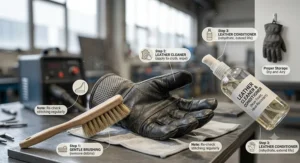
Problem: Stiff leather after grinding dust exposure. Leather that dries out loses flexibility fast. A light leather conditioner applied every few weeks keeps kidskin and goatskin gloves supple far longer than letting them dry out between uses.
✨ Don’t Miss These Exclusive Deals!
🔍 Take your plasma cutting setup to the next level — these gloves solve the exact problems above, so you spend less time fighting your gear and more time cutting clean lines. 🔥
How to Choose the Right Plasma Cutting Gloves
- Match heat rating to your typical amperage. Higher-amp cuts throw more heat; budget gloves rated lower may need more frequent replacement under heavy use.
- Prioritize trigger-finger design. A seamless or reinforced trigger finger reduces hand fatigue more than almost any other spec on the sheet.
- Check cuff length against your working posture. If you regularly crouch or reach over the cutting table, a longer cuff matters more than dexterity.
- Decide how much dexterity you actually need. Precision freehand work favors kidskin or goatskin; rough gouging favors thicker cowhide.
- Look for Kevlar or reinforced stitching. Seams are usually the first failure point, regardless of the leather quality.
- Size correctly — don’t size up “for safety.” Oversized gloves reduce trigger control more than they add protection.
Plasma Cutting Gloves vs. Standard Welding Gloves
| Factor | Plasma-Specific (Hyamp) | General TIG Gloves | General MIG/Stick Gloves |
|---|---|---|---|
| Trigger-finger design | Purpose-built, seamless | Good, but adapted | Often bulky, less precise |
| Heat tolerance | High, insulated | Moderate | High, but thick |
| Dexterity | High for the protection level | Highest overall | Lowest |
| Best use | Daily plasma cutting/gouging | Plasma + TIG crossover | Heavy gouging only |
The real difference shows up in daily use, not the spec sheet: a plasma-specific glove like the Hyamp gives you near-TIG dexterity without sacrificing the heat margin you actually need for sustained cutting, while a general MIG glove protects your hand but fights you on trigger control. If you’re only cutting occasionally, that gap matters less — but for daily plasma work, it’s the difference between a comfortable 8-hour shift and a sore trigger hand by lunch.
Common Mistakes When Buying Plasma Cutting Gloves
Buyers shopping by price alone often end up with gloves too thick for comfortable trigger control or too thin for the amperage they’re actually running — neither saves money once you count early replacements. Skipping cuff length is another common miss: a glove that’s perfect on a bench feels exposed the moment you’re working at an angle.
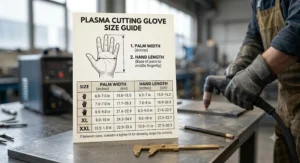
A subtler mistake is trusting a stated temperature rating without checking what it’s actually rating — palm heat resistance and overall flame resistance are different claims, and marketing copy doesn’t always distinguish between them. Finally, ordering a size based on a different brand’s chart causes more returns than any other single issue; sizing varies meaningfully between Tillman, Lincoln Electric, and Black Stallion.
What to Expect: Real-World Performance
Premium kidskin gloves like the Tillman 24C and Revco 35K need a short break-in period — expect the leather to feel slightly stiff for the first few uses before it conforms to your hand. Once broken in, expect noticeably better trigger feel than thicker cowhide options, at the cost of a shorter usable lifespan under heavy gouging.
Budget options like the ARCCAPTAIN trade some of that fine control for raw coverage — you’ll notice the bulk on the first wear, but it disappears quickly once you adjust your grip. The Hypertherm Hyamp sits in its own category: expect the closest experience to “forgetting you’re wearing gloves” of anything on this list, which is the entire point of a purpose-built design.
Features That Actually Matter (And Those That Don’t)
Matters: a seamless or reinforced trigger finger, an extended cuff matched to your working posture, Kevlar-stitched seams, and reinforced high-wear points like the thumb and index finger crotch.
Matters less than it sounds: extremely high advertised temperature ratings without a clear testing standard behind them, multi-purpose marketing claims (animal handling, BBQ use, and so on) that have nothing to do with plasma cutting performance, and flashy stitching colors or branding that don’t affect protection.
Plasma Cutting Gloves for Every Skill Level
Beginners should start with the ARCCAPTAIN or Lincoln Electric K2981 — both forgiving on price while teaching proper trigger habits without the steep cost of a mistake-prone learning curve. Intermediate hobbyists moving into more precision work benefit most from the Tillman 24C or Black Stallion T50, where dexterity starts paying off. Professionals running plasma daily should default to the Hypertherm Hyamp for fine work and the Black Stallion GM1611 as a backup pair for rough gouging days.
Safety, Regulations & Compliance Guide
OSHA 29 CFR 1910.138 requires employers to select hand protection based on the actual hazards present — for plasma cutting, that means thermal burns, sparks, and abrasion simultaneously, not any single hazard in isolation. None of the gloves on this list are independently rated under ANSI/ISEA 105 cut-resistance standards, which matters if your shop also handles sharp sheet metal edges alongside plasma cutting — in that case, pairing welding gloves with a cut-resistant under-layer is worth considering.
For shops with a formal safety program, document glove selection against the specific tasks performed, not just “welding” as a generic category — plasma gouging and precision TIG work present different enough hazards that one glove rarely covers both adequately.
Long-Term Cost & Maintenance
| Tier | Example | Expected Lifespan (daily use) | Cost-Per-Month Estimate* |
|---|---|---|---|
| Budget | ARCCAPTAIN, GM1611 | 2–4 months | ~$5–$8 |
| Mid-range | Tillman, Lincoln, Revco | 3–6 months | ~$5–$9 |
| Premium | Hypertherm Hyamp | 6–12 months | ~$5–$10 |
*Estimates assume daily professional use; occasional/hobbyist use extends lifespan considerably across every tier.
The numbers above tell a useful story: cost-per-month converges across tiers once you factor in lifespan, which means the “budget” option isn’t necessarily the cheaper long-term choice for daily users. A simple leather conditioner applied every few weeks extends life in any tier, and rotating between two pairs — one for precision work, one for rough gouging — often outlasts relying on a single do-everything glove.
FAQ
❓ What are the best gloves for plasma cutting?
❓ Can you use regular welding gloves for plasma cutting?
❓ What temperature can plasma cutting gloves withstand?
❓ Are leather or synthetic gloves better for plasma cutting?
❓ How much should good plasma cutting gloves cost?
Conclusion
Choosing plasma cutting gloves comes down to matching three things: how often you cut, how precise the work needs to be, and how exposed your wrists are during a typical job. The Hypertherm Hyamp wins for anyone cutting daily and willing to pay for purpose-built comfort. The Tillman 24C and Black Stallion T50 cover precision work without the premium price tag. And the ARCCAPTAIN or GM1611 make sense if budget and forearm coverage matter more than fine trigger feel.
None of these are wrong choices — they’re built for different shops, different cuts, and different budgets. Pick based on how you actually work, not just the spec sheet.
✨ Don’t Miss These Exclusive Deals!
🔍 Ready to protect your hands properly? Check current pricing on any of these seven picks and find the pair that matches how you actually cut. ⚡
Recommended for You
- 7 Best Multipurpose Welding Gloves for 2026
- 7 Best MIG Welding Gloves in 2026: Pro Picks & Buyer’s Guide
- TIG Welding Gloves: 7 Best Picks for Precision and Safety in 2026
Disclaimer: This article contains affiliate links. As an Amazon Associate, I earn from qualifying purchases. If you purchase products through these links, we may earn a small commission at no additional cost to you.
✨ Found this helpful? Share it with your friends! 💬🤗
