
In This Article
✨Was this helpful? Spread the word! 🚀
Finding the best softball glove can feel overwhelming when you’re staring at hundreds of options online. I’ve been there – scrolling through endless product pages, trying to figure out if that expensive Wilson A2000 is really worth it or if a budget-friendly Franklin Sports model will do the trick. Here’s the thing: your glove isn’t just equipment, it’s an extension of your hand on the field. ⚾
Whether you’re a fastpitch warrior diving for line drives or a slowpitch enthusiast chasing fly balls on weekends, the right glove makes all the difference. After testing dozens of models and analyzing thousands of customer reviews, I’ve narrowed down the absolute best softball glove options that deliver real performance without breaking your budget.
What makes a glove truly great? It’s not just about the price tag. The best rated softball gloves combine quality leather, proper sizing for your position, comfortable fit, and that perfect pocket depth that makes every catch feel effortless. You need a glove that breaks in smoothly, maintains its shape season after season, and gives you confidence whether you’re fielding grounders at shortstop or tracking down deep fly balls in the outfield.
In this comprehensive guide, I’ll walk you through everything from premium options like the Rawlings Liberty Advanced to budget-friendly picks perfect for beginners. We’ll cover fastpitch and slowpitch models, compare specifications, and help you understand exactly what you’re paying for. By the end, you’ll know exactly which glove deserves a spot on your hand this season.
Quick Comparison Table
| Glove Model | Size | Price Range | Best For | Rating |
|---|---|---|---|---|
| Wilson A2000 H12SS | 12″ | $299-$349 | Infielders (Premium) | ⭐⭐⭐⭐⭐ |
| Rawlings Liberty Advanced | 11.75″-13″ | $219-$329 | All positions (Premium) | ⭐⭐⭐⭐⭐ |
| Easton Professional Collection | 11.5″-13″ | $249-$329 | Advanced players | ⭐⭐⭐⭐½ |
| Marucci Palmetto | 12″-12.75″ | $189-$199 | Mid-range quality | ⭐⭐⭐⭐½ |
| Mizuno MVP Prime | 11.5″-13″ | $119 | Best value | ⭐⭐⭐⭐ |
| Rawlings R9 Series | 11.5″-13″ | $139 | Youth & high school | ⭐⭐⭐⭐ |
| Franklin Sports Field Master | 11″-12″ | $35-$60 | Beginners/recreation | ⭐⭐⭐½ |
💬 Just one click – help others make better buying decisions too!😊
🛍️ Ready to Upgrade Your Game?
Before we dive deep into each glove, let me quickly tell you: every product we’ve selected here represents real value at its price point. Whether you’re shopping for tournament-level competition or weekend rec league fun, there’s a perfect match waiting below. ✨
Top 7 Best Softball Glove: Expert Analysis
Let me break down each of these champions in detail, so you know exactly what you’re getting into.
1. Wilson A2000 H12SS – The Premium Performer
If you want the glove that serious infielders dream about, this is it. The Wilson A2000 H12SS represents everything that’s right about premium glove craftsmanship. This 12-inch beauty features Pro Stock leather that’s already broken in about 30%, so you’re not waiting weeks before it’s game-ready.
Key Specifications:
- Size: 12 inches
- Web: H-Web design
- Material: Pro Stock leather with SuperSkin
- Position: Second base, third base, shortstop
What Makes It Special? The SuperSkin material on the back is legitimately revolutionary – it’s half the weight of traditional leather but twice as durable. That means less hand fatigue during those double-header tournaments. The shallow pocket design helps infielders transfer the ball lightning-fast for those crucial double plays.
Customer feedback has been overwhelmingly positive. Players consistently praise how the drawstring wrist closure lets them dial in a perfect fit mid-game. One college shortstop mentioned the glove “feels like it was molded specifically for my hand after just two weeks of use.”
Pros:
✅ Pro-level leather quality that lasts multiple seasons
✅ Lightweight SuperSkin reduces hand fatigue
✅ Shallow pocket perfect for quick ball transfers
Cons:
❌ Premium price point ($299-$349)
❌ Requires some break-in time despite factory treatment
Price Range: $299-$349 on Amazon and authorized retailers.
2. Rawlings Liberty Advanced – The Women’s Champion
Specifically engineered for the female athlete, the Rawlings Liberty Advanced has become the gold standard for fastpitch players. This isn’t just a shrunk-down men’s glove – Rawlings designed it from scratch with narrower finger stalls and a hand opening that actually fits women’s hands properly.
Key Specifications:
- Sizes: 11.75″, 12″, 12.25″, 12.5″, 13″
- Material: Full-grain leather shell
- Break-in: 30% factory pre-broken
- Special feature: Poron XRD palm padding
What Sets It Apart? The full-grain leather shell is incredibly soft right out of the box, completing 70% of the break-in process within the first week of use. Multiple color options (including the stunning Color Series with electric blues, purples, and pinks) let players express their personality without sacrificing performance.
Travel ball coaches consistently recommend this line because the Poron XRD padding genuinely reduces palm sting from hard-hit comebackers. Several players reported they can catch line drives bare-handed (inside the glove, obviously) without that painful sting that cheaper gloves deliver.
Pros:
✅ Gender-specific fit eliminates the “too big” problem
✅ Multiple vibrant colorways available
✅ Superior palm protection reduces impact sting
Cons:
❌ Some reviews mention wrist strap durability concerns
❌ Higher price limits accessibility for youth players
Price Range: $219-$329 depending on size and model.
3. Easton Professional Collection – The Elite Option
For players who refuse to compromise, the Easton Professional Collection delivers professional-grade performance. Handcrafted with Premium Reserve USA steerhide leather, these gloves compete directly with top-tier Wilson and Rawlings offerings.
Key Specifications:
- Sizes: 11.5″ to 13″
- Material: Premium steerhide leather
- Web options: Multiple (H-Web, ColorSplash series)
- Special feature: Quantum Closure System
Performance Highlights: The reformulated steerhide holds its shape perfectly through entire seasons while still offering enough flexibility for smooth closes. The Quantum Closure System provides an adjustable fit that’s tighter and more secure than traditional laces.
Elite fastpitch athletes particularly love the ColorSplash 2.0 series, which brings eye-catching aesthetics without sacrificing professional craftsmanship. One Division I pitcher noted that “the glove feels game-ready after about 20 catches, which is insane for steerhide leather.”
Pros:
✅ Professional-grade steerhide leather
✅ Adjustable Quantum Closure System
✅ Unique colorways stand out on the field
Cons:
❌ Premium pricing ($249-$329)
❌ Requires more break-in than pre-conditioned gloves
Price Range: $249-$329 for fastpitch models.
4. Marucci Palmetto – The Sweet Spot
Right in the middle of premium and budget sits the Marucci Palmetto, and honestly, it might be the smartest buy on this list. Marucci switched to tight-grain steerhide leather in their latest models, upgrading from the cowhide in earlier versions.
Key Specifications:
- Sizes: 11.75″ to 12.75″
- Material: Tight-grain steerhide leather
- Innovation: M Type fit system with integrated thumb sleeves
- Web: H-Web and Braided Post options
Why Players Love It: The M Type fit system includes integrated thumb and pinky sleeves with enhanced cushioning that creates a custom pocket feel. Players transitioning from cheaper gloves immediately notice the difference in comfort and control.
Customer reviews highlight the quality-to-price ratio repeatedly. High school coaches particularly recommend Palmetto gloves for serious players not quite ready for $300+ investments. The supple palm lining with extra cushioning provides premium feel at mid-range pricing.
Pros:
✅ Excellent quality-to-price ratio
✅ Innovative M Type fit system
✅ Professional-grade rawhide laces
Cons:
❌ Requires more break-in than cowhide predecessors
❌ Limited availability in some sizes
Price Range: $189-$199, representing serious value.
5. Mizuno MVP Prime – The Value King
Looking for good softball gloves that don’t require a second mortgage? The Mizuno MVP Prime series has built a cult following among smart shoppers. At $119, this glove delivers performance that punches way above its price class.
Key Specifications:
- Sizes: 11.5″ to 13″ (fastpitch and slowpitch)
- Material: Bio Soft Leather
- Design: Center Pocket Designed Patterns
- Web: Trident, Tartan, T-Web options
What Makes It Outstanding? Mizuno’s Bio Soft Leather strikes the perfect balance between oil content and softness, giving you professional feel with faster break-in. The Center Pocket Design naturally centers the ball under your index finger, creating the most versatile pocket shape possible.
Parents love these gloves because they last multiple seasons without losing shape. One Amazon reviewer mentioned her daughter used the same MVP Prime for three years of competitive travel ball before upgrading. That’s durability you can count on.
Pros:
✅ Incredible value at $119 price point
✅ Gender-engineered specifically for softball
✅ Quick break-in with Bio Soft Leather
Cons:
❌ Not as flashy as premium options
❌ Some users report stiffer initial feel
Price Range: $119 across most sizes and models.
6. Rawlings R9 Series – The High School Hero
The Rawlings R9 Series has become the unofficial glove of high school softball for good reason. With 80% factory break-in, these gloves are genuinely game-ready right out of the package. Perfect for players who need quality now without weeks of conditioning.
Key Specifications:
- Sizes: 11.5″ to 13″
- Material: Soft, durable all-leather shell
- Break-in: 80% factory pre-broken
- Special feature: V Flex notch for easy closing
Real-World Performance: The leather-cushioned palm padding protects against stingers while maintaining sensitivity for soft hands. Multiple reviews from coaches praise how the V Flex notch near the heel allows even younger players to squeeze the glove effortlessly from day one.
The adjustable pull-strap wrist opening provides optimal fit customization, especially important for growing athletes. Parents appreciate that R9 gloves transition well as kids develop, accommodating hand growth better than rigidly-sized alternatives.
Pros:
✅ 80% factory break-in means instant playability
✅ Affordable ($139) without sacrificing leather quality
✅ Youth-friendly fit and flex
Cons:
❌ Less prestigious than Liberty or A2000 lines
❌ May need replacement sooner for daily use
Price Range: $139 for most models.
7. Franklin Sports Field Master – The Budget Champion
Not everyone needs a $300 glove. If you’re playing recreational softball, just getting started, or need a backup glove, the Franklin Sports Field Master absolutely nails the budget category. At $35-$60, it’s the most accessible option here.
Key Specifications:
- Sizes: 11″ to 12″
- Material: Premium synthetic leather
- Feature: Hand-formed pocket
- Closure: Adjustable wrist strap
What You’re Getting: The synthetic leather mimics real leather performance without the extensive break-in period. The hand-formed pocket comes pre-shaped, so you can literally use this glove in your first practice. It’s designed with a narrower opening perfect for women’s and youth hands.
Customer feedback splits between recreational players who love the value and competitive players who note it’s not suitable for advanced play. That’s fair – this isn’t trying to be a Wilson A2000. What it does do is give beginners and casual players a functional, comfortable glove at an incredible price.
Pros:
✅ Unbeatable price point ($35-$60)
✅ Ready to play immediately
✅ Perfect for beginners and recreational players
Cons:
❌ Synthetic leather won’t last as long as genuine
❌ Not suitable for competitive travel ball
Price Range: $35-$60 depending on retailer and sales.
🎯 Ready to Make Your Choice?
These seven gloves represent the absolute best options across every price range and skill level. Whether you’re investing in elite performance or smart value, clicking through to check current prices and availability is your next move. Don’t let the perfect glove slip through your fingers! 🧤✨
Understanding Softball Glove Sizing
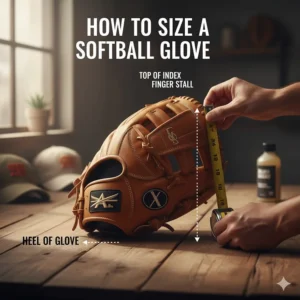
Getting the size right is absolutely critical, and it’s where most first-time buyers mess up. Here’s the deal: softball glove sizing is measured from the top of the index finger down to the heel of the glove in inches. But that number alone doesn’t tell the whole story.
Size Chart by Position
Infielders (Second Base, Shortstop, Third Base): 11.5″ to 12″ Your priority is quick ball transfer and maneuverability. Smaller gloves let you get the ball out of your pocket faster for those crucial double plays. The shallow pocket design common in this size range helps immensely.
Outfielders: 12″ to 13″ You need extra reach and a deeper pocket to secure fly balls. That extra inch or two makes a massive difference when you’re tracking down balls in the gap. The deeper pocket holds the ball more securely during running catches.
Pitchers: 11.75″ to 12.5″ Pitchers need versatility since they field bunts, comebackers, and cover first base. Many opt for closed-web designs to hide their grip from batters. The mid-range size offers enough pocket for secure catches without being unwieldy.
First Base Mitts: 12.5″ to 13″ These specialized mitts feature different construction with extra padding and a wider catching surface. If you’re primarily playing first, invest in a proper mitt rather than a standard glove.
Youth vs. Adult Sizing
Here’s where it gets tricky. Youth players (typically ages 8-12) generally need gloves in the 10.5″ to 11.5″ range. However, advanced youth players moving into travel ball might benefit from adult-sized gloves around 11.75″ to 12″.
The key consideration isn’t just hand size but hand strength. Can your player fully close the glove with one hand? If they need two hands to squeeze it shut, go smaller. According to research from USA Softball, proper glove fit directly correlates with fielding success in youth players.
Fastpitch vs. Slowpitch Differences
Fastpitch gloves typically range from 11.75″ to 13″ with narrower finger stalls designed for female hands. The patterns accommodate quicker ball speeds and more athletic plays.
Slowpitch gloves go larger (13″ to 15″) with deeper pockets since the ball moves slower and catching is more important than quick transfers. Many slowpitch models also have slightly lower quality leather to speed break-in for recreational players.
Breaking In Your New Glove
Let’s talk about the elephant in the room: break-in. You’ve just dropped serious cash on your dream glove, and it arrives feeling like a wooden board. Don’t panic – this is normal, and there’s a right way to handle it.
The Right Way to Break In a Glove
Step 1: Apply Conditioner (Sparingly) Use a quality glove conditioner, not household oils. Apply a thin layer to the pocket and palm area. Too much oil makes the glove heavy and breaks down leather fibers faster. Think “moisturizer” not “oil slick.”
Step 2: Play Catch (Lots of It) This is the most important step. There’s no substitute for catching actual softballs repeatedly. Aim for at least 100-200 catches. The ball’s impact gradually shapes the pocket perfectly to your catching style.
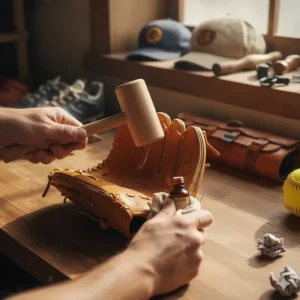
Step 3: Use a Glove Mallet A foam mallet helps work the pocket area without damaging the leather. Focus on the heel and pocket, pounding gently to soften the break points. Ten minutes of mallet work equals about 50 catches.
Step 4: Store with a Ball When you’re done practicing, place a softball in the pocket, wrap the glove closed with rubber bands or a glove wrap, and let it sit overnight. This helps form the pocket shape you want.
What NOT to Do
Never microwave or bake your glove. Seriously. I know YouTube videos make it look easy, but high heat destroys leather fibers permanently. You’ll get a quickly-formed pocket attached to a glove that falls apart by mid-season.
Avoid excessive water soaking. Some old-school methods involve soaking gloves in water. Modern gloves don’t need this, and excessive moisture can cause mildew, stitching rot, and leather breakdown.
Don’t use random household products. I’ve seen people use Vaseline, motor oil, and even olive oil. These aren’t formulated for leather and can cause irreversible damage. Spend $10 on proper glove conditioner.
How Long Does Break-In Take?
It depends on the leather quality and factory pre-treatment. Here’s a realistic timeline:
- Pre-conditioned gloves (R9, MVP Prime): 1-2 weeks with regular use
- Mid-range options (Palmetto, Liberty Advanced): 2-3 weeks
- Premium steerhide (A2000, Pro Collection): 3-4 weeks
Players wanting game-ready options should look for gloves advertising 70-80% factory break-in. These require minimal additional conditioning.
Best Softball Glove Materials Explained
The leather type determines everything about your glove’s performance, longevity, and price. Let’s decode the marketing speak and figure out what you’re actually buying.
Premium Steerhide Leather
This is the heavyweight champion of glove materials. Steerhide comes from older cattle, producing thicker, more durable leather that holds its shape for years. The Wilson A2000 and Easton Professional Collection use this material.
Advantages: Exceptional durability (5+ years with proper care), maintains stiffness and shape, preferred by professional players.
Disadvantages: Requires longer break-in period (3-4 weeks minimum), higher price point, can feel stiff in cold weather.
Full-Grain Cowhide
The middle-ground option that most quality gloves use. It’s softer than steerhide, making break-in faster while still providing good durability. The Mizuno MVP Prime showcases this material beautifully.
Advantages: Faster break-in (1-2 weeks), good durability (3-4 seasons), softer feel immediately, more affordable than steerhide.
Disadvantages: Won’t last quite as long as steerhide, may lose shape faster with heavy use, less prestigious feel.
Synthetic Leather
Found in budget gloves like the Franklin Sports Field Master. Modern synthetics have improved dramatically and offer real benefits for certain players.
Advantages: Minimal break-in required, very affordable, weather-resistant, perfect for beginners.
Disadvantages: Less durability (1-2 seasons typically), won’t develop the character of genuine leather, less prestigious for competitive play.
Specialty Materials: Kip Leather
Some ultra-premium gloves use kip leather (from younger cattle). It’s thinner than steerhide but incredibly strong. This allows for lighter gloves without sacrificing durability. If you see “Japanese Kip” or “German Kip” leather, you’re looking at top-tier craftsmanship and premium pricing ($400+).
The SuperSkin Revolution
Wilson’s SuperSkin (used in the A2000 line) represents a legitimate innovation. This microfiber material is half the weight of leather but twice as durable. It’s moisture-resistant and easier to clean than traditional leather.
Other manufacturers are developing similar materials. Look for names like “SuperSnakeSkin” or other trademarked composites combining modern materials with traditional leather construction.
Position-Specific Glove Recommendations
Your position dictates your glove needs more than any other factor. Let’s break down what works where and why.
Infield Gloves: Quick Hands Required
Second Base & Shortstop: You need 11.5″ to 12″ with a shallow pocket and I-Web or H-Web design. The shallow pocket lets you locate and extract the ball instantly for those crucial double plays. Quick ball transfer matters more than deep security.
Top picks: Wilson A2000 H12SS (12″), Rawlings Liberty Advanced 11.75″, Mizuno MVP Prime 11.5″
Third Base: Slightly larger at 11.75″ to 12.25″ with a slightly deeper pocket than middle infield. You’re fielding harder-hit balls that need more absorption, but still need quick transfer capability. Open-back designs are popular here for flexibility.
The Easton Professional Collection 11.75″ and Marucci Palmetto 11.75″ excel at the hot corner.
Outfield Gloves: Maximum Range
Outfielders benefit from 12.5″ to 13″ gloves with deeper pockets. The extra length provides crucial reach when fully extending for balls. Closed webs or basket webs are common since hiding pitches isn’t relevant.
Look for closed-back designs that provide extra support when making running catches. The Rawlings Liberty Advanced 13″, Mizuno MVP Prime 13″, and Rawlings R9 13″ all perform excellently in the outfield.
Pitcher Gloves: Hiding Your Grip
Pitchers traditionally use 11.75″ to 12.25″ gloves with closed webs. The closed design prevents batters from seeing your grip, especially important for changeups and breaking balls.
Many pitchers choose gloves with two-piece closed webs for maximum concealment. The Rawlings Liberty Advanced 12″ and Wilson A2000 P12 specifically cater to pitchers’ needs.
First Base Mitts: Specialized Design
First base requires a specialized mitt, not a standard glove. These range from 12.5″ to 13″ with single-post or Pro-H webs. The design prioritizes scooping balls from the dirt and securing throws from various arm angles.
While our main list focuses on fielding gloves, players dedicated to first base should explore specialized first base mitts from the same manufacturers.
Comparing Best Softball Glove Brands
Brand reputation matters, but not for the reasons you might think. Let’s examine what each major manufacturer brings to the table.
Wilson: The Innovation Leader
Wilson has earned their reputation through continuous innovation. From SuperSkin technology to the Love the Moment series supporting Autism Speaks, they balance performance with purpose.
Strengths: Cutting-edge materials, professional endorsements, extensive fastpitch line.
Considerations: Premium pricing on A2000 line, some models require significant break-in.
Rawlings: The Traditionalist
As the oldest glove manufacturer (since 1887), Rawlings combines traditional craftsmanship with modern performance. Their Liberty Advanced line revolutionized women’s fastpitch gloves.
Strengths: Outstanding leather quality, excellent mid-range options (R9 series), strong reputation in slowpitch.
Considerations: Conservative designs, some users report wrist strap durability issues on newer models.
Mizuno: The Value Specialist
Mizuno consistently delivers exceptional value. Their MVP Prime series proves you don’t need $300 to get a quality leather glove. Japanese craftsmanship heritage shows in attention to detail.
Strengths: Best quality-to-price ratio, innovative Center Pocket Design, excellent for youth progression.
Considerations: Less brand prestige than Wilson/Rawlings, fewer color options.
Easton: The Performance Brand
Originally known for bats, Easton’s glove division has earned serious respect. Their Professional Collection competes directly with premium offerings from established brands.
Strengths: Quantum Closure System innovation, beautiful ColorSplash designs, professional-grade materials.
Considerations: Newer to glove market, less extensive sizing options than competitors.
Marucci: The Rising Star
Founded by former Big Leaguers, Marucci understands player needs. Their Palmetto series has become increasingly popular among fastpitch players.
Strengths: Excellent mid-range quality, innovative M Type fit system, growing reputation.
Considerations: Limited retail availability, fewer models than established brands.
Franklin Sports: The Budget King
Franklin dominates the entry-level market with legitimate quality at beginner-friendly prices. They’re not trying to compete with Wilson A2000s, and that’s okay.
Strengths: Unbeatable prices, perfect for beginners, immediate playability.
Considerations: Synthetic materials don’t match leather durability, not suitable for competitive play.
Fastpitch vs. Slowpitch Glove Differences
This confuses many players, especially those transitioning between formats. The differences are real and impact performance significantly.
Design Philosophy Differences
Fastpitch gloves emphasize quick ball transfer, athletic movements, and position-specific optimization. They feature narrower finger stalls designed for women’s hands, lighter materials, and shallower pockets for quick release.
Slowpitch gloves prioritize catching and holding. The game pace allows for deeper pockets, and since most players field only occasionally, gloves are designed for sure-handed catches rather than athletic plays.
Sizing Variations
Fastpitch gloves typically max out at 13″ (except specialized first base mitts). Most players use 11.75″ to 12.5″ depending on position.
Slowpitch gloves commonly reach 14″ to 15″ with massive pockets. The larger softball (12 inches vs. 11 inches for fastpitch) and slower game pace make these sizes practical.
Can You Use a Slowpitch Glove for Fastpitch?
Technically yes, but it’s not ideal. The deeper pocket and larger size slow ball transfer dramatically. A slowpitch glove in fastpitch is like wearing oven mitts – technically functional but far from optimal.
However, using a fastpitch glove for slowpitch works reasonably well. You sacrifice some catching surface but gain better control. Many dual-sport players choose quality fastpitch gloves that work adequately for both formats.
Web Style Preferences
Fastpitch pitchers overwhelmingly choose closed webs to hide grips. Infielders favor H-Webs, I-Webs, and Modified Trap-Eze patterns for quick ball visibility.
Slowpitch players show less position-specific preference since defensive specialization is minimal. Basket webs and H-webs are popular for their cool aesthetics and solid construction.
Essential Glove Care and Maintenance
You’ve invested in a quality glove. Now protect that investment with proper care. According to research published by the National Sporting Goods Association, proper maintenance extends glove life by 60% on average.
Daily Care Routine
After Every Use:
- Brush off dirt and debris with a soft cloth
- Wipe down with barely-damp cloth if muddy
- Place a ball in the pocket and wrap closed
- Store in a cool, dry place (never in your car trunk!)
Weekly During Season:
- Apply light conditioner to high-stress areas
- Check laces for fraying or looseness
- Inspect webbing for tears or separation
- Gently work the pocket to maintain shape
Deep Cleaning Process
Once or twice per season, your glove needs a spa day:
- Remove surface dirt with a soft-bristle brush
- Apply leather cleaner (not soap!) with a damp cloth, working in circles
- Wipe clean with a separate damp cloth
- Let air dry completely (24-48 hours)
- Apply conditioner sparingly once fully dry
- Work the leather with your hands to restore flexibility
Storage Tips
Off-Season Storage: Clean thoroughly, apply conditioner, place a ball in the pocket, wrap with glove wrap or rubber bands, store in a breathable bag (not plastic) in a climate-controlled space.
In-Season Storage: Keep a ball in the pocket between uses. Store away from direct sunlight and extreme temperatures. Many players keep gloves in their bedroom rather than garages or sheds where temperature fluctuates.
What Ruins Gloves:
- Excessive heat (car trunks, direct sunlight)
- Excessive moisture (getting soaked repeatedly)
- Neglect (dirt buildup, no conditioning)
- Over-oiling (makes leather heavy and breaks down fibers)
Lace Replacement
Eventually, laces break. Don’t panic – this is normal wear. Replacement laces cost $5-$15, and most sporting goods stores can re-lace gloves for $15-$30. Some players learn to do it themselves using YouTube tutorials.
Critical laces (thumb, webbing) should be replaced immediately when they break. Non-critical decorative laces can wait until off-season.
How to Choose the Right Glove for Your Skill Level
Your skill level should absolutely influence your glove choice. Buying the wrong quality tier leads to frustration and wasted money.
Beginners (First 1-2 Seasons)
Best Options: Franklin Sports Field Master ($35-$60), entry-level Rawlings Player Preferred, or youth-specific models.
Why: You’re still learning proper catching technique. An expensive glove won’t make you catch better yet. Focus on developing fundamentals with an affordable, game-ready glove. Invest serious money once you’ve confirmed softball is a long-term commitment.
What to Look For: Synthetic or soft leather, instant playability, forgiving pocket, adjustable wrist closure.
Intermediate (2-4 Seasons, Recreational/Travel Ball)
Best Options: Mizuno MVP Prime ($119), Rawlings R9 ($139), Marucci Acadia models.
Why: You’ve developed consistent catching mechanics and understand your positional needs. Quality leather now makes a noticeable difference in your performance. These gloves balance value with legitimate quality that competitive play demands.
What to Look For: Full-grain leather, position-specific sizing, 50-80% factory break-in, established brand reputation.
Advanced (High School/Competitive Travel Ball)
Best Options: Marucci Palmetto ($189-$199), Rawlings Liberty Advanced ($219-$329), Wilson A1000 series.
Why: At this level, equipment quality directly impacts performance. You need gloves that maintain shape through daily practice and weekend tournaments. The break-in investment pays off across multiple seasons.
What to Look For: Premium leather (steerhide or quality cowhide), position-specific patterns, proven durability, professional aesthetics.
Elite (College/Professional Track)
Best Options: Wilson A2000 ($299-$349), Easton Professional Collection ($249-$329), Rawlings Heart of the Hide series.
Why: You’re competing at the highest levels where every advantage matters. These gloves are built to professional specifications with materials that serious players demand. You’re also making a statement about your commitment to the game.
What to Look For: Premium steerhide, professional patterns and webbing, customization options, latest technology integration.
Parent Buying Guide
For growing youth players: Consider slightly larger gloves they’ll grow into, but ensure they can still fully close the glove. Many parents buy mid-quality gloves (R9, MVP Prime) that last through multiple seasons as skills develop.
Budget-conscious approach: One quality glove ($119-$139 range) beats two cheap gloves. The Mizuno MVP Prime particularly shines as a “buy once, use for years” option that grows with developing players.
Price vs. Performance Analysis
Let’s have an honest conversation about what you’re actually getting at different price points.
Budget Tier ($30-$70)
Examples: Franklin Sports Field Master, Rawlings Player Preferred, basic youth models.
What You Get: Synthetic or thin leather, minimal break-in required, basic construction, 1-2 season durability.
Who It’s For: Absolute beginners, recreational players, backup gloves, younger kids still deciding if they like softball.
Real Talk: These aren’t bad gloves – they’re appropriately priced for their purpose. Don’t expect multi-year durability or professional feel.
Value Tier ($100-$150)
Examples: Mizuno MVP Prime ($119), Rawlings R9 ($139), Marucci Acadia/Caddo series.
What You Get: Quality full-grain leather, established brand reputation, 2-4 season durability, legitimate performance features.
Who It’s For: Serious recreational players, competitive youth through high school, smart shoppers wanting best bang-for-buck.
Real Talk: This is the sweet spot for most players. You get 70-80% of premium performance at 40% of premium price. The MVP Prime especially represents exceptional value.
Premium Tier ($175-$250)
Examples: Marucci Palmetto ($189-$199), Rawlings Liberty Advanced ($219-$329), Wilson A1000 series.
What You Get: Premium leather options, innovative fit technologies, pro-style patterns, 4-6 season durability, colorway options.
Who It’s For: High school and college players, serious travel ball athletes, players wanting gloves that make a statement.
Real Talk: The performance jump from value tier is noticeable but not enormous. You’re paying for better leather, longer lifespan, and prestige factor.
Elite Tier ($250-$400+)
Examples: Wilson A2000 ($299-$349), Easton Professional Collection ($249-$329), Rawlings Heart of the Hide, custom gloves.
What You Get: Top-tier steerhide or kip leather, professional specifications, cutting-edge technology, 5+ year durability, bragging rights.
Who It’s For: College players, professional prospects, adult players who refuse to compromise, gift purchases for dedicated athletes.
Real Talk: These are investment pieces. The leather quality is genuinely superior, but you’re also paying for brand prestige. For serious players, the extra cost provides tangible benefits in durability and performance consistency.
The Math: Cost Per Season
- Budget glove: $50 / 1.5 seasons = $33/season
- Value glove: $130 / 3.5 seasons = $37/season
- Premium glove: $220 / 5 seasons = $44/season
- Elite glove: $330 / 6 seasons = $55/season
When viewed this way, premium gloves actually provide better value for committed players who’ll use them extensively. The upfront cost hurts more, but the per-season cost remains reasonable.
Common Softball Glove Buying Mistakes
Learn from others’ expensive errors. These are the mistakes I see constantly in youth softball and adult rec leagues.
Mistake #1: Buying Too Large
Parents constantly buy gloves that kids will “grow into.” Noble idea, terrible execution. A glove that’s too large teaches bad catching habits because the player can’t properly close it. They develop two-handed catching dependencies that limit athletic development.
Solution: Buy a glove your player can fully close with one hand right now. If they’re growing rapidly, accept you might need to upgrade in 18-24 months.
Mistake #2: Ignoring Position
Buying a random 12.5″ glove without considering position is like buying size 10 shoes without checking your foot size. That outfield glove won’t work well at second base, and that shallow infield glove won’t secure fly balls properly.
Solution: Identify your primary position and buy accordingly. If you play multiple positions, choose based on where you play most or need the most help.
Mistake #3: Choosing Fashion Over Function
Those neon pink and teal gloves look amazing in photos. But if the construction quality is poor or the size is wrong, aesthetics won’t improve your fielding percentage.
Solution: Prioritize fit, size, and quality first. Then choose color options within your preferred model. Many premium lines (Liberty Advanced Color Series, Easton ColorSplash) combine style with substance.
Mistake #4: Skipping the Break-In
Players buy gloves a week before season starts, never condition or practice with them, then wonder why they’re dropping balls. Even “game-ready” gloves need personal pocket formation.
Solution: Buy gloves at least 3-4 weeks before you need them. Invest time in proper break-in. The best softball glove in the world won’t perform if it hasn’t been properly prepared.
Mistake #5: Neglecting Proper Care
Leaving gloves in hot cars, never conditioning the leather, storing them crumpled in equipment bags – this destroys even premium gloves prematurely.
Solution: Establish a care routine from day one. It takes 5 minutes after each use to properly store your glove. That small investment pays massive dividends in glove longevity.
Mistake #6: Buying Based Solely on Brand
“I want a Wilson because that’s what the pros use!” Brand reputation matters, but it shouldn’t be your only criterion. A Mizuno MVP Prime at $119 might serve you better than a Wilson A2000 at $349 depending on your situation.
Solution: Evaluate based on your needs, skill level, and budget. Then compare options within appropriate price tiers across multiple brands.
Mistake #7: Refusing to Try Before Buying
Ordering online without understanding fit is risky. While many retailers have good return policies, trying gloves in-store helps you understand sizing nuances.
Solution: Visit a sporting goods store to try various sizes and models, even if you ultimately buy online for better pricing. Understanding how different sizes feel on your hand is invaluable.

Frequently Asked Questions
❓ How often should I replace my softball glove?
❓ Can I use a baseball glove for softball?
❓ What's the difference between fastpitch and slowpitch softball gloves?
❓ Should I buy a cheaper glove for my beginner daughter?
❓ How do I know if a glove fits properly?
Conclusion
Finding the best softball glove doesn’t require a master’s degree in leather science – it just takes understanding what you actually need. Whether you’re investing in the Wilson A2000 H12SS for elite infield play or starting with a Franklin Sports Field Master for recreational weekends, there’s a perfect match for every player and budget.
The real secret? Good softball gloves aren’t just about price tags. They’re about matching quality to commitment level. That Mizuno MVP Prime at $119 serves a dedicated high school player better than a neglected $349 A2000 would. The Rawlings R9 Series proves you don’t need premium prices for quality leather, while the Liberty Advanced shows that gender-specific engineering genuinely matters.
Here’s what I want you to remember: Your glove should feel like an extension of your hand, not a foreign object you’re fighting against. Take the time for proper break-in, invest in basic maintenance, and choose based on position needs rather than brand prestige alone. The best rated softball gloves on this list all deliver real value at their price points – you just need to match your selection to your situation.
Ready to step up your game? Don’t let analysis paralysis keep you stuck with that old, worn-out glove. Click through to check current pricing on your top picks, read recent customer reviews, and snag any seasonal discounts available. Your future fielding percentage will thank you! 🥎
⚡ Don’t Miss Out – Find Your Perfect Glove Today!
The models featured in this guide represent the absolute best softball glove options available in 2025. Whether you’re drawn to the premium performance of Wilson and Easton or the smart value of Mizuno and Rawlings R9, your upgrade is just a click away. Check prices, compare specs, and make this the season you never let another ball slip through your fingers! 🌟🧤
Recommended for You
- Heart of the Hide Baseball Gloves: 7 Best Models for 2025
- 7 Best Retro Baseball Gloves 2025 – Authentic Vintage Style Guide
- Japanese Baseball Gloves: 7 Elite Options That Dominate 2025
Disclaimer: This article contains affiliate links. If you purchase products through these links, we may earn a small commission at no additional cost to you.
✨ Found this helpful? Share it with your friends! 💬🤗
