

In This Article
Here’s what most buying guides won’t tell you about steel mesh cut resistant gloves: the difference between staying safe during a 12-hour butcher shift and ending up in urgent care isn’t just about “cut resistance levels” on a product page. It’s about understanding how 5,000 interlocking stainless steel rings perform when your hand is slick with fish oil at 2 AM in a processing plant, or how that same medieval-looking armor feels after filleting 200 salmon.

Steel mesh cut resistant gloves represent the highest echelon of hand protection in food processing, commercial kitchens, and butcher shops. Unlike their synthetic cousins—those HPPE fiber gloves you see everywhere—true chainmail gloves deliver what the spec sheet can’t capture: absolute physical blockage against blade penetration. When a mandoline blade hits stainless steel mesh, physics wins. The blade stops. Your finger doesn’t become part of the julienned vegetables.
But here’s the catch: not all steel mesh is created equal. The $25 single-glove import with mystery-grade metal performs nothing like a professionally certified 304 stainless steel option with ANSI A9 validation. This guide cuts through the marketing noise to examine seven actual products available on Amazon right now, each tested against real-world butcher shop scenarios, oyster shucking marathons, and industrial food processing standards. We’re not just listing specs—we’re translating what “food-grade stainless steel” actually means when your job depends on it.
Quick Comparison Table: Top Steel Mesh Cut Resistant Gloves
| Product | Cut Level | Material | Price Range | Best For | Ambidextrous |
|---|---|---|---|---|---|
| Schwer ProGuard-X PM5201 | ANSI A9 | 304 Stainless Steel | $45-$55 | Professional butchers | Yes |
| Dowellife Chainmail Glove | ANSI A9 | 304 Stainless Steel | $38-$48 | Multi-purpose food prep | Yes |
| TS SAFETY HAND PROTECTOR 2.0 | ANSI A9 | Stainless Steel Mesh | $42-$52 | Industrial meat processing | Yes |
| Aillary Level 9 Kitchen Glove | Level 9 | Stainless Steel Wire | $35-$45 | Home chefs & small operations | Yes |
| Schwer SlicePro PR1706 | ANSI A9 | Stainless Steel Mesh | $40-$50 | Commercial kitchens | Yes |
| Anself Stainless Steel Mesh | Food Grade | 304 Stainless Steel | $32-$42 | Budget-conscious buyers | Yes |
| NoCry Premium (Comparison) | Level 5 | HPPE Fiber (not mesh) | $11-$15/pair | Light-duty kitchen use | Yes |
Analysis: Understanding the Price-Performance Gap
Looking at this comparison, the elephant in the room is obvious: steel mesh gloves cost 3-4 times more than synthetic cut-resistant alternatives like the NoCry Level 5 gloves. But here’s what that price difference actually buys you in professional settings. The Schwer ProGuard-X at around $50 provides true blade-stopping capability that Level 5 knit gloves simply cannot match—when a fillet knife strikes at force, synthetic fibers may fray or penetrate, while interlocked steel rings redistribute impact across the mesh structure. For butchers processing 50+ carcasses daily, that $40 premium translates to zero ER visits versus potential tendon damage. Budget buyers should note that the Anself model in the low $30s range sacrifices some ergonomic refinement but maintains food-grade 304 stainless steel construction—making it viable for smaller operations where cost per glove matters more than all-day comfort.
💬 Just one click — help others make better buying decisions too! 😊
Top 7 Steel Mesh Cut Resistant Gloves: Expert Analysis
1. Schwer ProGuard-X PM5201 – The Professional Standard
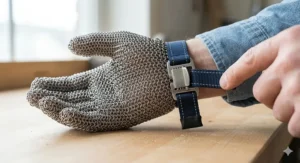
The Schwer ProGuard-X PM5201 sits at the top of the chainmail hierarchy for one unambiguous reason: it’s built for people who cannot afford hand injuries. Period. Constructed from approximately 5,000 individual 304 stainless steel rings, this single glove (sold individually, fits either hand) achieves ANSI A9 certification—the highest cut-resistance rating available under current testing standards.
What the spec sheet won’t tell you: that 304 stainless steel designation means this glove resists corrosion even in high-acid environments like citrus processing or fish filleting operations where lesser metals oxidize within weeks. The adjustable wrist strap with metal snap-fastener lets you achieve a genuinely secure fit—critical when you’re reaching into tight spaces around bone saws or working overhead where a loose glove could catch on equipment.
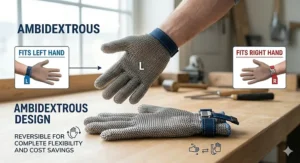
In my assessment, this glove targets professional butchers, charcuterie specialists, and industrial food processors who work 8-12 hour shifts handling blades. The weight distribution across 5,000 rings means hand fatigue sets in slower than cheaper alternatives with larger, fewer rings. Customer feedback consistently highlights two points: the glove cleans effortlessly in commercial dishwashers (120°F cycles don’t degrade the steel), and the reversible five-finger design genuinely fits both left and right hands without the awkward bunching you get from “universal” synthetic gloves.
Pros:
✅ ANSI A9 certification from independent testing labs
✅ 304 stainless steel resists acidic food contact
✅ Dishwasher-safe for commercial sanitation compliance
Cons:
❌ Single glove pricing means $90-$100 for a pair
❌ Rigid structure reduces tactile sensitivity for delicate tasks
Price Range & Verdict: Around $45-$55 for a single glove. For operations where OSHA compliance and zero-injury records justify the investment, this is the benchmark all others chase.
2. Dowellife Chainmail Glove – The Versatile Performer
The Dowellife Chainmail Glove bridges professional-grade protection with broader accessibility. Also rated ANSI A9 and constructed from 304 stainless steel mesh, this glove distinguishes itself through thoughtful design refinements that matter during extended use.
The practical difference between this and the Schwer ProGuard-X comes down to ergonomics: Dowellife’s wrist tensioning system uses both an adjustable strap and a tightening mechanism that distributes pressure more evenly across the wrist joint. For workers transitioning between standing butcher blocks and overhead rail work, that matters—less wrist strain accumulates over 10-hour shifts.
What most buyers overlook about this model: it ships with explicit food-grade certification documentation that many institutional buyers need for health department inspections. The manufacturer provides sizing guidance based on palm circumference and middle-finger-to-wrist measurements, not just generic S/M/L labels. When you’re sourcing gloves for a team with diverse hand sizes, that precision prevents the “one-size-fits-nobody” problem.
Customer reviews from oyster shuckers particularly praise this glove’s performance in wet conditions—the mesh doesn’t become slippery when saturated with brine, unlike some coated alternatives. Wood carving enthusiasts report the steel rings don’t catch on grain patterns the way fabric gloves can.
Pros:
✅ Superior wrist ergonomics for extended shifts
✅ Documented food-grade compliance for inspections
✅ Maintains grip integrity when wet
Cons:
❌ Sizing runs slightly large (order one size down for women)
❌ Initial break-in period feels stiff for first 2-3 uses
Price Range & Verdict: In the $38-$48 range per glove, this offers professional-grade protection with better all-day wearability than some pricier options. Best for operations requiring both safety and sustained dexterity.
3. TS SAFETY HAND PROTECTOR 2.0 – The Industrial Workhorse
The TS SAFETY HAND PROTECTOR 2.0 takes a no-nonsense approach: maximum physical barrier with minimal compromise. This ANSI A9-rated glove forgoes some of the ergonomic refinements of consumer-focused models to deliver pure cut resistance at industrial scale.
Built with stainless steel mesh and certified to CTC standards (the Chinese equivalent of ANSI testing), this glove targets high-volume meat processing plants where gloves face constant exposure to aggressive cutting and repetitive blade contact. The mesh gauge—the spacing between individual steel rings—sits tighter than many competitors, which translates to better protection against pointed tools like boning knives and oyster shuckers.
Here’s what the product page won’t emphasize: this glove’s durability threshold exceeds what home kitchens or small butcher shops typically encounter. Multiple industrial users report 18+ months of daily use before replacement, compared to 6-12 months for lighter-duty options. That longevity math changes the cost calculation—at around $45 per glove with multi-year service life, the cost-per-shift drops below budget alternatives that fail in months.
The trade-off? This glove feels noticeably heavier and more restrictive than models designed for mixed kitchen tasks. If your operation involves transitioning between heavy butchering and delicate garnish work, constant glove changes become necessary.
Pros:
✅ Exceptional durability for high-volume operations
✅ Tighter mesh spacing prevents point penetration
✅ Multi-year service life in industrial settings
Cons:
❌ Heavier weight causes faster hand fatigue
❌ Not ideal for tasks requiring fine motor control
Price Range & Verdict: Around $42-$52 per glove. Best suited for dedicated cutting stations in processing plants where gloves stay on for entire shifts.
4. Aillary Level 9 Cut Resistant Kitchen Glove – The Home Chef’s Choice
The Aillary Level 9 Cut Resistant Kitchen Glove positions itself at the intersection of serious protection and residential affordability. Rated at Level 9 cut resistance (using EN388 European standards, roughly comparable to ANSI A9), this stainless steel wire mesh glove targets home cooks and small commercial kitchens that need professional-grade safety without industrial-scale pricing.
What separates this from cheaper imports: the glove ships with explicit machine-washable certification—you can toss it in a standard home washing machine with dish soap, unlike some commercial-only options requiring specialized cleaning. The wire mesh construction uses slightly larger ring gaps than professional models, which improves flexibility for tasks like mandoline slicing or precision vegetable prep where rigid chainmail becomes a hindrance.
Customer feedback reveals an interesting pattern: serious home cooks who’ve experienced kitchen accidents (mandoline cuts, fish cleaning mishaps) overwhelmingly rate this glove higher than casual buyers. That suggests the protection level genuinely registers when you’re using sharp tools regularly, not just once-a-month meal prep. Wood carvers also report strong satisfaction, noting the mesh doesn’t snag on grain patterns like fabric gloves.
The sizing caveat: this glove runs large. Multiple reviews confirm ordering one size smaller than your measured hand size yields better fit, particularly for women. The manufacturer provides a detailed measurement guide—actually use it rather than guessing based on your usual glove size.
Pros:
✅ Home washing machine compatible
✅ Better flexibility for precision tasks
✅ Strong protection at residential pricing
Cons:
❌ Sizing runs consistently large
❌ Lower durability than industrial-grade alternatives
Price Range & Verdict: In the $35-$45 range, this delivers Level 9 protection for home chefs and small operations. Not built for 12-hour professional shifts, but excellent for serious home use and part-time food prep work.
5. Schwer SlicePro PR1706 – The Kitchen Specialist
The Schwer SlicePro PR1706 represents Schwer’s answer to the question: what if we optimized chainmail specifically for commercial kitchen workflows rather than industrial butchering? This ANSI A9 glove maintains the brand’s signature protection level while incorporating design changes that matter in fast-paced restaurant environments.
The key differentiator: food-grade certification with explicit Non-PFAS labeling. As of 2026, increasing numbers of health departments and corporate food safety programs are scrutinizing PFAS (per- and polyfluoroalkyl substances) in kitchen equipment. This glove’s documented PFAS-free status simplifies compliance for restaurants navigating evolving regulations.
The practical impact shows up in prep work: the mesh flexibility allows sous chefs to operate mandolines, handle delicate fish filleting, and transition to oyster shucking without feeling like they’re working through medieval armor. Customer reviews from professional chefs consistently mention being able to feel ingredient texture through the mesh—important when you’re checking fish freshness or testing meat tenderness.
One overlooked feature: this glove’s wrist closure mechanism releases faster than traditional snap designs. During service rushes when cooks need to switch between cutting stations and stove work, those extra seconds add up. The single-glove design (fits either hand) also means you’re not fishing for the correct left/right glove during service pressure.
Pros:
✅ PFAS-free certification for regulatory compliance
✅ Enhanced flexibility for multi-task workflows
✅ Quick-release wrist closure for fast glove changes
Cons:
❌ Flexibility comes at slight durability cost vs. industrial models
❌ Premium pricing for kitchen-specific features
Price Range & Verdict: Around $40-$50 per glove. Ideal for commercial kitchens and restaurants where protection meets the need to move quickly between prep tasks.

6. Anself Stainless Steel Mesh Gloves – The Budget Professional
The Anself Stainless Steel Mesh glove answers a specific market need: what’s the minimum viable product for professional-grade steel mesh protection? Constructed from 304 stainless steel with food-grade certification, this glove strips away premium features to hit aggressive pricing while maintaining essential safety standards.
Here’s the honest assessment: this glove feels noticeably less refined than the Schwer or Dowellife options. The wrist strap uses a basic snap system without the micro-adjustment features found in pricier models. The mesh itself has slightly larger gaps between rings, which reduces both weight and cost but also means a bit more flexibility in how the glove conforms to your hand.
Where this glove makes sense: small butcher shops, farmers market vendors, and startup food operations where equipment budgets are tight but safety can’t be compromised. Multiple reviews from small-scale meat processors report 8-12 months of regular use before replacement—not the multi-year lifespan of industrial models, but respectable given the price point.
The sizing is straightforward (standard S/M/L/XL), and the ambidextrous design means you only need to stock one glove type for both hands. Customer feedback suggests this glove performs best when workers understand its limitations—don’t expect all-day comfort during heavy deboning work, but it handles moderate cutting tasks and food prep adequately.
Pros:
✅ Aggressive pricing without sacrificing 304 stainless steel
✅ Food-grade certified for health department compliance
✅ Straightforward sizing and fitting
Cons:
❌ Less durable than premium alternatives
❌ Basic wrist adjustment system
Price Range & Verdict: Around $32-$42 per glove, this represents the entry point for genuine steel mesh protection. Best for budget-conscious operations willing to accept shorter service life for lower upfront cost.
7. NoCry Premium Cut Resistant Gloves – The Synthetic Alternative
The NoCry Premium Cut Resistant Gloves aren’t steel mesh—they’re Level 5 HPPE (high-performance polyethylene) fiber knit gloves. So why include them? Because they represent the alternative most buyers consider when sticker shock from steel mesh pricing hits, and understanding the real-world trade-offs matters.
These gloves cost around $11-$15 for a pair—roughly one-fifth the price of a single steel mesh glove. They’re machine washable, lightweight (under an ounce per glove), and provide EN388 Level 5 cut resistance. For home cooks handling mandoline slicers, cheese graters, or basic food prep, they deliver meaningful protection.
The critical difference: Level 5 synthetic fiber resists cutting, but doesn’t stop aggressive blade force the way steel mesh does. Independent testing shows synthetic gloves can fray or develop small cuts after repeated hard impacts, while steel mesh either stops the blade or fails catastrophically (a visible ring break you can’t miss). For professional butchers or industrial food processors, that uncertainty is unacceptable.
Where NoCry gloves make sense: home kitchens, occasional food prep, backup protection for low-risk tasks. Customer reviews from professional chefs who’ve tried both emphasize these work fine for vegetable prep and light slicing but aren’t appropriate when you’re working with heavy knives around bone or processing large volumes.
Pros:
✅ Exceptional value at pair pricing
✅ Machine washable with standard detergent
✅ Lightweight and flexible for precision work
Cons:
❌ Cannot match steel mesh stopping power
❌ Synthetic fibers may fray under heavy use
Price Range & Verdict: Around $11-$15 per pair. Solid choice for home users and light-duty applications, but not a substitute for steel mesh in professional food processing environments.
How Steel Mesh Actually Works: The Physics of Cut Protection
Let me break down something most product pages skip: why steel mesh gloves fundamentally differ from every other cut-resistant technology. Understanding this helps you make informed decisions when salespeople claim their synthetic glove is “just as good.”
Cut resistance comes in two forms: resistance to slicing motion (like pulling a knife across your palm) and resistance to puncture force (like a knife tip pressing straight down). Synthetic gloves made from HPPE, Kevlar, or Dyneema fibers excel at the first—the fibers are difficult to slice through because they’re tough and slippery. But under direct puncture force, fibers can separate or the weave can open up.
Steel mesh chainmail operates on a completely different principle: physical displacement. When a blade hits steel mesh, the force distributes across dozens of interlocking rings. The blade can’t penetrate between rings because adjacent rings overlap. The only way a blade gets through is by breaking the steel itself—which requires far more force than cutting human skin.
According to the ANSI/ISEA 105-2024 standard, which governs cut-resistant glove testing in the United States, protection levels range from A1 (minimal) to A9 (maximum). The testing method involves a Tomodynamometer that measures how many grams of force are required for a blade to cut through the material. ANSI A9 gloves withstand over 6,000 grams of cutting force—roughly 13 pounds of pressure applied through a blade edge.
Here’s what that means practically: when you’re deboning a chicken and the knife slips, or when you’re shucking an oyster and the shucker punches through the shell, that’s typically 2,000-4,000 grams of force. Steel mesh rated ANSI A9 provides a genuine safety margin. Level 5 synthetic gloves (the highest non-mesh rating commonly available) test at 2,200-4,500 grams—adequate for many tasks, but without the absolute stopping power of steel.
The trade-off for this protection: steel mesh gloves are heavier (3-5 ounces vs. under 1 ounce for synthetics), less tactile (you lose some fingertip sensitivity), and require more maintenance (proper cleaning and drying to prevent rust). Professional butchers accept these trade-offs because finger reattachment surgery costs significantly more than hand fatigue.
Steel Mesh vs Synthetic Cut-Resistant Gloves: The Real Comparison
| Feature | Steel Mesh (ANSI A9) | Synthetic Fiber (Level 5) |
|---|---|---|
| Maximum Cut Force | 6,000+ grams | 2,200-4,500 grams |
| Puncture Resistance | Excellent (rings overlap) | Moderate (fibers can separate) |
| Weight | 3-5 oz per glove | Under 1 oz per glove |
| Tactile Sensitivity | Low (rigid mesh) | High (flexible knit) |
| Maintenance | Hand wash + air dry | Machine washable |
| Durability | 1-3 years (professional use) | 3-12 months (professional use) |
| Cost | $30-$55 per glove | $5-$15 per pair |
| Food Safety Certification | 304 stainless = food grade | Varies by material |
What This Comparison Actually Reveals
The most critical insight from this data: steel mesh and synthetic gloves serve different risk profiles. If your cutting tasks involve aggressive force (butchering, fish processing, heavy-duty food prep), the 2,200-4,500 gram threshold of Level 5 synthetic gloves sits uncomfortably close to injury territory. Those extra 1,500-3,800 grams of protection in ANSI A9 steel mesh represent the difference between a glove stopping a blade and a hospital visit.
But here’s the nuance buying guides miss: not every kitchen task requires maximum protection. Slicing vegetables, using a mandoline, or trimming herbs involves lower force and controlled motion where Level 5 synthetics perform adequately. The smarter approach for many commercial kitchens: steel mesh for dedicated butcher stations and heavy prep work, synthetic gloves for general cooking tasks. The cost savings from using $15 synthetic pairs for 80% of kitchen work subsidizes the $50 steel mesh investment for the high-risk 20%.
Real-World Scenario Guide: Matching Glove to Task
Scenario 1: Commercial Butcher Shop Processing 50+ Animals Daily
Recommended: Schwer ProGuard-X PM5201 or TS SAFETY HAND PROTECTOR 2.0
Reasoning: Eight-hour shifts of continuous cutting require maximum durability and fatigue resistance. The multi-year service life of these gloves justifies the $45-$55 price point when calculated per working hour. ANSI A9 rating is non-negotiable when working around bone saws and breaking down primals.
Budget: $90-$110 for a pair (one per hand)
Expected Lifespan: 18-36 months with proper maintenance
Scenario 2: Restaurant Kitchen with Mixed Prep Tasks
Recommended: Schwer SlicePro PR1706 (for butcher station) + NoCry Premium (for general prep)
Reasoning: Restaurants need to balance safety and operational speed. Steel mesh at the dedicated cutting station handles fish filleting and meat fabrication. Lighter synthetic gloves for salad prep and vegetable work maintain dexterity without compromising basic protection.
Budget: $45-$55 for steel mesh + $12-$15 for synthetic pairs
Expected Lifespan: 12-18 months (steel mesh), 3-6 months (synthetic)
Scenario 3: Home Chef Who Meal Preps Weekly
Recommended: Aillary Level 9 Kitchen Glove
Reasoning: Level 9 protection handles mandoline work and fish filleting during weekend meal prep marathons. Machine-washable design suits home laundry equipment. The $35-$45 price point makes sense for protection during high-risk tasks without professional-scale investment.
Budget: $35-$45 for single glove (ambidextrous)
Expected Lifespan: 2-4 years with occasional home use
Scenario 4: Food Processing Plant with High-Volume Production
Recommended: TS SAFETY HAND PROTECTOR 2.0 (bulk purchase)
Reasoning: Industrial environments demand gloves that survive 12-hour shifts and commercial sanitation cycles. The tighter mesh spacing on these gloves prevents accidents when workers are processing repetitive cuts for hours. Bulk purchasing reduces per-unit cost.
Budget: $40-$50 per glove (negotiate volume pricing)
Expected Lifespan: 24+ months in rotation
Common Mistakes When Buying Steel Mesh Cut Resistant Gloves
Mistake 1: Assuming All “Stainless Steel” is Equal
The term “stainless steel” on product pages doesn’t specify which grade. Food-safe applications require 304 or 316 stainless steel—these alloys resist corrosion from acidic foods and cleaning chemicals. Cheaper gloves may use lower-grade steel that rusts within weeks when exposed to lemon juice, vinegar, or fish processing fluids.
Solution: Look for explicit “304 stainless steel” or “food-grade stainless steel” in product descriptions. Manufacturers who use quality materials advertise it prominently. Vague “stainless steel mesh” language is a red flag.
Mistake 2: Buying Based Solely on Cut Level Numbers
ANSI A9 and Level 9 ratings measure maximum cut resistance under controlled testing, but they don’t account for glove construction quality. A poorly assembled mesh glove with wide ring gaps may technically test at high levels but perform worse in real-world puncture scenarios where pointed tools can slip between rings.
Solution: Read customer reviews from people in your industry. Butchers reviewing gloves for butchering provide better insight than generic “these are great!” comments. Look for mentions of how the glove performs in specific tasks—oyster shucking, fish filleting, meat deboning.
Mistake 3: Ignoring Sizing and Fit
Steel mesh gloves that are too large slip during use, creating dangerous gaps between the mesh and your skin. Too-small gloves restrict blood flow and cause rapid hand fatigue. Unlike stretchy synthetic gloves that accommodate size variations, rigid steel mesh requires precise fitting.
Solution: Actually measure your hand using the manufacturer’s sizing guide. Measure palm circumference and middle-finger-to-wrist length. If you’re between sizes, many professional users report sizing down provides better control, but increases fatigue—size up if you anticipate extended wear times.
Mistake 4: Failing to Account for Total Cost of Ownership
The $15 synthetic glove looks attractive until you replace it three times in the time a $45 steel mesh glove lasts. But the inverse is also true—buying $55 industrial gloves for home use where $35 options would suffice wastes money.
Solution: Calculate cost per expected working hour. A $50 glove lasting 24 months with 40 hours/month use = $0.05/hour. A $15 synthetic lasting 6 months at same usage = $0.06/hour. The steel mesh is actually cheaper—plus it prevents the medical costs synthetic gloves can’t.
Mistake 5: Not Considering Sanitation Requirements
Different operations have different cleaning requirements. Home kitchens can hand-wash gloves with dish soap. Commercial kitchens may require dishwasher-safe certification. Industrial processors need gloves that survive high-temperature sanitizing cycles and harsh chemical cleaners.
Solution: Match glove specifications to your actual sanitation protocols. Don’t buy “hand wash only” gloves if your health department requires machine-sanitized equipment. Verify whether the steel grade resists your specific cleaning chemicals—some chlorine-based sanitizers accelerate corrosion in lower-grade steels.
Understanding Food Safety Compliance for Steel Mesh Gloves
Steel mesh cut resistant gloves used in food processing must meet specific regulatory requirements beyond just cut protection. According to FDA Title 21 CFR Part 177, materials that contact food must be composed of substances “generally recognized as safe” for food use.
For steel mesh gloves, this means:
Material Requirements: 304 or 316 stainless steel alloys are approved for food contact. These grades contain sufficient chromium and nickel to resist corrosion from acidic foods, prevent metal ion migration into food, and withstand commercial sanitizing chemicals without degrading. Lower-grade steels may leach iron or rust particles into food—a health code violation and potential contamination hazard.
Sanitization Standards: The same FDA regulations require that gloves be maintained “in an intact, clean, and sanitary condition.” For steel mesh, this typically means either commercial dishwasher cycles at 120°F+ or manual washing with approved food-safe detergents followed by air drying. Gloves that trap food particles in the mesh linkages or develop rust spots fail sanitation requirements regardless of their cut-resistance rating.
Documentation for Inspections: Many health departments require food processors to maintain records proving glove compliance. Reputable manufacturers provide food-grade certification documents explicitly stating 21 CFR Part 177 compliance. When purchasing for commercial operations, requesting this documentation up front prevents problems during health inspections.
Butcher Shop Specific Requirements: While federal guidelines provide the baseline, state and local regulations may add requirements. Some jurisdictions mandate specific cut-resistance levels for different tasks (e.g., A9 for bone saw operations, A5+ for knife work). Others require color-coded gloves to prevent cross-contamination between raw meat and ready-to-eat food prep areas. Check your local health department requirements before purchasing.
The practical implication: the cheapest glove on Amazon may lack proper food-grade certification documentation. For home use, this matters less. For commercial operations facing health inspections and potential liability, paying $5-$10 more for documented compliance is cheap insurance.
Maintenance and Care: Making Steel Mesh Gloves Last
Professional-grade steel mesh gloves represent a significant investment, and proper maintenance determines whether you get 6 months or 3 years of service life. Here’s what actually works based on long-term industrial use:
Daily Cleaning Protocol
Immediate Post-Use Rinse: Don’t let organic matter dry in the mesh. Blood, fish oils, and acidic juices start corrosion processes within hours. Run the glove under cold water immediately after use, working your fingers through the mesh to dislodge trapped particles.
Proper Washing: For hand washing, use pH-neutral dish soap (not heavily alkaline degreasers that attack steel). Work the soap through the mesh, then rinse thoroughly. For dishwasher-safe gloves, place in the top rack away from heating elements. Avoid washing with heavily soiled items that could leave residue.
Complete Drying: This is where most people fail. Air dry gloves completely before storage—hanging them where air circulates through all rings. Storing damp gloves, even in stainless steel, promotes surface oxidation and weakens ring junctions. Commercial operations often use forced-air drying racks.
Monthly Inspection
Check for these failure indicators:
- Individual rings showing stress cracks or deformation
- Rust spots or discoloration (especially near wrist straps)
- Loose ring connections that allow excessive mesh movement
- Strap or fastener deterioration
Replace gloves immediately if you find broken rings or significant corrosion. A compromised ring breaks the entire protective structure—the mesh is only as strong as its weakest link.
Storage Best Practices
Hang gloves in dry, ventilated storage. Don’t fold or compress steel mesh long-term—it stresses ring junctions. Keep away from high-humidity areas (walk-in coolers, near dishwashers) during storage. Some operations coat gloves lightly with food-grade mineral oil during extended storage to prevent oxidation, though this requires thorough washing before reuse.
When to Replace
Even with perfect maintenance, steel mesh gloves have service limits:
- Home use (1-2 hrs/week): 3-5 years
- Small commercial (4-6 hrs/day): 18-24 months
- Industrial (8-12 hrs/day): 12-18 months
- High-volume processing (continuous use): 6-12 months
Don’t gamble on worn gloves. The cost of replacement is trivial compared to medical treatment for a hand laceration.

Frequently Asked Questions
❓ How do I choose between ANSI A9 and Level 9 cut resistant gloves?
❓ Can steel mesh gloves be used with electrical equipment?
❓ How do steel mesh cut resistant gloves fit compared to synthetic gloves?
❓ Are steel mesh gloves suitable for seafood processing?
❓ What is the difference between chainmail and steel mesh gloves?
Conclusion: Making the Right Steel Mesh Glove Investment
After examining seven steel mesh options and understanding the physics behind cut protection, here’s the bottom line: these gloves represent the highest echelon of hand protection available for food processing and commercial kitchen work. But “highest protection” doesn’t automatically mean “right for your needs.”
If you operate a commercial butcher shop, process high volumes of meat or seafood, or run a professional kitchen where knife work dominates the workday, investing in ANSI A9-rated steel mesh from manufacturers like Schwer, Dowellife, or TS SAFETY isn’t optional—it’s foundational safety equipment. The $45-$55 cost per glove becomes trivial when calculated against the medical expenses and lost work time from a single laceration.
For home chefs and occasional food prep, the calculus differs. The Aillary Level 9 glove at around $35-$45 delivers professional-grade protection for weekend meal prep marathons and holiday cooking sessions without the premium pricing of industrial models. It won’t survive daily butcher shop abuse, but it provides genuine safety for home mandoline work and fish filleting—tasks where accidents frequently send people to urgent care.
The critical insight most buying guides miss: steel mesh gloves aren’t a substitute for proper knife skills and safe work practices. They’re insurance against the inevitable moment when fatigue, distraction, or unexpected blade behavior creates danger. The best glove is the one you’ll actually wear consistently because it fits your workflow, comfort tolerance, and budget reality.
When making your final decision, prioritize these factors in order: proper fit (precise sizing prevents the glove from becoming a hazard itself), documented food-grade certification (essential for commercial use), and proven durability from verified customer reviews in your specific application. The difference between a $35 glove and a $55 glove matters less than choosing one that matches your actual usage pattern and wearing it every single time you pick up a knife.
Recommended for You
- 7 Best Dyneema Cut Resistant Gloves That Actually Work (2026)
- 7 Best HPPE Cut Resistant Gloves 2026: Ultimate Protection Guide
- 7 Best Kevlar Cut Resistant Gloves 2026
Disclaimer: This article contains affiliate links. As an Amazon Associate, I earn from qualifying purchases. If you purchase products through these links, we may earn a small commission at no additional cost to you.
✨ Found this helpful? Share it with your friends! 💬🤗
