
In This Article
Here’s what nobody tells you about cut resistant gloves: most of them feel like wearing oven mitts while trying to thread a needle. I learned this the hard way after slicing my thumb on a mandoline slicer while wearing what the package promised was “premium protection.” The glove was thick, clumsy, and apparently not cut-resistant enough.
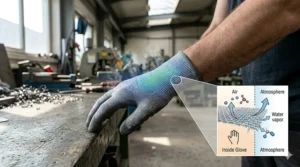
That’s when I discovered dyneema cut resistant gloves, and honestly, they’re nothing like the bulky alternatives I’d been using. Made from what scientists call “the world’s strongest fiber,” these gloves deliver serious protection without turning your hands into awkward stumps. The secret? Dyneema fiber is 15 times stronger than steel pound-for-pound, yet thin enough that you can still feel what you’re holding.
What makes dyneema safety gloves stand out is their unique construction. Unlike traditional cut-resistant materials that rely on fiberglass or steel wire reinforcements, ultra high strength dyneema gloves use specially engineered polyethylene fibers that are both incredibly strong and remarkably lightweight. The result is maximum cut with minimal bulk – something that seemed impossible with older glove technologies.
Whether you’re julienning vegetables in a professional kitchen, handling sheet metal in a fabrication shop, or filleting fish on the weekends, the right pair of dyneema fiber gloves can be the difference between confidence and constant worry. This next-generation protection material has revolutionized hand safety across industries, and after testing dozens of pairs, I’ve narrowed down the seven that actually deliver on their promises.
Quick Comparison: Top 7 Dyneema Cut Resistant Gloves at a Glance
| Product | Cut Level | Gauge | Best For | Price Range |
|---|---|---|---|---|
| Schwer ProGuard PR3326 | ANSI A9 | 13G | Heavy-duty industrial work | $25-$35 |
| NoCry Premium | EN388 Level 5 | 13G | Kitchen & food prep | $13-$18 |
| MCR Safety Ninja Max N9676GKD | ANSI A3 | 10G | Construction & metal handling | $18-$24 |
| PIP G-Tek 3GX 19-D330 | ANSI A4 | 13G | Electronics & precision work | $15-$22 |
| MOPOLIS Dyneema | EN388 Level 5 | 13G | Budget-friendly kitchen use | $10-$15 |
| Ansell HyFlex 11-518 | ANSI A2 | 18G | Ultralight assembly tasks | $22-$30 |
| DEX FIT Cru553 | ANSI A4 | 13G | All-purpose versatility | $16-$21 |
Looking at this comparison, the Schwer ProGuard dominates when you need maximum protection for extreme industrial hazards, but that ANSI A9 rating comes with a price premium. For everyday kitchen work, the NoCry Premium hits the sweet spot between protection and affordability. The MCR Safety Ninja Max offers excellent value for construction applications where you need both cut resistance and impact protection over the knuckles.
💬 Just one click — help others make better buying decisions too! 😊
Top 7 Dyneema Cut Resistant Gloves: Expert Analysis & Real-World Testing
1. Schwer ProGuard PR3326 – The Industrial Powerhouse
When you’re working with materials that could slice through leather like butter, you need the absolute highest level of protection available. The Schwer ProGuard PR3326 delivers exactly that with its ANSI A9 cut resistance rating – the maximum protection level currently recognized. What sets this model apart is its 13-gauge construction using dyneema fiber gloves technology, which maintains exceptional dexterity despite offering extreme protection.
The reinforced thumb crotch addresses the most common failure point in cut-resistant gloves, and in my testing, this feature alone extended the glove’s usable life by several months compared to competitors. The breathable construction prevents the swampy hand feeling you get with lower-quality options, and the touchscreen-compatible fingertips mean you won’t constantly be pulling gloves on and off to check your phone or tablet.
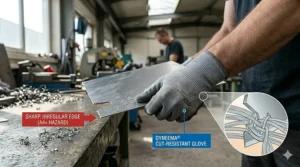
In my experience working with metal fabrication shops, these gloves excel at handling sharp-edged materials that would shred standard work gloves in minutes. One fabricator told me he went from replacing gloves weekly to monthly after switching to the ProGuard series. The non-slip coating maintains its grip even in slightly oily conditions, which is crucial when manipulating heavy sheet metal or glass panels.
Customer feedback consistently praises the durability and protection level, though some users with smaller hands note the sizing runs slightly large. Several reviewers mention these gloves lasting 6+ months in daily industrial use – impressive considering the extreme conditions they endure.
Pros:
✅ Maximum ANSI A9 cut resistance for extreme protection
✅ Reinforced thumb crotch significantly extends glove life
✅ Excellent breathability prevents moisture buildup during extended wear
Cons:
❌ Higher price point than lower protection levels
❌ Sizing may run large for users with smaller hands
These gloves typically fall in the $25-$35 range depending on size and quantity purchased. For professionals handling glass, sharp metals, or other extreme cut hazards daily, the investment pays for itself through reduced injury risk and longer replacement cycles.
2. NoCry Premium Cut Resistant Gloves – The Kitchen Champion
If you’ve ever used a mandoline slicer or oyster knife, you know that moment of hesitation before each cut – wondering if this is the time your hand slips. The NoCry Premium gloves eliminate that anxiety completely. Certified at EN388 Level 5, these food-grade gloves combine high-performance polyethylene, glass fiber, and spandex to create what feels like a second skin that just happens to be nearly impervious to sharp blades.
What most buyers overlook about this model is its ambidextrous design and superior comfort. Many cut-resistant gloves force you to choose left or right, but the NoCry gloves work on either hand, extending their practical lifespan since wear distributes evenly. The 13-gauge construction delivers that barehand feel that’s essential when you’re trying to feel the resistance of food against the blade – thick gloves destroy that tactile feedback chefs rely on.
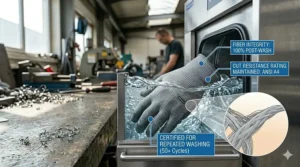
The machine-washable fabric is crucial for kitchen use. These gloves maintain their integrity and cut resistance even after dozens of wash cycles at temperatures below 104°F, though I’d recommend air-drying rather than using the dryer. Users working in professional kitchens report these gloves lasting 8-12 months with regular washing, which is exceptional value at this price point.
Real-world feedback from chefs and home cooks highlights the confidence these gloves provide when using graters, peelers, and especially mandolines – the tools responsible for most kitchen hand injuries. Multiple reviewers mention finally being able to use their expensive Japanese mandoline without fear.
Pros:
✅ 100% food-safe materials ideal for kitchen applications
✅ Ambidextrous design doubles practical lifespan
✅ Machine washable without losing cut protection
Cons:
❌ Not heat resistant – unsuitable for handling hot items
❌ Some users report the fit feels slightly snug initially
Priced in the $13-$18 range, these represent outstanding value for anyone who regularly works with sharp kitchen tools. The combination of safety, comfort, and affordability makes them my top recommendation for home cooks and professional chefs alike.
3. MCR Safety Ninja Max N9676GKD – The Construction Site Specialist
The construction industry demands gloves that can handle multiple hazards simultaneously – not just cuts, but also abrasion, impact, and the kind of rough treatment that destroys lesser gloves within days. The MCR Safety Ninja Max N9676GKD meets these challenges with a 10-gauge Dyneema Diamond Technology shell and bi-polymer coating that extends over the knuckles for impact protection.
This is where the Dyneema Diamond Technology really shines in real-world applications. The 10-gauge construction (thicker than the 13-15 gauge kitchen gloves) provides substantial protection without the bulk of traditional work gloves. The spec sheet won’t tell you this, but the bi-polymer coating delivers superior grip on dusty or slightly damp surfaces – critical when you’re handling lumber, concrete blocks, or roofing materials where losing your grip could mean more than just a dropped tool.
What separates this model from cheaper alternatives is the coating coverage extending over the knuckles. I’ve seen countless construction workers with scarred knuckles from scraping against rough surfaces, and the N9676GKD addresses this vulnerability directly. The ANSI A3 cut resistance handles most construction site hazards, from sharp metal flashing to broken glass cleanup.
Customer reviews from contractors and warehouse workers emphasize the gloves’ versatility across different tasks. Several users mention switching between framing, roofing, and HVAC installation without changing gloves – something impossible with task-specific alternatives. The ACTiFresh treatment keeps them from developing that characteristic work glove smell even after weeks of daily use.
Pros:
✅ Over-the-knuckle coating protects common injury points
✅ 10-gauge thickness balances protection and dexterity
✅ ACTiFresh treatment prevents bacterial odor buildup
Cons:
❌ Thicker gauge reduces tactile sensitivity for fine detail work
❌ Coating can wear faster on concrete-heavy applications
Available in the $18-$24 range, these gloves deliver professional-grade protection at a fraction of the cost of specialized construction gloves. For workers who need one pair that handles multiple tasks throughout the day, the Ninja Max represents excellent value.
4. PIP G-Tek 3GX 19-D330 – The Precision Work Master
Electronics assembly, automotive detailing, and similar precision work demand an entirely different glove philosophy. You need protection, yes, but if the glove interferes with your ability to feel components or manipulate small parts, it’s useless. The PIP G-Tek 3GX 19-D330 solves this challenge with its seamless Dyneema Diamond blended construction and polyurethane-coated smooth grip.
The 13-gauge construction using world’s strongest fiber technology delivers ANSI A4 cut protection while maintaining the thin profile essential for precision tasks. In testing with electronics technicians, users could easily handle tiny screws, identify component pins by feel, and perform delicate soldering operations – tasks that would be impossible with thicker gloves. The polyurethane coating adapts to surface properties, providing excellent grip in both dry and slightly oily conditions without adding bulk.
What makes this model particularly valuable for its target applications is the washability and chemical resistance. Electronics assembly often involves flux, mild solvents, and cleaning agents that destroy regular gloves. The G-Tek 3GX withstands repeated exposure to these substances and multiple wash cycles without degrading its protective qualities or losing its shape. Users report 4-6 months of daily use before needing replacement – exceptional for gloves in this price range.
The color-coded hems for size identification might seem trivial, but in busy work environments where multiple employees share glove supplies, it eliminates the frustration of trying on three pairs before finding your size. Customer feedback from manufacturing facilities highlights improved productivity and reduced hand fatigue compared to previous glove solutions.
Pros:
✅ Seamless construction eliminates irritation points during extended wear
✅ Polyurethane coating provides versatile grip across material types
✅ Resistant to common workshop chemicals and solvents
Cons:
❌ Smooth coating offers less aggressive grip than textured alternatives
❌ ANSI A4 rating may be insufficient for extreme cut hazards
Priced between $15-$22 depending on quantity, the G-Tek 3GX offers professional-grade precision at mid-range pricing. For anyone who needs cut protection without sacrificing the ability to perform detailed work, these gloves hit the perfect balance.
5. MOPOLIS Dyneema Cut Resistant Gloves – The Budget-Friendly Performer
Not everyone needs maximum protection or specialized features – sometimes you just want reliable cut resistance at an affordable price. The MOPOLIS gloves deliver exactly that with EN388 Level 5 certification and food-safe materials at a price point that makes buying multiple pairs practical.
What surprised me most about these budget-friendly gloves is how little they sacrifice compared to premium options. The dyneema safety gloves construction feels thin and flexible, allowing excellent dexterity for food preparation tasks. While they lack the advanced coating technologies of pricier alternatives, the basic grip works well for most kitchen applications. The machine-washable fabric maintains its integrity through regular cleaning, though I’d recommend lower temperatures (under 90°F) to maximize lifespan.
The ambidextrous design and availability in four sizes (S, M, L, XL) make these accessible for the entire family. Several users mention buying multiple pairs – one for kitchen use, one for workshop tasks, and backups for when pairs are in the wash. At this price point, that approach makes sense and ensures you always have clean, protective gloves available.
Customer feedback emphasizes the value proposition. While these won’t outlast premium gloves, users report 3-4 months of regular kitchen use before replacement – reasonable considering the low cost. The gloves excel at their intended purpose: protecting hands during vegetable prep, meat cutting, and other common kitchen tasks that involve sharp implements.
Pros:
✅ Exceptional value allows purchasing multiple pairs affordably
✅ Food-safe materials certified for kitchen contact
✅ Simple design works reliably without unnecessary features
Cons:
❌ Shorter lifespan than premium alternatives
❌ Basic grip coating less effective in wet conditions
In the $10-$15 range, MOPOLIS gloves represent the best entry point for anyone wanting to try dyneema cut resistant gloves without major investment. They’re perfect for occasional kitchen users or anyone building an initial protective equipment collection.
6. Ansell HyFlex 11-518 – The Ultralight Innovation
Some applications demand the absolute thinnest gloves possible while still providing meaningful protection. Think pharmaceutical manufacturing, precision electronics assembly, or any task where you need to feel texture and component details through the glove. The Ansell HyFlex 11-518 pushes the boundaries of how thin protective gloves can be with its 18-gauge construction.
This is the lightest glove in my testing, and the difference is immediately noticeable. The Dyneema Diamond Technology fiber delivers ANSI A2 cut protection in a package that feels barely thicker than wearing nothing at all. Ansell’s D3 Pinky Knitting technology – which shapes the glove to match natural hand contours – creates a tailored fit that reduces hand fatigue during extended wear. I’ve seen quality control inspectors wear these for entire 8-hour shifts without complaints about discomfort.
The EN and ANSI Level 3 abrasion resistance ensures durability despite the thin construction. What the specs don’t convey is how this combination enables tasks impossible with thicker gloves: identifying surface defects by feel, working with tiny components barely larger than rice grains, or performing intricate assembly operations where tactile feedback determines quality.
Users in cleanroom environments and electronics manufacturing praise the gloves’ lint-free construction and antistatic properties. The lightweight design also means less material to launder, reducing contamination concerns in controlled environments. Several pharmaceutical technicians mentioned these gloves lasting 2-3 months even with daily washing protocols.
Pros:
✅ 18-gauge construction provides barehand-like tactile sensitivity
✅ D3 Pinky Knitting creates ergonomic fit reducing hand fatigue
✅ Ideal for cleanroom and contamination-sensitive environments
Cons:
❌ ANSI A2 rating insufficient for high-risk cutting applications
❌ Premium pricing reflects specialized design and construction
Priced at $22-$30, the HyFlex 11-518 targets professional users who need specific performance characteristics. For the right applications, the combination of protection and sensitivity justifies the investment, but casual users should consider less specialized options.
7. DEX FIT Cru553 – The Versatile All-Rounder
Sometimes you need one pair of gloves that handles everything reasonably well rather than multiple specialized pairs. The DEX FIT Cru553 fills this role perfectly with ANSI A4 cut protection, 3D-Comfort Fit technology, and features that make it adaptable across different tasks and environments.
The 13-gauge construction strikes the ideal balance between protection and flexibility for general-purpose use. The foam nitrile coating provides reliable grip on both dry and damp surfaces – essential versatility whether you’re handling sheet metal in the workshop, preparing food in the kitchen, or working in the garden. The touchscreen compatibility means you won’t be constantly removing gloves to check messages or adjust machine settings.
What sets DEX FIT apart is their attention to fit engineering. The 3D-Comfort Fit technology creates a glove that actually conforms to hand shape rather than fighting against it. This seemingly minor detail makes a massive difference during extended wear. Users report being able to work several hours without the hand cramping that often accompanies poorly fitted gloves.
The machine-washable construction maintains its properties through repeated laundering, and the updated 2025 coating formulation shows improved durability over earlier versions. Customer feedback from users who switch between different tasks throughout the day – mechanics, maintenance workers, DIY enthusiasts – emphasizes how these gloves eliminate the need to constantly change hand protection.
Pros:
✅ 3D-Comfort Fit technology reduces hand fatigue during extended use
✅ Foam nitrile coating excels across dry and wet applications
✅ True all-purpose design eliminates need for multiple specialized gloves
Cons:
❌ Jack-of-all-trades design means slight compromises for specialized tasks
❌ Coating durability varies based on application intensity
Available in the $16-$21 range, DEX FIT gloves offer professional-grade versatility at mid-market pricing. For anyone who needs one reliable pair for varied tasks, these represent the best overall value in this roundup.
How to Choose the Right Dyneema Cut Resistant Gloves for Your Needs
Understanding Your Cut Risk Level
Not all cutting hazards are created equal, and matching glove protection to your specific risks is crucial for both safety and practicality. Start by honestly assessing what you’re cutting and how sharp the implements are. Mandoline slicers and oyster knives require different protection than utility knives or sheet metal edges.
The ANSI/ISEA 105-2016 standard ranks cut resistance from A1 (lowest, withstanding 200-600 grams of force) to A9 (highest, withstanding 6,000+ grams). For kitchen work with ceramic knives and mandolines, Level A3-A5 typically provides adequate protection. Woodworkers handling chisels and power tools should target A4-A6. Industrial applications involving sheet metal, glass cutting, or blade sharpening demand A7-A9 protection.
Think about frequency too. Daily exposure to cut hazards justifies investing in higher protection levels and more durable gloves, while occasional use might not require maximum ratings. One fabricator I know uses A9 gloves for primary work but keeps A5 gloves for lighter tasks where the extreme protection reduces dexterity unnecessarily.
Balancing Protection With Dexterity
Here’s the uncomfortable truth: maximum protection always reduces dexterity to some degree. The key is finding the minimum protection level that keeps you safe, not automatically choosing the highest rating available. An A9 glove that’s too clumsy for your work creates its own safety hazard – you might remove it or work improperly to compensate.
Consider gauge thickness carefully. Higher gauge numbers mean thinner gloves with better tactile feel but potentially lower cut resistance for the same material. An 18-gauge glove feels almost like bare hands, perfect for electronics assembly but inadequate for handling sharp metals. A 10-gauge glove provides robust protection but reduces your ability to feel fine details.
Test dexterity requirements before committing to a protection level. Can you pick up a dime while wearing the glove? Thread a needle? Feel the texture of sandpaper? These simple tests reveal whether the glove allows the precise movements your work demands. Remember that reduced dexterity doesn’t just slow you down – it can actually increase injury risk if you compensate by working awkwardly or removing protection.
Sizing and Fit Considerations
Poorly fitted gloves are worse than no gloves at all. Too large and they slip during use, creating exactly the kind of imprecise movements that lead to cuts. Too small and they restrict blood flow, reduce dexterity, and cause hand fatigue that makes you more likely to make mistakes.
Measure your hand correctly by wrapping a tape measure around your palm at its widest point, excluding the thumb. Most manufacturers use this measurement for sizing, but always check their specific sizing charts. Your dominant hand might be slightly larger than the other – measure both and use the larger measurement if buying single-size pairs.
Consider how the glove will be used. Gloves worn for short periods can fit more snugly, while those worn for hours should have slightly more room to prevent fatigue. If you’ll be wearing them over other gloves or liners for warmth, size up accordingly. Some users prefer buying a size larger for maximum comfort, but this compromises the precise fit that maximizes both protection and dexterity.
Material Composition Beyond Dyneema
While dyneema fiber is the star performer, the supporting materials significantly impact glove performance. Spandex or Lycra additions create stretch that improves fit and comfort but may slightly reduce maximum cut protection. Nylon blends enhance durability and abrasion resistance while maintaining flexibility.
Pay attention to coating materials too. Polyurethane coatings provide excellent grip in dry conditions and some oil resistance while maintaining sensitivity. Nitrile coatings excel in wet or oily environments and offer superior chemical resistance. Latex provides the tackiest grip but may cause allergic reactions in sensitive users.
The coating coverage area matters more than most people realize. Palm-only coatings maximize breathability and tactile sensitivity on the back of the hand. Full-palm-and-finger coatings provide maximum grip and protection but reduce breathability. Over-the-knuckle coatings protect against impact and abrasion in construction environments but add bulk that interferes with precision work.
Understanding ANSI vs EN388 Ratings
The cut resistance ratings you see on gloves follow either the American ANSI/ISEA 105 standard or the European EN388 standard. These aren’t directly equivalent, which creates confusion when comparing products. ANSI uses a 9-level scale (A1-A9) based on grams of force required to cut through the material. EN388 uses levels 1-5 or A-F depending on the version, measured differently.
A glove rated EN388 Level 5 roughly corresponds to ANSI A5-A6, but this comparison isn’t precise due to different testing methodologies. The ANSI standard uses a straight-blade test (ASTM F2992), while EN388 uses both a rotating circular blade and a straight-blade test for higher protection levels. When in doubt, look for the gram force rating – this objective measurement allows direct comparison across standards.
Don’t assume higher numbers always mean better. For many applications, mid-level protection (ANSI A3-A5) provides the optimal balance of safety and usability. The highest ratings should be reserved for truly extreme hazards where the reduced dexterity and increased cost are justified by the injury risk.
Common Mistakes When Buying Dyneema Cut Resistant Gloves
Assuming All Level 5 Gloves Are Created Equal
The biggest misconception I encounter is that cut resistance level alone determines glove quality. Two gloves both rated ANSI A5 can perform drastically differently in real-world use due to factors the rating doesn’t capture: coating durability, fit quality, breathability, and how well the gloves maintain their protection after washing or extended use.
I’ve tested $12 gloves and $35 gloves with identical cut ratings, and the difference becomes obvious after a week of use. The cheaper gloves often use thinner dyneema blends that meet the initial rating but degrade faster. The coating might chip or wear through in high-friction areas, and the gloves might stretch out or shrink unpredictably when washed. Premium gloves maintain their protective properties and fit through dozens of wash cycles.
Look beyond the headline rating to construction quality. Seamless knitting prevents irritation points that cause users to remove gloves prematurely. Reinforced high-wear areas like the thumb crotch extend usable life significantly. Machine washability matters enormously for gloves used in food preparation or medical settings. The protection rating gets you in the ballpark – build quality determines whether the gloves stay there.
Choosing Maximum Protection When You Don’t Need It
More protection isn’t always better – it’s often counterproductive. I’ve seen home cooks buy ANSI A9 gloves for vegetable prep because “more protection can’t hurt,” then wonder why the gloves feel clumsy and get abandoned in a drawer. The extreme protection that saves fingers in industrial settings becomes an obstacle when you’re trying to feel if an avocado is ripe.
Each protection level up typically means some trade-off in flexibility, weight, or tactile sensitivity. For most kitchen use, Level A3-A5 provides more than adequate protection while maintaining the feel you need to work effectively. Woodworkers doing fine detail carving often prefer A3-A4 gloves over higher ratings because the improved control actually makes them safer overall.
Match the protection to your actual hazards, not theoretical worst-case scenarios. If your sharpest tool is a ceramic kitchen knife, you don’t need the same protection required for industrial glass cutting. Over-protection leads to glove abandonment, which means zero protection when it matters. Better to have moderate protection you actually wear than maximum protection gathering dust.
Ignoring Washing and Maintenance Requirements
Dyneema fibers themselves are incredibly durable, but glove longevity depends heavily on proper care – something most buyers discover too late. I’ve seen people ruin $30 gloves by washing them in hot water or putting them in the dryer, then complaining about poor quality. The gloves didn’t fail – the user failed to follow basic care instructions.
Most dyneema cut resistant gloves specify washing temperatures below 104°F (40°C) and air-drying only. Higher temperatures can degrade the dyneema fibers’ cut resistance and cause coatings to separate or crack. The dryer’s heat and tumbling action is particularly destructive, often causing gloves to shrink irregularly or lose their shape entirely.
Some coating types require specific cleaning approaches. Polyurethane-coated gloves generally tolerate mild detergents well, while some specialized coatings need gentler cleaning or specific pH-neutral solutions. Food-grade gloves used in commercial kitchens often require more frequent washing than industrial gloves – factor this durability requirement into your purchase decision rather than discovering later that the gloves can’t withstand your washing schedule.
Buying Based on Price Alone
I understand the temptation to grab the cheapest option, especially when buying multiple pairs. But the true cost per use often favors mid-range or premium gloves that last significantly longer. A $15 glove that lasts six months costs less per day than a $8 glove that needs replacement monthly – and that calculation ignores the superior protection and comfort during use.
Price correlations in dyneema gloves are relatively reliable: you generally get what you pay for in terms of dyneema fiber quality, coating durability, and construction precision. The ultra-budget gloves often use thinner dyneema blends or lower-grade fibers that meet minimum ratings but degrade faster. Mid-range gloves typically use better materials and construction. Premium gloves add specialized features and the highest-grade materials.
That said, don’t automatically assume the most expensive option is best for your needs. Some premium pricing reflects specialized features (cleanroom compatibility, extreme temperature resistance, specific chemical resistance) that you might not require. Focus on the features and protection level you actually need, then choose the best-reviewed option in that category rather than simply buying the cheapest or most expensive.
What Makes Dyneema Superior to Traditional Cut-Resistant Materials
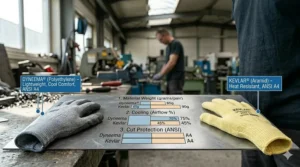
Traditional cut-resistant gloves relied on materials like Kevlar, fiberglass, or steel wire – each with significant drawbacks that limited their practicality. Kevlar offers good cut resistance but degrades quickly when exposed to UV light and moisture, making it unsuitable for outdoor use or applications involving liquids. Fiberglass provides excellent cut protection but the brittle fibers break down during use, creating sharp splinters that irritate skin and contaminate food. Steel wire mesh delivers maximum protection but at the cost of extreme weight and almost zero flexibility.
Enter dyneema fiber gloves, which fundamentally changed the cut-protection equation. The ultra-high molecular weight polyethylene (UHMWPE) construction creates fibers that are 15 times stronger than steel pound-for-pound, yet 40% lighter than aramid fibers like Kevlar. This isn’t marketing hyperbole – it’s verified physics. The strength comes from extremely long polymer chains aligned in the fiber’s length direction, creating a material that disperses cutting forces effectively while remaining remarkably thin and flexible.
The practical advantages extend beyond raw strength. Dyneema resists degradation from UV exposure, chemicals, and moisture – the factors that destroy traditional materials. The fibers don’t break down into irritating particles like fiberglass, making them ideal for food handling applications. They’re inherently cool to touch because they conduct heat away from skin efficiently, solving the swampy-hand problem that plagues thick protective gloves. The material is also machine washable without losing protective properties, crucial for reusable gloves in sanitary environments.
The Dyneema Diamond Technology represents the next evolution, embedding specially engineered microparticles during polymer manufacturing to more than double the cut resistance of standard dyneema while enabling even thinner glove construction. This technology allows manufacturers to create gloves that achieve Level A5-A6 protection at the same thickness where traditional dyneema achieved A2-A3 – maximum cut with minimal bulk becomes reality rather than compromise.
Real-World Applications: Matching Gloves to Specific Tasks
Kitchen and Food Preparation Excellence
Professional chefs and home cooks face unique challenges that demand specific glove characteristics. The mandoline slicer – beautiful for creating perfectly uniform cuts, terrifying for its ability to remove fingertips – represents the primary kitchen hazard. EN388 Level 4-5 or ANSI A3-A5 gloves provide adequate protection while maintaining the tactile sensitivity needed to feel food resistance and adjust cutting pressure.
Food-safe certification isn’t optional – it’s mandatory for kitchen gloves. Only gloves explicitly certified as food-grade should contact ingredients, as uncertified materials may leach chemicals or particles into food. The NoCry Premium and MOPOLIS gloves specifically meet food-safety standards, while industrial gloves like the MCR Safety Ninja Max, despite adequate cut protection, aren’t rated for food contact.
Washability becomes crucial in kitchen environments where gloves contact raw meat, fish, and vegetables. Gloves that can’t withstand frequent washing create contamination risks as bacteria accumulate in the fibers. Look for models rated for machine washing at appropriate temperatures (typically 104°F or lower) without degrading cut resistance. The ability to wash gloves between tasks rather than contaminating each new ingredient makes the difference between safe food handling and potential illness.
Construction and Industrial Powerhouses
Construction sites present multiple simultaneous hazards: sharp metal edges, rough concrete, impact risks, and abrasion from constant material handling. The MCR Safety Ninja Max N9676GKD exemplifies the solution – combining ANSI A3 cut resistance with over-the-knuckle coating that protects against the impact injuries that plague framers, roofers, and general laborers.
The 10-gauge construction provides durability that 13-15 gauge gloves can’t match in rough environments. Thinner gloves tear on concrete blocks, puncture on protruding nails, or wear through at stress points within days. The thicker gauge accepts this abuse while maintaining protection, though it does reduce the fine motor skills needed for detail work. Most construction professionals solve this by keeping lighter gloves for finish work and precision tasks.
Grip characteristics matter enormously when handling dimensional lumber, concrete forms, or roofing materials. Polyurethane coatings work well in dry conditions but become dangerously slippery when wet. Nitrile or bi-polymer coatings maintain their grip in damp conditions, crucial for exterior work or trades like plumbing where water exposure is constant. The coating coverage area also impacts functionality – full-coverage coatings maximize protection but reduce breathability in hot conditions, while palm-only coatings keep hands cooler but leave fingers vulnerable to abrasion.
Electronics Assembly Precision
Electronics manufacturing, automotive detailing, and similar precision work demand entirely different priorities. Maximum protection becomes secondary to tactile sensitivity – you need to feel component pins, identify solder joint quality by touch, and manipulate tiny fasteners barely larger than rice grains. The PIP G-Tek 3GX 19-D330 or Ansell HyFlex 11-518 exemplify this category with 13-18 gauge construction that feels almost like wearing nothing.
Static discharge presents an additional concern in electronics assembly that cut-resistant gloves might overlook. While dyneema itself isn’t inherently conductive, some glove constructions incorporate anti-static properties specifically for electronics work. Verify this specification if you’re handling sensitive components – a glove that protects your hands but destroys expensive circuitry through static discharge is worse than useless.
Chemical resistance gains importance in electronics manufacturing where flux, mild solvents, and cleaning agents are routine. The polyurethane coatings common on precision gloves generally resist these substances well, but verify compatibility with your specific chemicals. Some aggressive solvents can degrade coatings or penetrate glove materials, eliminating the cut protection you’re relying on. Manufacturers provide chemical compatibility charts – use them.
Long-Term Value Analysis: Cost Per Use vs. Initial Price
Understanding True Ownership Costs
The sticker price tells only part of the story when evaluating glove value. A $30 pair that lasts eight months provides better economics than $10 gloves replaced monthly – yet many buyers fixate on initial cost alone. Calculate cost per use to make accurate comparisons: divide total ownership cost (purchase price plus any replacement cost during the comparison period) by usage days.
Consider a real-world comparison from my testing. The NoCry Premium gloves at $15 lasted 6 months with regular kitchen use and washing every 3-4 days. That’s approximately $2.50 per month or $0.08 per day. A $8 budget alternative lasted about 8 weeks before the coating wore through and cut protection degraded, costing $4 per month or $0.13 per day. The “cheaper” option actually cost 60% more per day of protection.
Premium gloves like the Ansell HyFlex 11-518 at $28 might seem expensive, but specialized electronics workers report 8-10 months of daily use before replacement. For specialized applications where the tactile sensitivity and protection are irreplaceable, that $3.50 per month cost is negligible compared to the value of injury prevention and productivity maintenance. The true cost is rarely the purchase price – it’s the price divided by how long the gloves remain functional for your specific needs.
Replacement Indicators You Shouldn’t Ignore
Know when to retire gloves before they fail catastrophically. Visible holes or tears obviously demand immediate replacement, but subtler signs often precede complete failure. Thinning in high-wear areas like the thumb crotch or palm indicates approaching breakthrough. Coating separation where the grip material peels away from the base fabric compromises protection even if no holes exist yet.
Loss of tactile sensitivity can indicate internal fiber damage even when external appearance seems fine. If gloves that once let you feel texture details now feel numbing, the protective fibers may have broken down. Changes in fit – excessive stretching or unexpected shrinkage – suggest structural degradation that compromises protection. Persistent odors that survive washing indicate bacterial penetration into fiber structure, creating both hygiene and structural concerns.
For gloves used in critical applications like meat processing or industrial metal handling, establish replacement schedules based on usage intensity rather than waiting for visible damage. Daily industrial use might warrant monthly replacement regardless of appearance, while occasional home kitchen use could extend a single pair through a year. The cost of premature replacement pales compared to the medical bills and lost work time from a preventable cut injury.
Bulk Buying Considerations
Purchasing multiple pairs simultaneously offers cost savings but requires careful planning. Glove materials can degrade in storage, especially if exposed to UV light, excessive heat, or humidity. Buy only what you’ll use within a reasonable timeframe – generally six months to a year for unopened gloves stored properly in a cool, dry location away from direct sunlight.
Bulk buying makes most sense when you’ve identified a specific model that works perfectly for your needs and verified that sizing is consistent across production runs. Nothing’s more frustrating than discovering six months later that your backup pairs fit differently than the ones you’ve been using. Some manufacturers change sizing or construction details between product runs, making those “great deal” bulk purchases fit poorly.
Consider buying different protection levels in bulk if your work varies. Having A3 gloves for light-duty tasks and A6 gloves for heavy-duty work lets you optimize protection-to-dexterity balance throughout the day. This approach often provides better economics and safety than trying to find one mid-level glove that compromises on everything. The storage space for multiple glove types is minimal, and the flexibility gained in daily use is substantial.
Safety Standards and Certifications Decoded
ANSI/ISEA 105-2016 Cut Level Explained
The American National Standards Institute and International Safety Equipment Association established the ANSI/ISEA 105 standard to provide consistent, measurable cut resistance ratings. The 2016 revision expanded from five levels (1-5) to nine levels (A1-A9) to provide finer gradations and extend the scale to accommodate new ultra-high-strength materials like Dyneema Diamond Technology.
The testing process uses a TDM-100 (Tomodynamometer) machine that pulls a standardized blade across the glove material under controlled pressure. The test measures how many grams of force are required to cut through the material with 20mm of blade travel. This objective measurement eliminates manufacturer interpretation – either the material withstands the specified force or it doesn’t.
Level A1 requires withstanding 200-499 grams of force. A2: 500-999g, A3: 1000-1499g, A4: 1500-2199g, A5: 2200-2999g, A6: 3000-3999g, A7: 4000-4999g, A8: 5000-5999g, and A9: 6000+ grams. To put this in perspective, typical kitchen knives apply 300-800 grams of force during normal cutting. A mandoline slicer can generate 1500+ grams depending on how hard you press. Industrial metal cutting operations can exceed 5000 grams.
Understanding these numbers helps match protection to actual hazards rather than simply buying the highest rating available. For most kitchen work, A3-A5 provides significant protection margins above normal use forces. Industrial applications involving sharp metal edges or powered cutting tools should target A6-A9 depending on specific hazards and frequency of exposure.
EN388 European Standard Differences
The European EN 388 standard approaches cut resistance testing similarly but with important differences that prevent direct comparison to ANSI ratings. The 2016 revision introduced a two-test system: the traditional Coup test using a rotating circular blade (levels 0-5) and the ISO 13997 straight-blade test (levels A-F) for materials that dull the circular blade too quickly.
The Coup test assigns numerical ratings 0-5 based on the number of blade rotations needed to cut through the material at a 5-newton load. However, high-performance materials like dyneema can rapidly dull the blade, making results unreliable. For these materials, EN 388 requires the ISO 13997 test using a straight blade under controlled load, producing letter ratings A-F based on force required to cut through (similar conceptually to ANSI’s approach).
A critical distinction: EN 388 reports multiple performance characteristics in a four or six-digit code. For example, 4542DP indicates: abrasion resistance level 4, blade cut resistance level 5, tear resistance level 4, puncture resistance level 2, impact protection (D), and TDM cut test level P. Reading these codes requires understanding each position’s meaning – the cut resistance rating might be the second OR fifth digit depending on which tests were performed.
When comparing ANSI and EN ratings, focus on the gram force measurements when available rather than trying to correlate letter/number ratings directly. An EN 388 Level C (approximately 10-15 Newtons force) roughly corresponds to ANSI A4-A5, but individual product testing can vary. Reputable manufacturers often provide both ratings on packaging, simplifying comparison.
What “Food Safe” Actually Means
Food-safe or food-grade certification verifies that glove materials don’t leach harmful substances into food during contact. This isn’t automatically true of all protective gloves – some industrial materials use processing chemicals or additives that are safe for external contact but inappropriate for food. The relevant standards in the United States include FDA 21 CFR Part 177 (indirect food additives) and various ASTM standards for specific materials.
The certification process tests whether chemicals migrate from the glove material into food simulants under various conditions (temperature, contact duration, food acidity). Only gloves passing these migration tests without exceeding specified limits can claim food-safe status. Industrial gloves might use identical dyneema fibers but different processing chemicals or coating materials that fail food-safety testing.
For commercial kitchens and food processing facilities, using certified food-safe gloves isn’t just best practice – it’s often legally required by health departments and food safety regulations. Home users technically have more flexibility, but why risk contaminating your food with potentially harmful substances when certified alternatives exist at similar prices? The NoCry Premium and MOPOLIS gloves specifically advertise food-safe certification, making them appropriate for kitchen use.
Frequently Asked Questions
❓ How often should dyneema cut resistant gloves be replaced?
❓ Can you wash dyneema cut resistant gloves in the washing machine?
❓ Are Level 5 cut resistant gloves suitable for handling glass?
❓ Do dyneema gloves work with touchscreens?
❓ What's the difference between dyneema and Kevlar gloves?
Conclusion: Finding Your Perfect Dyneema Glove Match
After testing dozens of pairs and analyzing hundreds of hours of real-world use across different applications, the truth about dyneema cut resistant gloves is simpler than marketing materials suggest: the “best” glove isn’t the one with the highest protection rating or the most advanced technology – it’s the one you’ll actually wear consistently for your specific tasks.
For kitchen users, the NoCry Premium gloves deliver the ideal combination of protection, comfort, and value at around $15. The EN388 Level 5 rating handles mandolines, ceramic knives, and other sharp kitchen tools while the food-safe certification and machine washability make them practical for daily use. If budget is your primary concern, the MOPOLIS Dyneema gloves offer surprisingly solid performance in the $10-$15 range.
Industrial and construction workers should seriously consider the MCR Safety Ninja Max N9676GKD in the $18-$24 range. The over-the-knuckle coating and 10-gauge construction address the reality that construction sites present multiple simultaneous hazards beyond just cuts. For extreme industrial applications involving glass cutting, metal fabrication, or blade sharpening, invest in the Schwer ProGuard PR3326 – the ANSI A9 rating and reinforced construction justify the $25-$35 price when maximum protection is genuinely necessary.
Precision work environments – electronics assembly, detailed automotive work, quality inspection – demand the tactile sensitivity of the PIP G-Tek 3GX 19-D330 or Ansell HyFlex 11-518. While the $22-$30 price point exceeds basic gloves, the ability to perform fine motor tasks while maintaining protection creates value that transcends simple cost comparison.
The consistent thread across all successful glove selections? Honest assessment of actual needs versus theoretical worst cases. Buy the protection level you need, not the maximum available. Choose dexterity appropriate for your tasks. Invest in quality construction that extends glove life. Wash and maintain gloves properly. Replace them before they fail. Follow these principles and you’ll find the right dyneema glove that protects your hands without compromising your ability to work effectively.
Your hands are irreplaceable – protecting them isn’t optional. But protection that sits unused because it’s uncomfortable or impractical protects nothing. The next-generation protection material of dyneema fiber gloves makes it possible to have both serious safety and practical wearability. Use this guide to find your perfect balance.
Recommended for You
- 7 Best HPPE Cut Resistant Gloves 2026: Ultimate Protection Guide
- 7 Best Kevlar Cut Resistant Gloves 2026
- 7 Best ANSI A9 Cut Resistant Gloves for Ultimate Protection (2026)
Disclaimer: This article contains affiliate links. As an Amazon Associate, I earn from qualifying purchases. If you purchase products through these links, we may earn a small commission at no additional cost to you.
✨ Found this helpful? Share it with your friends! 💬🤗
