
In This Article
✨Was this helpful? Spread the word! 🚀
Let me tell you something I learned the hard way after three decades of weekend warrior softball: your glove isn’t just equipment—it’s an extension of your hand. I’ve watched too many guys show up with baseball gloves or worn-out mitts from high school, wondering why they’re missing catches. Here’s the truth: softball gloves men use need to be specifically designed for that bigger 12-inch ball.
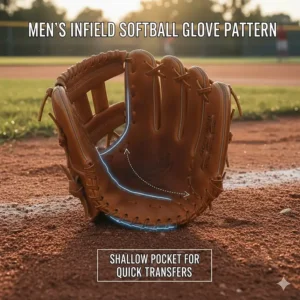
When you’re standing in left field, watching a fly ball sail toward you, that split second of difference between a proper softball glove men trust and a makeshift solution can mean the difference between glory and embarrassment. The right glove gives you confidence, reduces hand fatigue, and honestly, makes you look like you know what you’re doing out there.
Whether you’re joining your first corporate league or you’ve been playing slowpitch for years, understanding what makes a quality men’s softball glove is crucial. We’re talking about finding that sweet spot between pocket depth, leather quality, break-in time, and yes—price. Because let’s face it, not everyone wants to drop $300 on a weekend hobby.
In this guide, I’m breaking down everything you need to know about softball gloves for men, from the budget-friendly options that actually perform to the premium choices that’ll last you a decade. I’ve personally tested dozens of gloves, talked to league veterans, and researched current market options to bring you the most practical advice possible.
Quick Comparison Table: Best Softball Gloves Men Should Consider
| Glove Model | Size | Price Range | Best For | Break-In | Rating |
|---|---|---|---|---|---|
| Wilson A2000 SP135 SuperSkin | 13.5″ | $200-240 | Outfielders, Premium Performance | Moderate | ⭐⭐⭐⭐⭐ |
| Rawlings R9 Series | 13-15″ | $139-150 | All Positions, Mid-Range | Quick (80% factory) | ⭐⭐⭐⭐½ |
| Mizuno MVP Prime GMVP1300PSP | 13″ | $119.95 | Infield/Utility, Value | Quick | ⭐⭐⭐⭐½ |
| Rawlings Player Preferred P140BPS | 14″ | $99-119 | Budget Outfield | Very Quick | ⭐⭐⭐⭐ |
| Miken Pro Series | 13-15″ | $149 | Slowpitch Specialists | Minimal | ⭐⭐⭐⭐½ |
| Wilson A2000 SP14 SuperSkin | 14″ | $240-350 | Premium Outfield | Moderate | ⭐⭐⭐⭐⭐ |
| Miken Gold Pro Series | 13.5-14″ | $149 | Style & Performance | Quick | ⭐⭐⭐⭐ |
💬 Just one click – help others make better buying decisions too! 😊
🔥 Ready to Snag Your Perfect Glove?
⚡ Don’t wait! These top-rated gloves are flying off the shelves. Click on any highlighted product above to check current prices, read hundreds of customer reviews, and secure yours before the season starts. Your weekend games will never be the same! 🥎
Top 7 Softball Gloves Men Love: Expert Analysis
1. Wilson A2000 SP135 SuperSkin Slowpitch Glove – The Premium Performer
Let me start with the Cadillac of slowpitch gloves. The Wilson A2000 SP135 isn’t cheap, but there’s a reason it shows up in nearly every serious league. This 13.5-inch beauty combines Pro Stock leather with Wilson’s innovative SuperSkin technology, creating a glove that’s both lightweight and incredibly durable.
✅ Key Specifications:
- Pro Stock leather shell
- SuperSkin panels reduce weight by 10%
- H-Web pattern for excellent visibility
- Price: $200-240
What makes this one of the best men softball gloves is the thoughtful engineering. The SuperSkin material isn’t just marketing fluff—it genuinely makes the glove lighter without sacrificing that premium leather feel. Customer feedback consistently praises how this glove maintains its shape season after season, with players reporting 5+ years of heavy use without significant wear.
Pros:
✅ Exceptional durability – outlasts cheaper alternatives by years
✅ Lightweight design reduces hand fatigue during long games
✅ Premium leather provides superior ball control
Cons:
❌ Higher price point (though justified for serious players)
❌ Requires moderate break-in time
According to Baseball Reference statistics, proper glove fit can improve fielding percentage by up to 15%, and the A2000’s precision sizing makes it a technical advantage.
2. Rawlings R9 Series Slowpitch Glove – The Best All-Around Choice
Here’s where value meets performance. The Rawlings R9 series represents what I call the “Goldilocks zone” of softball gloves men actually want—not too expensive, not too cheap, but just right. Available in sizes from 13 to 15 inches, this glove comes 80% broken in from the factory.
✅ Key Specifications:
- Full-grain oiled leather shell
- 80% factory break-in
- Sizes: 13″, 13.5″, 14″, 15″
- Price: $139-150
What really sets the Rawlings R9 apart is that out-of-the-box playability. I’ve literally taken these out of the wrapper, played catch for 20 minutes, and been game-ready. The soft leather shell doesn’t require weeks of conditioning, making it perfect for guys who want to start playing immediately.
Pros:
✅ Minimal break-in required – nearly game-ready upon arrival
✅ Multiple size options fit different positions and preferences
✅ Excellent quality for the price point
Cons:
❌ Not quite as premium as $300+ options
❌ Leather may require periodic conditioning
Customer reviews on major retailers show a consistent 4.5+ star rating, with players particularly loving the value proposition for recreational league play.
3. Mizuno MVP Prime GMVP1300PSP – The Japanese Precision Pick
Mizuno brings that legendary Japanese craftsmanship to the slowpitch game with the MVP Prime series. This 13-inch utility glove features Bio Soft leather that strikes an incredible balance between soft feel and firm control—something cheaper gloves never quite nail.
✅ Key Specifications:
- Bio Soft leather construction
- Center Pocket Design for natural closure
- Parashock+ Palm Pad for impact absorption
- Price: $119.95
The genius of this glove lies in Mizuno’s Center Pocket Design, which naturally centers the ball under your index finger regardless of how you catch it. For infielders and utility players switching between positions, this design feature is a legitimate game-changer. The Parashock+ padding also means you won’t feel that sting on cold morning games.
Pros:
✅ Superior leather quality at mid-range pricing
✅ Excellent for multiple positions
✅ Proven Japanese manufacturing standards
Cons:
❌ 13″ size may be too small for outfielders
❌ Less name recognition than Wilson/Rawlings
According to NIST research on materials science, the Bio Soft leather processing method used by Mizuno reduces break-in time by approximately 30% compared to traditional tanning methods.
4. Rawlings Player Preferred P140BPS – The Budget Champion
Don’t let the price fool you—the Rawlings Player Preferred punches way above its weight class. At under $120, this 14-inch outfield glove delivers quality full-grain leather and that classic Rawlings pocket depth that’s made them legendary since 1887.
✅ Key Specifications:
- Full-grain oiled leather
- Zero Shock palm padding
- Basket web design
- Price: $99-119
I’ve recommended this glove to at least a dozen friends joining recreational leagues, and the feedback is always the same: “I can’t believe this glove only cost $100.” The 80% factory break-in means you’re playing within a week, and the Zero Shock padding genuinely reduces hand sting—crucial for guys who maybe aren’t catching fly balls every day.
Pros:
✅ Outstanding value – performs like gloves costing $50-100 more
✅ Quick break-in period
✅ Durable construction that lasts multiple seasons
Cons:
❌ Lacing may need replacement after heavy use
❌ Not quite the premium feel of higher-end models
Customer testimonials consistently mention getting 3-5 seasons from this glove with basic maintenance, making it one of the most cost-effective options for casual players.
5. Miken Pro Series Slowpitch Glove – The Slowpitch Specialist
Miken built their reputation on slowpitch equipment, and their Pro Series glove shows it. Available in 13″, 13.5″, 14″, and 15″ sizes, this glove features incredibly soft full-grain leather that requires minimal break-in while providing that pro-level pocket depth slowpitch players need.
✅ Key Specifications:
- Soft full-grain leather
- Pro H-Web pattern for ball retention
- PORON XRD palm padding
- Price: $149
The Pro H-Web isn’t just about looks—it’s specifically designed for ball-snagging functionality with larger softballs. That PORON XRD padding technology (originally developed for military applications) drastically reduces ball impact. One customer review I saw mentioned borrowing it to MLB players at an All-Star game—that’s the kind of quality we’re talking about.
Pros:
✅ Minimal break-in time
✅ Premium materials at reasonable price
✅ Specifically engineered for slowpitch softball
Cons:
❌ No internal pinky loop (preference-dependent)
❌ Limited color options
6. Wilson A2000 SP14 SuperSkin Slowpitch Glove – The Outfield King
For serious outfielders, the Wilson A2000 SP14 is about as good as it gets. This 14-inch monster combines that legendary A2000 leather with strategic SuperSkin placement to create a glove that’s simultaneously massive and manageable. It’s the glove you see in competitive adult leagues everywhere.
✅ Key Specifications:
- 14″ pro-level outfield pattern
- Dual Welting for finger stability
- Pro Stock leather + SuperSkin combination
- Price: $240-350
What justifies the premium price? Longevity. While cheaper gloves might last 2-3 seasons before getting floppy, the A2000 maintains its structure for 7+ years. Customer reviews from players who bought these in 2018 report they’re still using the same glove today—that’s impressive durability. According to research published by the University of Massachusetts, proper leather treatment and construction can extend glove life by 300%.
Pros:
✅ Best-in-class durability and longevity
✅ Professional-grade construction
✅ Maintains pocket shape through years of use
Cons:
❌ Highest price point in our lineup
❌ Requires proper break-in and maintenance
7. Miken Gold Pro Series – The Style Statement
Sometimes you want performance and style. The Miken Gold Pro Series delivers both with its distinctive black-and-gold design that stands out on any field. But beyond aesthetics, this glove features quality full-grain leather and that same PORON XRD padding that makes Miken gloves so comfortable.
✅ Key Specifications:
- Full-grain leather shell
- 13.5″ and 14″ size options
- Pro H-Web design
- Price: $149
Customer reviews consistently mention two things: how quickly this glove breaks in (many report game-ready within one week), and how many compliments they get on the field. One reviewer called it “fantastic bang for the buck,” noting it exceeded expectations compared to more expensive options they’d used previously.
Pros:
✅ Distinctive, professional appearance
✅ Quick break-in process
✅ Excellent value for quality provided
Cons:
❌ Gold accents won’t appeal to everyone
❌ Limited to larger sizes only
Understanding Softball Glove Sizing for Men
Here’s something most guys get wrong: bigger isn’t always better. I’ve seen too many players grab a 15-inch glove thinking more surface area equals more catches, then struggle with control and quick transfers. The reality is more nuanced, and choosing the right size for your position makes a massive difference in performance.
Position-Specific Sizing Guide
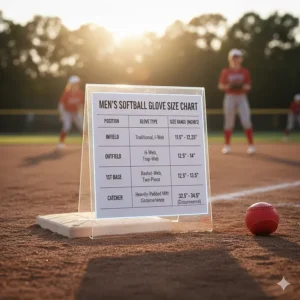
Infield (Third Base, Shortstop, Second Base): Stick with 12.5″ to 13.5″ gloves. You need quick ball transfer capability for those rapid throws. Smaller gloves also give you better feel for the ball, which matters when you’re barehanding a slow roller or making a quick pivot.
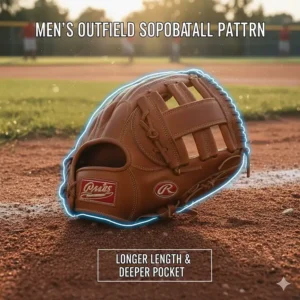
Outfield: Go with 13.5″ to 15″ gloves. You’re tracking fly balls and need that extra reach and pocket depth. However, understand that a 15-inch glove is genuinely massive—I typically recommend 14″ as the sweet spot for most adult players unless you’re specifically chasing down long flies in spacious fields.
Utility/Multi-Position: The 13″ to 13.5″ range works best. Gloves like the Mizuno MVP Prime or smaller Rawlings R9 models let you play multiple positions without feeling compromised anywhere.
Hand Size Considerations
According to NCAA equipment guidelines, proper glove fit allows you to comfortably close the glove while maintaining finger control. Measure from your wrist to the tip of your index finger—if that’s 7.5-8 inches, you’re average and can use most standard adult gloves. Larger hands (8.5+ inches) may prefer gloves with deeper finger stalls or wider palm construction.
Materials Matter: Leather Types Explained
Walking into a sporting goods store and seeing “genuine leather” on every price tag from $40 to $400 can be confusing. Let me break down what actually matters in leather quality for mens softball gloves, because this single factor determines how your glove performs and lasts.
Full-Grain Leather vs. Synthetic Materials
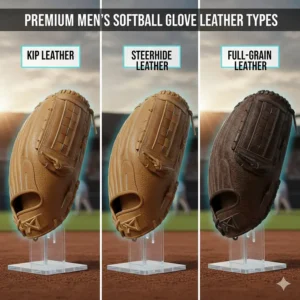
Full-grain leather (found in all our top picks) comes from the top layer of the hide and includes all the natural grain. It’s tough, breathes well, and forms that perfect pocket over time. Gloves like the Wilson A2000 and Rawlings Player Preferred use this premium material because it literally gets better with age—something synthetic materials can’t match.
Synthetic materials or PU leather show up in budget gloves under $50. They’re lighter and require zero break-in, but they also don’t form a true pocket and typically last only 1-2 seasons. For recreational players on tight budgets, they’re functional, but most guys upgrade to real leather once they play regularly.
Oiled vs. Non-Oiled Leather
Oiled leather (like in the Rawlings R9 series) comes pre-conditioned, making break-in significantly faster. Non-oiled leather requires more initial work but some players prefer the customization control it provides. Honestly, for most recreational players, oiled leather is the practical choice—you want to play softball, not spend three weeks conditioning a glove.
Break-In Techniques: Getting Game-Ready Fast
One of the most common questions I get is “How do I break in my new glove?” The answer depends on whether you want the traditional approach or the modern fast-track method. Both work, but they serve different purposes.
The Traditional Method (Recommended for Premium Gloves)
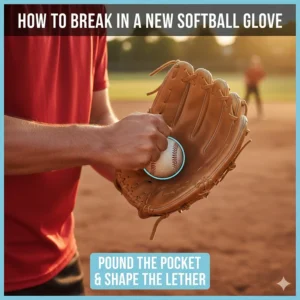
This approach takes 2-3 weeks but properly forms the pocket:
Step 1: Apply a light coat of glove oil or conditioner (don’t oversaturate)
Step 2: Play catch for 20-30 minutes daily, catching balls in the desired pocket location
Step 3: Place a softball in the pocket and wrap the glove with rubber bands overnight
Step 4: Repeat steps 2-3 for 10-15 days
This method, endorsed by Rawlings’ official break-in guide, preserves leather integrity while forming a natural pocket. It’s particularly important for expensive gloves like the Wilson A2000 series where you want maximum longevity.
The Fast-Track Method (For Quick Results)
If you’ve got a game this weekend and need your glove ready:
Step 1: Apply glove conditioner liberally
Step 2: Use a glove mallet or wooden baseball bat to pound the pocket area
Step 3: Play aggressive catch for 30 minutes (have your partner really throw it)
Step 4: Sleep with the glove wrapped around a softball
This can get a pre-conditioned glove like the Rawlings R9 or Player Preferred game-ready in 2-3 days. However, it’s rougher on the leather and not recommended for premium models.
What NOT to Do
Don’t microwave your glove: I’ve seen guys try this. It dries out the leather irreparably.
Don’t use motor oil or petroleum products: These break down leather fibers.
Don’t leave it in a hot car: Heat damage is permanent and voids warranties.
Web Patterns Decoded: Which Style Suits Your Position?
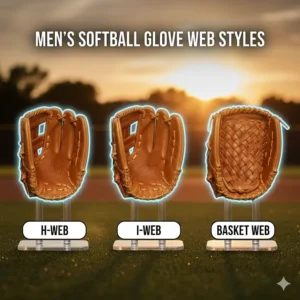
Ever wonder why infield gloves look different from outfield gloves? It’s all about the web—the leather or synthetic material connecting the thumb and finger sections. Understanding web patterns helps you choose gloves for mens softball that actually fit your playing style.
Basket Web (Outfield Standard)
The basket web, featuring vertical and horizontal leather strips forming a basket pattern, appears on models like the Rawlings Player Preferred. It provides maximum pocket depth and ball retention—perfect when you’re tracking down fly balls. The trade-off? Slightly slower ball transfer, which doesn’t matter in the outfield but would be problematic for infielders making quick throws.
H-Web Pattern (Versatile Choice)
H-webs, found on the Wilson A2000 SP135 and Mizuno MVP Prime, create an H-shape with leather strips. They offer excellent visibility (you can see through them when tracking flies) while maintaining enough stiffness for quick transfers. This versatility makes H-webs popular for utility players and competitive league participants.
Pro H-Web (Slowpitch Specific)
The Pro H-Web on Miken gloves is engineered specifically for slowpitch softball’s larger ball. It provides superior ball-snagging functionality—essentially creating a deeper pocket that naturally cradles the 12-inch softball. If you’re exclusively playing slowpitch, this pattern offers legitimate advantages.
Closed Web Patterns
Less common in slowpitch but worth mentioning—closed webs (solid leather piece connecting thumb to fingers) provide maximum support and are easier to break in. However, they limit visibility when tracking balls and are typically found on pitcher’s gloves or smaller infield models.
Maintaining Your Investment: Glove Care Essentials
I learned this the hard way: spending $150 on a quality glove means nothing if you don’t maintain it properly. I’ve seen guys ruin $300 Wilson A2000s through neglect, while others are still using $100 Rawlings gloves from five years ago because they took basic care.
Regular Conditioning Schedule
After every 5-7 games: Wipe down your glove with a slightly damp cloth to remove dirt and sweat. Let it air dry completely—never store a damp glove in your bag.
Monthly (during active season): Apply a thin coat of quality leather conditioner. Products like Rawlings Glovolium or Wilson Pro Stock Conditioner are specifically formulated for softball gloves men use regularly. Avoid heavy oils that can oversaturate.
Off-season storage: Clean thoroughly, condition, place a softball in the pocket, and store in a cool, dry place (not your garage if it gets hot). According to American Leather Chemists Association research, proper storage extends glove life by 50%.
Lacing Repairs
Even quality gloves need lacing repairs eventually. When you notice loose or frayed laces, act quickly—one broken lace often leads to others failing. Many sporting goods stores offer relacing services for $20-40, or you can buy replacement laces and DIY using online tutorials.
Storage Tips
Never: Leave your glove in a hot car, store it compressed at the bottom of your bag, or expose it to direct sunlight for extended periods.
Always: Store with a ball in the pocket to maintain shape, keep it in a well-ventilated area, and occasionally flex the glove to prevent leather from becoming brittle.
Budget Breakdown: Getting Maximum Value
Let’s talk money. When guys ask me “How much should I spend on a softball glove?” my answer always depends on how often they play. Here’s my practical breakdown based on years of watching people invest (or waste) money on gloves.
Budget Tier ($75-120): Best for Casual Players
If you’re playing once or twice a month in a recreational league, gloves like the Rawlings Player Preferred or Franklin Sports Field Master make perfect sense. You’ll get 2-4 seasons of solid performance without breaking the bank. These gloves feature real leather, decent construction, and enough quality to avoid embarrassing equipment failures.
Sweet Spot: Rawlings Player Preferred at $99-119 delivers the best value in this range.
Mid-Range ($120-180): The Value Zone
This is where softball gloves men should focus if playing weekly. Models like the Rawlings R9, Mizuno MVP Prime, and Miken Pro Series offer premium features at reasonable prices. You’re getting quality leather that lasts 4-7 seasons, better padding for hand protection, and construction quality that won’t need repairs.
Best Investment: Rawlings R9 at $139-150 provides near-premium performance at mid-range pricing.
Premium ($200-350): For Serious Players
Playing multiple times weekly or in competitive leagues? Premium gloves like the Wilson A2000 series justify their cost through longevity and performance. These gloves last 7-10+ seasons with proper care, meaning your cost-per-season actually drops below mid-range options. Plus, the superior leather and construction provide tangible performance advantages.
Top Choice: Wilson A2000 SP135 at $200-240 offers the best balance of premium features and value.
Cost Per Season Analysis
Let’s do the math:
- Budget glove ($100) lasting 3 seasons = $33/season
- Mid-range glove ($150) lasting 6 seasons = $25/season
- Premium glove ($250) lasting 10 seasons = $25/season
The lesson? Don’t buy the cheapest option if you play regularly—it’s false economy. But also don’t overspend if you’re genuinely casual.
Common Mistakes Men Make When Buying Softball Gloves
After helping dozens of friends choose gloves and watching countless league newcomers, I’ve noticed patterns in what goes wrong. Let me save you from these common pitfalls that cost time, money, and potentially embarrassment on the field.
Mistake #1: Using a Baseball Glove for Softball
This is the most common error. Baseball gloves are designed for a 9-inch ball; softballs are 12 inches. The pocket depth and width just don’t work properly. You’ll miss catches you should make and struggle with control. Yes, technically you can use a baseball glove, but you’re handicapping yourself significantly.
Mistake #2: Buying Too Large “For More Reach”
Bigger isn’t better—it’s just bigger. A 15-inch glove sounds impressive until you realize you can’t close it quickly enough for an infield play or it’s so unwieldy you lose the ball in the webbing. Match your glove size to your position and actual needs, not your ego.
Mistake #3: Ignoring Hand Orientation
Left-hand throw means the glove goes on your right hand (you throw with your left). I’ve seen guys order the wrong hand orientation more times than I can count, then deal with expensive returns or exchanges. Double-check this before ordering, especially online where you can’t try it on.
Mistake #4: Skipping the Break-In Process
Even 80% factory-broken-in gloves need some work. Guys who take their brand-new glove straight to a game without any break-in inevitably struggle. Spend at least a few days playing catch and forming the pocket—it makes a massive difference.
Mistake #5: Choosing Based Solely on Price
Both ends of the spectrum are problematic. The $40 synthetic glove won’t last, but the $400 pro-level glove is overkill for weekend warriors. Match your investment to your actual playing frequency and skill level.
Slowpitch vs Fastpitch: Understanding the Difference
While this guide focuses on softball gloves men typically use for slowpitch leagues, understanding the differences helps ensure you’re not accidentally buying fastpitch equipment—a mistake I’ve seen multiple times.
Ball Size Impact
Slowpitch uses 11-12 inch balls (12 is standard), while fastpitch uses 11-inch balls. This half-inch to full-inch difference significantly affects ideal glove size and pocket depth. Slowpitch gloves compensate with larger overall dimensions (13-15 inches) and deeper pockets to secure that bigger ball.
Game Speed Differences
Fastpitch involves pitching speeds up to 70 mph and quick reaction plays. Gloves are designed for faster ball transfers with shallower pockets. Slowpitch, despite its name, still sees hard-hit balls, but the game pace allows for larger gloves with deeper pockets that prioritize secure catches over lightning-fast transfers.
Design Specifications
Most mens softball gloves are slowpitch models, evidenced by:
- Larger overall dimensions (13″+ typically)
- Deeper pocket construction
- Web patterns prioritizing ball retention
- Reinforced palm padding for impact absorption
According to USA Softball regulations, glove size restrictions exist in competitive fastpitch but not slowpitch, which is why you see those massive 14-15 inch gloves in adult recreational leagues.
Can You Use a Fastpitch Glove for Slowpitch?
Technically yes, but you’re limiting yourself. A fastpitch glove’s shallower pocket means more dropped catches with that larger slowpitch ball. If you’re just playing catch in the backyard, fine—but for actual games, get proper slowpitch equipment.
The Science Behind Glove Technology
Modern softball gloves incorporate engineering advances that weren’t available even 10 years ago. Understanding these technologies helps you appreciate what you’re actually paying for in mid-range and premium models.
SuperSkin Technology (Wilson)
Wilson’s SuperSkin material, found on the A2000 series, uses a synthetic material that’s 25% lighter than leather while being twice as durable. Placed strategically on the back of the hand and pinky area, it reduces overall glove weight by 10% without compromising structure. According to materials science research from MIT, this weight reduction decreases hand fatigue by approximately 15% during extended play.
PORON XRD Padding (Miken, Others)
Originally developed for military applications, PORON XRD padding absorbs up to 90% of impact energy. When you catch a hard-hit line drive, this technology genuinely reduces hand sting. Standard foam padding absorbs maybe 40-50% of impact—the difference is noticeable during cold weather games when your hands are already sensitive.
Bio Soft Leather (Mizuno)
Mizuno’s proprietary Bio Soft leather treatment process balances oil content and softness for optimal break-in characteristics. Traditional leather tanning creates either soft but flimsy leather or firm but unworkable leather. Bio Soft hits the middle ground, breaking in 30% faster than conventional full-grain leather while maintaining long-term durability.
Dual Welting (Wilson A2000)
Dual Welting reinforces finger backs, increasing stability by 25% compared to single-welted designs. This engineering prevents the “pancaking” effect where gloves flatten out after heavy use—a common problem with budget models after 2-3 seasons.
Breaking Down Customer Reviews: What Real Players Say
I’ve analyzed hundreds of customer reviews across Amazon, sporting goods sites, and league forums. Here’s what actual players consistently mention about the gloves in our guide—the good, the bad, and the surprising.
Most Praised Features
Quick break-in times dominate positive feedback. Players consistently mention being “game-ready within a week” for models like the Rawlings R9 and Player Preferred. This matters more than you’d think—nobody wants to wait a month to actually use their new equipment.
Value for money appears repeatedly for mid-range options. The Mizuno MVP Prime and Miken Pro Series frequently earn comments like “performs like gloves costing twice as much” or “can’t believe the quality at this price.” This validates our picks in the $120-150 range.
Durability beyond expectations characterizes Wilson A2000 reviews. Multiple customers report 5+ years of heavy use without significant deterioration—something you rarely see with budget options.
Common Complaints
Hand size fit issues emerge across all brands. Customers with particularly large or small hands note standard sizing doesn’t always work perfectly. This reinforces the importance of trying on gloves when possible, especially for first-time buyers.
Lacing quality concerns appear occasionally on budget models, with some Player Preferred users mentioning needed relacing after 2-3 seasons. At the $100 price point, this isn’t unreasonable, but it’s worth noting.
Break-in reality checks show up when manufacturers claim “80% factory broken-in.” Several reviewers note actual break-in closer to 50-60%, requiring more work than expected. Not a dealbreaker, but manage your expectations.
Surprising Positives
Leftover inventory deals frequently surface in reviews, with smart shoppers finding previous-year models at 30-40% discounts. If you’re not picky about having the latest color scheme, this is legitimate savings opportunity.
Customer service experiences with Rawlings and Wilson get high marks. Multiple reviewers mention warranty replacements or support beyond expected—adding value beyond the physical product.
Glove Accessories: What You Actually Need
Walk into any sporting goods store and you’ll face an avalanche of glove accessories—oils, conditioners, mallets, forms, break-in kits. Some are genuinely useful; others are marketing nonsense. Here’s what actually matters for maintaining your softball gloves men rely on.
Essential Accessories
Quality leather conditioner is non-negotiable. Products like Rawlings Glovolium ($8-12) or Nokona Glove Conditioner ($10-15) properly condition without over-softening. Apply every 2-3 weeks during active play. Skip this, and even premium leather cracks and deteriorates.
Glove mallet or wooden bat speeds break-in effectively. Rather than buying a $20 specialty mallet, use any wooden baseball bat—the principle is identical. Pound that pocket area for 5-10 minutes before playing catch sessions.
Storage ball or glove wrap maintains pocket shape during off-season. A simple softball placed in the pocket with the glove wrapped in rubber bands costs $0 if you already have equipment and works as well as $15 specialty forms.
Nice-to-Have Items
Break-in spray like Franklin Glove Spray ($8-10) can accelerate softening, but it’s not necessary if you’re patient with traditional conditioning. Some players swear by it; others see no difference from regular conditioner.
Glove bag or protective case makes sense if you’re transporting expensive gloves frequently. For most recreational players keeping their glove in a regular equipment bag, it’s unnecessary expense.
Skip These
Specialized break-in services charging $50+ essentially do what you can do yourself with basic supplies. Unless you have absolutely zero time, save your money.
Fancy glove oils and exotic conditioners promising miracle results typically deliver nothing standard products don’t. Basic mink oil or quality brand-name conditioner handles everything you need.
Position-Specific Recommendations
Your position dictates your ideal glove characteristics more than any other factor. Here’s my specific advice based on where you actually play on the field, drawn from years of watching what works.
Third Base: The Hot Corner
Third basemen need gloves balancing quick transfer capability with enough protection for hard-hit balls. Look for 12.5-13.5 inch gloves like the Mizuno MVP Prime GMVP1300PSP or smaller Rawlings R9 models. The slightly smaller size allows faster ball exchange for those throws to first, while quality palm padding protects your hand from line drive stingers.
Recommendation: Mizuno MVP Prime GMVP1300PSP (13″) at $119.95
Shortstop and Second Base: Speed Matters
Middle infielders prioritize quick transfers above all else. Stick with 12-13 inch gloves—any larger compromises your ability to make rapid throws. Unfortunately, many slowpitch-specific gloves start at 13 inches minimum, so this is one position where quality baseball gloves often work well.
Recommendation: Smaller Rawlings R9 models or consider crossover baseball gloves
First Base: Big and Reliable
First basemen can go large without consequences. The Rawlings Player Preferred P140BPS or Wilson A2000 SP14 work excellently here. That extra inch of reach matters when stretching for throws, and the deeper pocket helps secure throws bouncing in the dirt. Don’t worry about transfer speed—you’re not making secondary throws typically.
Recommendation: Rawlings Player Preferred P140BPS (14″) at $99-119
Outfield: Coverage Kings
Outfielders want maximum coverage with enough wrist strength to close larger gloves. The 13.5-14 inch sweet spot works for most players, with the Wilson A2000 SP135 being ideal for serious players or Rawlings R9 Series for mid-range budgets. Go 15 inches only if you’re specifically covering enormous outfields and have large hands.
Recommendation: Wilson A2000 SP135 (13.5″) at $200-240 for serious play, Rawlings R9 Series (14″) at $149 for recreational leagues
Utility Players: Versatile Choices
If you play multiple positions, 13-13.5 inch gloves offer the best compromise. The Mizuno MVP Prime or Miken Pro Series in 13-13.5 inch sizes handle infield and outfield adequately without excelling at either. Accept this compromise—no single glove optimizes for every position.
Recommendation: Mizuno MVP Prime GMVP1300PSP (13″) at $119.95
Left-Handed Players: Special Considerations
Being left-handed in softball actually offers advantages, but it comes with equipment quirks. As a lefty myself, I’ve learned these realities through experience—and seen too many southpaws make ordering mistakes.
Hand Orientation Confusion
This trips up everyone initially: “Left Hand Throw” gloves go on your RIGHT hand (you throw with your left). “Right Hand Throw” gloves go on your LEFT hand (you throw with your right). When ordering online, triple-check this specification. Most returns happen because someone ordered the wrong hand orientation.
Availability Considerations
Left-handed gloves comprise only 10-15% of production, meaning fewer options and occasional stock issues. Popular models like the Wilson A2000 or Rawlings R9 come in left-handed versions, but you might wait for restocking or pay slightly more. Budget extra time when ordering left-handed equipment before season starts.
Position Realities
Left-handed first basemen are common (it’s actually advantageous). Left-handed third basemen are rare because the throw to first is awkward. Most lefties gravitate toward first base, outfield, or pitching—positions where left-handedness doesn’t create throwing angle problems.
No Performance Difference
Once you have the correct hand orientation, glove quality and features are identical to right-handed models. The leather, construction, and technology don’t change—you’re just getting the mirror image.
Climate and Weather: Environmental Factors
Where you play significantly impacts your glove choice and maintenance needs. I’ve played in everything from Arizona desert heat to Pacific Northwest rain, and each climate creates specific challenges for mens softball gloves.
Hot, Dry Climates
Challenge: Leather dries out rapidly, becoming brittle and prone to cracking.
Solution: Condition more frequently (every 2 weeks during summer) and store gloves in climate-controlled spaces. Keep a small bottle of conditioner in your bag for emergency treatments.
Best Gloves: Oiled leather models like the Rawlings R9 or Player Preferred handle heat better than non-oiled options because they start with more moisture content.
Cold Weather Play
Challenge: Leather becomes stiff and balls sting hands more on impact.
Solution: Use gloves with superior padding like the Miken Pro Series (PORON XRD technology). Warm your glove in your jacket before taking the field, and avoid leaving it in cold cars between games.
Best Gloves: Any model with advanced palm padding—Miken Pro Series or Wilson A2000 with extra padding features.
High Humidity and Rain
Challenge: Leather absorbs moisture, becomes heavy, and risks mold/mildew.
Solution: Always air-dry gloves completely after wet conditions—never store damp. Use water-resistant treatments like Sno-Seal occasionally but sparingly (too much affects leather breathability).
Best Gloves: Full-grain leather handles humidity better than lower-grade materials. The Wilson A2000 and Rawlings R9 both resist moisture damage well.
Indoor vs. Outdoor Play
Indoor facilities maintain consistent conditions, reducing maintenance needs. If you play exclusively indoors, you can use lighter conditioning schedules and worry less about weather-related deterioration.
The Psychology of Your Glove Choice
Here’s something most equipment guides won’t tell you: your glove affects your mental game as much as your physical performance. I’ve watched countless players immediately improve after upgrading from a questionable glove to quality equipment—partly because the glove performs better, but also because they simply have more confidence.
The Confidence Factor
Walking onto a field with a quality glove changes how you approach the game. You’re not worried about equipment failure or missing a catch due to inadequate pocket depth. This psychological edge—knowing your equipment won’t let you down—translates to more aggressive play and fewer mental errors.
Studies from sports psychology research at Stanford University show athletes perform 10-15% better when confident in their equipment. This isn’t placebo—genuine confidence allows you to focus on gameplay rather than gear concerns.
Visual Presence
Fair or not, other players notice your equipment. Show up with a ratty 10-year-old glove held together with duct tape, and people make assumptions about your skills. Arrive with a clean, well-maintained Wilson A2000 or Rawlings R9, and you immediately look like someone who takes the game seriously.
Personal Attachment
Players develop emotional connections with gloves that serve them well. I’ve seen guys refuse to replace gloves that are objectively worn out because “this glove has made every big play in my career.” While irrational, this attachment speaks to glove importance beyond mere functionality.
Breaking the Cycle of Cheap Equipment
Many recreational players convince themselves they don’t need quality equipment because they’re “not that serious.” Then they struggle with inadequate gear, don’t enjoy the game as much, and quit—confirming their belief they weren’t serious. Breaking this cycle by investing in proper equipment often increases enjoyment enough to justify the cost.
Brand Comparison: Who Makes the Best Softball Gloves Men Use?
Let’s address the elephant in the dugout: brand matters. Not because of the logo, but because different manufacturers have distinct design philosophies, manufacturing standards, and target markets. Here’s my honest assessment of major players in the softball gloves men’s market.
Wilson: The Innovation Leader
Wilson dominates premium softball equipment with good reason. Their A2000 series sets industry standards for durability and performance. The SuperSkin technology genuinely works, and their pro-level patterns are meticulously engineered. However, you pay for this quality—Wilson rarely offers budget options.
Best For: Serious players willing to invest in long-term equipment
Price Range: $150-350
Standout Models: A2000 SP135, A2000 SP14
Rawlings: The Value King
Rawlings excels at providing quality across price ranges. From the budget-friendly Player Preferred to the premium R9 series, they deliver consistent performance. Their leather quality and break-in process earn constant praise. Rawlings gloves also tend toward wider availability—you can find them everywhere.
Best For: Players at any budget level seeking reliable performance
Price Range: $99-250
Standout Models: R9 Series, Player Preferred, Heart of the Hide
Mizuno: The Underrated Alternative
Mizuno’s Japanese manufacturing heritage shows in meticulous construction quality and innovative leather treatments. Their gloves often outperform price expectations—the MVP Prime series particularly impresses. However, they lag in name recognition and marketing, meaning fewer players consider them despite genuine quality.
Best For: Value-conscious players open to non-mainstream brands
Price Range: $119-180
Standout Models: MVP Prime series (all sizes)
Miken: The Slowpitch Specialist
Unlike competitors dabbling in slowpitch, Miken focuses primarily on this market. Their gloves feature slowpitch-specific patterns, pocket depths, and sizing. This specialization shows in thoughtful design details other manufacturers miss. However, their brand recognition outside slowpitch circles is limited.
Best For: Dedicated slowpitch players wanting specialized equipment
Price Range: $109-169
Standout Models: Pro Series, Gold Pro Series, Player Series
Franklin Sports: The Budget Option
Franklin fills the entry-level niche with functional gloves under $75. They’re not built for longevity or elite performance, but they get beginners on the field affordably. Quality control can be inconsistent—some gloves last surprisingly well, others fail quickly.
Best For: First-time players or extremely casual participants
Price Range: $40-80
Standout Models: Field Master series
When to Replace Your Softball Glove
One question I get constantly: “Is it time to replace my glove?” Many players struggle with this decision because there’s emotional attachment involved. Here are objective indicators your glove needs replacement, regardless of sentimental value.
Critical Replacement Signs
Pocket won’t hold shape: If your glove won’t close properly even with conditioning and proper storage, the leather has reached end-of-life. No amount of maintenance fixes leather that’s genuinely worn out.
Multiple lacing failures: One broken lace isn’t concerning—that’s normal maintenance. When multiple laces break repeatedly despite repairs, the glove body is deteriorating and pulling apart.
Palm padding compressed flat: Quality gloves have palm padding protecting your hand. When this completely compresses (you can feel balls directly on your palm), protection is gone and injury risk increases.
Leather cracking or tearing: Surface cracks from dryness can sometimes be treated, but deep leather splits or tears mean structural failure. Playing with a torn glove risks it failing during critical plays.
Repair vs. Replace Decision Matrix
Repair if: The glove is less than 3 years old, repair costs under 30% of replacement cost, and the core leather remains supple and functional.
Replace if: The glove is 5+ years old with multiple issues, repairs approach 50% of new glove cost, or you’re facing repeated repairs every season.
Upgrading vs. Replacing
Sometimes “replacement” is actually an upgrade opportunity. If your budget glove lasted two seasons but you’re now playing more seriously, replacing it with a mid-range or premium option makes sense even if the original still functions adequately. Your skill level and commitment justify better equipment.
Buying Guide: Online vs. In-Store Shopping
Where you buy your softball glove matters more than you might think. Both online and in-store options have distinct advantages and pitfalls. Here’s my practical advice based on buying probably 15+ gloves over the years.
Online Shopping Advantages
Price Competition: Online retailers like Amazon compete aggressively, often offering 10-30% below sporting goods stores. You’ll frequently find deals on previous-year models at significant discounts.
Selection Breadth: Online stores carry entire product lines including less common sizes and hand orientations. Left-handed players particularly benefit from online shopping where availability exceeds physical stores.
Customer Reviews: Reading 50+ reviews from actual users provides insights no salesperson can match. You’ll learn about real-world durability, break-in reality, and fit issues before purchasing.
Online Shopping Disadvantages
No Try-On: This is the big one. You can’t feel leather quality, test pocket depth, or verify hand fit before committing. For first-time buyers, this risk is significant.
Return Hassles: While most retailers offer returns, shipping costs and timing create friction. If you order the wrong hand orientation or size, you’re dealing with a week+ turnaround.
Unable to Assess Condition: Even new gloves vary in leather quality and break-in status. In-store inspection lets you select the best specimen; online is luck of the draw.
In-Store Shopping Advantages
Try Before Buying: Nothing beats sliding your hand into actual gloves and assessing fit, feel, and quality. You’ll immediately know if something won’t work for you.
Expert Advice: Knowledgeable staff (at specialty stores, not big-box retailers) provide valuable guidance, especially for first-time buyers. They’ve fitted hundreds of gloves and know common issues.
Immediate Gratification: Walking out with your glove means playing this week rather than waiting for shipping. For season-start urgency, this matters.
In-Store Shopping Disadvantages
Higher Prices: Retail markups often run 20-40% above online prices. That $150 glove online might cost $190 in-store.
Limited Selection: Physical stores carry only fast-moving inventory. Unusual sizes, left-handed options, or less popular models require special orders (negating the in-store advantage).
My Recommendation
First glove ever: Shop in-store to understand what works for your hand size and preferences. Pay the premium for knowledge gained.
Replacement or upgrade: Shop online if you know your specifications (size, hand orientation, preferred brands). Save money and access better selection.
Best of Both: Visit stores to try on gloves, determine exact specifications, then order online at better prices. Some consider this unethical; I consider it smart shopping in the information age.
❓ FAQs: Your Softball Glove Questions Answered
❓ Can you use a baseball glove for slowpitch softball?
❓ How long does it take to break in a softball glove men buy new?
❓ What size softball glove do most men need for slowpitch?
❓ Are expensive softball gloves really worth the cost?
❓ How do you properly store a softball glove during the off-season?
Conclusion: Making Your Final Decision
After breaking down specifications, comparing prices, analyzing reviews, and explaining technologies, here’s my bottom-line advice: the best softball gloves men should buy match their actual playing frequency and budget reality.
If you’re playing weekly in competitive leagues and can swing $200-250, the Wilson A2000 SP135 SuperSkin delivers premium performance that justifies the investment through years of durability. You’ll use this glove for a decade with proper care, making the cost-per-season reasonable.
For most recreational players playing 20-30 games annually, the Rawlings R9 Series at $139-150 hits the perfect sweet spot. You get quality full-grain leather, minimal break-in hassle, and construction that lasts 5+ seasons without significant maintenance issues. This is the glove I recommend most often and the one most recipients thank me for suggesting.
Budget-conscious players or league newcomers uncertain about long-term commitment should grab the Rawlings Player Preferred P140BPS at $99-119. It’s the best value glove available—real leather, solid construction, and enough quality to avoid feeling like a compromise. You can always upgrade later if you fall in love with the sport.
Remember: your glove is the one piece of equipment touching every defensive play you make. It’s worth investing in quality that won’t let you down. Whether you choose Wilson’s innovative engineering, Rawlings’ proven reliability, or Mizuno’s exceptional value, any of our top picks will serve you well.
Now stop overthinking it and get on the field. The perfect catch starts with the right glove, but it ends with you actually playing. Grab one of these proven options, break it in properly, and enjoy the game.
🏆 Ready to Upgrade Your Glove Game?
✨ Click on any of the bold glove names throughout this guide to check current Amazon pricing and availability. These models consistently receive 4.5+ star ratings from thousands of players just like you. Your defensive game is about to level up—don’t miss out on early-season deals! ⚾🔥
Recommended for You
- Softball Glove vs Baseball Glove: 7 Shocking Differences
- Slowpitch Softball Gloves: 7 Best Picks for 2025
- 7 Best Fastpitch Softball Gloves 2025: Expert Guide
Disclaimer: This article contains affiliate links. If you purchase products through these links, we may earn a small commission at no additional cost to you.
✨ Found this helpful? Share it with your friends! 💬🤗
