
In This Article
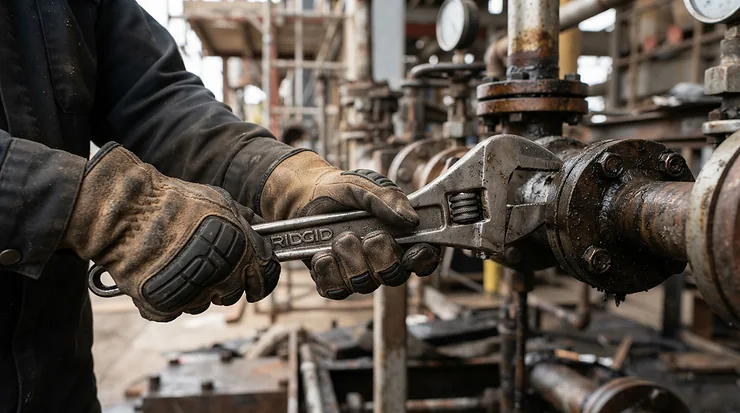
Impact resistant gloves for oil field workers are work gloves that pair a grippy, oil-tolerant palm with thermoplastic rubber (TPR) or foam armor over the knuckles, fingers and back of the hand. They absorb crush and strike forces from pipe, tongs and chains. Many also add cut and abrasion protection.
Here’s the uncomfortable truth about a rig floor: your hands arrive at every problem first. Pipe swings, tongs bite, and a chain wraps where it absolutely should not. Per International Association of Drilling Contractors figures, hand and finger injuries made up about 43 percent of recordable incidents on drilling rigs in 2014. Industry safety papers still describe them as a stubborn, expensive problem. Nobody wins a fair fight with a spinning chain, which is why impact resistant gloves for oil field workers exist.
This guide ranks seven real gloves and translates the standards into plain English. It also covers hydrocarbon exposure and oilfield hand protection that holds up past week two. It is built from published specs, manufacturer data and aggregated review sentiment, not hands-on testing. Where I couldn’t verify a meaningful pool of reviews, I say so. Prices appear as ranges because they change constantly. Check current prices before you buy.
Quick Comparison Table: Impact Resistant Gloves for Oil Field Workers at a Glance
| Glove | Impact Protection | Palm / Grip | Best For |
|---|---|---|---|
| Ironclad KONG SDX2 | KONG knuckle and metacarpal armor | Synthetic leather with grip dots | Chains, rigging, heavy handling |
| Mechanix Wear M-Pact | TPR knuckle and finger guards | Padded synthetic leather | Tool-heavy maintenance, tight budgets |
| Cestus Deep II Grip 3075 | One-piece 3D TPR shield | Skid-X oil-resistant palm | Mud, oil and wet pipe |
| Ergodyne ProFlex 922CR | ANSI/ISEA 138 Level 1 | Sandy foam nitrile | Cut-plus-impact pipe yard work |
| Ansell RINGERS R168 | ANSI/ISEA 138 Level 2 | PVC palm, Kevlar stitching | Medium-duty tong and tubing work |
| Portwest A722 | Anti-impact (verify level on pack) | Nitrile coated | Crew-wide budget stock |
| TEGERA Rig Impact 422 | ANSI Level 2 (per maker) | Sandy nitrile | Dexterity, cut protection, touchscreens |
On paper, the Ansell RINGERS R168 and TEGERA Rig Impact 422 carry the strongest published impact ratings in this group. The Ironclad KONG SDX2 and Cestus Deep II Grip 3075 lean on oilfield-specific design instead of a headline certification. If you’re stocking a whole crew on a budget, the Mechanix Wear M-Pact and Portwest A722 are the cheaper entry points. Both need a closer look at what the packaging actually certifies.
💬 Just one click — help others make better buying decisions too!😊
Top 7 Impact Resistant Gloves for Oil Field Workers: Expert Analysis
1. Ironclad KONG SDX2 — original oil and gas knuckle armor
The Ironclad KONG SDX2 exists because the industry asked for it. It was co-developed with an oil and gas safety committee, and “KONG” is shorthand for King of Oil and Gas. Ironclad claims the back-of-hand design absorbs up to 90% of knuckle impact and 80% on the metacarpals. The palm is described as 25% tougher than standard synthetic leather, with grip dots for wet work. Those are manufacturer figures, so read them as design intent rather than independent lab results.
My read is that the SDX2 is an impact-first glove. If your shift is chains, rigging and wrestling heavy things, the armor-over-everything approach makes sense. If you thread small fittings all day, you’ll feel the bulk. Reviewers on retail listings consistently call it tough for the money, and several report months of regular use. Recurring complaints are that it isn’t waterproof and the fingers run thick. One reviewer found the plastic palm dots slippery on bare metal.
Pros:
- ✅ Knuckle and metacarpal armor built for oil and gas
- ✅ Palm that survives heavy handling
- ✅ Strong durability for the money, per reviewers
Cons:
- ❌ Not waterproof, with minimal cut protection
- ❌ Thick fingers limit fine dexterity
Retail listings at the time of research sat roughly in the $20-$35 range, which is fair for a glove that does one job very well.
2. Mechanix Wear M-Pact — familiar mechanic’s fit with TPR guards
The Mechanix Wear M-Pact is the glove most people picture when someone says “impact glove.” It’s the mechanic’s-style fit with TPR guards over the knuckles and fingers and padding in the palm. Mechanix lists oil and gas among its intended uses. The glove is touchscreen capable and, in the M-Pact 2 line, machine washable. That matters when oil dulls grip and screen response by the end of a tour.
Here’s what the spec sheet won’t shout. Reviewers at one safety retailer point out that the M-Pact carries no cut rating. The listing also doesn’t state a certified ANSI/ISEA 138 impact level, so treat it as impact-resistant knuckle protection rather than a rated glove. For oil-soaked work, Mechanix also sells an oil-resistant M-Pact ORHD variant aimed at oil and gas, which is worth a look. Retail summaries describe the standard version as comfortable, with decent grip and good dexterity. The same sources say it’s weaker for precision tasks.
Pros:
- ✅ Comfortable, familiar mechanic’s-glove fit
- ✅ Good dexterity for tool work
- ✅ Touchscreen-capable fingertips
Cons:
- ❌ No cut rating on the standard model
- ❌ No certified ANSI/ISEA 138 level stated
Prices I saw ranged from roughly $15-$30 depending on version and seller, making it a solid value for maintenance crews who don’t face sharp-edge exposure.
3. Cestus Deep II Grip 3075 — built for mud, oil and wet pipe
The Cestus Deep II Grip 3075 is blunt about its mission. Cestus describes the Skid-X palm as oil-resistant and double-stitched with Kevlar thread. The dorsal side is a one-piece, 3D, direct-injected TPR shield that bends with the fingers and covers from fingertips to wrist. A neoprene long cuff covers the wrist while still letting you pull out if the glove gets caught in a pinch. That last detail is the kind of thing someone who has worked around rotating equipment would insist on.
One retailer lists the 3075 at ANSI cut A2. That is modest, so don’t expect it to shrug off banding or sharp steel. Cestus markets it for work with oil, drilling mud and water. The one-piece shield also means fewer seams to catch or fail. I couldn’t verify a meaningful pool of independent reviews for this exact model, so I won’t characterize reviewer sentiment. Check recent buyer feedback on the listing before ordering a crew’s worth.
Pros:
- ✅ Continuous one-piece TPR shield, fingertips to wrist
- ✅ Oil-resistant palm made for drilling mud
- ✅ Pull-out neoprene cuff for entanglement safety
Cons:
- ❌ Modest cut rating (A2 per one retailer)
- ❌ Few verifiable independent reviews
Listings clustered in the mid-$20s range at the time of research, which makes this a good-value pick for wet, muddy work.
4. Ergodyne ProFlex 922CR — cut protection with dorsal impact armor
The Ergodyne ProFlex 922CR takes a different route. It’s a 13-gauge HPPE seamless knit with a sandy foam nitrile palm and molded TPR armor on the back. Ergodyne lists it at ANSI/ISEA 105 cut level A3, abrasion level 6 and puncture level 3. Its impact rating is ANSI/ISEA 138 Level 1, the lowest tier. It has a reinforced thumb saddle, a knit cuff, and it is machine washable.
Some older retailer listings still label it “Level 5” cut under an earlier scale. Check the current A-rating on the pack and ignore the legacy wording. The thin knit makes it a good fit where you need touch and cut protection more than maximum armor. Think pipe yard handling, rigging prep and sharp-edge sorting. Verifiable reviews are thin: one arborist reviewer praised it, but that’s a different trade. I’d call the oilfield evidence limited rather than strong.
Pros:
- ✅ A3 cut protection in a thin, dexterous knit
- ✅ Nitrile palm grips well in wet conditions
- ✅ Machine washable and light
Cons:
- ❌ Only ANSI/ISEA 138 Level 1 impact
- ❌ Little verified oilfield review evidence
Retail listings ran roughly $20-$30, a reasonable price for a cut-and-impact hybrid.
5. Ansell RINGERS R168 — highest published impact tier here
The Ansell RINGERS R168 is positioned as a medium-duty impact glove. It combines high cut protection with a PVC palm. Ansell certifies it to ANSI/ISEA 138-2019 Level 2, with an HPPE liner, a safety cuff, and a patented TPR design over the knuckles, thumb and fingers. The PVC palm uses Kevlar stitching, and Ansell lists ANSI/ISEA 105-2024 abrasion level 4. The EN 388 code is 3X43EP, and the “E” indicates a high ISO cut letter.
In plain terms, this is the one with paperwork. If a safety manager asks “what’s the rated impact level?”, the R168 gives you a clean answer. The tradeoff is “medium-duty” in Ansell’s own wording. For brute-force chain and tong work you might prefer more armor, but for tubing, tool handling and general rig maintenance it’s well matched. I couldn’t confirm a verifiable review pool for this model, so check current buyer feedback.
Pros:
- ✅ Certified ANSI/ISEA 138-2019 Level 2 impact
- ✅ High cut rating with abrasion-resistant PVC palm
- ✅ Safety cuff reduces entanglement risk
Cons:
- ❌ Medium-duty, not maximum armor
- ❌ Few verifiable independent reviews
Check current price; expect mid-tier pricing, which is easy to justify when rated impact protection is the requirement.
6. Portwest A722 — budget anti-impact glove for crew stock
The Portwest A722 is the budget play. It’s a nitrile-coated anti-impact glove with ANSI cut level A4 per one safety supplier, and the nitrile coating helps with grip and abrasion. That is a strong cut number for what’s usually a low-cost glove. The supplier page I found didn’t state an ANSI/ISEA 138 impact level or oil-resistance rating, so verify both on the packaging before assuming.
Here’s what to weigh. A budget glove makes sense when you’re stocking an entire site and replacing gloves often. It makes less sense if your hazard assessment calls for a specific impact level. Coated palms also handle oil better than bare cotton, but “nitrile coated” is not the same as chemical-rated. I couldn’t verify enough independent reviews to summarize sentiment honestly, so I’m leaving that blank rather than guessing.
Pros:
- ✅ A4 cut level at a budget-tier position
- ✅ Nitrile coating for grip and abrasion
- ✅ Good fit for high-turnover crew supply
Cons:
- ❌ Impact level not stated on the page I found
- ❌ No verified oil-resistance rating
Check current price. At a budget tier, it’s best viewed as a replaceable workhorse rather than a premium armor glove.
7. TEGERA Rig Impact 422 — lesser-known dexterity-first option
The TEGERA Rig Impact 422 comes from Ejendals and doesn’t get the shelf space of the big American names. That’s a shame. The maker describes extended TPR back-of-hand coverage, EN cut level D, a nitrile sandy grip and touchscreen functionality. The Rig Impact line is stated to meet ANSI Impact Level 2 and the European “P” impact mark.
The big advantage is a knit-style glove with real impact certification and decent cut resistance. That combination is hard to find, especially with touchscreen fingertips for tablets and handhelds. The tradeoff is availability. It’s sold mostly through safety distributors, so confirm Amazon availability and seller authenticity before you count on it. I couldn’t verify an independent review pool, so judge it on specs and the maker’s certification.
Pros:
- ✅ ANSI Impact Level 2 per the manufacturer
- ✅ Cut level D with nitrile sandy grip
- ✅ Touchscreen-compatible fingertips
Cons:
- ❌ Availability on Amazon may vary
- ❌ Few verifiable independent reviews
Check current price. If you can find it, it’s a smart choice for crews that want rated protection without a bulky glove.
How the Seven Stack Up
| Glove | Impact Rating | Cut | Palm | Price Range | Best For |
|---|---|---|---|---|---|
| Ironclad KONG SDX2 | KONG design (maker claim) | Low | Synthetic leather | $20-$35 | Heavy handling |
| Mechanix Wear M-Pact | TPR (no level stated) | None rated | Padded synthetic | $15-$30 | Tool work |
| Cestus Deep II Grip 3075 | One-piece TPR shield | A2 (one retailer) | Skid-X | Mid-$20s | Wet, muddy work |
| Ergodyne ProFlex 922CR | ANSI/ISEA 138 L1 | A3 | Nitrile foam | $20-$30 | Cut plus impact |
| Ansell RINGERS R168 | ANSI/ISEA 138 L2 | High (EN “E”) | PVC | Check current price | Rated medium-duty |
| Portwest A722 | Not stated | A4 | Nitrile | Check current price | Budget crew stock |
| TEGERA Rig Impact 422 | ANSI L2 (maker) | EN D | Nitrile | Check current price | Dexterity plus rating |
Looking at the table, the Ansell RINGERS R168 and TEGERA Rig Impact 422 are the only two with a published Level 2 certification. The Ergodyne ProFlex 922CR matches them on cut but drops a tier on impact. Budget buyers should note that the Portwest A722 and Mechanix Wear M-Pact leave impact certification as a “verify first” item.
✨ Ready to Upgrade Your Hand Protection?
🔍 Take your rig-floor safety to the next level with these carefully selected gloves. Click on any highlighted item to check current pricing and availability. The right pair means safer shifts and fewer hand injuries your crew will thank you for!
Rig Worker Gloves: Fit, Break-In and Care Guide
Good rig worker gloves fail in boring ways. They’re too big, too wet, or too old. Fit comes first. You want a snug fingertip with no loose material beyond it, because extra fabric is what snags on equipment. Make sure the knuckle pads line up with your actual knuckles, not an inch to either side. Then flex the glove through a full grip. If the armor binds in the first five minutes, it will be miserable by hour ten.
Maintenance can be a simple routine:
- After each shift: knock off mud, and let the pair air dry away from direct heat.
- Weekly: wash per the label. The Mechanix Wear M-Pact and Ergodyne ProFlex 922CR list machine washing, while others need label checks. Skip hot dryers, which can warp TPR.
- Monthly: inspect for cracked or peeling TPR, worn palms, and torn seams.
Rotate two pairs so each one dries fully. Retire a glove when the palm wears through, the armor cracks, or oil has soaked the liner. Common first-30-day mistakes are sizing up “for comfort,” skipping the inspection, and wearing a pair long past its protective life.
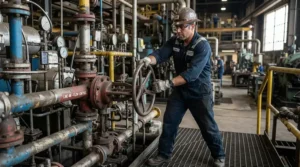
Real-World Scenarios: Matching Gloves to the Job
These are illustrative profiles, not testimonials.
The floorhand on a 12-hour tour. Pipe, tongs, chains and mud all day, with frequent knocks. The Cestus Deep II Grip 3075 or the Ironclad KONG SDX2 fits best. Both prioritize armor and grip over dexterity. Expect to replace them often, which is why a mid-$20s pair makes sense.
The lease maintenance tech. Wrenches, valves and lots of small fasteners, and a boss who watches the budget. The Mechanix Wear M-Pact gives dexterity for tool work at a modest price. If sharp edges are common, step up to the Portwest A722 for its A4 cut level.
The wellsite technician with a tablet. Handling steel, tubing and a handheld all shift. The TEGERA Rig Impact 422 or Ansell RINGERS R168 gives rated impact protection and reasonable dexterity. Both reduce the glove-off, glove-on cycle that gets hands hurt.
Problem → Solution: Fixing the Most Common Glove Complaints
Grip disappears when everything is oily. Choose a palm built for it, like the Cestus Deep II Grip 3075 Skid-X or the nitrile palm on the Ergodyne ProFlex 922CR. Keep a clean spare pair for jobs where grip really matters.
Hands overheat in summer. Thick armor traps heat. Lighter knit options like the Ergodyne ProFlex 922CR or TEGERA Rig Impact 422 breathe better. Cestus sells a ventilated “Kool” variant of its line for hot weather.
Dexterity vanishes. Don’t compromise on safety here. Match the glove to the task. Wear a thinner knit for fine work, then switch to the armored pair for heavy handling.
Gloves wear out in weeks. Check where. Palm wear points to a tougher palm like the Ironclad KONG SDX2. Cracked armor points to age, heat, or chemical exposure.
How to Choose Impact Resistant Gloves for Oil Field Workers
- Map your hazards. Decide whether you face strikes, pinches, cuts, or all three. Impact gloves only help with the first.
- Check the impact level. ANSI/ISEA 138-2019 defines three levels, and Ansell notes the rating reflects the lowest level recorded across multiple tests. Level 1 is the lowest and Level 3 the highest. Lower mean transmitted force means better protection.
- Match the cut rating. Look for an ANSI/ISEA 105 A-level that fits your sharp-edge exposure.
- Pick a palm for wet work. Nitrile, PVC and Skid-X-style palms do better than bare fabric around oil.
- Balance fit and dexterity. Heavy chain work tolerates bulk. Tablet and tool work doesn’t.
- Choose the cuff. Pull-out neoprene cuffs and safety cuffs reduce entanglement risk around rotating equipment.
- Think climate and washability. Hot sites and long shifts reward breathable, washable gloves.
Oilfield Hand Protection: Features That Actually Matter (And Those That Don’t)
What matters: a stated impact level, TPR coverage that reaches the fingers, a palm designed for oil, an appropriate cuff, and an abrasion rating you can compare. Stitching matters too. The Kevlar thread on the Cestus Deep II Grip 3075 and Ansell RINGERS R168 is a small detail that decides how a glove ages.
What doesn’t: marketing words like “military-grade” or “tactical,” and padding thickness quoted without a rating. Colors help visibility but don’t change protection. Touchscreen fingertips are worth having only if you actually use screens. And extra cut level beyond your real hazard just adds cost.
The best oilfield hand protection is rarely the thickest pair. It’s the one your crew will actually keep on. A glove sitting in a truck cab protects nobody.
Hydrocarbon Exposure: What “Oil Resistant” Really Means
Hydrocarbon exposure is the part of oilfield hand protection most people get wrong. OSHA lists skin absorption of harmful substances among the hand hazards employers must address. “Oil resistant” on a package is a marketing description, not a permeation rating.
Nitrile coatings generally handle petroleum oils and greases well, which is why they show up on so many rig gloves. But coatings usually cover only the palm and fingers. The knit back and liner can still soak up fluids. Solvents and aromatic hydrocarbons are a different story. For those, use gloves chemically rated against the specific substance on the safety data sheet.
Practical rules:
- Replace a glove soaked through with oil or solvent.
- Don’t reuse contaminated gloves for tasks that need clean hands.
- Wash hands after removing them.
A Portwest A722 or Ergodyne ProFlex 922CR gives useful splash and grip performance. Neither one is a chemical-immersion glove.
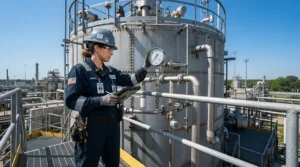
Drilling Site Safety: Where Hand Injuries Really Happen
Drilling site safety starts with knowing where hands get hurt. MCR Safety’s buyer guide lists swinging and latching a tong, lifting and pulling heavy items, valve handling, and working with heavy spinning chains and pipe. A paper on human-factors analysis of hand and finger injuries in oil and gas describes injuries that often come from contact with material, machinery or equipment.
Gloves are the last line of defense. OSHA’s own guidance says PPE alone shouldn’t be relied on and should be used with guards, engineering controls and sound practices. A glove won’t fix a pinch point. Better tools, hands-free handling and stop-work habits do that.
The cost of ignoring this adds up. MCR claims a single oilfield hand injury can cost a company more than $21,000. The National Safety Council reports hand injury costs ranging from $540 to $26,000. Good drilling site safety makes the glove budget look cheap.
Industrial Impact Gloves vs Traditional Cotton and Leather Gloves
For decades, cotton gloves ruled oil and gas work. MCR Safety says that changed around 2008, when new guidelines called for TPR on the back of the hand. Today, industrial impact gloves are the baseline for rig work.
| Glove Type | Impact Protection | Grip in Oil | Dexterity | Best For |
|---|---|---|---|---|
| Plain cotton or jersey | None | Poor | High | Light, dry chores |
| Leather driver | Limited | Fair | Moderate | General handling |
| Cut-resistant knit, no armor | None | Good | High | Sharp-edge handling |
| Impact gloves (TPR) | High | Good, depending on palm | Moderate | Rig and pipe work |
The takeaway is simple. Traditional gloves protect hands from scrapes, not strikes. Industrial impact gloves like the Ansell RINGERS R168 or Cestus Deep II Grip 3075 trade a little dexterity for real armor. For anyone near moving iron, that trade is easy.
Heavy Industrial PPE and OSHA Compliance: What Employers Weigh
Heavy industrial PPE choices sit under OSHA’s hand protection rule. 29 CFR 1910.138 requires employers to select and require appropriate hand protection. Selection must be based on an evaluation of performance characteristics relative to the task, conditions, duration of use, and hazards.
OSHA’s standards are performance-based. They don’t prescribe a specific glove model. That makes the hazard assessment the core of any program. ANSI/ISEA 138 is a voluntary consensus standard, but it gives employers a measurable way to compare gloves.
For crews, that means documenting why a glove was chosen. A rated glove like the Ansell RINGERS R168 makes that paperwork easy. An unrated one like the Mechanix Wear M-Pact may still fit certain tasks, but you’ll need to justify it. This isn’t legal advice, so confirm requirements with your safety lead or counsel.
Long-Term Cost and Maintenance: What a Glove Really Costs Per Shift
Sticker price misleads. A pair around $25 that lasts eight weeks costs less per shift than a $15 pair that dies in three. That’s an illustration, not a measured result, but the logic holds. Divide price by shifts worn.
Maintenance stretches the math. Rotating two pairs, washing where the label allows, and retiring gloves at the first sign of cracked armor all help. Budget gloves like the Portwest A722 make sense when replacement is routine. Heavier armor like the Ironclad KONG SDX2 costs more upfront but may last longer under abuse, according to reviewer reports.
Then add the avoided costs. If a single injury runs into five figures, as MCR suggests, a few extra dollars per pair is trivial. Spend on fit and rating first, and brand second.
FAQ
❓ Are impact resistant gloves required on oil rigs?
❓ How long do impact gloves last on a drilling rig?
❓ Can you wash impact resistant work gloves?
❓ Is ANSI Level 2 impact protection enough for oil field work?
❓ How can I confirm an Amazon glove's impact rating is real?
Conclusion
Choosing impact resistant gloves for oil field workers comes down to matching armor, grip and cut protection to your real hazards. The Ansell RINGERS R168 and TEGERA Rig Impact 422 lead on published impact certification. The Ironclad KONG SDX2 and Cestus Deep II Grip 3075 offer purpose-built oilfield design for heavy, wet work. The Ergodyne ProFlex 922CR adds cut protection in a thinner knit. The Mechanix Wear M-Pact and Portwest A722 keep budgets in check, as long as you verify what each is actually certified for.
Whatever you pick, remember that gloves are the last line of defense. Pair them with good tools, hands-free handling and sound drilling site safety habits. Match the glove to the job, check the rating on the pack, and replace them before they fail. Your hands will thank you the next time a chain does something unexpected.
Recommended for You
- Mechanic Gloves For Motorcycle Maintenance: 7 Best Picks (2026)
- Touchscreen Compatible Mechanic Gloves: 7 Best Picks For 2026
- Precision Mechanic Gloves: 7 Proven Picks For Fine Work (2026)
Disclaimer: This article contains affiliate links. As an Amazon Associate, I earn from qualifying purchases. If you purchase products through these links, we may earn a small commission at no additional cost to you.
✨ Found this helpful? Share it with your friends! 💬🤗
