

In This Article
Ever found yourself running out of work gloves right when you need them most? I’ve been there, scrambling to find a decent pair while my hands get dirty and scratched. That’s exactly why smart businesses and homeowners are switching to cotton work gloves bulk purchasing. The numbers don’t lie – buying a cotton work gloves 12 pack or larger quantities can slash your costs by up to 60% compared to single-pair purchases.
Cotton work gloves represent one of the most economical choice options for hand protection across multiple industries. Whether you’re managing a warehouse, running a construction site, or simply tackling weekend projects, these breathable gloves offer exceptional value without compromising on basic protection. According to OSHA regulations, employers must provide appropriate hand protection when workers face hazards like abrasions, cuts, or chemical exposure. Cotton gloves serve as an excellent foundation for light-duty tasks and can even function as liners under heavier protective gear.
The beauty of cotton work gloves bulk purchasing lies in its simplicity. You’re always prepared, you save money, and you never have to worry about running out at critical moments. These gloves are incredibly versatile too – from gardening and light construction to food handling and general maintenance work. The disposable option nature of bulk packs means you can freely replace worn gloves without guilt, maintaining optimal protection levels throughout your workday.
Quick Comparison Table: Top Cotton Work Gloves Bulk Options
| Product | Quantity | Material | Price Range | Best For | Rating |
|---|---|---|---|---|---|
| Wells Lamont 506LZ | 12 pairs | Cotton/Poly Blend | $19-$24 | General purpose | 4.5/5 |
| MAGID T92C | 12 pairs | Cotton/Poly | $16-$21 | Light construction | 4.4/5 |
| KingWei Work Gloves | 12 pairs | 90% Cotton/10% Nylon | $9-$13 | Budget option | 4.2/5 |
| Winterlace PVC Dotted | 48 pairs | Cotton Knit + PVC | $36-$40 | Warehouse work | 4.3/5 |
| Heavy Weight Cotton Jersey | 12 pairs | 100% Cotton | $10-$15 | Food handling | 4.4/5 |
| Wells Lamont 302L Hob Nob | 1 pair | Premium Cotton/Poly | $8-$12 | Precision work | 4.5/5 |
| MAGID T193 KnitMaster | 12 pairs | Cotton/Poly Seamless | $14-$19 | Winter liner | 4.3/5 |
💬 Just one click – help others make better buying decisions too! 😊
Top 7 Cotton Work Gloves Bulk: Expert Analysis
1. Wells Lamont Versatile Work Gloves 506LZ – The Industry Standard
The Wells Lamont 506LZ represents everything you’d want in a workhorse glove. This 12-pair bulk pack features their proprietary Wearpower cotton-polyester blend that genuinely outlasts traditional 100% cotton versions. I’ve seen these gloves in action across construction sites and warehouses for good reason – they just keep performing.
Key Specifications:
- Wearpower polyester/cotton jersey blend
- Straight thumb design with Clute cut (seamless palm)
- Knit wrist keeps debris out
- Available in multiple sizes (Large standard)
Price Range: $19-$24 for 12 pairs ($1.60-$2.00 per pair)
Customer Feedback: Users consistently praise the durability, with many reporting 2-3 weeks of daily use before replacement. The lightweight design means your hands don’t overheat during extended wear.
✅ Pros:
- Excellent breathability for all-day comfort
- Seamless palm reduces irritation
- Proven track record across industries
❌ Cons:
- Not suitable for heavy-duty tasks
- May run slightly large

2. MAGID T92C JerseyMaster – Premium Quality at Mid-Range Price
When you need reliability without breaking the bank, the MAGID T92C delivers. This 12-pair set uses an 8 oz. cotton-polyester blend that’s noticeably softer than competitors while maintaining impressive durability. The dark brown color cleverly hides soiling, extending the perceived service life.
Key Specifications:
- 8 oz. Clute pattern construction
- Single-piece palm design (no bottom seams)
- Stretchable knit wrist cuff
- Men’s large (fits most hands)
Price Range: $16-$21 for 12 pairs ($1.33-$1.75 per pair)
Customer Feedback: Buyers love the comfortable fit right out of the package. Several warehouse managers report these gloves reduce hand fatigue during repetitive tasks.
✅ Pros:
- Superior comfort from cotton-poly blend
- Dark color hides dirt effectively
- Reduced seams improve comfort
❌ Cons:
- Slightly more expensive than basic options
- Limited size availability
3. KingWei Cotton Work Gloves – Unbeatable Budget Champion
Looking for cheap cotton work gloves that actually work? The KingWei 12-pack is your answer. At under $1 per pair, these gloves punch way above their weight class. Sure, they’re not indestructible, but for light-duty applications where you need frequent replacements, they’re absolutely perfect.
Key Specifications:
- 90% cotton, 10% nylon construction
- Large size (9.05 x 5.7 inches)
- High elastic mesh wrist
- Launderable and reusable
Price Range: $9-$13 for 12 pairs ($0.75-$1.08 per pair)
Customer Feedback: Home improvement enthusiasts appreciate the value proposition. These gloves excel at DIY projects, gardening, and automotive work where you expect to get them dirty.
✅ Pros:
- Incredibly affordable for bulk purchasing
- Good sweat absorption
- Suitable for multiple applications
❌ Cons:
- Thinner material than premium options
- May not last as long under heavy use
4. Winterlace PVC Dotted Work Gloves – The Grip Master (48 Pairs)
Sometimes you need serious warehouse quantities, and that’s where the Winterlace 48-pack shines. These aren’t your ordinary cotton gloves – the PVC dots on one side provide non-slip grip that’s genuinely game-changing for material handling. At $0.75 per pair, buying cotton work gloves bulk has never been more economical.
Key Specifications:
- String knit cotton construction
- Single-sided PVC dot coating
- Elastic knit wrist for snug fit
- One size fits most
Price Range: $36-$40 for 48 pairs ($0.75-$0.83 per pair)
Customer Feedback: Warehouse workers report these gloves significantly improve grip when handling boxes and equipment. The reversible design extends lifespan, though most prefer the dotted side for added control.
✅ Pros:
- Exceptional value at bulk scale
- PVC dots enhance grip dramatically
- Can double as thermal liner
❌ Cons:
- Bulk packaging may be excessive for home use
- One-size-fits-most doesn’t fit everyone
5. Heavy Weight 9OZ Cotton Jersey Work Gloves – Food Safe Excellence
For food handling, meat packing, or any application requiring FDA compliance, these Heavy Weight Cotton Jersey gloves check all the boxes. The 9 oz. weight provides excellent protection while maintaining the breathability cotton is famous for. Plus, they’re fully compliant with Federal Food Contact regulations.
Key Specifications:
- 9 oz. heavyweight cotton
- Knit wrist design
- Food contact safe (FFDCA 21 CFR compliant)
- Sold by dozen (12 pairs)
Price Range: $10-$15 for 12 pairs ($0.83-$1.25 per pair)
Customer Feedback: Restaurant and food processing workers appreciate the balance between protection and dexterity. Many users report these gloves are comfortable enough for 8-hour shifts without hand fatigue.
✅ Pros:
- FDA compliant for food handling
- Heavyweight construction for durability
- Excellent sweat absorption
❌ Cons:
- Heavier than standard jersey gloves
- May be too warm for summer outdoor work

6. Wells Lamont 302L Hob Nob Jersey – Precision Work Specialist
When you need cotton work gloves that offer actual grip without going full rubber-coated, the Wells Lamont 302L hits the sweet spot. Those Hob Nob dots on the palm and fingers provide just enough traction for handling small parts, tools, and equipment without sacrificing the breathability of cotton.
Key Specifications:
- 9 oz. premium polyester/cotton blend
- Hob Nob PVC dots on palm and fingers
- Straight thumb with Clute cut
- Available in multiple sizes
Price Range: $8-$12 per pair (sold individually or bulk)
Customer Feedback: Mechanics and assembly workers praise the enhanced grip for handling oily tools and small components. The cotton backing keeps hands comfortable during precise work.
✅ Pros:
- Enhanced grip without full coating
- Premium blend material
- Excellent for detailed work
❌ Cons:
- Higher price per pair
- May wear faster than plain cotton
7. MAGID T193 KnitMaster Seamless – Winter Liner Perfection
The MAGID T193 serves double duty as both a standalone glove and an insulating liner for cold weather work. This seamless cotton-polyester design eliminates pressure points while providing that extra layer of warmth and protection you need when temperatures drop.
Key Specifications:
- Seamless 7-gauge knit construction
- Cotton/polyester blend
- Machine washable
- 12-pair bulk pack
Price Range: $14-$19 for 12 pairs ($1.17-$1.58 per pair)
Customer Feedback: Cold climate workers love using these as liners under leather or insulated gloves. The seamless design prevents bunching and discomfort during extended wear.
✅ Pros:
- Seamless comfort all day
- Reversible for extended life
- Excellent as glove liner
❌ Cons:
- Thinner than standard work gloves
- Not suitable as primary protection for rough work
✨ Don’t Miss These Exclusive Deals!
🔍 Take your hand protection to the next level with these carefully selected products. Click on any highlighted item to check current pricing and availability. These tools will help you create authentic workplace safety your team will appreciate!
Understanding Cotton Work Glove Materials and Construction
Not all cotton work gloves are created equal, and understanding the construction makes a huge difference in selecting the right product. Cotton fabric itself is one of nature’s most remarkable fibers – breathable, absorbent, and naturally hypoallergenic. But when it comes to work gloves, manufacturers blend cotton with various synthetic fibers to enhance specific properties.
The most common blend you’ll encounter is cotton-polyester, typically in ratios like 60/40 or 70/30. This combination gives you the breathability and comfort of cotton while the polyester adds durability and reduces shrinkage. Pure 100% cotton gloves exist, especially in food-grade applications, but they tend to wear faster and shrink more aggressively in the wash.
Jersey knit construction dominates the cotton work glove market for good reason. This technique creates a soft, stretchy fabric that conforms to your hand naturally. The Clute cut pattern – where the palm is constructed from a single piece with no seams – reduces friction points that can cause blisters during repetitive tasks. Some manufacturers add PVC dots or coating to enhance grip without sacrificing breathability on the back of the hand.
Weight matters significantly in cotton gloves. Lightweight 7 oz. gloves offer maximum dexterity for detailed work, while heavyweight 9-10 oz. versions provide better protection and durability for rough materials. Think of it like choosing between a t-shirt and a sweatshirt – same basic material, different applications based on thickness.
Industries and Applications: Where Cotton Work Gloves Excel
Cotton work gloves bulk purchasing makes sense across an incredibly diverse range of industries. Let me walk you through the main sectors where these gloves truly shine.
Construction and Light Manufacturing represent the bread and butter for cotton glove usage. These environments need affordable, disposable option protection that workers will actually wear. Cotton gloves handle light materials, protect against minor abrasions, and keep hands clean during assembly work. The breathability prevents that sweaty, uncomfortable feeling that causes workers to remove gloves prematurely.
Food Service and Processing requires specific considerations. Only gloves meeting FDA food contact standards should be used here, which eliminates many coated options. Pure cotton or approved cotton blends provide the necessary protection while allowing workers to maintain tactile sensitivity for food preparation. Many meat packing operations specifically require heavyweight cotton jerseys as specified protective equipment.
Warehousing and Logistics operations consume cotton gloves by the thousands. Workers handling boxes, operating equipment, and moving materials all day need gloves that balance protection with comfort. The disposable nature of bulk cotton gloves means supervisors can enforce regular replacement, maintaining hygiene and protection standards without budget concerns.
Gardening and Landscaping professionals appreciate cotton gloves for their breathability during hot weather work. While heavier leather gloves handle thorny bushes and rough materials, cotton gloves excel at general weeding, planting, and light maintenance tasks. Many landscapers keep a bulk supply in their trucks, treating them as disposable when they get too dirty or wet.
Automotive and Mechanical Work benefits from cotton gloves both as primary protection and as liners under chemical-resistant or cut-resistant gloves. The absorbent nature of cotton helps manage sweat during intense work sessions, while the inexpensive nature means mechanics don’t worry about getting them greasy or oily.
Cost Analysis: Breaking Down True Value in Bulk Purchasing
Let’s talk numbers, because that’s really where cotton work gloves bulk purchasing proves its worth. When you buy cotton work gloves bulk, you’re not just saving a few cents – you’re potentially cutting your hand protection costs by more than half.
Consider this realistic scenario: A single pair of cotton work gloves at a hardware store typically runs $3-5. For a small business with 10 employees going through one pair per week, that’s $150-250 per month just for basic hand protection. Now flip the script – buying a 120-pair bulk order at wholesale prices ($0.75-1.25 per pair) drops that monthly cost to $30-50. That’s $1,200-2,400 in annual savings for a small operation.
The warehouse quantities approach offers even better economics for larger operations. A distribution center employing 50 workers might purchase 600-1,000 pairs quarterly. At bulk rates, this economical choice translates to annual glove costs of $3,000-5,000 versus $15,000-25,000 for retail purchases. Those savings go straight to the bottom line.
But pure cost per pair doesn’t tell the whole story. Factor in procurement time and administration costs. Bulk purchasing reduces ordering frequency, minimizes administrative overhead, and ensures consistent inventory. When you factor in the labor cost of someone constantly reordering small quantities, bulk purchasing often saves an additional 20-30% in hidden costs.
Durability also plays into value calculations. A cheap $0.50 glove that lasts one day costs more than a $1.50 glove that lasts four days. Quality bulk purchases from established manufacturers like Wells Lamont or MAGID typically offer better cost-per-wear ratios than ultra-cheap alternatives.

Sizing Guide: Getting the Perfect Fit for Your Team
Getting the right size in cotton work gloves seems straightforward until you realize that “one size fits most” rarely fits anyone perfectly. Let me break down the sizing mystery so you can order confidently.
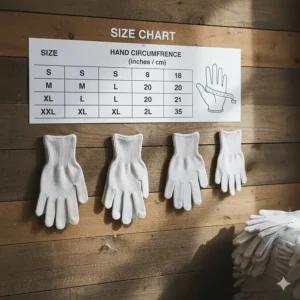
Standard glove sizes run from Small through 2XL, but cotton work gloves bulk packs most commonly come in Large or “one size fits most.” Here’s the reality – Large fits men’s hand sizes from medium to XL reasonably well, which covers about 75% of the adult male population. For mixed-gender workforces, consider ordering multiple size ranges.
Measure your hand by wrapping a tape measure around the widest part of your palm (usually just below the knuckles). Here’s the general breakdown:
- Small: 7-8 inches (typically women’s sizing)
- Medium: 8-9 inches
- Large: 9-10 inches (most common bulk size)
- XL: 10-11 inches
- XXL: 11+ inches
Cotton’s natural stretch helps compensate for sizing variations, but there’s a sweet spot. Gloves too small create pressure points and restrict movement, while oversized gloves reduce dexterity and can catch on equipment. For bulk orders, I recommend ordering a sample pack in multiple sizes first if your supplier offers it.
Consider the application too. Assembly work requiring fine motor skills benefits from snugger fits, while heavy material handling works better with slightly looser gloves that allow air circulation. Many operations maintain small, medium, and large inventory to accommodate different hand sizes and preferences.
Pro tip: Cotton gloves typically shrink 5-10% in the wash, especially 100% cotton versions. If your team launders gloves for reuse, consider sizing up slightly to account for shrinkage.
Comparison Table: Cotton vs Other Work Glove Materials
| Feature | Cotton | Leather | Nitrile | Latex | Cut-Resistant |
|---|---|---|---|---|---|
| Breathability | Excellent | Good | Poor | Poor | Moderate |
| Cost (bulk) | $0.75-2.00 | $3-8 | $0.50-1.50 | $0.40-1.00 | $2-6 |
| Durability | Moderate | Excellent | Good | Fair | Excellent |
| Chemical Resistance | Poor | Poor | Excellent | Good | Varies |
| Dexterity | Excellent | Good | Excellent | Excellent | Moderate |
| Washability | Yes | No | Limited | No | Yes |
| Best Applications | Light duty, comfort | Heavy materials | Chemical handling | Food service | Cut hazards |
Care and Maintenance: Maximizing Glove Lifespan
Getting maximum value from your cotton work gloves bulk purchase requires smart maintenance practices. While many operations treat these as disposable, proper care can extend useful life significantly.
Washing Guidelines: Cotton work gloves are machine washable, which separates them from many protective glove types. Use warm water (not hot) to minimize shrinkage, and avoid harsh detergents that can break down fibers. Skip the fabric softener – it reduces absorbency and can make gloves slippery. Air drying or low-heat tumble drying works best. Expect some shrinkage regardless, especially on first wash.
Storage Practices: Keep bulk quantities in a dry, climate-controlled area. Moisture promotes mildew growth, which ruins entire boxes. I’ve seen warehouses lose hundreds of pairs to poor storage conditions. Original packaging works fine for long-term storage, but once opened, consider transferable storage bins that protect from dust and humidity.
Inspection Protocols: Before each use, quickly inspect for holes, tears, or excessive wear. Damaged gloves don’t protect properly and should be discarded immediately. For safety-critical applications, implement a formal inspection protocol where supervisors check glove condition regularly.
Rotation Systems: Smart operations rotate glove inventory using first-in-first-out principles. Cotton gloves don’t technically expire, but older inventory may develop storage odors or minor degradation. Mark boxes with receipt dates and use older stock first.
Reuse vs Disposal: The disposable option nature of bulk cotton gloves means most operations use them once and discard them. However, for light-duty applications where contamination isn’t a concern, laundering and reusing extends value significantly. Food service operations should always use fresh gloves and never reuse.
Safety Standards and Compliance Requirements
Understanding safety regulations helps you select appropriate cotton work gloves bulk products for your specific industry. Different applications face different regulatory requirements, and choosing the wrong gloves can create liability issues.
OSHA Requirements: The Occupational Safety and Health Administration mandates that employers provide appropriate hand protection based on hazard assessment. Under OSHA Standard 1910.138, employers must evaluate workplace hazards and select gloves that protect against identified risks. Cotton gloves qualify for protection against minor abrasions, dirt, and light materials, but don’t meet requirements for chemical, cut, or impact hazards.
Food Industry Standards: For food contact applications, gloves must comply with FDA regulations (21 CFR). This means using materials approved for food contact and avoiding coatings or treatments that could contaminate products. Many cotton work gloves bulk options specifically advertise FDA compliance – verify this before purchasing for food service applications.
ANSI Standards: The American National Standards Institute publishes standards for hand protection (ANSI/ISEA 105). While primarily focused on high-performance gloves, understanding these standards helps contextualize cotton glove limitations. Cotton gloves typically don’t achieve measurable cut resistance ratings and shouldn’t be used where cut hazards exist.
Industry-Specific Requirements: Construction sites often require ANSI-rated gloves for specific tasks. Manufacturing facilities may mandate specific glove types based on process hazards. Always verify your industry’s specific requirements before making bulk purchases. What works perfectly in warehousing might be completely inappropriate for manufacturing.
Documentation: Maintain records of glove purchases, specifications, and hazard assessments. If an injury occurs, documented compliance with selection and provision requirements provides important legal protection.
Environmental Considerations and Sustainability
As environmental consciousness grows, the sustainability profile of cotton work gloves bulk purchasing deserves consideration. Cotton offers significant environmental advantages over synthetic alternatives, but the picture isn’t entirely simple.
Natural Material Benefits: Cotton fabric biodegrades naturally within months under proper conditions, unlike nitrile or latex gloves that persist for decades in landfills. For operations generating hundreds or thousands of used gloves monthly, this biodegradability significantly reduces long-term environmental impact.
Cotton Production Concerns: Traditional cotton farming uses substantial water resources and pesticides. The environmental cost of growing cotton can be considerable. However, many manufacturers now source organic cotton or participate in sustainability initiatives like the Better Cotton Initiative. These certified options reduce environmental impact while maintaining product quality.
Reusability Factor: Cotton work gloves can be laundered and reused multiple times for appropriate applications, dramatically reducing consumption. A glove lasting four uses instead of one cuts waste by 75%. This makes cotton more sustainable than disposable nitrile or latex gloves even when considering washing resource usage.
Bulk Packaging Benefits: Large-quantity purchases reduce packaging waste compared to individually packaged gloves. A 120-pair bulk order might use one cardboard box versus 120 individual packages. Transportation efficiency improves too – fewer shipments mean lower carbon footprint.
End-of-Life Options: Heavily worn cotton gloves can be composted (check for plastic content first), repurposed as shop rags, or recycled through textile recycling programs. Compare this to synthetic gloves that typically have only one end destination: the landfill.
Price Range Comparison: Budget to Premium Options
| Price Tier | Cost Per Pair | Best For | Expected Lifespan | Key Features |
|---|---|---|---|---|
| Budget | $0.50-$0.99 | High-volume disposal | 1-2 uses | Basic protection, thin material |
| Mid-Range | $1.00-$1.75 | General purpose | 3-5 uses | Better durability, comfort |
| Premium | $1.76-$3.00 | Specialized work | 5-10 uses | Enhanced features, superior materials |
Common Mistakes When Buying Cotton Work Gloves Bulk
Let me save you from the mistakes I’ve seen countless operations make when transitioning to cotton work gloves bulk purchasing.
Buying Based Solely on Price: That unbelievable $0.30 per pair price seems fantastic until gloves fall apart after one use. Ultra-cheap gloves often use inferior cotton, loose weaving, and poor quality control. Calculate cost per wear, not just cost per pair. A $1.50 glove lasting five uses beats a $0.50 glove used once.
Ignoring Size Distribution: Ordering 500 pairs of “one size fits most” sounds efficient, but what happens when 20% of your workforce can’t wear them comfortably? Survey your team’s sizing needs before placing massive orders. Most successful operations maintain a mix of sizes even when “one size” works for most.
Overlooking Application Specifics: Not all cotton gloves suit all cotton glove tasks. Using lightweight inspection gloves for rough construction work frustrates workers and wastes money. Match glove weight and construction to actual job requirements. Food service operations need FDA-compliant gloves. Warehouse work benefits from PVC-dotted grip enhancement.
Failing to Test First: Order sample packs or small quantities before committing to warehouse quantities. What works for one operation might not suit yours. Worker acceptance is crucial – uncomfortable or poorly-fitting gloves get left in lockers instead of protecting hands.
Inadequate Storage Planning: Receiving a pallet of gloves is exciting until you realize you have nowhere to store them properly. Moisture, pests, and contamination can ruin bulk inventory quickly. Plan storage before ordering massive quantities.
Ignoring Seasonal Needs: Cotton glove consumption often varies seasonally. Construction operations use more in summer (breathability advantage), while some facilities see winter spikes when gloves serve as thermal liners. Analyze your actual usage patterns before committing to annual bulk purchases.
Innovations in Cotton Work Glove Technology
The cotton work glove industry hasn’t stood still. While these remain fundamentally simple products, manufacturers continue innovating to improve performance and value.
Advanced Blending Technology: Modern textile engineering creates cotton blends that outperform traditional materials significantly. Moisture-wicking fibers integrated into cotton bases keep hands drier during intense work. Some manufacturers add silver-infused fibers for antimicrobial properties, reducing odor in gloves used repeatedly before washing.
Seamless Knitting Advances: New knitting machines create completely seamless gloves that eliminate pressure points and improve comfort dramatically. These seamless designs also enhance durability since there are no seams to fail under stress. The technology has become affordable enough that even cheap cotton work gloves benefit from improved construction methods.
Sustainable Material Development: Organic cotton and recycled cotton fibers increasingly appear in work gloves as manufacturers respond to environmental concerns. Some companies now offer gloves made partially from post-industrial cotton waste, reducing virgin material needs without compromising quality.
Enhanced Grip Technologies: PVC dots have evolved beyond simple circles. Manufacturers now apply honeycomb patterns, mini-squares, and specialized textures that dramatically improve grip while maintaining breathability. Some use color-coded dots to indicate different grip levels for specific applications.
Smart Sizing Systems: Digital hand measurement systems help operations order precisely sized gloves, reducing waste from poor fits. Some bulk suppliers now offer custom sizing distributions based on workforce demographics rather than standard one-size approaches.

FAQ: Expert Answers to Common Questions
❓ How long do cotton work gloves bulk last in storage?
❓ Can I use cotton work gloves for food handling operations?
❓ What's the difference between jersey cotton and string knit construction?
❓ How do I determine the right quantity for my operation's needs?
❓ Are PVC dotted cotton work gloves washable?
Conclusion: Making the Smart Choice for Your Operation
Choosing cotton work gloves bulk purchasing isn’t just about saving money – though those savings certainly add up fast. It’s about ensuring your team always has access to comfortable, protective equipment that they’ll actually wear. Throughout this guide, we’ve explored how the right cheap cotton work gloves can deliver professional-grade protection at prices that make sense for operations of any size.
The key takeaway? Match gloves to your specific needs rather than just grabbing the lowest price. That budget option works perfectly for light-duty applications, but demanding environments justify investing in premium blends. When you buy cotton work gloves bulk from established manufacturers like Wells Lamont or MAGID, you’re getting proven reliability backed by decades of industrial experience.
Remember to conduct proper hazard assessments as required by OSHA standards, verify food-contact compliance when needed, and don’t underestimate the importance of proper sizing. Your team’s comfort directly impacts productivity and safety compliance. Those warehouse quantities become cost-effective only when workers actually use the gloves you provide.
Start small if bulk purchasing feels overwhelming. Order a cotton work gloves 12 pack in different styles, test with your team, and scale up once you’ve identified the perfect match. The investment in sampling pays dividends through reduced waste and improved worker satisfaction. Your hands—and your budget—will thank you for making the switch to smart bulk purchasing.
Recommended for You
- 7 Best Carpentry Gloves vs Framing Gloves 2026 Guide
- 7 Best Insulated Rigger Gloves for Winter 2026
- 7 Best Rigger Work Gloves for Heavy Duty Work 2026
Disclaimer: This article contains affiliate links. If you purchase products through these links, we may earn a small commission at no additional cost to you.
✨ Found this helpful? Share it with your friends! 💬🤗
