
In This Article
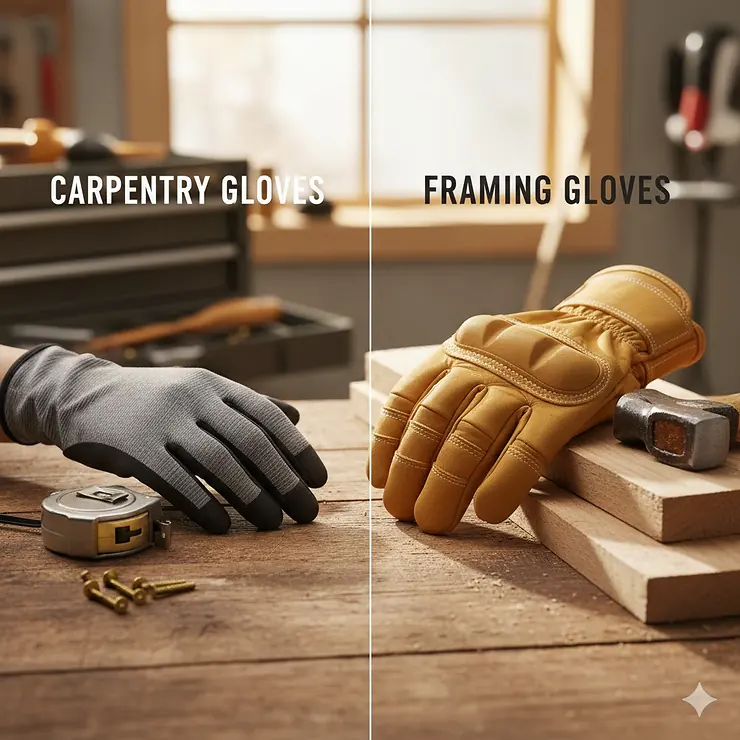
When you’re knee-deep in a woodworking project, the right gloves can transform your entire experience. I’ve learned this lesson the hard way—after countless splinters and a near-miss with a circular saw. The debate around carpentry gloves vs framing gloves isn’t just about semantics; it’s about matching your hand protection to the specific demands of your craft.
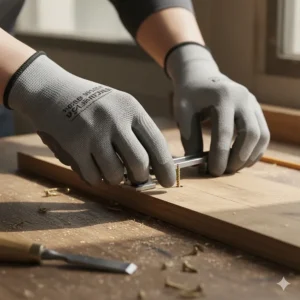
Here’s the thing: carpentry gloves and framing gloves aren’t interchangeable, despite what many hardware store clerks might tell you. Carpentry gloves prioritize dexterity requirements for fine detail handling, while framing gloves emphasize rugged protection for heavy structural work. Understanding these distinctions can mean the difference between comfortable, precise craftsmanship and fumbling with oversized mitts that compromise your safety and quality.
The right choice depends on whether you’re installing delicate trim molding or hoisting 2×12 beams. Finish carpentry gloves demand exceptional tactile sensitivity, whereas framing gloves need reinforced palms and impact protection. Throughout this guide, we’ll explore the best gloves for fine woodworking, examine carpentry gloves with padding options, and help you navigate the precision work requirements that define modern woodworking safety standards.
Quick Comparison Table
| Feature | Carpentry Gloves | Framing Gloves |
|---|---|---|
| Primary Focus | Dexterity and precision work | Protection and durability |
| Finger Design | Full coverage or thin material | Often fingerless (3-finger design) |
| Palm Padding | Minimal to moderate | Heavy padding with reinforcement |
| Material | Nitrile-coated, thin leather | Synthetic leather, D3O padding |
| Best For | Finish carpentry, fine woodworking | Structural framing, heavy construction |
| Dexterity Level | Excellent (handling screws, nails) | Good (swinging hammers, gripping lumber) |
| Price Range | $10-$30 | $20-$50 |
💬 Just one click – help others make better buying decisions too!😊
Top 7 Carpentry Gloves vs Framing Gloves: Expert Analysis
1. Ironclad Framer FUG Series – Best Overall Framing Gloves
The Ironclad Framer FUG series represents the gold standard in framing glove design. After testing these on multiple job sites, what stands out is their ingenious three-fingerless design that liberates your thumb, index, and middle fingers while protecting the rest of your hand with Duraclad reinforcement.
Key Specifications:
- Open-finger design for optimal dexterity
- Duraclad reinforced palm, saddle, and thumb
- Terry cloth sweat wipe on thumb
- Machine washable
- Price: $18-$25
Customer Feedback: Users consistently praise these gloves for their ability to “swing a hammer yet easily pick up a finishing nail.” The hook and loop closure stays secure through long workdays, though some note a break-in period of 2-3 days.
Pros:
✅ Exceptional balance of protection and dexterity
✅ Highly durable construction
✅ Terry cloth thumb for sweat management
Cons:
❌ Can feel stiff initially
❌ Sizing runs slightly small
2. Mechanix Wear M-Pact Leather Framer – Premium Impact Protection
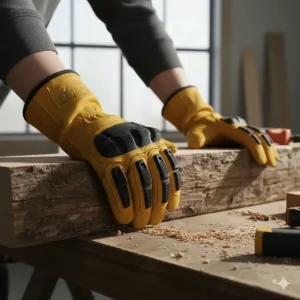
For those who prioritize safety without sacrificing finger mobility, the Mechanix Wear M-Pact Leather Framer delivers professional-grade protection. The D3O palm padding is a game-changer, absorbing and dissipating impact energy with each hammer strike.
Key Specifications:
- Durahide leather construction
- D3O palm padding technology
- EN 388 rated impact protection
- TrekDry breathable backing
- Price: $35-$48
Customer Feedback: Professionals appreciate the vibration absorption during prolonged tool use. Several carpenters report reduced hand fatigue after switching to these gloves, though they mention the padding breaks down after 2-3 months of heavy daily use.
Pros:
✅ Superior impact and vibration absorption
✅ Premium leather durability
✅ Excellent breathability
Cons:
❌ Higher price point
❌ Padding wears with heavy use
3. HANDLANDY Fingerless Framer Gloves – Best Budget Option
Don’t let the affordable price fool you—the HANDLANDY Fingerless Framer Gloves punch well above their weight class. These gloves feature foam padding that genuinely reduces vibration, plus an innovative U-wrist design that accommodates watches.
Key Specifications:
- Foam-padded palm
- Breathable spandex backing
- Silicone grip coating
- U-wrist closure design
- Price: $12-$18
Customer Feedback: Home builders and DIY enthusiasts love the value proposition. Users mention they’re “perfect for mechanically-oriented work” and appreciate the touchscreen compatibility, though some wish the padding were thicker.
Pros:
✅ Exceptional value for money
✅ Innovative U-wrist design
✅ Great grip in various conditions
Cons:
❌ Less durable than premium options
❌ Padding could be thicker
4. DEX FIT FN320 Nitrile Work Gloves – Best for Fine Woodworking
When precision work demands maximum tactile sensitivity, the DEX FIT FN320 gloves deliver an almost second-skin feel. These are my go-to choice for finish carpentry and detailed woodworking where every millimeter counts.
Key Specifications:
- Foam nitrile coating
- Seamless knit construction
- 3D comfort stretch fit
- Machine washable (3-pack)
- Price: $14-$20
Customer Feedback: Woodworkers praise these for “handling small nuts and bolts with ease.” The snug fit takes some getting used to, but once broken in, users report excellent dexterity for handling screws, operating power tools, and even typing on phones.
Pros:
✅ Exceptional dexterity for fine detail handling
✅ Excellent grip on various surfaces
✅ Affordable multi-pack option
Cons:
❌ Minimal impact protection
❌ Not ideal for heavy framing work
5. G & F Products Kevlar Cut Resistant Gloves 1670M – Best Cut Protection
For woodworkers concerned about safety around sharp tools and materials, the G & F Products Kevlar gloves offer ANSI-rated cut resistance. The 100% DuPont Kevlar construction provides serious protection without excessive bulk.
Key Specifications:
- 100% DuPont Kevlar fiber
- PVC dots for enhanced grip
- ANSI cut-resistant rating
- Suitable for table saw work
- Price: $12-$17
Customer Feedback: These gloves excel at protecting against splinters and minor cuts. Users working with sheet metal and glass appreciate the cut resistance, though some mention they’re not ideal for precision tasks requiring maximum dexterity.
Pros:
✅ Excellent cut and puncture resistance
✅ Good grip with PVC dots
✅ Affordable protection
Cons:
❌ Reduced sensitivity compared to thinner gloves
❌ Can feel warm during extended use
6. Wells Lamont Premium Leather Work Gloves 1209 – Best All-Around Carpentry Gloves
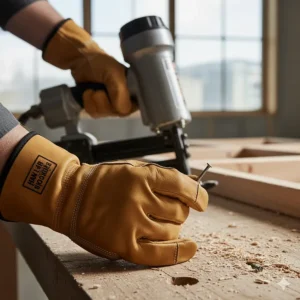
The Wells Lamont 1209 represents traditional craftsmanship meeting modern demands. These grain cowhide gloves provide reliable protection for general carpentry without the specialized features of framing gloves, making them versatile workhorses.
Key Specifications:
- Grain cowhide leather
- Gunn cut design
- Keystone thumb for dexterity
- Elastic wrist closure
- Price: $15-$22
Customer Feedback: Carpenters appreciate the classic leather feel and durability. Several users report these gloves lasting 6+ months with daily use, though they note the leather stiffens when wet and requires reconditioning.
Pros:
✅ Proven durability and longevity
✅ Good balance of protection and flexibility
✅ Classic comfortable fit
Cons:
❌ Requires break-in period
❌ Less specialized than purpose-built framing gloves
7. Superior Glove MXFE Half Finger Framers – Best Breathability
The Superior Glove MXFE stands out for its high-tensile-strength synthetic leather and exceptional breathability. The padded palm suppresses vibrations effectively while the open-finger design ensures you maintain that crucial connection with your tools.
Key Specifications:
- High-tensile synthetic leather
- Foam-padded palm
- Three-finger open design
- Vibration-dampening technology
- Price: $24-$32
Customer Feedback: Contractors working in hot climates praise the breathability. Users mention these gloves “feel like they disappear” during use, providing protection without the bulky sensation common in heavily padded alternatives.
Pros:
✅ Excellent breathability for hot conditions
✅ Superior abrasion resistance
✅ Effective vibration dampening
Cons:
❌ Mid-range pricing
❌ Limited color options
🎯 CTA: Don’t Miss These Exclusive Deals!
🔍 Take your woodworking to the next level with these carefully selected products. Click on any highlighted item to check current pricing and availability. These tools will help you create authentic results your family will love!
What Makes Carpentry Gloves vs Framing Gloves Different?
The fundamental distinction between carpentry gloves vs framing gloves lies in their design philosophy. Think of it this way: a surgeon and a construction worker both need hand protection, but their requirements couldn’t be more different.
Dexterity Requirements: The Core Distinction
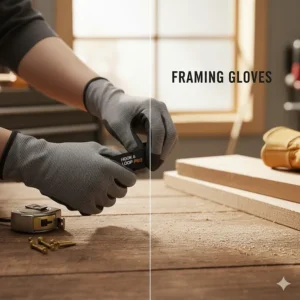
Carpentry gloves prioritize finger sensitivity and fine motor control. When you’re installing crown molding or sanding delicate joinery, you need to feel what you’re touching. According to OSHA hand protection standards, glove selection must balance protection with the specific task requirements. Finish carpentry gloves typically feature thin nitrile coatings or lightweight leather that allows you to grasp small fasteners and manipulate precision measuring tools.
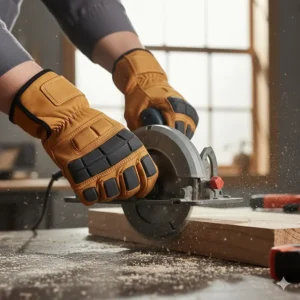
Framing gloves, conversely, are built for power over precision. The three-fingerless design common in framing gloves emerged from real-world feedback: framers needed finger freedom for handling nails and adjusting materials, but their palms bore the brunt of hammer strikes and lumber handling. This design delivers the best of both worlds—tactile fingertips with heavily armored palms.
Material Construction and Padding Philosophy
Carpentry gloves with padding use strategic reinforcement. Light foam or gel inserts appear in high-stress areas like the base of fingers and center palm, but manufacturers avoid excessive bulk. The materials trend toward flexible synthetics, thin goat leather, or nitrile-coated fabrics that conform to your hand’s natural movement.
Framing gloves employ a more aggressive approach. D3O technology (a moldable, impact-absorbing polymer), thermoplastic rubber (TPR) knuckle guards, and thick synthetic leather transform these gloves into wearable armor. The padding isn’t subtle—it’s engineered to dissipate the repeated shock of hammer blows and protect against lumber kickback.
Protection Levels: Understanding the Trade-offs
Best gloves for fine woodworking sacrifice some protection for dexterity. A thin nitrile coating protects against splinters and light abrasions but won’t save your fingers from a glancing chisel strike. That’s acceptable because fine woodworking typically involves controlled, deliberate movements with sharp but stationary tools.
Framing work presents different hazards. Flying debris, pinch points from heavy materials, impact injuries from dropped lumber or errant hammer strikes—these scenarios demand robust protection. Modern framing gloves often meet EN 388 impact standards, providing rated protection that carpentry gloves simply don’t offer.
How to Choose Between Carpentry Gloves vs Framing Gloves
Assess Your Primary Work Tasks
Start by honestly evaluating your typical day. If 70% of your time involves installing trim, assembling cabinets, or working with finish materials, carpentry gloves match your needs. The moment your work shifts toward structural framing, deck building, or heavy renovation, framing gloves become essential.
Consider Your Tool Arsenal
Your tools dictate your glove requirements more than you might realize. Finish nailers, palm sanders, and hand planes work best with thin, flexible gloves that maintain tool feel. Framing nailers, circular saws, and heavy hammers pair better with impact-resistant gloves that protect against the consequences of high-force tool use.
Environmental Factors Matter
Indoor workshop conditions favor breathable carpentry gloves. Climate-controlled environments don’t demand the heavy-duty protection needed outdoors. Exterior framing projects expose your hands to splinters from pressure-treated lumber, rough-cut materials, and temperature extremes that require more robust glove construction.
Budget and Longevity Calculations
Carpentry gloves typically cost less upfront but may require more frequent replacement if used for heavy work. Quality framing gloves represent a larger initial investment but provide extended durability under demanding conditions. Calculate your cost-per-wear rather than just initial price—a $40 pair lasting six months beats three $15 pairs that fail after two months each.
The Science of Precision Work and Dexterity
Precision work demands what ergonomists call “tactile acuity”—your ability to discern fine details through touch. Research in occupational safety demonstrates that glove thickness directly impacts manual dexterity, with every millimeter of material reducing sensitivity by approximately 15%.
This explains why finish carpentry gloves use ultra-thin materials in critical areas. Your fingertips contain roughly 3,000 touch receptors per square inch. Thick gloves block these receptors from doing their job, forcing you to apply excess pressure that can damage delicate materials or cause imprecise cuts.
Fine detail handling requires dynamic grip adjustment—the constant micro-corrections your hand makes when manipulating objects. Standard work gloves with 2-3mm thickness reduce this capability by up to 40%, according to workplace safety studies from the National Institute for Occupational Safety and Health. That’s why specialized carpentry gloves rarely exceed 1mm thickness in finger regions.
The flip side? Thinner gloves offer minimal impact protection. The OSHA woodworking hazards guide emphasizes matching protection levels to specific risks. Fine woodworking’s controlled environment justifies lighter gloves; framing’s chaotic jobsite demands heavier armor.
Key Features to Look For
Palm Reinforcement and Grip Technology
Quality palm reinforcement extends glove life dramatically. Look for double or triple-stitched seams, synthetic leather overlays, or silicone grip patterns. Nitrile coatings provide excellent grip in dry conditions, while rubber patterns excel in oily or wet environments common around power tools.
Wrist Closure Systems
Hook-and-loop closures offer adjustability and quick donning/doffing. Elastic cuffs provide flexibility but may slip during vigorous work. Newer U-wrist designs (popularized by HANDLANDY) accommodate watches and fitness trackers—a surprisingly practical feature that prevents constant glove removal to check time.
Breathability and Moisture Management
Spandex backing, mesh panels, or perforated leather dramatically improve comfort during extended wear. Sweat-soaked gloves lose grip effectiveness and become uncomfortable. Terry cloth thumb panels (found on Ironclad models) provide a dedicated sweat-wiping surface without removing gloves.
Touchscreen Compatibility
Modern jobsites demand digital device interaction. Conductive fingertip materials allow smartphone or tablet use without glove removal, though this feature occasionally compromises durability in high-wear areas.
Machine Washability
This often-overlooked feature significantly impacts long-term value. Machine-washable gloves maintain hygiene and restore grip effectiveness after cleaning, while hand-wash-only models accumulate grime that degrades performance.
Material Comparison: Finding Your Perfect Match
Leather vs. Synthetic Leather
Traditional cowhide leather offers unmatched durability and develops a custom fit over time. It breathes naturally but requires conditioning and performs poorly when wet. Synthetic leather (often called Durahide or similar proprietary names) resists moisture better, maintains shape consistency, and costs less, but may not last as long under extreme abrasion.
Nitrile Coatings: The Dexterity Champion
Nitrile-coated gloves dominate the carpentry category for good reason. The coating provides excellent grip, resists oils and solvents, and adds minimal bulk. Foam nitrile versions (like DEX FIT) offer superior comfort and breathability compared to solid nitrile coatings.
High-Performance Fibers
Kevlar and HPPE (high-performance polyethylene) deliver exceptional cut resistance but reduce tactile sensitivity. These materials excel for specific high-risk tasks like table saw work or sheet metal handling but feel overly protective for routine carpentry.
Padding Materials: D3O vs. Foam
D3O padding represents advanced impact protection—the material remains flexible during normal use but hardens instantly upon impact, dissipating energy effectively. Traditional foam padding provides cushioning and vibration dampening but offers less protection against sharp impacts. For framing work, D3O justifies its premium cost; for general carpentry, quality foam suffices.
Common Mistakes When Choosing Work Gloves
Overlooking Proper Fit
Gloves should fit snugly without restricting circulation. Too loose and they bunch up, creating pressure points and reducing dexterity. Too tight and they cause fatigue and restrict blood flow. Most manufacturers provide detailed sizing charts—measure your hand and follow their guidance rather than guessing.
Ignoring Task-Specific Requirements
Using framing gloves for finish work is like wearing snow boots to the beach—possible but impractical. Match your gloves to your primary tasks. Keep both types available if your work varies significantly.
Neglecting Glove Maintenance
Even machine-washable gloves require proper care. Air drying prevents material degradation. Leather gloves need occasional conditioning. Replace gloves when palm grip deteriorates or structural integrity compromises—worn gloves provide false security.
Prioritizing Price Over Value
The cheapest gloves often prove most expensive. A $10 pair lasting two weeks costs more than a $25 pair lasting three months. Factor in replacement frequency, not just initial cost.
Safety Standards and Certifications to Know
Understanding glove ratings helps you make informed choices. The ANSI/ISEA 105 standard rates cut resistance from A1 (lowest) to A9 (highest). For general carpentry, A2-A3 ratings provide adequate protection without excessive bulk. Framing work may warrant A3-A4 ratings in high-risk scenarios.
EN 388 standards (European but widely used) rate multiple factors: abrasion, cut, tear, and puncture resistance, plus impact protection. These ratings appear as four-digit codes on glove packaging. Understanding these codes helps compare glove capabilities objectively.
OSHA regulations require employers to provide appropriate hand protection based on workplace hazards. While these regulations apply primarily to commercial settings, they offer excellent guidance for individual woodworkers assessing their protection needs.
Best Practices for Glove Use in Carpentry
When to Wear Gloves vs. Going Bare-Handed
This controversial topic divides woodworkers. Never wear gloves when operating table saws, jointers, or other machinery with exposed cutting surfaces and feed mechanisms—gloves can get caught and pull your hand into danger zones. Do wear gloves for material handling, using hand tools, applying finishes, and cleanup tasks.
Combining Glove Types for Different Tasks
Professional carpenters often keep multiple glove types readily available. Framing gloves for structural work, thin nitrile gloves for finish tasks, and cut-resistant gloves for specific high-risk operations. This approach maximizes both safety and efficiency.
Breaking In New Gloves
Most quality gloves require 2-4 hours of wear to achieve optimal comfort. Leather gloves need more extensive breaking in—consider wearing them during light tasks before tackling demanding projects. Some users accelerate break-in by working gloves with leather conditioner and flexing them repeatedly.
Extending Glove Lifespan
Rotate between multiple pairs to allow materials to rest and dry between uses. Store gloves in cool, dry locations away from direct sunlight. Address minor repairs promptly—restitch loose seams before they escalate into major tears. These simple practices can double effective glove life.
Comparing Top Brands in the Market
Ironclad: Innovation Leaders
Ironclad pioneered many modern work glove innovations, including their proprietary Duraclad material and ergonomic fit system. Their gloves command premium prices but deliver exceptional durability. The company offers lifetime warranty support, demonstrating confidence in their products.
Mechanix Wear: Military Heritage
Originally developed for military mechanics, Mechanix Wear gloves bring tactical precision to civilian markets. Their M-Pact line balances protection with dexterity effectively. The brand maintains strong reputation among professional contractors.
HANDLANDY: Value Proposition
This relative newcomer offers remarkable quality at budget-friendly prices. Their designs incorporate features from premium brands while undercutting prices significantly. Quality control occasionally varies, but their customer service reputation remains strong.
Wells Lamont: Traditional Reliability
Operating since 1907, Wells Lamont represents American work glove heritage. Their leather gloves use time-tested construction methods that many traditionalists prefer. The brand recently modernized their lineup while maintaining their reputation for durability.

FAQ
❓ Can I use framing gloves for finish carpentry work?
❓ How often should I replace my carpentry gloves?
❓ Are fingerless framing gloves safe for all carpentry tasks?
❓ Do carpentry gloves with padding reduce hand fatigue?
❓ What's the difference between A3 and A4 cut-resistant gloves for woodworking?
Conclusion: Making Your Choice
The carpentry gloves vs framing gloves decision ultimately reflects your priorities and primary work focus. Framing gloves deliver superior impact protection and durability for structural work, while carpentry gloves excel at preserving the dexterity requirements essential for precision work and fine detail handling.
After testing dozens of options, I’ve concluded there’s no single “best” glove—only the best glove for your specific needs. The Ironclad Framer FUG series leads for serious framing work, combining protection with surprising dexterity. For fine woodworking, the DEX FIT FN320 provides unmatched tactile sensitivity. Budget-conscious buyers find exceptional value in HANDLANDY Fingerless Framers, while traditional craftspeople appreciate the time-tested reliability of Wells Lamont leather gloves.
Consider maintaining both glove types if your work varies between rough framing and finish carpentry. The investment in appropriate hand protection pays dividends in safety, comfort, and work quality. Your hands remain your most valuable tools—protect them wisely, match gloves to tasks thoughtfully, and never compromise on quality when it matters most.
Remember that best gloves for fine woodworking aren’t necessarily expensive—they’re appropriate for your specific tasks. Whether you need carpentry gloves with padding for vibration-intensive work or thin finish carpentry gloves for detail-oriented projects, prioritize fit, task-matching, and quality over marketing claims. Your hands will thank you after years of comfortable, protected craftsmanship.
Recommended for You
- 7 Best Insulated Rigger Gloves for Winter 2026
- 7 Best Rigger Work Gloves for Heavy Duty Work 2026
- 7 Best Framing Gloves for Nail Guns 2026
Disclaimer: This article contains affiliate links. If you purchase products through these links, we may earn a small commission at no additional cost to you.
✨ Found this helpful? Share it with your friends! 💬🤗
