
In This Article
Here’s a scenario you’ve probably lived: you’re halfway through a job involving bleach, fertilizer, battery acid, or industrial solvent, and you realize your gloves are flimsy latex exam gloves that are already starting to permeate. Your skin stings. You think, maybe I’ll upgrade next time. That “next time” thinking is exactly how chemical burns happen.
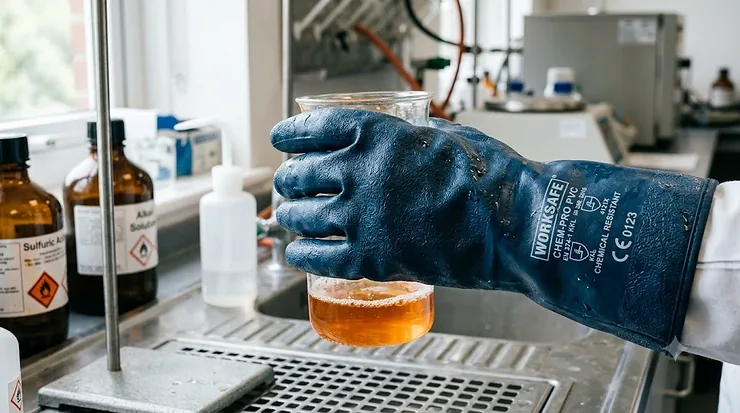
PVC chemical resistant gloves are the workhorse of hand protection across industries — from agriculture and automotive to janitorial services and home renovation. What makes polyvinyl chloride gloves special isn’t just the material; it’s the combination of properties that no single alternative nails quite as well at the same price point. PVC delivers excellent resistance to oils, acids, alkalis, solvents, and fuels. It doesn’t crack in cold storage. It doesn’t stiffen up after one wash. And critically, it’s latex-free — an underrated benefit for anyone with skin sensitivities.
But here’s what the product listings won’t tell you: not all PVC chemical resistant gloves are built the same. Cuff length, coating thickness, liner comfort, grip texture, and certifications vary wildly. A pair that works beautifully for scrubbing out a grease trap will fail spectacularly against concentrated sulfuric acid. Choosing wrong doesn’t just waste money — it puts your hands at genuine risk.
According to OSHA’s hand protection guidelines, glove material must be matched specifically to the chemical being handled, with consideration for concentration, duration of exposure, and permeation rate. This isn’t box-checking — it’s the difference between a good day at work and a trip to urgent care.
In this guide, I’ve researched and ranked 7 real, currently available PVC coated chemical gloves on Amazon — analyzing specs, certifications, user feedback, and real-world fit for different budgets and work environments. Whether you’re a homeowner cleaning a deck or a plant technician handling industrial solvents, there’s a pair here that’ll do the job right.
Quick Comparison: Top 7 PVC Chemical Resistant Gloves at a Glance
| Product | Cuff Length | Key Feature | Best For | Price Range |
|---|---|---|---|---|
| Wells Lamont 174L | 12 inches | Super flexible PVC, textured grip | Budget daily use | Under $10 |
| Wells Lamont 167L | 14 inches | Heavyweight PVC, gauntlet cuff | Fertilizer/farming | $10–$15 |
| LANON PVC Gloves (B09F98463J) | 12 inches | Sandy texture, EN 374 Type B | General industrial | $10–$18 |
| LANON 26″ Elbow Length PVC | 26 inches | Full forearm coverage | Splash-heavy tasks | $15–$25 |
| SHOWA Atlas 620 | 12 inches | Double-dipped, professional grade | Lab & light industry | $8–$20/pair |
| PACIFIC PPE 26″ PVC Gloves | 26 inches | 96-hr durability tested, Level 4 abrasion | Heavy industrial use | $20–$30 |
| Xpose Safety 18″ PVC Gloves | 18 inches | 3-pair value pack, forearm-length | Cost-conscious buyers | $15–$22/3pk |
What this table tells you: The biggest decision point isn’t brand — it’s cuff length. If you’re regularly dealing with splashing liquids or working at or above elbow height (reaching into tanks, mixing drums, cleaning under machinery), you need at minimum 18 inches. The 12-inch options are excellent for bench work and most everyday tasks, but they leave your forearm exposed in ways that will eventually bite you. Budget buyers get two strong options under $15; professionals handling aggressive chemicals should look at SHOWA 620 or PACIFIC PPE for the extra performance margin
💬 Just one click — help others make better buying decisions too! 😊
Top 7 PVC Chemical Resistant Gloves: Expert Analysis
1. Wells Lamont 174L Heavy Duty Rubber Gloves with PVC Coating
If you need reliable, no-fuss chemical hand protection without spending a fortune, the Wells Lamont 174L is the glove you hand to literally everyone on the crew. The 12-inch gauntlet extends over your wrist and lower forearm — enough for most bench-level chemical handling — with a blue PVC exterior that’s textured for grip in wet or oily conditions.
The seamless cotton knit lining is the unsung hero here. A lot of cheap PVC gloves have liners that bunch, slip, and turn sweaty hands into a blister factory by hour two. This one doesn’t. The cotton sits smooth, absorbs a little moisture, and makes getting the gloves on and off fast — important if you’re pulling them off to answer a radio or grab a tool repeatedly throughout the day.
What the spec sheet won’t tell you: the straight thumb design keeps your hand in a natural, ergonomic position. It sounds minor until you’ve worn a poorly designed glove for six hours and your thumb joint aches.
Buyers consistently report using these for cleaning grease traps, handling pool chemicals, and automotive degreasing. The 4.7-star rating across thousands of reviews speaks for itself.
✅ Super flexible for a PVC glove
✅ Cotton lining — genuinely comfortable
✅ Outstanding price-to-protection ratio
❌ 12 inches only — not for tasks with overhead splash risk
❌ Not certified for concentrated industrial acids
Price range: Under $10. For the occasional chemical job or household use, this is the easiest recommendation I can make.

2. Wells Lamont 167L Heavyweight PVC Coated Work Gloves, 14″
Think of the Wells Lamont 167L as the 174L’s harder-working older sibling. Same DNA — cotton liner, PVC coating, Wells Lamont’s century-plus manufacturing heritage — but with two key upgrades: a 14-inch gauntlet cuff (two more inches of forearm protection) and a heavier PVC coating that handles thicker, more aggressive exposures.
This model is genuinely famous in the agricultural sector. It’s the de facto standard for handling anhydrous ammonia and fertilizer — two substances that will destroy lesser gloves in minutes. The precurved hand and wing thumb design means your hand isn’t fighting the glove shape all day; it just fits. The textured grip handles diesel fuel, oils, and wet concrete with confidence.
The extra cuff length matters more than people realize. Two inches might sound trivial, but when you’re pouring liquid fertilizer into a spreader and it splashes back, those two inches are the difference between skin contact and a clean sleeve. If farming, landscaping, or construction are in your regular job description, the upgrade from 174L to 167L is worth every extra dollar.
Customer feedback highlights long-term durability — multiple users report getting a full season of daily agricultural use before needing replacement.
✅ 14-inch cuff for extra forearm coverage
✅ Excellent resistance to fuels, oils, fertilizers
✅ Precurved ergonomic fit reduces hand fatigue
❌ Only available in men’s large size (167L) — limited sizing options
❌ Not suitable for concentrated strong acid applications
Price range: $10–$15. A legitimate upgrade from the 174L for anyone in agriculture or outdoor chemical work.
3. LANON PVC Chemical Resistant Gloves, 12″ (Model B09F98463J)
LANON has been manufacturing PPE since 1958. That’s not marketing fluff — it shows in the build quality and, critically, in the certifications. The LANON PVC Chemical Resistant Gloves (blue, 12-inch) carry EN ISO 374-1:2016 Type B certification, which means they’ve been independently tested against methanol, n-heptane, and 40% sodium hydroxide — actual documentation that these resist real chemical threats, not just “chemical resistant” printed on the box.
The sandy-textured palm is where this glove pulls ahead of the Wells Lamont budget options. That texture isn’t just for grip — it increases surface area contact with the PVC coating, which means better resistance to liquid absorption over time. The 13-gauge seamless cotton liner keeps things breathable. EN 388 abrasion performance at level 4121X means these handle mechanical hazards — rough surfaces, edges, abrasive materials — better than most comparably priced PVC gloves.
Who is this for? Workshop users, lab technicians, janitorial crews, and anyone who wants documented certification backing their protection. The difference between “we say it’s chemical resistant” and “certified EN ISO 374 Type B” matters enormously when you’re writing safety protocols or managing workers’ comp risk.
Buyers note the gloves hold up well through repeated washes and extended daily use.
✅ EN ISO 374-1:2016 Type B certified — real documentation
✅ Sandy texture provides superior grip and chemical resistance
✅ Available in multiple sizes including XL
❌ 12-inch cuff limits upper forearm protection
❌ Not suitable for highly concentrated acids or strong solvents
Price range: $10–$18. The certification story alone makes this worth the extra few dollars over a basic PVC glove.
4. LANON 26″ Elbow Length PVC Chemical Resistant Gloves
When tasks involve reaching into drums, cleaning tanks, or working in environments where splashes are routine — not occasional — the jump to 26-inch elbow-length coverage isn’t a luxury, it’s a necessity. The LANON 26″ Elbow Length PVC Gloves are the go-to for exactly those situations.
The extra-long PVC sleeve flexes surprisingly well for its length — this is something most long industrial gloves get wrong. Stiff 26-inch gloves wear out your forearm and wrist muscles by mid-shift. LANON’s flexibility here comes from the same PVC compound used in their shorter models, just extended. The 13-gauge cotton liner runs the full length, so your arms aren’t sweating inside a rubber tube all day.
The chemical protection spec — EN ISO 374-1:2016 Type B, tested against methanol, n-heptane, and 40% sodium hydroxide — carries across from LANON’s shorter model. What you’re paying more for is coverage, not a fundamentally different protection level.
In practice, I’d recommend these for anyone doing pond maintenance, aquarium cleaning, septic tank work, heavy-duty industrial cleaning, or agricultural chemical mixing. The 3-pair pack option provides excellent value for teams or high-use environments.
✅ 26-inch full forearm protection — ideal for immersion tasks
✅ Surprisingly flexible for long-cuff PVC
✅ Same EN 374 certification as shorter LANON models
❌ Not ideal for dexterity-heavy precision tasks
❌ Takes longer to don and doff — minor hassle in fast-paced environments
Price range: $15–$25 (single pair), 2–3 pair packs also available. A smart investment for splash-heavy work.
5. SHOWA Atlas 620 Double-Dipped PVC Chemical Resistant Gloves, 12″
SHOWA is the brand safety managers trust when they need to defend a glove choice in writing. The SHOWA Atlas 620 is a double-dipped medium-weight PVC glove — and that “double-dipped” detail is more important than it sounds. Where single-coat PVC gloves have one layer of protection, the 620’s double-dip process builds two bonded layers of PVC over the seamless cotton liner. The result is a glove that resists common acids, bases, and solvents with notably higher reliability than single-layer alternatives, while remaining liquid-proof throughout.
The rough texture finish provides a secure grip even with wet, oily, or slippery surfaces — something that smooth-surface PVC gloves consistently fail at when conditions get messy. At 12 inches long with a gauntlet-style extension, the 620 strikes the ideal balance between protection and range of motion.
This is the glove for lab technicians, chemical plant workers, automotive detailers, and anyone who writes safety protocols and needs documented performance behind their choices. Available in packs of 12 pairs — a cost-effective solution for workplace purchasing.
Customer feedback consistently highlights the 620’s durability and comfort edge over cheaper alternatives. SHOWA’s manufacturing quality control is notably tighter than no-name imports.
✅ Double-dipped PVC for superior protection
✅ Liquid-proof with rough-finish grip
✅ Trusted brand with strong quality consistency
❌ Typically higher per-pair cost than budget brands
❌ Orange color may not suit all work environments
Price range: $8–$20 per pair depending on pack size. In bulk (12-pair packs), the per-pair cost drops significantly.

6. PACIFIC PPE 26″ PVC Chemical Resistant Gloves with Cotton Liner
If you need long-sleeve protection that genuinely survives industrial punishment, the PACIFIC PPE 26″ PVC Gloves deliver with a specification that few competitors in their price range can match. The headline stat: mechanical strength maintained above 90% after 96 continuous hours of operation at 158°F. In practical terms, that means these gloves won’t degrade in hot, wet, chemically aggressive environments where lesser PVC gloves start softening or cracking within days.
The abrasion resistance hits EN 388 Level 4 (at least 8,000 wear cycles) — a spec that matters enormously in industrial environments where gloves are scraped across rough concrete, metal edges, and machinery. The 13-gauge cotton liner is seamless, breathable, and makes all-day wear genuinely manageable even in warm conditions.
Crucially, PACIFIC PPE’s PVC formulation is CA Prop.65 compliant for phthalates — relevant for buyers in California or companies with strict chemical input documentation requirements.
This is the glove for petrochemical workers, mining operations, heavy manufacturing, and anyone dealing with sustained chemical exposure in physically demanding environments. It’s also smart for agriculture operations where gloves go through genuine abuse daily.
✅ 90%+ strength retention after 96-hour continuous use
✅ Level 4 abrasion resistance — handles rough industrial conditions
✅ CA Prop.65 compliant, latex-free
❌ 26-inch length limits fine motor precision
❌ Heavier and stiffer than shorter alternatives — not ideal for office or lab settings
Price range: $20–$30. For genuinely demanding industrial use, this is excellent value relative to what you’re getting.
7. Xpose Safety 18″ Chemical Resistant PVC Gloves (3-Pair Pack)
The Xpose Safety 18″ PVC Chemical Resistant Gloves occupy a smart middle-ground that most people overlook: 18 inches of forearm protection — longer than typical short-cuff options but more maneuverable than 26-inch elbow gloves — sold in a 3-pair pack that significantly cuts cost-per-use.
The 18-inch cuff hits the sweet spot for tasks like cleaning industrial tanks from the top, handling garden and yard chemicals, working in labs with overhead pours, or any scenario where 12-inch cuffs feel borderline but you don’t want the bulk of a 26-inch glove. The PVC-coated cotton construction resists most chemicals and acids encountered in commercial and home environments.
What the Xpose Safety 18″ offers that single-pair gloves don’t: redundancy. Having three pairs means you can keep one in the truck, one in the shop, and one in the house. You’re never caught without protection. For teams, this pack stretches the budget considerably.
Customer feedback focuses on durability and comfort for extended use — these hold up well for landscaping, pool maintenance, and light industrial cleaning without developing cracks or stiffness.
✅ 18-inch cuff — ideal mid-length for overhead-splash tasks
✅ 3-pair pack provides excellent value
✅ Versatile for both home and commercial use
❌ Less certified/documented than LANON or SHOWA alternatives
❌ Heavier-duty industrial chemistry may exceed these gloves’ protection level
Price range: $15–$22 for the 3-pack. Outstanding value for the volume and coverage you’re gettin
✨ Don’t Miss These Exclusive Deals!
🔍 Take your chemical safety to the next level with these carefully selected PVC gloves. Click on any highlighted product to check current pricing and availability on Amazon. The right gloves are the ones you’ll actually wear — make sure you have them before the next job demands it!
How to Use PVC Chemical Gloves Correctly (Most People Skip This)
Buying the right gloves is step one. Using them correctly is step two — and step two gets skipped embarrassingly often.
Before putting gloves on: Inspect them. Every single time. Run your fingers inside the cuff and feel for thin spots, cracks, or weak areas near the seams. A small integrity failure in PVC means the chemical will find its way in, often without you realizing immediately. This takes about ten seconds. It is absolutely worth those ten seconds.
Putting gloves on: Pull from the cuff edge, not from the fingers. Pulling from the fingertips puts tensile stress on the most vulnerable part of the glove — the tips — and accelerates wear. Also: make sure your hands are dry before donning. Water trapped inside a PVC glove creates a humid, irritating environment that leads to hand rash over time.
During use: Don’t touch your face. This sounds obvious and is violated constantly. If you need to wipe your face, remove the glove first. PVC gloves carry chemical residue on their surface even when you can’t see or smell it.
Removing gloves: The “peel from the wrist” technique is the correct move — roll the cuff back on itself and pull inside-out. This keeps the contaminated exterior contained. Never use your bare hand to grab the exterior of a used chemical glove.
Cleaning and storage: Most PVC gloves are reusable. Rinse thoroughly with clean water, inside and out, after each use. Let them dry completely before storing — moisture trapped inside promotes bacteria and degrades the liner. Store them away from direct sunlight and heat, which accelerates UV breakdown in PVC. A dry, dark cabinet or storage bin extends glove life dramatically.
Replacement schedule: Even with perfect care, PVC gloves degrade. If you notice stiffening, discoloration, or any tackiness on the exterior surface, replace them immediately. Don’t gamble your skin on a glove that’s past its useful life.

The 3 Most Common Mistakes When Buying PVC Chemical Gloves
Mistake #1: Choosing Cuff Length Based on Price, Not Task
The single most common glove-buying error. People default to short (12-inch) cuffs because they’re cheaper, then work in environments where splashes routinely reach the forearm. The economics of this are backwards — a longer glove costs $5–$10 more but saves you a chemical burn that can easily mean $500+ in medical costs and days of lost productivity.
The fix: Honestly assess your most common task. If your hands are ever above or level with a chemical source, or you’re working in a space where unexpected splashes are plausible, go with 18 inches minimum. Reserve 12-inch cuffs for controlled bench environments only.
Mistake #2: Assuming “PVC” Means Universal Chemical Protection
PVC is excellent against oils, fuels, diluted acids, alkalis, and most organic solvents at typical concentrations. It is not a universal chemical barrier. Concentrated sulfuric acid, hydrofluoric acid, and certain chlorinated solvents will permeate or degrade PVC over time. According to NIOSH guidelines on PPE selection, glove material must be verified against specific chemicals and concentrations — not just material category.
The fix: Look at EN ISO 374 certification and the specific chemicals tested. The LANON and PACIFIC PPE options in this list provide certified documentation. If you’re dealing with highly aggressive chemistry, that documentation is non-negotiable.
Mistake #3: Ignoring Liner Comfort and Fit
A glove you won’t wear because it’s uncomfortable is worse than no glove — because no-glove situations at least remind you you’re unprotected. Workers pull off gloves that chafe, bind, or sweat their hands, especially during sustained tasks. Then the phone rings. Then they forget to put them back on.
The fix: Choose a glove with a seamless cotton liner (all seven options here have one). Verify sizing — PVC gloves that are too large create loose fabric that folds inside and causes blisters. The right glove fits snugly at the fingers with just enough room to make a fist comfortably.
PVC Chemical Gloves vs. Alternative Materials: What Actually Wins Where
This comparison comes up constantly, so let’s settle it with specifics rather than vague generalities.
| Material | Acid Resistance | Solvent Resistance | Oil Resistance | Cold Performance | Price | Latex-Free |
|---|---|---|---|---|---|---|
| PVC | ✅ Good | ✅ Good | ✅ Excellent | ✅ Flexible to 14°F | 💲 Low–Mid | ✅ Yes |
| Nitrile | ✅ Very Good | ✅ Very Good | ✅ Excellent | ⚠️ Stiffens in cold | 💲💲 Mid | ✅ Yes |
| Natural Rubber/Latex | ✅ Excellent | ⚠️ Limited | ✅ Good | ⚠️ Moderate | 💲 Low | ❌ Latex risk |
| Neoprene | ✅ Excellent | ✅ Excellent | ✅ Good | ✅ Good | 💲💲💲 High | ✅ Yes |
| Butyl Rubber | ✅✅ Superior | ✅✅ Superior | ⚠️ Moderate | ⚠️ Stiff | 💲💲💲💲 Premium | ✅ Yes |
The real-world read: PVC wins on price-per-performance for general chemical work — oils, fuels, dilute acids, cleaning agents, fertilizers. Nitrile is often preferred for more precise dexterity tasks and superior solvent resistance, but costs more. For extreme chemical environments (concentrated strong acids, ketones, esters), neoprene or butyl rubber is the better call. But for 90% of industrial, agricultural, and commercial cleaning applications, PVC chemical resistant gloves deliver everything you need at a fraction of the cost of premium alternatives.
According to a resource from the University of Minnesota’s Lab Safety program, glove selection should always start with chemical compatibility charts — matching the polymer to the specific substance, not guessing based on general reputation.
As a general rule: don’t spend $40 on butyl rubber gloves to wash down a concrete floor, and don’t use a $6 PVC glove to handle concentrated hydrochloric acid. Match the material to the risk level, and PVC fits the majority of everyday chemical protection needs perfectly.
Features That Actually Matter (And Marketing Noise You Can Ignore)
After reviewing dozens of PVC gloves, here’s what I’ve learned separates real protection from packaging claims:
What ACTUALLY matters:
✅ EN ISO 374 Certification — This is the single most important credential on a chemical-resistant glove. It documents third-party testing against specific chemicals. If a glove doesn’t have this, it’s the manufacturer’s word alone that it resists chemicals.
✅ Cuff length — Already covered, but worth repeating. Length is a physical barrier. No coating compensates for an exposed forearm.
✅ Liner construction — Seamless vs. sewn liners matter enormously for multi-hour wear. Seamless means no seam ridges digging into your palm. Non-negotiable for extended use.
✅ Grip texture — Sandy or rough-textured finishes significantly outperform smooth PVC in real wet/oily conditions. This is a practical safety feature, not aesthetics.
✅ Coating process — Double-dipped (like the SHOWA Atlas 620) builds two bonded layers. Single-dipped is cheaper but more vulnerable to pinhole formation over time.
What you can largely ignore:
❌ Color — Blue, green, orange, red — irrelevant to performance. Choose whatever helps you track gloves in your workspace.
❌ “Industrial grade” without certification — Every manufacturer calls their gloves industrial grade. Without EN 374 or equivalent testing data, it means nothing.
❌ Exact thickness numbers without context — “3mm thickness” sounds impressive but tells you nothing about protection level. The material compound and coating process matter far more than thickness alone.
How to Choose PVC Chemical Resistant Gloves: 6 Criteria That Actually Narrow Your Choice
Buying the wrong glove is easier than you’d think. Here’s the decision framework I use:
1. Identify your specific chemicals first. Not “I work with chemicals.” Specifically: what acid, solvent, or substance will contact the glove? Cross-reference with PVC chemical compatibility charts. OSHA and glove manufacturers publish these free online.
2. Determine required cuff length. Bench work with controlled pours → 12 inches is likely fine. Overhead work, tank cleaning, mixing operations → 18–26 inches minimum.
3. Assess frequency of use. Daily professional use demands certified gloves (LANON EN 374, SHOWA Atlas 620) and a replacement schedule. Occasional home use — a reliable PVC glove like the Wells Lamont 174L or 167L is perfectly sufficient.
4. Consider temperature extremes. PVC performs well in cold environments — better than nitrile. If you’re in a freezer warehouse or working outdoors in winter, this is a genuine PVC advantage.
5. Factor in dexterity needs. Long 26-inch gloves limit fine motor control. If your task requires threading bolts, operating controls, or other precision work, shorter cuffs with good finger contouring (like the Wells Lamont or LANON 12-inch models) serve better.
6. Don’t forget sizing. A glove that’s too large for your hand is almost as dangerous as no glove — the loose fingertip area reduces tactile feedback and can get caught in machinery.

FAQ: PVC Chemical Resistant Gloves
❓ What chemicals do PVC chemical resistant gloves protect against?
❓ How long do reusable PVC chemical resistant gloves last?
❓ Are PVC coated chemical gloves latex-free?
❓ What is the difference between PVC coated gloves and fully dipped PVC gloves?
❓ Can I use red PVC chemical gloves for the same tasks as blue or green ones?
Conclusion: The Right Glove Exists for Every Budget and Every Hazard
Let’s cut to it. If you’re buying your first pair of PVC chemical resistant gloves and the job involves typical cleaning chemicals, oils, fuels, or agricultural substances — the Wells Lamont 174L or 167L are honest, reliable choices under $15 that will serve you well. Start there.
If your work demands certified protection with documented testing against specific chemical threats, LANON’s EN 374-certified models deliver that documentation at a fair price. The SHOWA Atlas 620 earns its reputation in professional environments with double-dipped construction and consistent quality. And for anyone doing sustained immersion work or operating in splash-heavy industrial environments, the LANON 26″ or PACIFIC PPE 26″ models provide the arm coverage that shorter gloves simply cannot.
The bottom line: PVC chemical resistant gloves are among the most cost-effective PPE investments you can make. The cost difference between a pair that’s barely adequate and one that’s genuinely right for your job is often less than $10. Your hands do the work — protect them accordingly.
✨ Don’t Miss These Exclusive Deals!
🔍 Ready to protect your hands the right way? Click any product name above to check current pricing and availability on Amazon. Whether you need budget-friendly daily protection or certified industrial-grade defense, the perfect pair is one click away!
Recommended for You
- Best Butyl Rubber Chemical Gloves in 2026: 7 Expert Picks That Won’t Let You Down
- 7 Best Neoprene Chemical Resistant Gloves in 2026
- 7 Best Nitrile Chemical Resistant Gloves 2026
Disclaimer: This article contains affiliate links. As an Amazon Associate, I earn from qualifying purchases. If you purchase products through these links, we may earn a small commission at no additional cost to you.
✨ Found this helpful? Share it with your friends! 💬🤗
