
In This Article
Foam coated gloves for grip in warehouse work are lightweight knit gloves whose palms and fingers are dipped in a porous nitrile foam. The foam creates tiny grip pockets that bite into cardboard, shrink wrap, and oily steel while staying breathable, so you hold loads with less squeeze, less sweat, and fewer slips.

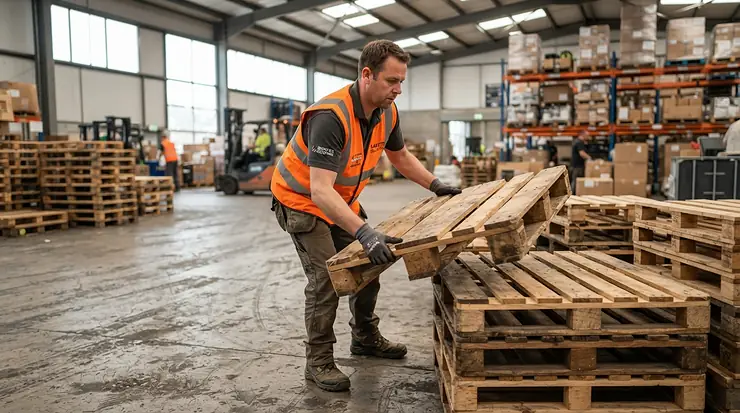
That’s the textbook version. Here’s the shift-length version: by hour six, your hands are the part of your body doing the most unglamorous work. They’ve pinched thousands of cartons, peeled tape, wrestled shrink-wrapped pallets, and tapped a scanner screen more times than you could count. A glove that slips forces you to squeeze harder. Squeezing harder tires your forearms. Tired forearms drop boxes.
The secret ingredient is nitrile rubber, a synthetic rubber known for standing up to oils and fuels. Whip it into a foam, and you get a coating that grips and breathes. That’s why foam nitrile has become the default palm coating in distribution centers.
This guide covers seven real, widely stocked gloves, with every spec translated into what it means on the dock. One note on method: there’s no invented hands-on testing here. The analysis rests on spec sheets, published standards, and the review chatter that’s out there. Where I couldn’t verify real customer feedback for a product, I say so. Prices are ranges only, since they move constantly, so check current listings before you buy.
Quick Comparison: 7 Foam Coated Gloves at a Glance
| Glove | Standout Trait | Price Tier (per pair) | Best For |
|---|---|---|---|
| Uline Warehouse Warrior Micro-Foam | 18-gauge liner, touchscreen-compatible | Budget (roughly $3-$4) | Pickers and packers who scan all day |
| KleenGuard G40 Foam Nitrile | Strong oil and grease grip | Mid-range (roughly $4.50-$6) | Mixed, slightly oily cartons |
| Showa Atlas 380 Ventulus | Open-back breathability | Budget-to-mid (roughly $3-$5) | Hot docks and long shifts |
| Showa 381 | Higher abrasion marking, microfibre liner | Mid-range (check current price) | Rough pallets and cardboard-heavy work |
| Kebada W5 | Bulk 12-pair pack, high abrasion claim | Budget (check current price) | Crews that burn through gloves |
| ProWorks GCN15 Micro-Foam | 15-gauge liner, launders well | Budget (roughly $2.50-$4) | Facilities buying in bulk |
| Ansell HyFlex 11-840 | Form-fitting thin liner | Premium (roughly $7-$8) | Precision handling, all-day comfort |
Think of this table as a menu, not a verdict. The Uline Warehouse Warrior Micro-Foam wins on scanner-friendly value, while the Ansell HyFlex 11-840 costs roughly double or more per pair and earns it with fit and feel. The KleenGuard G40 Foam Nitrile sits in the middle, which makes it the safe default if you can’t predict what’s on your dock tomorrow.
💬 Just one click — help others make better buying decisions too!😊
Top 7 Foam Coated Gloves for Grip in Warehouse Work: Expert Analysis
1. Uline Warehouse Warrior Micro-Foam — touchscreen-ready budget workhorse
The Uline Warehouse Warrior Micro-Foam is built around one idea: warehouse workers shouldn’t peel gloves off to scan a label. Uline’s own copy describes an 18-gauge nylon/spandex liner, touchscreen compatibility, and a blended coating aimed at grip and durability.
An 18-gauge liner is thin, and thin liners keep tactile feedback high. On paper, that means you can feel a box corner or a barcode edge without fumbling. The tradeoff is that thin liners generally feel less substantial against rough pallets than heavier knits. This one suits pickers, packers, and returns processors whose day is more handling than hauling.
Sizing is straightforward, with Uline’s chart keyed to palm circumference (small is 7-8 inches, medium 8-9, large 9-10, extra large 10-11). Measure first. A glove that’s too loose bunches and slips, while one that’s too tight restricts blood flow and your hand tires faster.
On feedback: I couldn’t find a trustworthy aggregate of independent customer reviews for this exact glove, so I won’t characterize it. Treat the manufacturer’s claims as claims until you’ve worn a pair through a full shift.
Pros:
- ✅ Touchscreen-compatible for scanners and tablets
- ✅ Thin 18-gauge liner keeps good tactile feel
- ✅ Sold in 12-pair packs for easy crew supply
Cons:
- ❌ Thin liner may wear faster on rough pallets
- ❌ No independently verified review sentiment found
Roughly $3-$4 per pair. Strong value if scanning is part of your day.

2. KleenGuard G40 Foam Nitrile — the dependable middle ground
The KleenGuard G40 Foam Nitrile is the glove many safety managers reach for when they don’t want to think about it. It uses a seamless knit nylon shell with a foam nitrile palm, and listings show an EN 388 rating of 3121X, with a retailer listing citing an ANSI abrasion level of 3.
Decode that EN 388 code and it means abrasion level 3, a modest cut rating of 1, tear level 2, and puncture level 1. In plain English, this is a grip-and-abrasion glove, not a cut-protection glove. If your job involves blades or sharp strapping, pair it with a rated cut glove instead.
The manufacturer says the current version delivers almost three times better oil and grease grip than earlier G40 nitrile gloves, and that it keeps its top abrasion rating after five washes. Both are manufacturer claims, so weigh them accordingly. Retailer reviews I found mention good dexterity and less hand fatigue, but several were collected as part of a brand promotion, so I wouldn’t lean on them. One more detail from listings: these aren’t touchscreen-compatible.
Pros:
- ✅ Seamless knit shell reduces rubbing and hot spots
- ✅ Good grip on lightly oily or greasy cartons
- ✅ Washable and widely available in many sizes
Cons:
- ❌ Not touchscreen-compatible per retailer listings
- ❌ Cut rating is minimal
Roughly $4.50-$6 per pair. Fair value for general-purpose handling.
3. Showa Atlas 380 Ventulus — open-back cool for long shifts
The Showa Atlas 380 Ventulus is the sweat-management specialist. Listings describe a 13-gauge nylon liner, an oil-resistant nitrile foam coating, and an open back designed for breathability. Distributor data shows an EN 388 rating of 3121X.
An open back matters more than it sounds like it should. Foam coating covers the palm and fingers, but the back of your hand is where heat builds. Leaving it uncoated lets air in and moisture out, which keeps the liner from turning clammy by midday. A damp liner shifts inside the coating, and a shifting liner costs you control.
Showa’s listings also describe a snug, conforming fit that favors dexterity. That’s good for hand feel, though people between sizes should read fit notes carefully before ordering. Retail pages I found show a respectable review pool, appearing to sit around 4.5 stars out of 5 on one listing, though the data was messy, so treat it as a rough signal rather than gospel.
Pros:
- ✅ Open back dumps heat on warm docks
- ✅ Oil-resistant foam coating for dry or damp handling
- ✅ Often priced well in case quantities
Cons:
- ❌ Uncoated back offers less protection from scrapes
- ❌ Snug fit may not suit wider hands
Roughly $3-$5 per pair, depending on quantity. Smart pick for warm warehouses.
4. Showa 381 — higher abrasion marking for rougher work
The Showa 381 steps up the durability story. Distributor listings show a microfibre, polyester, and spandex liner with nitrile foam coating, flagged as abrasion and oil resistant, and marked EN 388 4121X.
That first digit is the headline: abrasion level 4 sits at the top of that EN scale. Compared with the 3121X markings on the KleenGuard G40 Foam Nitrile and Showa Atlas 380 Ventulus, the Showa 381 is positioned for longer coating life against rough surfaces like wood pallets and corrugated cartons. Lab abrasion cycles don’t equal your dock, but the direction is meaningful.
The polyester-spandex blend is designed to stretch and recover, which helps the glove hug your hand through a full day of grabbing and releasing. A glove that keeps its shape resists the baggy-fingertip problem that ruins dexterity as liners age.
I found spec data for this glove but not reliable aggregated customer reviews, so I can’t speak to real-world sentiment. If you’re buying for a team, order a small trial run before committing to cases.
Pros:
- ✅ EN 388 abrasion level 4 marking
- ✅ Stretchy liner holds its shape through the shift
- ✅ Oil-resistant foam coating
Cons:
- ❌ No verified review sentiment found
- ❌ Cut rating remains low, like most foam gloves
Mid-range pricing; check current price. Worth it where abrasion eats cheaper gloves.
5. Kebada W5 — bulk pack for crews that churn through gloves
The Kebada W5 is the volume play. A 2026 warehouse-glove roundup describes it as a 15-gauge nylon-spandex glove sold in 12-pair packs with an EN 388 abrasion level of 4, promoted for heavy abrasion and oily loads.
Fifteen gauge is the sweet spot for many warehouse tasks. It’s thin enough for good feel but thick enough to survive rough cartons. Pairing that liner with a foam nitrile coat is the standard recipe for general warehouse work, and the bulk pack format is its real selling point: handing every temp a fresh pair becomes cheap enough to be routine.
Reviewer notes in that roundup flagged two things. First, hand-wash only, since machine washing is said to degrade the coating faster. Second, a snug fit for people with wider palms. Both are practical details worth knowing before you buy. If your crew washes gloves in a machine as a matter of habit, plan on shorter life or change the habit.
I didn’t find a deep pool of verified buyer reviews beyond that single roundup, so stay cautious with performance claims.
Pros:
- ✅ 12-pair packs keep crews stocked
- ✅ 15-gauge liner balances feel and durability
- ✅ Abrasion level 4 claim for rough surfaces
Cons:
- ❌ Hand-wash care reported as necessary
- ❌ Snug fit reported for wider palms
Budget tier; check current price. Great for high-turnover crews.
6. ProWorks GCN15 Micro-Foam — the facilities buyer’s laundering friend
The ProWorks GCN15 Micro-Foam doesn’t chase headlines. Distributor copy describes a 15-gauge breathable knit liner with a microfiber foam nitrile grip, sold in 12-pair bags across sizes from extra small to 2XL, in gray and black.
That size range is underrated. Warehouse teams aren’t made of identical hands, and a glove that doesn’t fit is a glove that gets pushed to the bottom of a locker. Offering extra small through 2XL means a supervisor can actually fit the whole crew from one purchase order.
Another distributor says nitrile foam coated gloves like this survive regular professional laundering without losing coating or strength. That claim comes from a seller, so verify with your own laundry vendor, but if it holds up, the economics improve. A glove that survives multiple wash cycles drops its cost per shift.
I couldn’t find independent customer-review aggregates for this specific model, so I’m leaving sentiment unreported rather than guessing.
Pros:
- ✅ Wide size run from XS to 2XL
- ✅ Breathable 15-gauge knit liner
- ✅ Claimed to hold up through laundering
Cons:
- ❌ No verified review data found
- ❌ Basic feature set, no touchscreen claim
Roughly $2.50-$4 per pair, depending on seller and quantity. A solid bulk-buy.
7. Ansell HyFlex 11-840 — premium fit for precision and comfort
The Ansell HyFlex 11-840 is the splurge. It’s a micro-foam nitrile glove with a form-fitting nylon liner, and Uline markets it for comfort and dry grip across a full day.
Why pay more? Fit. A glove that follows your finger contours puts the coating where your skin needs it, and you waste less force to hold things. That’s relevant because research on gloves and grip, covered later in the grip fatigue section, shows that thickness and poor fit make hands work harder. A thin, well-fitted glove is the most direct fix.
Cost per pair is where this one hurts, running roughly double or more the budget picks. The math works for people with high hand-fatigue complaints, high-value small-parts handling, or anyone whose gloves get replaced on schedule rather than when they fall apart. For a crew that tears through gloves in two weeks, though, it’s probably the wrong buy.
No verified review aggregate here either. I’d rather say that plainly than repeat marketing language as if it were feedback.
Pros:
- ✅ Form-fitting liner for natural hand movement
- ✅ Micro-foam coating built for dry grip
- ✅ Good choice for detail-oriented handling
Cons:
- ❌ Highest cost per pair in this lineup
- ❌ No verified review sentiment found
Roughly $7-$8 per pair. Premium pricing for premium fit.
Spec Snapshot: How the Seven Compare
| Glove | Liner / Gauge | EN 388 Marking | Touchscreen | Best For |
|---|---|---|---|---|
| Uline Warehouse Warrior Micro-Foam | 18-gauge nylon/spandex | Not confirmed | Yes (per maker) | Scan-heavy picking |
| KleenGuard G40 Foam Nitrile | Seamless knit nylon | 3121X | No (per listing) | General cartons |
| Showa Atlas 380 Ventulus | 13-gauge nylon | 3121X | Not confirmed | Warm docks |
| Showa 381 | Microfibre/polyester/spandex | 4121X | Not confirmed | Rough pallets |
| Kebada W5 | 15-gauge nylon-spandex | Abrasion level 4 (per roundup) | Not confirmed | High-turnover crews |
| ProWorks GCN15 Micro-Foam | 15-gauge knit | Not confirmed | Not confirmed | Bulk, mixed-size crews |
| Ansell HyFlex 11-840 | Form-fitting nylon | Check label | Not confirmed | Precision handling |
Read this table for gaps as much as for facts. Only two of the seven clearly offer touchscreen compatibility in the sources I found, so if a handheld scanner touchscreen is your daily tool, the Uline Warehouse Warrior Micro-Foam has the clearest claim. If abrasion is the villain, the Showa 381 and Kebada W5 advertise the top abrasion level, while the KleenGuard G40 Foam Nitrile and Showa Atlas 380 Ventulus sit one notch lower. Whenever a cell says “not confirmed,” treat that as a prompt to read the packaging.
How to Size, Break In, and Maintain Your Gloves
A glove that fits wrong is a glove that fails early. Fixing that costs nothing.
Measure first. Wrap a tape around the widest part of your palm. Uline’s chart maps 7-8 inches to small, 8-9 to medium, 9-10 to large, and 10-11 to extra large, and most brands use similar logic. If you land between sizes, remember that a slightly snug glove stretches a touch while a loose one only gets looser.
Give new pairs a fair first shift. Wear a fresh pair for a short stint before committing the whole crew. Grab a few cartons, close your fist, spread your fingers, and watch for pinching at the thumb crotch. Pinch points show up in minutes, not days.
Wash with intent. Care labels vary. The Kebada W5 is reported as hand-wash only, the KleenGuard G40 Foam Nitrile is described as washable, and the ProWorks GCN15 Micro-Foam is described as laundering well. Skip hot dryers on any of them, since heat can stiffen the coating. Let gloves air-dry flat.
Rotate pairs. Two pairs on alternate days outlast one pair worn daily, because the liner fully dries between shifts and holds its shape.
Retire at the right moment. Inspect the palm and the pads of your thumb and index finger. When the foam wears through and you can see liner, grip drops quickly and your hands start compensating by squeezing harder. Replace before that point.
Avoid first-month mistakes. The common ones are buying one size for everyone, washing in hot water, and using foam gloves around chemicals they weren’t designed for. Foam nitrile is oil-friendly, not a chemical barrier.

Real-World Scenarios: Three Shifts, Three Picks
The seasonal picker. Maria works ten-hour peak-season shifts in an e-commerce fulfillment center, scanning and bagging all day on a modest budget. Her priority is touchscreen compatibility and light feel. The Uline Warehouse Warrior Micro-Foam fits that brief, and at a few dollars a pair, replacing a worn glove mid-season is painless.
The dock unloader. Dev unloads floor-loaded trailers four days a week: cardboard, strapping, and the occasional oily carton. Abrasion life matters more than touchscreen. The Showa 381 and Kebada W5 both market a top abrasion marking, while the KleenGuard G40 Foam Nitrile is the sturdier all-rounder if cartons vary wildly from load to load. Budget is moderate, use is daily.
The tight-handling lead. Priya runs a small-parts bin line and handles fragile, high-value items. Her hands need to feel edges. The Ansell HyFlex 11-840 is worth the extra cost when feel matters more than longevity, since a form-fitting liner reduces the wasted squeeze that causes fatigue.
None of these is a hard rule. They’re starting points: match your biggest daily frustration to the glove’s strongest trait.
✨ Don’t Miss These Exclusive Deals!
🔍 Take your warehouse shifts to the next level with these carefully selected gloves. Click on any highlighted product name to check current pricing and availability. The right pair will help you build a grip your hands, and your forearms, will thank you for!
How to Choose Foam Coated Gloves for Grip in Warehouse Work
- Match the coating to the job. Foam nitrile suits dry to lightly oily handling, giving grip and breathability. If your hands touch standing liquids, you need a different glove entirely, because foam is not a liquid barrier.
- Pick the gauge for the task. Higher gauge numbers mean thinner liners. An 18-gauge liner favors feel and scanning, while 13 to 15 gauge trades some sensitivity for durability.
- Read the performance label. Under ANSI/ISEA 105-2024, ratings for abrasion, cut, and puncture appear together in a pentagon label, as the ANSI overview of the standard explains. EN 388 codes serve the same job in Europe, and many listings show both.
- Check the cut rating honestly. Most foam gloves carry minimal cut protection. If you open boxes with knives, add a separate rated glove.
- Fit beats features. Measure your palm, then size accordingly. A great glove in the wrong size performs like a mediocre one.
- Look for touchscreen and breathability if your day demands them. Scanner screens and hot docks are separate problems with separate features.
- Run the per-pair math. Divide pack price by pairs, then divide again by how many shifts a pair survives.
Foam Grip Work Gloves vs Leather, Latex, and PU
| Option | Grip | Breathability | Durability | Best For |
|---|---|---|---|---|
| Foam nitrile (KleenGuard G40 Foam Nitrile, Showa 381) | Strong, dry to lightly oily | Good | Good to very good | General warehouse handling |
| Natural latex-coated (e.g., Showa Atlas 300 style) | Strong, wet and dry | Fair | Good | Outdoor yards, damp conditions |
| Polyurethane (PU) coated | Light, smooth | Very good | Fair | Fine assembly, clean parts |
| Leather | Moderate | Fair | Excellent for rough hardware | Heavy debris, hot or sharp-edged items |
The punchline from this table: foam grip work gloves occupy the sweet spot between sensitivity and durability, which is why warehouses default to them. Leather outlasts everything on abrasive hardware but numbs your fingertips, while PU feels fantastic until cardboard grit scrubs it away. Natural latex grips well in damp conditions, but it’s a different glove for a different job.
Box and Pallet Handling: What Warehouse Lifting Gloves Must Do
Box and pallet handling puts three demands on your hands at once. You need friction on smooth, dusty cardboard, abrasion resistance against wood and strapping, and enough feel to adjust your hold when a stack shifts. Warehouse lifting gloves that nail only one of those will let you down.
Foam coating helps because the porous surface grips in two ways: the foam texture bites into the carton face, and the micro-pockets give moisture and dust somewhere to go instead of sitting between your palm and the box. Reviewers of foam gloves commonly note good grip on cardboard even when slightly damp, though those comments come from product roundups rather than lab tests.
For pallets, look at abrasion markings first. The Showa 381 and Kebada W5 advertise level 4, and the KleenGuard G40 Foam Nitrile and Showa Atlas 380 Ventulus sit at level 3. Splintery wood and plastic strapping chew through coatings faster than carton faces do.
One honest caution: no foam glove replaces proper lifting technique, team lifts, or mechanical aids. Gloves reduce slips. They don’t reduce load weight.
Forklift Operator Gear: Where Gloves Fit In
Forklift operator gear is a system, and gloves are one part of it. Operators need to feel levers and steering inputs, grab onto steps and handholds safely, and still handle forks, chains, and loose loads when they dismount.
For that mix, thin and snug beats thick and floppy. A glove that bunches inside a fist or catches on a control is a hazard. Thin, form-fitting options like the Ansell HyFlex 11-840 and Uline Warehouse Warrior Micro-Foam lean toward control feel, and the latter’s touchscreen compatibility helps if your truck has a handheld or screen interface.
Skip anything with loose cuffs or dangling features around moving parts. Knit-wrist cuffs, which are standard on all seven gloves here, stay put and snug.
Pair gloves with the rest of the kit: sturdy footwear, high-visibility clothing, and whatever your site’s operator rules require. Check your employer’s hazard assessment before choosing, since site rules rule.

Grip Fatigue Reduction: What the Research Says
Here’s the uncomfortable truth: gloves reduce grip strength. It’s a protection-versus-performance tradeoff. A NIOSH-indexed study on effects of gloves on total grip strength found that anti-vibration gloves cut grip strength by more than 29% compared with bare hands, that one non-AV glove cut it by over 25% while another cut it by less than 10%, and that glove thickness appeared to be a major factor.
Translate that to your shift: a thinner glove costs you less strength, which means you can hold the same box with less effort. Other research summarized in an MDPI study reports average grip-strength drops of up to roughly 23% depending on glove, gender, and grip span, and notes that gloves can raise forearm muscle activation, which brings earlier fatigue. Ergonomics writers also point out that poorly fitted gloves make people squeeze harder.
So grip fatigue reduction starts with three choices. Pick the thinnest liner that survives your task, size it correctly, and keep the coating healthy. A small experimental study of 22 male participants compared four cut-resistant glove types and found the foam nitrile-coated one gave the best finger dexterity. It’s a small sample, but it fits the broader pattern.
Practical bonus: rotate pairs, stretch your forearms on breaks, and replace gloves when the coating wears thin.
Cushioned Coated Gloves: Soft Grip vs Real Padding
Cushioned coated gloves is a phrase that means two different things, and mixing them up leads to disappointment. In foam nitrile gloves, “cushioned” describes the soft, springy feel of the coating against your palm. It isn’t impact padding.
If you’re after a plush palm, a thicker foam layer feels softer but costs dexterity and, as the NIOSH-indexed research above suggests, thickness tends to reduce grip performance. For most warehouse tasks, the micro-cushion of a thin foam coat is the better tradeoff.
If you actually need impact protection, for example from pinched fingers against racking, you’re shopping for a different category entirely. ANSI/ISEA publishes a separate standard for impact-protection gloves, and none of the seven gloves here is marketed for that. Don’t assume a soft feel equals a protective one.
For fatigue-prone hands, the Ansell HyFlex 11-840 and Showa Atlas 380 Ventulus lean toward soft, breathable comfort. The rest are comfortable but built for grip first, cushion second.
Long-Term Cost: Per-Pair Math That Actually Matters
| Glove | Typical Pack | Approx. Cost per Pair | Longevity Clues | Best For |
|---|---|---|---|---|
| ProWorks GCN15 Micro-Foam | 12 pairs | Roughly $2.50-$4 | Described as launder-friendly | Facilities buying in bulk |
| Uline Warehouse Warrior Micro-Foam | 12 pairs | Roughly $3-$4 | Blended coating for durability (maker claim) | Scan-heavy roles |
| Showa Atlas 380 Ventulus | Cases in bulk | Roughly $3-$5 | Open back reduces sweat | Warm warehouses |
| KleenGuard G40 Foam Nitrile | 12 pairs | Roughly $4.50-$6 | Maker claims abrasion rating holds after washing | General handling |
| Ansell HyFlex 11-840 | 12 pairs | Roughly $7-$8 | Premium fit and feel | Precision work |
The lowest sticker price isn’t automatically the lowest cost. A $3 pair that survives five shifts costs about 60 cents a shift, and a $7 pair that survives fifteen shifts costs under 50 cents. That example is illustrative, since I couldn’t verify real lifespan data for these gloves, but the logic holds: longevity decides value more than price does. Track how many shifts your crew actually gets from each model before locking in a big order.
Safety and Compliance: OSHA and ANSI/ISEA Basics
OSHA’s hand-protection rule requires employers to select and require appropriate hand protection when hands face hazards like severe cuts, severe abrasions, punctures, chemical burns, and thermal burns. The selection itself must rest on an evaluation of performance characteristics relative to the task, the conditions, the duration of use, and the hazards identified, as the OSHA 1910.138 standard lays out.
What that means for you: a glove isn’t compliant because it looks tough. Your employer’s hazard assessment should drive the choice. Foam coated gloves handle general handling and abrasion, but they’re a poor stand-in for cut-resistant or chemical-resistant gloves.
On labeling, the ISEA chair said the 2024 update made no major changes to test methods; the big change was the pentagon label showing cut, abrasion, and puncture ratings together. Don’t assume every listing uses the new label yet, so read the actual markings.
When in doubt, ask your safety lead before buying in bulk.
FAQ
❓ What gauge is best for foam coated gloves in a warehouse?
❓ Can I machine wash foam nitrile work gloves?
❓ Are foam nitrile gloves cut resistant?
❓ How do I know when to replace my gloves?
❓ Do foam coated gloves work on touchscreen scanners?
Conclusion
Picking among foam coated gloves for grip in warehouse work comes down to matching one daily frustration to one standout trait. Scanning all day? The Uline Warehouse Warrior Micro-Foam is the clearest touchscreen pick. Fighting abrasion? The Showa 381 and Kebada W5 advertise the top abrasion marking. Want a dependable all-rounder? The KleenGuard G40 Foam Nitrile is a sensible default. Hot dock? The Showa Atlas 380 Ventulus breathes best. Buying for a mixed-size team? The ProWorks GCN15 Micro-Foam covers XS to 2XL. And if fit and feel justify the splurge, the Ansell HyFlex 11-840 earns its premium.
Whichever you choose, remember the research: thinner, well-fitted gloves tax your hands less. Size carefully, rotate pairs, replace worn gloves early, and confirm your choice against your site’s hazard assessment. Prices move, availability shifts, and review data is thinner than you’d like for several of these gloves, so check current listings before ordering and trial a few pairs before buying by the case.
✨ Ready to Upgrade Your Grip?
🔍 Click the highlighted product names above to check current pricing and availability, then pick the pair that fits your shift. Your hands do the heavy lifting every day, so give them gloves worth trusting!
Recommended for You
- Polyurethane Coated Gloves For Precision Assembly Work: 7 Best (2026)
- Latex Coated Gloves For Gardening And Landscaping: 7 Best Picks 2026
- Nitrile Coated Gloves For Oil And Grease Resistance: 7 Best (2026)
Disclaimer: This article contains affiliate links. As an Amazon Associate, I earn from qualifying purchases. If you purchase products through these links, we may earn a small commission at no additional cost to you.
✨ Found this helpful? Share it with your friends! 💬🤗
