

In This Article
Bare hands are great right up until the moment they meet a blackberry cane. Then a bag of mulch. Then a wet shovel handle that slides through your fingers like a bar of soap.

That’s the gap latex coated gloves for gardening and landscaping fill. Not leather-tough, not paper-thin. A stretchy knit shell, a rubbery palm, and a price that doesn’t make you flinch when you lose one pair in the compost pile. Independent testers such as Bob Vila’s team keep returning to the same trade-off: the best glove is the one you barely notice, and the second best is the one that protects you without turning your fingers into sausages.
Here’s the plan. I researched real models, compared their published specs, and read through the aggregated buyer feedback that’s actually out there. I didn’t test any of these myself, so you won’t find “when I wore these in my backyard” stories here. What you will find is honest analysis: what each spec means in a flowerbed, who each glove suits, and where the marketing gets ahead of reality. We’ll cover flexible latex gloves, gardening grip gloves, dirt-resistant coated gloves, soil handling, planting tools, and the part most listicles skip: latex allergy considerations.
Prices below are ranges, because they move constantly. Check the current price before you buy.
Quick Comparison: 7 Latex Coated Gloves for Gardening and Landscaping at a Glance
| Product | Shell & Coating | Standout Trait | Approx. Price Range | Best For |
|---|---|---|---|---|
| SHOWA Atlas Fit 300 | Poly/cotton knit, natural latex palm | The long-time pro favorite | Roughly $6-$12 per pair | Daily landscaping crews |
| SHOWA Atlas 310 | Seamless nylon-style knit, latex palm, wing thumb | Rated for abrasion, tear, and puncture (EN 388) | Roughly $5-$12 per pair | Planting and light hauling |
| G&F Rubber Latex Double Coated Work Gloves | Knit shell, double latex coating | Multi-pack value | Roughly $20-$40 per 12-pack | Households and crews that lose gloves |
| G&F 2030 Women’s Micro-Foam Latex Gloves | Breathable nylon shell, micro-foam latex | Smaller sizing, waterproof palm | Roughly $20-$25 per 3-pack | Women with smaller hands |
| Wells Lamont 133F Latex Coated Grip (3-Pack) | Polyester knit, textured latex | Easy-to-find general-purpose glove | Under $15 per pack | Everyday yard chores |
| Wells Lamont Women’s Latex-Coated Grip Winter Gloves | Fleece-lined knit, textured latex | Cold-weather warmth | Under $12 per pair | Fall and early-spring work |
| Scotts Yard Care SC30501 Wet/Dry Grip | Stretch knit, latex palm | Three-pair budget pack | Mid-teens or less per 3-pack | Casual weekend gardeners |
Look at the table and you’ll see three tiers. The two SHOWA gloves are the most professionally proven, the G&F pair covers value and fit, and the Wells Lamont and Scotts gloves are the easy, widely available options. If you want something that survives daily landscaping, start with the SHOWA Atlas Fit 300. If you’re replacing gloves every few weeks anyway, the G&F Rubber Latex Double Coated Work Gloves make more financial sense. And if you garden when the thermometer is flirting with freezing, the Wells Lamont Women’s Latex-Coated Grip Winter Gloves are the only insulated option on this list.
💬 Just one click — help others make better buying decisions too!😊
Top 7 Latex Coated Gloves for Gardening and Landscaping: Expert Analysis
1. SHOWA Atlas Fit 300 — the pro landscaper’s default
The SHOWA Atlas Fit 300 is the glove other gloves get compared to. It’s also sold under the “Atlas 300” name, and its crinkled natural-latex palm has been a fixture on landscaping crews for decades.
Under the coating sits a 10-gauge poly/cotton liner. Translation: a seamless knit that’s fine enough to feel a seed packet’s edge and sturdy enough not to shred on a stucco wall. The crinkle texture channels water away from your fingertips, which is why wet hose-and-hardscape days don’t turn it into a slip-and-slide.
On the analysis side, this is a glove for people who garden often. If you’re out there twice a week or more, the fit and grip justify the slightly higher per-pair cost. Reviewers describe it as comfortable, easy to wash, and a go-to for gardening and general chores. A few long-time buyers say the fit changed after the brand shifted its packaging, and some report a pair lasting around a couple of months at twice-weekly use. One thing worth knowing: sellers note the “Atlas” name is being phased out, so your pair may arrive without it.
Pros:
- ✅ Crinkle latex grip works in wet and dry conditions
- ✅ Seamless liner reduces irritation and hot spots
- ✅ Machine washable, cheap enough to stock several pairs
Cons:
- ❌ Thin shell won’t stop serious thorns
- ❌ Lifespan varies with how hard you work
Price range: roughly $6-$12 per pair, so check current price. For frequent gardeners, the value is excellent.

2. SHOWA Atlas 310 — the only one here with published EN 388 ratings
The SHOWA Atlas 310 earns its spot by showing its work. A retailer listing reports an EN 388:2016 rating of 2142X, which breaks down to abrasion level 2, blade-cut level 1, tear level 4, and puncture level 2.
What does that mean in a garden bed? The tear rating is the standout. It tells you the knit shell resists ripping when a root, wire fence, or rose cane snags it, even though the puncture and abrasion numbers are modest. The listing also notes a latex-coated palm, seamless lining, wing thumb, and machine-washable construction. That wing thumb matters more than it sounds: it gives your thumb room to pivot when you’re pinching seedlings or twisting a hose bib.
Honest take: this is an excellent glove for planting, transplanting, mulching, and light hauling, and a poor choice for pruning brambles or handling rebar. It’s a precision tool, not armor. I couldn’t verify a deep pool of independent buyer reviews for this exact model, so treat the spec sheet as your main evidence and test a single pair before ordering a dozen.
Pros:
- ✅ Published abrasion, tear, and puncture ratings
- ✅ Wing thumb improves dexterity for fine tasks
- ✅ Seamless knit lining feels smooth in use
Cons:
- ❌ Modest cut and puncture protection
- ❌ Limited verifiable independent review data
Price range: roughly $5-$12 per pair, so check current price. It’s a good-value, no-nonsense planting glove.
3. G&F Rubber Latex Double Coated Work Gloves — best value in the multi-pack
If you lose gloves the way some people lose pens, the G&F Rubber Latex Double Coated Work Gloves make economic sense. Tom’s Guide named them its best-value pick in a hands-on gardening glove roundup, sold as a 12-pack.
“Double coated” generally means a thicker rubber layer than a single dip, and that’s worth thinking through. More coating usually buys better abrasion resistance and more water resistance, but it costs breathability and some fingertip feel. So the G&F Rubber Latex Double Coated Work Gloves lean toward hardscaping, hauling, and muddy cleanup rather than delicate seed starting.
Who should buy them? Households with several gardeners, landscaping side-hustlers, and anyone who wants a clean pair every time without doing the laundry. I couldn’t verify a large body of independent buyer feedback beyond the roundup’s endorsement, and sellers don’t publish an EN 388 rating I could confirm, so treat durability claims cautiously. Keep a few pairs in the truck, a few in the shed, and rotate.
Pros:
- ✅ Tested roundup named it best value
- ✅ Twelve pairs makes rotation easy
- ✅ Thicker coating suits wet, rough work
Cons:
- ❌ Less breathable than single-dip gloves
- ❌ Fine-motor control may feel reduced
Price range: roughly $20-$40 per 12-pack, so check current price. The per-pair value is hard to beat.
4. G&F 2030 Women’s Micro-Foam Latex Gloves — made for smaller hands
Anyone with smaller hands knows the frustration: a “medium” that fits like a mitten. The G&F 2030 Women’s Micro-Foam Latex Gloves are cut with that in mind, sold as a 3-pair pack with a breathable nylon shell and a waterproof micro-foam latex coating.
Micro-foam is a different animal from crinkle. The coating contains tiny air pockets, which makes it lighter and a bit more flexible, and gives fingertips more feedback when you’re deadheading or tying plants. That makes these gloves a strong match for flexible latex gloves territory: dexterous, breathable, and easier to wear for hours.
The trade-off is durability against sharp debris. Foam coatings abrade faster than denser rubber, so these suit flowerbeds, containers, and vegetable gardens better than rock-hauling. I found limited verified review depth, so rely on the spec sheet and plan to treat the first pair as a trial.
Pros:
- ✅ Smaller-hand sizing improves control
- ✅ Breathable shell keeps hands cooler
- ✅ Micro-foam coating adds fingertip feedback
Cons:
- ❌ Foam coating wears faster on abrasive tasks
- ❌ Limited independent review data
Price range: roughly $20-$25 per 3-pack, so check current price. It’s good value for light-to-medium garden work.
5. Wells Lamont 133F Latex Coated Grip (3-Pack) — the easy, everywhere glove
The Wells Lamont 133F Latex Coated Grip (3-Pack) is the glove you’ll find on a hardware-store peg when you realize your last pair has a hole in it. That convenience is its own selling point.
The brand describes its latex-coated line as the better choice when you need flexibility or precision, with its rubber-coated cousins reserved for heavy abrasion. The knit-wrist design keeps debris out of your cuffs, and the textured palm gives you purchase on wet tool handles. Retail listings describe the broader 133 family as waterproof-palm, polyester-knit gloves aimed at general-purpose use.
My analytical take: this is the “buy it without thinking” option. It won’t win any awards for innovation, but it covers digging, weeding, mulching, and shed cleanup. Because I couldn’t confirm a verified volume of buyer reviews for this exact 3-pack, I’d call it a safe-by-reputation pick rather than a proven standout.
Pros:
- ✅ Knit wrist keeps soil out
- ✅ Textured latex palm grips wet handles
- ✅ Three pairs per pack for rotation
Cons:
- ❌ Polyester shell runs warm in summer
- ❌ Nothing special for thorny jobs
Price range: under $15 per pack, so check current price. The value is solid for everyday yard work.
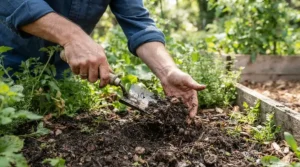
6. Wells Lamont Women’s Latex-Coated Grip Winter Gloves — warmth without bulk
Cold hands ruin gardening faster than weeds do. The Wells Lamont Women’s Latex-Coated Grip Winter Gloves are built for that moment, pairing a fleece lining with a waterproof textured latex palm.
Bob Vila’s testing team named them its best insulated pick in a tested gardening glove roundup, which is a useful endorsement. The fleece adds warmth but also bulk, so expect slightly less dexterity than with an unlined knit. That’s the price of keeping fingers functional during fall cleanup, bulb planting, and early-spring prep.
Retailer listings show a rating around 4.5 stars from a few dozen reviews on one store’s page. That’s a small sample, so don’t treat it as gospel, but it points the right direction. Best for cool-weather gardeners who want a glove that handles wet leaves and cold soil. Poor fit for July.
Pros:
- ✅ Fleece lining adds real warmth
- ✅ Waterproof textured latex palm
- ✅ Tested roundup named it best insulated
Cons:
- ❌ Bulk reduces fine-motor feel
- ❌ Too warm for summer work
Price range: under $12 per pair, so check current price. It’s good value as a seasonal glove.
7. Scotts Yard Care SC30501 Wet/Dry Grip — the casual gardener’s budget pack
The Scotts Yard Care SC30501 Wet/Dry Grip exists for people who garden because spring arrived, not because it’s an identity. You get three pairs of stretch-knit gloves with a latex-coated palm, in a grey-and-green colorway.
Stretch knit is the key spec. It means the shell hugs your hand rather than bunching, which cuts down on the blister-causing wrinkles that cheap gloves develop. The latex palm gives grip on wet and dry tools, so you can swap from hose to trowel without stripping them off.
Bottom line: great for occasional use and light jobs, less compelling for crews or serious daily work. The listing I found showed no verified buyer ratings, so I can’t characterize reviewer sentiment. I’d recommend buying one pack and judging for yourself.
Pros:
- ✅ Stretch knit hugs the hand
- ✅ Latex palm grips wet and dry
- ✅ Three pairs at a low entry cost
Cons:
- ❌ No verified review data to lean on
- ❌ Likely shorter life under heavy use
Price range: mid-teens or less per 3-pack, so check current price. The value is fair for casual gardeners.
✨ Don’t Miss These Exclusive Deals!
🔍 Take your garden work to the next level with these carefully selected gloves. Click on any highlighted item to check current pricing and availability. A good pair makes every task feel easier, and your hands will thank you!
What Are Latex Coated Gloves for Gardening and Landscaping?
Latex coated gloves for gardening and landscaping are knit-shell work gloves, usually nylon, polyester, or cotton blends, whose palms and fingers are dipped in natural rubber latex. The coating adds wet and dry grip, abrasion resistance, and water resistance while the uncoated back stays breathable, making them a practical everyday option for digging, planting, hauling, and handling tools.
That’s the textbook version. Here’s the practical one: they’re the middle child of hand protection. Cotton gloves are comfortable but soak through. Leather gloves resist thorns but cost more and feel clumsy for fine work. Latex-coated gloves split the difference, which is why they dominate the budget-to-mid range at hardware stores.
The key design idea is zoning. Protection goes where you need it, on the palm and fingertips, while the back of the hand breathes. You get grip without a sweaty sauna. Wells Lamont frames it as flexibility for precision work versus heavier rubber coatings for abrasion, which is a fair summary of the decision you’re really making.

How to Choose Latex Coated Gloves for Gardening and Landscaping
Choosing well takes about five minutes of thought. Skip it and you’ll own a drawer of gloves you hate.
- Match coating thickness to your job. Foam and thin dips suit planting and pruning flowers. Double coating and crinkle finishes suit hauling and wet hardscape work. Thicker means tougher, but it also means less feel.
- Check the liner gauge and knit. A higher gauge generally means a finer, more flexible knit with more fingertip feedback. A lower gauge tolerates abuse better. Seamless liners cut down on irritation.
- Prioritize fit above everything. A glove that’s loose bunches and blisters. One that’s tight cramps your hand by hour two. Try sizes if you can, or buy women’s cuts when standard sizing swallows your hand.
- Look for published ratings. An EN 388 code, like the one on the SHOWA Atlas 310, tells you far more than “heavy-duty” ever will. No rating? Treat durability claims as unverified.
- Pick your season. Unlined for summer, fleece-lined like the Wells Lamont Women’s Latex-Coated Grip Winter Gloves for cold months. Wearing insulated gloves in July is misery.
- Decide on wrist style. Knit wrists keep soil out. Cuffs offer more coverage and are easier to pull off muddy.
- Check your skin first. If you have any history of latex sensitivity, stop here and read the allergy section below before buying a single pair.
Flexible Latex Gloves: Fit, Gauge, and Dexterity
Flexible latex gloves live or die on one question: can you pick up a dime? Not literally, but close. The point of the coating is protection, but the point of the glove is getting work done.
Here’s what drives flexibility. First, the shell. A fine-gauge knit stretches with your hand, while a thick one fights it. Second, coating coverage: a palm-only dip leaves the back of your fingers free to bend, while a fully coated glove is stiffer. Third, fit. A snug glove transmits your hand’s motion directly to your tools, which is why the G&F 2030 Women’s Micro-Foam Latex Gloves feel more nimble on paper than bulky options.
Natural latex itself helps. It’s inherently stretchy and conforms to a tool handle, which is why many gardeners favor it over stiffer synthetic coatings for delicate planting. The SHOWA Atlas Fit 300 and SHOWA Atlas 310 both emphasize seamless, ergonomic construction for this reason.
One practical rule: if you plant seedlings, tie vines, or handle small hardware, go thin. If you move stone and soil, go thick. And if you do both, own two pairs.
Gardening Grip Gloves: What Makes a Coating Actually Grip
Gardening grip gloves are only as good as their palm. Slick handles, wet pots, and muddy hose connections are the real test.
Latex grips through friction and conformity. Crinkle patterns, like the one on the SHOWA Atlas Fit 300, create channels that move water away from contact points. Textured coatings, like the one on the Wells Lamont 133F Latex Coated Grip (3-Pack), give the same benefit in a flatter pattern. Smooth coatings grip well when dry and worse when wet.
Think about the tasks. Pulling a wheelbarrow handle when it’s rained overnight is a wet-grip problem. Threading a bolt into a sprinkler fitting is a precision-grip problem. A glove tuned for one may underperform at the other.
What the spec sheet won’t tell you: grip degrades as coating wears. Reviewers of several models mention replacing pairs every few months with regular use, which is simply the nature of a dipped coating. Rotate pairs and wash them, since dirt clogging the texture reduces friction.
Dirt-Resistant Coated Gloves: Keeping Your Hands Clean and Dry
Dirt-resistant coated gloves are a quiet luxury. Anyone who has scrubbed packed soil out from under their nails knows why.
The coating forms a barrier on the palm and fingers, so wet soil, compost, and sap sit on rubber instead of skin or fabric. The G&F Rubber Latex Double Coated Work Gloves push that further with a thicker layer, and Wells Lamont describes its latex palm as keeping hands dry while resisting snags and abrasion.
But “waterproof palm” and “waterproof glove” are not the same thing. The back of the hand is usually breathable knit, which means it will absorb water if you dunk it. Prolonged wet work, like cleaning a pond or flushing irrigation lines, calls for a fully coated model rather than a palm dip.
Cleaning matters too. Dirt-resistant coatings still collect grime. Rinse before it dries, because dried clay is the worst, and avoid scrubbing hard enough to abrade the rubber.
Soil Handling: How Your Gloves Change What You Can Do
Soil handling is where a glove’s design gets tested hardest. Dry dust, wet clay, rocky fill, and compost each punish different weaknesses.
Fine-gauge, thin-coated gloves let you feel root balls and separate tangled roots without crushing them. For that, the Scotts Yard Care SC30501 Wet/Dry Grip and the G&F 2030 Women’s Micro-Foam Latex Gloves suit container work and bed prep. Thicker coatings, like those on the G&F Rubber Latex Double Coated Work Gloves, hold up when you’re shoveling gravel, moving sod, or clearing debris.
Watch for abrasive stuff. Coarse sand, crushed stone, and bark nuggets chew through coatings quickly. If you’re doing a lot of that, plan on shorter glove life and buy in bulk.
A final tip: wet soil gums up cuffs. Knit wrists keep it out of the glove, but they also hold onto it. Rinse cuffs first when you wash.
Planting Tools: Pairing Gloves With Trowels, Pruners, and Hoses
Planting tools and gloves are a partnership. Choose badly and one ruins the other.
A hand trowel puts pressure on your palm and the base of the thumb. A glove with a reinforced or thicker palm, like the SHOWA Atlas Fit 300, spreads that load. Bypass pruners ask for finger dexterity and a clean squeeze, so thin, snug gloves like the SHOWA Atlas 310, with its wing thumb, work better. Hoses and spray nozzles reward wet-grip coatings.
Mind thorns, too. Latex-coated knit gloves are not thorn-proof. Retail listings describe puncture resistance in modest terms, and the SHOWA Atlas 310 earns a puncture level of 2 under EN 388. For roses and brambles, add long leather gauntlets. For everything else, latex coating is plenty.
One last point about tool care. Wet, dirty gloves transfer grit to your tool handles, and rubber coatings can leave residue on metal. Wipe down tools after a muddy session.

Latex Allergy Considerations: What Every Buyer Should Know
This is the section most gardening guides skip, and it’s the one that matters most if you’re sensitive.
Natural rubber latex contains proteins that can trigger allergic reactions. NIOSH’s guidance on natural rubber latex explains that those proteins can cause reactions ranging from mild to severe, and that several synthetic rubbers called “latex” do not release those proteins. The FDA estimates that roughly 1 to 6 percent of the general U.S. population may be sensitive to natural rubber latex, and the figure is higher in health care workers.
Two practical consequences. First, if you’ve ever had itching, hives, swelling, or breathing trouble around balloons, bandages, or gloves, talk to a physician before buying latex gloves. Second, don’t trust vague labels. The FDA has stated that it’s aware of no test that can show a product contains no natural rubber latex proteins, and it recommends the wording “not made with natural rubber latex” instead of “latex free.” That guidance targets medical products, but the logic carries over.
For allergic gardeners, nitrile-coated gloves are the common alternative, offering similar grip and dexterity without natural rubber. If you have a mild sensitivity and want to keep using latex, don’t self-diagnose. This isn’t medical advice, so get a professional opinion.
Latex vs Nitrile vs Leather: Which Garden Glove Material Wins?
| Material | Grip | Dexterity | Thorn Protection | Allergy Risk | Best For |
|---|---|---|---|---|---|
| Latex coated | Excellent wet and dry | High | Low-moderate | Possible for latex-sensitive users | Planting, hauling, SHOWA Atlas Fit 300 |
| Nitrile coated | Excellent, especially oily or wet | High | Low-moderate | No natural latex proteins | Latex-sensitive gardeners |
| Leather | Good, drier conditions | Lower | High | Low | Pruning thorns, heavy digging |
The table shows why latex stays popular: grip and dexterity at a low price, with the allergy question as the main caveat. Nitrile is the closest competitor and the right pick for sensitive users, which is why reviewers often name nitrile-coated gloves as their best overall pick. Leather wins on protection but loses on feel.
My analytical read is simple. For most planting, mulching, and general landscaping, latex-coated gloves deliver the best balance. For brambles, buy leather. For allergies, buy nitrile. And for people who do all three, a three-glove rotation costs less than one decent pair of boots.
Practical Usage Guide: Setup, Washing, and Your First 30 Days
Treat gloves like tools and they’ll last longer. Here’s a simple routine.
Day one. Fit-check before you commit. Make a fist, pinch a small object, and grip a tool handle. If anything binds, size up or down. Break in new pairs on a light job so you notice problems early.
Weekly. Rinse mud off before it dries. Machine-wash if the label allows it (the SHOWA Atlas 310 and Wells Lamont 133F Latex Coated Grip (3-Pack) listings indicate machine washing or hand washing, so check your pair). Use cool water and mild soap, then air-dry out of direct sun. Natural latex degrades with heat and UV, so skip the dryer.
Skin care. If you use hand cream, be careful. The American Dental Association notes that oil-based hand lotions can damage latex gloves, and the same chemistry applies to coated work gloves. Wait until your hands are dry and the gloves are off.
Common first-month mistakes. Wearing one pair until it falls apart. Storing wet gloves in a bag. Using summer gloves for cold work. Buying a size too big “just in case.”
Rotation. Keep at least two pairs in play. Giving each pair a day to dry extends life and keeps grip texture clean.
Real-World Scenarios: Which Gloves Match Which Gardener
Numbers on a spec sheet only go so far. Here are three realistic profiles and the pairs that fit them.
The weekend vegetable gardener. Picture someone working a 4-by-12 raised bed on Saturday mornings, with a budget under $20. Light digging, weeding, harvesting, and container work. The Scotts Yard Care SC30501 Wet/Dry Grip or Wells Lamont 133F Latex Coated Grip (3-Pack) covers this nicely. Three pairs means one is always clean.
The part-time landscaper. Someone mowing, edging, mulching, and hauling four days a week. They need durability, wet grip, and quick replacement. The SHOWA Atlas Fit 300 is the track-record pick, and a box of G&F Rubber Latex Double Coated Work Gloves in the truck handles the days when pairs vanish.
The cold-weather bulb planter. Someone with small hands planting daffodil and tulip bulbs in late October. Fleece lining and a waterproof palm matter more than raw toughness. The Wells Lamont Women’s Latex-Coated Grip Winter Gloves suit that scenario well. If the same person has small hands and plants in spring, the G&F 2030 Women’s Micro-Foam Latex Gloves are the better fit.
Notice the pattern: the right glove depends on frequency, season, and hand size more than on brand.
Long-Term Cost and Maintenance: What Your Gloves Really Cost
Cheap gloves aren’t cheap if you replace them every six weeks. Total cost of ownership is the honest comparison.
| Product | Approx. Price Range | Pairs Included | Approx. Cost Per Pair | Best For |
|---|---|---|---|---|
| SHOWA Atlas Fit 300 | $6-$12 | 1 | $6-$12 | Frequent use |
| G&F Rubber Latex Double Coated Work Gloves | $20-$40 | 12 | Under $4 | Heavy rotation |
| Wells Lamont 133F Latex Coated Grip (3-Pack) | Under $15 | 3 | Under $5 | General yard work |
| Scotts Yard Care SC30501 Wet/Dry Grip | Mid-teens or less | 3 | Under $6 | Casual gardeners |
Cost per pair is the number that matters. Bulk packs like the G&F Rubber Latex Double Coated Work Gloves win on pure economics, which is why Tom’s Guide gave them the best-value label in its gardening glove roundup. But cheap per pair only works if you actually rotate. A single pair worn daily dies fast, no matter how little it cost.
The sensible approach: buy one premium-ish pair like the SHOWA Atlas Fit 300 for fine work, plus a bulk pack for rough jobs. You’ll spend less than replacing leather gloves, and your hands stay comfortable.

FAQ
❓ Are latex coated gloves good for gardening?
❓ Can you machine wash latex coated gardening gloves?
❓ How long do latex coated work gloves last?
❓ Are latex coated gloves waterproof?
❓ What should I wear if I'm sensitive to latex?
Conclusion
Great gloves don’t announce themselves. You forget you’re wearing them, and that’s the whole point.
So here’s the short version. For frequent work and proven reputation, the SHOWA Atlas Fit 300 is the benchmark, with the SHOWA Atlas 310 a smart pick for planting and published ratings. For value and rotation, the G&F Rubber Latex Double Coated Work Gloves make sense, while the G&F 2030 Women’s Micro-Foam Latex Gloves serve smaller hands. If you want a no-fuss everyday option, the Wells Lamont 133F Latex Coated Grip (3-Pack) and the Scotts Yard Care SC30501 Wet/Dry Grip cover the basics, and for chilly days the Wells Lamont Women’s Latex-Coated Grip Winter Gloves are the clear choice.
Before you buy, remember the caveats. These are not thorn-proof, coatings wear out, and anyone with latex sensitivity should talk to a physician and consider nitrile. Match the glove to the job, rotate pairs, and wash them properly.
✨ Ready to Upgrade Your Garden Routine?
🌱 Pick the pair that fits your hands and your habits, then check current pricing and availability on your favorite model. Your hands do the work every season, so give them the right gear. Happy gardening!
Recommended for You
- Nitrile Coated Gloves For Oil And Grease Resistance: 7 Best (2026)
- PVC Coated Gloves Vs Rubber Coated Gloves: 7 Best Picks For 2026
- Nitrile Coated Gloves: 7 Best Picks For Garage Grip In 2026
Disclaimer: This article contains affiliate links. As an Amazon Associate, I earn from qualifying purchases. If you purchase products through these links, we may earn a small commission at no additional cost to you.
✨ Found this helpful? Share it with your friends! 💬🤗
