

In This Article
Polyurethane coated gloves for precision assembly work are thin knit gloves, usually nylon or polyester, with a micro-layer of polyurethane dipped onto the palm and fingertips. The coating adds grip and abrasion resistance without the bulk of leather or rubber. Your fingertips can still feel a thread engage or a connector seat, while skin oil and lint stay off the parts.
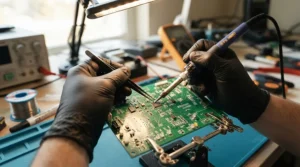
Bare hands are a liar. They feel precise, but they leave fingerprints on optics, sweat on bright metal, and tiny flakes of skin in places you’ll never find them again. Thick gloves fail the other way. Try seating a 2 mm screw while wearing something that feels like an oven mitt and you’ll learn quickly what “no feedback” means.
The sweet spot is a thin, close-fitting shell with just enough tack on the fingertips. Hit that sweet spot and your grip force drops, fatigue drops, and dropped parts drop with them. If you work near circuit boards, electrostatic discharge adds a second variable, and not every thin glove is built for it.
Below, you’ll find seven real gloves covering thin coated work gloves, precision grip gloves, and true electronics assembly gloves with ESD-safe handling in mind. You’ll also find honest guidance on small component assembly and tactile control. Prices are ranges as of October 2026, and where I couldn’t verify real review data, I say so instead of making it up.
Quick Comparison: 7 Thin Coated Work Gloves at a Glance
| Glove | Liner / Build | Coating | ESD-Marketed? | Price Range (per pair)* | Best For |
|---|---|---|---|---|---|
| Ansell HyFlex 11-600 | Nylon liner | Polyurethane | No | Roughly $2-$6 | Budget everyday light assembly |
| Ansell HyFlex 11-618 | 18-gauge nylon, knit wrist | Polyurethane | No | Roughly $4-$10 | Maximum fingertip feel |
| Ansell HyFlex 11-644 | 13-gauge HPPE/nylon/spandex | Polyurethane palm and fingertips | No | Roughly $8-$12 | Parts with sharp edges |
| Ansell HyFlex 48-100 | White nylon | Palm-dipped polyurethane | No | Roughly $3-$6 | Clean inspection and handling |
| KleenGuard G40 | Seamless nylon, knit cuff | Polyurethane | Not marketed as ESD | Roughly $2-$6 | Thin, no-frills general assembly |
| QRP Qualakote PDESDNY | Nylon with ESD fiber, seamless | Micro-foam polyurethane palm and fingertips | Yes | Roughly $3-$5 | Budget ESD-safe handling |
| Magid ROC PU50ESD | Anti-static knit | Polyurethane palm coating | Yes (rated) | Roughly $3-$7 | PCB, SMT, and PC building |
*Ranges are approximate, vary by pack size and seller, and change often. Check current price before buying.
Looking at the table, the Ansell HyFlex 11-618 is the one to pick when raw fingertip sensitivity beats everything else, while the Ansell HyFlex 11-644 costs more because it adds cut protection. The two ESD-focused gloves, the QRP Qualakote PDESDNY and the Magid ROC PU50ESD, cost about the same as the non-ESD options, so there’s little reason to wear a non-ESD glove at a static-sensitive bench.
💬 Just one click — help others make better buying decisions too!😊
Top 7 Polyurethane Coated Gloves for Precision Assembly Work: Expert Analysis
1. Ansell HyFlex 11-600 — featherweight feel at a bargain price
The Ansell HyFlex 11-600 is built for delicate handling, with a nylon liner under a thin polyurethane coating, and it’s the cheapest way into this category.
On paper, a thin liner and thin coating mean less material between your skin and the part. In practice, that’s the difference between feeling a thread catch and guessing. The coating performs best in dry or lightly oily conditions, which covers most bench work.
Based on the spec comparison, this is the glove for hobbyists, light assembly, and anyone who wants to test whether coated gloves suit them before spending more. The trade-off is that it carries no ESD marketing in the sources I checked, so keep it away from static-sensitive boards unless your ESD program specifically allows it. I couldn’t verify a large, current review pool for this exact model, so skim recent verified-purchase reviews for sizing and wear comments before ordering.
Pros:
- ✅ Very thin nylon liner for strong fingertip feel
- ✅ Low cost per pair for daily use
- ✅ Wide size range for a snug fit
Cons:
- ❌ Not marketed as ESD-safe
- ❌ Thin coating wears faster on rough surfaces
Price range: roughly $2-$6 per pair, so check current price. Value verdict: excellent entry point for non-ESD precision work.
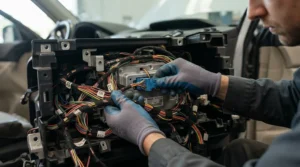
2. Ansell HyFlex 11-618 — 18-gauge, the thinnest feel in the group
The Ansell HyFlex 11-618 pushes thinness furthest, using an 18-gauge nylon liner with a polyurethane palm coating and a knit wrist.
Gauge refers to how many stitches fit in an inch, so a higher number means finer yarn and a thinner, more flexible fabric. Eighteen-gauge is about as close to “second skin” as work gloves get. That helps with small component assembly, where you’re picking up tiny parts, threading small fasteners, or manipulating fine connectors.
The honest catch is durability. Retail descriptions steer this model toward light-duty tasks and warn against heavy mechanical use. Think of it as a scalpel, not a hatchet. It’s ideal when feel matters more than toughness, such as optics, small mechanical assemblies, and kitting delicate parts. It’s the wrong choice if your parts have burrs that chew through fabric.
I couldn’t verify a robust review pool for this exact model in my sources, so treat the take above as spec-based reasoning.
Pros:
- ✅ Ultra-thin 18-gauge shell maximizes tactile control
- ✅ Knit wrist keeps debris out
- ✅ Excellent for fine, light-duty handling
Cons:
- ❌ Not built for rough or heavy-duty tasks
- ❌ Not marketed as ESD-safe
Price range: roughly $4-$10 per pair, so check current price. Value verdict: worth it when fingertip feel is the priority.
3. Ansell HyFlex 11-644 — cut protection without clubby fingers
The Ansell HyFlex 11-644 pairs a 13-gauge HPPE, nylon, and spandex liner with polyurethane on the palm and fingertips.
HPPE is the cut-resistant fiber, so this is the glove for parts with sharp stamped edges, trimmed leads, or sheet-metal fasteners. A retail listing for the vending-pack version notes a top ANSI abrasion level of 5, and the coating is pitched as hard-wearing. The knit wrist stays snug, and the glove is described as launderable, which helps its cost-per-use.
What the spec sheet doesn’t say loudly is the trade-off: 13-gauge is noticeably thicker than the 18-gauge Ansell HyFlex 11-618. You gain protection and give up some fingertip sensitivity. For workers who get nicked regularly, that’s a good exchange. For pure bench electronics, it’s overkill.
Review data I could verify for this exact configuration was thin, so check recent buyer feedback on fit, since cut-resistant liners can feel stiffer at first.
Pros:
- ✅ Cut-resistant HPPE liner for sharp parts
- ✅ Durable coating with strong abrasion rating
- ✅ Launderable for longer service life
Cons:
- ❌ Thicker, so less fingertip feel
- ❌ Priciest glove in this group
Price range: roughly $8-$12 per pair, so check current price. Value verdict: strong value if sharp edges are part of your day.
4. Ansell HyFlex 48-100 — white shell that shows every speck of dirt
The Ansell HyFlex 48-100 is a white nylon glove with a palm-dipped polyurethane coating, aimed at precision handling in dry or slightly oily settings.
The color matters more than it sounds. White is brutally honest: a smudge from a greasy part shows up instantly, so you know when to swap pairs before contamination reaches a finished assembly. That’s why white gloves make sense for inspection, packaging, and assembly where cleanliness is part of the quality check. The listing also shows EN 388 test categories, so it carries mechanical ratings you can read.
The downside of white is that it looks dirty quickly. That’s a feature at an inspection bench and an annoyance on a shop floor. The 48-100 isn’t marketed as ESD-safe, so it belongs on non-static-sensitive work.
I couldn’t verify a meaningful review pool for the exact SKU, so verify sizing against the chart, since distributors list a wide size run.
Pros:
- ✅ White shell reveals contamination quickly
- ✅ Palm-dipped coating keeps the back breathable
- ✅ EN 388 rated for mechanical performance
Cons:
- ❌ Shows dirt fast during rough work
- ❌ Not marketed as ESD-safe
Price range: roughly $3-$6 per pair, so check current price. Value verdict: great for clean, visual-inspection workflows.
5. KleenGuard G40 — thin-mil nylon for no-nonsense assembly
The KleenGuard G40 is a seamless black nylon glove with a polyurethane palm coating and a knit cuff, positioned for delicate tasks including electronics assembly.
Seamless construction eliminates the stitched seam that can irritate fingertips over a long shift. A distributor listing shows EN 388 ratings of abrasion level 3, cut level 1, tear level 3, and puncture level 1. Translation: decent wear resistance, little cut protection. That’s fine for assembly where the only enemy is friction, and wrong where sharp edges lurk.
Black hides smudges, which is the opposite of the Ansell HyFlex 48-100. Pick based on whether you want to see dirt or ignore it. One important caution: the sources I reviewed don’t market the KleenGuard G40 as ESD-safe, so don’t assume static protection.
I found no verified, aggregated review data worth quoting here, so rely on the specs and read live-listing reviews for fit.
Pros:
- ✅ Seamless knit reduces fingertip irritation
- ✅ Thin-mil feel suits delicate tasks
- ✅ Clear published EN 388 ratings
Cons:
- ❌ Minimal cut protection
- ❌ Not marketed as ESD-safe
Price range: roughly $2-$6 per pair, so check current price. Value verdict: solid middle ground for non-ESD precision tasks.

6. QRP Qualakote PDESDNY — budget ESD-safe handling that actually works
The QRP Qualakote PDESDNY blends electrostatic-dissipative fiber into low-lint nylon, then adds a micro-foam polyurethane coating on the palm and fingertips.
This is the glove for people searching “electronics assembly gloves” who also need ESD-safe handling. The ESD yarn reduces static buildup on the glove surface, and the seamless knit keeps dexterity high. Distributor listings place it in circuit board manufacturing, electronics assembly, and aerospace work, and note a roughly nine-inch length in medium. The listing also notes that it can be recycled through TerraCycle, a small perk.
Here’s the useful reframing: an ESD glove is not a wrist strap. It lowers charge generation from your hands and adds a controlled-resistance layer, but personnel grounding still comes from your ESD program. Treat the QRP Qualakote PDESDNY as one layer of protection, not the whole plan.
Verified, aggregated review data was limited in my sources, so check live listings for fit and wear comments.
Pros:
- ✅ ESD fiber blended into low-lint nylon
- ✅ Micro-foam coating grips dry or slightly oily parts
- ✅ Seamless knit keeps dexterity high
Cons:
- ❌ Does not replace wrist straps or grounding
- ❌ Micro-foam feels slightly less “bare” than flat coatings
Price range: roughly $3-$5 per pair, so check current price. Value verdict: outstanding for static-sensitive benches on a budget.
7. Magid ROC PU50ESD — rated for PCBs, SMT, and PC builds
The Magid ROC PU50ESD is an ESD-rated, polyurethane palm-coated anti-static glove aimed at electronics manufacturing.
Magid positions it for electronics assembly, circuit board manufacturing, SMT assembly, PC building, and anything involving ESD-sensitive items. That breadth makes it a flexible pick: a home PC builder and a production technician can both justify it. Because it’s a palm-coated design, the back of the hand stays breathable, which matters over a full shift.
Two honest caveats. First, the product appears under more than one part-number variant, so confirm the exact part number against the data sheet you need. Second, check the published surface-resistance values and compare them to your facility’s ESD program requirements, because “anti-static” on a title is not the same as compliance.
I couldn’t verify a robust aggregated review sample for this model, so use the manufacturer sheet plus live reviews.
Pros:
- ✅ ESD-rated for sensitive electronics work
- ✅ Palm coating keeps the glove breathable
- ✅ Suited to PCB, SMT, and PC builds
Cons:
- ❌ Multiple variants require careful part-number checks
- ❌ Specs need verification against your ESD program
Price range: roughly $3-$7 per pair, so check current price. Value verdict: a flexible, well-targeted pick for electronics assembly gloves.
How to Choose Polyurethane Coated Gloves for Precision Assembly Work
Buying thin coated work gloves is easier when you decide in a fixed order. Follow these six steps:
- Match gauge to your smallest part. A 13-gauge shell is fine for general assembly, while 18-gauge suits the tiniest fasteners. Higher gauge means thinner yarn, better feel, and less toughness.
- Decide on ESD first. If you touch static-sensitive boards, start with ESD-rated gloves and ignore the rest. If you don’t, skip the ESD premium and spend it on fit.
- Check coating coverage. Fingertip-only coating keeps maximum breathability, palm-and-fingertip coating adds grip for the whole hand. Some manufacturers sell both versions of the same glove.
- Read the EN 388 code properly. The standard reports abrasion, blade cut, tear, and puncture levels, and an X means a test wasn’t performed. This EN 388 guide explains each digit, and for precision work abrasion and tear matter more than headline cut numbers.
- Get the fit right. The glove should be snug at the fingertips with no loose fabric at the tip, since slack kills tactile control and snags on parts.
- Check cuff and lint. A knit wrist keeps debris out, and low-lint nylon matters for clean work. Some industrial listings also note silicone-free construction for paint-sensitive areas.
If a glove fails step one or two, nothing else matters. That’s why the QRP Qualakote PDESDNY and Magid ROC PU50ESD lead for electronics benches, and why the Ansell HyFlex 11-618 leads for pure feel.

Thin Coated Work Gloves vs. Nitrile, Latex, and Bare Hands
Why not just wear nitrile-dipped gloves or go bare? Because each option trades something away. Polyurethane has a reputation for the thinnest feel and strong abrasion performance in dry conditions. Nitrile foam, like on the Ansell HyFlex 11-844, generally handles oilier parts and is touchscreen compatible, but it’s usually bulkier at the fingertip. Bare hands win on raw sensitivity and lose on contamination.
| Option | Tactile Control | Oil Tolerance | Contamination Control | Best For |
|---|---|---|---|---|
| Polyurethane coated (e.g., Ansell HyFlex 11-600) | Excellent | Light oil only | Good | Dry precision assembly |
| Nitrile foam coated (e.g., Ansell HyFlex 11-844) | Good | Better in oily conditions | Good | Oily parts, touchscreen use |
| ESD polyurethane (e.g., QRP Qualakote PDESDNY) | Excellent | Light oil only | Good, plus static control | Electronics benches |
| Bare hands | Best raw feel | Poor grip with sweat | Poor | Nothing that touches finished parts |
The table makes the choice plain: polyurethane wins whenever the parts are dry and small. If your parts arrive slick with machining oil, step up to nitrile foam like the Ansell HyFlex 11-844. And if you’re at a static-sensitive station, ESD polyurethane such as the QRP Qualakote PDESDNY beats both.
Electronics Assembly Gloves and ESD-Safe Handling: Decoding the Spec Sheet
ESD-safe handling sounds technical, but the core idea is simple. Static charge builds up on your body and clothing, and a discharge as small as a few hundred volts can silently damage sensitive components. The ANSI/ESD S20.20 standard covers the requirements for building and maintaining an ESD control program for activities that handle parts susceptible to discharges of 100 volts or more under the Human Body Model. The ESD Association’s standards pages describe the working group behind it.
Gloves enter the picture through in-use resistance testing under ANSI/ESD SP15.1. Manufacturers usually quote surface resistance. For example, one ESD assembly glove lists surface resistance in the 10^6 to 10^8 ohm range, while a striped PU-palm option lists 1 x 10^10 ohms.
| Class | Typical Surface Resistance | What It Means |
|---|---|---|
| Conductive | Below 10^5 ohms | Very rapid discharge, so verify safety near live circuits |
| Dissipative | 10^5 to 10^12 ohms | Controlled charge bleed-off, the target for ESD gloves |
| Insulative | Above 10^12 ohms | Holds charge, avoid at static-sensitive stations |
That table shows why a standard PU glove isn’t automatically safe at an ESD bench: nylon and polyurethane on their own can hold charge. A dissipative glove like the Magid ROC PU50ESD is built to bleed charge off in a controlled way. Remember, though, that gloves supplement grounding rather than replace it. Seated operators generally need a wrist strap connection under S20.20, so treat your gloves as one layer.
Small Component Assembly and Tactile Control: Where Precision Grip Gloves Shine
Tiny parts punish clumsy hands. When you’re placing small fasteners, seating ribbon connectors, or handling tiny springs, the coating’s job is to let you grip with less pressure. Less squeeze means less fatigue and fewer launched parts.
That’s the mechanical logic behind precision grip gloves: a tacky fingertip surface substitutes for muscle. Coating coverage changes the feel, too. Fingertip-only coatings preserve palm breathability, while palm-and-fingertip coatings give a steadier hold on larger housings.
Thickness is the other half of tactile control. The Ansell HyFlex 11-618 at 18-gauge lets you sense edges and threads that a thicker shell would blur, but it’s more fragile. The Ansell HyFlex 11-644 gives up some feel in exchange for protection. Pick the thinnest glove your parts’ edges will allow, and no thinner.
✨ Don’t Miss These Exclusive Deals!
🔍 Take your precision assembly to the next level with these carefully selected gloves. Click on any highlighted product to check current pricing and availability. The right pair will help you create cleaner, faster, more confident work!
Features That Actually Matter (And Those That Don’t)
Marketing copy loves buzzwords. Here’s what deserves your attention and what doesn’t.
Matters:
- ✅ Gauge and liner material, because they set your fingertip feel
- ✅ ESD rating with published resistance values for electronics work
- ✅ Knit cuff and low-lint shell for clean assembly
- ✅ Coating coverage matched to the job
Doesn’t matter as much:
- ❌ Cut ratings, if your parts have no sharp edges
- ❌ Touchscreen claims, unless you actually use screens at the bench
- ❌ Fancy color schemes, beyond white-versus-black visibility
A common trap is paying extra for cut protection you’ll never use. The Ansell HyFlex 11-644 is a smart buy if edges are an issue, but it’s wasted money on a clean PC-building bench where a QRP Qualakote PDESDNY does the job better.
Common Mistakes When Buying Polyurethane Coated Gloves for Precision Assembly Work
Mistake one: assuming “anti-static” means ESD-compliant. Check the surface-resistance data and your facility’s requirements instead of trusting a product title.
Mistake two: buying too large. Loose fingertips flop, snag, and destroy tactile control. A snug fit beats a “comfortable” loose one.
Mistake three: ignoring the part’s oil level. Polyurethane shines in dry or lightly oily conditions, and heavier oil calls for nitrile foam.
Mistake four: using a non-ESD glove on static-sensitive boards because it “feels better.” Gloves like the KleenGuard G40 and Ansell HyFlex 48-100 are fine for general assembly, but the sources I checked don’t market them as ESD-safe.
Mistake five: skipping the pack-size math. Dozens-per-pack pricing often cuts per-pair cost dramatically, which matters when you rotate pairs daily.

Long-Term Cost & Maintenance: Cost Per Use Matters More Than Sticker Price
A $3 glove that dies in a week costs more per day than a $9 glove that lasts a month. Durability, launderability, and replacement frequency decide true cost. As an illustration, a $4 pair that lasts three weeks of daily use works out to roughly 19 cents a day.
| Glove | Typical Price Range | Maintenance Note | Value Verdict |
|---|---|---|---|
| Ansell HyFlex 11-600 | Roughly $2-$6 | Thin coating, replace when worn | Excellent budget value |
| Ansell HyFlex 11-644 | Roughly $8-$12 | Described as launderable | Best long-term value for sharp parts |
| QRP Qualakote PDESDNY | Roughly $3-$5 | Follow label guidance, re-verify ESD performance | Best ESD value per dollar |
| Magid ROC PU50ESD | Roughly $3-$7 | Check data sheet for washing guidance | Strong value if specs match your program |
Reading the table, the Ansell HyFlex 11-644 costs the most up front but can pay back through laundering and longer wear. ESD gloves can usually be washed and reused, per supplier guidance, but re-test or re-verify performance under your ESD program afterward because repeated laundering can change glove properties.
Practical Usage Guide: Your First 30 Days With Thin Coated Gloves
Days 1-3: Fit and break-in. Try a pair for a full session before buying a whole box. Watch for slack at the fingertips, pinching at the knuckles, and any numbness from over-tight cuffs.
Week 1: Build a rotation. Keep at least two pairs per person so you can swap when one gets damp or dirty. White gloves like the Ansell HyFlex 48-100 make swapping obvious.
Week 2: Inspect for wear. Look for pilling, thin spots, and peeling coating at the fingertips. Retire gloves when the grip changes.
Week 3: Keep ESD gloves honest. If you wear a Magid ROC PU50ESD or QRP Qualakote PDESDNY, keep them in a clean bag between uses and verify performance on the schedule your ESD program requires.
Week 4: Review and adjust. If your fingertips tire, drop a gauge. If you’re nicking yourself, go up one.
Common first-month mistakes: wearing them as dish gloves, leaving them in a hot vehicle, and using hand lotion right before putting them on, which can transfer oils to parts.
Real-World Scenarios: Three Buyers, Three Pairs
The weekend PC builder. Eight hours a month, clean bench, no ESD program but real static risk. The Magid ROC PU50ESD or QRP Qualakote PDESDNY is a sensible, inexpensive choice.
The electronics technician. Daily soldering and board handling in an ESD-protected area. The QRP Qualakote PDESDNY works well, paired with a wrist strap and whatever your facility mandates.
The light-assembly operator. Handling small stamped brackets with the occasional burr. The Ansell HyFlex 11-644 delivers cut protection without ruining feel, while the Ansell HyFlex 11-600 handles clean, burr-free steps.
In each case, the right choice is determined by environment and frequency, not by whichever model has the most features.
Buyer’s Decision Framework: If This, Choose That
- If you touch static-sensitive electronics, choose ESD-rated gloves such as the QRP Qualakote PDESDNY or Magid ROC PU50ESD. A guide from PIP notes that ESD gloves belong inside a professionally managed program.
- If fingertip feel is everything, choose the Ansell HyFlex 11-618.
- If parts have sharp edges, choose the Ansell HyFlex 11-644.
- If cleanliness inspection matters, choose the Ansell HyFlex 48-100.
- If you want a no-fuss budget pair, choose the Ansell HyFlex 11-600 or KleenGuard G40.
Start with ESD, then touch, then protection, then price. That priority order prevents the most expensive mistakes.

FAQ
❓ Are polyurethane coated gloves good for electronics assembly?
❓ Can I use regular PU gloves on ESD-sensitive boards?
❓ How thin should gloves be for small component assembly?
❓ Do polyurethane coated gloves work with oily parts?
❓ How do I wash thin PU coated gloves?
Conclusion
The best polyurethane coated gloves for precision assembly work aren’t the thickest or the toughest. They’re the thinnest gloves your parts will allow, matched to your environment and ESD needs. For pure feel, the Ansell HyFlex 11-618 leads. For sharp-edged parts, the Ansell HyFlex 11-644 earns its higher price. For clean inspection, the Ansell HyFlex 48-100 is hard to beat. For budget general assembly, the Ansell HyFlex 11-600 and KleenGuard G40 both deliver.
And if you touch static-sensitive electronics, skip the debate and go straight to an ESD-rated pair like the QRP Qualakote PDESDNY or Magid ROC PU50ESD, then confirm the resistance data against your program. Fit, gauge, and ESD status decide nearly everything else. Get those right and your hands do the rest.
✨ Ready to upgrade your bench?
🔍 Click any highlighted glove above to check current pricing and availability, then pick the pair that matches your parts, your environment, and your standards. Your fingertips will thank you! 🧤
Recommended for You
- Latex Coated Gloves For Gardening And Landscaping: 7 Best Picks 2026
- Nitrile Coated Gloves For Oil And Grease Resistance: 7 Best (2026)
- PVC Coated Gloves Vs Rubber Coated Gloves: 7 Best Picks For 2026
Disclaimer: This article contains affiliate links. As an Amazon Associate, I earn from qualifying purchases. If you purchase products through these links, we may earn a small commission at no additional cost to you.
✨ Found this helpful? Share it with your friends! 💬🤗
