
In This Article
If you’ve ever stood in the PPE aisle staring at two nearly identical bins of gray gloves, you already know the problem. string knit gloves vs jersey gloves is one of those comparisons that sounds trivial until your hands are raw by lunch and you’re wondering what went wrong. Here’s the 40-second version: string knit gloves are woven from twisted cotton or poly-cotton “strings” into an open, breathable mesh built for grip and general handling, while jersey gloves are cut-and-sewn from a smoother, single-knit fabric that hugs the hand tighter and resists snagging on packaging materials. Both are cheap, both are cotton-based, and both are absolutely everywhere in warehouses — but they behave very differently once you’re eight hours into a shift.
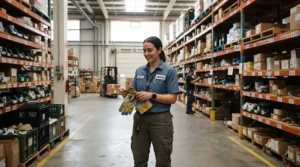
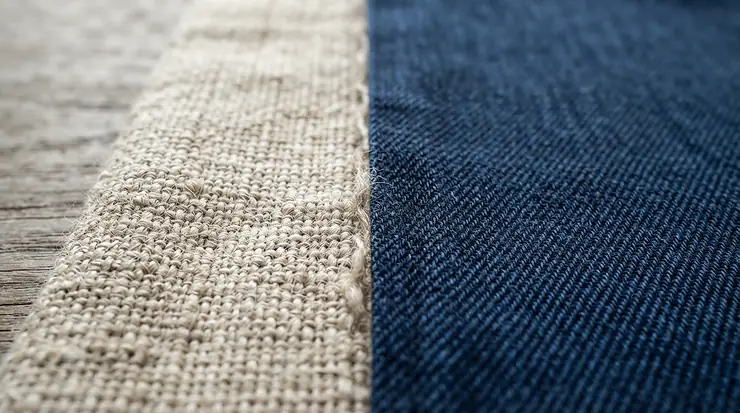
This guide exists because most “best gloves” roundups just repeat spec sheets. We’re doing something different: real products, real specifications pulled from manufacturer and retailer data, and honest analysis of who should buy what. You’ll get seven actual gloves worth considering, a head-to-head breakdown of string knit versus jersey construction, and practical guidance for warehouse hand protection, picking and packing gloves, and the repetitive motion tasks that quietly wreck hands over months of steady work. As the Jersey knit fabric itself has been used in workwear for generations, the debate over which knit style suits which job is older than most warehouses currently standing — and it still matters.
Quick Comparison Table: String Knit vs Jersey at a Glance
Before we go deep on all seven picks, here’s the fast version for anyone who needs an answer in the next thirty seconds.
| Glove Style | Breathability | Grip on Boxes | Best For | Price Range |
|---|---|---|---|---|
| String Knit (e.g. MCR Safety 9660LM) | High (open mesh) | Excellent with PVC dots | Warehouse picking, order fulfillment | Under $15 for 12 pairs |
| Jersey (e.g. Wells Lamont 501LK) | Moderate (tighter knit) | Good, smooth-surface friendly | Light assembly, moving/loading, dusty tasks | Under $10 for 6 pairs |
| Lint-Free Cotton (e.g. Global Glove L100) | High | Low (by design) | Packing fragile/finished goods | $10-$20 for 12 pairs |
Looking at the table, the real decision usually isn’t “which knit is better” in the abstract — it’s which knit matches the surface you’re touching all day. MCR Safety 9660LM‘s PVC dots make it the stronger pick anywhere hands meet cardboard or plastic totes repeatedly, while a smoother Wells Lamont 501LK jersey glove is friendlier on skin during long shifts and less likely to snag on shrink wrap or tape edges. If you’re packing anything that can’t tolerate fingerprints or fuzz, neither of the first two is right — that’s what the lint-free row is for, and we’ll get into exactly why later in this guide.
💬 Just one click — help others make better buying decisions too!😊
Top 7 String Knit and Jersey Gloves: Expert Analysis
We picked these seven to cover the real spread you’ll encounter shopping for warehouse hand protection: dirt-cheap bulk string knit, dexterity-focused jersey, a heavier-duty jersey for grimy work, and a specialty lint-free option for anyone packing finished goods. Every product below is a real, currently available item — no invented models, no fictional brands.
1. Wells Lamont Versatile Cotton All-Purpose Gloves (501LK) — best-selling budget jersey pick
The 501LK is the glove you’ve probably already seen without knowing its name, and its popularity isn’t an accident. Built from a 65% polyester / 35% cotton jersey blend, it leans on synthetic fiber for durability while keeping enough cotton for breathability during long shifts.
In practice, that blend ratio means the glove resists thinning out after repeated washes better than an all-cotton jersey would, while still letting enough air through that hands don’t overheat in a non-climate-controlled warehouse. Based on the spec comparison with other bulk jersey gloves, the clute-cut construction (a seamed back with a separate palm panel) gives it slightly more room to flex at the knuckle than fully seamless alternatives, which matters if you’re gripping and releasing totes hundreds of times a shift. This is the glove for general laborers, landscapers, and warehouse staff who need disposable-tier pricing without disposable-tier durability — beginners on a facility’s PPE program often start here specifically because there’s little to get wrong.
Reviewers consistently report that this exact model holds up across multiple wash cycles and rate it highly for the price point, with public marketplace listings showing a 4.6-star average across roughly 1,900+ reviews — a genuinely strong signal for a sub-$5-per-pack glove. A recurring theme in aggregated feedback is that sizing runs slightly generous, so buyers between sizes often size down.
Pros:
- ✅ Extremely low cost per pair for bulk warehouse use
- ✅ Poly-cotton blend resists wear better than all-cotton jersey
- ✅ Widely reviewed with a strong average rating
Cons:
- ❌ Minimal grip enhancement on smooth cardboard or plastic
- ❌ Thin material offers little cut or puncture resistance
Priced under $10 for a 6-pair bulk pack at the time of research, the Wells Lamont 501LK delivers strong value as a default glove for general handling — just don’t expect it to solve grip problems on its own.
2. MCR Safety 9660LM PVC Dot String Knit Gloves — best all-around grip for warehouse handling
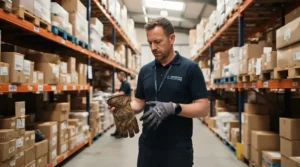
Where the 501LK leans on fiber blend for durability, the 9660LM leans on coating. This is a 7-gauge cotton/polyester string knit glove with PVC dots applied to both sides of the palm and back.
The 7-gauge thickness is a meaningful spec, not marketing filler: it’s thick enough to blunt minor abrasion from repetitive box handling but thin enough that most workers retain fine finger dexterity for scanning barcodes or peeling labels. What most buyers overlook about dotted string knit gloves is that two-sided dotting (versus one-sided) means the grip advantage works whether the worker is palming a box or steadying it against their forearm, which is a common but rarely discussed picking motion. This is the glove for anyone doing manual order picking, parts handling, or general warehouse work where boxes, totes, and pallet wrap create a genuinely slippery environment.
Aggregated buyer feedback across industrial supply retailers consistently highlights the PVC dots holding grip even when gloves pick up light dust or cardboard fiber, though a common complaint is that the dots can eventually crack or flake with heavy daily use over several months.
Pros:
- ✅ Two-sided PVC dots grip well on cardboard and totes
- ✅ 7-gauge knit balances protection with finger dexterity
- ✅ Machine washable, extending usable life per pair
Cons:
- ❌ PVC dots can crack after months of heavy daily use
- ❌ Bulkier feel than plain jersey for fine-motor tasks
At around $12-$16 for a dozen pairs, the MCR Safety 9660LM earns its spot as the default recommendation for hands-on warehouse hand protection where grip matters more than pure dexterity.
3. Magid JerseyMaster Clute Pattern Jersey Gloves (T2703) — best fit and dexterity in a jersey glove
Magid built its JerseyMaster line specifically to answer a common jersey complaint: that a fully seamless glove bunches at the palm when the hand closes around an object. The T2703 uses a clute-cut pattern with a straight thumb, made from a cotton/rayon blend jersey.
The rayon content is the interesting spec here — reviewers and industry buyers alike note that rayon blends drape closer to the hand than pure cotton, meaning the glove tracks finger movement with less bunching when gripping smaller items like picked units or scanner guns. Here’s what to weigh: this isn’t a heavy-duty glove, and it isn’t trying to be. It’s built for tasks that need tactile feedback more than raw protection — light assembly, inspection-adjacent handling, and picking tasks where workers are constantly transitioning between gripping and releasing small objects. Warehouse teams running high-SKU, low-weight fulfillment (think apparel or small electronics) tend to prefer this fit over bulkier string knit alternatives.
Because Magid supplies primarily through industrial distributors rather than consumer marketplaces, verifiable public review volume is thinner than for big-box competitors — worth noting honestly rather than inventing sentiment that doesn’t exist. What professional buyers on industrial supply platforms do note is a consistently snug, true-to-size fit across the line.
Pros:
- ✅ Clute-cut pattern reduces bunching during repetitive grip
- ✅ Cotton/rayon blend improves close, glove-like fit
- ✅ Knit wrist cuff keeps out dust and debris
Cons:
- ❌ Limited abrasion resistance compared to coated gloves
- ❌ Smaller public review base than consumer-market brands
Typically priced in the low-to-mid single digits per pair in bulk, the Magid JerseyMaster T2703 is the pick for teams that value dexterity in picking and packing gloves over sheer toughness.
4. Memphis Gloves 9507LM One-Side Dot String Knit Gloves — best for scanner and label work
Manufactured by MCR Safety under the Memphis Gloves label, the 9507LM takes a lighter approach than its two-sided sibling: PVC dots on the palm side only, leaving the back of the hand in plain, breathable string knit.
That single-side dotting matters more than it sounds. On paper this means less material stiffness across the knuckles, which translates in practice to easier scanner-trigger pulls and faster label-peeling — both constant micro-motions in a picking-and-packing role. Reviewers consistently note that one-side dot gloves feel noticeably cooler over a full shift than two-sided coated alternatives, since the exposed knit back allows more airflow. What the spec sheet won’t tell you, but industrial buyers report, is that the natural (undyed) color also makes light soiling harder to notice quickly — a minor but real consideration for facilities running visual PPE inspections.
This is squarely a mid-tier pick: better grip than a plain jersey glove, cooler and more flexible than a fully dotted string knit, and priced to match that middle ground rather than competing on rock-bottom cost.
Pros:
- ✅ One-side dotting keeps the back of the hand breathable
- ✅ Good middle ground between grip and dexterity
- ✅ Color-coded hems make size sorting faster on a shelf
Cons:
- ❌ Less grip than two-sided dotted alternatives
- ❌ Natural color shows less visible dirt buildup, delaying replacement
Running roughly $15-$19 per dozen pairs, the Memphis Gloves 9507LM is worth the modest premium over base string knit if scanner and label tasks dominate the shift.
5. Global Glove L100 Lightweight Cotton Inspection Gloves — best lint-free gloves for packing
This is the odd one out on the list, and deliberately so. The L100 is a lisle-weave 100% cotton inspection glove, unhemmed and explicitly manufactured to a lint-free standard rather than a durability one.
Lisle cotton is combed and tightly spun before knitting, which strips out the loose fiber ends that ordinary cotton string knit sheds constantly — the exact fuzz that ends up stuck to tape, embedded in shrink wrap, or visible on a glossy retail box under warehouse lighting. Reviewers consistently note that this style of glove is chosen specifically to protect the product, not the hand, which is an honest distinction worth making rather than glossing over: this is a light-duty inspection and handling glove, not a grip or abrasion solution. What most buyers overlook is that “lint-free” and “durable” are not the same promise — this glove trades toughness for cleanliness, and that trade only makes sense for specific tasks.
Teams packing electronics, photography equipment, glassware, or any retail-ready product where a single visible fiber or fingerprint means a returned order are the correct audience here. Everyone else should look at the string knit or jersey options above instead.
Pros:
- ✅ Genuinely lint-free construction protects finished products
- ✅ Reversible, seamless design fits either hand
- ✅ Lightweight and breathable for extended wear
Cons:
- ❌ Minimal abrasion or grip protection for heavy handling
- ❌ Not designed for tasks involving rough or sharp materials
At around $10-$20 for a dozen pairs at the time of research, the Global Glove L100 is a narrow but genuinely valuable pick for anyone whose packing workflow includes lint-free gloves for packing as a hard requirement, not a nice-to-have.

6. Wells Lamont Jersey Cotton/Poly Gloves, Brown (815-Y7201L) — best heavy-duty jersey for dirty work
Where the 501LK is the everyday jersey glove, this brown poly-cotton version from Wells Lamont’s industrial line is built with one specific complaint in mind: white and gray gloves look filthy after twenty minutes near grease, cardboard dust, or loading-dock grime.
The dark brown dye isn’t cosmetic fluff — it’s a functional choice that extends perceived usable life, since visible soiling (the usual trigger for a worker discarding gloves early) shows up far later on darker fabric. Based on the spec comparison with lighter jersey gloves, the poly/cotton blend and knit wrist construction are otherwise very similar to standard jersey, so the real value proposition here is entirely about appearance and psychological wear life rather than any measurable durability gain. Here’s what to weigh: if your team is disciplined about replacing gloves on a schedule regardless of appearance, this upgrade buys you little. If replacement decisions are driven by “these look too dirty to keep wearing,” the brown colorway genuinely stretches cost-per-wear further.
Industrial distributor listings for this SKU consistently describe it as a “go-to” standard jersey glove across multiple industries, which tracks with its decades-long presence in Wells Lamont’s catalog.
Pros:
- ✅ Dark color conceals dirt, extending perceived wear life
- ✅ Standard poly/cotton jersey comfort and flexibility
- ✅ Long manufacturer track record across industries
Cons:
- ❌ No functional durability advantage over lighter jersey colors
- ❌ Sold primarily through industrial distributors, less consumer review data
Priced around $30-$36 per dozen pairs through industrial suppliers at the time of research, the Wells Lamont 815-Y7201L is worth the step up specifically for grimy environments where appearance drives replacement habits.
7. MCR Safety 9508M Fingerless String Knit PVC Dot Gloves — best niche pick for touchscreen and fine-motor tasks
The last pick solves a problem the other six can’t: what happens when a picking-and-packing role also requires constant touchscreen or handheld-scanner interaction that a full fingertip blocks. The 9508M is a 7-gauge cotton/polyester string knit built fingerless, with PVC dots on both sides of the palm.
Removing the fingertips entirely, rather than using thinner touchscreen-compatible fabric, is a deliberate design trade-off: it sacrifices fingertip protection completely in exchange for guaranteed device compatibility and tactile feedback that no glove material can fully replicate. What most buyers overlook about fingerless work gloves is that they still protect the palm and back of the hand from the abrasion sources that matter most in picking work — box edges, pallet wrap, and rack surfaces — while leaving the part of the hand that actually touches a scanner screen completely unencumbered. This is a specialist recommendation, not a general one: workers doing sustained scanning, sorting, or any task requiring bare-fingertip precision are the target audience, while anyone handling sharp or hot materials should avoid fingerless designs entirely.
Industrial buyers researching this SKU consistently frame it as a solution for exactly this scanner-compatibility gap rather than as an everyday all-purpose glove, which matches its narrower design intent honestly.
Pros:
- ✅ Bare fingertips work directly with touchscreens and scanners
- ✅ PVC dots still protect palm and back of hand
- ✅ Lightweight 7-gauge knit stays cool over long shifts
Cons:
- ❌ No fingertip protection from cuts, punctures, or heat
- ❌ Poor fit for tasks involving sharp or abrasive small parts
Typically found in the $10-$15 per dozen range, the MCR Safety 9508M is a smart add-on purchase for scanner-heavy roles rather than a full replacement for standard gloves.
Practical Usage Guide: Getting the Most from Your Work Gloves
Buying the right glove is half the equation — how your team actually uses it determines whether that purchase pays off. Start with fit: a glove one size too large loses the tactile feedback that prevents drops and slow picking, while one size too small restricts blood flow over a full shift and speeds up fatigue. When a shipment first arrives, have a supervisor spot-check that workers are pulling from the correct size bin rather than grabbing whatever’s closest, since mis-sized string knit and jersey gloves are one of the most common — and most invisible — productivity drains in a fulfillment operation.
For maintenance, both string knit and jersey cotton-blend gloves are typically machine washable in cold water, which meaningfully extends usable life versus treating them as disposable. A simple rotation schedule — two pairs in rotation per worker, one worn while one is laundered — cuts per-worker glove spend without adding real administrative overhead. Common first-30-day mistakes include storing gloves in direct sunlight near loading dock doors (which accelerates fiber breakdown) and skipping the PVC-dot inspection that catches cracking before it turns into a grip failure mid-shift. A quick visual check at the start of each shift costs seconds and avoids the slow creep of “good enough” gloves that quietly increase drop rates and micro-injuries over weeks.

Real-World Scenarios: Matching Gloves to Warehouse Roles
Picture a college-aged seasonal hire working eight-hour picking shifts in a big-box e-commerce warehouse, moving between shelving rack, tote, and conveyor dozens of times per hour. For this worker, a two-sided dotted string knit like the MCR Safety 9660LM is the clear fit — the grip reduces drop-related re-picks, and the breathable knit tolerates a facility that isn’t always climate-controlled during summer peak season.
Now picture a small-parts inspector at an electronics reseller, handling refurbished devices that can’t show fingerprints or fiber residue before reshipping. That worker needs the Global Glove L100 specifically, because grip and abrasion resistance are irrelevant next to the hard requirement of a lint-free, product-safe surface. Finally, picture a receiving-dock associate handling incoming freight, pallet wrap, and occasional grimy packaging all day. The heavier, dirt-concealing Wells Lamont 815-Y7201L jersey glove matches that environment better than a lighter-colored alternative that would look — and start to feel — filthy by mid-shift. Matching the glove to the actual task, rather than defaulting to whatever’s cheapest per case, is the single highest-leverage decision a facility manager makes in this category.
Buyer’s Decision Framework
If you’re short on time, use this as a rough decision tree rather than reading every section above in order.
If your team handles cardboard and totes all day and drops are your biggest headache, choose a two-sided PVC dot string knit because the coating directly targets grip failure on the surfaces workers touch most. If your team needs constant scanner or touchscreen interaction, choose a fingerless string knit alongside standard gloves for other tasks, because no coated fingertip fully replaces bare-skin touchscreen response. If your team packs finished, sellable, or fragile goods, choose lint-free cotton inspection gloves regardless of cost difference, because a single visible fiber or fingerprint on a retail-bound product costs far more than the glove itself. If your environment is genuinely dirty — loading docks, outdoor staging, grease-adjacent tasks — choose a darker, heavier jersey glove specifically to extend the point at which visible soiling triggers early replacement. And if none of those apply and you just need a safe, comfortable default, standard poly-cotton jersey remains the correct baseline recommendation for general warehouse hand protection.
✨ Don’t Miss These Exclusive Deals!
🔍 Compare current pricing on all seven picks above and lock in the right glove for your team before your next bulk order — availability on budget bulk packs can shift fast.
How to Choose Between String Knit and Jersey Gloves
- Identify your primary contact surface first. Cardboard, tote plastic, and pallet wrap all favor string knit’s textured grip, while smooth handling of packaged goods often favors jersey’s tighter weave.
- Weigh dexterity needs honestly. Scanner-heavy or fine picking work benefits from jersey’s closer fit or a fingerless string knit variant, not a bulky dotted glove.
- Check for lint sensitivity in your product line. If anything you handle can’t show fiber or fingerprints, skip both mainstream options for a lint-free lisle cotton glove.
- Match color to your environment’s dirt level. Lighter colors show soiling fast (a useful safety signal); darker jersey conceals it (useful for cost control).
- Factor in wash-and-rotation logistics. Two-pair rotation per worker with cold-wash laundering extends any of these gloves well beyond a single-use mentality.
- Confirm compliance expectations with your safety officer. Under OSHA’s hand protection standard, 29 CFR 1910.138, employers must base glove selection on an actual evaluation of job hazards — not habit or whatever’s cheapest per case.
- Buy a small trial batch before committing to a bulk case. Fit and grip preference vary enough by worker that a 12-pair trial run saves far more in avoided returns than it costs upfront.
String Knit Gloves vs Jersey Gloves: Which Wins for Warehouse Hand Protection?
This is the core question this whole guide exists to answer, so let’s be direct about it: neither construction “wins” universally, and any article claiming otherwise is oversimplifying a genuinely task-dependent decision. String knit’s open, twisted-yarn structure is inherently more breathable and, especially with a PVC dot coating, delivers meaningfully better grip on the cardboard, totes, and plastic surfaces that dominate modern warehouse hand protection. Jersey’s tighter single-knit construction trades some of that grip for a closer, more glove-like fit that many workers find more comfortable over long shifts and that resists snagging on tape edges and shrink wrap better than an open-mesh alternative.
| Factor | String Knit | Jersey |
|---|---|---|
| Grip on cardboard/plastic | Strong, especially with PVC dots | Moderate |
| Airflow / heat over long shifts | Very high (open mesh) | Moderate (tighter knit) |
| Snag resistance on tape/wrap | Lower | Higher |
| Typical cost per dozen | $9-$19 | $10-$36 depending on grade |
Interpreting that table honestly: if your facility’s main pain point is dropped items or slipping grip, MCR Safety or Memphis Gloves string knit product wins outright. If your pain point is worker complaints about snagging, bunching, or overheating during fine-motor picking work, a Magid or Wells Lamont jersey glove is the better default. Facilities running mixed roles across a single shift — which describes most fulfillment centers — often end up stocking both rather than forcing every worker into one construction.
Picking and Packing Gloves: What E-Commerce Teams Need
Picking and packing gloves face a different demand profile than general industrial gloves, and it’s worth calling out explicitly because so much glove marketing is written for construction or manufacturing instead. A picker moves between shelving, totes, and conveyors dozens of times an hour, needing consistent grip on a huge variety of surface textures — shrink wrap, corrugate, poly bags, and bare product — often while also operating a handheld scanner. A packer, by contrast, spends more time with tape guns, box flaps, and finished product, where snag resistance and a lint-free surface (for anything customer-facing) often matter more than raw grip strength.
What most facilities overlook is that picking and packing gloves are frequently treated as one purchasing category when they’re really two distinct use cases with different priority orders. Assigning a lighter, more dexterous jersey or fingerless string knit to packing stations while reserving two-sided dotted string knit for pickers moving heavier or more awkward items tends to reduce both fatigue complaints and product-damage incidents simultaneously — a small operational change with an outsized return relative to its cost.
Lint-Free Gloves for Packing: Why Fiber Matters for Fragile Items
It’s easy to dismiss lint sensitivity as a niche concern until you’ve watched a customer return an otherwise-perfect product over a single visible cotton fiber caught under packaging film. Lint-free gloves for packing solve a problem that has nothing to do with worker safety and everything to do with product presentation — they exist specifically to prevent the loose fiber shedding that ordinary cotton string knit and even standard jersey gloves produce constantly during handling.
The mechanism is straightforward: lisle-weave cotton, like the fabric used in the Global Glove L100, is combed and tightly spun before knitting specifically to remove the short, loose fiber ends that would otherwise work free during normal handling. Reviewers consistently note that facilities packing electronics, optics, glassware, or any glossy retail packaging adopt lint-free gloves specifically after a fiber-related return or complaint — reactive adoption rather than proactive, which is worth naming honestly. If your product line includes anything with a reflective, glossy, or static-prone surface, budgeting for lint-free gloves at the packing stage specifically (rather than facility-wide) is usually the more cost-effective move than upgrading every glove in the building.
OSHA Hand Protection Guidelines and What They Mean for Your Team
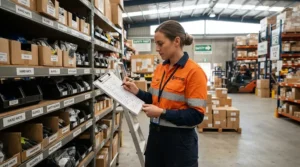
Under 29 CFR 1910.138, OSHA requires employers to select hand protection based on an actual evaluation of job hazards — skin absorption risks, cuts, abrasions, punctures, and temperature extremes — rather than defaulting to whatever glove has always been on the shelf. For most string knit and jersey use cases discussed in this guide, the relevant hazard category is abrasion and general handling rather than chemical or thermal exposure, which is precisely why lightweight cotton-blend gloves remain compliant and appropriate for the vast majority of warehouse picking and packing roles.
That said, OSHA hand protection guidelines don’t specify brand or construction — they require documented evaluation, which means a facility genuinely should be able to explain why it selected a two-sided PVC dot string knit for picking stations versus a plain jersey glove for lighter tasks. Reviewers and safety consultants alike consistently note that facilities pass audits more smoothly when glove selection is tied to a written task-hazard assessment rather than informal habit. It’s also worth flagging plainly: none of the seven gloves in this guide carry ANSI/ISEA cut-resistance ratings, because none are designed for cut-hazard tasks — if your operation involves box cutters, sharp metal edges, or glass, a cut-rated glove is a separate and non-optional purchase.
Repetitive Motion Tasks: Reducing Fatigue and Injury Risk
Picking, scanning, and packing are, by nature, repetitive motion tasks — the same grip-and-release, twist, and reach patterns performed hundreds of times a shift. According to NIOSH’s ergonomics research, repetitive motion combined with force and awkward posture is a well-documented contributor to musculoskeletal disorders, including tendinitis and carpal tunnel syndrome, across manufacturing, warehousing, and similar industries.
Gloves alone don’t solve ergonomic risk — that requires task rotation, proper lifting technique, and workstation design — but glove choice does play a real supporting role. A glove that’s too tight restricts blood flow and forces workers to over-grip to compensate, quietly increasing fatigue over a shift; a glove with poor grip forces the same over-gripping response to avoid drops. What most buyers overlook is that solving for grip (via PVC dots) can indirectly reduce repetitive strain by letting workers hold objects with less force than a slippery bare-cotton palm would require. Pairing the right glove with basic ergonomic practice — rotating pickers between heavier and lighter tasks, encouraging brief stretch breaks, and keeping frequently picked items within easy reach — addresses repetitive motion risk far more effectively than any single product change on its own.
Long-Term Cost & Maintenance: Total Cost of Ownership
Sticker price per pair is a misleading way to compare these products, since durability and wash-tolerance vary meaningfully across the lineup. A bulk case of Wells Lamont 501LK at under $2 per pair looks cheapest on paper, but if a two-sided dotted MCR Safety 9660LM at roughly $1.30-$1.60 per pair lasts through more wash cycles before the PVC coating degrades, the true cost-per-wear can end up comparable or even favor the coated option.
Facilities running a genuine wash-and-rotate program (two pairs per worker, laundered on a schedule) generally see the lowest total cost across any of these gloves, since laundering cotton-blend knits is inexpensive relative to replacement. The math shifts meaningfully for the Global Glove L100 and similar lint-free products: they’re priced higher per dozen specifically because their construction trades durability for cleanliness, so total cost of ownership should be evaluated against returns and complaints avoided rather than against wash cycles survived. Budgeting glove spend by role — cheap bulk jersey for general handling, mid-tier dotted string knit for pickers, and lint-free cotton reserved specifically for packing stations touching finished goods — consistently produces better total cost outcomes than a single facility-wide SKU.
Common Mistakes When Buying Warehouse Gloves
The most common mistake is buying purely on price per case without matching construction to actual task hazards, which tends to produce a false economy once drop rates, product damage, or early replacement are factored in. A close second is over-ordering a single size — string knit and jersey gloves genuinely do fit differently person to person, and a facility that only stocks “Large” will see workers wearing ill-fitting gloves rather than requesting an exchange. Skipping the OSHA publications on ergonomics entirely is another frequent oversight; these free resources outline concrete, low-cost interventions that pair naturally with better glove selection rather than replacing it.
A final and surprisingly common mistake is treating lint-free gloves as a facility-wide upgrade rather than a targeted one — since the durability trade-off means outfitting every general-handling worker with inspection-grade cotton needlessly inflates spend without a matching benefit. Matching glove grade to the specific hazard and product sensitivity at each station, rather than standardizing on one SKU for simplicity, consistently avoids both the underprotection and overspending failure modes.
Features That Actually Matter (And Those That Don’t)
PVC dot coverage (one-side versus two-side) actually matters — it’s the single biggest lever on grip performance in this glove category, and the difference is noticeable within the first shift of use. Knit gauge (7-gauge versus lighter weights) actually matters for balancing dexterity against bulk, particularly for scanner-heavy roles. Glove color, by contrast, is mostly cosmetic — the dirt-concealing benefit of darker jersey is real but marginal compared to actual construction differences, and shouldn’t be a primary purchase driver. Brand name recognition matters less than most buyers assume in this specific category; MCR Safety, Memphis Gloves (an MCR Safety label), Magid, Wells Lamont, and Global Glove are all established industrial manufacturers, and differences within a given construction type (say, two-sided dotted string knit) tend to be smaller across brands than the difference between construction types.

FAQ
❓ What's the difference between string knit gloves and jersey gloves?
❓ Are string knit gloves good for warehouse work?
❓ Do jersey gloves protect against cuts?
❓ What gloves are best for packing fragile or retail-ready items?
❓ How often should warehouse gloves be replaced?
Conclusion
The honest answer to string knit gloves vs jersey gloves is that the right choice depends entirely on what your hands are actually touching all shift long. String knit, especially with PVC dots, wins on grip and breathability for anyone handling cardboard, totes, and plastic — which describes most order pickers. Jersey wins on fit and comfort for lighter, more dexterity-driven tasks, and a darker, heavier jersey specifically earns its keep in genuinely dirty environments. Lint-free cotton is a narrow but non-negotiable choice the moment your product line can’t tolerate visible fiber or fingerprints.
Rather than defaulting to whichever glove has always been on the shelf, matching construction to task — and backing that decision with an actual hazard evaluation, as OSHA hand protection guidelines require — consistently produces better outcomes on grip, comfort, and total cost across a warehouse’s full range of picking and packing roles. Start with the quick comparison table above, pull a small trial batch of whichever pick fits your team’s dominant task, and adjust from there.
Recommended for You
- Knit Work Gloves: 7 Best Picks For Grip & Durability (2026)
- 7 Best Work Gloves for Sweaty Hands in Summer (2026)
- Cleanroom Gloves for Pharmaceutical Work: 7 Best Picks (2026)
Disclaimer: This article contains affiliate links. As an Amazon Associate, I earn from qualifying purchases. If you purchase products through these links, we may earn a small commission at no additional cost to you.
✨ Found this helpful? Share it with your friends! 💬🤗
