
In This Article
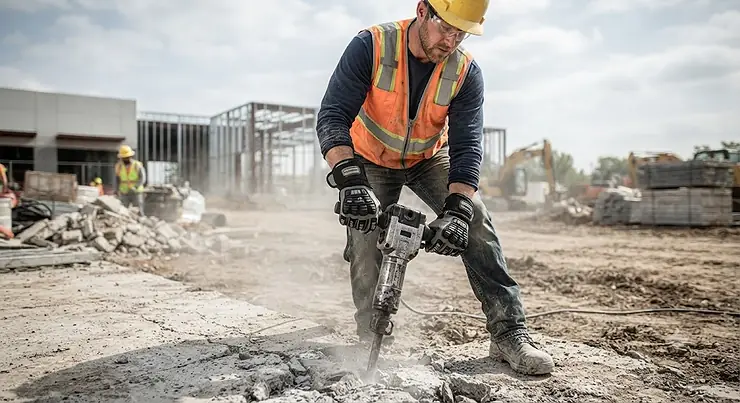
Your hands have been buzzing since Tuesday. You know the feeling — that low electric hum that lingers in your fingertips long after you’ve set the jackhammer down, like your hands are still plugged into the wall. If you’ve spent any real time behind a breaker, a grinder, or a chipping gun, that buzz isn’t just annoying. It’s your nervous system sending an eviction notice. Anti-vibration gloves for construction workers exist specifically to slow that process down, and picking the right pair is less about brand loyalty and more about matching the glove’s dampening technology to the tool actually shaking your hands apart.

Here’s the blunt truth most product pages skip: no glove eliminates vibration. What a properly certified glove does is reduce the energy transmitted through your palm at the frequencies most likely to damage nerves and blood vessels over years of exposure — and that reduction, compounded across thousands of shifts, is the difference between retiring with steady hands or with a diagnosis. We dug through real specs, aggregated review sentiment, and the actual ISO 10819 testing standard to build this guide, and we’re not going to pretend a $15 foam-palm glove from a gas station rack does the same job as a certified pair.
This article covers seven real, currently available gloves spanning budget to premium, explains exactly how HAVS prevention gloves work, and walks through the ISO 10819 standard so you can stop guessing and start reading labels like someone who actually knows what they mean.
What Is Hand-Arm Vibration Syndrome?
Hand-arm vibration syndrome, or HAVS, is a progressive and irreversible condition caused by prolonged exposure to vibrating hand tools — think jackhammers, grinders, and impact wrenches. It damages nerves, blood vessels, and joints in the hands, causing tingling, numbness, weakened grip, and painful “white finger” episodes triggered by cold. Once symptoms appear, the damage cannot be reversed, which is exactly why prevention gear and work practices matter more than treatment.
The scale of this isn’t small. Roughly two million U.S. workers are regularly exposed to hand-arm vibration, and safety researchers estimate as many as half of them will eventually develop some degree of HAVS. What makes the condition particularly cruel is its timeline — symptoms can take anywhere from six months to several years to show up, and by the time your fingers start blanching in the cold, the underlying nerve and vessel damage is already permanent. That’s a sobering read, and it’s exactly why the tools in this guide exist: not to make vibration disappear, but to buy your hands more good years on the job. For a deeper look at the mechanism, Safety+Health Magazine’s coverage of hand-arm vibration is a solid primer on how the condition develops and who’s most at risk.
Quick Comparison Table
Before we go deep on all seven picks, here’s the fast version for anyone standing in a job trailer with five minutes to decide.
| Glove | Best For | Price Range | ISO 10819 Certified |
|---|---|---|---|
| Ergodyne ProFlex 9000 | Jackhammer & demolition | $45-$60 | Yes |
| Impacto Air Glove BG408 | Mixed power tools, all-day comfort | $55-$75 | Yes |
| DeWalt DPG250 | General mid-range job site use | $20-$30 | No (padded, not certified) |
| Intra-FIT Anti-Vibration Gloves | Budget-conscious certified protection | $18-$28 | Yes |
| Mechanix Wear M-Pact | Impact + vibration hybrid tasks | $25-$40 | No (impact-rated, not ISO) |
| Impacto Blackmaxx ISO | Cost-effective certified option | $30-$40 | Yes |
| Impacto AVPro | High-dexterity precision tool work | $45-$65 | Yes |
Notice the split here — not every glove on this list is ISO 10819 certified, and that’s intentional. Some, like the Mechanix Wear M-Pact and DeWalt DPG250, earn their spot through impact protection and all-around durability rather than certified vibration dampening, and we’ll be upfront about that trade-off in each write-up. If your job involves genuine jackhammer or breaker time, lean toward the certified options; if you’re mostly running drivers and drills with occasional grinder work, the padded-but-uncertified gloves can still meaningfully improve comfort and grip fatigue.
💬 Found a glove that matches your job? Save this list and compare notes with your crew before you buy.
Top 7 Anti-Vibration Gloves for Construction Workers: Expert Analysis
1. Ergodyne ProFlex 9000 — thickest palm padding for jackhammer work
Pick this one up for the first time and the palm feels almost architectural — a grid of raised chloroprene rubber blocks that looks more like waffle iron than glove. That texture isn’t decorative.
The palm padding is built from thick, segmented chloroprene rubber blocks designed specifically to absorb low-frequency vibration, the kind produced by jackhammers and concrete breakers rather than the higher-frequency buzz of a sander. It’s certified to the ISO 10819 standard, which means independent testing confirmed it actually reduces transmitted vibration rather than just feeling padded. Based on the spec sheet and how the segmented-block design distributes impact energy, this glove trades away fine dexterity for raw absorption — you will not thread a small screw quickly while wearing these, and that’s the honest cost of the protection you’re getting.
Reviewers consistently report that the padding holds up well through months of daily demolition work, with the most common complaint being reduced grip precision on small fasteners and tools. That trade-off tracks with what the design is optimized for.
Pros:
- ✅ ISO 10819 certified for verified vibration reduction
- ✅ Thick chloroprene blocks excel at low-frequency absorption
- ✅ Durable enough for daily demolition-grade use
Cons:
- ❌ Bulk reduces dexterity for fine motor tasks
- ❌ Runs warm during long summer shifts
In the $45-$60 range, this sits solidly mid-premium, and for anyone spending real hours behind a breaker, it earns that price through certified protection where it matters most.
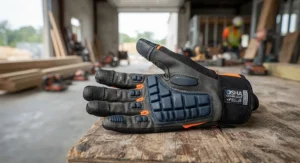
2. Impacto Air Glove BG408 — patented air bladder technology for all-day comfort
There’s something almost clever about how this one solves the vibration problem — instead of dense foam, it uses sealed air bladders in the palm, fingers, and thumb that flex and redistribute pressure as your grip shifts.
The synthetic suede leather palm combined with silicone grip dots handles wear from rough handles well, while the air bladder system (Impacto’s patented Air Glove technology) is engineered to protect against vibration from sanders, grinders, disc cutters, and hammer drills specifically. What most buyers overlook about air-bladder design is that it adapts dynamically to grip pressure changes throughout a shift — foam compresses and stays compressed, while air redistributes, which matters if your job alternates between light and heavy grip tasks all day. It meets the ANSI/ISO 10819 glove standard, giving it the same certified backing as our top pick.
Aggregated review sentiment points to strong comfort ratings over 8-10 hour shifts, though a recurring theme in feedback is that the air bladders can eventually develop slow leaks with heavy long-term use — a legitimate durability trade-off for the comfort gained.
Pros:
- ✅ ISO 10819 certified with dynamic air-bladder dampening
- ✅ Comfortable across full-day shifts
- ✅ Strong grip from silicone palm dots
Cons:
- ❌ Air bladders can develop leaks over extended heavy use
- ❌ Premium price relative to foam-based alternatives
Expect to pay in the $55-$75 range — the highest on this list — but for workers rotating between multiple vibrating tools daily, the adaptive comfort may justify it.
3. DeWalt DPG250 — premium leather palm with memory foam padding
DeWalt built its reputation on tools, and this glove borrows the same “built to survive a job site” mentality, wrapped around a genuinely comfortable padded palm.
The ToughTanned leather palm is both oil- and water-resistant, meaning it holds grip integrity in the wet, greasy conditions that ruin cheaper gloves within weeks. Memory foam padding sits beneath the leather to absorb shock and reduce vibration transfer, though it’s worth being straightforward here — this glove is not independently ISO 10819 certified, so treat it as a comfort-and-durability upgrade rather than a verified HAVS prevention tool. Here’s what to weigh: if your day is mostly drilling, driving, and general carpentry with occasional vibration exposure, the memory foam meaningfully reduces fatigue even without a certification stamp; if you’re running a jackhammer for hours, this isn’t your glove.
Reviewers frequently praise the leather’s water resistance and describe the fit as true-to-size, with the main recurring complaint being that the foam padding compresses and flattens noticeably after several months of daily wear.
Pros:
- ✅ Oil- and water-resistant leather holds up in wet conditions
- ✅ Comfortable memory foam reduces general shock and strain
- ✅ Durable construction at an accessible price point
Cons:
- ❌ Not ISO 10819 certified for verified vibration reduction
- ❌ Foam padding compresses with extended heavy use
Priced around $20-$30, this is a smart mid-range pick for general job site comfort, just not a substitute for certified protection on high-vibration tasks.
4. Intra-FIT Anti-Vibration Work Gloves — most affordable ISO-certified option
Budget and certified vibration protection don’t usually appear in the same sentence, which is exactly what makes this one worth a closer look.
These gloves are certified to both EN 388:2016 and EN ISO 10819:2013, meaning they’ve passed the same standardized testing as gloves costing twice as much. The palm uses foam latex specifically tuned to absorb vibration from jackhammers and similar tools, while a TPR-reinforced back shields against bumps and debris common on active sites. Based on the spec comparison against pricier competitors, the trade-off here isn’t in the certification — it’s in materials longevity; foam latex is simply less durable over time than the chloroprene blocks or air bladders found in premium picks.
Reviewers describe a snug, comfortable fit for extended wear and a firm grip even in dusty conditions, with the most common criticism centering on the foam latex breaking down faster than premium alternatives after roughly six months of daily use.
Pros:
- ✅ ISO 10819 certified at a genuinely budget price
- ✅ TPR back adds impact protection beyond vibration alone
- ✅ Firm grip performance in dusty, humid job conditions
Cons:
- ❌ Foam latex palm wears down faster than premium materials
- ❌ Less durable long-term than chloroprene or air-bladder designs
At around $18-$28, this is the clearest value pick on the list for crews that need certified protection across multiple workers without a premium budget.
5. Mechanix Wear M-Pact — best hybrid impact-and-vibration protection
Mechanix built its name in motorsports pits before construction crews adopted it, and that mechanic’s-glove DNA shows in how this one balances protection with actual tool feel.
TPR knuckle guards and D3O palm padding work together to absorb both impact and some vibration energy, and independent force-sensor testing has shown gloves in this category cut impact force by roughly 60% compared to going bare-handed. That’s a meaningful number, but it’s worth being precise about what it measures — impact absorption and ISO 10819 vibration dampening are related but distinct tests, and this glove is not independently ISO-certified. Reviewers consistently note it as the pick when a job mixes vibrating tools with genuine impact risk — think grinding one hour, hauling debris the next — rather than pure jackhammer duty where a certified glove would serve better.
Customer sentiment praises the dexterity retained despite the padding, a rare combination, with the main recurring gripe being reduced breathability in hot climates due to the snug synthetic construction.
Pros:
- ✅ D3O and TPR combo excels at impact plus general vibration
- ✅ Dexterity holds up well despite the protective padding
- ✅ Versatile across mechanics, hauling, and mixed job site tasks
Cons:
- ❌ Not ISO 10819 certified for pure vibration-dampening claims
- ❌ Runs hot in warm-weather, high-exertion conditions
In the $25-$40 range, this earns its spot as the most versatile all-rounder here, especially for crews whose day isn’t one single repetitive vibrating task.
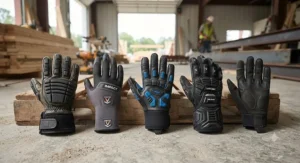
6. Impacto Blackmaxx ISO — cost-effective certified pick for daily wear
Somewhere between the ultra-budget foam gloves and the premium air-bladder options sits this one, quietly doing certified work without the premium price tag.
The palm is coated with pods of lightweight cellular chloroprene that use encapsulated air pockets to absorb both impact and vibration energy, and the entire glove meets the AV glove standard ISO 10819:2013. The nylon/cotton knit body adds stretch and breathability that the thicker, all-rubber designs sacrifice. Based on the spec comparison, this is essentially a mid-tier compromise — thicker padding than the absolute budget picks, but without the extended-shift comfort engineering of the air-bladder premium option, which explains its position squarely in the middle of this list on both price and performance.
Aggregated reviews describe reliable protection for daily sanders, chipping hammers, and chain saw work, with recurring feedback noting the breathable knit runs cooler than thicker rubber-block designs but offers slightly less cushioning on the heaviest jackhammer tasks.
Pros:
- ✅ ISO 10819:2013 certified vibration protection
- ✅ Breathable knit construction stays cooler than rubber-block designs
- ✅ Suitable for sanders, chainsaws, and chipping hammers
Cons:
- ❌ Less cushioning than premium options for heaviest jackhammer use
- ❌ Sizing runs precise, so measuring hands first matters
Sitting around $30-$40, this is a smart middle-ground choice for workers who want certified protection without paying for extended-shift comfort features they may not need.
7. Impacto AVPro — high-dexterity option for precision power tool work
Rounding out the list is a glove built for the worker who needs certified vibration protection without giving up the fine control that thicker gloves sacrifice.
It complies with both the international ISO 10819 standard and the North American ANSI S2.73-2002 (R2007)/ISO 10819 standard, plus EN 388 mechanical risk protection — a genuinely thorough certification stack. What most buyers overlook about dexterity-focused anti-vibration gloves is that manufacturers typically achieve slimmer profiles through more advanced dampening materials rather than simply less padding, and that appears to be the design philosophy here based on the spec sheet. This makes it a natural fit for detail-oriented tasks like finish sanding, trim work, or operating smaller rotary tools where you genuinely need to feel what you’re doing.
Reviewers frequently highlight the balance between dexterity and protection as the standout trait, noting it fits more like a work glove than a padded mitt, with the main complaint being a smaller size range compared to bulkier competitors.
Pros:
- ✅ Dual ISO 10819 and ANSI S2.73 certification
- ✅ Retains dexterity better than thicker padded alternatives
- ✅ EN 388 mechanical protection adds abrasion resistance
Cons:
- ❌ Limited size range compared to bulkier competitors
- ❌ Premium pricing for the dexterity trade-off
Priced around $45-$65, this is the pick for finish-oriented power tool operators who’ve been frustrated by how clumsy thicker certified gloves feel.
How to Choose Anti-Vibration Gloves for Construction Work
Picking the right glove isn’t about finding the “best” one in the abstract — it’s about matching certification, materials, and fit to your actual tools and hours. Here’s the framework, step by step.
- Confirm ISO 10819 certification if vibration is your primary risk. If you’re running jackhammers, breakers, or grinders for meaningful hours daily, an uncertified padded glove is a comfort upgrade, not a HAVS prevention tool.
- Match dampening material to tool frequency. Chloroprene blocks and air bladders handle low-frequency tools like jackhammers well; silicone-infused or gel materials perform better against the higher-frequency buzz of sanders and grinders.
- Weigh dexterity against protection honestly. Thicker padding absorbs more but costs you fine motor control — be honest about whether your job needs precision or raw absorption.
- Check the abrasion and cut rating alongside vibration protection. A glove doing double duty against sharp debris and vibration needs an EN 388 rating that matches your site’s other hazards.
- Size correctly — a loose glove transmits more vibration. An anti-vibration glove that shifts on your hand reduces contact with the dampening material exactly where you need it most.
- Factor in shift length and breathability. An 8-hour shift in a non-breathable glove creates its own fatigue problem, independent of vibration.
- Budget for replacement, not just purchase. Dampening materials degrade with use; a $20 glove replaced every three months may cost more annually than a $50 glove that lasts a year.
✨ Ready to gear up? Compare current prices and availability on today’s top-rated picks before your next shift.
Understanding the ISO 10819 Standard
The ISO 10819 standard is the international benchmark for anti-vibration glove performance, and it’s worth understanding what it actually measures rather than just looking for the logo on packaging. The standard tests a glove’s Transmissibility Ratio at both medium frequencies (TRM) and high frequencies (TRH) — essentially, how much vibration energy passes through the glove material to reach your palm. To earn certification, a glove must achieve a TRM of 1.0 or lower (meaning it doesn’t amplify medium-frequency vibration, a real risk with poorly designed padding) and a TRH of 0.6 or lower, which translates to reducing high-frequency vibration transmission by at least 40%.
Here’s the nuance that most product marketing skips entirely: certification is tool- and frequency-specific in practice, even though the label looks universal. A glove that performs brilliantly against a grinder’s high-frequency buzz may perform only adequately against a jackhammer’s low-frequency pounding, because the two vibration profiles stress different dampening materials. That’s precisely why our top pick, the Ergodyne ProFlex 9000, leans into thick chloroprene blocks optimized for low-frequency demolition work, while the Impacto AVPro and Impacto Blackmaxx ISO balance dampening differently for lighter tool categories. For the official technical scope of the standard, the International Organization for Standardization’s documentation lays out the full testing methodology if you want to go deeper than the marketing summary.
Anti-Vibration Gloves vs Standard Work Gloves
| Factor | Anti-Vibration Gloves | Standard Work Gloves |
|---|---|---|
| Vibration dampening | Engineered palm padding, some ISO 10819 certified | Minimal to none |
| Dexterity | Reduced (thicker padding) | Higher |
| Price range | $18-$75 typical | $8-$25 typical |
| Best for | Jackhammers, grinders, breakers | General handling, light tasks |
| HAVS risk reduction | Measurable in certified models | Negligible |
The core distinction here isn’t marketing fluff — it’s material engineering. Standard work gloves prioritize grip, abrasion resistance, and cost, while anti-vibration gloves like the Intra-FIT Anti-Vibration Work Gloves or Impacto Blackmaxx ISO dedicate palm real estate specifically to absorbing mechanical energy at damaging frequencies. That said, an important honesty check: independent NIOSH research has found that only a limited number of glove designs actually reduce vibration transmitted to the palm in a meaningful way, and how well any glove performs depends heavily on the specific tool and vibration level involved. This isn’t a reason to skip anti-vibration gear — it’s a reason to treat gloves as one layer in a broader prevention strategy rather than a magic shield, a point we’ll return to below.
Common Mistakes When Buying Vibration Dampening PPE
Even well-intentioned buyers make the same handful of errors when shopping for vibration dampening PPE, and most of them are easy to avoid once you know what to look for.
The first mistake is assuming thickness equals protection. A glove can feel dramatically padded and still fail ISO 10819 testing, because certified performance depends on material engineering, not just bulk — always check for the actual standard, not just marketing words like “anti-vibration” printed on the tag. The second common error is buying based on price alone without matching the glove to the tool; a $60 glove optimized for grinders won’t necessarily outperform a $30 glove built for jackhammers if you’re running a breaker all day. The third mistake is ignoring fit, since a glove sized too large shifts during use and loses contact with the dampening material precisely where your palm meets the tool.
A fourth, subtler mistake: treating the glove as a complete solution rather than one layer alongside tool maintenance, work-rest breaks, and proper grip technique — a poorly maintained tool can out-vibrate even a premium certified glove.
Anti-Vibration Gloves for Different Power Tool Operators
Not every power tool operator faces the same vibration profile, and gloves that shine for one trade can underperform for another.
Operators running rotary hammers and concrete breakers all day should prioritize low-frequency dampening — the Ergodyne ProFlex 9000 and Impacto Air Glove BG408 both target this range well. Sanders and angle grinders, by contrast, produce higher-frequency vibration, and gel-padded or silicone-infused designs like the Impacto Blackmaxx ISO tend to perform better here. Finish carpenters and trim installers running smaller rotary tools benefit more from the dexterity-focused Impacto AVPro, since their tasks demand precision over raw absorption. Meanwhile, operators splitting time between vibrating tools and material handling — hauling debris, loading equipment — get more practical value from a hybrid pick like the Mechanix Wear M-Pact, which balances impact resistance with general comfort even without a formal ISO rating.
The throughline across every trade: match the dampening technology to your dominant tool category first, then layer in dexterity and durability preferences second.
Long-Term Cost & Maintenance of Anti-Vibration PPE
The sticker price on any of these gloves is only part of the real cost equation. Dampening materials degrade with use — foam compresses, air bladders can develop slow leaks, and chloroprene blocks eventually harden and lose some absorption capacity. That means the true cost-per-year of a glove depends heavily on replacement frequency, not just upfront price.
A budget-certified option like the Intra-FIT Anti-Vibration Work Gloves at $18-$28 might need replacement every four to six months under daily heavy use, based on aggregated review reports of foam latex breakdown, while a premium pick like the Impacto Air Glove BG408 at $55-$75 may last considerably longer under the same conditions thanks to more durable air-bladder construction — though it carries its own leak risk over time. Running the simple math: two budget pairs annually can approach or exceed the cost of one premium pair, before even factoring in the productivity cost of reduced protection during the gap between “still wearable” and “actually still dampening vibration effectively.” For crews outfitting multiple workers, this arithmetic often favors buying one tier higher than instinct suggests, provided the fit and dexterity trade-offs work for the job at hand.
Practical Usage Guide: Getting the Most From Your Gloves
Owning a certified glove is only half the equation — how you use and maintain it determines whether you actually get the protection the label promises.
Break-in and fit check: Try the glove with the actual tool you’ll be using before committing to a full shift in it. A glove that feels fine standing still can shift or bunch once you’re gripping a vibrating handle for real, and that shifting reduces the dampening contact you’re paying for.
Grip lightly, not hard. One of the most consistently cited good work practices is gripping the tool as lightly as control allows — over-gripping transmits more vibration through the hand regardless of how good the glove is, essentially working against the padding you just bought.
Maintenance schedule: Inspect palm padding monthly for compression, cracking, or (in air-bladder designs) soft spots suggesting a slow leak. Hand wash rather than machine wash when possible, since heat and agitation break down foam and rubber dampening materials faster than gentle cleaning.
Common first-30-days mistake: New users often size up “for comfort,” but a loose glove reduces the direct contact between your palm and the dampening material exactly where it matters. Size to snug-but-not-restrictive, and always break the glove in before a full workday.
Take real breaks. Even the best certified glove is a mitigation tool, not a shield — pairing it with scheduled rest periods away from vibrating tools meaningfully compounds its protective effect over a career.
Real-World Scenarios: Matching Gloves to the Job
The demolition crew member running a 90-pound breaker eight hours a day needs maximum low-frequency absorption above all else — the Ergodyne ProFlex 9000‘s thick chloroprene blocks are built precisely for this scenario, even at the cost of some dexterity.
The finish carpenter doing detail trim work with smaller rotary tools a few hours a day has a completely different priority: feel and control matter more than raw absorption. The Impacto AVPro‘s slimmer, dexterity-focused profile fits this use case far better than a bulkier demolition glove ever would.
The maintenance tech who splits a shift between grinding, hauling parts, and general mechanical work benefits from a hybrid approach — the Mechanix Wear M-Pact‘s impact-and-comfort balance suits someone whose day doesn’t revolve around one repetitive vibrating task.
The budget-conscious crew lead outfitting an entire team on a tight PPE budget can still hit certified protection across the board with the Intra-FIT Anti-Vibration Work Gloves, proving that certified doesn’t have to mean expensive when the whole crew needs coverage at once.
Jackhammer Operation Safety: Beyond the Gloves
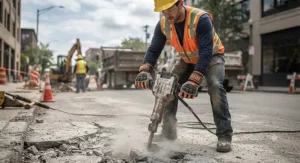
Jackhammer operation safety is where anti-vibration gloves matter most, but gloves alone were never meant to carry the whole job. Federal workplace safety guidance generally recognizes limiting continuous vibrating-tool sessions to 10-15 minutes, with no more than two hours of total operating time per day, as a prudent work-rest schedule — a detail that surprises a lot of operators who assume gear alone solves the exposure problem.
Beyond scheduled breaks, a few practical fixes address the most common problems operators face. If your hands feel numb by mid-shift despite a certified glove, the issue is often over-gripping rather than glove failure — consciously loosening your hold, letting the tool’s own weight do more of the work, reduces transmitted force considerably. If cold weather makes symptoms worse, keeping hands warm between sessions (not just during) matters, since cold tissue is measurably more vulnerable to vibration damage. And if you’re rotating between multiple vibrating tools in a single shift, alternating tasks with non-vibrating work whenever the schedule allows spreads cumulative exposure rather than concentrating it. For a broader rundown of prevention strategies beyond PPE, OSHA’s guidance on vibration hazards covers the full picture, including training and tool maintenance considerations that gloves can’t address on their own.
Frequently Asked Questions
❓ Do anti-vibration gloves for construction workers actually work?
❓ What is the ISO 10819 standard for gloves?
❓ How often should I replace anti-vibration gloves?
❓ Can anti-vibration gloves prevent hand-arm vibration syndrome completely?
❓ Are Mechanix gloves good for vibration protection?
Conclusion
Vibration damage builds quietly, which is exactly what makes it dangerous — there’s no single dramatic moment, just months and years of exposure adding up until the damage is done and irreversible. The seven gloves covered here span the realistic range construction workers actually shop in, from the budget-certified Intra-FIT Anti-Vibration Work Gloves to the dexterity-focused Impacto AVPro, and the right choice genuinely depends on which tool dominates your day and how much precision your work demands.
What matters most, though, is treating the glove as part of a system rather than a silver bullet. Pair certified protection with the work-rest schedules, light-grip technique, and tool maintenance habits covered throughout this guide, and you’re giving your hands the best realistic shot at staying steady for the long haul. Whichever pair you land on, check current pricing and availability before you buy, since stock and pricing shift regularly on these listings.
✨ Don’t Miss These Exclusive Deals!
🔍 Take your hand protection seriously this year with a certified pick that matches your actual job site. Click through to check current pricing and availability on today’s top-rated anti-vibration gloves before your next shift starts.
Recommended for You
- Moisture Wicking Work Gloves Under $20: 7 Best Picks (2026)
- Hi-Viz Work Gloves for Construction Sites: 7 Best ANSI Picks (2026)
- 7 Best Arctic Work Gloves for Extreme Cold Jobs in 2026
Disclaimer: This article contains affiliate links. As an Amazon Associate, I earn from qualifying purchases. If you purchase products through these links, we may earn a small commission at no additional cost to you.
✨ Found this helpful? Share it with your friends! 💬🤗
