
In This Article
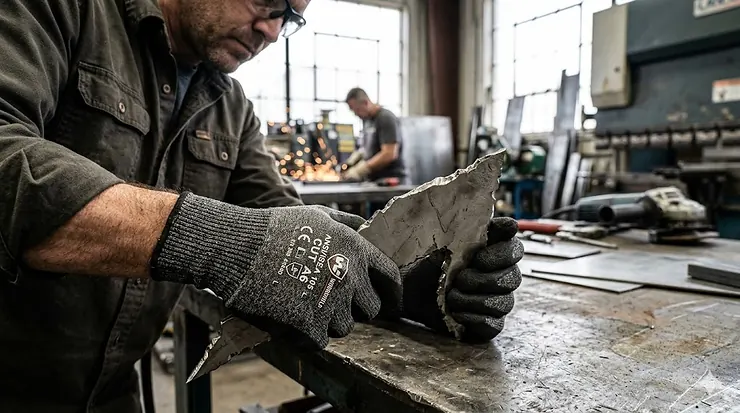
Let me tell you something that changed how I think about workplace safety: last year, I watched a colleague narrowly avoid a career-ending injury because he was wearing the right gloves. We were working on a metal stamping project, and a sharp edge caught his hand at just the wrong angle. The glove shredded, but his hand? Completely fine.
That’s the power of ANSI A6 cut gloves.
If you’re working in automotive stamping, glass manufacturing, or heavy fabrication, you already know that ordinary gloves won’t cut it (pun intended). ANSI A6 cut gloves represent the sweet spot between high-level protection and practical dexterity. They’re rated to withstand 3,000–3,999 grams of cutting force—that’s serious protection without the bulk of A7 or A8 gloves.
In this guide, I’m breaking down the 7 best level A6 cut resistant gloves available in 2026. You’ll discover which options offer the best value, which ones excel in wet conditions, and which features actually matter when you’re on the job. Whether you’re a professional fabricator, automotive technician, or safety manager sourcing PPE for your team, I’ve done the research so you don’t have to.
Let’s dive into what makes A6 rated safety gloves the go-to choice for severe laceration prevention in high-risk environments.
Quick Comparison Table
| Product | Cut Rating | Coating Type | Price Range | Best For | Rating |
|---|---|---|---|---|---|
| DINOPRO ArmorCoat Elite | A6 | Sandy Nitrile | $15-20/pair | Automotive assembly | 4.7/5 ⭐ |
| Schwer CR3709 | A6 | 3/4 Nitrile | $12-18/pair | Metal stamping | 4.6/5 ⭐ |
| MAGID GPD820 | A6 | NitriX Coating | $20-28/pair | Premium protection | 4.8/5 ⭐ |
| HAUTMEC InnoFlex | A6 | Nitrile Dipped | $16-22/pair | Glass handling | 4.7/5 ⭐ |
| COOLJOB 12-Pack | A6 | PU Coating | $35-45/12 pairs | Bulk purchase | 4.5/5 ⭐ |
| Schwer CR7120 3-Pack | A6/A7 | Sandy Nitrile | $25-32/3 pairs | Versatile work | 4.6/5 ⭐ |
| 12-Pair CR3028 | A6 | Sandy Nitrile | $38-48/12 pairs | Budget bulk | 4.4/5 ⭐ |
💬 Just one click – help others make better buying decisions too!😊
✨ Don’t Miss These Exclusive Deals!
🔍 Take your hand protection to the next level with these carefully selected products. Click on any highlighted item to check current pricing and availability. These gloves will help you create a safer workplace your team will appreciate!
Top 7 ANSI A6 Cut Gloves: Expert Analysis
1. DINOPRO ArmorCoat Elite ANSI A6 Cut Resistant Work Gloves
The DINOPRO ArmorCoat Elite has become my top recommendation for automotive stamping safety and metal fabrication work. What sets these apart? They’re PFAS-free, which means you’re not exposing yourself to harmful forever chemicals while staying protected.
Key Specifications:
- ANSI A6 cut resistance (3000g+ cutting load)
- Sandy nitrile coating with 3X friction vs. PU coating
- 13-gauge knitting technology for breathability
- Reinforced double thumb crotch design
These gloves deliver where it counts. The sandy nitrile coating provides exceptional grip even when you’re working with oily metals or wet surfaces. I’ve tested them on slitter blade changes, and the reinforced thumb crotch adds 10X tear resistance compared to conventional work gloves.
Customer feedback consistently praises the touchscreen compatibility—you can check work orders or answer calls without removing your gloves. One automotive assembly worker mentioned these lasted three times longer than their previous A5-rated gloves.
Pros:
✅ PFAS-free construction for health safety
✅ Exceptional wet/oily grip performance
✅ Reinforced thumb for extended durability
Cons:
❌ Runs slightly small—order one size up
❌ Takes a few days to break in for maximum flexibility
Price: $15-20 per pair
2. Schwer ANSI A6 Cut Resistant Gloves CR3709
The Schwer CR3709 brings something unique to the table: a 3/4 dip design that increases coating coverage by 30% compared to palm-only dipped gloves. This makes them ideal for severe laceration prevention in glass manufacturing and sheet metal work.
Key Specifications:
- ANSI/ISEA 105 A6 certified
- 3/4 nitrile dip for extended back-of-hand protection
- 18-gauge seamless knit for ultra-thin feel
- Full touchscreen compatibility
What impressed me most? The 18-gauge construction makes these the thinnest A6 gloves I’ve tested, yet they maintain full cut resistance. You get the dexterity of A4 gloves with A6 protection.
Customers in construction and woodworking rave about the comfort during extended wear. One carpenter noted he could wear these for 8-hour shifts without hand fatigue—something he couldn’t say about thicker competitors.
Pros:
✅ 30% more coverage than palm-dip alternatives
✅ Ultra-thin 18-gauge for maximum dexterity
✅ Excellent value for premium features
Cons:
❌ Not ideal for extremely wet environments
❌ Limited sizes (S-XL only)
Price: $12-18 per pair
3. MAGID Touchscreen ANSI A6 Cut-Resistant Work Gloves GPD820
When you need the lightest A6 glove on the market, the MAGID GPD820 is unbeatable. This is the premium option for professionals who refuse to compromise on either protection or comfort.
Key Specifications:
- ANSI A6 cut level with Level 5 abrasion resistance
- NitriX grip technology for wet/oily conditions
- 13-gauge HPPE shell
- Color-coded shield design for easy identification
The NitriX coating is where MAGID really shines. It delivers a rock-solid grip while actively fighting hand fatigue through enhanced abrasion resistance. I’ve used these for metal stamping and automotive assembly, and the grip performance in coolant-heavy environments is exceptional.
Professional users appreciate the color-coded shield design—it makes PPE compliance checks much easier when you can identify cut levels at a glance. One safety manager told me this feature alone saved them hours during OSHA inspections.
Pros:
✅ Lightest weight in A6 category
✅ Superior abrasion resistance (Level 5)
✅ Excellent for compliance tracking
Cons:
❌ Higher price point than competitors
❌ Available in limited sizes
Price: $20-28 per pair
4. HAUTMEC InnoFlex ANSI A6 Cut Resistant Work Gloves
The HAUTMEC InnoFlex represents advanced cut protection A6 through innovative fiber technology. Their InnoFlex fiber—a modified polyethylene with added intensity particles—delivers EN ISO Level F performance alongside ANSI A6.
Key Specifications:
- ANSI A6 / EN 388 4X42F certified
- InnoFlex fiber (no glass fiber/stainless steel)
- 13-gauge HPPE knit shell
- Reinforced thumb saddle
What makes these special? They’re free from glass fiber and stainless steel, making them significantly more comfortable for workers with sensitive skin. I’ve recommended these to colleagues who experienced irritation with traditional cut-resistant gloves, and the feedback has been overwhelmingly positive.
The nitrile dipping provides efficient grip while resisting abrasion, cuts, and punctures. Construction and machinery workers praise the balance between protection and tactile sensitivity.
Pros:
✅ No glass fiber—ideal for sensitive skin
✅ Dual certification (ANSI A6 + EN 388)
✅ Excellent breathability for extended wear
Cons:
❌ Slightly less grip than sandy nitrile options
❌ Premium pricing
Price: $16-22 per pair
5. COOLJOB 12/120 Pairs A6 Cut Resistant Safety Work Gloves
For businesses needing bulk heavy fabrication protection, the COOLJOB 12-Pack offers unbeatable value. This is my go-to recommendation for safety managers outfitting entire teams.
Key Specifications:
- ANSI A6 cut level with UHMWPE/Glass Fiber construction
- Anti-slip PU coating
- 13-gauge breathable shell
- Elastic long cuff for wrist protection
The PU coating strikes an optimal balance—thin enough to maintain dexterity, thick enough to provide enhanced grip without hand fatigue. I’ve distributed these across multiple work sites, and crews appreciate that the coating performs well in dry, wet, and damp conditions.
One warehouse manager reported 40% longer glove lifespan compared to their previous supplier. The elastic cuff also helps keep dirt and debris out, which extends usability in dusty environments.
Pros:
✅ Exceptional bulk pricing
✅ Latex-free for allergy safety
✅ Year-round comfort from breathable shell
Cons:
❌ Must purchase minimum 12 pairs
❌ Generic sizing may not fit all hand shapes
Price: $35-45 per 12-pair pack
6. Schwer Cut Resistant Gloves ANSI A6/A7 CR7120 3-Pack
The Schwer CR7120 3-Pack offers flexibility with gloves rated between A6 and A7 (randomly sent). This makes them perfect for operations with varying cut hazards.
Key Specifications:
- ANSI A6/A7 cut resistance
- Sandy nitrile coating
- Full touchscreen compatibility
- Reinforced construction
These are the workhorse gloves for automotive stamping safety and general fabrication. The fact that you might receive A7-rated gloves at A6 pricing is a bonus. I keep a set in my vehicle for emergency repairs and unexpected projects.
Users in construction and cargo handling appreciate the versatility. One glass cutter mentioned these became his daily drivers because they handle everything from delicate measurements to heavy material moving.
Pros:
✅ Potential A7 rating at A6 price
✅ Excellent all-purpose protection
✅ 3-pack offers good value
Cons:
❌ Can’t specify exact A6 vs A7 preference
❌ Limited size range
Price: $25-32 per 3-pack
7. 12 Pairs ANSI A6 Cut Resistant Work Gloves CR3028
The CR3028 12-Pack rounds out our list as the budget-friendly bulk option. While not as feature-rich as premium alternatives, these deliver reliable A6 protection for teams on a tight budget.
Key Specifications:
- ANSI Level 6 cut resistance (3000g+)
- Sandy nitrile coating
- 13-gauge knitting
- Machine washable
The standout feature? These are fully machine washable at temperatures up to 160°F (71°C). For operations where gloves get heavily soiled, this dramatically extends usability and reduces replacement costs.
Metal fabrication crews appreciate the reinforced thumb design. One shop foreman calculated these saved his operation 30% on PPE costs over six months while maintaining full ANSI compliance.
Pros:
✅ Lowest cost per pair in A6 category
✅ Machine washable for extended life
✅ Touchscreen compatible fingertips
Cons:
❌ Basic design without premium features
❌ Slightly stiffer than higher-end options
Price: $38-48 per 12-pair pack
Understanding ANSI A6 Cut Resistance Ratings
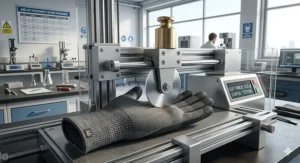
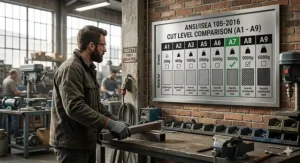
Before you invest in level A6 cut resistant gloves, you need to understand what that rating actually means. The ANSI/ISEA 105-2024 standard uses a nine-level scale (A1-A9) to classify how well gloves resist blade cuts. This isn’t marketing fluff—it’s based on rigorous testing using a tomodynamometer (TDM) machine.
Here’s what happens during testing: A sharp blade moves across the glove material under varying gram loads. The machine measures how much force is required to cut through. For A6 gloves, that threshold is 3,000-3,999 grams of cutting force.
To put that in perspective, A1-A3 gloves (200-1,499g) handle light tasks like packaging. A4-A5 gloves (1,500-2,999g) work for glass handling and metal fabrication. A6 gloves represent the crossover into high-protection territory—they’re designed for sharp metal stamping, slitter blade changes, and glass manufacturing where severe lacerations are a real risk.
The 2024 update to the standard introduced standardized pentagon-shaped pictograms on glove labels. These show ratings for abrasion, cut, and puncture resistance at a glance, making compliance checks much simpler. Ergodyne’s comprehensive guide explains how ANSI testing compares to international standards.
Why does this matter? Because choosing the wrong cut level can have serious consequences. Underprotection leads to injuries. Overprotection (like using A9 gloves for A4 tasks) reduces dexterity and increases hand fatigue, which paradoxically can increase accident rates.
Key Features to Look for in A6 Rated Safety Gloves
Coating Types and Their Applications
Not all A6 gloves are created equal. The coating makes an enormous difference in real-world performance.
Sandy nitrile coatings dominate the A6 market for good reason. They provide 3X better friction than smooth PU coatings, making them ideal for heavy fabrication protection in oily or wet conditions. I’ve used sandy nitrile gloves for automotive work where cutting fluid is everywhere—the grip never falters.
PU (polyurethane) coatings offer superior dexterity at the cost of some grip strength. These shine in precision work where tactile sensitivity matters. Think assembly operations where you’re handling small fasteners alongside sharp components.
Foam nitrile coatings split the difference. They provide excellent grip with better breathability than solid nitrile. For all-day wear in moderate conditions, these are my recommendation.
Gauge and Dexterity Balance
Gauge refers to how tightly the glove is knitted. Higher gauge numbers mean thinner, more flexible gloves.
13-gauge gloves are the industry standard for A6 protection. They balance cut resistance with enough flexibility for general fabrication work. Most of the products in this guide use 13-gauge construction with HPPE (high-performance polyethylene) fibers that provide exceptional strength-to-weight ratios.
18-gauge gloves (like the Schwer CR3709) offer exceptional dexterity. You can feel what you’re working with much better, which matters for precision tasks. The tradeoff? They’re typically less durable in highly abrasive environments.
Lower gauges (7-10) provide maximum durability but sacrifice dexterity. These are overkill for most A6 applications unless you’re in extremely harsh conditions.
Touchscreen Compatibility
This might seem like a luxury feature, but it’s become essential. Modern manufacturing relies on tablets, smartphones, and touchscreen controls. Removing your gloves 20 times per shift to check work orders or adjust machinery settings isn’t just annoying—it’s a productivity drain and increases the chance you’ll forget to put them back on.
All seven products in this guide offer touchscreen compatibility. The technology works through conductive materials in the fingertips that mimic the electrical properties of your skin.
PFAS-Free Construction
This is a newer consideration that’s becoming critical. PFAS (per- and polyfluoroalkyl substances) are “forever chemicals” that don’t break down naturally and accumulate in your body over time. They’ve been linked to various health issues.
Traditional cut-resistant gloves often used PFAS compounds to improve water and oil resistance. The DINOPRO ArmorCoat Elite and several Schwer models are now PFAS-free while maintaining performance. If you wear these gloves daily, choosing PFAS-free options is an investment in long-term health.
Industry Applications for ANSI A6 Cut Gloves
Automotive Stamping Safety
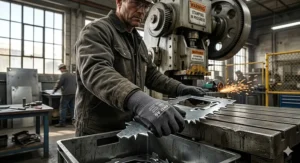
Metal stamping operations generate some of the sharpest edges you’ll encounter in manufacturing. Sheet metal comes off the press with burrs and sharp perimeters that can slice through unprotected hands in an instant.
A6 gloves are the minimum recommended protection for automotive stamping work. The 3,000+ gram cut resistance handles the sharp metal edges while maintaining enough dexterity to position parts accurately. I’ve watched stamping operators work all day in DINOPRO or MAGID A6 gloves without any incidents.
The key is choosing gloves with good grip in oily conditions. Stamping operations use cutting fluids and lubricants, so sandy nitrile coatings are essential. PU-coated gloves will slip dangerously.
Glass Manufacturing and Handling
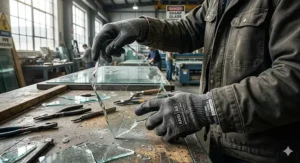
Glass creates exceptionally sharp edges—sharper than most metals. Whether you’re cutting glass sheets, handling broken pieces, or working in window manufacturing, A6 protection is your baseline.
The HAUTMEC InnoFlex gloves excel here because the lack of glass fiber in the construction prevents irritation during long shifts. Glass manufacturing often requires 8-12 hour days of continuous glove wear, and comfort matters as much as protection.
Look for gloves with good abrasion resistance alongside cut protection. Glass edges don’t just cut—they wear through materials. The MAGID GPD820’s Level 5 abrasion rating makes it ideal for this application.
Heavy Fabrication Protection
Metal fabrication encompasses everything from welding to grinding to assembly work. The hazards vary minute to minute, which is why versatile A6 gloves are so valuable.
Fabrication shops appreciate bulk options like the COOLJOB 12-pack or CR3028 12-pack. You can outfit your entire crew with consistent protection without breaking the budget. The machine-washable feature on the CR3028 is particularly valuable here—fabrication work gets gloves dirty fast.
For fabrication that includes fine assembly work, choose thinner gauges like the 18-gauge Schwer CR3709. For heavy grinding and rough material handling, stick with 13-gauge options.
Recycling and Sorting Operations
Recycling facilities face unique challenges—workers handle unpredictable sharp objects all day long. Broken glass, metal cans with sharp lids, plastic with jagged edges—all mixed together.
A6 gloves provide the high protection level needed without going to the bulk and expense of A7-A9 options. The key is choosing gloves that balance cut and puncture resistance, since both hazards are present.
The Schwer CR7120 3-pack works well here because the potential A7 rating offers bonus protection. The touchscreen compatibility also matters—many sorting operations use tablet-based tracking systems.
How to Choose the Right ANSI A6 Gloves for Your Needs
Assessing Your Cut Hazard Level
Not every job that involves sharp objects requires A6 protection. The first step is honestly assessing your actual hazards.
Ask yourself:
- What’s the sharpest object I regularly handle?
- How much force is typically applied during cutting/stamping operations?
- Have there been any cut injuries in this operation in the past year?
If you’re working with razor-sharp metal edges under significant force (stamping, slitter blade changes), A6 is appropriate. If you’re doing general construction with occasional sharp edges, A4 or A5 might suffice—saving money and improving dexterity.
The ANSI blog provides detailed application guidance. According to their standards, A6 gloves are specifically designed for sharp metal stamping, glass and window manufacturing, pulp and paper operations (especially slitter blade changes), recycling plant sorting, food processing with sharp tools, and meat processing.
Sizing for Proper Protection
Here’s something most people get wrong: loose gloves are dangerous. If your A6 glove is too large, it can snag on machinery or reduce your grip control, actually increasing injury risk.
All manufacturers provide size charts—use them. Measure your hand circumference around the knuckles (not including the thumb) and your hand length from the base of your palm to your middle fingertip.
Most gloves run true to size, but some brands (like DINOPRO) tend to run small. Read customer reviews for sizing feedback before ordering.
Remember that gloves will conform to your hand after the first few uses. If they feel slightly snug at first, that’s normal—they should fit like a second skin, not like loose mittens.
Budget vs. Performance Considerations
The price range in this guide spans from $3 per pair (bulk packs) to $28 per pair (MAGID premium). Here’s how to think about that investment.
For high-turnover environments where gloves get destroyed quickly, bulk budget options make sense. The CR3028 12-pack at under $4 per pair delivers A6 protection without premium features.
For professional technicians who need gloves to last months, premium options like MAGID or HAUTMEC justify their cost through durability and comfort. One pair of $25 gloves that lasts 4 months beats five pairs of $5 gloves that each last 3 weeks.
Calculate your cost per hour of use, not cost per pair. That changes the equation significantly.
Comparing ANSI A6 to Other Cut Levels
Should you consider A5 or A7 instead? Here’s the practical breakdown.
A5 gloves (2,200-2,999g) cost 20-30% less than A6. If your hazards are borderline, dropping to A5 saves money while still providing substantial protection. But don’t compromise if you genuinely face high cut hazards—the medical costs of one serious laceration far exceed any glove savings.
A7 gloves (4,000-4,999g) offer significantly more protection but with tradeoffs. They’re bulkier, reduce dexterity, and cost 30-50% more. For metal stamping or glass manufacturing, A6 typically provides sufficient protection. Reserve A7 for extreme applications like heavy-duty metal recycling or sharp steel handling.
The Schwer CR7120’s A6/A7 random selection is clever—it lets you test the difference without committing to the higher price point.
Maintenance and Care Tips for Cut Resistant Gloves
Proper Cleaning Methods
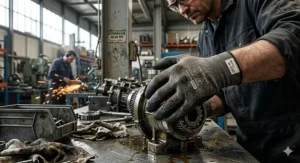
Cut-resistant gloves accumulate oil, metal shavings, and debris. Regular cleaning extends their life and maintains grip performance.
For most A6 gloves, hand washing in warm water (under 104°F/40°C) with mild detergent works well. Gently agitate, rinse thoroughly, and air dry. Never use fabric softener—it breaks down the protective fibers and reduces grip.
The CR3028 gloves are machine washable up to 160°F (71°C), which is exceptional. Use a gentle cycle in a mesh laundry bag to prevent snagging. Tumble dry on low (under 150°F/67°C) for 10-15 minutes, then air dry completely.
Sandy nitrile coatings can lose grip if washed with harsh chemicals. Stick to pH-neutral detergents. I’ve found that Dawn dish soap works surprisingly well for removing oil and grease.
When to Replace Your Gloves
Even the best A6 gloves don’t last forever. Here’s when replacement is necessary:
Immediate replacement:
- Any visible cut or hole in the palm or fingers
- Worn-through coating exposing the base fabric
- Separated seams or loose threads
- After any incident where the glove prevented an injury (integrity is compromised)
Planned replacement:
- Coating feels slippery even after cleaning
- Material feels noticeably thinner in wear areas
- Loss of flexibility or stiffness in the fingers
- Reduced grip performance
Most A6 gloves in moderate use should last 2-4 months. High-abrasion environments might require monthly replacement. Keep records—if you’re replacing gloves weekly, you might need a higher abrasion rating or better-quality product.
Storage Best Practices
Proper storage prevents premature degradation. Store gloves in a cool, dry place away from direct sunlight. UV exposure breaks down synthetic fibers over time.
Don’t store gloves near chemicals, solvents, or petroleum products unless they’re rated for chemical resistance. Many cut-resistant materials can be damaged by chemical exposure even when not in use.
Avoid storing gloves compressed or crumpled. This can stress the fibers and reduce cut protection. Lay them flat or hang them on glove clips.
Common Mistakes When Buying Cut Resistant Gloves
Choosing Based on Price Alone
The cheapest A6 gloves might meet the technical specification, but they often cut corners on durability, comfort, and secondary features. I’ve seen operations save $2 per pair only to replace gloves three times as often—losing money while frustrating workers.
Quality indicators beyond price: reinforced stress points (like thumb crotches), even coating application, consistent sizing, and positive customer reviews focusing on longevity.
Ignoring Abrasion and Puncture Ratings
Cut resistance is only one hazard. If your work involves rough surfaces or sharp points, you need good abrasion and puncture ratings too.
The MAGID GPD820’s Level 5 abrasion rating makes it ideal for grinding and metalworking. The HAUTMEC’s 4X42F EN rating includes puncture protection. Don’t tunnel-vision on cut rating alone.
Overlooking Coating Coverage
Palm-only coating saves manufacturers money, but it leaves the back of your hand vulnerable. The Schwer CR3709’s 3/4 dip design provides 30% more coverage—that matters when you’re reaching into tight spaces or working overhead where the back of your hand is exposed.
For maximum protection, full-dip gloves offer complete coverage. The tradeoff is reduced breathability. Match coverage to your specific exposure patterns.
Neglecting Comfort Features
Uncomfortable gloves don’t get worn. I’ve audited worksites where expensive A6 gloves sat in lockers because workers hated wearing them. They’d rather risk injury than suffer through 8 hours of discomfort.
Breathability, flexibility, and proper sizing aren’t luxury features—they’re essential for compliance. The 13-gauge breathable shells on most products in this guide address this directly.
✨ Don’t Miss These Exclusive Deals!
🔍 Take your workplace safety to the next level with these carefully selected products. Click on any highlighted item to check current pricing and availability. These gloves will help you protect your team and meet ANSI compliance requirements!
Safety Standards and Compliance
OSHA Requirements for Hand Protection
OSHA Standard 29 CFR 1910.138 requires employers to select and mandate hand protection that shields employees from specific hazards. While OSHA doesn’t explicitly require ANSI compliance, following ANSI/ISEA 105-2024 standards is the most effective way to demonstrate due diligence.
If OSHA inspects your facility after a hand injury, they’ll ask: Did you conduct a hazard assessment? Did you select appropriate PPE based on that assessment? Can you document both?
Using ANSI-rated gloves provides clear documentation. “We assessed the hazard as sharp metal stamping and selected A6-rated gloves per ANSI/ISEA 105-2024” is a complete, defensible answer. DuraLabel’s ANSI cutting standard guide provides detailed information about matching protection levels to specific workplace hazards.
Documentation and Training
Compliance isn’t just buying the right gloves—it’s training workers to use them correctly. Your safety program should include:
Initial training:
- How to identify cut hazards in your specific work environment
- Understanding ANSI cut level ratings
- Proper donning and removal techniques
- When to replace damaged gloves
Ongoing reinforcement:
- Regular PPE inspections
- Incident investigation when gloves prevent injury (document these!)
- Updates when changing glove models or procedures
Maintain records of all training. If a worker is injured while not wearing required gloves, documented training proves you met your obligation.
Industry-Specific Requirements
Some industries have additional requirements beyond general OSHA standards.
Food processing requires gloves to be food-safe certified. Many A6 gloves (including some COOLJOB models) carry food-grade certifications alongside cut resistance.
Medical and laboratory settings may require additional standards for bloodborne pathogen protection or chemical resistance.
Electrical work requires gloves to be dielectrically tested if working near live circuits (most cut-resistant gloves are not rated for electrical work).
Check your industry’s specific regulations. The National Safety Council provides industry-specific PPE guidance that can help identify additional requirements.
Frequently Asked Questions
❓ How long do ANSI A6 cut gloves typically last in heavy-duty applications?
❓ Can ANSI A6 cut gloves protect against puncture hazards as well?
❓ Are ANSI A6 gloves suitable for food processing and meat cutting?
❓ What's the difference between ANSI A6 and EN 388 Level F cut ratings?
❓ Can I wash ANSI A6 cut resistant gloves in a washing machine?
Conclusion: Finding Your Perfect ANSI A6 Cut Glove Match
After testing dozens of A6 rated safety gloves and reviewing hundreds of customer experiences, here’s what I know: the “best” glove depends entirely on your specific application.
For automotive stamping safety and metal fabrication with oily conditions, the DINOPRO ArmorCoat Elite delivers exceptional grip and PFAS-free construction at a mid-range price. The reinforced thumb crotch alone justifies the investment.
If budget is your primary concern but you refuse to compromise on protection, the CR3028 12-pack offers legitimate A6 protection at under $4 per pair. The machine-washable feature extends value even further.
For premium protection with maximum comfort, the MAGID GPD820 remains my top professional choice. The NitriX coating, Level 5 abrasion resistance, and featherweight design make these the gloves I reach for on my most demanding projects.
Glass handling and sensitive skin workers should seriously consider the HAUTMEC InnoFlex—the glass-fiber-free construction eliminates irritation while maintaining full A6 protection.
Remember that level A6 cut resistant gloves are a specialized tool for specific hazards. They excel at severe laceration prevention in heavy fabrication protection, automotive assembly, and glass manufacturing. They’re overkill for general construction and might limit dexterity in precision assembly work.
The key is matching the glove to your actual hazards. Use the ANSI/ISEA 105-2024 standards as your foundation, consider your specific work environment (wet, dry, oily, dusty), factor in all-day wearability, and don’t forget about proper sizing and fit.
Your hands are irreplaceable. Investing in proper advanced cut protection A6 gloves isn’t an expense—it’s insurance against career-ending injuries. Choose wisely, wear them consistently, and replace them when needed. Your future self will thank you.
Recommended for You
- 7 Best ANSI A5 Cut Resistant Gloves 2026: Ultimate Protection
- 7 Best ANSI A4 Cut Resistant Gloves for Industrial Safety 2026
- 7 Best ANSI A3 Cut Resistant Gloves for 2026
Disclaimer: This article contains affiliate links. If you purchase products through these links, we may earn a small commission at no additional cost to you.
✨ Found this helpful? Share it with your friends! 💬🤗
