
In This Article
Finding the best catchers glove can feel like searching for a needle in a haystack. With dozens of brands, countless models, and price tags ranging from $70 to $450, how do you choose the right one? I’ve been catching for over a decade, and I’ve learned that the right mitt isn’t just equipment—it’s your partner behind the plate.
The best catchers glove depends on your skill level, budget, and playing style. However, elite models like the All-Star Pro Elite CM3000 and Wilson A2000 M23 consistently dominate professional baseball, while youth players thrive with options like the Rawlings R9 Series. Whether you’re blocking 90 mph fastballs or learning the basics, what is the best catchers glove for you comes down to leather quality, pocket depth, and break-in time.
Throughout my years behind the dish, I’ve tested countless mitts. Some promised the world but fell apart after a season. Others felt stiff as a board for months. But here’s what I’ve discovered: the best catchers gloves share specific characteristics that separate them from mediocre options. They feature premium leather that balances durability with a reasonable break-in period, strategic padding that protects without sacrificing feel, and web designs that frame pitches while hiding signals.
✨Was this helpful? Spread the word! 🚀
Quick Comparison Table
| Model | Size | Price Range | Best For | Break-In Time | Rating |
|---|---|---|---|---|---|
| All-Star Pro Elite CM3000 | 33.5″ | $449.95 | Advanced/Pro | 3-4 weeks | ⭐⭐⭐⭐⭐ |
| Rawlings Heart of the Hide | 33-34″ | $329.99 | High School+ | 2-3 weeks | ⭐⭐⭐⭐⭐ |
| Wilson A2000 M23 | 33.5″ | $299.95 | High School/College | 2-3 weeks | ⭐⭐⭐⭐⭐ |
| Mizuno Pro Select | 33.5″ | $279.95 | Intermediate+ | 2 weeks | ⭐⭐⭐⭐ |
| Wilson A2K | 34″ | $399.95 | Elite/Pro | 3-4 weeks | ⭐⭐⭐⭐⭐ |
| Rawlings R9 Series | 32.5″ | $129.99 | Youth/Beginner | 1 week | ⭐⭐⭐⭐ |
| Mizuno Samurai | 31.5-33″ | $69.95 | Youth | Few days | ⭐⭐⭐⭐ |
💬 Just one click – help others make better buying decisions too!😊
🛒 Ready to Find Your Perfect Mitt?
These carefully selected catcher mitts represent the cream of the crop in 2025. Click on any highlighted product to check current pricing, read verified customer reviews, and secure the best deals before they’re gone. Your next game-changing catch awaits! ⚾✨
Top 7 Best Catchers Glove: Expert Analysis
1. All-Star Pro Elite CM3000 ⭐⭐⭐⭐⭐
If you’ve watched professional baseball, you’ve seen this mitt. The All-Star Pro Elite CM3000 is the gold standard for serious catchers, and there’s a reason it commands respect from Little League parks to Major League stadiums.
Key Specifications:
- Size: 33.5 inches (also available in 31.5″, 32″, 34″, and 35″)
- Material: Japanese-tanned U.S. steerhide leather
- Web: Reinforced closed web
- Price: $449.95
What makes this mitt special? The exclusive Japanese-tanned steerhide allows for faster break-in while maintaining extended durability. The soft tan leather pocket creates that satisfying “pop” pitchers love, while the stiffer black backing provides crucial support for handling high-velocity pitches.
Customer Feedback: One catcher noted using the same CM3000 from 5th grade through 9th grade with minimal wear, testament to its legendary durability. However, expect to invest time breaking it in properly.
Pros:
✅ Exceptional longevity—lasts multiple seasons
✅ Professional-grade craftsmanship
✅ Perfect pocket depth for framing
Cons:
❌ Premium price point
❌ Requires dedicated break-in period
2. Rawlings Heart of the Hide (PRORAR35) ⭐⭐⭐⭐⭐
The Rawlings Heart of the Hide represents American glove-making heritage at its finest. Crafted from world-renowned ultra-premium steer-hide leather from the top 5% of hides, this mitt delivers pro-level performance without the “pro-only” price tag.
Key Specifications:
- Size: 33-34 inches (multiple patterns available)
- Material: Heart of the Hide steerhide leather
- Web: 1-piece solid or 2-piece solid web
- Price: $329.99
The Heart of the Hide line offers various patterns like the AR35, which features a deep pocket for secure ball control while maintaining quick transitions for throwing out runners. The R2G (Ready to Go) versions come with additional factory break-in, reducing your preparation time significantly.
Customer Feedback: Reviews are mixed but mostly positive. While some users praise it as “very Goooooooooooooooooooooooooooooooooooooood,” one disappointed parent reported lacing issues during their child’s season. Quality control appears consistent overall.
Pros:
✅ Iconic brand trusted by MLB catchers
✅ Multiple pattern options
✅ R2G models are nearly game-ready
Cons:
❌ Some users report lacing durability concerns
❌ Varied pocket depths between models
3. Wilson A2000 M23 ⭐⭐⭐⭐⭐
Wilson’s legendary A2000 line needs no introduction. The Wilson A2000 M23 represents decades of refinement, combining Pro Stock leather with a half-moon web construction that facilitates tight, secure catches.
Key Specifications:
- Size: 33.5 inches
- Material: Pro Stock leather with SuperSkin options
- Web: Half Moon web
- Price: $299.95-$349.95
The thinner toe pads expand the catching surface for better pitch framing, a crucial advantage for catchers focused on stealing strikes. The SuperSkin models feature lightweight, moisture-resistant backing that’s half the weight of traditional leather but twice as durable.
Customer Feedback: The A2000 consistently earns five-star ratings from users, with catchers praising its balance of protection and feel.
Pros:
✅ Excellent pitch-framing capabilities
✅ Lightweight SuperSkin option available
✅ Proven professional pattern
Cons:
❌ May feel stiff initially
❌ Premium models approaching $350
4. Mizuno Pro Select (GPS-20) ⭐⭐⭐⭐
Don’t let Mizuno’s lower profile fool you—this Japanese manufacturer has perfected glove craftsmanship with premium steerhide leather that offers quicker break-in without compromising structural integrity.
Key Specifications:
- Size: 33.5 inches
- Material: Premium U.S. steerhide
- Web: Professional pattern
- Price: $279.95
The Mizuno Pro Select stands out for its perfect balance of durability and comfort, with thoughtful design ensuring swift adaptation to your hand’s contours. It’s the catcher mitt that feels custom after just a few practice sessions.
Customer Feedback: Players appreciate the faster game-ready timeline compared to All-Star and premium Rawlings models.
Pros:
✅ Faster break-in than competitors
✅ Excellent value proposition
✅ Professional-level construction
Cons:
❌ Less brand recognition than Wilson/Rawlings
❌ Limited color options
5. Wilson A2K (1734 Pattern) ⭐⭐⭐⭐⭐
When Wilson wants to make an even better glove than the A2000, they create the A2K. This premium line uses the finest Pro Stock leather selection and costs accordingly.
Key Specifications:
- Size: 34 inches
- Material: Top 5% Pro Stock leather
- Web: Dual post web or solid web options
- Price: $399.95-$449.95
The Wilson A2K is engineered for catchers who demand perfection. The larger 34-inch size provides maximum coverage for blocking and receiving, while the premium leather breaks in beautifully while maintaining its shape season after season.
Customer Feedback: MLB catchers consistently choose the A2K, which speaks volumes about its professional-grade quality.
Pros:
✅ Absolute top-tier leather quality
✅ Exceptional durability
✅ Preferred by professional catchers
Cons:
❌ Highest price point
❌ Longer break-in required
❌ May be too large for some players
6. Rawlings R9 Contour Series ⭐⭐⭐⭐
For youth and beginner catchers, the Rawlings R9 Contour Series hits the sweet spot between quality and affordability. Designed specifically for smaller hands, the ContoUR Fit gives younger players better control behind the plate.
Key Specifications:
- Size: 32-32.5 inches
- Material: Pro-Soft leather
- Web: 1-piece solid web
- Price: $129.99
Here’s what makes the R9 special: it comes with 80% factory break-in, making it ready for action almost immediately. For young catchers learning the position, this eliminates the frustration of working with a board-stiff mitt.
Customer Feedback: Parents and coaches consistently praise the R9 for being game-ready out of the box with minimal break-in required.
Pros:
✅ Excellent for youth players
✅ Nearly game-ready immediately
✅ Affordable price point
Cons:
❌ Not built for varsity-level pitches
❌ Lighter padding than premium models
7. Mizuno Samurai (GXC95Y3) ⭐⭐⭐⭐
The Mizuno Samurai series provides an entry point for youth catchers without sacrificing quality. Available in 31.5″ and 33″ sizes at just $69.95, it’s the budget-friendly option that doesn’t feel cheap.
Key Specifications:
- Size: 31.5-33 inches
- Material: Quality cowhide leather
- Web: Closed web design
- Price: $69.95
With an impressive 4.5-star rating from 15 reviews, the Samurai proves that beginner mitts can deliver solid performance. It’s perfect for recreational leagues and players exploring the catcher position.
Customer Feedback: Youth coaches recommend the Samurai for players ages 9-12 who are serious about catching but not ready for premium pricing.
Pros:
✅ Most affordable quality option
✅ Great for beginners
✅ Quick break-in
Cons:
❌ Won’t last multiple seasons like premium mitts
❌ Basic padding protection
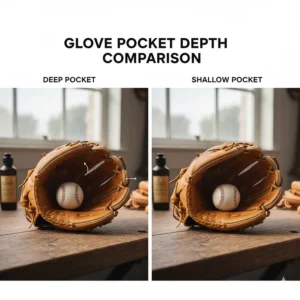
Understanding Catcher Mitt Specifications
Size Matters: Finding Your Perfect Fit
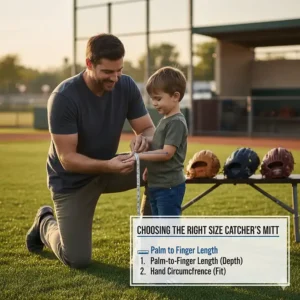
Catcher mitts use a unique sizing system that confuses many first-time buyers. According to Baseball Reference, unlike other glove positions measured from wrist to webbing tip, catchers mitts measure circumference around the outer edge.
Here’s your sizing guide:
- 31-32 inches: Youth players (ages 8-12)
- 32.5-33 inches: Young teens and smaller-handed adults
- 33.5 inches: Standard adult size (most popular)
- 34-35 inches: Larger catchers preferring maximum coverage
I typically recommend starting with a 33.5-inch mitt if you’re uncertain. It’s the goldilocks size—not too big, not too small. You can always adjust with proper break-in techniques to match your catching style.
Leather Types: What’s Really Worth It?
The leather quality determines everything about your mitt’s performance and longevity. Let’s break down what you’re actually buying:
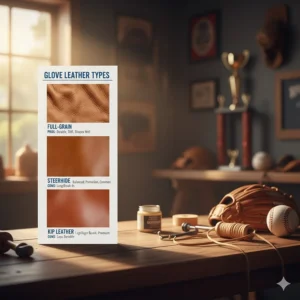
Japanese-Tanned Steerhide 🏆 This premium leather allows faster break-in while maintaining extended durability. It’s the sweet spot between stiffness and flexibility, used in the All-Star Pro Elite and high-end Mizuno models. Expect to pay $400+ but gain years of reliable service.
Heart of the Hide Steerhide Taken exclusively from hand-selected pro-grade hides, representing the top 5% of available leather. It’s stiffer initially but forms an incredible pocket once broken in. Think of it as an investment that appreciates with use.
Pro Stock Leather Wilson’s proprietary leather selection offers rugged durability with a comfortable feel. It sits in the middle tier—better than entry-level but not quite reaching Japanese-tanned quality.
Pro-Soft and Cowhide Comes nearly game-ready out of the box but won’t hold up as long as premium options. Perfect for youth players who’ll outgrow the mitt before wearing it out.
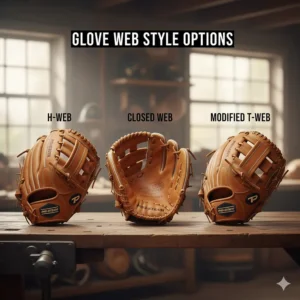
Web Design: More Than Looks
The web isn’t just decorative—it fundamentally affects how you catch and frame pitches. Reinforced closed webs are the common setup for pro-league backstops to maximize ball security while executing quick transfers.
Closed Web: Conceals pitch signals, provides maximum durability, and creates a deeper pocket. Best for most catchers.
Half-Moon Web: Facilitates tight, secure catches and aligns the ball in the pocket for fast transfers. Popular among catchers focused on controlling the running game.
Breaking In Your Catcher Mitt: The Right Way
I’ve seen catchers ruin $400 mitts by rushing the break-in process. Here’s how to do it properly, based on advice from Rawlings’ official break-in guide:
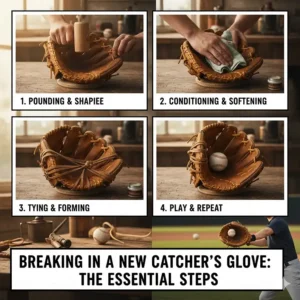
The Three-Week Method
Week 1: Conditioning Apply a thin layer of quality glove oil (not too much!) and work the leather with your hands for 15-20 minutes daily. Focus on the pocket and hinge points. Avoid microwaving, oven-baking, or any “quick break-in” methods that degrade leather.
Week 2: Shaping Place a baseball in the pocket and wrap the mitt tightly with rubber bands or glove straps. Sleep with it under your mattress (yes, really). During practice, catch every pitch you can—nothing breaks in a mitt like actual use.
Week 3: Game Ready By now, your mitt should be forming nicely to your hand. Continue regular use and occasional conditioning. The break-in never truly ends; you’re constantly refining the pocket.
Common Break-In Mistakes
❌ Using too much oil: Creates a sloppy, heavy mitt
❌ Putting it in the oven: Dries out and cracks leather
❌ Hitting it with a hammer excessively: Damages internal structure
❌ Not using it enough: Time alone doesn’t break in gloves—catching does
Comparing Premium vs Budget Options
Let me be honest about whether expensive mitts justify their cost. I’ve caught with both $70 Mizuno Samurais and $450 All-Star Pro Elites, and here’s what I’ve learned:
| Feature | Premium ($300+) | Mid-Range ($150-300) | Budget ($70-150) |
|---|---|---|---|
| Leather Quality | Japanese steerhide / HoH | Pro Stock / Quality steerhide | Cowhide / Synthetic |
| Longevity | 5-10 years | 2-4 years | 1-2 years |
| Break-In Time | 3-4 weeks | 2-3 weeks | Few days |
| Protection | Maximum | Good | Adequate |
| Resale Value | 50-60% | 30-40% | Minimal |
For serious high school and college catchers, premium mitts make financial sense. You’ll buy one great mitt instead of three mediocre ones. However, for youth players still growing or recreational adult leagues, mid-range options deliver excellent value.
Position-Specific Features for Catchers
Pitch Framing Elements
Modern catchers need mitts optimized for stealing strikes. Thinner toe pads expand the catching surface area, crucial for better pitch framing. Look for mitts with:
- Flexible wrist hinges that enable subtle movement
- Lightweight backing materials (like SuperSkin)
- Shallow-to-medium pocket depth for quick presentation
Blocking Protection
When you’re dropping to your knees to block a curveball in the dirt, padding matters. Extended pockets with profile toes make scooping easier, while reinforced palm padding absorbs impact without sacrificing ball feel.
The All-Star Pro Elite and Wilson A2K excel here, offering pro-grade protection that lets you attack balls in the dirt fearlessly.
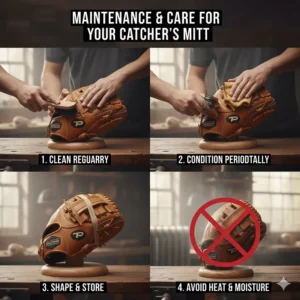
Maintenance and Care Tips
Your catcher mitt endures more punishment than any other glove on the field. According to MLB equipment managers, professional catchers follow strict maintenance routines:
Daily Care Routine
After Each Game:
- Brush off dirt and mud with a soft cloth
- Let it air dry completely (never near heat sources)
- Store with a ball in the pocket to maintain shape
Weekly Conditioning: Apply glove conditioner (not oil) to keep leather supple. I prefer Lexol or Nokona conditioning cream—they penetrate without over-softening.
Storage Best Practices
Never leave your mitt in a hot car or direct sunlight. UV rays degrade leather faster than years of catching. Store in a cool, dry place, preferably in a glove bag with a ball secured in the pocket.
Buying Guide: Where to Purchase
Online Retailers
Amazon: Best for comparing prices and reading verified reviews
JustBallGloves.com: Specialist retailer with expert sizing advice
Dick’s Sporting Goods: In-store try-on options with price-matching
New vs Used Considerations
I’m generally against buying used catcher mitts. The break-in is so personalized that you’re essentially fighting against the previous owner’s hand shape. However, if you find a barely-used premium mitt at 40% off, it might be worth considering.
Common Mistakes When Choosing a Mitt
Mistake #1: Buying Too Large
Many catchers think bigger is always better. Wrong. An oversized mitt is harder to close, slower to transfer from, and more likely to let balls pop out. Hook-and-loop wrist straps allow quick adjustment to fit, but they can only compensate so much.
Mistake #2: Ignoring Break-In Time
You bought your mitt three days before the season starts? You’re going to struggle. Premium leather requires weeks of conditioning and use. Budget accordingly for break-in time, or choose models with higher factory break-in percentages.
Mistake #3: Choosing Based on Color
I get it—you want to look good behind the plate. But selecting a mitt primarily for aesthetics is like buying cleats because they match your socks. Focus on fit, leather quality, and web design first. The right colorway is a bonus, not the priority.
Youth Player Considerations
If you’re buying for a young catcher, different rules apply. Youth mitts need to balance three competing priorities: affordability (they’re growing), quality (they’re learning proper mechanics), and durability (they’re rough on equipment).
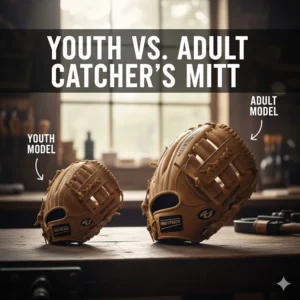
Age-Appropriate Sizing
Ages 8-10: 31-31.5 inches Ages 11-13: 32-32.5 inches
Ages 14+: 33+ inches
The Rawlings R9 Contour Series with its ContoUR Fit specifically addresses smaller hands, making it easier for young catchers to secure and control the mitt. Don’t force a 10-year-old to use an adult 33.5-inch mitt—it hinders development.
When to Upgrade
Plan to upgrade when:
- The mitt no longer closes properly
- Laces are fraying beyond repair
- Your child’s hand physically outgrows the mitt
- Competition level increases significantly (rec league → travel ball)
Advanced Features Worth Paying For
Some features genuinely improve performance and justify higher costs:
Memory Foam Padding
Dual-density memory foam padding provides lasting comfort while absorbing impact. It’s the difference between finishing a game with sore hands versus feeling fresh.
Moisture-Wicking Liners
DriLex wrist lining creates a dry, comfortable back-of-hand feel, crucial during hot summer doubleheaders. Sweaty hands lose grip and control.
Adjustable Pocket Systems
All-Star’s Adjustable Pocket System allows depth changes for different pitch types and catching scenarios. It’s like having multiple mitts in one.
Frequently Asked Questions
❓ How long does it take to break in a catchers glove properly?
❓ What size catchers mitt should a high school player use?
❓ Can you use a regular baseball glove for catching?
❓ How often should I replace my catcher mitt?
❓ What makes catchers gloves different from first base mitts?
Conclusion: Making Your Final Decision
Choosing the best catchers glove ultimately comes down to matching your needs with the right features. For elite players committed to catching long-term, the All-Star Pro Elite CM3000 ($449.95) or Wilson A2K ($399.95-$449.95) represent uncompromising quality that lasts years.
High school and college catchers achieve excellent results with the Wilson A2000 M23 ($299.95) or Mizuno Pro Select ($279.95)—professional-grade performance without extreme cost. Meanwhile, the Rawlings Heart of the Hide ($329.99) splits the difference with legendary quality and moderate pricing.
For youth players, you honestly can’t go wrong with the Rawlings R9 Series ($129.99) or Mizuno Samurai ($69.95). Both deliver quality construction at prices that make sense when kids are still growing.
Remember: the best catchers gloves aren’t always the most expensive—they’re the ones that fit your hand properly, break in reasonably quickly, and help you command the plate with confidence. Whether you’re blocking 90 mph heaters or learning to frame pitches, invest in a mitt that matches your current skill level while supporting your development.
🎯 Lock In Your Perfect Mitt Today!
Don’t let another game pass with subpar equipment. These top-rated catcher mitts represent the best value at every price point. Click any highlighted product above to check live pricing, read hundreds of verified reviews, and take advantage of current promotions. Your hands (and your pitchers) will thank you! ⚾🔥
Recommended for You
- Best Zett Pitcher Glove Sideline Options 2025: 7 Expert Picks & Buying Guide
- 7 Best Pitching Gloves 2025: Expert Reviews & Buying Guide
- Heart of the Hide Infield Glove: 7 Pro Models (2025 Guide)
Disclaimer: This article contains affiliate links. If you purchase products through these links, we may earn a small commission at no additional cost to you.
✨ Found this helpful? Share it with your friends! 💬🤗
