
In This Article
Ever grabbed a rough piece of lumber without gloves and instantly regretted it? I’ve been there—scraped knuckles, splinters, and that frustrating moment when you realize the bandage won’t stick because your hands are too calloused. The right pair of work gloves transforms these painful moments into non-events, but here’s the thing: walk into any hardware store and you’ll face a wall of options that look identical yet range from $5 to $50.

This work gloves buying guide cuts through the marketing noise to help you understand what actually matters. Whether you’re framing a deck, wrenching on engines, handling materials in a warehouse, or tackling weekend DIY projects, there’s a specific glove designed for your exact needs. According to OSHA’s hand protection standards, employers must select appropriate hand protection when workers face hazards from cuts, chemical burns, punctures, or temperature extremes—and that same logic applies to your personal safety.
You’re about to discover the seven best work gloves currently dominating Amazon in 2026, from budget-friendly multi-packs to premium leather options. More importantly, you’ll learn the work gloves selection guide principles that professionals use: how material properties affect performance, what safety standards actually mean, and the sizing secrets that prevent blisters.
Quick Comparison Table
| Product | Best For | Material | Price Range | Rating |
|---|---|---|---|---|
| Mechanix Wear Original | Automotive & General Use | Synthetic Leather/Mesh | $19-32 | ⭐⭐⭐⭐⭐ |
| HANDLANDY Touchscreen | Light-Duty & Electronics | Synthetic Leather/Spandex | $15-16 | ⭐⭐⭐⭐½ |
| Wells Lamont 1132L | Heavy Construction | Full Grain Cowhide | $18-25 | ⭐⭐⭐⭐⭐ |
| Ironclad OCTANE Turbo | Bulk Value (10 pairs) | Nitrile Coated Nylon | $35-45 | ⭐⭐⭐⭐½ |
| DEX FIT FN330 | Precision Work | Micro-Foam Nitrile | $8-14 | ⭐⭐⭐⭐⭐ |
| G&F Products Leather Palm | Budget Heavy-Duty | Leather Palm/Cotton Back | $17-20 | ⭐⭐⭐⭐ |
| KAYGO MicroFoam KG18NB | Warehouse & Assembly | Micro-Foam Nitrile | $13-14 | ⭐⭐⭐⭐½ |
💬 Just one click – help others make better buying decisions too! 😊
Top 7 Work Gloves: Expert Analysis
1. Mechanix Wear Original Work Gloves – The Mechanic’s Gold Standard
If you’ve ever watched pit crews at a racing event, you’ve seen these gloves in action. The Mechanix Wear Original has earned legendary status since its 1991 debut at the Daytona 500, and for good reason.
Key Specifications:
- Synthetic leather palm with reinforced grip zones
- TrekDry™ breathable mesh backing
- Touchscreen-compatible fingertips
The synthetic leather construction strikes that sweet spot between durability and dexterity. Unlike cheaper alternatives that feel like oven mitts, these gloves let you actually feel what you’re working with. The palm material resists wear from repeated tool use while maintaining enough tactile sensitivity to thread a bolt by feel.
Customers consistently praise the fit—these gloves mold to your hands after a few uses rather than staying stiff. One reviewer noted they’re on their third pair after wearing through two over several years of automotive work, calling them “very good for automotive work, easy to maneuver, and the quality is excellent.”
Pros:
✅ Exceptional grip on oily/greasy surfaces
✅ Machine washable for easy maintenance
✅ Available in 6 colors and multiple sizes (XXS to XXL)
Cons:
❌ Some users report seam separation after heavy use
❌ Not suitable for sharp metal work
Price: $19-32 depending on size and color
2. HANDLANDY Utility Touchscreen Work Gloves – Best for Light-Duty Versatility
These gloves dominate Amazon’s bestseller list for one simple reason: they do everything pretty well without excelling at any one thing. That versatility makes them perfect for homeowners and weekend warriors.
Key Specifications:
- Foam-padded knuckles and palms
- Full touchscreen compatibility on all fingers
- Breathable spandex backing
The foam padding absorbs vibration from power tools—a feature you’ll appreciate after an hour with a reciprocating saw. The touchscreen capability works flawlessly, eliminating that frustrating dance of removing gloves to check your phone mid-project.
What really sets these apart is the terry cloth sweat wipe on the thumb. It sounds gimmicky until you’re dripping sweat on a July afternoon and need to clear your eyes without smearing dirt across your face.
Pros:
✅ Terry cloth thumb for wiping sweat
✅ Excellent breathability for all-day comfort
✅ Snug fit improves over time as material stretches
Cons:
❌ Runs small—order one size up for comfort
❌ Not durable enough for heavy construction
Price: $15-16 per pair
3. Wells Lamont Full Grain Cowhide Leather Gloves (Model 1132L) – Premium Protection That Lasts Years
When professionals talk about “real work gloves,” they usually mean something like these Wells Lamont leather gloves. This American heritage brand has been manufacturing quality gloves since 1907, and their full leather models represent the pinnacle of traditional construction.
Key Specifications:
- 100% premium grain cowhide construction
- Gunn cut design with keystone thumb
- Adjustable ball and tape wrist closure
The grain cowhide offers superior puncture and abrasion resistance compared to split leather alternatives. These gloves break in beautifully—they start stiff but conform to your hand shape after a week of use, creating a custom fit that cheap gloves never achieve.
The keystone thumb (stitched separately into the palm) provides exceptional dexterity for a full leather glove. You can actually manipulate small fasteners and feel what you’re gripping, unlike many leather gloves that feel like you’re working with baseball mitts.
Pros:
✅ Exceptional durability—many reviews mention 2+ years of heavy use
✅ Superior protection for construction and demolition
✅ Adjustable wrist keeps debris out
Cons:
❌ Requires break-in period for optimal comfort
❌ Not ideal for precision electronic work
Price: $18-25 depending on size and model
4. Ironclad OCTANE Turbo Ten Pack – Unbeatable Value for Crews
Buying work gloves shouldn’t require a second mortgage, especially if you run through them quickly or outfit multiple workers. The Ironclad Turbo Ten Pack delivers exactly what contractors need: functional protection at a bulk price.
Key Specifications:
- Smooth nitrile palm coating for oil resistance
- 15-gauge breathable yarn construction
- Machine washable and reusable
The nitrile coating provides excellent grip in oily conditions without the bulk of heavy-duty gloves. These work brilliantly for parts handling, material sorting, or any task where you need basic cut and abrasion protection with maintained dexterity.
At roughly $3.50 per pair, you can afford to keep fresh gloves in your truck, workshop, and garage. One gold prospector reviewer noted these outlasted their usual daily glove consumption by 10x, praising them as “STRONG ENOUGH FOR A GOLD MINER.”
Pros:
✅ Incredible value at 10 pairs for $35-45
✅ Great for keeping backup gloves everywhere
✅ Good oil and grease resistance
Cons:
❌ Thinner material wears faster than premium options
❌ Limited impact or cut protection
Price: $35-45 for 10-pair pack
5. DEX FIT Nitrile Coated Work Gloves FN330 – The Second-Skin Option
Sometimes you need protection without sacrificing the ability to feel what you’re doing. The DEX FIT FN330 gloves excel at this balance, offering a near-barehand experience with just enough barrier protection.
Key Specifications:
- Ultra-thin micro-foam nitrile coating
- 15-gauge seamless nylon liner
- CE 388 certified for quality standards
The micro-foam nitrile creates a slightly tacky surface that grips even wet or oily materials. Unlike smooth coatings that get slippery, this texture maintains purchase in challenging conditions. The gloves are so thin you can actually pick up small screws or use precision tools without frustration.
Customers rave about the fit—the seamless 3D knitting molds to your hand shape, eliminating bunching and pressure points. One reviewer called them “best fitting and best looking” even among other touchscreen-compatible gloves.
Pros:
✅ Exceptional dexterity for detailed work
✅ Touchscreen compatible on all fingers
✅ Machine washable and reusable
Cons:
❌ Thin material won’t survive sharp edges
❌ Less breathable than mesh-backed options
Price: $8-14 for 3-pair pack
6. G & F Products Leather Palm Work Gloves – Classic Budget Protection
These represent the work glove archetype: leather palm for grip and protection, cotton back for breathability, rubberized cuff to keep debris out. G&F Products proves that traditional doesn’t mean outdated—sometimes the old designs work because they simply work.
Key Specifications:
- Premium cowhide leather palm
- Breathable cotton back construction
- Extended 3.5-inch rubberized safety cuff
The leather palm handles rough materials admirably while the cotton back prevents your hands from turning into sweat puddles. The extended cuff protects your wrists from abrasions and prevents annoying debris from sliding inside the glove.
At under $4 per pair in a 5-pack, these offer tremendous value for general construction, landscaping, or warehouse work. Customers consistently praise the quality-to-price ratio, noting they outlast cheaper big-box store alternatives.
Pros:
✅ Excellent value at $17-20 for 5 pairs
✅ Good balance of protection and breathability
✅ Extended cuff protects wrists
Cons:
❌ Cotton back offers minimal impact protection
❌ Leather requires occasional conditioning
Price: $17-20 for 5-pair pack
7. KAYGO Safety Work Gloves MicroFoam Nitrile KG18NB – Warehouse Workers’ Choice
The KAYGO gloves dominate Amazon’s safety work gloves category because they nail the trifecta warehouse workers demand: grip, breathability, and touchscreen functionality. These aren’t flashy, but they quietly excel at their intended purpose.
Key Specifications:
- Micro-foam nitrile coating on palm and fingers
- Seamless knit nylon construction
- Full touchscreen compatibility
The micro-foam coating provides superior grip on light oils while maintaining excellent breathability. Unlike fully coated gloves that trap heat, the coating only covers grip zones, allowing your hands to breathe during extended wear.
Customer reviews consistently mention the true-to-size fit and exceptional durability. One satisfied buyer wrote, “The true-to-size fit, exceptional comfort, and impressive durability have far exceeded my expectations.”
Pros:
✅ Excellent grip in dry and light oil conditions
✅ True to size for consistent ordering
✅ Great breathability for all-day wear
Cons:
❌ Not suitable for heavy-duty construction
❌ Thicker than some nitrile alternatives
Price: $13-14 for 3-pair pack
✨ Don’t Miss These Exclusive Deals!
🔍 Take your hand protection to the next level with these carefully selected products. Click on any highlighted item to check current pricing and availability on Amazon. These gloves will help you tackle any project safely and efficiently while protecting your most valuable tools—your hands!
How to Choose Work Gloves: The Complete Selection Guide
Selecting work gloves isn’t about grabbing the first pair that fits. Professional safety managers and experienced tradespeople follow a systematic approach that considers multiple factors. Let’s break down exactly how to choose work gloves that match your specific needs.
Understanding Material Properties Explained
The material composition of work gloves determines their performance characteristics more than any other factor. Each material excels in specific applications while having limitations in others.
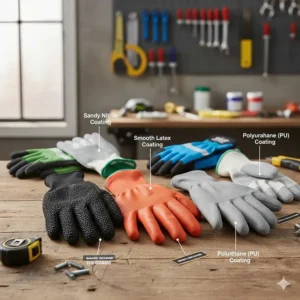
Leather Options: Full-grain leather offers the gold standard for puncture and abrasion resistance. It breathes reasonably well and molds to your hands over time. Split leather costs less but sacrifices some durability. Suede provides excellent grip but less moisture resistance.
Synthetic Materials: Nitrile coatings resist oil and chemicals while maintaining flexibility in cold weather. Neoprene handles acids and caustics that destroy natural rubber. Polyurethane offers the thinnest coating for maximum dexterity.
Cotton and Fabric: Canvas and cotton gloves excel at general handling where minimal protection suffices. They breathe exceptionally well but offer limited defense against sharp objects or chemicals.
According to material science research, hybrid constructions combining multiple materials often outperform single-material designs. The Mechanix Wear Original exemplifies this approach with synthetic leather palms and breathable mesh backing.
Decoding Safety Standards and Certifications
Not all work gloves meet the same safety criteria. Understanding certification marks helps you select appropriate protection for your hazards.
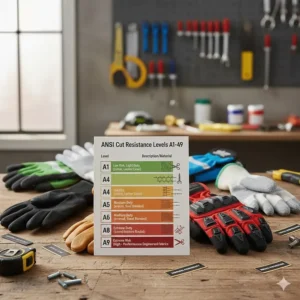
The ANSI/ISEA 105-2024 standard provides comprehensive classification for hand protection based on performance testing. Key ratings include:
Cut Resistance Levels (A1-A9):
- A1-A3: Basic protection against scrapes and light cuts
- A4-A6: Moderate cut hazards like sheet metal or glass
- A7-A9: Severe cut hazards requiring specialized materials
Puncture Resistance (0-5): Measures force required to penetrate glove material with a standardized probe. Level 3 or higher provides meaningful protection for construction applications.
Abrasion Resistance (0-6): Indicates how many cycles of friction the material withstands before failure. Construction workers should target level 3 minimum.
OSHA regulation 1910.138 requires employers to select hand protection based on hazard evaluation. While this regulation targets employers, the selection criteria apply equally to personal safety decisions.
Mastering the Sizing Chart Mystery
Ill-fitting gloves cause more problems than you’d expect. Too tight restricts circulation and causes fatigue. Too loose reduces grip control and creates snag hazards.
Measuring Your Hand: Wrap a fabric tape measure around your dominant hand at the widest point below your knuckles, excluding your thumb. Don’t pull tight—just snug. This measurement in inches corresponds to glove sizes:
- 7-8 inches = Small
- 8-9 inches = Medium
- 9-10 inches = Large
- 10-11 inches = X-Large
Fit Considerations: Leather gloves should fit snugly when new—they’ll stretch. Coated fabric gloves should fit true to size. Always check manufacturer-specific sizing charts since brands vary significantly.
The HANDLANDY Touchscreen gloves run small according to customer feedback—ordering one size up provides the intended fit. Meanwhile, KAYGO gloves receive consistent praise for true-to-size accuracy.
Task-Specific Selection Criteria
Different jobs demand different glove characteristics. Here’s how to match gloves to common applications:
Construction and Demolition: Prioritize cut and puncture resistance with abrasion durability. Full leather or heavy synthetic options work best. The Wells Lamont 1132L excels here.
Automotive and Mechanical Work: Need grip in oily conditions plus touchscreen capability. Synthetic leather with nitrile elements performs well. Mechanix Wear Original dominates this category.
Warehouse and Material Handling: Require breathability for all-day wear with moderate protection. Thin nitrile-coated gloves like DEX FIT FN330 or KAYGO KG18NB work perfectly.
Electronics and Precision Assembly: Demand maximum dexterity with minimal bulk. Ultra-thin nitrile coatings on seamless liners provide protection without compromising feel.
Landscaping and Gardening: Need breathability and flexibility with basic thorn/abrasion protection. Leather palm gloves with cotton backing offer ideal balance.
Understanding Touchscreen Technology Integration
Modern work gloves increasingly feature touchscreen compatibility, but not all implementations work equally. The technology typically uses conductive threads woven into fingertips or conductive coatings applied to specific areas.
Full-finger touchscreen capability (all five fingers work) provides maximum convenience but costs more. Three-finger designs (thumb, index, middle) handle most phone operations while reducing cost.
The HANDLANDY and KAYGO models both feature full five-finger touchscreen functionality, eliminating the frustration of removing gloves to check messages or look up measurements.
Breathability vs. Protection Trade-offs
Every protective layer you add reduces breathability. Understanding this fundamental trade-off helps set realistic expectations.
Fully coated nitrile gloves offer maximum chemical resistance but trap heat. Palm-only coatings balance protection and ventilation. Mesh-backed designs maximize airflow but provide less impact protection.
For extended wear in warm conditions, prioritize breathable designs even if it means accepting slightly less protection. Hand fatigue from heat buildup reduces your overall safety by decreasing alertness and increasing mistakes.

Types of Work Gloves Explained: Finding Your Perfect Match
The work glove universe contains distinct categories, each engineered for specific hazard profiles. Understanding these types of work gloves explained helps you navigate options confidently.
General Purpose Work Gloves
These versatile performers handle light to moderate tasks across various applications. They typically feature:
- Cotton or polyester knit construction
- Optional palm coatings for improved grip
- Moderate abrasion resistance
- Excellent breathability
General purpose gloves suit homeowners, DIY enthusiasts, and workers handling non-hazardous materials. The G&F Products Leather Palm gloves exemplify this category perfectly.
Cut-Resistant Gloves
Specialized materials like Kevlar, Dyneema, or steel mesh protect against laceration hazards. Key features include:
- ANSI cut resistance ratings (A1-A9)
- Varying thickness levels
- Often sacrifices some dexterity for protection
- Required for glass handling, metal stamping, or food processing with sharp tools
Never assume any glove is “cut-proof”—ratings indicate resistance levels, not absolute protection.
Chemical-Resistant Gloves
Different chemicals require specific barrier materials. Common options include:
- Nitrile: Resists oils, greases, and many solvents
- Neoprene: Handles acids and caustics
- Butyl rubber: Protects against strong chemicals and gases
- PVC: General chemical resistance at lower cost
Always check glove manufacturer chemical resistance charts for your specific substances. The glove material that blocks one chemical may dissolve in another.
Impact-Resistant Gloves
Thermoplastic rubber (TPR) padding protects knuckles, fingers, and the back of hands from crushing or striking hazards. Critical for:
- Oil and gas operations
- Construction work
- Mining applications
- Heavy equipment operation
The ANSI/ISEA 138 standard classifies impact protection levels to help match gloves to hazard severity.
Heat and Cold-Resistant Gloves
Temperature extremes require specialized insulation or heat-resistant materials:
- Heat-resistant: Leather, Kevlar, or aluminized materials for welding and furnace work
- Cold-resistant: Thinsulate or fleece linings for outdoor winter work
- Temperature range ratings indicate safe operating limits
Always verify temperature ratings match your specific application rather than assuming generic “heat resistant” claims.
Electrical Safety Gloves
Voltage-rated rubber gloves with leather protectors prevent electrical shock. Classifications include:
- Class 00 (500V) through Class 4 (36,000V)
- Require regular testing and inspection
- Must be used with leather protector gloves
- Never use general work gloves for electrical work
Electrical safety gloves demand specialized knowledge—consult with safety professionals for electrical applications.
Material Properties Deep Dive: What Makes Each Material Unique
Understanding material properties at a deeper level helps predict real-world performance. Let’s examine the science behind common work glove materials.
Leather Characteristics and Care
Full-Grain Leather: The strongest leather type comes from the outer skin layer with minimal processing. It develops a protective patina over time while maintaining flexibility. Advantages include natural breathability, excellent abrasion resistance, and puncture protection. However, it costs more and requires break-in time.
Split Leather: Made from inner skin layers, split leather offers good value with decent protection. It’s less durable than full-grain but more affordable. Common in budget work gloves.
Leather Maintenance: Leather requires occasional conditioning to prevent drying and cracking. Clean with mild soap, air dry away from heat, and apply leather conditioner monthly with heavy use. Properly maintained leather gloves last years rather than months.
Synthetic Coatings Performance
Nitrile Properties: This synthetic rubber excels in oil resistance, chemical protection, and abrasion durability. It remains flexible in cold temperatures down to -40°F. However, it offers poor resistance to ketones and aromatic solvents.
Polyurethane Benefits: The thinnest available coating material, polyurethane provides exceptional dexterity while maintaining reasonable grip and abrasion resistance. Ideal for precision work but lacks chemical resistance.
Neoprene Applications: Originally developed as a synthetic rubber alternative, neoprene resists degradation from ozone, weather, and moderate chemicals. It’s frequently used in chemical-resistant glove construction.
Fabric and Knit Construction
Gauge Rating: Glove liners are described by their knit gauge—the number of stitches per inch. Higher gauge numbers (13-15) create thinner, more flexible gloves with better dexterity. Lower gauge (7-10) produces thicker, more protective material.
The DEX FIT FN330 uses 15-gauge construction for maximum dexterity, while heavier-duty options use 13-gauge for additional protection.
Seamless vs. Seamed: Seamless construction eliminates weak points and pressure spots, creating more comfortable gloves. Seamed gloves cost less but may develop failures at seams under heavy stress.
Advanced Technical Materials
Kevlar Capabilities: This aramid fiber provides five times the tensile strength of steel by weight. It resists cuts exceptionally well while remaining flexible. However, Kevlar degrades under UV exposure and offers poor wet grip.
Dyneema Innovation: Ultra-high-molecular-weight polyethylene (UHMWPE) delivers outstanding cut resistance with superior flexibility compared to Kevlar. It floats on water and resists chemicals.
Steel Mesh Applications: Stainless steel mesh provides the highest cut protection available. Food processing and glass handling industries commonly require this protection level. The trade-off? Minimal dexterity and no insulation.

Comparison Table: Material Properties
| Material | Cut Protection | Chemical Resistance | Dexterity | Breathability | Cost |
|---|---|---|---|---|---|
| Full-Grain Leather | High | Low | Medium | High | High |
| Nitrile Coating | Medium | High | High | Medium | Medium |
| Kevlar | Very High | Medium | Medium | Low | High |
| Cotton/Canvas | Low | None | Very High | Very High | Low |
| Neoprene | Low | Very High | Medium | Low | Medium |
| Polyurethane | Low | Low | Very High | High | Low |
Workplace Safety Standards and Compliance
While homeowners aren’t bound by OSHA regulations, understanding professional safety standards helps make informed glove selections. These frameworks emerged from decades of workplace injury analysis.
OSHA Hand Protection Requirements
The Occupational Safety and Health Administration establishes baseline requirements for workplace hand protection:
Key OSHA 1910.138 Provisions:
- Employers must provide appropriate hand protection when hazards exist
- Selection based on hazard evaluation and task requirements
- Gloves must fit properly and be maintained in sanitary condition
- Employees must be trained in proper use and limitations
According to OSHA statistics, 71% of hand and arm injuries could have been prevented with proper hand protection. Yet 70% of workers don’t wear gloves, and 30% of those who do wear inappropriate gloves for their tasks.
ANSI/ISEA Standards Framework
The American National Standards Institute and International Safety Equipment Association develop consensus standards that define performance testing and classification:
ANSI/ISEA 105-2024: The current hand protection standard establishes consistent test methods for:
- Cut resistance (ASTM F2992 test)
- Puncture resistance
- Abrasion resistance
- Chemical permeation
These standardized tests allow meaningful comparison between different glove products.
ANSI/ISEA 138-2019: Specifically addresses impact-resistant glove performance and classification. Establishes testing methods for back-of-hand impact protection.
Understanding Performance Ratings
Glove labeling typically includes multiple performance ratings. Here’s how to interpret them:
Cut Level Example: A glove rated ANSI Cut Level A4 withstood 1,500 grams of cutting force in standardized testing. This doesn’t mean it’s cut-proof—it indicates the force required to penetrate the material under controlled laboratory conditions.
Puncture Level Meaning: Level 3 puncture resistance required 100 Newtons of force to penetrate the glove material. Higher levels indicate greater protection but often reduce dexterity.
Abrasion Cycles: Level 4 abrasion resistance survived 8,000 cycles of rubbing before material failure. Construction workers handling rough materials should target level 3 minimum (2,000 cycles).
Industry-Specific Requirements
Different industries face unique hazards requiring specialized protection:
Food Processing: FDA food-contact requirements, cut resistance for knife work, moisture resistance, and easy cleaning capability.
Construction: High abrasion resistance, puncture protection, impact resistance for knuckles and fingers, and comfort for all-day wear.
Automotive: Oil and grease resistance, touchscreen capability, good tactile sensitivity, and heat resistance for engine work.
Healthcare: Barrier protection against biological hazards, latex-free options for allergy concerns, and proper sizing for delicate procedures.
Price Range and Value Analysis
Work glove pricing spans from under $1 per pair to over $100 for specialized applications. Understanding what drives these price differences helps identify genuine value.
Budget Options ($1-10 per pair)
Entry-level gloves typically feature:
- Basic cotton or polyester construction
- Minimal coatings or treatments
- Standard sizes only
- Shorter lifespan under heavy use
The G&F Products Leather Palm gloves ($3.40-4.00 per pair in bulk) represent exceptional value in this category. They provide meaningful protection for general tasks without premium pricing.
Mid-Range Selection ($10-25 per pair)
This category delivers the best value for most users:
- Quality materials and construction
- Specialized features (touchscreen, impact protection)
- Better sizing options
- Reasonable durability
The Mechanix Wear Original ($19-32), HANDLANDY Touchscreen ($15-16), and DEX FIT FN330 ($8-14 for 3 pairs) all occupy this sweet spot.
Premium Category ($25-50 per pair)
High-end gloves justify their cost through:
- Superior materials (full-grain leather, advanced synthetics)
- Specialized certifications
- Extended durability
- Precision sizing and fit
The Wells Lamont full leather models represent the lower end of premium pricing, offering professional-grade protection that lasts years rather than months.
Specialized/Industrial ($50-100+ per pair)
Top-tier gloves include:
- Voltage-rated electrical gloves
- High-temperature welding gloves
- Extreme cut-resistance models
- Chemical-resistant gloves for specific hazards
Most homeowners and general tradespeople won’t need this protection level unless working with electrical systems or handling extremely hazardous materials.
Total Cost of Ownership
Smart glove selection considers lifespan, not just purchase price. A $30 pair lasting two years costs $15 annually. A $10 pair replaced monthly costs $120 annually.
Calculate value by dividing price by expected lifespan:
- Light use (occasional DIY): Budget gloves work fine
- Regular use (weekly projects): Mid-range offers best value
- Daily professional use: Premium gloves reduce long-term costs
Maintenance and Care: Extending Glove Lifespan
Proper maintenance dramatically extends work glove service life. Even expensive gloves fail prematurely without basic care.
Cleaning Methods by Material
Leather Gloves:
- Brush off loose dirt after each use
- Hand wash with mild soap and cool water when needed
- Stuff with newspaper to maintain shape while drying
- Apply leather conditioner monthly with regular use
- Never machine wash or tumble dry
Synthetic/Coated Gloves: Most synthetic gloves tolerate machine washing:
- Turn inside out before washing
- Use cold or warm water (check manufacturer specs)
- Mild detergent only—avoid bleach
- Air dry away from direct heat or sunlight
- The Mechanix Wear and DEX FIT gloves both handle machine washing well
Specialty Gloves: Chemical-resistant and electrical gloves require specific cleaning protocols. Always follow manufacturer instructions as improper cleaning may compromise protection.
Storage Best Practices
Proper storage prevents premature degradation:
- Hang gloves to dry completely before storing
- Keep in cool, dry location away from direct sunlight
- Avoid folding or crushing—this damages materials
- Store away from chemicals, solvents, and ozone sources
- Rotate multiple pairs to extend lifespan
Inspection and Replacement
Regular inspection catches problems before they cause injuries:
Daily Pre-Use Check:
- Hold gloves up to light—look for holes or thin spots
- Flex fingers—check for cracks or stiffness in coatings
- Examine seams for fraying or separation
- Verify wrist closures function properly
Replace When:
- Holes or tears appear anywhere
- Coating shows excessive wear or cracking
- Seams fail or separate
- Gloves no longer fit properly
- Material has hardened or lost flexibility
Don’t risk injuries by extending glove life beyond safety limits. The cost of medical treatment for a preventable injury far exceeds new gloves.
Seasonal Considerations
Temperature affects glove performance and storage:
Summer Care: Sweat accelerates deterioration. Wash gloves more frequently and allow complete drying between uses. Consider keeping two pairs in rotation.
Winter Storage: Leather can dry out in heated indoor storage. Apply conditioner before extended storage and check periodically for drying.
Maximizing Glove Longevity
Beyond basic cleaning and storage:
- Match gloves to tasks—don’t use precision gloves for rough work
- Keep nails trimmed to prevent snagging
- Remove rings that can catch and tear material
- Alternate hands when possible to even wear
- Address small problems immediately before they worsen
✨ Don’t Miss These Exclusive Deals!
🔍 Take your hand protection to the next level with these carefully selected products. Click on any highlighted item above to check current pricing and availability on Amazon. These gloves will help you tackle any project safely and efficiently!

FAQ: Your Work Gloves Questions Answered
❓ How often should I replace my work gloves?
❓ Can I use the same work gloves for all tasks?
❓ What does ANSI cut level A4 actually mean for protection?
❓ Do touchscreen-compatible work gloves really work well?
❓ Should I size up or down if I'm between sizes?
Conclusion: Making Your Final Selection
Choosing the right work gloves transforms from overwhelming to straightforward once you understand the key factors. Start by identifying your primary hazards—cuts, chemicals, heat, or abrasion. Then match those hazards to appropriate materials and safety ratings.
For most general users, the mid-range options like Mechanix Wear Original or HANDLANDY Touchscreen provide excellent value and versatility. They handle the majority of common tasks while maintaining comfort for extended wear. Professionals working daily in demanding conditions benefit from premium options like Wells Lamont leather gloves that justify their higher cost through superior durability.
Budget-conscious buyers or those outfitting multiple workers should consider the Ironclad OCTANE Turbo Ten Pack for unbeatable value, while precision work demands the ultra-thin protection of DEX FIT FN330 or KAYGO nitrile-coated options.
Remember that the best work gloves are the ones you’ll actually wear. A perfectly rated glove gathering dust in your toolbox provides zero protection. Prioritize comfort and fit alongside safety specifications—gloves that feel good encourage consistent use, which is the ultimate goal of this entire work gloves buying guide.
Investing in quality hand protection now prevents injuries, maintains productivity, and ultimately saves money over time. Your hands are your most valuable tools—protect them accordingly.
Recommended for You
- Canvas Work Gloves vs Leather: 7 Best Options Compared 2026
- 7 Best Canvas Work Gloves with Leather Palm 2026
- Cotton Work Gloves Made in USA: 7 Best Picks for 2026
Disclaimer: This article contains affiliate links. If you purchase products through these links, we may earn a small commission at no additional cost to you.
✨ Found this helpful? Share it with your friends! 💬🤗
