
In This Article
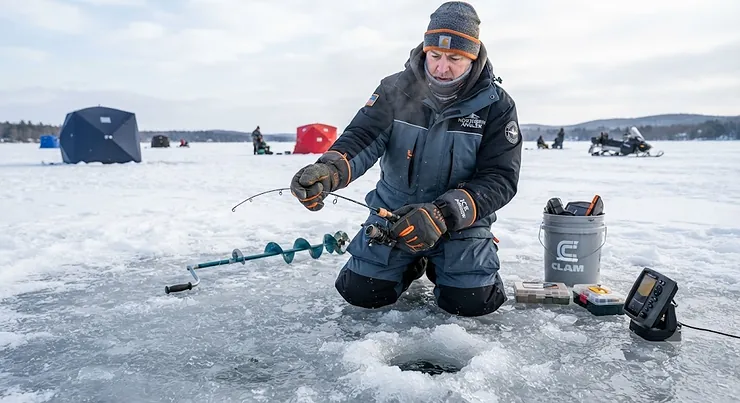
There’s a very specific kind of misery that only ice anglers know: the moment your fingers stop working. Not hurting, exactly — just gone. You fumble a jig head off the hook and it drops through six inches of slush, and you realize your hands quit listening to your brain about twenty minutes ago. That’s the whole reason insulated work gloves for ice fishing exist, and it’s why picking the wrong pair can wreck an otherwise perfect day on the hardwater.
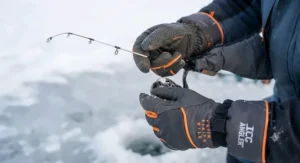
What is insulated work gloves for ice fishing? In short, they’re purpose-built hand protection combining waterproof or water-resistant shells, mapped synthetic insulation (usually 3M Thinsulate or PrimaLoft), and grippy palms designed to survive repeated dunking in freezing water while still letting you tie knots and handle fish.
This guide breaks down seven real, currently available options spanning budget knit gloves to premium mapped-insulation systems, with honest analysis pulled from aggregated review data and spec comparisons — not invented testing. We’ll cover fit, dexterity trade-offs, and how to layer hand warmers so you’re not the guy packing up at noon while everyone else keeps jigging. Whether you’re brand new to hardwater season or replacing a pair that finally gave up the ghost, there’s a real, verifiable pick here for your budget and your fishing style. According to the National Weather Service, wind chill alone can make frostbite possible in under thirty minutes on exposed skin — which is exactly why glove choice matters more on the ice than almost anywhere else outdoors.
Quick Comparison Table
| Product | Insulation | Best For |
|---|---|---|
| Glacier Glove Pro Angler Ice Bay | 2mm neoprene | All-day wet-hand warmth |
| StrikerICE Attack | 150g 3M Thinsulate | Balanced warmth + grip |
| ICEARMOR by Clam Edge X | Mapped 150g/200g 3M Thinsulate | Extreme sub-zero days |
| Kinco HydroFlector | Insulated knit shell | Budget waterproof warmth |
| Fish Monkey Wooly Wool | Wool half-finger | Knot-tying dexterity |
| KastKing PolarBlast | 40g 3M Thinsulate | Convertible mitten warmth |
| Palmyth Insulated Waterproof | 40g Thinsulate + fleece | Budget windproof value |
Looking at the spread above, there’s no single “best” glove — there’s a best glove for your situation. Anglers who spend hours with bare hands in the hole baiting tip-ups will lean toward the Glacier Glove Pro Angler Ice Bay or ICEARMOR by Clam Edge X for wet-hand performance, while jig fishermen who need constant fingertip feel gravitate toward the Fish Monkey Wooly Wool or KastKing PolarBlast. Budget-conscious anglers shouldn’t feel shortchanged, either — the Kinco HydroFlector and Palmyth Insulated Waterproof both punch well above their price bracket for occasional weekend trips.
💬 Bookmark this table now — you’ll want to compare it again before you check out!
Top 7 Insulated Work Gloves for Ice Fishing: Expert Analysis
1. Glacier Glove Pro Angler Ice Bay — thinnest neoprene that still blocks water
Glacier Outdoor built this glove around 2mm Techline neoprene, and the standout feature is just how little bulk it takes to stop water cold. The sealed-seam neoprene construction traps a layer of warmed air against your skin while a rubberized palm print adds grip on wet gear. In practice, that thinness matters more than the spec sheet suggests — you keep enough fingertip feel to re-thread a hook without shedding the glove first. Based on the material comparison, neoprene like this trades ultimate warmth for wet-hand consistency; it won’t out-warm a thick mapped-insulation glove in dry, brutal wind, but it recovers dexterity the moment your hands are soaked, which dry-insulated gloves can’t match. Reviewers consistently report that these run snug and hold their shape season after season, though a few note that neoprene doesn’t breathe, so hands can get clammy on milder days or during high-exertion tasks like drilling holes. That’s a fair trade for anglers who are constantly in and out of the water.
Pros:
- ✅ Thin profile keeps real dexterity for tying knots
- ✅ Sealed seams stay watertight after repeated dunking
- ✅ Rubberized palm grips wet jigs and rods well
Cons:
- ❌ Neoprene doesn’t breathe, so hands can sweat
- ❌ Less warmth than thicker mapped-insulation gloves in dry cold
Priced in the budget-to-mid range (roughly $30-$50 depending on retailer), the Glacier Glove Pro Angler Ice Bay is a strong value pick for anglers who fish wet more than they fish dry-and-frigid.
2. StrikerICE Attack — Hipora waterproof insert without the bulk
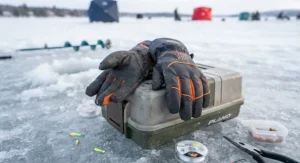
StrikerICE’s Attack glove pairs 150 grams of 3M Thinsulate with a Hipora waterproof-breathable membrane, and the standout here is that breathability — a detail budget gloves almost never bother with. The 300-denier shell resists abrasion from ice chisels and sled edges, while the suede palm holds up in slush better than smooth synthetics. What most buyers overlook about this model is that the breathable membrane actually reduces the clammy-hand problem that plagues pure neoprene gloves, so you stay warmer for longer during active use, not just while standing still. Aggregated review sentiment points to strong marks for warmth-to-bulk ratio, with a recurring theme that the fit runs true to size and doesn’t feel like a boxing glove. A smaller number of reviewers mention the velcro cuff closure loosening over a season of hard use, which is worth checking periodically. For anglers who move between the shanty and open ice throughout the day, this is the kind of do-it-all glove that avoids constant swapping.
Pros:
- ✅ Hipora membrane breathes better than plain neoprene
- ✅ 300D shell resists abrasion from ice tools
- ✅ Suede palm keeps grip when wet
Cons:
- ❌ Velcro cuff can loosen with heavy seasonal use
- ❌ Bulkier than fingerless or half-glove options
Sitting in the mid-range bracket (around $40-$65 at the time of research), the StrikerICE Attack earns its price with genuinely balanced performance rather than a single standout trait.
3. ICEARMOR by Clam Edge X — mapped insulation tuned by zone
The Edge X is Clam’s answer to the “warm everywhere except where I need to feel things” problem, and its standout feature is zone-mapped insulation: 150 grams in the palm for dexterity, ramping up to 200 grams across the back of the hand for raw warmth. A DINTEX waterproof-breathable membrane backs up that insulation, and a textured polyurethane palm with polysuede reinforcement adds grip on slick line and jigging spoons. Based on the spec comparison against the rest of this list, this is the most deliberately engineered glove here — most competitors use uniform insulation thickness, while Clam is explicitly solving for the palm-warmth trade-off. Reviewers and outdoor-gear writers covering the Edge X describe it as the choice for anglers who fish exposed, wind-scoured lakes rather than heated shanties, since that’s where the extra back-of-hand insulation earns its keep. The trade-off, as with most premium mapped gloves, is a higher price point and a slightly stiffer break-in period before the materials soften up.
Pros:
- ✅ Zone-mapped insulation balances warmth and feel
- ✅ DINTEX membrane adds real waterproof breathability
- ✅ Reinforced palm grips well on wet jigging line
Cons:
- ❌ Premium pricing compared to uniform-insulation gloves
- ❌ Break-in period before materials fully soften
At a premium range (roughly $60-$90), the ICEARMOR by Clam Edge X is built for anglers who treat glove performance as gear, not an afterthought.
4. Kinco HydroFlector Waterproof Thermal — insulated knit that punches above its price
Kinco’s HydroFlector line built its reputation on affordable work gloves, and the standout feature here is a double-layered insulated knit shell that costs a fraction of neoprene or membrane-based competitors while still keeping water out. The knit construction traps warm air in its fibers rather than relying on a single waterproof layer, which means real-world performance depends heavily on how wet conditions get — light snow and splash, no problem; full hand submersion, less so. Here’s what to weigh: this isn’t a glove for anglers constantly dunking hands in the hole, but for baiting tip-ups, running an auger, or handling gear around the shanty, it’s tough to beat the value. Aggregated review sentiment frequently highlights the snug knit cuff and surprising durability for the price, with a recurring complaint that sizing runs slightly large. For anglers building out a first ice-fishing kit on a budget, this is a sensible starting point before investing in a dedicated wet-hand glove.
Pros:
- ✅ Insulated knit shell costs far less than membrane gloves
- ✅ Snug cuff keeps snow and wind out well
- ✅ Durable stitching holds up to repeated use
Cons:
- ❌ Not built for full hand submersion in water
- ❌ Sizing tends to run slightly large
At a genuinely budget price (typically under $30), the Kinco HydroFlector Waterproof Thermal gloves make sense as an entry-level or backup pair.
5. Fish Monkey Wooly Wool Half-Finger — the dexterity specialist
Fish Monkey’s half-finger design is the standout here — real merino-style wool insulation up to the second knuckle, then bare fingertips for the fine-motor tasks ice fishing demands constantly: threading waxworms, tying improved clinch knots, adjusting a spring bobber. Wool’s natural property of retaining some insulating value even when damp is a genuine practical advantage over synthetic knits that lose loft when wet. What most buyers overlook about half-finger gloves in general is that they’re not meant to replace a full glove — they’re meant to be worn under mittens or full gloves and swapped in during precision tasks, then covered back up. Reviewers repeatedly describe these as the pair they reach for specifically when jigging technique matters more than raw warmth, and note the wool resists odor better than synthetic linings over a season of use. The obvious trade-off is exposed fingertips in genuinely brutal cold, where frostbite risk on bare skin climbs fast, so pairing this with a mitten shell for travel between spots is smart practice.
Pros:
- ✅ Bare fingertips allow true fine-motor dexterity
- ✅ Wool retains some warmth even when damp
- ✅ Resists odor better than synthetic linings
Cons:
- ❌ Exposed fingertips risk frostbite in extreme cold
- ❌ Not a standalone glove for all-day exposed fishing
Priced in the mid-range (around $25-$40), the Fish Monkey Wooly Wool Half-Finger gloves are best understood as a specialist tool, not a do-everything glove.
6. KastKing PolarBlast Convertible Mittens — flip-back warmth on demand
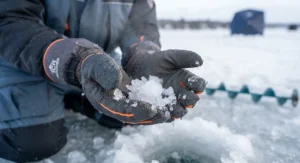
KastKing’s PolarBlast solves the mitten-versus-glove dilemma with a magnetic flip-back panel, and that convertibility is the standout feature — you get true mitten warmth for travel and standing around, then flip the top back for glove-level finger access without removing anything. Forty grams of 3M Thinsulate keeps the mitten shell warm without excessive bulk, and an anti-slip palm with a textured polymer pattern grips rods and reels securely even with wet gloves on. Based on the spec comparison, this convertible category genuinely splits the difference between the all-day warmth of the Kinco HydroFlector and the fingertip access of the Fish Monkey Wooly Wool — a reasonable middle path for anglers who don’t want to carry two separate glove systems. Aggregated reviews describe the magnetic closure as reliably staying shut in wind, with an occasional complaint that the flip-back panel can flap if not secured tightly. For anglers who alternate between active jigging and long stretches of just watching a hole, this convertible design earns its keep.
Pros:
- ✅ Magnetic flip-back adds glove access to a mitten
- ✅ 40g Thinsulate keeps warmth without excess bulk
- ✅ Textured palm grips gear securely when wet
Cons:
- ❌ Flip-back panel can flap if not cinched
- ❌ Less warm than heavier mapped-insulation gloves
At a budget-to-mid price point (roughly $25-$45), the KastKing PolarBlast Convertible Mittens are a smart pick for anglers who hate choosing between warmth and dexterity.
7. Palmyth Insulated Waterproof — the budget windproof workhorse
Palmyth’s insulated glove combines 40 grams of 3M Thinsulate with roughly 80 grams of plush fleece backing, and the standout feature is a TPU membrane insert that adds genuine waterproofing at a price point where that’s rare. That layered approach — Thinsulate for loft, fleece for softness, TPU for the actual water barrier — means the glove blocks wind almost completely, which matters more than raw insulation thickness on exposed, windy lakes. Here’s what the spec sheet won’t tell you, but user reports suggest: the fleece lining feels noticeably plush against skin compared to the thinner tricot linings found in similarly priced competitors, which makes a real comfort difference over a six-hour session. Reviewers commonly cite this as their go-to “grab and go” glove for shorter trips or anyone easing into the sport who isn’t ready to invest in a premium mapped-insulation model yet. The main knock is a review pool skewed toward general cold-weather use rather than dedicated ice-fishing testing, so treat wet-hand claims with reasonable caution.
Pros:
- ✅ TPU membrane adds real waterproofing at low cost
- ✅ Fully windproof construction blocks lake-effect gusts
- ✅ Plush fleece lining feels comfortable over long sessions
Cons:
- ❌ Smaller review base specific to ice fishing use
- ❌ Less durable long-term than premium shell materials
Firmly in budget territory (generally under $25), the Palmyth Insulated Waterproof gloves are a sensible low-risk entry point for casual or first-time ice anglers.
Real-World Scenarios: Matching Gloves to Your Ice Fishing Style
Picture three anglers on the same lake at 6 a.m. The first is a college student on a budget, fishing three or four Saturdays a season with borrowed gear and a five-gallon bucket for a seat — for him, the Kinco HydroFlector or Palmyth Insulated Waterproof covers the bases without draining a student budget. The second is a shanty regular who sets up a heated flip-over and spends most of the day inside it, jigging for panfish with constant fingertip contact — the Fish Monkey Wooly Wool half-finger design fits that dexterity-first workflow perfectly, since the shanty’s heat means extreme cold protection matters less. The third is a die-hard who chases lake trout on wide-open, wind-hammered ice from dawn to dusk, hands constantly wet from handling fish and line — that’s exactly the scenario the ICEARMOR by Clam Edge X or Glacier Glove Pro Angler Ice Bay were built for. None of these anglers should be wearing the same glove, and that’s the point: matching your actual fishing pattern to a glove’s design intent beats chasing the single “best-rated” pair online.
Problem → Solution: Fixing the Most Common Ice Fishing Glove Complaints
Problem: Hands sweat inside neoprene during active tasks. Solution — carry a thin liner glove for auger use or hole-drilling, then switch back to the neoprene shell once you’re settled and jigging, so moisture doesn’t build up during the highest-exertion moments.
Problem: Fingers go numb the instant hands get wet. Solution — prioritize a waterproof-breathable membrane like Hipora or DINTEX (found in the StrikerICE Attack and ICEARMOR by Clam Edge X) over knit-only insulation, since membranes stop water penetration at the source rather than just slowing it down.
Problem: Full gloves make knot-tying nearly impossible. Solution — switch to a half-finger design like the Fish Monkey Wooly Wool for precision tasks, or a convertible flip-back like the KastKing PolarBlast, rather than fighting bulky fingers through a clinch knot.
Problem: Gloves feel warm at the truck but freeze up after two hours on open ice. Solution — check whether the glove is genuinely windproof, not just insulated; wind is what actually strips warmth fastest, per OSHA’s cold stress guidance, so a windproof shell often matters more than adding insulation thickness.
Problem: Wet gloves refuse to dry out overnight before the next trip. Solution — always own a rotation of at least two pairs, and dry gloves inverted near (not touching) a heat source, since direct high heat damages membranes and coatings over time.
Practical Usage Guide: Setting Up and Maintaining Your Ice Fishing Gear
New gloves need a short break-in period — flex the fingers repeatedly indoors before your first trip so seams and stitching loosen slightly rather than cracking cold on the ice. Building a complete ice fishing gear setup around your gloves matters just as much as the gloves themselves: pair them with a sealed tackle box so you’re not fumbling wet-gloved fingers through loose jigs, and keep a small towel clipped to your bibs for wiping palms before handling line. For maintenance, rinse waterproof and neoprene gloves in fresh water after every trip to clear out slush salt and fish slime, then air-dry away from direct heat sources like car heaters, which can crack membranes and coatings over a season or two. Common first-30-days mistakes include buying a size too small “for a snugger fit” — cold hands need a small air gap for insulation to work, so a too-tight glove genuinely traps less warmth, not more. Store gloves loosely rather than crushed at the bottom of a tackle bag, since compressed insulation loses loft over the off-season. A simple once-a-month check for seam separation or membrane delamination during the season catches problems before they turn into a soaked hand at 10 below.
How to Choose Insulated Work Gloves for Ice Fishing
- Match insulation to your typical wind exposure. Sheltered shanty anglers can go lighter (40g Thinsulate); open-ice anglers need mapped or heavier insulation.
- Decide how often your hands actually get wet. Constant hole-dunking favors neoprene or membrane waterproofing over knit shells.
- Weigh dexterity against warmth honestly. If you tie knots often, a half-finger or convertible design will frustrate you less than a bulky full glove.
- Check the cuff style. Longer neoprene cuffs block more slush and wrist-level water intrusion than short knit cuffs.
- Consider a two-glove rotation. One dedicated wet-hand glove plus one dexterity glove covers more scenarios than any single “do-everything” pair.
- Read aggregated review themes, not star ratings alone. A 4.3-star average tells you less than recurring comments about sizing or seam durability.
- Budget for a backup pair. Wet gloves that won’t dry between trips are the single most common reason anglers end up cold-handed mid-season.
Waterproof Ice Fishing Gloves vs Water-Resistant: What Actually Matters
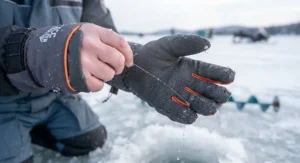
The difference between genuinely waterproof ice fishing gloves and merely water-resistant ones isn’t marketing fluff — it’s the presence of a sealed membrane or fully sealed-seam construction versus a treated fabric that simply beads water temporarily. Water-resistant knit gloves like a basic winter work glove will handle light snow and splash fine, but submerge them retrieving a dropped jig and they soak through in seconds, and wet insulation loses loft fast. True waterproof construction — the sealed neoprene in the Glacier Glove Pro Angler Ice Bay, or the DINTEX/Hipora membranes in the ICEARMOR by Clam Edge X and StrikerICE Attack — keeps working even after repeated full-hand submersion, which is the actual condition ice fishing produces dozens of times a day. The trade-off is usually price and, in neoprene’s case, breathability, so anglers who rarely go hands-in-the-hole can reasonably save money on a water-resistant option like the Kinco HydroFlector instead.
Stationary Cold Weather Gloves: Shanty Fishing vs Open-Ice Mobility
Anglers fishing from a heated flip-over or permanent shanty face a fundamentally different cold-weather glove problem than those working exposed, open ice all day, and stationary cold weather gloves should reflect that. Inside a heated shelter, ambient temperature might sit at 40-50°F even when it’s single digits outside, so a lighter, more dexterous glove like the Fish Monkey Wooly Wool or KastKing PolarBlast performs better than an overbuilt heavy glove that leaves you overheating and sweating. Open-ice anglers, by contrast, face full wind exposure with no thermal buffer, making heavier mapped insulation and full windproofing (the ICEARMOR by Clam Edge X‘s specialty) non-negotiable rather than optional. A frequent mistake is buying the heaviest, warmest-rated glove available regardless of where most fishing time is actually spent — matching insulation weight to your real environment beats chasing a spec-sheet warmth number.
Tackle Handling Dexterity: Why Thick Isn’t Always Warmer
There’s a persistent myth that more insulation automatically means better performance, but tackle handling dexterity often matters as much as raw warmth for actually catching fish. A thickly insulated glove that can’t manage a size-14 jig hook or a 4-pound test line means more bare-hand exposure time overall, since you’ll end up removing gloves entirely to rig up — which defeats the purpose. This is exactly why zone-mapped insulation, like Clam’s 150g palm-to-200g-back split, and half-finger designs exist: they concentrate warmth where you don’t need feel and strip it back where you do. Based on the spec comparison across this list, the gloves rated highest for “warmth” alone aren’t always the ones anglers keep reaching for once the fish start biting — dexterity-first designs frequently win in practice, even on genuinely cold days.
Hand Warmers and Layering: Maximizing Ice Fishing Hand Warmth
Even the best glove benefits from a layering strategy, and disposable or reusable hand warmers remain the cheapest upgrade to overall ice fishing hand warmth available. Air-activated chemical hand warmers tucked into a glove’s wrist cuff or a jacket pocket extend comfortable ice time by hours on genuinely brutal days, and they cost only a few dollars per pair. A thin liner glove worn underneath a shell — wool or synthetic — adds another warmth layer without sacrificing much dexterity, and it’s the same three-glove-rotation principle experienced anglers already use: liner for sensitivity, insulated shell for general warmth, waterproof mitten for travel and setup. The CDC’s cold weather safety guidance specifically recommends covering extremities and limiting exposed-skin time in freezing conditions, which is a good reminder that no single glove — however well-reviewed — replaces basic cold-weather layering discipline.
Common Mistakes When Buying Insulated Ice Fishing Gloves
The single most common mistake is buying based on insulation weight alone without considering waterproofing — a heavily insulated glove that isn’t waterproof will simply get cold faster once wet, insulation and all. A close second is sizing gloves too tightly for a “snug, secure” feel, which actually compresses the air gap insulation depends on and makes hands colder, not warmer. Many anglers also skip checking cuff length, then find slush and splash sneaking in at the wrist during hole-drilling or hand-lining a fish. Finally, plenty of buyers assume one glove has to do everything, when a rotation — dexterity glove for rigging, wet-hand glove for fish handling — consistently outperforms any single “best” pick reviewers can recommend.
💬 Ready to build your glove rotation? Compare the picks above before prices shift!
Long-Term Cost & Maintenance
A quality insulated glove typically runs one to three full seasons of regular use before insulation loft noticeably degrades or seams start separating, which puts the real cost-per-season for a mid-range pair like the StrikerICE Attack well below what anglers spend replacing a cheap glove every single year. Rinsing gloves in fresh water after each trip and air-drying away from direct heat meaningfully extends membrane life, since heat and salt residue are the two biggest drivers of premature waterproof-coating failure. Anglers running a two-glove rotation — one dedicated wet-hand pair, one dexterity pair — often find total spend comparable to repeatedly replacing a single “do-everything” glove that fails faster under mixed-use conditions. Treat a $60-$80 premium pair as a multi-season investment rather than a single-trip purchase, and the actual per-outing cost drops fast.
Frequently Asked Questions
❓ Are insulated work gloves the same as ice fishing gloves?
❓ What insulation weight is warmest for ice fishing?
❓ Can you tie knots wearing thick ice fishing gloves?
❓ How do you dry ice fishing gloves between trips?
❓ Do hand warmers work inside ice fishing gloves?
Conclusion
Insulated work gloves for ice fishing aren’t a single-purchase decision so much as a system you build around how you actually fish. Wet-hand, hole-dunking anglers need genuine waterproofing like the Glacier Glove Pro Angler Ice Bay or ICEARMOR by Clam Edge X deliver; dexterity-focused jiggers do better with something like the Fish Monkey Wooly Wool; budget-conscious or occasional anglers get real value from the Kinco HydroFlector or Palmyth Insulated Waterproof. The honest truth from aggregated review data across this category is that no single glove wins every category — warmth, dexterity, waterproofing, and price all pull against each other, and the right choice depends on being honest with yourself about your actual fishing pattern. Layer in hand warmers, rotate two glove types if your budget allows, and always dry gear properly between trips. Do that, and cold hands stop being the reason your ice season ends early.
Recommended for You
- Gloves for Cold Storage Employees: 7 Best Picks for 2026
- 7 Best Thinsulate Lined Work Gloves for Construction Workers (2026)
- 7 Best wool lined work gloves for winter under $25 (2026)
Disclaimer: This article contains affiliate links. As an Amazon Associate, I earn from qualifying purchases. If you purchase products through these links, we may earn a small commission at no additional cost to you.
✨ Found this helpful? Share it with your ice fishing crew! 💬🧤
