
In This Article
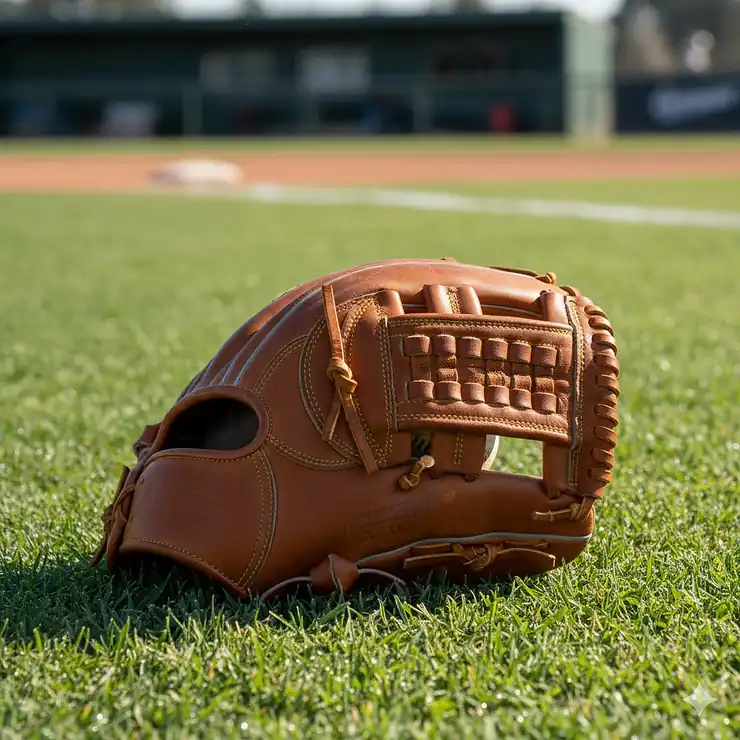
Let me tell you something—choosing the right infielder baseball glove can make or break your defensive game. I’ve seen countless players struggle because they picked a glove that looked cool but didn’t match their position or playing style. Whether you’re manning shortstop, holding down second base, or patrolling third, your glove is basically an extension of your hand. Get it wrong, and you’ll be fighting leather instead of making plays.
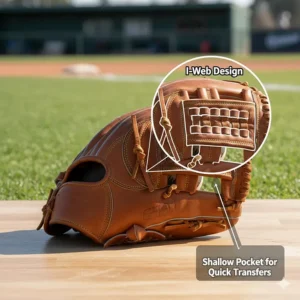
An infielder baseball glove differs significantly from outfield mitts. We’re talking about smaller sizes (typically 11-11.75 inches), shallower pockets for quick ball transfers, and specific web designs that help you snag grounders and turn double plays. The right baseball glove for infield positions needs to feel responsive, break in properly, and hold up through thousands of groundballs.
✨Was this helpful? Spread the word! 🚀
In 2025, the market offers incredible options across every price point. From premium leather masterpieces that cost $300+ to budget-friendly synthetic options under $50, there’s genuinely something for everyone. But here’s the thing—more expensive doesn’t always mean better for your specific needs. I’ve watched Little League kids outperform high schoolers simply because they had a properly fitted glove that matched their skill level.
So what exactly makes a great infielder baseball glove? First, it’s about size and fit. A shortstop baseball glove tends toward the smaller end (11-11.5 inches) for lightning-quick transfers, while third basemen might prefer slightly larger gloves (11.5-11.75 inches) for more reach on hot shots. Second, the web pattern matters—I-webs and H-webs are popular because they offer great ball visibility and quick release. Third, leather quality determines both break-in time and longevity.
Throughout this guide, I’ll walk you through the seven best infielder baseball glove options available right now, comparing everything from premium steerhide models to game-ready synthetic alternatives. You’ll learn exactly what to look for, how to break in your new glove properly, and which specific models offer the best value for your budget. Ready to upgrade your defense? Let’s dive in.
Quick Comparison Table: Top Infielder Baseball Gloves
| Glove Model | Size | Price Range | Material | Best For | Break-in Time |
|---|---|---|---|---|---|
| Rawlings Heart of the Hide R2G | 11.5″ | $249-$329 | Premium Steerhide | Advanced/Pro | Minimal (R2G) |
| Wilson A2000 1786 | 11.5″ | $299-$349 | Pro Stock Leather | Advanced/Pro | Moderate |
| Mizuno Pro Select GPS-40R | 11.5″ | $299 | US Steerhide | Competitive | Minimal |
| Rawlings R9 Series | 11.5″ | $139 | Full Grain Leather | Youth/Teen | Game-Ready |
| Wilson A1000 1786 | 11.5″ | $129-$179 | Full Grain Leather | Youth 12+ | Quick |
| Franklin Field Master | 11″ | $30-$60 | Synthetic Leather | Beginner/Rec | Instant |
| Rawlings Gamer Series | 11.5″ | $100-$150 | Soft Leather | Intermediate | Fast |
💬 Just one click – help others make better buying decisions too!😊
🛒 Ready to Upgrade Your Defense?
✨ Don’t waste another season with a glove that’s holding you back! Click on any of the featured products above to check current prices and customer reviews. The right infielder baseball glove is just one click away—your defensive stats will thank you! ⚾
Top 7 Infielder Baseball Gloves: Expert Analysis
1. Rawlings Heart of the Hide R2G 11.5″ Baseball Glove
If you’re serious about baseball, you’ve probably dramed about owning a Heart of the Hide. This isn’t just marketing hype—these gloves are genuinely crafted from the top 5% of US steer hide leather, giving you that buttery-soft feel combined with incredible durability.
Key Specifications:
- Size: 11.5 inches (perfect for middle infield)
- Pattern: 200 series (shallow pocket, quick transfers)
- Web: Pro I Web (preferred by MLB infielders)
- Break-in: R2G technology (35% player break-in vs 60% traditional)
The R2G (Ready-2-Go) version changes the game for players who can’t wait weeks to use their new glove. Rawlings pre-softens the leather and thins the heel pad, so you’re basically getting a glove that’s already 65% broken in right out of the box.
Customer Feedback: Players consistently rave about the immediate game-readiness and the premium feel. One verified buyer mentioned, “This glove felt like it was already molded to my hand after just two practices.”
✅ Pros:
- Premium US steerhide leather lasts multiple seasons
- R2G technology means minimal break-in required
- Proven MLB patterns used by professionals
- Deer-tanned cowhide lining for maximum comfort
- Thermoformed wrist provides excellent support
❌ Cons:
- Higher price point ($249-$329)
- Still requires some break-in despite R2G technology
2. Wilson A2000 1786 11.5″ Infield Baseball Glove
The Wilson A2000 1786 is basically the gold standard for infielder baseball gloves. Ask any glove expert what they’d recommend, and this model number will come up within the first three suggestions. There’s a reason it’s been a favorite for decades—the 1786 pattern just works.
Key Specifications:
- Size: 11.5 inches
- Pattern: 1786 (the quintessential infield pattern)
- Web: H-Web or I-Web (position dependent)
- Leather: Pro Stock Leather (incredibly durable)
What makes this glove special? The Pro Stock leather holds up to serious abuse while maintaining its shape season after season. The dual welting isn’t just cosmetic—it’s integrated into the liner, providing better structural support and helping the glove maintain its pocket shape through hundreds of games.
Customer Feedback: One college player noted, “It’s stiff at first, but once you break it in, this glove will outlast anything else you’ve owned. Mine lasted through three full seasons of college ball.”
✅ Pros:
- Time-tested 1786 pattern trusted by pros
- Exceptional durability—can last 5+ years
- Dual welting maintains glove shape longer
- DriLex wrist lining keeps hands dry
- Shallow pocket perfect for double plays
❌ Cons:
- Requires significant break-in time (2-4 weeks)
- Premium pricing ($299-$349)
3. Mizuno Pro Select GPS-40R 11.5″ Baseball Glove
The Mizuno Pro Select GPS-40R brings Japanese craftsmanship to American baseball. Mizuno used advanced glove scans of hundreds of professional players to create position-specific pocket designs. This means the GPS-40R isn’t just sized right—it’s shaped exactly how infielders prefer to break in their gloves.
Key Specifications:
- Size: 11.5 inches
- Material: US Steerhide (firm, durable)
- Pattern: Professional pocket design
- Web: Deep 1 or Pro-I configurations
The US Steerhide leather is notably firm when you first receive it, but here’s the payoff—it forms perfectly to your hand as you break it in, creating a truly personalized fit. Plus, the break-in time is significantly shorter than competitors, usually game-ready within one to two weeks.
Customer Feedback: Reviews highlight the superior break-in experience. A travel ball coach shared, “We bought these for three of our middle infielders, and they were all game-ready faster than the Wilson gloves we’d purchased the previous season.”
✅ Pros:
- Minimal break-in time compared to competitors
- US Steerhide leather extremely durable
- Position-specific pocket design
- More affordable than A2000 or Heart of the Hide
- Professional patterns based on real data
❌ Cons:
- Leather initially very firm (intimidating for some)
- Slightly less longevity than top-tier Wilson/Rawlings
4. Rawlings R9 Series 11.5″ Baseball Glove
The Rawlings R9 series represents phenomenal value in the mid-range market. These gloves punch way above their weight class, offering soft, durable all-leather construction at a price point that won’t devastate your wallet.
Key Specifications:
- Size: 11.5 inches
- Material: Full-grain leather shell
- Pattern: Pro-style 31 pattern or 200 pattern
- Price: $139 (exceptional value)
What really sets the R9 apart is its game-ready feel straight from the package. The leather comes pre-softened, meaning you can literally use it in a game the day you receive it. For youth players aged 8-14 or budget-conscious high school athletes, this is hard to beat.
Customer Feedback: Parents love the value proposition. One reviewer noted, “My son has put this glove through an entire travel ball season, and it’s held up just as well as his teammate’s $250 Wilson.”
✅ Pros:
- Game-ready right out of the box
- Excellent price-to-quality ratio
- Reinforced palm pad reduces sting
- Pro-style patterns at youth-friendly prices
- Soft leather requires minimal break-in
❌ Cons:
- Won’t last as long as premium leather gloves
- Less customization than higher-tier options
5. Wilson A1000 1786 11.5″ Baseball Glove
Think of the Wilson A1000 1786 as the A2000’s younger sibling—it shares the legendary 1786 pattern but comes in at a more accessible price point. Built in the same factory as the A2000, this glove delivers professional-level design without the premium price tag.
Key Specifications:
- Size: 11.5 inches
- Material: Full Grain Blonde & Black Leather
- Pattern: 1786 (same as A2000)
- Recommended: Ages 12 and up
The Full Grain leather breaks in considerably faster than Pro Stock leather, which is perfect for players who want to start using their glove within a week or two. The Rolled Dual Welting helps maintain the glove’s shape over time, and the H-Web design is ideal for middle infielders.
Customer Feedback: A high school coach shared, “We outfit our JV team with A1000s because they perform like professional gloves but break in fast enough for kids who don’t know proper glove care yet.”
✅ Pros:
- Inherits the proven 1786 professional pattern
- Breaks in much faster than A2000
- Affordable mid-range pricing ($129-$179)
- DriLex moisture-wicking lining
- Perfect for developing players
❌ Cons:
- Less durable than premium A2000 leather
- May need replacement after 2-3 heavy seasons
6. Franklin Field Master 11″ Baseball Glove
For recreational players, beginners, or parents who need an affordable backyard catch glove, the Franklin Field Master delivers incredible value. Don’t expect premium leather craftsmanship—this is synthetic material designed for instant playability and casual use.
Key Specifications:
- Size: 11 inches
- Material: Premium synthetic leather
- Pattern: Pre-formed pocket
- Price: $30-$60 (budget-friendly)
The synthetic leather comes pre-formed, so there’s literally zero break-in period. You open the box, slip it on, and start catching. It’s perfect for kids just learning the game, adults who play beer league softball, or anyone who wants a knock-around glove for the park.
Customer Feedback: Most buyers appreciate the instant playability. One parent noted, “My 8-year-old needed a glove for Little League, and this was ready to go immediately. It’s not going to last forever, but for the price, we’ll just buy another next season.”
✅ Pros:
- Extremely affordable ($30-$60)
- Zero break-in required—instant use
- Adjustable wrist strap for customized fit
- Great for casual recreational play
- Lightweight and comfortable
❌ Cons:
- Synthetic material lacks durability
- Not suitable for competitive baseball
- Won’t develop character or pocket over time
7. Rawlings Gamer Series 11.5″ Baseball Glove
The Rawlings Gamer series fills a crucial gap between budget gloves and premium models. It offers genuine leather construction with accelerated break-in features, making it ideal for intermediate players who need something better than entry-level but aren’t ready for $300+ investments.
Key Specifications:
- Size: 11.5 inches
- Material: Soft leather shell
- Pattern: Conventional back
- Price: $100-$150
This glove features Rawlings’ game-ready technology—softer leather that requires minimal conditioning and shaping. The conventional back provides a snug, traditional fit that many players prefer, especially those transitioning from youth leagues to high school ball.
Customer Feedback: The reviews consistently mention the sweet spot between quality and affordability. A travel ball player shared, “This glove gave me two full seasons of reliable performance before I upgraded to a Heart of the Hide for high school.”
✅ Pros:
- Genuine leather at mid-range price
- Fast break-in (usually 1-2 weeks)
- Good durability for the price point
- Pro-style patterns
- Excellent transitional glove
❌ Cons:
- Not as refined as Heart of the Hide
- May need replacement after 2-3 seasons
Understanding Infielder Baseball Glove Sizing
Here’s something most people get wrong—they assume bigger is better. Wrong! An oversized glove actually slows down your transfers and makes you less effective in the field. Let me break down the sizing philosophy for different infield positions.
Position-Specific Size Recommendations
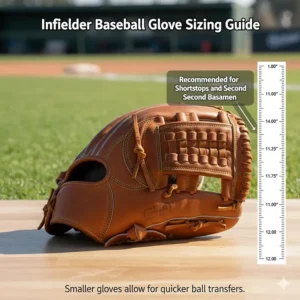
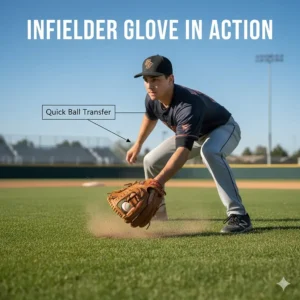
For second base and shortstop positions, you typically want gloves in the 11-11.5 inch range. These shortstop baseball glove sizes prioritize quick ball transfers over maximum reach. Think about it—when you’re turning a double play, every millisecond counts. You need to feel that ball hit your pocket immediately and get it out fast.
Third basemen can go slightly larger, usually 11.5-11.75 inches. Why? Because they’re dealing with absolute rockets off the bat and sometimes need that extra pocket depth to secure hard-hit balls. The extra size also provides more surface area for those diving stops down the line.
How Glove Size Affects Performance
A properly sized baseball glove infielder should feel like an extension of your bare hand. When you close it, you should feel the ball immediately—not have to dig around a deep pocket searching for it. The pocket depth matters just as much as the overall length.
According to research from Wilson Sporting Goods, professional middle infielders overwhelmingly prefer gloves in the 11.25-11.5 inch range, with shortstops trending toward the smaller end of that spectrum. This isn’t coincidence—it’s physics. Smaller gloves mean faster transfers, and faster transfers mean more outs.
Essential Features in Quality Infielder Gloves
Not all leather is created equal, folks. The material quality of your infielder baseball glove directly impacts its break-in time, durability, and long-term performance. Here’s what separates the premium options from the pretenders.
Leather Types Explained
Premium Steerhide (found in Heart of the Hide, Mizuno Pro): This is the top 5% of all leather, characterized by incredible durability and a buttery feel once broken in. It requires patience during break-in but rewards you with 5+ years of elite performance.
Pro Stock Leather (Wilson A2000): Slightly less selective than premium steerhide but still exceptionally high quality. Known for maintaining its shape beautifully over thousands of catches and fielding plays.
Full Grain Leather (Wilson A1000, Rawlings R9): This mid-tier leather offers a faster break-in while still providing genuine leather performance. It’s perfect for players who want quality without the premium price or extensive break-in period.
Synthetic Materials (Franklin Field Master): Made from man-made compounds, synthetic gloves require zero break-in but lack the durability and feel development of genuine leather. Best for recreational use.
Web Patterns for Infielders
The web design on your glove isn’t just aesthetic—it fundamentally affects how you field the ball. For infield positions, you’ll typically encounter these patterns:
✅ I-Web (Single Post): Provides excellent ball visibility and quick release. Popular among shortstops and second basemen who need to see the ball instantly.
✅ H-Web (H Pattern): Offers a good balance of structure and flexibility. The horizontal bar provides added support while maintaining quick transfer capability.
✅ Pro-I Web: A reinforced version of the I-Web with additional leather, giving you more pocket depth without sacrificing transfer speed.
❌ Closed webs are generally avoided for infielder positions because they obstruct ball visibility and slow down transfers—save those for pitchers and outfielders.
Breaking In Your New Infielder Baseball Glove
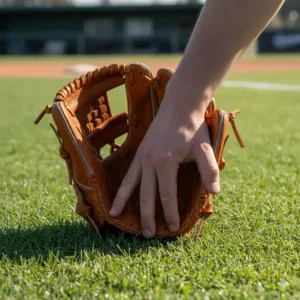
Let’s talk about break-in—this is where people either set themselves up for success or completely ruin a $300 glove. I’ve seen both extremes, and trust me, proper break-in technique matters way more than most players realize.
The Right Way to Break In Leather
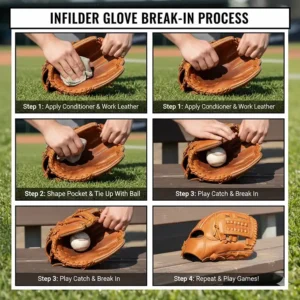
Traditional Method (4-6 weeks):
- Apply a thin layer of glove conditioner (not too much—you don’t want it soaking wet)
- Play catch daily, focusing on catching balls in the precise pocket location you want
- Close the glove around a baseball overnight to form the pocket
- Repeat for several weeks, gradually increasing the intensity of balls you catch
Accelerated Method (1-2 weeks):
- Use hot water (not boiling) to steam the leather for 5-10 minutes
- Apply conditioner while the leather is warm and pliable
- Aggressively play catch for 30-60 minutes
- Use a glove mallet to pound the pocket area
- Store with a ball secured in the pocket overnight
According to glove experts at Rawlings, the key is consistency. “Breaking in a glove isn’t about one intense session—it’s about regular, repeated use that gradually molds the leather to your hand,” their fitting guide explains.
Common Break-In Mistakes to Avoid
❌ Using excessive oil or conditioner: This oversaturates the leather, making it heavy and reducing its lifespan. One thin application is enough.
❌ Microwaving your glove: I know some YouTube videos suggest this, but it’s a terrible idea. The intense, uneven heat can permanently damage the leather fibers.
❌ Running it over with your car: Yes, people actually do this. Don’t. You’ll create permanent creases in the wrong places and likely ruin the glove’s structure.
❌ Using shaving cream as conditioner: While it’s cheaper than proper glove oil, shaving cream contains chemicals that can dry out leather over time. Stick with products specifically designed for baseball gloves.
Comparing Infielder Gloves vs Other Positions
Understanding what makes an infielder baseball glove unique helps you appreciate why position-specific gloves exist in the first place. Let’s break down the key differences.
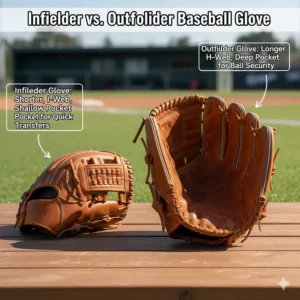
Infield vs Outfield Gloves
| Feature | Infielder Glove | Outfield Glove |
|---|---|---|
| Size | 11-11.75 inches | 12.5-13 inches |
| Pocket Depth | Shallow | Deep |
| Purpose | Quick transfers | Securing fly balls |
| Web Style | Open (I-Web, H-Web) | Closed/Larger |
| Leather Stiffness | More flexible | Stiffer structure |
Outfield gloves prioritize maximum reach and deep pockets to secure fly balls hit with significant velocity and distance. Infield gloves do the opposite—they minimize pocket depth to facilitate lightning-quick transitions from catch to throw.
Pitcher Gloves vs Infielder Gloves
Pitcher gloves typically feature closed-web designs to hide the pitcher’s grip from batters. While they’re similar in size to infielder gloves (11.5-12 inches), the closed web makes them less suitable for infield play where ball visibility matters. Some pitchers do use infield gloves successfully, but they need to be comfortable with batters potentially seeing their grip.
Maintenance Tips for Longevity
Your infielder baseball glove is an investment—treat it accordingly. Proper maintenance extends its lifespan from 2-3 seasons to potentially 5-7 years. Here’s how the pros do it.
Cleaning Your Glove
After Each Use:
- Wipe off dirt and debris with a slightly damp cloth
- Let it air dry naturally (never use direct heat)
- Store in a cool, dry place away from extreme temperatures
Deep Cleaning (Monthly):
- Use a leather cleaner specifically formulated for baseball gloves
- Apply with a soft cloth in circular motions
- Remove excess cleaner and let air dry completely
- Follow with a light application of leather conditioner
Storage Best Practices
✅ Store with a ball in the pocket to maintain shape
✅ Keep in a climate-controlled environment (not your garage in Arizona summer)
✅ Use a glove wrap or rubber band to keep it closed
✅ Avoid leaving it in direct sunlight or in your car
✅ Check regularly for loose laces or damaged webbing
The National Baseball Hall of Fame actually maintains vintage gloves using these exact techniques, proving that proper care can preserve leather for decades.
Budget Considerations: Finding Your Sweet Spot
Let’s talk money—because not everyone can (or should) drop $350 on a glove. The key is matching your investment to your skill level and playing frequency.
Price Tiers Explained
Budget Tier ($30-$75): Perfect for beginners, recreational players, or young kids who will outgrow the glove quickly. Expect synthetic materials, instant break-in, and 1-2 seasons of casual use. The Franklin Field Master fits perfectly here.
Mid-Range ($100-$200): The sweet spot for most competitive youth and high school players. You get genuine leather, decent durability (2-4 seasons), and faster break-in than premium models. The Rawlings R9 and Wilson A1000 dominate this category.
Premium ($250-$400): For advanced high school players, college athletes, and adults who play frequently. Premium steerhide or Pro Stock leather, exceptional durability (5+ seasons), and the exact patterns used by professionals. Heart of the Hide, A2000, and Mizuno Pro models reign supreme.
When to Invest More
You should seriously consider premium options if:
- You’re playing at a competitive high school or college level
- You practice/play year-round with significant repetitions
- You’ve mastered proper glove care techniques
- You’ve stopped growing (for youth players)
- You value the confidence boost of professional-quality equipment
Conversely, stick with mid-range or budget options if:
- You’re still developing fundamental fielding skills
- You play seasonally or recreationally
- You’re still growing physically
- You’re testing out a new position
Choosing the Right Glove for Your Position
While all infield positions share some commonalities, the specific demands of each position should influence your glove selection. Let me break this down position by position.
Second Base: Quick Hands Required
Second basemen need the fastest possible transfers because they’re often the pivot on double plays. The typical second base baseball glove ranges from 11-11.25 inches with an extremely shallow pocket.
Ideal Features:
- 11-11.25 inch size
- I-Web or modified T-Web for ball visibility
- Lightweight leather that doesn’t slow your hands
- Minimal padding (you want to feel the ball immediately)
The Wilson A2000 1786 and Rawlings R9 11.5″ both excel here, though some players prefer going even smaller.
Shortstop: Versatility Matters
The shortstop baseball glove needs to handle everything—from slow rollers to line drives to double-play feeds. Most shortstops use 11.25-11.5 inch gloves that balance quick transfers with enough reach for diving plays.
Ideal Features:
- 11.25-11.5 inch size (sweet spot for most)
- H-Web or I-Web for visibility and flexibility
- Moderate pocket depth
- Durable leather (shortstops see the most action)
Every glove on our top 7 list works well for shortstop, making it the most versatile position in terms of glove selection.
Third Base: The Hot Corner
Third basemen face absolutely scorched line drives and need that extra security in their pocket. Most third basemen use 11.5-11.75 inch gloves—slightly larger than their middle infield counterparts.
Ideal Features:
- 11.5-11.75 inch size
- Deeper pocket for securing hard-hit balls
- Reinforced palm padding
- Wider glove opening for quick hand insertion
The Wilson A2000 in 11.75″ or Mizuno Pro Select both work beautifully for third base, providing that crucial extra protection without sacrificing too much transfer speed.
Common Mistakes When Buying Infielder Gloves
I’ve watched players waste hundreds of dollars on gloves that never worked for them. Let me save you from these common pitfalls.
Prioritizing Brand Over Fit
Just because your favorite MLB player uses a certain glove doesn’t mean it’ll work for you. The Wilson A2000 might be perfect for someone else but feel awkward in your hand. Always prioritize how a glove feels over brand loyalty.
Buying Too Large
This is the #1 mistake youth players make. Their parents think, “We’ll buy a bigger glove so they can grow into it,” but oversized gloves actually hinder skill development. A glove that’s too large makes everything harder—catching, transferring, throwing. Buy the right size for your current hand size and skill level.
Ignoring Web Style
Many beginners pick gloves based purely on appearance, overlooking how web design affects functionality. A closed web might look cool, but it’s wrong for infield play. Stick with I-Webs, H-Webs, or modified T-Webs for infielder positions.
Skipping the Break-In Process
Rushing into games with an improperly broken-in glove is asking for errors and missed plays. Even “game-ready” gloves benefit from some catch sessions to form a proper pocket. Give your new glove at least a few practice sessions before using it in competition.
💬 Ready to Find Your Perfect Match?
🔥 Stop settling for a glove that’s slowing you down! Whether you need premium leather or a budget-friendly option, there’s a perfect infielder baseball glove waiting for you. Click on any of our featured products to check current deals, read customer reviews, and get ready to dominate the infield. Your defensive upgrade starts now! ⚾
FAQ
❓ What size infielder baseball glove should I buy for shortstop?
❓ How long does it take to break in an infielder baseball glove?
❓ Can I use an outfield glove for infield positions?
❓ What's the difference between a shortstop baseball glove and third base glove?
❓ Is it worth spending $300+ on a premium infielder baseball glove?
Conclusion: Elevating Your Defensive Game
Choosing the right infielder baseball glove isn’t about finding the most expensive option or copying what the pros use—it’s about matching the glove to your specific position, skill level, and budget. Whether you’re a shortstop needing lightning-quick transfers or a third baseman handling rocket shots, there’s a perfect glove out there for you.
From our analysis, the Rawlings Heart of the Hide R2G delivers unmatched premium quality for serious players, while the Wilson A2000 1786 offers time-tested reliability. For budget-conscious players, the Rawlings R9 Series provides exceptional value without compromising on genuine leather construction.
Remember—the best baseball glove infield players can buy is the one that fits properly, matches your position’s demands, and suits your skill level. Take time to break it in correctly, maintain it properly, and it’ll reward you with thousands of successful plays.
Don’t let inadequate equipment hold back your defensive potential. The gloves we’ve reviewed represent the cream of the crop in 2025, each offering something unique for different player profiles. Whether you’re just starting your baseball journey or competing at elite levels, upgrading to the right infielder baseball glove can transform your game.
🚀 Take Action Now – Your Best Season Starts Here!
⚾ Stop wasting time with the wrong glove! The perfect infielder baseball glove is waiting for you in our recommendations above. Click through to compare prices, read real customer reviews, and make the smart choice for your position. Whether you’re a shortstop baseball glove specialist or covering third base, we’ve got you covered. Make this your defensive breakthrough season—your teammates, coaches, and stats sheet will thank you! ✨
Recommended for You
- Best Glove for Outfield: 7 Top Picks (2025)
- Outfield Gloves: 7 Best Picks for 2025
- Left Handed First Baseman Glove: 7 Top Choices 2025
Disclaimer: This article contains affiliate links. If you purchase products through these links, we may earn a small commission at no additional cost to you.
✨ Found this helpful? Share it with your friends! 💬🤗
