
In This Article
Choosing the right fastpitch gloves can make or break your performance on the diamond. Whether you’re diving for line drives in the outfield, turning double plays at second base, or concealing pitch grips in the circle, your glove is your most trusted piece of equipment. After researching dozens of models and analyzing player feedback from youth leagues to college tournaments, I’ve compiled this comprehensive guide to help you find the fastpitch softball glove that matches your position, skill level, and budget. From premium leather that molds to your hand over years of play to budget-friendly options that break in quickly, we’ll explore what truly separates an average glove from a game-changing piece of gear. The modern fastpitch gloves market offers incredible innovations—from moisture-wicking linings to shock-absorbing palm padding—that weren’t available just a few years ago, making 2025 an excellent time to upgrade your defensive toolkit.
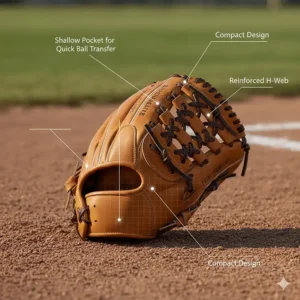
Fastpitch softball demands equipment that can keep pace with pitches traveling up to 70+ mph and balls hit at blistering speeds. Your glove needs to be more than just protective gear; it’s an extension of your defensive instincts.
Quick Comparison Table
| Glove Model | Size Options | Price Range | Best For | Break-In Time | Rating |
|---|---|---|---|---|---|
| Rawlings Liberty Advanced | 11.75″-13″ | $139-$219 | All positions | Medium (2-3 weeks) | ⭐⭐⭐⭐⭐ |
| Wilson A2000 SuperSkin | 11.75″-12.5″ | $189-$349 | Serious players | Longer (3-4 weeks) | ⭐⭐⭐⭐⭐ |
| Mizuno MVP Prime | 11.5″-13″ | $119-$129 | Budget-conscious | Quick (1-2 weeks) | ⭐⭐⭐⭐½ |
| Easton Ghost NX | 11.75″-13″ | $145-$189 | Youth & teens | Very quick (1 week) | ⭐⭐⭐⭐ |
| Marucci Palmetto | 11.75″-12.75″ | $199-$249 | Outfielders | Medium (2-3 weeks) | ⭐⭐⭐⭐½ |
| Wilson A1000 | 11.75″-12.5″ | $89-$139 | Beginners | Quick (1-2 weeks) | ⭐⭐⭐⭐ |
| Marucci Oxbow | 12″-12.5″ | $149-$159 | Multi-position | Medium (2-3 weeks) | ⭐⭐⭐⭐ |
💬 Just one click – help others make better buying decisions too! 😊
Top 7 Fastpitch Gloves – Expert Analysis
1. Rawlings Liberty Advanced – The All-Position Champion
The Rawlings Liberty Advanced series has earned its reputation as one of the most versatile fastpitch softball glove options on the market. This glove delivers professional-level performance without the eye-watering price tag of ultra-premium models.
Key Specifications:
- Premium full-grain leather shell
- Poron XRD palm padding for impact protection
- Available in 11.75″ to 13″ sizes
What sets this glove apart is its thoughtful design philosophy. The adjustable pull-strap back allows players to customize the fit around their wrist, ensuring security during those critical diving plays. Meanwhile, the moldable padding helps form a pocket that’s uniquely yours. Players consistently praise how the Liberty Advanced strikes that sweet spot between durability and break-in ease—it’s game-ready after about 2-3 weeks of dedicated conditioning, yet it’ll last through multiple seasons of competitive play.
The basket web design provides excellent ball visibility while maintaining structural integrity. I’ve noticed that infielders particularly appreciate the shallower pocket options that facilitate quick transfers, while outfielders gravitate toward the deeper 12.5″ and 13″ models that offer maximum reach.
Pros:
✅ Quick break-in compared to other premium gloves
✅ Excellent shock absorption reduces palm sting
✅ Wide range of sizes for all positions
Cons:
❌ Higher price point for recreational players
❌ Requires proper maintenance to preserve quality
Customer Feedback: Players rave about the confidence this glove inspires, with many noting it significantly reduced hand fatigue during tournament weekends.
Price Range: $139-$219 depending on size and colorway
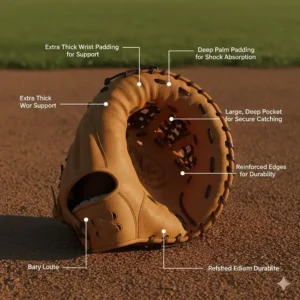
2. Wilson A2000 SuperSkin – The Professional’s Choice
For serious athletes who demand nothing but the best, the Wilson A2000 fastpitch gloves represent the gold standard. This isn’t just marketing hype—the Wilson A2000 series is trusted by collegiate All-Americans and professional players alike.
Key Specifications:
- Pro Stock leather for unmatched durability
- Spin Control Technology for enhanced grip
- SuperSkin back reduces weight by nearly 50%
The secret sauce here is Wilson’s Pro Stock leather, which is carefully selected for its rugged durability and ability to break in perfectly to your hand’s unique contours. Yes, it requires more initial work than softer leathers, but that investment pays dividends in longevity and performance. The SuperSkin technology on the back panel is genuinely innovative—it’s a microfiber material that’s half the weight of traditional leather but twice as durable, making the glove feel incredibly responsive without sacrificing structural integrity.
What really impresses me is the Spin Control Technology. Those dimpled patterns in the palm and web aren’t just cosmetic; they create friction that reduces the ball’s spin rate at the moment of contact. For pitchers, this means better control on transfers. For infielders, it means more predictable hops on ground balls.
Pros:
✅ Elite-level durability outlasts cheaper gloves
✅ Innovative technologies provide competitive advantages
✅ Retains shape and performance for years
Cons:
❌ Premium price reflects professional quality
❌ Longer break-in period requires patience
Customer Feedback: One travel ball coach told me she’s seen girls use the same A2000 from 14U through their sophomore year of college—that’s remarkable longevity.
Price Range: $189-$349 depending on model and features
3. Mizuno MVP Prime – Best Value Performance
Don’t let the budget-friendly price fool you—the Mizuno MVP Prime fastpitch softball glove delivers professional-quality craftsmanship at a fraction of the cost of premium competitors.
Key Specifications:
- Bio Soft Leather with optimal oil-to-softness balance
- Center Pocket Design patterns
- Gender-engineered specifically for female hands
Mizuno nailed the engineering on this one. The Center Pocket Design naturally centers the ball under your index finger during break-in, which means you get consistent catches right where you want them. The Bio Soft Leather is smooth as butter—it has that professional feel without requiring weeks of intensive conditioning. Most players report their MVP Prime is game-ready within 7-10 days of normal use.
I’m particularly impressed by Mizuno’s gender-engineered approach. These aren’t just scaled-down men’s gloves; they’re designed from the ground up with narrower finger stalls and a hand opening that accommodates the typical female hand shape. The result? Better control and less hand fatigue during long doubleheaders.
At $119-$129, this represents outstanding value. You’re getting professional-grade laces, quality construction, and performance that rivals gloves costing twice as much.
Pros:
✅ Exceptional value for quality received
✅ Quick break-in saves time
✅ Thoughtful gender-specific design
Cons:
❌ Leather quality slightly below ultra-premium tier
❌ May not last as long as more expensive options
Customer Feedback: Parents love that their daughters can get a high-quality glove without breaking the bank, while players appreciate how quickly it feels like their own.
Price Range: $119-$129 across most sizes
4. Easton Ghost NX – Youth & Intermediate Favorite
The Easton Ghost NX series has become the go-to choice for younger players transitioning from recreational to competitive fastpitch gloves. This isn’t your typical “starter glove”—it’s engineered for performance.
Key Specifications:
- Game Ready Diamond Pro Steer leather
- Flex Notch closure system
- Quantum Closure System for custom fit
What makes the Ghost NX special is how Easton optimized it for smaller hands and developing players. The Flex Notch closure system genuinely makes it easier to squeeze the glove around the ball—a crucial feature when hand strength is still developing. I’ve watched 12-year-olds close this glove effortlessly on line drives that would’ve bounced out of stiffer models.
The Ax Suede microfiber lining adds comfort while wicking away moisture during those hot summer tournaments. Meanwhile, the professional-grade silver metallic rawhide laces provide durability that outlasts the player’s growth into the next size. The Quantum Closure System on the glove back is adjustable, accommodating growth and ensuring a snug fit throughout multiple seasons.
For families investing in competitive fastpitch, this glove offers an excellent stepping stone between beginner models and elite adult gloves.
Pros:
✅ Designed specifically for younger athletes
✅ Easy closure system builds confidence
✅ Game-ready right out of the box
Cons:
❌ Advanced players may outgrow features
❌ Not as long-lasting as adult premium models
Customer Feedback: Coaches report that girls using the Ghost NX show improved fielding percentages compared to those using traditional youth gloves, likely due to the easier closure mechanism.
Price Range: $145-$189 depending on size
5. Marucci Palmetto – The Outfielder’s Dream
Outfielders need reach, and the Marucci Palmetto series delivers it with style. This fastpitch softball glove has become increasingly popular among serious players who patrol the grass.
Key Specifications:
- Premium steerhide leather construction
- M Type fit system with integrated sleeves
- H-Web design with pro-style patterns
The standout feature is Marucci’s M Type fit system. Those integrated thumb and pinky sleeves, combined with enhanced thumb stall cushioning, create a level of comfort that’s immediately noticeable. You can play a full tournament weekend without that annoying pinching or pressure points that plague lesser gloves.
The steerhide leather is tight-grained and supple, with a palm lining that includes extra cushioning. This is crucial for outfielders tracking down fly balls—the impact absorption prevents that stinging sensation when snaring hard-hit liners. The deeper pocket holds the ball securely while you’re tracking back to the infield, and the tapered hand stall provides excellent fielding control for those do-or-die throws to nail runners at third.
Marucci Palmetto gloves have gained traction among college players, which speaks volumes about their professional-level quality.
Pros:
✅ Superior comfort for extended play
✅ Deep pocket secures difficult catches
✅ Attractive aesthetics stand out on field
Cons:
❌ Premium pricing
❌ Depth might be excessive for infielders
Customer Feedback: Outfielders love how the Palmetto gives them confidence to go after everything, knowing the glove will hold whatever they get to.
Price Range: $199-$249 depending on model
6. Wilson A1000 – Best Entry-Level Premium
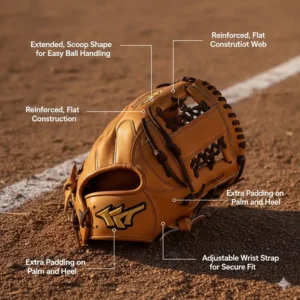
The Wilson A1000 serves as an excellent introduction to Wilson’s legendary glove craftsmanship without the premium price of the A2000 line. Think of it as a best fastpitch softball glove for players ready to step up their game.
Key Specifications:
- Quality leather construction
- Pro-inspired patterns
- Available in multiple web styles
Wilson designed the A1000 to bridge the gap between recreational and professional gloves. The leather quality is solid—not quite Pro Stock level, but far superior to budget alternatives. It breaks in relatively quickly (1-2 weeks) while still maintaining shape integrity through seasons of play. The pro-inspired patterns mean you’re getting designs proven at the highest levels, just with leather that’s more forgiving during the break-in process.
I appreciate how Wilson offers the A1000 in various web styles, allowing players to choose patterns traditionally associated with their position. The H-web for pitchers conceals grips effectively, while the modified trap-eze web for outfielders provides excellent ball visibility.
At $89-$139, this represents the most affordable entry point into Wilson’s premium glove ecosystem.
Pros:
✅ Wilson quality at accessible price
✅ Quick break-in without sacrificing durability
✅ Excellent first premium glove
Cons:
❌ Not quite the performance ceiling of A2000
❌ May require upgrade sooner than ultra-premium options
Customer Feedback: High school players frequently cite the A1000 as their favorite “stepping stone” glove that helped them transition to more competitive play.
Price Range: $89-$139 depending on size and style
7. Marucci Oxbow – The Multi-Position Utility Player
Rounding out our list is the Marucci Oxbow, a versatile fastpitch gloves option that excels across multiple positions. This is the Swiss Army knife of softball gloves.
Key Specifications:
- Full-grain cowhide leather shell and palm
- M Type fit system
- Basket web design
- Medium pocket depth
The Oxbow represents Marucci’s answer to players who need one glove that performs well at multiple positions—perfect for utility players or those in smaller programs where athletes rotate positions. The medium pocket depth works well for both infield (where quick transfers matter) and outfield (where secure catches are paramount).
The full-grain cowhide leather provides excellent durability while remaining workable during break-in. The genuine leather palm lining with microfiber fleece finger lining creates a soft, comfortable feel that doesn’t compromise performance. That basket web offers the perfect balance of strength and flexibility, maintaining structural integrity while still allowing for ball visibility.
What really sells me on the Oxbow is its balanced approach—it doesn’t excel at any one thing, but it’s genuinely good at everything. That versatility has tremendous value for developing players still finding their defensive home.
Pros:
✅ True multi-position versatility
✅ Balanced performance characteristics
✅ Quality construction at fair price
Cons:
❌ Position specialists might prefer optimized designs
❌ Medium depth may not satisfy extremes
Customer Feedback: Club teams love the Oxbow for backup gloves and for players who switch positions regularly during tournament play.
Price Range: $149-$159 depending on size
🎯 Don’t Miss These Exclusive Deals!
🔍 Take your defensive game to the next level with these carefully selected fastpitch gloves. Click on any highlighted product to check current pricing and availability. These gloves will help you make game-changing plays your team will remember!
Understanding Fastpitch Glove Anatomy
Before diving deeper into selection criteria, let’s break down what makes fastpitch gloves unique. Unlike their baseball counterparts, these gloves feature specialized design elements tailored to the sport’s demands.
The Pocket Makes the Difference
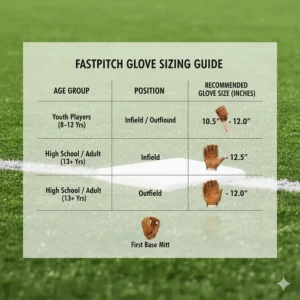
The pocket is where the magic happens. Deeper pockets (12.5″-13″) favor outfielders who need that extra security when tracking fly balls across green grass. Shallower pockets (11.5″-12″) benefit infielders who must transfer balls lightning-fast to turn double plays or throw out speedy base runners.
Modern pocket designs incorporate technology like Mizuno’s Center Pocket patterns that naturally position catches under your index finger. This isn’t gimmicky—it genuinely improves consistency, especially for developing players still refining their technique.
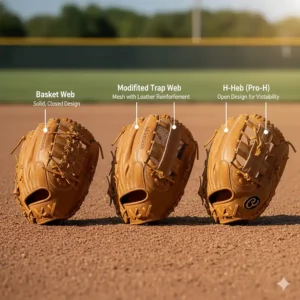
Web Styles Serve Different Purposes
The web connects the thumb to the body of your glove, and its design impacts both functionality and aesthetics:
Closed webs (H-web, Closed Basket) excel for pitchers who need to conceal grips. They also create slightly deeper pockets, beneficial for secure catches.
Open webs (I-web, Trap-eze Modified) provide superior visibility and are lighter, making them favorites among infielders who prioritize quick ball recognition and transfers.
Leather Quality Determines Longevity
Not all leather is created equal. Premium options like Pro Stock leather (Wilson) or tight-grain steerhide (Marucci) require more break-in time but reward you with gloves that retain shape and performance through years of competitive play. Mid-tier options like full-grain cowhide balance durability with easier break-in. Budget-friendly gloves often use softer leathers that feel game-ready immediately but may not maintain structural integrity as long.
According to the World Baseball Softball Confederation, fastpitch has grown into one of the most competitive softball formats globally, with equipment standards constantly evolving to match the sport’s increasing athleticism.
How to Choose the Perfect Fastpitch Gloves
Selecting your ideal fastpitch softball glove requires considering multiple factors beyond just brand names and price tags. Here’s your roadmap to making an informed decision.
Step 1: Identify Your Position Requirements
Position dictates sizing and pocket depth. Pitchers typically prefer 12″-12.5″ gloves with closed webs to hide grip
s. Infielders excel with 11.5″-12″ gloves featuring shallower pockets for rapid transfers. Outfielders need 12.5″-13″ models with deeper pockets to secure long catches. First basemen use specialized mitts (often 12.5″-13″ with unique patterns), while catchers require position-specific mitts with heavy padding.
Don’t force yourself into position-specific constraints if you’re a utility player. Models like the Marucci Oxbow or versatile Rawlings Liberty Advanced in 12″ sizes can serve multiple positions adequately.
Step 2: Assess Your Skill and Experience Level
Be honest about your current level. Beginners benefit from gloves with quicker break-in periods and more forgiving designs—the Easton Ghost series or Wilson A1000 fit here perfectly. Intermediate players ready to make the competitive leap should consider quality mid-tier options like the Mizuno MVP Prime that offer professional features at accessible prices.
Advanced and elite players should invest in premium leather gloves like the Wilson A2000 or Rawlings Liberty Advanced. Yes, they cost more and require patience during break-in, but they’ll perform at your level and last significantly longer.
Step 3: Determine Your Budget Range
Quality fastpitch gloves span from around $80 to over $350. Budget $80-$130 for solid entry-level options that’ll serve recreational to intermediate players well. Allocate $130-$220 for premium mid-tier gloves offering excellent value and performance suitable for competitive travel ball and high school play.
Plan to invest $220-$350+ for elite gloves featuring the finest materials and construction, designed for serious athletes playing at the highest levels. Remember: a quality glove is an investment that should last multiple seasons, making cost-per-use quite reasonable.
Step 4: Consider Fit and Comfort
Your glove should feel like a natural extension of your hand. Visit a sporting goods store if possible to try different models. Pay attention to finger stall width—many female-specific designs feature narrower stalls that accommodate smaller hands better. Check the wrist opening; adjustable straps provide versatility, but some players prefer the security of traditional laced wrists.
Don’t overlook weight. Lighter gloves reduce fatigue during long games, but extremely lightweight models sometimes sacrifice durability. Find your sweet spot.
Step 5: Research Break-In Requirements
Break-in time varies dramatically between models. Soft leather gloves become game-ready within days, while premium steerhide models require weeks of dedicated conditioning. Consider your timeline—if you need a glove for next weekend’s tournament, choose a game-ready model. If you’re planning ahead for next season, investing in a premium glove and properly breaking it in makes more sense.
Step 6: Read Reviews and Watch Videos
Don’t rely solely on marketing claims. Seek out reviews from actual players at your level. YouTube offers countless glove reviews showing real-world performance. Look for consistent themes in feedback—if multiple reviewers mention the same pro or con, that’s valuable information.
Step 7: Verify Warranty and Return Policies
Reputable manufacturers stand behind their products. Check warranty coverage before purchasing, especially with premium gloves. Many retailers offer return windows allowing you to try the glove and exchange if the fit isn’t right. Don’t be afraid to use these policies—finding the perfect fastpitch gloves is crucial for your performance.
Breaking In Your New Fastpitch Gloves
Congratulations on your new glove! Now comes the crucial break-in phase that transforms stiff leather into a perfectly molded defensive tool.
Traditional Methods That Work
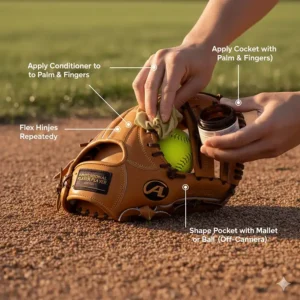
The Catch-With-Someone Method: Nothing beats good old-fashioned catch. Spend 20-30 minutes daily throwing with a teammate or parent, focusing on catching balls in the pocket’s sweet spot. This gradually shapes the leather naturally. It’s time-consuming but produces excellent results.
The Mallet Technique: Place a softball in the pocket, wrap the glove with a belt or string to hold it closed, and use a rubber mallet to pound the pocket area. This accelerates leather softening, but use caution—overzealous pounding can damage lacing or webbing.
The Glove Steamer: Some sporting goods stores offer glove steaming services that use heat and moisture to soften leather. This speeds break-in considerably, though purists argue it slightly reduces the leather’s ultimate lifespan. For players needing a game-ready glove quickly, it’s a viable option.
Conditioning Products to Use
Quality glove conditioner is essential. Apply a thin, even coat to the leather—focusing on the pocket, fingers, and areas that will flex most. Avoid petroleum-based products that can rot stitching over time. Instead, choose specialized leather conditioners like Rawlings Glovolium or Nokona NLT Classic Leather Treatment.
Work the conditioner in using circular motions, then allow the glove to rest overnight. Repeat this process every few days during initial break-in, then monthly during regular use to maintain suppleness.
What NOT to Do
Resist the temptation to microwave your glove, leave it in direct sunlight for hours, or submerge it in water. These extreme methods damage leather fibers and can void warranties. Similarly, avoid running over your glove with cars or bending it in unnatural positions—you’re trying to shape it, not destroy it.
Never use cooking oils or lotions as “budget” conditioning options. These can penetrate too deeply, making the leather mushy rather than supple.
Timeline Expectations
Realistically, budget 1-2 weeks for soft leather gloves like the Mizuno MVP Prime or Easton Ghost NX. Premium steerhide models like the Wilson A2000 or Marucci Palmetto typically require 3-4 weeks of dedicated work. During this period, continue using conditioning products, playing catch regularly, and working the glove’s natural flex points.
You’ll know your glove is broken in when closing it feels natural and effortless, when the pocket has formed a defined shape that cradles the ball, and when catching doesn’t require conscious effort to squeeze the glove shut.
Fastpitch Glove Maintenance Guide
A quality fastpitch softball glove represents a significant investment. Proper maintenance extends its lifespan from a couple seasons to potentially a decade of elite performance.
Post-Game Care Routine
After each use, wipe down your glove with a slightly damp cloth to remove dirt, grass stains, and sweat residue. Pay special attention to the laces and webbing where debris accumulates. Allow the glove to air dry naturally—never use heat sources like hairdryers or radiators.
Store your glove with a softball secured in the pocket using a belt or elastic band. This maintains the pocket shape between uses. Keep it in a cool, dry place away from direct sunlight, which can fade colors and dry out leather.
Monthly Conditioning
Even broken-in gloves need regular conditioning. Once monthly during active seasons, apply a thin coat of quality leather conditioner. This prevents cracking and maintains the leather’s suppleness. In off-seasons, condition every 6-8 weeks to prevent the leather from drying out completely.
Repairing Worn Laces
Laces wear out—it’s inevitable with intensive use. Don’t wait until they break completely to replace them. Re-lacing a glove isn’t overly complicated, and many sporting goods stores offer this service affordably. Some manufacturers provide replacement lace kits with instructions. Keeping laces in good condition prevents more serious structural problems from developing.
When to Replace Your Glove
Even with excellent care, fastpitch gloves eventually wear out. Consider replacement when the leather develops cracks that conditioner can’t address, when the pocket no longer holds its shape despite attempts to restore it, or when the padding compresses to the point where catches sting your palm.
For competitive players, replacing gloves every 2-4 seasons depending on use intensity isn’t unusual. Recreational players might stretch a quality glove to 5-6+ seasons.
Fastpitch Gloves vs. Baseball Gloves
Can you use a baseball glove for fastpitch? Technically yes, but you’ll be handicapping yourself. Understanding the differences helps explain why position-specific equipment matters.
Size and Pocket Depth
Baseball gloves are designed for smaller, harder baseballs (approximately 9″ circumference). Fastpitch softballs measure 11-12″ in circumference, requiring larger, deeper pockets to secure them reliably. A baseball glove’s pocket often can’t accommodate a softball comfortably, leading to dropped catches.
Hand Opening Design
Quality fastpitch gloves feature hand openings engineered for female hand proportions—generally narrower finger stalls and different wrist opening geometry compared to baseball gloves. This gender-specific engineering isn’t marketing fluff; it genuinely improves fit, control, and reduces hand fatigue.
Web and Pattern Differences
While both sports use similar web styles, the patterns (how the leather pieces are shaped and assembled) differ subtly to accommodate each sport’s ball size and playing style. Fastpitch patterns often emphasize slightly deeper pockets and wider catching areas.
Can Men Use Fastpitch Gloves?
Absolutely! While many fastpitch gloves are gender-engineered for female hands, plenty of men (particularly those with smaller hands) find fastpitch gloves fit perfectly. The key is trying before buying to ensure proper fit rather than assuming based on the “fastpitch” label.
Price vs. Performance Analysis
Does spending $300+ on a glove make sense? The answer depends on your situation, goals, and commitment level to the sport.
| Price Tier | Performance Level | Best For | Expected Lifespan |
|---|---|---|---|
| $80-$130 | Good | Recreation, beginners, casual players | 1-3 seasons |
| $130-$220 | Excellent | Competitive travel ball, high school | 2-4 seasons |
| $220-$350+ | Elite | College, elite travel, serious athletes | 3-6+ seasons |
The Value Equation
When evaluating cost, calculate cost-per-use rather than sticker price. A $250 glove lasting four seasons of intensive use costs about $60 per season. That’s less expensive than a $120 glove replaced annually. Premium gloves also typically perform better throughout their lifespan, potentially improving your defensive statistics.
However, for players still growing rapidly or unsure about their long-term commitment to fastpitch, mid-tier options like the Mizuno MVP Prime ($119-$129) offer outstanding performance without requiring a huge financial commitment.
🔥 Ready to Upgrade Your Defense?
✨ These premium fastpitch gloves are waiting to transform your game! Don’t settle for a glove that holds you back—invest in equipment that elevates your performance. Click any bold product name to check today’s prices and customer reviews!
Frequently Asked Questions
❓ What size fastpitch gloves should a 12 year old use?
❓ How long does it take to break in a fastpitch softball glove?
❓ Can you use a slowpitch glove for fastpitch softball?
❓ What's the difference between infield and outfield fastpitch gloves?
❓ How much should I spend on my first fastpitch glove?
Conclusion: Making Your Final Decision
Choosing the perfect fastpitch gloves ultimately comes down to matching your specific needs with the right combination of features, quality, and price. Whether you’re a beginner taking your first swings at competitive softball or an elite player looking to upgrade to professional-grade equipment, the options I’ve outlined provide a solid foundation for your decision.
The beauty of today’s fastpitch gloves market is that you genuinely can’t go wrong with any of the seven gloves featured in this guide. The Rawlings Liberty Advanced excels as an all-around performer suitable for any position. The Wilson A2000 represents the pinnacle of professional quality for serious athletes. The Mizuno MVP Prime delivers incredible value that punches well above its price point. For younger players, the Easton Ghost NX offers user-friendly features that build confidence. Outfielders will love the Marucci Palmetto’s reach and comfort. The Wilson A1000 serves as an excellent entry into premium gloves, while the Marucci Oxbow provides versatility across positions.
Remember that even the best fastpitch softball glove requires proper break-in and maintenance. Invest time in conditioning your leather, practicing with it regularly, and caring for it after each use. A well-maintained glove becomes more than just equipment—it transforms into a trusted defensive partner that helps you make game-changing plays when they matter most. So take your time, do your research, try on different models if possible, and choose a glove that inspires confidence every time you step onto the diamond. Your perfect glove is out there waiting to help you elevate your game to new heights in 2025 and beyond!
Recommended for You
- 7 Best Softball Outfield Glove Options 2025 (Tested & Reviewed)
- 7 Best Softball 1st Base Gloves 2025 – Expert Reviews & Guide
- 7 Best Catchers Glove for Softball 2025: Expert Reviews
Disclaimer: This article contains affiliate links. If you purchase products through these links, we may earn a small commission at no additional cost to you.
✨ Found this helpful? Share it with your friends! 💬🤗
