
In This Article
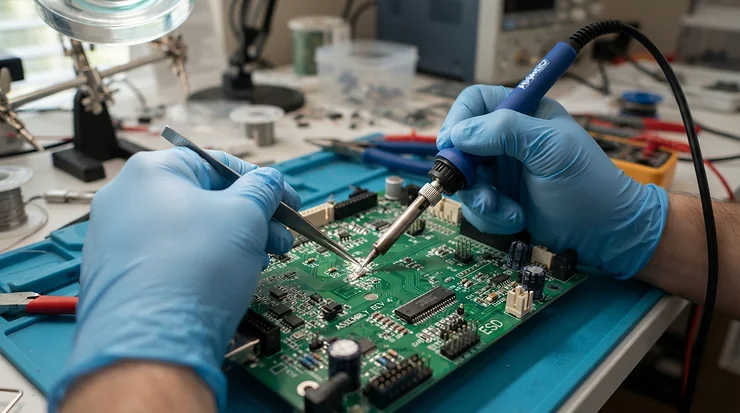
Precision mechanic gloves exist to solve one stubborn problem. You need protection, but you also need to start an M3 screw by feel. Thick leather saves your knuckles and ruins your fingertips. Bare hands give you all the sensation and none of the armor. Between the two sits a small, underrated category of gloves built for exactly that tension.
If you’ve ever watched a spring clip vanish into the dark cavity of an engine bay because your glove was half an inch too fat, you already get it. The right small parts handling gloves turn a compromise into a tool. Picture 0.5 mm synthetic palms, thin nitrile-dipped knits, and seamless fingertips that let you feel a thread catch before you commit to it.
This guide breaks down seven real options, from a budget knit to a purpose-built 0.5 mm mechanic’s glove. Each gets honest analysis of what its specs mean at the bench. Prices are ranges only, and review sentiment is summarized from what could actually be verified, never invented.
North American hand protection follows ANSI/ISEA 105-2024, a classification system for cut, abrasion and puncture performance. We’ll decode those labels later. Along the way we’ll cover high dexterity mechanic gloves, fine motor mechanic gloves, fastener assembly, touch sensitivity, and precision tool work. Those five factors decide whether a thin glove helps you or quietly sabotages you.
Quick Comparison: Precision Mechanic Gloves at a Glance
| Glove | Palm Build | Price Range | Best For |
|---|---|---|---|
| Mechanix Wear Specialty 0.5mm | 0.5 mm AX-Suede synthetic | $30-$40 | Maximum feel, intricate assembly |
| MaxiFlex Ultimate 34-874 | Thin knit, nitrile micro-foam | $12-$20 | Everyday small parts handling |
| Mechanix Wear Original | Synthetic leather, stretch back | $15-$25 | All-round wrenching and fastener work |
| Mechanix Wear FastFit | Synthetic leather, elastic fit | $20-$30 | Quick on/off, shop use |
| PIP G-Tek 33-G125 | 13-gauge nylon, PU flat grip | $13-$35 per dozen pairs | Budget bulk, electronics assembly |
| Ironclad Touchscreen Mechanics Gloves | TS1 synthetic leather palm | $15-$30 | Scan tools and phones |
| Milwaukee Cut Level 5 High-Dexterity Nitrile Dipped | Cut-resistant knit, nitrile dip | $15-$20 | Sharp edges, sheet metal |
Here’s how that table reads in practice. MaxiFlex Ultimate 34-874 and PIP G-Tek 33-G125 win on price, and both are thin enough that you’ll forget they’re on. Mechanix Wear Specialty 0.5mm costs roughly double but offers the most bare-handed feel of the group. If sharp edges are your daily annoyance, Milwaukee Cut Level 5 High-Dexterity Nitrile Dipped is the only pick here built around cut protection.
Prices shift constantly, so treat these as ballparks and check current price before you buy.
💬 Just one click — help others make better buying decisions too!😊
Top 7 Precision Mechanic Gloves: Expert Analysis
Seven gloves, three price tiers, one rule: every spec has to translate into something your hands can feel. Here’s how each one earns its place.
1. Mechanix Wear Specialty 0.5mm — closest thing to bare-handed feel
The headline is the palm: 0.5 mm of AX-Suede, a synthetic material thin enough to nearly vanish against the skin. Mechanix adds three-dimensional patterning, an hourglass finger design that removes overlapping material, and flex inserts at the joints. In practice, that means fewer bunched seams at the fingertip, which is exactly where small parts handling goes wrong. The TrekDry back vents heat, and listings put the pair at roughly two ounces and machine washable.
Based on the spec comparison, this is the glove for people whose work is mostly feel. Think seating hose clamps, threading electrical terminals, and assembling small mechanisms. The trade-off is simple physics. A 0.5 mm palm won’t shrug off a burr or a slipped wrench the way a padded glove will, and retailers openly note it gives up impact and cut protection compared with the Original or M-Pact.
Buyer comments on retail listings praise the fit and thin feel, including one reviewer who wore them through 13-hour shifts. Others report fingertip wear showing up after weeks of heavy use. The verified review pool is modest, so read it as a pattern, not a verdict.
Pros:
- ✅ Exceptional fingertip feel for fine work
- ✅ Anatomical patterning reduces bunching
- ✅ Breathable back and machine washable
Cons:
- ❌ Minimal impact and cut protection
- ❌ Fingertip wear reported under heavy use
Price: around $30-$40 depending on color and retailer. Verdict: pricey for a glove, but good value when feel is the whole job.
2. MaxiFlex Ultimate 34-874 — the thin nitrile-foam benchmark
This one is a seamless knit liner with a micro-foam nitrile coating on the palm. The foam traps tiny pockets of air, which keeps the glove light, lets it breathe, and gives it a grippy, slightly tacky surface. Roundups regularly call it the standard for assembly and handling small parts, and the editorial praise centers on how thin and flexible it stays while still offering mechanical resistance.
What the spec sheet won’t tell you is how quickly you stop noticing it. That’s the point of a knit glove, and it’s why it suits long assembly sessions. The limits are equally clear. One comparison guide flags it as a poor match for extended work on very greasy surfaces, and another notes it isn’t the pick for high cut resistance.
On a roundup I checked, the glove carried a 4.6 out of 5 editorial rating and was sold in multi-packs. I couldn’t verify a large, independent pool of individual buyer reviews, so weigh that number lightly.
Pros:
- ✅ Very thin, flexible, and breathable
- ✅ Good grip on dry and lightly oily parts
- ✅ Multi-pack pricing lowers cost per pair
Cons:
- ❌ Low cut resistance
- ❌ Struggles in very greasy conditions
Price: around $12-$20, often as a multi-pack. Verdict: arguably the easiest recommendation in this group for general small parts handling gloves.
3. Mechanix Wear Original — the all-round benchmark
The Original is the glove most people picture when they hear “mechanic gloves.” Its synthetic leather palm, stretch back, and form-fitting cut have been the fit standard in the category since Mechanix introduced it in 1991, per a retailer review. It’s thicker than the Specialty 0.5mm, but still thin enough for fastener assembly with practice.
Here’s the useful way to think about it. If your day alternates between breaking loose a seized bolt and starting a tiny set screw, the Original is the compromise that rarely embarrasses either task. A retailer review praises its model-to-model consistency, which matters more than it sounds when you’re buying by size and expect the same fit every time.
The caveat is durability against abrasion. One comparison notes the thinner palm wears faster on rough metal edges than heavily padded gloves do. I couldn’t verify enough individual buyer reviews of this exact model to characterize them, so consider the retailer commentary a single data point.
Pros:
- ✅ Balanced dexterity and durability
- ✅ Stretch back moves with your hand
- ✅ Consistent fit across sizes
Cons:
- ❌ Thicker than a 0.5 mm palm
- ❌ Palm wears faster on rough metal edges
Price: around $15-$25. Verdict: strong value if one glove has to cover everything.
4. Mechanix Wear FastFit — fast on, fast off
The FastFit is built around convenience. Product descriptions for the current generation highlight a high-dexterity 0.6 mm synthetic leather palm, touchscreen capability, TrekDry evaporative cooling, and an elastic-style fit that slips on quickly. One reviewer summarized the line as precise grip with less protection, which is a fair read.
Why does that matter? Anyone who swaps between gloved and bare-handed work all day knows the friction of struggling with a Velcro strap. A glove you can pull on in two seconds gets worn more often, and a glove that gets worn protects more. For precision tool work in a shop with constant interruptions, that matters more than it looks on paper.
Treat the protection level honestly. There’s no knuckle armor here, and the thin palm is optimized for control, not abuse. I couldn’t verify a deep pool of independent reviews for this model, so I’m leaning on the product description and the one third-party comparison I found.
Pros:
- ✅ Quick on and off for frequent switching
- ✅ 0.6 mm palm keeps dexterity high
- ✅ Touchscreen-capable palm per product descriptions
Cons:
- ❌ Light protection overall
- ❌ No impact padding
Price: roughly $20-$30; check current price. Verdict: a smart choice for busy shops and daily drivers.
5. PIP G-Tek 33-G125 — best budget small parts handling gloves
This is the workhorse of electronics benches and inspection tables. A 13-gauge seamless nylon shell carries a thin polyurethane coating on the palm and fingers, with a knit wrist and breathable back. The spec sheet lists electronic and computer assembly, quality control, and general assembly as intended uses, and the glove is silicone free, which matters wherever silicone contamination is a concern, such as electronics and finishing work.
Because PU coatings take on the surface texture of the liner beneath, the result is thin and conformable. Grip is good in dry and slightly oily conditions, and it tails off as things get wet or heavily lubricated. A retailer listing marks the ANSI cut, abrasion, and puncture ratings as not tested, so treat this as a clean-handling glove, not a protective one.
For review context, a closely related white 33-125 variant showed roughly 83 percent five-star ratings across several thousand reviews on one retailer’s page. That’s a related model, not this exact one.
Pros:
- ✅ Extremely low cost per pair
- ✅ Thin PU coating keeps tactility high
- ✅ Silicone free for clean-sensitive work
Cons:
- ❌ No tested ANSI cut or puncture ratings
- ❌ Weaker grip in wet or heavily oily conditions
Price: dozen-pair packs have appeared in the $13-$35 range across retailers, meaning a few dollars or less per pair. Verdict: unbeatable value for volume use.
6. Ironclad Touchscreen Mechanics Gloves — checks the scan tool without gloves off
Modern repair work involves a tablet or phone almost as often as a ratchet. These gloves pair a TS1 synthetic leather palm with seamless fingertips, designed so conductive material sits where your fingertips meet the screen. A trade review of Ironclad’s range described the touchscreen version as the lightest and thinnest of the models sampled.
That’s the double meaning of touch sensitivity in a nutshell: feel for the part, and conductivity for the screen. You’ll get both, though neither at the extreme end of its category. It’s less armored than a padded mechanic glove and less featherweight than a 0.5 mm palm. Capacitive performance can vary by device and by how snugly the fingertip fits, so sizing down slightly (without cramping) helps.
I couldn’t verify a robust set of independent buyer reviews for this exact model, so the assessment rests on the trade review and the published materials.
Pros:
- ✅ Capacitive fingertips for tablets and scan tools
- ✅ Lightweight with seamless fingertips
- ✅ Familiar mechanic-glove fit
Cons:
- ❌ Less tactile than a 0.5 mm palm
- ❌ Touchscreen response varies by device and fit
Price: around $15-$30 depending on the seller. Verdict: a practical pick if diagnostics are part of the job.
7. Milwaukee Cut Level 5 High-Dexterity Nitrile Dipped — thin gloves for sharp edges
Handling sheet metal, hose clamps with razor tabs, or freshly cut stock calls for a different kind of thin glove. This one pairs a nitrile-dipped knit with a cut rating labeled Level 5. One roundup calls it the best cut protection available for under $20, with a 4.8 out of 5 editorial rating.
Here’s the practical read. Cut-resistant yarns usually feel a touch stiffer than plain nylon, so you’ll trade a little fingertip sensitivity for blade protection. For deburring, trimming brackets, or reaching around stamped edges, that’s a trade worth making. Confirm the exact ANSI/ISEA 105 rating on the packaging before assuming a specific level.
I couldn’t verify a large pool of individual buyer reviews, so the praise here comes from one editorial roundup.
Pros:
- ✅ Meaningful cut protection in a thin knit
- ✅ Nitrile dip adds grip
- ✅ Low price for its protection level
Cons:
- ❌ Less feel than a 0.5 mm palm
- ❌ Limited impact protection
Price: around $15-$20. Verdict: the sensible choice when edges are the real threat.
| Glove | Protection Focus | Price Range | Best For |
|---|---|---|---|
| Mechanix Wear Specialty 0.5mm | Light, feel-first | $30-$40 | Intricate fastener assembly |
| MaxiFlex Ultimate 34-874 | Light, handling | $12-$20 | General small parts handling |
| Mechanix Wear Original | Balanced abrasion and dexterity | $15-$25 | Mixed wrenching and fine work |
| Mechanix Wear FastFit | Light | $20-$30 | Frequent glove swapping |
| PIP G-Tek 33-G125 | Skin barrier, ANSI not tested | $13-$35 per dozen pairs | Bulk electronics assembly |
| Ironclad Touchscreen Mechanics Gloves | Light to moderate | $15-$30 | Diagnostics and screens |
| Milwaukee Cut Level 5 High-Dexterity Nitrile Dipped | Cut resistance | $15-$20 | Sharp-edged components |
Reading across the rows, protection and feel move in opposite directions, and price barely predicts either. PIP G-Tek 33-G125 is the cheapest by a wide margin but offers no rated protection, while Milwaukee Cut Level 5 sits at a similar price with real cut resistance. If you’re picking just one glove to try first, MaxiFlex Ultimate 34-874 is the lowest-risk way to find out whether thin gloves suit your hands.
✨ Don’t Miss These Exclusive Deals!
🔍 Take your fine work to the next level with these carefully selected gloves. Click on any highlighted product name to check current pricing and availability. The right pair will make every small fastener and delicate connector feel easier to control!
Fastener Assembly with Thin Gloves: A Practical Usage Guide
Fastener assembly is where thin gloves either shine or make you want to throw them across the garage. A few habits make the difference.
Start with fit. Pinch each fingertip: you should feel almost no extra material beyond your nail. A fingertip that’s even a quarter inch too long folds over and blunts exactly the sensation you bought the glove for. Size down within the manufacturer’s chart if you’re between sizes, then flex your hand fully to confirm nothing binds.
Next, use the “reverse-thread” trick. Seat the fastener, turn it counterclockwise gently until you feel a faint click as the threads align, then reverse direction. Thin gloves transmit that click far better than padded ones, so this habit pays off quickly with Mechanix Wear Specialty 0.5mm or MaxiFlex Ultimate 34-874.
Build a small ritual around the first 30 days. Watch the thumb and index fingertip, which take most of the wear, and rotate between two pairs so one can dry or be washed. Wash according to the care tag, since listings describe the Specialty 0.5mm as machine washable, but not every glove shares that.
The classic mistakes are predictable:
- Wearing a 0.5 mm glove for grinder or hot-exhaust work
- Buying a size up for “comfort”
- Using one glove for every job
Match the glove to the task, and a thin pair becomes the most useful tool in your drawer.
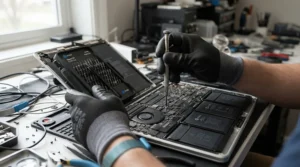
Real-World Scenarios: Matching Gloves to Your Bench
Specs are abstract until you picture your actual hands in an actual garage. Here are three buyer profiles.
The weekend motorcycle tinkerer. Imagine someone who spends two or three Saturdays a month on a carburetor and small fasteners in a cold garage, with a budget under $20. MaxiFlex Ultimate 34-874 fits the profile: thin, cheap per pair, and tolerant of light oil. If the garage is chilly, they’d accept a bit less sensitivity for warmth, but the base logic holds.
The shop technician with a tablet. Now picture a technician logging into a scan tool dozens of times a day, constantly taking gloves on and off between jobs. Mechanix Wear FastFit gets on in seconds, and Ironclad Touchscreen Mechanics Gloves keeps the screen usable without removal. At daily use, spending toward the higher end of the range makes sense because the gloves earn their keep every shift.
The bench assembler working with sharp parts. Finally, someone handling stamped brackets and clamp tabs for six hours a day, with a moderate budget. Milwaukee Cut Level 5 High-Dexterity Nitrile Dipped protects against edges, while Mechanix Wear Specialty 0.5mm earns a spot as the glove for the delicate steps in between. Two pairs, two jobs, no compromise.
The common thread: budget, environment, and frequency of use decide the pick far more reliably than a spec sheet does.
Problem → Solution Guide: Fixing the Usual Glove Complaints
Thin gloves bring a predictable set of annoyances. Most have simple fixes.
Problem: hands sweat and slip. Breathable backs help, which is why Mechanix Wear Specialty 0.5mm (TrekDry back) and the knit gloves, MaxiFlex Ultimate 34-874 and PIP G-Tek 33-G125, run cooler than solid-palm designs. Keep a spare pair and rotate.
Problem: fingertips wear through. Wear tends to concentrate at the thumb and index finger. If you see thinning, retire the pair before it becomes a hole, and consider splitting duties between a thin precision glove and a sturdier Mechanix Wear Original for rougher steps.
Problem: parts slip when oily. Foam and flat PU coatings handle light oil, but heavy grease defeats them. Wipe parts first or switch to a glove with a more aggressive grip for those tasks.
Problem: you can’t use your phone or scan tool. Choose a capacitive option like Ironclad Touchscreen Mechanics Gloves or Mechanix Wear FastFit, and size snugly at the fingertips.
Problem: sharp edges nick you through thin material. Step up to Milwaukee Cut Level 5 High-Dexterity Nitrile Dipped for those steps.
Diagnose the specific complaint before you buy again, because the cure is usually a better match, not just a thicker glove.
What Are Precision Mechanic Gloves?
Precision mechanic gloves are thin, close-fitting work gloves built to protect your hands while preserving fingertip feel. They typically use 0.5-0.6 mm synthetic palms or thin coated knit liners, trading heavy padding for dexterity, so you can handle fasteners, connectors, and small components without taking the gloves off.
That definition hides an important design philosophy. Standard mechanic gloves start with protection and then try to claw back flexibility. Precision designs start from feel and add only as much protection as the job needs.
You’ll see two main families. Synthetic-palm designs, like Mechanix Wear Specialty 0.5mm, resemble a second skin, with patterned seams and stretch backs. Coated-knit designs, like MaxiFlex Ultimate 34-874 and PIP G-Tek 33-G125, rely on a thin liner dipped in nitrile or polyurethane.
Neither family is universally better. Synthetic palms usually handle abrasion and bench abuse well, while coated knits tend to win on price and breathability. Most people end up owning one of each, then reaching for whichever matches the day’s work.
How to Choose Precision Mechanic Gloves
Choosing well comes down to a short, ordered checklist.
- Define the job. Fastener assembly, diagnostics, and edge handling call for different gloves. Write down your top two tasks first.
- Pick palm thickness. Around 0.5 mm gives maximum feel; around 0.6 mm or thin knit offers a bit more buffer.
- Set your protection ceiling. Higher cut ratings add bulk, and Ansell’s guidance warns that over-protecting hurts comfort and dexterity on low-risk tasks.
- Check the fit at the fingertip. There should be almost no slack beyond the nail.
- Decide on touchscreen needs. Choose capacitive fingertips only if you actually use devices on the job.
- Consider care. If you want to wash gloves often, confirm the care tag first.
- Weigh price per use. A pricier pair that lasts longer can beat a cheap one you replace monthly.
Run through those seven steps and the field narrows to two or three candidates fast. Nothing here requires guesswork, just honesty about how you really work.
Small Parts Handling Gloves vs Standard Mechanic Gloves
Standard mechanic gloves are built for impact, abrasion, and knuckle-banging. Small parts handling gloves are built to stay out of the way. The difference shows up the moment you try to pick up a washer.
Padded gloves add layers over the palm and fingers. Those layers absorb shock, but they also stand between your skin and the part, which dulls the signal your fingertips send back to your brain. Thin gloves do the reverse. They sacrifice cushioning to keep that signal clean.
| Type | Dexterity | Protection | Best For |
|---|---|---|---|
| Precision synthetic palm | Very high | Light | Intricate fastener assembly |
| Thin coated knit | High | Light | Everyday small parts handling |
| Standard padded mechanic | Moderate | High | Heavy wrenching, impact |
| Disposable nitrile | Very high | Very light | Messy, short tasks |
The table makes the trade-off blunt. Precision styles sit at the top for feel, but they’re not for hammering or heavy demolition. Disposable nitrile matches them on sensitivity yet tears easily, so it suits quick, messy jobs more than extended bench work.
If you only own padded gloves today, adding a thin pair for the delicate steps will probably improve your work immediately.

High Dexterity Mechanic Gloves: Features That Matter (and Don’t)
Marketing loves to stack features. Most of them don’t help when your hands are doing detailed work, so here’s what to focus on.
Features that matter:
- Palm thickness. The thinner the palm, the more feel you get, down to the point where durability begins to suffer.
- Seamless or minimal fingertip seams. Seams are the enemy of sensation.
- Pre-curved, anatomical fit. Patterning that follows the natural curve of your hand reduces fatigue.
- Breathability. Sweat dulls grip and feel more than most people realize.
Features that don’t matter as much:
- Knuckle armor. It’s excellent for impact work and pointless when you’re threading a small screw.
- “Tactical” styling. Looks don’t change dexterity.
- Touchscreen tech, unless you really use devices while gloved.
Notice how many high dexterity mechanic gloves skip padding entirely. Mechanix Wear Specialty 0.5mm and PIP G-Tek 33-G125 both lean on exactly the features above.
Judge a pair by how it behaves on the first tiny fastener. Gloves that make you feel clumsy at that stage rarely improve with time.
Touch Sensitivity: What Your Fingertips Actually Need
Touch sensitivity sounds like marketing copy, and partly it is. According to ISHN, ANSI/ISEA 105-2016 incorporated dexterity criteria, but there are no standard tests for tactility. It’s usually judged by how well someone can identify objects by touch without looking.
That gap means you’ll have to test it yourself. Here’s a simple home version: put on the glove and, eyes closed, try to tell a coin from a washer, or an M4 nut from an M5 nut. If you can do it quickly, the glove transmits enough sensation for most fine work.
Three things drive touch sensitivity. Thickness is the obvious one. Stiffness matters almost as much, because a thin but rigid material still muffles feedback. And fit matters most of all: slack material absorbs the very vibrations you’re trying to feel.
Capacitive touchscreen sensitivity is a separate quality. Ironclad Touchscreen Mechanics Gloves and Mechanix Wear FastFit target it, while knits like MaxiFlex Ultimate 34-874 simply focus on feel.
Choose based on which meaning of touch sensitivity your job demands. Many people need only one of them, and paying for both is wasted money.
Fine Motor Mechanic Gloves for Precision Tool Work
Fine motor control is what you use to pinch a tiny clip, guide a hex key into a recessed screw, or steady a pair of tweezers over a connector. Fine motor mechanic gloves support that control by staying out of the way of small finger movements.
Precision tool work puts specific demands on a glove. Grip surfaces must hold small tool handles securely without forcing a tight squeeze, because a tight squeeze is what fatigues your hand over a long session. Thin palms help here, since you can feel the tool’s position and don’t need to clamp down for security.
Consider the screwdriver. With a thick glove, you instinctively grip harder to “feel” the handle, and your forearm pays for it by afternoon. With Mechanix Wear Specialty 0.5mm or PIP G-Tek 33-G125, you can hold the same driver lightly and still sense the bit seating in the fastener.
Joint flexibility matters just as much. The flex inserts and hourglass finger design on Mechanix Wear Specialty 0.5mm exist to keep joints moving freely.
Match the glove’s grip coating to your tools too. Smooth PU suits dry, clean handles, while foam nitrile suits slightly oily ones. That small choice affects control more than most people expect.
Long-Term Cost & Maintenance
Thin gloves wear faster than armored ones, so cost per use deserves a hard look. A $35 glove that lasts months of daily use can beat a $15 pair you replace every few weeks, and a bulk pack of PIP G-Tek 33-G125 can beat both when you only need clean handling.
Think in tiers. Budget bulk knits are consumables: you wear them, then replace them, and the low price per pair makes that painless. Mid-range options like Mechanix Wear Original and Mechanix Wear FastFit are meant to last through repeated washing and everyday use. Premium choices like Mechanix Wear Specialty 0.5mm earn their cost by sustaining feel, which affects work quality as well as comfort.
Maintenance is simple but worth doing. Wash gloves as the care tag directs, since listings describe the Specialty 0.5mm as machine washable, then air dry rather than baking them. Inspect the thumb and index fingertip regularly, because that’s where wear shows first. Keep a second pair on rotation to extend both lifespans.
Replace a glove the moment you notice reduced grip or thinning material. That small habit protects your hands and your results.
Safety, Standards and Compliance Guide
Thin gloves aren’t an excuse to ignore protection. They’re a prompt to pick the right level for the hazard.
ANSI/ISEA 105 classifies hand protection for cut, abrasion, and puncture. Cut levels run from A1 to A9, with A1-A3 considered light protection suited to jobs such as packaging and assembly, per ANSI’s overview. The 2024 edition also introduced a unified pictogram combining the three ratings, according to Ansell.
Here’s the part many buyers miss: ratings describe specific hazards, not general toughness. A retailer listing for PIP G-Tek 33-G125 shows these ratings as not tested, so treat it as a clean-handling glove. Milwaukee Cut Level 5 High-Dexterity Nitrile Dipped is the one pick here built around cut protection, but confirm the label on the pack.
Chemical exposure is another matter entirely. A University of Nebraska-Lincoln hand protection guide notes that thin gloves provide a low barrier but high dexterity, while thicker gloves protect better against chemicals but sacrifice dexterity. Don’t assume any glove in this guide is chemical resistant.
Finally, follow your workplace rules about gloves near rotating equipment, where loose or snag-prone material can be hazardous. Choose your protection level deliberately, then let dexterity do the rest.
FAQ
❓ Are precision mechanic gloves worth the extra cost?
❓ How tight should small parts handling gloves fit?
❓ Do high dexterity mechanic gloves work with touchscreens?
❓ Can I wash fine motor mechanic gloves?
❓ Is a 0.5 mm glove better than a nitrile knit for fastener assembly?
Conclusion
Precision mechanic gloves are one of those small purchases that change how a whole job feels. The best ones disappear on your hand, protect just enough, and let you feel the thread catch.
For maximum feel, Mechanix Wear Specialty 0.5mm is the standout, and MaxiFlex Ultimate 34-874 is the easiest everyday choice. Mechanix Wear Original covers mixed work, Mechanix Wear FastFit suits quick on-off shop use, and PIP G-Tek 33-G125 wins on budget. If devices are part of your day, Ironclad Touchscreen Mechanics Gloves fits, and Milwaukee Cut Level 5 High-Dexterity Nitrile Dipped earns its place when sharp edges are around.
Whatever you choose, start with the job, size carefully, and respect the protection limits. Test one pair on a real task, because ten minutes of fastener assembly will teach you more than any spec sheet.
Recommended for You
- Oil Resistant Mechanic Gloves: 7 Best Picks For 2026
- Automotive Mechanic Gloves For Engine Work: 7 Proven Picks (2026)
- Heavy Duty Mechanic Gloves Vs Automotive Mechanic Gloves: 7 Best 2026
Disclaimer: This article contains affiliate links. As an Amazon Associate, I earn from qualifying purchases. If you purchase products through these links, we may earn a small commission at no additional cost to you.
✨ Found this helpful? Share it with your friends! 💬🤗
