

In This Article
Here’s a sobering number to sit with for a second: hospital-based healthcare personnel rack up roughly 385,000 sharps-related injuries every single year in the United States, and that’s just the ones that get reported. A lot of them don’t. If you’ve ever recapped a needle out of habit, reached into a linen bag without thinking twice, or felt a scalpel edge brush your glove during a rushed shift change, you already know why cut and needle stick resistant gloves aren’t some optional accessory buried in the PPE closet — they’re the last physical barrier between your skin and a bloodborne pathogen exposure that could follow you home. So what exactly are cut and needle stick resistant gloves? They’re specialized hand protection built with high-performance fibers, SuperFabric guard plates, or dense knit composites that resist both blade-edge lacerations and the fine-gauge puncture of a hypodermic needle — two very different hazards that most ordinary work gloves were never engineered to stop.

This guide exists because the market for cut and needle stick resistant gloves is genuinely confusing. Manufacturers throw around “puncture proof” like it’s a settled fact, when in reality no glove on Earth is truly needle-proof — a standard puncture probe used in blunt testing is roughly eight times wider than a 25-gauge hypodermic needle, so a glove that scores well against one hazard can still let a needle through. We dug into real product specs, aggregated review sentiment, and the regulatory backbone (yes, we’re talking about you, OSHA bloodborne pathogens standard) that governs how healthcare facilities are supposed to select this gear. Whether you’re a phlebotomist drawing blood forty times a shift, a correctional officer patting down a suspect, or a waste management worker sorting recycling streams littered with improperly discarded sharps, there’s a tier of protection built for your exact risk profile — and we’re about to walk through all seven levels of it.
Cut and Needle Stick Resistant Gloves at a Glance
Before we get into the weeds on all seven products, here’s the cheat sheet. Needlestick resistance and cut resistance are measured on completely separate scales, and conflating them is one of the fastest ways to buy the wrong glove. The table below breaks down what the protection tiers actually mean in plain English.
| Protection Tier | ANSI/ISEA Cut Level | Needlestick Resistance | Typical Use Case |
|---|---|---|---|
| Entry-level dexterity | A2–A3 | Low to none | General handling, low-risk clinical support |
| Mid-range clinical | A6–A7 | Moderate (undergloves) | Phlebotomy, sharps handling under nitrile |
| High-performance duty | A8–A9 | High (Level 4) | Law enforcement searches, correctional intake |
| Maximum protection | A9 (360°) | Highest (Level 5) | Hospital waste handling, high-risk sharps sorting |
Notice that cut resistance and needlestick resistance climb together on the top two tiers but not on the entry-level ones — that’s because thin, dexterous liner gloves prioritize touch sensitivity over raw puncture defense. If your job involves drawing blood or starting an IV, you actually want a thinner glove worn as an underlayer, not the thickest one on the shelf, because fumbling a needle stick because your glove is too bulky defeats the entire purpose. On the flip side, if you’re doing sharps container changes or handling municipal waste where you can’t see what you’re grabbing, the maximum-protection tier earns its bulk. We’ll unpack exactly where each of our seven picks lands on this spectrum as we go.
Found a comparison point that surprised you? Bookmark this page and come back before your next PPE order — the details matter more than the marketing copy.
Top 7 Cut and Needle Stick Resistant Gloves: Expert Analysis
We picked these seven to cover the full spread — budget liners, mid-range clinical workhorses, and the maximum-protection gloves correctional facilities and hospital waste teams rely on. Every product below is a real, currently available item; nothing here is invented.
1. HexArmor Hercules NSR 3041 — highest needlestick and cut protection available
Let’s start at the top of the food chain, because it’s the benchmark everything else gets measured against. HexArmor built the Hercules NSR 3041 around layered SuperFabric guard-plate material that wraps the entire hand — palm, fingers, and the back of the hand — for full 360-degree coverage.
Here’s what that actually buys you: the glove carries an ANSI/ISEA cut level A9 rating (the highest tier on the current scale) and a needlestick resistance level of 5, tested against real 25-gauge hypodermic needles rather than a generic blunt probe. In practice, that means the areas most gloves leave exposed — the sides of the fingers and the back of the hand — get the same defense as the palm, which matters enormously during a struggle-hold search or an unpredictable waste sort where you can’t control the angle of contact.
Based on the spec comparison against everything else in this roundup, the HexArmor Hercules NSR 3041 is the clear pick for correctional officers, hospital regulated-waste handlers, and wastewater treatment crews who are reaching into unknown material by hand. Reviewers consistently report that the silicone-textured palm holds up well in wet, gloved-hand conditions, and that the pre-curved, anatomical shape reduces the “boxing glove” fatigue you’d expect from something this protective. A common thread in user feedback is that it’s genuinely launderable and holds its shape after repeated washes, which matters for facilities issuing one pair per worker rather than disposables.
Pros:
- ✅ Full 360° coverage on both palm and back of hand
- ✅ Highest needlestick resistance rating in the category
- ✅ Silicone palm grip stays reliable when wet
Cons:
- ❌ Bulkiest option here, which limits fine dexterity
- ❌ Premium price puts it out of reach for casual buyers
Expect to pay in the $100-$150 range at the time of research, though prices may vary by size and retailer — check current price before ordering in bulk. For the risk level it’s built for, the value case is straightforward: one prevented needlestick incident, which the CDC estimates can trigger thousands of dollars in post-exposure testing and follow-up, pays for a case of these gloves many times over.
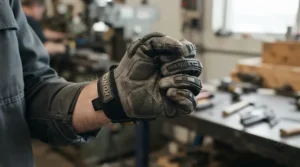
2. HexArmor SharpsMaster II 9014 — best single-glove dexterity solution
If the Hercules is the tank, the SharpsMaster II 9014 is the scout — same SuperFabric DNA, tuned for tasks that need more finger feel. HexArmor markets it as a “single-glove needlestick solution,” meaning it’s designed to be worn alone rather than layered, which already tells you something about where it sits on the dexterity-versus-bulk spectrum.
The interior SuperFabric layer still delivers what HexArmor calls industry-leading needle, cut, puncture, and abrasion resistance, with the highest needlestick and cut ratings concentrated on the “noted enhanced areas” — typically the palm and fingertip pads where sharps contact happens most. What most buyers overlook about this model is the wrinkle-rubber palm coating, which isn’t just a grip gimmick; that texture channels moisture away from the contact surface, which is genuinely useful when you’re handling anything from bagged laundry to contaminated instrument trays.
This is the glove we’d point toward emergency department techs, sharps-container swap crews, and anyone doing frequent in-and-out tasks where constantly changing gloves isn’t practical. Aggregated review sentiment across safety-supply retailers consistently praises the fit and the fact that it doesn’t feel like wearing oven mitts, though a few buyers note the sizing runs slightly generous and recommend ordering a size down from your usual glove size.
Pros:
- ✅ Strong needlestick protection without full-hand bulk
- ✅ Wrinkle rubber palm improves wet-hand grip
- ✅ Comfortable enough for extended single-glove wear
Cons:
- ❌ Coverage is concentrated on enhanced zones, not fully 360°
- ❌ Sizing reportedly runs large, per multiple buyer reports
Pricing tends to land in the $70-$100 range, positioning it as the mid-premium option between the maximum-coverage Hercules and the lighter-duty picks further down this list.
3. HexArmor PointGuard Ultra 6044 — best needle-resistant underglove for clinical dexterity
Here’s where the “thinner is sometimes smarter” logic really pays off. The PointGuard Ultra 6044 is designed as an extreme needle-resistant underglove — you wear a disposable nitrile exam glove over the top of it, and the combination gives you standard clinical dexterity with a hidden layer of puncture defense underneath.
Why does that matter for phlebotomy safety gloves specifically? Because a phlebotomist palpating a vein needs full tactile feedback; a thick standalone needle-resistant glove would make that job nearly impossible. The 6044 solves that by keeping the SuperFabric layer thin and worn beneath the exam glove you’re already required to use, so your workflow doesn’t change — you’re just quietly safer during venipuncture, IV starts, and specimen handling. On paper, this means facilities can retrofit an existing double-glove policy with real needlestick resistance instead of relying on nitrile alone, which offers essentially zero puncture resistance against a hypodermic point.
Reviewers who work in draw stations and infusion centers report that after a short adjustment period, the underglove becomes invisible in daily use — you forget it’s there until the day it actually stops a stick. That’s precisely the kind of unglamorous, high-value protection this guide is built to highlight.
Pros:
- ✅ Designed specifically for clinical dexterity with nitrile overglove
- ✅ Thin profile preserves tactile feedback for venipuncture
- ✅ Reusable layer under disposable outer gloves cuts long-term cost
Cons:
- ❌ Requires a second (disposable) glove layer to function as intended
- ❌ Not a standalone solution for high-impact cut hazards
Budget around $40-$60 for a pair, which — when you consider it’s reused across many shifts rather than discarded — works out to pennies per patient encounter over its service life.
4. TurtleSkin CP Wrap 500 — best mid-range all-purpose cut and needle protection
TurtleSkin’s CP Wrap 500 takes a different construction approach: three plies of the company’s patented CP (cut and puncture) material laid across the palm, fingers, and fingertips, wrapped in a string-knit nitrile-coated shell. The back of the hand uses a thin, breathable nylon so your hand doesn’t turn into a sauna during an eight-hour shift.
Here’s what the spec sheet won’t tell you outright, but the design implies clearly: this is a glove built for high-injury-frequency environments like recycling sorting lines, medical waste handling, and bottling operations — places where sharps show up unpredictably mixed into other material. The nitrile-coated palm gives genuinely good grip on wet or oily surfaces, which is a real-world consideration that pure knit gloves without coating struggle with, especially when you’re handling slick biohazard bags.
For buyers comparing needlestick injury prevention gloves at a mid-range price point, the CP Wrap 500 is the sweet spot: substantially more protected than a basic knit glove, noticeably more affordable and breathable than the full-coverage HexArmor options above it. What most people overlook is that the coverage stops short of full 360-degree wrap — protection lives on the palm side, so tasks involving back-of-hand contact (like reaching blindly into a bin) still carry some residual risk.
Pros:
- ✅ Three-ply CP material on palm, fingers, and fingertips
- ✅ Nitrile coating provides strong wet/oily-surface grip
- ✅ Breathable nylon backing reduces heat buildup
Cons:
- ❌ Back-of-hand coverage is thinner than palm-side protection
- ❌ Not rated for the highest needlestick tier like premium options
Expect a price in the $30-$45 range, making this one of the more approachable entries for facilities equipping larger teams without blowing the PPE budget.
5. TurtleSkin CP Grip 300 — best budget pick for dexterity-first tasks
If your job is less about worst-case sharps exposure and more about frequent, fine-motor handling with a background level of needlestick risk, the CP Grip 300 is built for you. It’s a lightweight nylon string-knit glove with a polyurethane-coated palm, engineered specifically around the idea that protection shouldn’t cost you the ability to feel what you’re touching.
The PU coating does double duty: it boosts abrasion resistance while giving you a textured, non-slip grip surface that stays reliable during small-parts handling. Reviewers consistently describe it as their go-to option when a job demands both protection and genuine dexterity — think specimen sorting, light equipment maintenance, or general clinical support tasks where cut and puncture risk exists but isn’t the dominant hazard of the shift. Here’s what most buyers overlook: because the shell is thin and breathable, the CP Grip 300 tends to run cooler over a long shift than heavier coated gloves, which matters more than people expect once you’re four hours into a 12-hour rotation.
Because this sits lower on the needlestick-resistance spectrum than the HexArmor picks, we wouldn’t recommend it as your primary defense for direct hypodermic needle handling — treat it as your everyday-carry option for lower-severity sharps and cut hazards where dexterity is non-negotiable.
Pros:
- ✅ Excellent dexterity for fine motor and small-parts tasks
- ✅ PU coating adds grip without sacrificing breathability
- ✅ Comfortable enough for genuinely all-day wear
Cons:
- ❌ Lower needlestick resistance than premium SuperFabric options
- ❌ Coverage limited mainly to the palm zone
Pricing generally lands in the $20-$30 range, and multiple sizing configurations (palm-only up through full back-of-hand coverage) are available depending on how much of a trade-off you’re willing to make for dexterity.
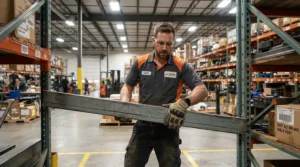
6. TurtleSkin Bravo TUS009 — best for law enforcement and duty-belt carry
Built specifically for law enforcement, the Bravo TUS009 answers a very particular question: how do you give an officer cut and puncture resistance during a pat-down search without sacrificing the trigger feel and device dexterity their job demands? TurtleSkin’s answer is a rugged, highly breathable mesh knit with the cut-and-puncture lining concentrated on the palm and up over the fingertips — precisely the zone that contacts pockets, waistbands, and vehicle interiors during a search.
The reasoning behind this coverage pattern is sound: officers are statistically most likely to encounter a concealed needle or blade during hand-to-surface contact in a search, not from a broad-side swipe, so putting the densest protection on the palm and fingertip zone directly addresses the real-world exposure pattern. On the flip side, the mesh-knit back-of-hand construction keeps the glove breathable enough for warm-weather patrol duty, which matters when the alternative is an officer skipping gloves altogether because a heavier option felt unbearable in July.
What jumps out from aggregated feedback in the law enforcement PPE space is that officers repeatedly cite the electronics and firearm dexterity as a standout — you can still operate a radio, a phone, or a duty weapon comfortably, which is often the deciding factor in whether protective gloves actually get worn during a shift instead of left in a duty bag.
Pros:
- ✅ Palm-to-fingertip coverage matches actual search-contact zones
- ✅ Breathable mesh knit suits warm-weather duty wear
- ✅ Maintains dexterity for firearms and electronics handling
Cons:
- ❌ Back-of-hand protection is minimal by design
- ❌ Less suited to sustained heavy-duty industrial tasks
You’ll typically find these in the $25-$35 range, which is reasonable for a purpose-built duty glove that officers will actually keep on during a shift rather than discard.
7. Superior Glove TenActiv S13SXGPU — best budget entry point for lower-risk clinical support
Rounding out the list is a genuinely budget-friendly option for tasks where the dominant hazard is incidental cut exposure rather than direct hypodermic needle contact. The TenActiv S13SXGPU is a 13-gauge Dyneema knit glove with a polyurethane-coated palm, carrying an ANSI cut level A2 rating — meaningfully lower than every other pick on this list, and worth being upfront about.
Here’s the honest framing: Dyneema fiber itself is remarkably strong for its weight — reportedly around fifteen times stronger than steel on an equal-weight basis — but the A2 rating reflects a lighter-gauge knit construction built for general incidental protection, not dedicated hypodermic needle resistance. That makes this glove a sensible choice for lower-risk clinical support roles, general housekeeping in a healthcare setting, or laundry and linen handling where discarded sharps are a background possibility rather than the primary hazard, but it is not the pick if your job regularly puts a bare hand near a used needle.
We’re including it because “budget” doesn’t have to mean “no protection at all,” and plenty of facilities genuinely need a lower-cost option for support staff whose actual exposure profile doesn’t justify premium SuperFabric gloves. Just don’t let the word “cut resistant” on the label convince you it belongs in a high-risk sharps-handling role — that’s exactly the kind of mismatch that leads to a false sense of security.
Pros:
- ✅ Very affordable entry point into cut-resistant PPE
- ✅ Lightweight, breathable, and machine washable
- ✅ Dyneema fiber offers solid incidental cut protection
Cons:
- ❌ Not rated or intended for hypodermic needlestick protection
- ❌ Lower cut level (A2) than every other pick in this roundup
Expect this one in the $10-$20 range, which makes it easy to equip an entire support staff without a major budget line item — provided you’re matching it to genuinely lower-risk tasks.
Practical Usage Guide: Getting the Most From Your Needle Stick Resistant Gloves
Buying the right glove is half the equation; wearing and maintaining it correctly is the other half, and it’s the part almost nobody talks about. First, get sized properly before you commit to a case order — a glove that’s too loose bunches at the fingertips, which is exactly where SuperFabric and CP material need to sit snugly against your skin to work as tested. Most manufacturers, including HexArmor and TurtleSkin, publish size charts based on hand circumference and finger length rather than generic S/M/L guessing, and it’s worth the five minutes to measure your team properly.
Second, understand the “donning under” technique if you’re using an underglove like the PointGuard Ultra 6044: put the needle-resistant layer on first, smooth out any wrinkles at the fingertips and palm crease, then pull your standard nitrile exam glove over the top. Wrinkles create pressure points that can actually reduce effective coverage in that spot. Third, build a wash-and-inspect habit rather than a wear-until-it-fails habit — most of these reusable gloves are launderable, but they should also be visually inspected before each shift for thinning, delamination at the coating edge, or any spot where the knit has pulled apart. A common mistake in the first thirty days of use is treating these gloves like disposable nitrile — tossing them in a drawer wet, which accelerates coating breakdown — instead of letting them air dry flat.
Finally, rotate your inventory. If your facility issues personal pairs, track approximate wear cycles (roughly 3-6 months of daily use is a reasonable inspection trigger for most coated knit gloves) rather than waiting for visible failure, since the internal fiber structure can degrade before it’s obvious externally.

Real-World Scenarios: Matching Gloves to the Job
Picture Maria, a phlebotomist doing forty-plus draws a shift at a busy outpatient lab. Her dominant hazard is a hypodermic needle during specimen collection, and she needs full tactile feedback to locate a vein on a difficult stick. For Maria, the HexArmor PointGuard Ultra 6044 worn under her standard nitrile exam glove is the obvious fit — it adds needlestick resistance to a workflow she’s not going to change, and she genuinely won’t notice it’s there until it matters.
Now consider Devon, a correctional intake officer who pats down new admissions multiple times a shift, sometimes finding concealed syringes tucked into waistbands or shoe linings. Devon’s exposure pattern is unpredictable, tactile-search-heavy, and can involve real force against an unseen sharp object. The HexArmor Hercules NSR 3041, with its full 360-degree coverage and Level 5 needlestick rating, matches that risk far better than a thin clinical underglove ever could — the trade-off in bulk is worth it when you genuinely can’t see what you’re about to touch.
Finally, think about Priya, who manages environmental services at a hospital and handles regulated medical waste bags multiple times daily, never knowing exactly what sharps might be improperly bagged inside. She needs strong grip on slick surfaces plus solid mid-tier protection without the premium price tag on every glove her twenty-person team burns through monthly. The TurtleSkin CP Wrap 500 hits that balance — real three-ply CP protection, nitrile grip for handling wet bags, and a price point that scales sensibly across a large team.
Problem → Solution: Common Cut and Needle Stick Challenges
Problem: Gloves feel too bulky for fine motor tasks like IV starts. Solution: switch to an underglove system like the PointGuard Ultra 6044 rather than a standalone thick glove — you get needlestick resistance without sacrificing the tactile precision clinical tasks demand.
Problem: Team members skip gloves because they overheat during long shifts. Solution: prioritize breathable mesh-knit construction, like the TurtleSkin Bravo TUS009, over solid coated shells for warm environments; a glove that’s comfortable enough to actually wear beats a superior glove that ends up in a pocket.
Problem: Budget can’t stretch to premium SuperFabric gloves for every role. Solution: tier your PPE by actual exposure risk instead of issuing one glove facility-wide — reserve maximum-protection gloves for high-risk roles (waste handling, correctional search) and use lower-cost cut-resistant options for genuinely lower-risk support staff.
Problem: Gloves degrade faster than expected and nobody notices until a failure. Solution: implement a simple visual pre-shift inspection checklist and a documented wear-cycle replacement schedule instead of relying on staff to self-report wear.
Problem: Staff assume “cut resistant” automatically means “needle resistant.” Solution: train explicitly on the difference — cut resistance measures blade-slash defense, while needlestick resistance is tested separately against actual hypodermic needles, and a glove can score well on one scale while offering minimal protection on the other.
How to Choose Cut and Needle Stick Resistant Gloves
- Identify your dominant hazard first. Are you primarily at risk from hypodermic needles, blade-edge lacerations, or both? This single answer eliminates most of the wrong options immediately.
- Match coverage pattern to your actual contact zones. Palm-only protection makes sense for controlled tasks; full 360-degree coverage matters when you’re reaching into unknown material.
- Weigh dexterity against protection honestly. The highest-rated glove isn’t automatically the right glove if it makes you clumsy during a task that demands fine motor control.
- Check both ANSI cut level and needlestick resistance rating separately. Never assume a high cut score implies strong needle protection — they’re measured against completely different hazards.
- Factor in wear duration and breathability. A glove nobody wants to wear for a full shift provides zero protection once it comes off early.
- Confirm the return-to-use policy for reusable gloves. Understand your facility’s laundering and inspection protocol before committing to a reusable option over disposables.
- Budget by role, not by blanket purchase. Higher-risk roles justify premium spend; lower-risk support roles can reasonably use a more affordable, lower-tier cut-resistant option.
Common Mistakes When Buying Cut and Needle Stick Resistant Gloves
The single biggest mistake is treating “puncture resistant” marketing language as a guarantee. As glove manufacturers themselves acknowledge, no glove is truly needle-proof — a hypodermic needle is roughly 0.51mm in diameter and can penetrate many materials with under 2 newtons of force, compared to the 20-150 newtons required to defeat a standard blunt puncture probe. That’s a massive gap, and it’s why ASTM F2878 testing (which uses actual hypodermic needles) exists as a distinct standard from general puncture-resistance testing.
A second common mistake is over-specifying protection for low-risk tasks, which sounds harmless until you realize it actively reduces tactility and can create its own safety issue — think fumbling equipment because a glove is stiffer than the job requires. A third mistake is buying based on price alone without checking coverage pattern; a cheap glove that only protects the palm offers false confidence during tasks where back-of-hand contact is common. Last, many buyers skip sizing charts entirely and guess based on standard glove sizing from an unrelated brand, which leads to fit issues that compromise the very protection zones the glove was designed around.
Cut and Needle Stick Resistant Gloves vs Standard Nitrile Exam Gloves
This comparison matters because nitrile exam gloves remain the default in most clinical settings, and it’s worth being blunt about what they do and don’t provide. Nitrile offers excellent barrier protection against fluids and reasonable chemical resistance, but it provides essentially no meaningful resistance against a hypodermic needle or a blade edge — a standard exam glove is designed to stop liquid, not a sharp point under pressure.
| Feature | Standard Nitrile Exam Glove | Cut and Needle Stick Resistant Glove |
|---|---|---|
| Fluid/barrier protection | Excellent | Varies (often paired with nitrile) |
| Needlestick resistance | Minimal to none | Low to highest (varies by tier) |
| Cut resistance | None | A2 to A9 depending on model |
| Reusability | Single-use, disposable | Often reusable/launderable |
| Best use | General fluid barrier tasks | Sharps handling, searches, waste sorting |
The analysis here is simple: these two categories aren’t competitors, they’re complements. The smartest programs — like the underglove approach with the HexArmor PointGuard Ultra 6044 — layer a needlestick-resistant glove underneath a standard nitrile exam glove, getting fluid barrier protection and puncture resistance simultaneously. Treating cut and needle stick resistant gloves as a replacement for nitrile, rather than an addition to it, misunderstands what each layer is actually built to stop.
👉 Ready to build a layered protection system that actually matches your risk level? Compare the picks above against your team’s daily tasks before your next PPE order.
What to Expect: Real-World Performance
Specs on a box don’t tell you what an eight-hour shift feels like, so here’s the translation. At the high-protection end (Hercules NSR 3041, SharpsMaster II 9014), expect a noticeable reduction in fine finger articulation compared to bare-handed work — you’ll adapt within a shift or two, but tasks requiring pinch-grip precision, like manipulating small fasteners or delicate packaging, will feel different. Grip surfaces like silicone and wrinkle-rubber coatings genuinely do perform better wet than dry knit alone, which matters the moment you’re handling anything damp.
At the mid-tier (CP Wrap 500, CP Grip 300, Bravo TUS009), the trade-off shifts toward comfort — these gloves largely disappear into your routine after the first few wears, breathability holds up over long shifts, and dexterity loss is minor enough that most wearers stop noticing it entirely. At the budget tier (TenActiv S13SXGPU), performance mirrors a slightly more durable version of a standard work glove — solid for incidental cuts and abrasion, but don’t expect it to change your risk calculus around actual needle exposure. Reviewers across the board note that the biggest performance variable isn’t the glove itself but proper sizing — an ill-fitting glove underperforms its own spec sheet regardless of tier.

Cut and Needle Stick Resistant Gloves for Healthcare Workers
Healthcare worker hand protection sits at a genuinely unusual intersection: the need for fluid barrier protection, needlestick resistance, and fine motor precision, often simultaneously, often during a task that can’t be paused. That’s precisely why the underglove-plus-exam-glove model has gained traction — it doesn’t ask clinicians to change how they work, it just quietly adds a layer of defense beneath the glove they’re already required to wear.
Different roles within a facility carry meaningfully different exposure profiles, and PPE selection should reflect that rather than defaulting to a single facility-wide glove. Phlebotomists and infusion nurses benefit most from thin underglove systems that preserve tactile feedback. Environmental services and regulated waste handling staff are better served by mid-to-high protection gloves like the CP Wrap 500 or Hercules NSR 3041, since their hazard is often an unseen sharp mixed into other material rather than a controlled needle stick during a procedure. Central sterile processing techs handling instrument trays sit somewhere in between — enough dexterity to sort instruments, enough cut resistance to handle the occasional scalpel blade that wasn’t properly contained.
The throughline across all of these roles is that bloodborne pathogen exposure isn’t hypothetical — it’s a documented, quantifiable occupational hazard, and matching glove tier to actual task risk is the most cost-effective way to reduce it without over-equipping every role at premium prices.
Long-Term Cost & Maintenance
Total cost of ownership tells a very different story than sticker price alone. A disposable nitrile exam glove costs cents per pair but offers zero cut or needlestick resistance, meaning the “cost” of an incident isn’t reflected in the glove price at all — it shows up later in post-exposure testing, potential prophylaxis treatment, and lost work time. By contrast, a reusable glove like the TurtleSkin CP Wrap 500 or HexArmor Hercules NSR 3041, priced in the tens of dollars per pair but rated for months of laundering and reuse, spreads that cost across hundreds of wear cycles.
Run a simple cost-per-use estimate: a $120 pair of Hercules NSR 3041 gloves rated for roughly six months of daily use in a demanding role works out to well under a dollar per shift — a rounding error compared to the cost of even a single needlestick incident requiring baseline bloodwork, follow-up testing, and potential post-exposure prophylaxis, which can run into the thousands of dollars per case. Maintenance costs stay minimal across this category: hand or machine washing at cold temperatures (most manufacturers cap it around 104°F) is typically sufficient, and the main ongoing cost is simply timely replacement once a glove shows signs of coating wear or knit degradation — delaying that replacement is where the real long-term risk creeps back in.
Features That Actually Matter (And Those That Don’t)
What actually matters: verified needlestick testing against real hypodermic needles (look for ASTM F2878 or equivalent claims backed by actual gauge-specific testing, not vague “puncture resistant” marketing), coverage pattern matched to your contact zones, and grip performance in the conditions you’ll actually work in — wet, dry, or oily. Sizing accuracy matters more than almost any other spec, because even a perfectly rated glove underperforms badly if it doesn’t fit.
What matters less than the marketing suggests: color (it’s cosmetic), touchscreen compatibility unless your job specifically requires phone or tablet use mid-task, and raw thickness as a proxy for protection — some of the thinnest gloves in this roundup, like the PointGuard Ultra 6044, deliver excellent protection precisely because of engineered fiber density rather than bulk. Reviewers frequently over-index on brand name recognition too; while HexArmor and TurtleSkin are both well-established in this space, the specific model’s rated protection level matters far more than which logo is on the cuff.
OSHA Bloodborne Pathogens Standard & Compliance Guide
Any serious discussion of clinical PPE has to acknowledge the regulatory backbone underneath it. The OSHA Bloodborne Pathogens Standard, codified at 29 CFR 1910.1030 and updated following the Needlestick Safety and Prevention Act of 2000, requires covered employers to maintain a written Exposure Control Plan, use engineering and work practice controls as the primary line of defense, and provide appropriate personal protective equipment — including gloves — for employees with reasonably anticipated occupational exposure.
Here’s what that means practically for glove selection: PPE isn’t treated as an optional add-on under the standard, it’s a documented compliance requirement, which is exactly why facilities need to be deliberate about matching glove protection tier to actual task exposure rather than making an ad hoc purchase decision. The standard doesn’t mandate a specific brand or protection level for cut and needle stick resistant gloves specifically, but it does require employers to evaluate and implement safer devices and adequate protective equipment as part of an ongoing exposure control program — which is precisely the kind of role-by-role risk matching we’ve walked through in this guide. Facilities that treat glove selection as a checkbox rather than a genuine risk assessment tend to be the ones over-equipping low-risk roles while under-equipping high-risk ones.
Phlebotomy Safety: A Closer Look
Phlebotomy deserves its own callout because it’s one of the highest-frequency needle-exposure tasks in any clinical setting — a single phlebotomist might perform dozens of venipunctures in a shift, each one a discrete moment of needle handling. Phlebotomy safety gloves need to satisfy a narrow but demanding brief: thin enough to palpate a vein accurately, resistant enough to add real protection if a needle deviates unexpectedly, and compatible with standard glove-change protocols between patients.
This is precisely the scenario where underglove systems shine over standalone thick gloves. Layering something like the HexArmor PointGuard Ultra 6044 beneath a standard nitrile exam glove preserves the tactile precision phlebotomists need while adding a defense layer that a nitrile glove alone simply doesn’t provide. What most training programs overlook is that engineered safety needles (a requirement under the Needlestick Safety and Prevention Act) reduce but don’t eliminate needlestick risk — device malfunction, activation failure, and human error during safety-mechanism deployment all still occur, which is exactly why glove-based protection remains relevant even in facilities with modern safety-engineered devices.
FAQ: Cut and Needle Stick Resistant Gloves
❓ What ANSI cut level should healthcare workers look for?
❓ Can needle stick resistant gloves be worn under regular exam gloves?
❓ Are cut and needle stick resistant gloves actually needle-proof?
❓ How often should reusable cut resistant gloves be replaced?
❓ Do cut resistant gloves meet OSHA bloodborne pathogens requirements on their own?
Conclusion
Choosing between cut and needle stick resistant gloves ultimately comes down to one honest question: what does your actual workday put your hands into contact with? A correctional officer patting down an unknown subject faces a fundamentally different exposure pattern than a phlebotomist drawing blood in a controlled setting, and the right glove reflects that difference rather than ignoring it. We’ve walked through seven real, currently available options spanning the full spectrum — from the maximum-coverage HexArmor Hercules NSR 3041 down to the budget-friendly Superior Glove TenActiv S13SXGPU — precisely so you can match protection tier to genuine risk instead of overpaying for coverage you don’t need or, worse, under-protecting a role that demands more.
The data on sharps injuries isn’t going anywhere; hundreds of thousands of exposures still happen annually across U.S. healthcare settings alone, and needlestick injuries remain a documented, serious occupational hazard across healthcare, law enforcement, and waste management. Whatever tier you land on, the goal is the same: gloves your team will actually wear consistently, matched honestly to the hazards they face every single shift. Pair that with a real understanding of proper sharps disposal practices, and you’ve built a genuinely layered defense rather than a single point of failure.
Recommended for You
- 7 Best TPR Impact Gloves for Mechanics in 2026
- 7 Best Anti-Vibration Gloves for Construction Workers (2026)
- Moisture Wicking Work Gloves Under $20: 7 Best Picks (2026)
Disclaimer: This article contains affiliate links. As an Amazon Associate, I earn from qualifying purchases. If you purchase products through these links, we may earn a small commission at no additional cost to you.
✨ Found this helpful? Share it with your team! 💬🤗
