
In This Article
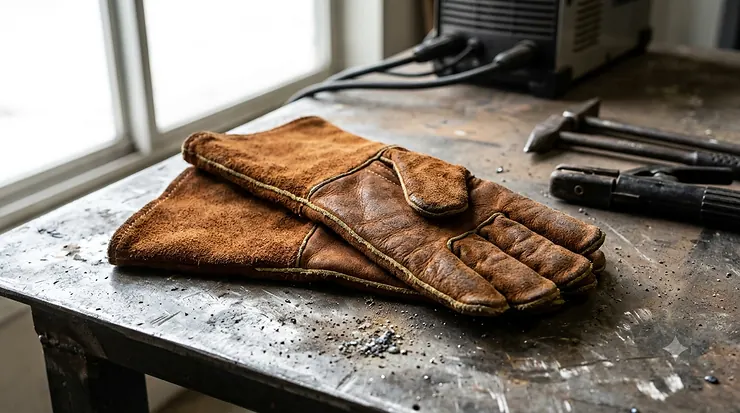
Stick welding gloves are heavy-duty leather gloves built specifically for shielded metal arc welding (SMAW) — the messiest, sparkiest, highest-amperage process in the welding world. They’re thicker than MIG gloves, longer than TIG gloves, and tough enough to survive molten spatter raining down on your forearm for eight hours straight.
If you’ve ever run a 7018 rod on a cold morning and felt heat creeping through a glove that looked tough on the shelf, you already know the problem. Most gloves are designed by people who have never actually struck an arc. They look the part — thick leather, long cuffs, intimidating stitching — and then fail exactly where you need them not to: at the seam by your thumb, right where the rod angle puts the most stress.
I’ve gone through more pairs of stick welding gloves than I’d like to admit, including a few that started smoking (literally) before lunch. So this guide skips the marketing copy and gets into what actually matters: heat rating in practice, cuff length that doesn’t bunch up under a jacket, and dexterity that lets you change a rod without peeling the glove off first. Below, you’ll find seven real, current picks — budget, mid-range, and premium — plus a full breakdown of how to choose, what mistakes to avoid, and what your hands will actually feel like an hour into a long fabrication job.
Quick Comparison Table
| Glove | Material | Heat Rating | Length | Best For |
|---|---|---|---|---|
| Black Stallion GM1611-WT | Top grain cowhide | High (cowhide-grade) | 14″ | All-around stick/MIG use |
| Lincoln Electric K2979-ALL | Lined leather, Kevlar stitch | High | 14″ | Budget DIY welders |
| Caiman 1878-5 | Deerskin/boarhide, Kontour fit | High, insulated | 21″ | Heavy spatter, overhead welding |
| RAPICCA 16″ Forge Gloves | Leather with aluminum lining | 932°F rated | 16″ | Casual stick welders on a budget |
| YESWELDER Leather Forge | Leather, Kevlar stitched | High heat-resistant | 16″ | Beginners, occasional use |
| Mechanix Wear Flux Stick + MIG | Durahide cowhide, Kevlar | High | Mid-length | Welders who want a snug, ergonomic fit |
| Tillman 1350 | Top-grain cowhide | High | 14″ | Multi-process shops (MIG/stick) |
Looking at this lineup, the split is pretty clean: the Caiman 1878-5 earns its premium spot by being the only glove here built around an 21-inch cuff and insulated lining, which matters if you’re doing overhead work where spatter rains down your sleeve. The RAPICCA and YESWELDER pairs sit at the budget end and trade some dexterity for serious heat-blocking thickness, while the Black Stallion, Lincoln Electric, Mechanix, and Tillman gloves occupy the do-everything middle ground most hobbyists and shop welders will actually want day to day.
Just one click — help others make better buying decisions too! 😊
Top 7 Stick Welding Gloves — Expert Analysis
1. Black Stallion GM1611-WT Top Grain Cowhide Welding Gloves
The standout here is the reinforced palm, thumb, and index finger patching — exactly the three spots that wear through first on a stick welder’s dominant hand. Top grain cowhide gives you a balance of heat resistance and decent feel for the electrode holder, which cheaper split-cowhide gloves can’t match; split leather is more porous and lets heat through faster, even at the same thickness.
What most buyers overlook about this model is that the reinforcement patches add bulk exactly where you need fine control — at the fingertips — so there’s a slight dexterity tax. Customers consistently note these run true to size and hold up well across repeated heat cycles without stiffening into a claw shape, which is a common complaint with cheaper cowhide.
Best for: Shop welders who weld daily and need a workhorse glove that won’t need babying.
✅ Pros: Excellent reinforcement placement, true-to-size fit, holds shape over time
❌ Cons: Slightly less fingertip feel than thinner gloves, tan color shows grime fast
Pricing typically lands in the $25–$35 range on Amazon — solid value for the reinforcement you’re getting.
2. Lincoln Electric Traditional MIG/Stick Welding Gloves (K2979-ALL)
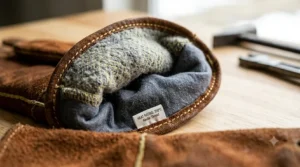
Lincoln Electric’s name carries weight in welding circles for a reason, and this 14-inch lined leather glove with Kevlar stitching is their answer to “what’s the least I need to spend and still be safe.” The Kevlar thread matters more than it sounds — regular cotton stitching is often the first thing to fail when heat hits a seam directly, even before the leather itself gives out.
In my experience, this is the glove to recommend to someone who welds occasionally in a home garage rather than eight hours a day in a fab shop. It won’t out-survive a premium pair under constant heavy use, but for intermittent stick welding on small projects, the lining adds comfort without making the glove feel like a oven mitt.
Best for: Hobbyists and DIYers who weld a few times a month, not a few times an hour.
✅ Pros: Trusted brand, Kevlar-stitched seams, comfortable lining
❌ Cons: Lining traps heat faster during long continuous welds, sizing runs slightly large
Expect a price in the $20–$30 range, making it one of the better value picks on this list.
3. Caiman 1878-5 Premium Split Deerskin MIG/Stick Welding Gloves
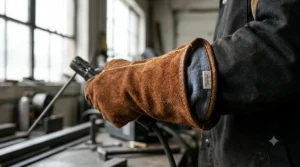
This is the glove for anyone doing overhead welding, pipe work, or anything where sparks have a habit of rolling down your sleeve and finding the one gap in your coverage. The 21-inch length with heavy padding at the forearm and elbow isn’t a gimmick — it’s a genuine answer to a real complaint that shorter gloves can’t solve no matter how good the leather is.
The Kontour 3D pre-curved finger design is the kind of detail that doesn’t show up on a spec sheet but changes how an 8-hour shift feels. Standard gloves are cut flat and force your hand into an unnatural position when gripping a rod; this one is shaped closer to a relaxed fist from the start, which reduces hand fatigue more than people expect from “just a glove design.”
Best for: Pipeline welders, overhead/vertical positions, and anyone tired of burnt forearms.
✅ Pros: Best-in-class forearm coverage, ergonomic Kontour fit, sock-lined insulation for cold shops
❌ Cons: Bulkier than 14-inch gloves, premium price point
Pricing varies by retailer but generally sits in the $45–$65 range — a fair trade for the extended coverage.
4. RAPICCA 16″ 932°F Stick Welding Gloves
RAPICCA built a following among casual stick welders by doing one thing well: stuffing in an aluminum-foil heat-reflective layer that genuinely changes how much radiant heat you feel through the leather. That layer is the difference between “warm hands” and “I need to take a break” during a long run of beads with thick rods.
The trade-off the spec sheet won’t tell you is that the foil layer reduces fingertip sensitivity slightly compared to thinner premium gloves — you’re handling a rod with a touch less precision. For stick welding, where you’re not threading wire through a tight nozzle, that trade is usually worth it.
Best for: Budget-conscious welders who prioritize heat blocking over fine dexterity.
✅ Pros: Strong heat reflection, 16-inch sleeve coverage, affordable
❌ Cons: Bulkier feel, less precise grip than goatskin/deerskin options
Typically found in the $15–$25 range, making it one of the most accessible heavy-duty options available.
5. YESWELDER Leather Forge MIG Welding Gloves (16-inch)
YESWELDER has built a reputation for delivering more glove than the price tag suggests, and the Kevlar-stitched seams paired with palm reinforcement patches hold up surprisingly well for the cost. The 16-inch length splits the difference between a standard 14-inch glove and the longer 21-inch premium options.
Independent testing has flagged some inconsistency between the marketed heat rating and the brand’s own published spec — worth knowing before you push these into the most extreme high-amperage jobs. For everyday stick and MIG work, though, they hold their own.
Best for: Beginners building their first welding kit who don’t want to overspend before they know what they actually need.
✅ Pros: Budget-friendly, Kevlar stitching, decent palm reinforcement
❌ Cons: Heat rating claims vary by source, thinner than premium picks
Generally priced in the $15–$20 range — a reasonable entry point.
6. Mechanix Wear Flux Stick + MIG Welding Gloves
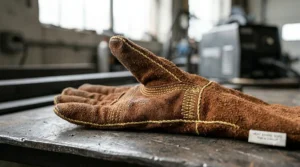
Mechanix built its name on tight, ergonomic mechanic’s gloves, and that DNA shows here. The Durahide cowhide shell paired with DuPont Kevlar stitching gives you a glove that fits more like a second skin than the boxy, oversized cut common in traditional welding gloves.
What stands out in practice is the close fit translating directly into better tool control — you can feel the electrode holder’s grip texture in a way that bulkier gloves muffle. For welders who also do general fabrication work and don’t want to swap gloves every time they pick up a different tool, this crossover design earns its keep.
Best for: Welders who also do mechanical/fabrication work and want one glove that does both reasonably well.
✅ Pros: Snug ergonomic fit, strong tool feel, durable Kevlar stitching
❌ Cons: Less bulk means slightly less raw heat insulation than dedicated stick gloves
Price typically falls in the $30–$45 range.
7. Tillman 1350 Cowhide MIG/Stick Welding Gloves
Tillman shows up on nearly every “best welding glove” list for a reason — the 1350 is the definition of a dependable all-rounder. Top-grain cowhide construction means it handles both MIG wire feeding and stick rod work without forcing you to choose a dedicated glove for each process, which matters if you’re a one-person shop switching between machines all day.
One detail worth knowing before you order: Tillman gloves run noticeably smaller than the size chart suggests, according to consistent buyer feedback. Sizing up a notch from your usual measurement avoids a too-tight fit that kills dexterity faster than any design flaw could.
Best for: Multi-process welders who don’t want a drawer full of specialized gloves.
✅ Pros: Versatile across MIG and stick, durable cowhide, widely trusted brand
❌ Cons: Runs small — size up, mid-pack heat resistance compared to dedicated stick gloves
Expect pricing in the $20–$30 range, putting it squarely in value territory.
Practical Usage Guide
Breaking in a new pair of stick welding gloves matters more than people think. Flex the fingers and work the leather by hand for a few minutes before your first real weld — leather straight off the shelf is stiffer than it’ll ever be again, and forcing dexterity out of stiff leather is how seams start tearing early.
For maintenance, keep gloves dry between uses and store them flat, not crumpled in a bag where moisture gets trapped in the lining. If a glove gets soaked from sweat or rain, let it air-dry away from direct heat — tossing leather gloves near a space heater to speed-dry them is a fast way to crack the hide.
A common rookie mistake in the first 30 days: gripping the rod too tightly because the new leather feels unfamiliar. This over-gripping fatigues your hand faster and wears the palm leather unevenly. Give it a week or two — the leather will relax into your grip pattern, and so will you.
Real-World Scenarios: Matching the Glove to the Welder
The weekend hobbyist building a trailer or fixing farm equipment a few times a month doesn’t need a 21-inch premium glove. A Lincoln Electric K2979 or YESWELDER pair covers the bases without the investment of gloves that’ll mostly sit in a drawer.
The daily shop welder running multiple positions across an 8-hour shift needs durability over flash. The Black Stallion GM1611 or Tillman 1350 fit this profile — built to survive repeated heat cycling without curling into uselessness after a few months.
The pipe welder doing overhead and vertical work faces the worst-case spatter scenario, with sparks rolling down the arm constantly. This is where the Caiman 1878-5’s 21-inch coverage stops being a luxury and starts being the actual point of the purchase.
Problem → Solution: Fixing Common Stick Welding Glove Complaints
Problem: Hands overheat during long runs of thick rod. Solution: Look for an aluminized or foil-lined glove like the RAPICCA — that reflective layer does more for radiant heat than leather thickness alone.
Problem: Sparks keep finding the gap between glove and sleeve. Solution: Size up to a 16- or 21-inch cuff rather than relying on a jacket sleeve to cover the gap; the Caiman 1878-5 or any 16-inch+ option solves this directly.
Problem: Gloves feel clumsy when changing electrodes. Solution: A more ergonomic, pre-curved fit (Caiman’s Kontour design, or the snugger Mechanix Flux) reduces the fumbling that comes from flat-cut, boxy gloves.
How to Choose Stick Welding Gloves
- Match the cuff length to your welding position. Flat, downhand welding is fine with a 14-inch glove; overhead or vertical work calls for 16 inches or more.
- Prioritize seam stitching material. Kevlar-stitched seams outlast cotton thread under repeated heat exposure — check this before checking the leather grade.
- Pick leather type based on process mix. Cowhide balances durability and cost for stick welding; deerskin and elk skin add comfort and heat resistance at a higher price.
- Size up if buying Tillman or similarly snug-running brands. Measure knuckle circumference, not just palm width.
- Decide how much dexterity you’re willing to trade for heat protection. Thicker, insulated gloves block more heat but reduce rod-handling feel.
- Check for reinforced wear points. Palm, thumb, and index finger patches extend glove life significantly for stick welders.
- Set a realistic replacement budget. Even premium gloves wear out — professionals report replacing gloves every 2–3 months with daily use, so factor that into cost, not just upfront price.
Stick Welding Gloves vs MIG Welding Gloves
Stick gloves are built thicker and longer because SMAW produces more spatter and runs at higher, less consistent amperage than MIG. MIG gloves prioritize dexterity for wire-feed control and trigger sensitivity, often trading cuff length and bulk for a closer fit.
In practice, this means a dedicated MIG glove will feel noticeably better for trigger control but will burn through faster under stick welding’s heavier spatter load. Several gloves on this list — the Black Stallion GM1611, Tillman 1350, and Mechanix Flux — are marketed as MIG/stick crossovers specifically because they split the difference, and that’s a reasonable compromise if you switch processes often. If you weld stick exclusively, though, a dedicated stick glove like the Caiman 1878-5 will outlast a crossover pair under the same conditions.
Common Mistakes When Buying Stick Welding Gloves
A surprisingly common mistake is buying based on stated heat rating alone without checking cuff length or seam material — a glove rated for high heat but cut short still leaves your forearm exposed during overhead work. Another is ordering true-to-size on brands like Tillman that run small, leading to a too-tight glove that actually reduces dexterity rather than improving it.
Buyers also tend to underweight stitching quality, focusing entirely on leather thickness. A thick glove with cotton-thread seams will often fail at the seam before the leather itself wears through, especially around the thumb saddle where stress concentrates during rod manipulation.
What to Expect: Real-World Performance
On paper, most stick welding gloves look similar — leather, some heat rating, a length measurement. In practice, the difference shows up around the 20-minute mark of continuous welding, when heat has had time to soak through the leather. Budget gloves without insulation start transmitting noticeable warmth here; insulated or foil-lined options like the Caiman 1878-5 or RAPICCA stay comfortable considerably longer.
Dexterity differences show up immediately rather than over time — you’ll know within the first few rod changes whether a glove lets you reposition the electrode holder smoothly or forces you to half-remove the glove to get a good grip.
Safety, Regulations & Compliance Guide
Welding gloves fall under general personal protective equipment requirements. In the U.S., the Occupational Safety and Health Administration requires that employees exposed to hazards from welding, cutting, or brazing be protected by personal protective equipment, with OSHA’s welding standards specifically calling for heavy, flame-resistant gloves during hot work. Canada’s CCOHS guidance echoes this, recommending gauntlet-style cuff leather gloves to protect wrists and forearms, since dry leather also acts as a useful electrical insulator around live welding circuits.
None of the gloves in this guide are a substitute for a full PPE setup — flame-resistant clothing, eye protection, and proper ventilation matter just as much. But gloves are the piece of PPE you’re touching the work with, which is exactly why fit and seam quality deserve as much attention as the headline heat rating.
✨ Don’t Miss These Exclusive Deals!
🔍 Take your welding setup to the next level with these carefully selected gloves. Click on any highlighted pick to check current pricing and availability — the right pair pays for itself the first time it saves your hands from a long, hot afternoon.
Long-Term Cost & Maintenance
Buying the cheapest glove on the shelf rarely saves money over a year of regular welding. A $15 pair that needs replacing every six weeks under daily use costs more annually than a $30 pair that lasts three to four months — and that’s before factoring in the productivity lost to fumbling with degraded leather.
Maintenance habits stretch glove life further than most people expect: keeping leather dry, avoiding direct high heat for drying, and rotating between two pairs so each gets recovery time between shifts all add real months of usable life to a glove that would otherwise wear out from constant flex-and-heat cycling.
Frequently Asked Questions
❓ What are the best gloves for stick welding?
❓ How long should stick welding gloves be?
❓ What temperature can stick welding gloves withstand?
❓ Can I use MIG gloves for stick welding?
❓ How do I know what size welding glove to buy?
Conclusion
Stick welding gloves aren’t a place to cut corners, but they’re also not a place to overspend on features you’ll never use. If you’re welding occasionally in a home shop, the Lincoln Electric K2979 or YESWELDER pair will serve you well without breaking the budget. Daily shop welders should lean toward the Black Stallion GM1611 or Tillman 1350 for durability that matches real use. And if your work involves overhead or pipe welding, the Caiman 1878-5’s extended coverage isn’t a luxury — it’s the feature that actually prevents burns.
Whatever you choose, the details that matter most rarely show up in the marketing photos: seam material, cuff length relative to your welding position, and how the leather feels after the first dozen uses, not the first one. Shop with that in mind, and your hands will thank you somewhere around hour six of a long fabrication day.
Recommended for You
- 7 Best Heat Resistant Gloves in 2026 (BBQ to Industrial)
- 7 Best Supported Chemical Resistant Gloves in 2026
- 7 Best Gauntlet Chemical Gloves in 2026
Disclaimer: This article contains affiliate links. As an Amazon Associate, I earn from qualifying purchases. If you purchase products through these links, we may earn a small commission at no additional cost to you.
✨ Found this helpful? Share it with your friends! 💬🤗
