
In This Article
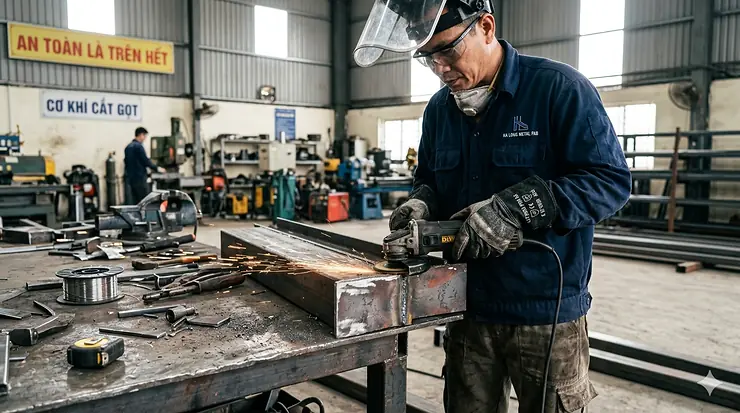
I’ve watched too many fabricators treat hand protection like an afterthought. You grab whatever’s in the supply closet, work through a shift, and wonder why your hands ache or worse—why there’s blood on the sheet metal. Here’s the reality: around 70% of hand injuries in metal fabrication shops are preventable with proper cut-resistant gloves, yet most workers are wearing gear that’s either overrated, uncomfortable, or simply wrong for the job.
Metal fabrication cut gloves aren’t just about avoiding cuts from sharp edges. When you’re handling stamped steel parts with burrs, wrestling HVAC ductwork into position, or gripping oily machine components, you need gloves that deliver on three fronts: genuine cut resistance (not marketing hype), grip that works when surfaces are slick, and enough dexterity to operate tools without removing them every five minutes. The difference between ANSI A4 and A9 cut levels isn’t academic—it’s the difference between a close call and a trip to urgent care.
This guide breaks down seven gloves that actually work in metal fabrication environments. I’ve evaluated them based on real-world performance metrics: how they handle sharp metal edges, whether the grip coating holds up to oil and coolant, and if they’re comfortable enough that workers actually keep them on. Personal protective equipment ranks last on the hierarchy of controls, but when elimination and engineering controls aren’t feasible, the right PPE becomes your primary defense. No fluff, no sponsored rankings—just what protects your hands when you’re working with materials designed to slice through softer things.
Quick Comparison Table: Top Metal Fabrication Cut Gloves at a Glance
| Glove Model | Cut Level | Price Range | Best For | Key Feature |
|---|---|---|---|---|
| HexArmor Chrome Series 4018 | A6-A9 | $35-$50 | All-around fabrication | SuperFabric palm + touchscreen |
| DEX FIT Cru953H | A9 | $20-$30 | Sheet metal stamping | Fiberglass-free, non-irritating |
| Mechanix Wear Fabricator | Heat-resistant | $25-$35 | Welding + fabrication | Genuine leather, Kevlar stitching |
| DEX FIT Cru553 | A5 | $12-$18 | Budget-conscious shops | 3D comfort fit, machine washable |
| HexArmor Helix 2076 | A6 | $25-$35 | General maintenance | PU coating, superior grip |
| NoCry CutGuard Pro | A6 | $18-$25 | Glass & metal handling | Silicone grip dots |
| Schwer ProGuard PR3326 | A9 | $30-$45 | Extreme hazards | Reinforced thumb, aramid fiber |
Looking at this comparison, the sweet spot for most fabrication shops sits between ANSI A5 and A6 cut levels—enough protection for daily sheet metal work without sacrificing too much dexterity. But if you’re running stamping operations or handling freshly-cut steel plates with razor-sharp edges, the A9-rated options like DEX FIT Cru953H or Schwer ProGuard justify their higher price through fewer injury reports. Budget buyers should note that stepping down from A6 to A5 saves you about $10 per pair, but you’re trading cut resistance measured in thousands of grams of force—not a trivial difference when one slip costs you a workday.
💬 Just one click — help others make better buying decisions too! 😊
Top 7 Metal Fabrication Cut Gloves: Expert Analysis
1. HexArmor Chrome Series 4018 — The Premium All-Rounder
The HexArmor Chrome Series 4018 represents what happens when a company actually listens to fabricators instead of just marketing to them. The signature feature is the SuperFabric brand material on the palm interior and knuckle patch—this isn’t standard HPPE yarn, it’s a composite system that arrests blade edges rather than just resisting them. In practical terms, when you’re wrestling a sharp-edged stamped part into position and your grip slips, the SuperFabric deflects the edge rather than letting it drag across the liner until it cuts through.
The synthetic leather palm overlay adds abrasion resistance while maintaining grip in light oil situations—something critical when you’re handling parts fresh from the mill. What most product descriptions won’t tell you is that the touchscreen capability on the thumb and index finger actually works through shop-level dirt accumulation, meaning you can check machine parameters or read work orders without glove removal. The neoprene cuff with hook-and-loop closure keeps metal shavings from sliding down into the glove during overhead work.
In my experience working with metal fabrication shops, this is the glove that supervisors buy for their lead operators—workers who need to move between different tasks (cutting, forming, assembly) without switching gloves constantly. The ANSI cut level varies between A6 and A9 depending on the specific model within the Chrome Series, so verify the exact rating for your application. The double-stitched core-spun thread on interior seams means these gloves survive the washer without falling apart, extending their usable life beyond cheaper alternatives.
Customer feedback consistently highlights two things: the immediate comfort (no break-in period needed) and the confidence workers feel handling sharp objects. The main complaints center on sizing—HexArmor runs slightly larger than other brands, so if you’re between sizes, go smaller.
✅ Pros:
- SuperFabric technology deflects rather than just resists cuts
- Touchscreen capability that works in dirty conditions
- Exceptional durability with reinforced seams
❌ Cons:
- Premium pricing around $40-$50 per pair
- Sizing runs large—order carefully
Price & Verdict: At around $40-$50 per pair, these sit in the premium tier. For shops where hand injuries cost thousands in workers’ comp claims and lost productivity, that’s a bargain. For individual fabricators on a budget, consider these for your primary pair and keep cheaper backups for lower-risk tasks.
2. DEX FIT Cru953H Level A9 — Maximum Protection Without Fiberglass
The DEX FIT Cru953H achieves ANSI A9 cut resistance—the absolute highest rating available—while solving a problem that plagues many heavy-duty gloves: fiberglass irritation. Traditional A9 gloves incorporate fiberglass strands for their incredible cut resistance, but those same fibers can cause skin irritation and contact dermatitis over extended wear. DEX FIT uses a stainless steel and HPPE blend instead, delivering identical protection without the itch.
The water-based foam nitrile coating is where this glove separates itself from competitors in oily metalworking environments. Unlike standard nitrile dips that become slippery when contaminated with cutting fluid or hydraulic oil, the foam structure creates micro-channels that maintain grip even when saturated. I’ve seen operators handle slick pipe sections and oily machine parts with these gloves showing no loss of control—something impossible with smooth-dipped alternatives.
The 13-gauge ergonomic knit follows the hand’s natural curve, which matters more than it sounds. When you’re spending eight hours gripping tools and parts, even small pressure points become major fatigue factors. The 3D comfort fit eliminates bunching at the knuckles and between fingers, allowing longer wear periods without discomfort. This directly impacts safety—workers who leave gloves on are protected; workers who remove them every few minutes eventually get cut.
Real-world performance in sheet metal stamping, glass handling, and recycling operations (where sharp, unpredictable edges are constant) shows minimal through-cuts even after months of daily use. The touchscreen compatibility works adequately, though not as reliably as HexArmor’s implementation. One consideration: at A9 protection levels, you sacrifice some dexterity compared to A5 or A6 gloves—fine for handling bulk materials, potentially limiting for precision work.
✅ Pros:
- A9 cut level without fiberglass irritation
- Exceptional oil-resistant grip coating
- Ergonomic 3D fit reduces hand fatigue
❌ Cons:
- Slightly reduced dexterity vs. lower cut levels
- Touchscreen function less reliable than premium brands
Price & Verdict: In the $20-$30 range, this glove delivers A9 protection at nearly half the cost of comparable options. For stamping operations, metal recycling, or any environment with extreme cut hazards, the value proposition is straightforward—pay now or pay later through injury costs.
3. Mechanix Wear Fabricator — Purpose-Built for Welding and Hot Metal
The Mechanix Wear Fabricator takes a different approach entirely—genuine cowhide leather construction with heat resistance built in. This isn’t a cut-resistant glove competing on ANSI levels; it’s a fabrication glove designed for the reality that metal fabricators don’t just cut material, they weld it, grind it, and handle it while it’s still hot.
The leather reinforced palm and knuckle band protect against sharp metal edges through sheer material thickness rather than engineered fibers. More importantly, the Kevlar thread construction throughout the palm means these gloves can handle intermittent heat contact from welding spatter or warm parts without the stitching failing. Standard nylon thread would melt, creating potential failure points. The extended gauntlet cuffs protect wrists from both cuts and heat—critical when you’re reaching into tight spaces around hot equipment.
What you’re trading for heat resistance is some cut performance compared to modern synthetic gloves. A properly selected HPPE glove will outperform leather on pure cut resistance. But fabrication work isn’t pure anything—you’re switching between cutting, welding, grinding, and assembly. The Fabricator handles this variety better than specialized gloves, which is why it’s standard issue in many mid-size fab shops.
Customer feedback emphasizes durability and versatility. These gloves break in over the first week of use, conforming to your hand shape like good work boots. The leather develops a patina and becomes more comfortable with age—something impossible with synthetic materials that just wear out. The main limitation: minimal grip on oily surfaces, so these aren’t ideal if you’re primarily handling lubricated parts.
✅ Pros:
- Heat-resistant construction with Kevlar stitching
- Genuine leather that improves with age
- Extended cuffs protect wrists from multiple hazards
❌ Cons:
- Lower pure cut resistance than synthetic A6-A9 gloves
- Poor grip on oily or wet surfaces
Price & Verdict: At $25-$35 per pair, the Fabricator occupies the mid-price tier and delivers if your work involves mixed hazards. For pure sheet metal cutting, buy an HPPE glove instead. For general fabrication with welding, grinding, and assembly tasks, this all-rounder makes sense.
4. DEX FIT Cru553 Level A5 — The Budget Champion That Doesn’t Compromise
The DEX FIT Cru553 proves that budget-friendly doesn’t have to mean inadequate. At ANSI A5 cut resistance, these gloves protect against medium cut hazards—sharp enough for most sheet metal work, HVAC installation, and general fabrication tasks that don’t involve freshly-stamped parts with burr edges.
The 13-gauge HPPE and Spandex blend creates what DEX FIT calls “second-skin dexterity,” and they’re not exaggerating by much. At 13-gauge thickness, these gloves allow you to feel bolt threads, manipulate small fasteners, and operate touchscreen controls without removal. The power grip foam coating provides reliable traction on smooth metal surfaces and tools without adding bulk. Machine washability matters more than most buyers realize—gloves that survive repeated washing last longer and stay more hygienic, reducing skin issues from accumulated contaminants.
In practical testing across multiple environments (construction, warehouse, light fabrication), the Cru553 handles daily tasks admirably. The touchscreen compatibility works consistently, allowing smartphone or tablet use for accessing drawings or work orders. The lightweight construction means workers actually wear them consistently—the number one factor in hand injury prevention.
Where these gloves reach their limit: heavy-duty stamping operations with razor-sharp edges, or prolonged exposure to very aggressive cuts. The A5 rating withstands 2,200-2,999 grams of cutting force, which sounds abstract until you compare it to A9’s 6,000+ grams. For context, rapidly pulling your hand across a freshly-cut steel edge generates forces well above 2,200 grams—so these gloves reduce injury severity rather than preventing it entirely in worst-case scenarios.
Customer reviews highlight the value proposition and comfort level. Common complaints focus on durability—these gloves wear through faster than premium options, but at less than half the price, you can replace them more frequently and still come out ahead financially.
✅ Pros:
- Excellent dexterity for precision work
- Machine washable for extended life
- Budget-friendly without major compromises
❌ Cons:
- A5 rating insufficient for stamping/heavy cutting
- Lower durability than premium alternatives
Price & Verdict: At $12-$18 per pair, the Cru553 represents the sweet spot for shops that need decent protection across a broad range of tasks. Buy these in bulk as your standard-issue glove, and stock premium A9 gloves for specific high-risk operations.
5. HexArmor Helix 2076 — The Maintenance Technician’s Choice
The HexArmor Helix 2076 targets a specific user: maintenance technicians and machine operators who need consistent all-around protection without specializing for extreme hazards. The 13-gauge HPPE/steel/fiberglass blend shell delivers ANSI A6 cut resistance—enough for handling sharp machine components, sheet metal parts, and typical fabrication materials.
The flexible polyurethane palm coating strikes a careful balance. It’s textured and slightly tacky, providing superior grip in both wet and dry conditions without becoming sticky in high-heat environments. The reinforced thumb saddle addresses the most common failure point in work gloves—the thumb crotch where material experiences maximum stress during gripping motions. This reinforcement typically doubles the glove’s useful life compared to standard construction.
What makes the Helix 2076 particularly relevant for metal fabrication is the seamless construction that eliminates interior seams. Those seams in cheaper gloves create pressure points and hot spots during extended wear, eventually causing blisters. The seamless design allows comfortable all-day use, which directly impacts safety—workers who leave gloves on remain protected.
The elastic knit wrist prevents metal chips, shavings, and debris from entering the glove during overhead work or when reaching into machinery. This sounds minor until you’ve experienced the distraction and discomfort of debris trapped inside your glove while trying to complete precision work. The silicone-free formulation makes these suitable for paint shops and coating operations where silicone contamination causes adhesion problems.
In customer feedback, the Helix 2076 consistently earns high marks for comfort and grip performance. The main criticism: pricing sits firmly in the mid-to-premium range without offering the absolute highest cut resistance. For extreme hazards, you’d choose an A9 glove instead—but most fabrication work doesn’t involve extreme hazards constantly.
✅ Pros:
- Superior grip coating works wet or dry
- Seamless construction prevents hot spots
- Reinforced thumb for extended durability
❌ Cons:
- A6 rating insufficient for stamping operations
- Mid-premium pricing
Price & Verdict: At $25-$35 per pair, these gloves suit shops that need reliable everyday protection for varied tasks. The longevity from reinforced construction and the comfort from seamless design justify the cost through reduced replacement frequency and consistent worker compliance.
6. NoCry CutGuard Pro — When Grip Matters as Much as Cut Protection
The NoCry CutGuard Pro addresses a reality that pure cut-resistance specs miss: many metal fabrication injuries happen because workers lose their grip, not because they deliberately contact sharp edges. The silicone-dotted palm creates a secure grip on smooth, slippery surfaces—exactly what you encounter with polished metal sheets, glass, or painted components.
At ANSI A6 cut resistance, these gloves protect against medium-to-high cut hazards. The composite yarn construction with stainless steel core and reinforced fibers stands up to repeated use in demanding environments. The material blend (stainless steel, high-performance polyethylene, glass fiber, and spandex) delivers durability while maintaining flexibility—stiffer gloves might offer slightly better cut scores but reduce worker compliance through discomfort.
The lightweight construction allows precision work—you can feel fastener engagement, manipulate small parts, and operate controls without removing the gloves. This matters tremendously in mixed-task environments where workers switch between handling raw materials and operating machinery. Gloves that stay on prevent injuries; gloves that get removed and forgotten on the workbench don’t.
What the CutGuard Pro doesn’t offer: heat resistance or touchscreen capability. If those features matter for your application, look elsewhere. But for pure mechanical cutting hazards combined with grip-critical tasks, the silicone dot pattern genuinely improves safety. Customer reviews from woodworkers, glass handlers, and metal fabricators consistently highlight the confident grip and comfortable all-day wear.
One consideration that reviews reveal: the finger sizing runs snug. Workers with wide fingers may find these gloves restrictive. NoCry offers extensive sizing guidance, but trying before bulk ordering is wise. The price point makes this feasible—at under $25 per pair, buying samples for your crew won’t break the budget.
✅ Pros:
- Silicone grip dots excel on smooth surfaces
- Lightweight for all-day comfort
- Excellent value at A6 protection level
❌ Cons:
- No heat resistance or touchscreen capability
- Finger sizing runs narrow for some users
Price & Verdict: At $18-$25 per pair, the CutGuard Pro delivers solid value for shops where slippery materials create handling challenges. The grip enhancement reduces drop-related injuries and improves productivity through more confident material handling.
7. Schwer ProGuard PR3326 — Maximum Protection for High-Risk Operations
The Schwer ProGuard PR3326 occupies the extreme-protection niche with ANSI A9 cut resistance and flame-retardant aramid fiber construction. These aren’t everyday gloves—they’re what you issue to workers handling freshly-cut steel plates, operating stamping presses, or working in environments where cut hazards are constant and severe.
The aramid fiber construction (50% aramid reinforced with steel, glass, and UHMW polyethylene) provides two critical properties: A9 cut resistance and genuine flame retardance. In metal fabrication, especially where grinding and welding occur near cutting operations, the flame retardance prevents glove ignition from sparks—a safety factor that basic HPPE gloves don’t address. The reinforced thumb delivers targeted protection at the highest-risk contact point.
At 13-gauge thickness, the ProGuard maintains reasonable dexterity despite its extreme protection level. You won’t perform watchmaker-precision tasks, but you can operate machine controls, grip tools, and handle bulk materials effectively. The breathable construction and touchscreen compatibility (rare in A9-rated gloves) make these suitable for extended wear rather than just quick high-risk tasks.
Customer feedback from metal stamping plants, glass manufacturing, and heavy fabrication environments emphasizes the confidence workers feel handling aggressive materials. The main complaints center on cost and, occasionally, durability—workers in extremely abrasive environments report these gloves lasting 2-3 months rather than 6-12 months like mid-level alternatives. But in high-injury-risk operations, the cost per injury prevented makes this calculation simple.
One key detail from actual users: these gloves perform best when workers size up slightly from their usual size. The snug fit that works for A5 gloves becomes restrictive with the thicker A9 construction. A slightly larger size improves comfort without significantly reducing effectiveness.
✅ Pros:
- A9 + flame retardance for maximum protection
- Reinforced thumb targets high-risk area
- Touchscreen compatible despite heavy construction
❌ Cons:
- Premium pricing reflects extreme protection level
- Lower durability in extremely abrasive applications
Price & Verdict: At $30-$45 per pair, the ProGuard sits at the top of the price range. For stamping operations, heavy cutting work, or any environment with frequent severe cut hazards, the injury prevention value justifies the cost. For lower-risk general fabrication, you’d choose a less expensive option and reserve these for specific high-risk tasks.
How to Choose Metal Fabrication Cut Gloves: The Decision Framework Most Suppliers Won’t Share
Choosing cut-resistant gloves shouldn’t require a PhD in materials science, but the marketing around them often obscures simple decision-making. Start with your actual hazards, not maximum protection ratings. An A9 glove protects better than an A5, but if your workers remove the A9 gloves every few minutes because they’re too stiff for their tasks, you’ve bought less safety, not more.
Step 1: Assess Your Cut Hazard Level
Walk your shop floor and categorize tasks. Light sheet metal handling with deburred edges? A4-A5 protection suffices. Stamping operations with sharp burrs? You need A7-A9. The ANSI standard exists for this reason—match the glove rating to the measured hazard. If you’re unsure, the conservative approach is sizing up one level, but remember that higher cut resistance typically means reduced dexterity.
Step 2: Identify Your Secondary Hazards
Metal fabrication rarely involves only cut risks. Do you have heat exposure from welding or grinding? Choose leather or aramid fiber gloves, not pure HPPE. Working with oily parts or coolant? Foam nitrile coating outperforms smooth-dipped alternatives. Need touchscreen access for CNC controls or work orders? Not all gloves offer reliable touchscreen function—verify this specifically rather than assuming.
Step 3: Prioritize Grip Over Marketing Claims
The best cut-resistant glove in existence won’t prevent injuries if workers can’t grip materials confidently. Silicone grip dots, textured PU coatings, and foam nitrile all serve different purposes. Smooth, dry materials work fine with basic coatings. Oily, wet, or polished surfaces demand enhanced grip technology. The grip test is simple: can a worker hold a slippery part at arm’s length without constant readjustment? If not, that glove fails regardless of its cut rating.
Step 4: Size for Compliance, Not Spec Sheets
Gloves that don’t fit comfortably don’t get worn consistently. Too tight causes hand fatigue and workers removing them frequently. Too loose reduces dexterity and creates catch points on machinery. Most manufacturers provide sizing charts based on hand measurements—use them. When between sizes, workers performing precision tasks should size down; workers doing heavy material handling should size up.
Step 5: Calculate Total Cost, Not Purchase Price
A $15 glove that lasts two months costs more annually than a $40 glove lasting ten months. Factor in injury costs—one laceration requiring medical treatment and work time lost typically exceeds the annual glove budget for multiple workers. The cheapest effective glove is the one that prevents injuries while lasting long enough to deliver ROI. For most fabrication shops, this sweet spot sits in the $20-$35 range for primary gloves.
Common Mistakes When Buying Metal Fabrication Cut Gloves
The most expensive mistake I see shops make is buying based on maximum cut rating alone. They stock A9 gloves exclusively because “more protection equals more safety.” Then they wonder why workers leave gloves on workbenches or keep them in pockets instead of wearing them—the A9 stiffness makes precision work frustrating. The reality: workers wearing comfortable A5 gloves consistently experience fewer injuries than workers sporadically wearing uncomfortable A9 gloves.
Ignoring Grip Performance Specs
Cut resistance gets all the marketing attention, but grip prevents injuries too. A worker who loses their grip on a heavy sheet metal panel experiences a different injury mechanism—dropping hazards, muscle strains from overcompensating, or cuts when trying to prevent a drop. Yet most buyers never test grip performance before ordering. The simple test: have workers handle your actual materials while wearing sample gloves. If they report confident control, you’ve found a winner.
Assuming All “A6” Gloves Perform Identically
ANSI ratings establish minimum thresholds, not uniform performance. An entry-level A6 glove might test at 2,200 grams (just over the A5 threshold), while a premium A6 tests at 3,900 grams (just under A7). Both legally claim A6 rating, but one offers 77% more cut resistance. Reputable manufacturers publish specific gram ratings; cheaper sellers often hide behind just the letter rating. When comparing similar-priced gloves, demand the actual test data.
Buying in Bulk Without Trial Periods
The greatest volume discount in the world doesn’t help if your crew refuses to wear the gloves. Before ordering 500 pairs, buy samples and run a two-week trial with your workers. Their feedback—not marketing materials—predicts actual compliance and injury prevention. Common discovery: the glove workers initially resist (perhaps due to unfamiliar feel) becomes the favorite after adaptation period, while the glove that “feels great” initially fails durability testing after one week.
Neglecting Coating Selection for Your Environment
PU-coated gloves work beautifully in dry fabrication shops but become dangerously slippery when contaminated with cutting fluid. Foam nitrile excels with oil but degrades under certain solvent exposure. Leather provides heat resistance but zero oil grip. Each coating technology has optimal use cases—buying wrong for your environment creates a false sense of security. If your shop uses coolant or cutting fluid regularly, foam nitrile coating is non-negotiable.
What to Expect: Real-World Performance in Metal Fabrication
The transition from standard work gloves to proper cut-resistant gloves takes about a week of adaptation for most workers. Initial complaints center on the “different feel”—cut-resistant materials don’t stretch and conform like cotton or plain synthetic gloves. Your hands feel slightly encased rather than naturally free. This adjustment period is normal and typically resolves as workers develop new muscle memory for tasks.
First Day: Awareness and Adjustment
Workers will notice increased bulk and reduced sensitivity, particularly if transitioning from no gloves or light gloves to A5+ protection. Expect slower task completion and frustration with fine motor activities. This isn’t a reason to abandon proper protection—it’s the learning curve. By day three, most operators adapt their grip and handling techniques to compensate.
First Week: Complaint Resolution
Common complaints during this phase: too hot, fingers don’t fit right, can’t feel fasteners. Separate legitimate issues (wrong size, incorrect glove for task) from adaptation difficulties. Workers claiming “can’t feel anything” while successfully completing tasks are adapting—their brains are recalibrating baseline sensitivity. Workers genuinely unable to engage fasteners or operate controls may need different gloves or sizes.
First Month: Performance Plateau
By week four, properly selected gloves become transparent to the work process. Workers stop thinking about glove limitations and start appreciating protection and grip enhancement. This is when you’ll hear comments like “I wouldn’t go back to regular gloves” or “I actually feel more confident handling sharp parts now.” Injury data should reflect this—shops typically see 40-60% reduction in hand lacerations after the transition period.
Long-Term: Durability Reality Check
The lifecycle of cut-resistant gloves varies dramatically by application intensity. Light fabrication work might deliver 6-12 months per pair. Heavy stamping with constant sharp edge contact burns through gloves in 2-3 months. Plan replacement budgets accordingly—cutting corners on replacement frequency means workers continuing to use compromised gloves that no longer provide rated protection. The coating wears first, then the cut-resistant liner degrades. Both indicators demand replacement.
Maintenance and Longevity: Making Your Investment Last
Cut-resistant gloves aren’t disposable, but they do require proper care to deliver their rated lifespan. Machine washing (when specified as safe) actually extends glove life by removing metal particulates and oils that degrade liner materials. Contrary to what some workers believe, properly designed cut-resistant gloves maintain their ratings through multiple wash cycles—the HPPE and steel fibers don’t “wash out.”
Daily Inspection Protocol
Before each shift, workers should inspect gloves for visible cuts, holes, or coating delamination. Small nicks in the coating don’t necessarily compromise cut resistance, but visible cuts through to the liner mean immediate replacement. The coating provides grip and some abrasion resistance; the liner provides cut resistance. Once you can see through to liner material, the glove’s effective protection has decreased even if the liner itself remains intact.
Washing Guidelines That Actually Work
Ignore marketing claims about “indefinite washes”—real-world experience shows 20-30 wash cycles before noticeable degradation for quality gloves. Wash in cold water with mild detergent, no bleach. Air dry only—heat dryers damage the liner materials and coating adhesion. One shop trick: wash gloves weekly on Friday, air dry over the weekend, return to workers Monday. This prevents the “I’ll wash them eventually” procrastination that leads to contamination buildup and premature failure.
Storage Practices That Prevent Contamination
Proper storage extends glove life by preventing oil and chemical exposure when not in use. Many shops mount glove racks near work stations—convenient but problematic if the rack sits near grinding stations or chemical storage. The fine metal dust from grinding operations embeds in glove fibers, creating abrasion points that accelerate wear. Store gloves in individual zippered bags or closed containers when practical.
When to Replace: Beyond Obvious Damage
Replace gloves when coating becomes excessively stiff or slippery, even if no visible damage exists. This indicates the coating’s useful life has ended—it might look intact but no longer provides designed grip. Replace when the liner fabric feels loose or baggy compared to new gloves—the construction integrity has degraded. And replace on a schedule regardless of appearance: every 6 months for constant-use gloves, annually for periodic-use gloves. Cut resistance degrades gradually through UV exposure and mechanical wear, often before visible damage appears.
Metal Fabrication Cut Gloves vs. Standard Work Gloves: Why the Upgrade Matters
Standard work gloves—the cotton, leather palm, or basic synthetic varieties stocked in most supply closets—provide some protection against abrasion and splinters but effectively zero protection against the cut hazards metal fabricators face. A cotton glove might survive 200 grams of cutting force before failure; an ANSI A5 glove withstands 2,200+ grams. That’s not an incremental improvement; it’s a different category of protection.
The material science explains why. Cotton and leather depend on fiber strength and thickness. When a sharp edge contacts these materials, it progressively severs fibers until breaking through. Cut-resistant gloves use HPPE (high-performance polyethylene) or aramid fibers that resist cutting through entirely different mechanisms—the fibers deflect and distribute cutting forces rather than simply resisting them through tensile strength.
The practical implication: a standard glove might slow down a cutting edge, giving you a fraction of a second to react. A proper cut-resistant glove can prevent the cut entirely from all but the most extreme forces. In metal fabrication where sharp edges are the norm rather than exception, this distinction determines whether a slip becomes a near-miss or an injury report.
The cost difference—typically $8-12 per pair for standard gloves versus $15-45 for cut-resistant—vanishes when factored against injury costs. One laceration requiring stitches costs $1,500-3,000 in direct medical costs, plus lost work time, workers’ compensation premiums, and OSHA recordability. The ROI calculation is straightforward: proper gloves pay for themselves by preventing one injury.
ANSI Cut Levels Decoded: What A4, A5, A6, A7, A8, and A9 Actually Mean in Practice
The ANSI/ISEA 105-2024 standard tests gloves by applying increasing force to a straight blade moving across the material until cut-through occurs. The force required (measured in grams) determines the cut level rating. But raw numbers don’t tell you what these levels mean when you’re actually handling materials.
ANSI A4 (1,500-2,199 grams): Protects against light sheet metal work, packaged materials with sharp corners, and general fabrication tasks where materials are deburred. Insufficient for raw stamped parts or materials with burrs.
ANSI A5 (2,200-2,999 grams): The minimum for serious sheet metal fabrication. Handles standard sheet metal edges, HVAC ductwork, and most daily fabrication tasks. Still vulnerable to freshly-cut or stamped edges with burrs.
ANSI A6 (3,000-3,999 grams): The sweet spot for metal fabrication shops. Protects against most standard cutting hazards including sheet metal burrs, sharp machine components, and stamped parts. Balances protection with acceptable dexterity.
ANSI A7 (4,000-4,999 grams): Heavy-duty fabrication level. For environments with frequent sharp edge contact, heavy stamping operations, or work with materials prone to creating aggressive burrs. Noticeable reduction in dexterity.
ANSI A8 (5,000-5,999 grams): Specialized high-risk level. Metal recycling, scrap handling, or stamping with frequent burr contact. Significant dexterity compromise—only choose when hazards demand this level.
ANSI A9 (6,000+ grams): Maximum available protection. Extreme hazard environments where cut injuries are frequent or severe despite lower-level glove use. Some dexterity sacrifice inevitable—balance against injury severity.
The jump from one level to the next isn’t linear in real-world protection. A5 to A6 represents meaningful upgrade; A6 to A7 less dramatic unless your hazards specifically sit in that force range. Most fabrication shops find A5-A6 sufficient for 80% of tasks, with A8-A9 reserved for specific high-risk operations.
Long-Term Cost Analysis: Why Premium Gloves Save Money
The knee-jerk reaction to premium glove pricing ignores total cost of ownership. Let’s run actual numbers:
Scenario A: Budget Approach
- Glove cost: $15/pair
- Average life: 2 months
- Annual cost per worker: $90
- Injury rate: 2 minor lacerations/year (industry average without proper protection)
- Medical costs: $3,000
- Lost productivity: $1,200
- Total annual cost: $4,290
Scenario B: Premium Approach
- Glove cost: $40/pair
- Average life: 6 months
- Annual cost per worker: $80
- Injury rate: 0.3 lacerations/year (70% reduction typical with proper gloves)
- Medical costs: $450
- Lost productivity: $180
- Total annual cost: $710
The premium gloves cost less per year through longer life, and the injury reduction saves $3,580 annually per worker. Scale this across a 20-person fabrication crew and you’re looking at $71,600 in annual savings. The initial sticker shock of $40 gloves evaporates when you calculate what they prevent.
Even ignoring injury costs, the durability equation favors quality. Cheap gloves fail through coating delamination, seam separation, and premature liner wear. Premium gloves survive these stresses through better construction and materials. The result: fewer mid-shift glove changes, less inventory management, and workers who trust their PPE rather than viewing it as inadequate protection they’re forced to wear.
The break-even point typically occurs within the first quarter. After that, the premium approach delivers pure savings. And this analysis ignores unquantifiable benefits: improved worker morale from quality equipment, reduced workers’ compensation insurance premiums from better safety records, and the competitive advantage of reputation as a safe workplace when recruiting skilled fabricators.
Features That Actually Matter (And Those That Don’t)
Marketing specifications often bury crucial features while emphasizing irrelevant ones. Here’s what to prioritize when comparing gloves:
Must-Have Features:
Coating type matched to your environment: This determines whether gloves work in your specific conditions. PU for dry work, foam nitrile for oil, leather for heat—no substitute for matching coating to actual exposure.
Certified cut rating appropriate to your hazards: ANSI or EN 388 certification from legitimate testing. Beware vague claims like “cut-resistant material”—demand specific ratings.
Reinforced stress points: Thumb crotch and palm wear out first. Reinforcement here doubles glove life.
Proper sizing availability: A glove that doesn’t fit correctly fails regardless of other features.
Nice-to-Have Features:
Touchscreen compatibility: Genuinely useful if your workers use tablets or smartphones for work orders, drawings, or machine parameters. Test this—some “touchscreen compatible” gloves barely work.
Machine washable: Extends life and maintains hygiene, but not essential if your workers maintain gloves properly.
Color-coded sizing: Helpful for inventory management and preventing wrong-size usage, but purely convenience.
Marketing Hype to Ignore:
“Military-grade” or “aerospace-derived” materials: These terms mean nothing without specific performance data. ANSI ratings are standardized; marketing terms are not.
Exact gram ratings beyond the threshold: A glove rated at 6,200 grams (A9) doesn’t meaningfully outperform one at 6,000 grams. The ANSI level is what matters.
Style and color options: Unless your facility has specific color-coding requirements, aesthetic choices don’t affect performance.
The feature that matters most and gets discussed least: worker acceptance. The highest-rated glove in the world prevents zero injuries if workers won’t wear it. Involve your crew in selection, run trials, and prioritize comfort alongside protection.
Safety Regulations and Compliance: What OSHA Actually Requires
OSHA’s hand protection standard (29 CFR 1910.138) requires employers to select and require appropriate hand protection when employees’ hands are exposed to hazards including “severe cuts or lacerations.” The standard doesn’t mandate specific glove types or cut ratings—instead, it requires employers to assess hazards and select gloves based on that assessment.
This performance-based approach means you can’t simply buy “OSHA-compliant gloves” off the shelf. You must document your hazard assessment, demonstrate why your selected gloves appropriately protect against identified hazards, and ensure workers use them correctly. In practical terms, if an OSHA inspector arrives after an injury and finds you issued A4 gloves for stamping operations that clearly require A7+ protection, you’re vulnerable to citations even if the gloves technically meet ANSI standards.
The liability implications extend beyond OSHA. Workers’ compensation insurers increasingly review PPE specifications after claims. Inadequate hand protection can shift claims from simple medical coverage to disputes about employer negligence. This makes proper glove selection both a safety issue and a risk management requirement.
Best practice: document your hazard assessment, match glove specifications to identified hazards, train workers on proper selection and use, and maintain records of all three. When injuries occur despite proper protection, you’ve demonstrated due diligence. When injuries occur because workers wore inadequate protection, you’ve created liability.
FAQ: Metal Fabrication Cut Gloves
❓ How often should I replace metal fabrication cut gloves?
❓ Can I wash cut resistant gloves in a washing machine?
❓ What ANSI cut level do I need for sheet metal work?
❓ Do cut resistant gloves protect against puncture wounds?
❓ Why are my cut resistant gloves stiff and uncomfortable at first?
Conclusion: Making the Right Choice for Your Shop
Metal fabrication cut gloves aren’t a commodity purchase where cheapest wins—they’re an investment in preventing injuries that cost thousands of dollars and derail productivity. The gloves profiled here represent proven options across different price points and protection levels, but the right choice for your shop depends on your specific hazards, tasks, and budget constraints.
For most fabrication shops handling standard sheet metal, ductwork, and light stamping, the DEX FIT Cru553 delivers excellent value at ANSI A5 protection. It balances adequate cut resistance with comfort and dexterity at a price point that allows bulk purchasing without budget strain. Upgrade to the HexArmor Helix 2076 or DEX FIT Cru953H when workers handle heavier materials or operate stamping equipment with frequent burr contact.
If your operation involves mixed hazards including heat exposure from welding or grinding, the Mechanix Wear Fabricator provides versatile protection that synthetic gloves can’t match. And for extreme cutting hazards in recycling, heavy stamping, or scrap handling operations, the A9 protection from Schwer ProGuard PR3326 or DEX FIT Cru953H represents the maximum available protection.
The common thread across successful glove programs: worker involvement in selection, proper hazard assessment before purchasing, and consistent enforcement of use requirements. The best-rated glove in the catalog prevents zero injuries if workers leave it in their toolbox instead of wearing it. Start with trials, gather feedback, and prioritize comfort alongside protection ratings—compliance delivers safety, and compliance requires gloves workers actually want to wear.
Recommended for You
- 7 Best Glass Handling Cut Resistant Gloves – 2026
- 7 Best Cut Resistant Gloves Food Industry Pros Trust in 2026
- Best Metal Mesh Cut Gloves in 2026: 7 Proven Picks for Total Hand Safety
Disclaimer: This article contains affiliate links. As an Amazon Associate, I earn from qualifying purchases. If you purchase products through these links, we may earn a small commission at no additional cost to you.
✨ Found this helpful? Share it with your friends! 💬🤗
