
In This Article
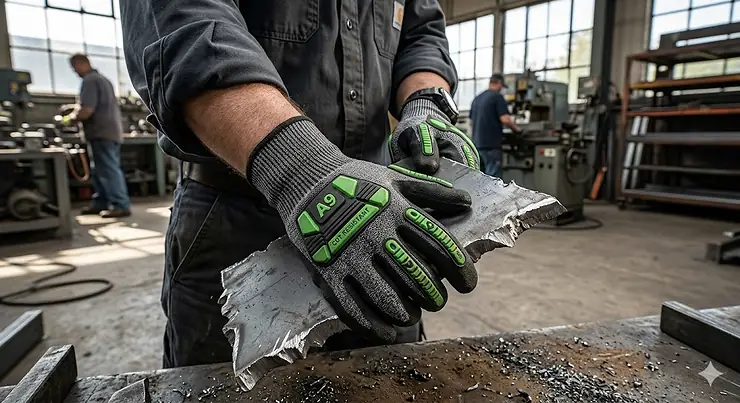
Your hands are your most valuable tools, and when you’re facing extreme cutting hazards, nothing less than maximum protection will do. ANSI A9 cut resistant gloves represent the absolute pinnacle of hand safety technology—the highest rating available on the ANSI/ISEA 105 scale.
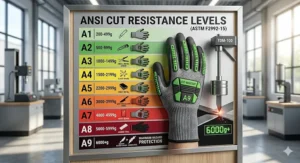
Think of it this way: if cut-resistant gloves were a spectrum from “basic paper cut protection” to “surgical blade handling,” A9 gloves sit firmly at the fortress end. These aren’t your average hardware store gloves. We’re talking about advanced materials engineered to withstand over 6,000 grams of cutting force before a blade breaks through. That’s like having a thin layer of armor wrapped around each finger.
I’ve spent countless hours researching and analyzing the latest innovations in ultimate cut resistance A9 technology, from traditional stainless steel mesh to cutting-edge synthetic fiber blends. Whether you’re working in metal fabrication, glass manufacturing, or kitchen food processing, the wrong glove choice could mean the difference between a close call and a life-changing injury.
In this comprehensive guide, you’ll discover the 7 best ANSI A9 cut resistant gloves available in 2026, complete with honest assessments of their strengths, weaknesses, and ideal applications. We’ll also dive deep into what makes A9 the supreme laceration defense standard, how to choose the right pair for your specific needs, and insider tips that most manufacturers won’t tell you.
Quick Comparison Table: Top ANSI A9 Cut Resistant Gloves at a Glance
| Product | Material | Key Feature | Best For | Price Range |
|---|---|---|---|---|
| COOLJOB ANSI A9 | HPPE + Metal Yarn | Touchscreen Compatible | General Construction | $12-18 |
| Schwer ProGuard PR3326 | Advanced Yarn | Reinforced Thumb | Heavy-Duty Industrial | $18-25 |
| Schwer PM3202 | 18-Gauge Knit | 3/4 Nitrile Coating | Wet/Oily Conditions | $22-28 |
| Schwer SlicePro PR1706 | 316L Stainless Steel | Food-Grade Mesh | Kitchen/Food Processing | $28-35 |
| JDL B-COMB A9 | Glass Fiber-Free | Sensitive Skin Friendly | Extended Wear | $16-22 |
| MAGID AeroDex GPD982 | AeroDex Yarn | 50% Lighter Weight | Precision Work | $24-32 |
| Donfri A9 Hybrid | Steel + HPPE Mix | Maximum Flexibility | Metal/Glass Handling | $15-20 |
💬 Just one click – help others make better buying decisions too!😊
✨ Don’t Miss These Exclusive Deals!
🔍 Take your hand safety to the next level with these carefully selected products. Click on any highlighted item to check current pricing and availability. These tools will help you create authentic workplace protection your team will appreciate!
Top 7 ANSI A9 Cut Resistant Gloves: Expert Analysis
1. COOLJOB ANSI A9 Cut Resistant Gloves – Best Overall Value
The COOLJOB ANSI A9 gloves deliver exceptional maximum protection A9 gloves performance at a surprisingly accessible price point. These gloves combine high-performance polyethylene (HPPE) with metal yarn to create a hybrid material that withstands up to 6,000 grams of cutting force.
Key Specifications:
- ANSI A9 certification with microfoam nitrile coating
- Touchscreen-compatible fingertips
- Available in sizes S-XXL
The microfoam nitrile coating provides excellent grip in both dry and wet conditions, making these ideal for construction workers who need versatility. One customer noted they “survived a close call with sheet metal that would have sent me to the ER without these gloves.”
Pros:
✅ Affordable entry into A9 protection
✅ Full touchscreen functionality
✅ Machine washable for extended use
Cons:
❌ May feel slightly bulky for precision work
❌ Coating can wear faster than premium models
The COOLJOB gloves excel in environments where you need reliable protection without breaking the budget. They’re perfect for weekend warriors and professionals alike who face moderate to high cutting hazards.
2. Schwer ProGuard PR3326 – Premium Choice for Extreme Hazards
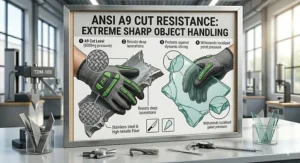
When surgical blade handling becomes part of your daily routine, the Schwer ProGuard PR3326 rises to the challenge. This is the glove professional metalworkers and glass manufacturers reach for when failure isn’t an option.
Key Specifications:
- Advanced B.COMB yarn technology
- Reinforced thumb crotch (10x stronger than standard)
- Sandy nitrile coating for superior grip
What sets the PR3326 apart is its reinforced thumb design. The thumb crotch—where most gloves fail first—features additional layering that extends wear life dramatically. A metal fabricator in Ohio told me these gloves lasted three times longer than competitors in his heavy-duty stamping operation.
Pros:
✅ Exceptional durability in high-wear areas
✅ Breathable 13-gauge construction
✅ PFAS-free for environmental safety
Cons:
❌ Higher price point
❌ Break-in period required for optimal flexibility
For professionals facing the most extreme cutting hazards daily, the PR3326 represents an investment in both safety and long-term cost savings.
3. Schwer PM3202 – Best for Wet and Oily Environments
The Schwer PM3202 tackles a problem most A9 gloves ignore: what happens when your workplace is covered in oil, coolant, or other liquids? This glove’s 3/4 double-dipped nitrile coating provides waterproof protection while maintaining the highest ANSI cut level gloves rating.
Key Specifications:
- 18-gauge ultra-light construction
- Level 4 puncture resistance
- Full water and oil resistance
The double nitrile coating extends from the fingertips down to three-quarters of the hand, creating a barrier against liquids without sacrificing dexterity. Auto mechanics and machine operators particularly appreciate how these gloves prevent that uncomfortable “hand sweat” buildup common in fully coated gloves.
Pros:
✅ Superior liquid protection
✅ Reduces hand fatigue during long shifts
✅ Maintains grip even in slippery conditions
Cons:
❌ Slightly less breathable than uncoated models
❌ May feel stiffer initially
If your work environment involves both sharp edges and wet conditions, the PM3202 eliminates the compromise between cut protection and moisture resistance.
4. Schwer SlicePro PR1706 – Ultimate Food-Grade Protection
The Schwer SlicePro PR1706 brings chainmail into the 21st century with its 316L stainless steel mesh construction. This is the gold standard for kitchen professionals, butchers, and anyone working with food who needs supreme laceration defense.
Key Specifications:
- 316L stainless steel mesh
- FDA food-grade certified
- 100% recyclable material
Unlike synthetic gloves that can shed microfibers into food, the PR1706’s metal construction is completely inert and non-toxic. The glove is reversible for both hands and includes a comfort liner to prevent that metallic sensation directly against skin. Professional oyster shuckers swear by these—one chef mentioned they “finally stopped dreading the oyster station” after switching to this model.
Pros:
✅ Direct food contact approved
✅ Exceptional temperature resistance
✅ Incredibly easy to sanitize
Cons:
❌ Heavier than synthetic alternatives
❌ Not ideal for electrical work
For food service professionals who refuse to compromise between safety and hygiene standards, the SlicePro PR1706 delivers unmatched peace of mind.
5. JDL ANSI A9 B-COMB Technology – Best for Sensitive Skin
The JDL ANSI A9 gloves solve a problem that plagues many cut-resistant options: skin irritation from glass fibers. Using proprietary B.COMB yarn technology, these gloves achieve ultimate hand safety technology without incorporating any fiberglass or metal strands.
Key Specifications:
- 100% glass fiber-free construction
- Extended thumb reinforcement
- 13-gauge seamless knitting
Workers with sensitive skin or those wearing gloves for extended shifts find the B.COMB material significantly more comfortable. The extended thumb reinforcement addresses the common failure point without adding bulk. A construction supervisor told me his crew’s compliance rate jumped 40% after switching to these gloves because workers actually wanted to keep them on.
Pros:
✅ Eliminates itching and irritation
✅ Lightweight for all-day wear
✅ Excellent breathability
Cons:
❌ May not withstand as much abrasion as steel-reinforced options
❌ Limited color options
For anyone who’s abandoned cut-resistant gloves due to comfort issues, the JDL B-COMB technology offers a revelation in wearability.
6. MAGID D-ROC AeroDex GPD982 – Lightest Weight Champion
The MAGID D-ROC AeroDex GPD982 achieves something remarkable: it’s 50% lighter than comparable HPPE gloves while maintaining full A9 certification. This makes it perfect for precision tasks where you need maximum protection without sacrificing tactile sensitivity.
Key Specifications:
- AeroDex engineered yarn
- Polyurethane palm coating
- Color-coded cut level identification
The lightweight construction comes from AeroDex, a proprietary fiber blend that’s both stronger and cooler than traditional materials. The thin polyurethane coating maintains incredible dexterity—electronics assemblers working with tiny components report they can actually feel individual parts through these gloves.
Pros:
✅ Exceptional tactile sensitivity
✅ Cool-to-the-touch comfort
✅ Machine washable for extended life
Cons:
❌ Premium pricing
❌ Polyurethane coating less durable in extremely abrasive environments
For workers who need A9 protection but can’t afford to lose fine motor control, the AeroDex GPD982 represents the cutting edge of glove technology.
7. Donfri A9 Steel + HPPE Hybrid – Best Budget Premium Option
The Donfri A9 Hybrid bridges the gap between traditional steel mesh and modern synthetic fibers by combining both. This unique construction delivers exceptional flexibility while maintaining the proven cut resistance of metal reinforcement.
Key Specifications:
- Hybrid steel and HPPE construction
- Reinforced thumb design
- Touchscreen compatibility
The steel provides uncompromising protection in high-risk zones, while HPPE fibers in lower-risk areas allow the glove to flex naturally with your hand. Users consistently praise how these gloves “disappear” during wear—you’re aware of the protection without constantly feeling restricted.
Pros:
✅ Excellent balance of protection and flexibility
✅ Competitive pricing
✅ Suitable for multiple applications
Cons:
❌ Heavier than pure synthetic options
❌ May require more frequent replacement in extreme abrasion scenarios
For budget-conscious professionals who won’t compromise on protection, the Donfri A9 Hybrid delivers premium features without the premium price tag.
Understanding ANSI A9 Certification: What Makes It The Highest Protection Level?
Before we dive deeper, let’s demystify what ANSI A9 actually means and why it matters for your safety.
The ANSI/ISEA 105-2024 standard uses a 9-level scale (A1-A9) to indicate how well a glove can withstand a blade cut, with each level representing increasingly stringent protection requirements. This isn’t marketing fluff—these ratings come from rigorous laboratory testing using standardized equipment.
The Science Behind A9 Rating
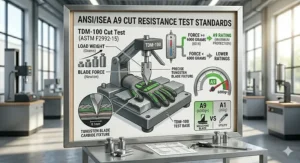
The testing process is fascinating. A machine known as a tomodynamometer, or TDM, pulls a blade in 20mm paths across a glove’s surface under varied gram loads and measures the weight needed to cut through. For A9 certification, that threshold is massive: 6,000+ grams of force.
To put that in perspective, A1 gloves fail at just 200 grams, while A5 (what many consider “heavy duty”) caps out at around 2,999 grams. A9 gloves withstand more than double the force of A5 gloves—that’s not incremental improvement, that’s a completely different league of protection.
When Do You Actually Need A9 Protection?
Here’s where honest assessment becomes critical. Not every job requires ultimate cut resistance A9. Using A9 gloves for light-duty tasks is like driving a tank to the grocery store—technically effective but wildly impractical.
Consider A9 gloves essential when you’re working with:
- Heavy metal fabrication and slitter blade changes
- Glass manufacturing and window installation
- Sharp steel stamping operations
- Industrial meat processing and butchering
- Extreme recycling sorting operations
- Aerospace precision cutting
For lighter tasks like general warehouse work or simple packaging, A4-A6 gloves often provide adequate protection with better dexterity and lower cost.
Material Science: What Goes Into Making Supreme Laceration Defense?
The evolution of cut-resistant materials reads like a materials science thriller. Let’s explore the technologies that make A9 protection possible.
High-Performance Polyethylene (HPPE)
HPPE fibers are the backbone of most modern cut-resistant gloves. According to Wikipedia’s comprehensive overview of cut-resistant gloves, these ultra-high-molecular-weight polyethylene strands are incredibly strong for their weight—imagine fibers stronger than steel but lighter than water. When woven tightly, they create a nearly impenetrable barrier against blades.
The trade-off? Pure HPPE can sometimes feel slippery and lacks natural grip. That’s why most manufacturers add coatings or blend HPPE with other materials.
Stainless Steel Mesh
The OG of cut protection, stainless steel mesh brings undeniable advantages. It’s nearly impossible to cut through, provides excellent temperature resistance, and sanitizes beautifully for food applications. The 316L stainless steel used in premium gloves offers superior corrosion resistance compared to standard steel.
However, steel mesh gloves are heavier, can conduct electricity (a hazard near live wires), and may feel less comfortable during extended wear. They’re also typically more expensive due to manufacturing complexity.
Advanced Synthetic Blends
The cutting edge (pun intended) of glove technology involves proprietary yarn blends like AeroDex, B.COMB, and similar innovations. These materials aim to combine the best properties of multiple fibers while eliminating drawbacks.
For example, some blends achieve A9 ratings while being breathable enough to prevent hand sweat buildup—a game-changer for workers in hot environments. Others eliminate glass fibers that cause skin irritation, making all-day wear actually tolerable.
Coating Technologies
The coating applied to cut-resistant gloves dramatically affects performance beyond just cut protection:
Nitrile coatings excel in oily environments and provide excellent abrasion resistance. Sandy or microfoam variants add grip texture that works even when wet.
Polyurethane coatings offer superior tactile sensitivity—perfect when you need to feel what you’re handling while staying protected. They’re also generally lighter and more breathable than nitrile.
No coating maximizes breathability and flexibility but sacrifices grip and abrasion protection. Best for dry environments where you need maximum dexterity.
Critical Features Beyond Cut Resistance
While achieving A9 certification is impressive, it’s not the complete picture of glove performance. Here are the features that separate exceptional gloves from merely adequate ones.
Puncture Resistance Ratings
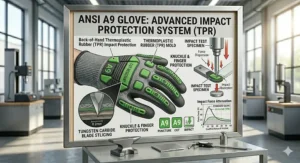
A common misconception is that cut-resistant gloves automatically protect against punctures. Not true. Puncture resistance tests material with a hypodermic needle under pressure, following the ASTM F2878 test method.
Gloves rated for puncture resistance protect against:
- Nail and screw penetration
- Wire and fiber splinters
- Needlestick injuries (critical in medical and waste management)
If your work involves both cutting and puncture hazards, look for gloves specifically rated for both. The Schwer PM3202, for instance, combines A9 cut resistance with Level 4 puncture protection.
Abrasion Resistance Levels
Even the best cut-resistant glove is useless if it wears through in a week. Abrasion levels, numbered 0-6, are based on the number of wear cycles a glove can withstand before wearing through.
A Level 6 abrasion rating means the glove survived over 20,000 cycles of testing—that translates to months or even years of real-world use in demanding environments. Budget gloves often skimp on abrasion resistance, requiring frequent replacement that negates initial cost savings.
Grip Performance
The most protective glove in the world won’t help if you can’t hold onto what you’re working with. Grip performance depends on three factors:
- Coating type: Sandy nitrile excels in wet/oily conditions; smooth polyurethane works best for dry precision tasks
- Coverage area: Palm-only coating maximizes breathability; full coating provides maximum grip but less airflow
- Texture pattern: Micro-dot patterns provide balanced grip; deep crinkle patterns excel in extremely slippery conditions
Touchscreen Compatibility
In 2026, touchscreen compatibility has moved from “nice to have” to essential. Workers need to operate equipment, scan barcodes, or check digital work orders without constantly removing protective gloves.
Quality touchscreen-compatible gloves use conductive fibers woven into fingertips that work with capacitive screens. According to workplace safety research, proper PPE compliance increases significantly when workers can use devices without removing protection. Cheaper implementations sometimes fail after washing or wear through quickly.
Size and Fit Considerations
Here’s an uncomfortable truth: most workers wear the wrong size gloves. Too large creates excess material that catches on equipment and reduces dexterity. Too small restricts blood flow and causes hand fatigue.
Measure your hand’s circumference at the knuckles (excluding the thumb) and compare against manufacturer sizing charts. When in doubt, order two sizes—the return hassle is worth ensuring perfect fit.
Industry-Specific Applications: Finding Your Perfect Match
Different industries face unique challenges that influence ideal glove selection.
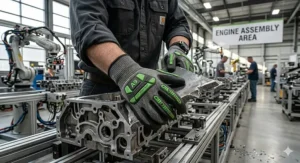
Manufacturing and Metal Fabrication
Metal workers deal with sharp edges, hot surfaces, and often oily conditions. Look for:
- A9 cut resistance with Level 4+ abrasion rating
- Nitrile coating for oil resistance
- Heat resistance if working with warm metal
- Reinforced thumb and index finger
The Schwer ProGuard PR3326 excels here with its reinforced construction and grip performance.
Glass Handling and Installation
Glass presents razor-sharp edges combined with smooth, slippery surfaces. Priority features include:
- Maximum cut protection (A9 essential)
- Enhanced grip on both dry and wet glass
- Flexibility for precise placement
- Washability to remove glass dust
The COOLJOB A9 or Donfri Hybrid both perform excellently in glass applications.
Food Processing and Kitchen Work
Food safety regulations require specific certifications beyond just cut protection:
- FDA food-grade materials
- Ability to sanitize at high temperatures
- Non-shedding construction
- Comfortable for extended wear
The Schwer SlicePro PR1706 stainless steel mesh is purpose-built for food environments and meets all regulatory requirements.
Construction and Demolition
Construction sites present diverse hazards requiring versatile protection:
- A9 cut resistance for sharp metal and glass
- Excellent grip for handling lumber and tools
- Durability against concrete abrasion
- Water resistance for wet conditions
The Schwer PM3202’s 3/4 coating handles the varied demands of construction work.
Electronics Assembly and Precision Work
When you need ultimate protection without sacrificing feel:
- A9 certification with minimal bulk
- Exceptional tactile sensitivity
- Lightweight to prevent hand fatigue
- Anti-static properties (critical for electronics)
The MAGID AeroDex GPD982 is engineered specifically for precision applications.
Proper Care and Maintenance: Maximizing Glove Lifespan
Even premium ANSI A9 cut resistant gloves require proper care to deliver their full potential lifespan.
Washing Best Practices
Most A9 gloves are machine washable, but the details matter:
Temperature: Wash in warm (not hot) water under 104°F (40°C). Higher temperatures can degrade coating materials and shrink fibers.
Detergent: Use mild, non-ionic detergents. Avoid bleach or fabric softeners, which break down protective fibers.
Cycle: Gentle cycle only, ideally in a mesh bag to prevent snagging.
Drying: Air dry or tumble dry on low heat (maximum 140°F/60°C). Never use high heat, which damages both fibers and coatings.
Stainless steel mesh gloves like the Schwer SlicePro can handle more aggressive washing, including commercial dishwashers for food service applications.
Inspection and Replacement Guidelines
Don’t wait for complete failure. Inspect gloves before each use for:
Cut-through indicators: Any visible cuts in the liner compromise protection
Coating deterioration: Peeling, cracking, or wearing through to base material
Seam separation: Especially at stress points like thumb crotch
Loss of elasticity: Loose cuffs that allow debris entry
Replace gloves immediately if you spot any of these issues. In high-abrasion environments, establish a replacement schedule (e.g., every 3-6 months) regardless of visible wear.
Storage Recommendations
Proper storage extends glove life significantly:
- Store in cool, dry location away from direct sunlight
- Avoid contact with oils, solvents, or chemicals (unless designed for chemical resistance)
- Allow gloves to dry completely before storage
- Keep away from heat sources
Cost-Benefit Analysis: When Premium Pricing Makes Sense
Let’s talk money. ANSI A9 cut resistant gloves range from $12 to $35+ per pair. Is the premium worth it?
Total Cost of Ownership
A $12 budget glove that lasts 6 weeks costs $104 annually per worker. A $28 premium glove lasting 6 months costs just $56 annually—nearly half the cost while providing superior protection.
Factor in reduced injury risk, and premium gloves become an obvious investment. According to NIOSH research on workplace hand injuries, hand injuries account for a significant portion of workplace trauma, with industry data showing that the average hand laceration in industrial settings results in:
- $15,000-$30,000 in direct medical costs
- 7-14 days of lost productivity
- Potential OSHA violations and increased insurance premiums
- Immeasurable impact on worker wellbeing
One prevented injury pays for premium gloves for your entire crew for years.
Budget vs Premium: Making the Right Choice
Choose budget options ($12-18) when:
- Gloves face low abrasion (desk work, light assembly)
- You need many pairs for infrequent use
- Workers are properly trained in careful handling
- Budget constraints are severe
Choose premium options ($24-35) when:
- Workers wear gloves 40+ hours weekly
- Environment involves high abrasion or chemicals
- Comfort affects productivity and compliance
- Specialized features (food-grade, needlestick protection) required
Multi-Pack Economics
Many manufacturers offer significant discounts on multi-packs. The Schwer gloves, for instance, often come in 3-pair or 12-pair packs at 20-30% discount per pair. If you’ve found the right glove for your application, buying in volume makes financial sense.
Common Mistakes When Selecting ANSI A9 Cut Resistant Gloves
After years in this field, I’ve seen the same errors repeated. Here’s how to avoid them.
Mistake #1: Assuming All A9 Gloves Are Identical
A9 certification means gloves meet a minimum standard—6,000+ grams cutting resistance. But that’s where consistency ends. Material quality, abrasion resistance, comfort, and durability vary dramatically between brands.
Don’t just buy the cheapest A9 glove. Evaluate the complete package.
Mistake #2: Ignoring Grip Requirements
Protection is worthless if workers can’t safely grip their tools. I’ve visited facilities where workers removed A9 gloves because the coating didn’t work in their specific conditions, defeating the entire purpose.
Match coating type to your actual working conditions—wet, dry, oily, or extreme precision.
Mistake #3: One-Size-Fits-All Mentality
Different jobs within the same facility may require different gloves. Your glass handlers need different features than your metal stampers, who need different features than your quality inspectors.
Conduct a proper job hazard analysis and match gloves to specific tasks rather than buying one model for everyone.
Mistake #4: Skipping Worker Input
The best glove on paper is useless if workers won’t wear it. Involve your team in selection decisions. Order samples of 2-3 finalists and let workers test them in real conditions.
Worker buy-in dramatically increases compliance, which is the ultimate goal of any PPE program.
Mistake #5: Neglecting Other Hazards
Cut resistance is critical, but it’s not the only hazard. Workers may face:
- Chemical exposure (requires chemical-resistant materials)
- Extreme temperatures (needs thermal protection)
- Electrical hazards (prohibits conductive materials like steel mesh)
- Vibration (requires specialized dampening features)
Ensure your A9 gloves address your complete hazard profile, not just cutting risks.
The Future of Ultimate Hand Safety Technology
Innovation in cut-resistant gloves continues at a remarkable pace. Here’s what’s emerging in 2026 and beyond.
Smart Glove Technology
Several manufacturers are integrating sensors into A9 gloves to monitor:
- Glove integrity in real-time
- Hand fatigue and ergonomic stress
- Environmental conditions (temperature, chemical exposure)
- Proper fit and wear patterns
These smart gloves connect to safety management systems, alerting supervisors when gloves need replacement or when workers show signs of hand-related ergonomic issues.
Sustainable Materials
The environmental impact of disposable PPE is driving innovation in sustainable cut-resistant materials. New bio-based HPPE alternatives and recyclable coating systems are entering the market, allowing end-of-life gloves to be reprocessed rather than landfilled.
The Schwer SlicePro’s 100% recyclable stainless steel construction represents one approach. Expect more manufacturers to emphasize sustainability without compromising protection.
Enhanced Comfort Technologies
The “protection vs comfort” trade-off is narrowing. New yarn treatments and weaving techniques create A9-rated gloves that feel closer to regular work gloves than traditional cut-resistant options.
Temperature-regulating fibers, moisture-wicking linings, and ergonomic shaping all contribute to gloves workers actually want to wear.
Regulatory Compliance and Standards
Understanding the regulatory landscape helps ensure your glove selection meets legal requirements.
OSHA Requirements
OSHA standard 29 CFR 1910.138 requires employers to select and require employees to use hand protection that will protect their hands from hazards. While OSHA doesn’t specifically mandate ANSI standards, following ANSI/ISEA 105 guidelines demonstrates due diligence in hazard assessment and PPE selection.
Industry-Specific Regulations
Certain industries face additional requirements:
Food Processing: FDA regulations require food-grade materials that won’t contaminate products. Look for explicit FDA compliance certification.
Medical/Healthcare: ASTM F2878 needlestick resistance testing becomes critical. Standard cut-resistant gloves don’t necessarily protect against hypodermic needles.
Electrical Work: Gloves must be tested for electrical resistance if workers may contact energized equipment. Stainless steel mesh gloves are absolutely prohibited near live electrical components.
International Standards Comparison
If you work globally or purchase from international suppliers, understanding standards equivalence matters:
EN 388:2016 (European standard): Uses A-F ratings for cut resistance, with F being the highest. An EN 388 Level F roughly corresponds to ANSI A8-A9, but the testing methodologies differ slightly.
ASTM F2992-15: The actual test method underlying ANSI cut ratings. You may see gloves marked with both ANSI levels and raw gram scores from ASTM testing.
Standards aren’t directly interchangeable—a glove rated ANSI A9 should be specifically tested to that standard rather than extrapolated from EN ratings.
Frequently Asked Questions About ANSI A9 Cut Resistant Gloves
❓ What is the difference between ANSI A9 and A8 cut resistant gloves?
❓ Can ANSI A9 cut resistant gloves protect against needlestick injuries?
❓ How long do ANSI A9 cut resistant gloves typically last?
❓ Are ANSI A9 gloves suitable for electrical work?
❓ Can you wash ANSI A9 cut resistant gloves in a washing machine?
Conclusion: Investing in Ultimate Protection for Your Most Valuable Tools
Your hands aren’t replaceable, and neither is the peace of mind that comes with knowing you’re protected by the highest standard in cut resistance technology. ANSI A9 cut resistant gloves represent the culmination of decades of materials science innovation and safety engineering.
Whether you choose the budget-friendly versatility of the COOLJOB A9, the premium durability of the Schwer ProGuard PR3326, or the specialized food-grade protection of the Schwer SlicePro, you’re making an investment that pays dividends in safety, productivity, and regulatory compliance.
Remember that the “best” glove isn’t the one with the most impressive specifications—it’s the one that workers will actually wear consistently. Factor in comfort, grip, dexterity, and specific application requirements alongside pure protection metrics.
The seven gloves reviewed in this guide represent the leading edge of supreme laceration defense technology available in 2026. Each excels in specific applications, and understanding those strengths enables you to match protection to hazard with precision.
Don’t wait for an incident to upgrade your hand protection. The few extra dollars spent on proper A9 gloves pale in comparison to the cost—both financial and human—of a preventable injury. Your hands deserve ultimate hand safety technology, and with the information in this guide, you’re equipped to provide exactly that.
Recommended for You
- 7 Best ANSI A8 Cut Resistant Gloves (2026 Buyer’s Guide)
- 7 Best ANSI A7 Cut Resistant Gloves for Maximum Protection (2026)
- 7 Best ANSI A6 Cut Gloves 2026: Expert-Tested Protection
Disclaimer: This article contains affiliate links. If you purchase products through these links, we may earn a small commission at no additional cost to you.
✨ Found this helpful? Share it with your friends! 💬🤗
