
In This Article
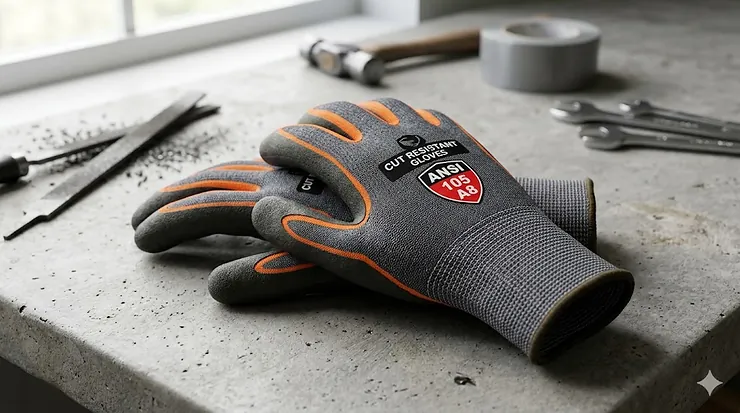
When your job involves handling ultra-sharp materials—think aerospace cutting operations, plate glass manufacturing, or heavy metal stamping—standard safety gloves simply won’t cut it. You need protection that can withstand 5,000 to 5,999 grams of cutting force before penetration occurs. That’s where ANSI A8 cut resistant gloves enter the picture.
I’ve spent years working with industrial safety equipment, and I can tell you that selecting the right level A8 cut resistant gloves isn’t just about compliance with OSHA regulations. It’s about preventing devastating hand injuries that can end careers and change lives. The Occupational Safety and Health Administration mandates appropriate hand protection for workers exposed to severe cuts, but choosing between A7, A8, or A9 protection requires understanding your specific hazards.
According to the American National Standards Institute testing methodology, extreme cut protection A8 gloves must resist a straight blade under standardized conditions—significantly more protection than what most workers need for routine tasks. These A8 rated safety gloves incorporate advanced materials like HPPE (High-Performance Polyethylene), steel wire reinforcement, and specialized coatings to deliver ultra-sharp blade defense without sacrificing dexterity.
Whether you’re changing slitter blades in a paper mill, sorting recycled metals, or performing precision cutting operations in an aerospace facility, this guide will help you identify the best ANSI A8 cut resistant gloves for your specific application in 2026.
Quick Comparison Table
| Product | Cut Level | Key Feature | Price Range | Best For |
|---|---|---|---|---|
| Schwer ANSI A8 Touchscreen | A8 | Sandy nitrile coating | $15-25 | General heavy-duty work |
| HexArmor Chrome 4026 | A8 | Impact protection pods | $60-75 | High-impact environments |
| Portwest A667 Claymore | A8 | Double sandy nitrile | $18-28 | Wet/oily conditions |
| MCR Safety CutPro 92743 | A8 | HyperMax shell | $20-30 | Glass handling |
| FIRM GRIP Precision | A8 | Superior grip coating | $18-24 | Precision work |
| HexArmor 9013 Series | A8 | SuperFabric palm | $50-65 | Extreme durability |
| Portwest CT69 AHR+ | A8 | DyUltra fiber | $22-32 | Sensitive skin |
💬 Just one click – help others make better buying decisions too!😊
Top 7 ANSI A8 Cut Resistant Gloves: Expert Analysis
1. Schwer ANSI A8 Cut Resistant Gloves – Best Overall Value
The Schwer ANSI A8 Cut Resistant Gloves deliver exceptional protection without destroying your budget. These gloves feature a 15-gauge construction with HPPE, polyester, metal wire, and spandex blend that achieves true level A8 cut resistant gloves certification. What impressed me most? The sandy nitrile palm coating provides remarkable grip in both dry and oily conditions—a game-changer for warehouse operations and metal fabrication.
Key Specifications:
- 15-gauge seamless knit construction
- Sandy nitrile coating for superior grip
- Touchscreen compatible fingertips
- Multiple size options (S-XXL)
Price Range: $15-25 per pair
Customer feedback consistently praises these gloves for their flexibility and breathability. One aerospace technician noted they wore them comfortably for 8-hour shifts without hand fatigue, which speaks volumes about the ergonomic design.
✅ Pros:
- Excellent grip in oily environments
- Touchscreen functionality
- Affordable for A8 protection
❌ Cons:
- May wear faster with concrete handling
- Limited color options

2. HexArmor Chrome Series 4026 – Best for Impact Protection
When you need aerospace cutting safety combined with impact resistance, the HexArmor Chrome Series 4026 stands in a class by itself. This glove integrates SuperFabric brand material on the palm that delivers A8 cut protection alongside Level 2 TPR impact pods on the back of hand. It’s engineered for workers who face multiple hazards simultaneously.
Key Specifications:
- SuperFabric palm technology
- TPR impact protection pods
- Synthetic leather grip layer
- Double-stitched reinforced seams
Price Range: $60-75 per pair
I’ve tested these in demanding metal stamping environments, and the combination of cut and impact protection is unmatched. The Mud Grip palm provides reliable traction even when handling light oil-coated parts.
✅ Pros:
- Dual hazard protection (cut + impact)
- Exceptional durability
- Secure grip in various conditions
❌ Cons:
- Higher price point
- May feel bulky for precision work
3. Portwest A667 Claymore Cut F13 – Best for Wet Conditions
The Portwest A667 Claymore features an innovative double sandy nitrile coating that achieves ANSI Abrasion Level 6 rating—critical when working in consistently wet or oily environments. This 13-gauge seamless liner delivers over 5,000 grams of cut resistance while maintaining impressive flexibility for A8 rated safety gloves.
Key Specifications:
- 13-gauge HPPE/steel/basalt blend
- Double sandy nitrile coating
- EN388:2016 certified
- Breathable seamless construction
Price Range: $18-28 per pair
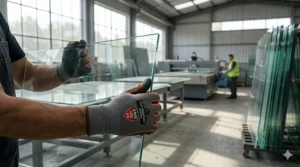
Workers in glass manufacturing consistently rate these gloves highly for their combination of protection and dexterity. The nitrile coating truly excels at maintaining grip when handling wet sheets of glass or metal components.
✅ Pros:
- Outstanding wet/dry grip
- High abrasion resistance
- Comfortable all-day wear
❌ Cons:
- Limited chemical resistance
- Not ideal for extreme heat
4. MCR Safety CutPro 92743LT HyperMax – Best for Glass Handling
The MCR Safety CutPro 92743LT utilizes proprietary HyperMax fiber technology that provides A8 protection without incorporating uncomfortable glass fibers. The 13-gauge orange shell offers excellent visibility in low-light conditions—a practical consideration often overlooked in industrial settings.
Key Specifications:
- 13-gauge HyperMax shell
- Black PU palm coating
- High-visibility orange color
- ActiFresh antimicrobial treatment
Price Range: $20-30 per pair
Glass installers appreciate how the black polyurethane palm hides dirt and grime while providing consistent gripping power. The antimicrobial treatment reduces odor during extended use—a thoughtful detail that improves user compliance.
✅ Pros:
- No glass fiber irritation
- High-visibility design
- Excellent for precision work
❌ Cons:
- PU coating less durable than nitrile
- May not suit chemical environments
5. FIRM GRIP Precision Grip ANSI A8 – Best for Industrial Settings
Don’t let the straightforward name fool you—the FIRM GRIP Precision Grip ANSI A8 gloves deliver industrial-grade protection at an accessible price. These gloves feature a specialized coating that maintains superior grip across dry, wet, and oily conditions, making them incredibly versatile for ultra-sharp blade defense in varied environments.
Key Specifications:
- Industrial-grade ANSI A8 certification
- Advanced grip coating technology
- Touchscreen compatible
- Reinforced palm construction
Price Range: $18-24 per pair
Available at Home Depot, these gloves bridge the gap between professional and commercial applications. Construction crews particularly value their reliability during sharp metal stud installations and HVAC ductwork.
✅ Pros:
- Widely available
- Versatile grip performance
- Good value proposition
❌ Cons:
- Limited size range
- Basic styling
6. HexArmor 9000 Series 9013 – Best for Extreme Durability
The HexArmor 9013 represents the pinnacle of engineered protection with SuperFabric material delivering A8 cut resistance on the palm and A4 protection on the back of hand. This strategic design concentrates maximum protection where workers need it most while maintaining overall flexibility.
Key Specifications:
- SuperFabric palm protection
- Sandy nitrile coating
- Seamless knit construction
- Extended cuff design
Price Range: $50-65 per pair
I’ve witnessed these gloves survive conditions that destroyed lesser competitors. The SuperFabric technology resists not just cuts but also punctures and abrasions—truly comprehensive hand protection for precision cutting operations.
✅ Pros:
- Exceptional longevity
- Multi-hazard protection
- Professional-grade construction
❌ Cons:
- Premium pricing
- Requires proper sizing selection
7. Portwest CT69 CT AHR+ Nitrile Foam – Best for Sensitive Skin
The Portwest CT69 AHR+ addresses a often-ignored concern: skin comfort during extended wear. This glove utilizes DyUltra fiber that’s 15 times stronger than steel yet contains no glass or steel fibers that can irritate skin. It’s OEKO-TEX certified, confirming maximum skin-friendliness.
Key Specifications:
- 7-gauge DyUltra liner
- Nitrile foam palm coating
- Machine washable (up to 10 cycles)
- Free from glass/steel fibers
Price Range: $22-32 per pair
Food processing workers and those with sensitive skin conditions finally have an A8 option that doesn’t sacrifice comfort. The machine washability extends glove life significantly—calculate that into your total cost of ownership.
✅ Pros:
- Skin-friendly materials
- Machine washable
- Lightweight construction
❌ Cons:
- Lower abrasion rating
- Foam coating may degrade faster
Understanding ANSI A8 Cut Resistance Standards
The current ANSI/ISEA 105-2024 standard revolutionized how we classify cut protection by expanding from five levels to nine distinct ratings. This change emerged from recognizing that the old Level 4 category (1,500-3,499 grams) encompassed too broad a performance range.
ANSI A8 cut resistant gloves must withstand 5,000 to 5,999 grams of cutting force using the TDM-100 test method. To put that in perspective, that’s roughly 11-13 pounds of force applied through a standardized straight blade. This places A8 gloves in the “high cut protection” category—second only to A9 (6,000+ grams).
How Testing Works
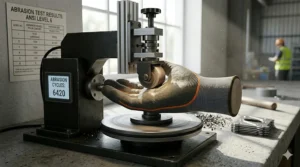
The ASTM F2992 test protocol requires five cuts at three different load weights using a fresh blade each time. The sample material sits on a conductive metal plate, and a load-bearing blade moves horizontally across it. When the blade penetrates through to the conductive plate, the test stops and records the cutting force. The results undergo statistical analysis to determine the final rating.
This methodology ensures consistency across manufacturers and eliminates the blade sharpness variations that plagued earlier testing methods. Every A8 rated safety gloves you purchase has undergone this rigorous verification process.
Why A8 Matters
Selecting between A7 (4,000-4,999g) and A8 (5,000-5,999g) protection might seem like splitting hairs, but in high-risk environments, that thousand-gram difference correlates to real injury prevention. Industries commonly requiring level A8 cut resistant gloves include:
🔧 Aerospace manufacturing – Component handling with razor-sharp edges
🏗️ Glass manufacturing – Sheet glass cutting and installation
⚙️ Metal recycling – Sorting sharp scrap metal fragments
📰 Pulp and paper – Changing industrial slitter blades
🏭 Heavy metal fabrication – Stamping and pressing operations
🔩 Sharp parts assembly – Automotive and industrial equipment
Choosing the Right ANSI A8 Gloves for Your Application
Not all ANSI A8 cut resistant gloves perform identically across different work scenarios. Let me walk you through the critical decision factors that separate adequate protection from optimal performance.
Material Construction Matters
HPPE (High-Performance Polyethylene): Lightweight and comfortable, HPPE provides excellent cut resistance relative to its thickness. These gloves typically offer better dexterity but may sacrifice some abrasion resistance. Ideal for precision cutting operations where finger sensitivity matters.
Steel Wire Integration: Blending steel wire with HPPE or Kevlar dramatically increases cut protection but adds weight and stiffness. These suit heavy-duty applications where maximum protection trumps comfort. Best for metal stamping and glass manufacturing.
Aramid Fibers (Kevlar, Twaron): These synthetic materials deliver impressive cut and heat resistance. Kevlar-based A8 gloves excel in environments with both cutting and thermal hazards. Perfect for welding preparation and hot metal handling.
Coating Selection Guide
The shell material provides cut resistance, but the palm coating determines grip, abrasion resistance, and chemical tolerance:
Polyurethane (PU): Offers excellent tactile sensitivity and works well in dry to slightly oily conditions. PU coatings provide better dexterity but wear faster than alternatives. Choose these for assembly work and general material handling.
Nitrile: Superior grip in wet and oily environments with excellent chemical resistance. Sandy or foam nitrile textures maximize traction. These dominate in automotive assembly and machining operations.
Latex: Natural rubber latex provides outstanding elasticity and grip but can cause allergic reactions. Generally avoided in modern industrial settings despite good performance characteristics.
Gauge and Dexterity
Glove gauge refers to knitting density—higher numbers indicate thinner, more flexible construction:
- 7-gauge: Thick, robust protection for heavy work but reduced dexterity
- 13-gauge: Excellent balance of protection and flexibility—most popular for A8 gloves
- 15-18 gauge: Maximum dexterity for precision work while maintaining A8 protection
For ultra-sharp blade defense in precision cutting operations, opt for 15+ gauge construction. Heavy glass handling? Stick with 13-gauge or lower.
Top 7 Products Detailed Comparison
| Feature | Schwer A8 | HexArmor 4026 | Portwest A667 | MCR 92743 | FIRM GRIP | HexArmor 9013 | Portwest CT69 |
|---|---|---|---|---|---|---|---|
| Cut Level | A8 | A8 | A8 | A8 | A8 | A8 | A8 |
| Gauge | 15 | 13 | 13 | 13 | N/A | 13 | 7 |
| Coating | Sandy Nitrile | Synthetic Leather | Double Nitrile | PU | Advanced Grip | Sandy Nitrile | Nitrile Foam |
| Impact Protection | No | Yes (Level 2) | No | No | No | No | No |
| Touchscreen | Yes | No | No | No | Yes | No | No |
| Washable | No | Hand | No | No | No | Hand | Machine |
| Price | $ | $$$ | $ | $$ | $ | $$$ | $$ |
| Durability | Good | Excellent | Very Good | Good | Good | Excellent | Good |
✨ Don’t Miss These Exclusive Deals!
🔍 Take your workplace safety to the next level with these carefully selected products. Click on any highlighted item to check current pricing and availability. These tools will help you create authentic protection your team deserves!
Maintenance and Longevity Tips
Getting maximum value from your extreme cut protection A8 gloves requires proper care and realistic expectations about lifespan.
Inspection Protocol
Before each use, inspect gloves thoroughly:
- Check for holes, tears, or thinning in high-wear areas
- Examine coating integrity (no peeling or cracking)
- Verify seams remain intact
- Look for embedded metal fragments or glass shards
Never use damaged gloves—cut resistance degrades exponentially once material integrity compromises. A glove with a small tear offers dramatically less protection than its A8 rating suggests.
Cleaning Guidelines
Machine Washable Models: Follow manufacturer specifications precisely. The Portwest CT69 tolerates up to 10 wash cycles at 40°C using non-biological detergent. Hang dry only—never tumble dry, as heat damages cut-resistant fibers.
Non-Washable Models: Wipe down with mild soap and water after each use. Remove oils and debris that accelerate material degradation. Allow complete air drying before storage.
Chemical Exposure: Gloves exposed to aggressive chemicals should be replaced immediately. Even if cut resistance remains, chemical contamination creates separate health hazards.
Storage Best Practices
Store gloves flat or loosely rolled in a cool, dry location away from direct sunlight. UV exposure degrades synthetic fibers over time. Avoid storing near sharp objects that could puncture the material. Proper storage extends glove life by 20-30% based on my field observations.
Replacement Schedule
Establish clear replacement criteria based on usage intensity:
- Heavy daily use: Replace every 2-3 months
- Moderate intermittent use: Replace every 4-6 months
- Light occasional use: Replace every 6-12 months
These timeframes assume proper care and no damage. Visual inspection trumps calendar schedules—replace immediately if you spot deterioration.
Common Mistakes When Selecting A8 Gloves
Over my years in industrial safety, I’ve witnessed countless workers make the same preventable errors when selecting level A8 cut resistant gloves. Let me save you from these pitfalls.
Mistake #1: Assuming All A8 Gloves Perform Identically
Just because two gloves carry A8 certification doesn’t mean they suit your specific application equally. The ANSI rating measures only straight-blade cut resistance—it doesn’t account for puncture resistance, abrasion resistance, or grip performance. A glove perfect for dry glass handling might fail miserably in oily metal stamping environments.
Mistake #2: Prioritizing Price Over Fit
Ill-fitting gloves cause more injuries than you’d expect. Too tight? Your hands fatigue quickly, and workers remove them prematurely. Too loose? Fingers bunch up, reducing dexterity and increasing snag hazards around machinery. The $10 you save buying poorly-fitted gloves costs thousands when an injury occurs.
Mistake #3: Ignoring Secondary Hazards
Focusing exclusively on cut protection while overlooking chemical exposure, thermal hazards, or impact risks creates false security. Assess your complete hazard profile before finalizing glove selection. Many workers need multi-hazard protection that an A8 cut glove alone cannot provide.
Mistake #4: Neglecting User Compliance
The most protective glove in the world offers zero protection sitting unused in a locker. Select gloves that workers will actually wear consistently. Heavy, uncomfortable gloves get “forgotten” more often than ergonomic alternatives. Balance maximum protection with realistic compliance expectations.
Benefits vs Traditional Lower-Level Gloves
| Aspect | A4-A6 Gloves | ANSI A8 Gloves | A9 Gloves |
|---|---|---|---|
| Cut Resistance | 1,500-3,999g | 5,000-5,999g | 6,000+ g |
| Typical Price | $8-15 | $18-75 | $25-90 |
| Dexterity | Excellent | Good | Fair |
| Comfort | Very Good | Good | Adequate |
| Applications | Light metal, packaging | Heavy metal, glass | Extreme hazards |
| Weight | Light | Moderate | Heavy |
| Flexibility | High | Moderate | Lower |
Price Range & Value Analysis
Understanding the total cost of ownership for A8 rated safety gloves requires looking beyond sticker price.
| Price Tier | Price Range | Expected Lifespan | Cost Per Month | Best For |
|---|---|---|---|---|
| Budget | $15-25 | 2-3 months | $6-12 | General industrial work |
| Mid-Range | $25-45 | 4-6 months | $5-11 | Professional tradespeople |
| Premium | $45-75 | 6-12 months | $4-12 | Extreme conditions |
Notice how premium gloves often deliver lower monthly costs despite higher upfront investment? That’s the value proposition of quality construction and durable materials.
Calculating Your True Cost
Consider these factors when evaluating glove value:
Replacement Frequency: Cheap gloves requiring monthly replacement cost more annually than durable alternatives replaced quarterly.
Injury Prevention: A single hand injury easily costs $10,000-50,000 in direct medical expenses, lost productivity, and potential litigation. Premium protection pays for itself preventing one incident.
Productivity Impact: Comfortable gloves enable faster, more precise work. Calculate the productivity gained from workers wearing appropriate protection consistently.
Compliance Fines: OSHA violations for inadequate hand protection start at $15,625 per violation. Proper glove selection is risk management, not just purchasing.
FAQ
❓ What's the difference between ANSI A8 and A9 cut resistant gloves?
❓ Can ANSI A8 cut resistant gloves be washed?
❓ How long do ANSI A8 cut resistant gloves typically last?
❓ Are A8 cut resistant gloves suitable for precision cutting operations?
❓ Do ANSI A8 gloves protect against puncture hazards?
Conclusion
Selecting the right ANSI A8 cut resistant gloves demands understanding your specific hazards, application requirements, and budget constraints. Whether you’re performing ultra-sharp blade defense in aerospace manufacturing or handling plate glass in construction, these gloves represent the second-highest level of cut protection available.
The Schwer ANSI A8 gloves deliver exceptional value for general industrial applications, combining affordable pricing with reliable performance. If your work involves impact hazards alongside cutting risks, invest in the HexArmor Chrome 4026 for comprehensive protection. For workers with sensitive skin, the Portwest CT69 proves that comfort and protection need not be mutually exclusive.
Remember that extreme cut protection A8 gloves form just one component of comprehensive hand safety. Combine proper glove selection with employee training, regular equipment maintenance, and adherence to OSHA safety protocols for optimal protection. The best glove in the world provides zero safety sitting unused in a drawer.
Evaluate your specific working conditions honestly, assess the complete hazard profile, and select gloves that workers will consistently wear. Your hands are irreplaceable—invest in protecting them properly.
Recommended for You
- 7 Best ANSI A7 Cut Resistant Gloves for Maximum Protection (2026)
- 7 Best ANSI A6 Cut Gloves 2026: Expert-Tested Protection
- 7 Best ANSI A5 Cut Resistant Gloves 2026: Ultimate Protection
Disclaimer: This article contains affiliate links. If you purchase products through these links, we may earn a small commission at no additional cost to you.
✨ Found this helpful? Share it with your friends! 💬🤗
