

In This Article
Ever slipped on a pair of work gloves that felt like wearing oven mitts? Yeah, I’ve been there. When it comes to goatskin work gloves vs cowhide, you’re not just choosing between two types of leather—you’re deciding between surgical precision and brute force protection. The difference in tactile sensitivity and leather flexibility can literally make or break your workday, whether you’re threading a needle or gripping a crowbar.
Here’s the thing most people don’t realize: goatskin leather offers approximately 25-30% better dexterity than cowhide while still maintaining impressive abrasion resistance. The natural lanolin content in goatskin creates a supple, water-resistant barrier that actually improves with use. Meanwhile, cowhide brings its own heavyweight championship belt to the ring with superior heat resistance and thicker protection for heavy-duty applications.
Understanding the nuances between these two leather giants isn’t just about reading specifications. You need to know how each performs in real-world scenarios, how they age, and which one will save your bacon (or should I say, save your knuckles?) when the job gets tough.
Quick Comparison Table: Goatskin vs Cowhide at a Glance
| Feature | Goatskin | Cowhide |
|---|---|---|
| Tactile Sensitivity | Excellent (9/10) | Good (6/10) |
| Leather Flexibility | Superior – stretches naturally | Moderate – requires break-in |
| Abrasion Resistance | Very High | Excellent |
| Water Resistance | Natural lanolin protection | Moderate (requires treatment) |
| Dexterity Rating | Exceptional | Good after break-in |
| Thickness | Thinner (0.8-1.2mm) | Thicker (1.2-1.8mm) |
| Heat Resistance | Good (up to 250°F) | Excellent (up to 350°F) |
| Price Range | $15-$45 | $10-$35 |
| Best For | Precision work, TIG welding | Heavy construction, stick welding |
💬 Just one click – help others make better buying decisions too!😊
✨ Don’t Miss These Exclusive Deals!
Take your hand protection to the next level with these carefully selected products. Click on any highlighted item to check current pricing and availability. These gloves will help you achieve authentic results your hands will thank you for!
Top 7 Goatskin Work Gloves: Expert Analysis 🏆
1. Watson Gloves Van Goat Winter Lined Work Gloves (9547TPR)
If you want to be the G.O.A.T., you literally need to wear the goat. The Watson Van Goat 9547TPR combines premium full-grain goatskin with Kevlar stitching and a Cutshield P-aramid/steel/polyester liner that meets ANSI/ISEA 105-2016 cut level A7 standards. The Dryhide water and oil-resistant treatment keeps liquids from penetrating while maintaining remarkable dexterity.
Key Specs:
- 3M Thinsulate C100 + microfleece lining for cold weather
- Impact-resistant TPR on knuckles, fingers, wrist
- Kevlar thread throughout
Price Range: $35-$55
Customers rave about the balance between protection and feel. One construction worker mentioned these gloves let him feel bolt threads through the leather—that’s serious tactile sensitivity. The wraparound index finger provides extra protection where you need it most.
Pros:
✅ Exceptional cut and impact protection
✅ Superior warmth without bulk
✅ Maintains dexterity in cold weather
Cons:
❌ Premium pricing
❌ Slightly longer break-in period

2. Wells Lamont 1720M Pearl Grain Goatskin Driver Gloves
The Wells Lamont 1720M represents over a century of glove-making expertise packed into a classic driver design. Made from 100% genuine pearl grain goatskin with a reinforced leather palm patch, these gloves offer the perfect blend of comfort and durability for medium-duty tasks.
Key Specs:
- Keystone thumb construction
- Elasticized wrist for secure fit
- Reinforced palm patch for enhanced grip
Price Range: $12-$18
These are the gloves you’ll reach for again and again. The goatskin naturally molds to your hand shape after just a few uses, and the elasticized wrist keeps debris out while allowing easy on-off flexibility. Perfect for farming, ranching, and general construction.
Pros:
✅ Excellent value for money
✅ Superior comfort and natural fit
✅ Quick break-in period
Cons:
❌ Not ideal for heavy-duty welding
❌ Lighter protection than lined options
3. Custom Leathercraft 2060L Top Grain Goatskin Work Gloves
The Custom Leathercraft 2060L proves that simplicity often wins. These unlined goatskin gloves feature a shirred wrist with cotton binding and a keystone thumb design that provides maximum comfort without unnecessary bells and whistles.
Key Specs:
- Top grain goatskin leather
- Palm patch reinforcement
- Shirred elastic wrist
Price Range: $10-$15
Don’t let the budget-friendly price fool you—these gloves punch way above their weight class. The top grain leather offers natural breathability, making them ideal for warm weather work. Users appreciate how lightweight they feel without sacrificing protection.
Pros:
✅ Ultra-affordable
✅ Excellent breathability
✅ Great for precision tasks
Cons:
❌ No thermal insulation
❌ Less durable than premium options
4. Kinco 92 White Grain Goatskin Leather Work Glove
The Kinco 92 has achieved cult status among professionals who demand both durability and dexterity. This classic white driver glove features premium pearl full grain goatskin with an ergonomic keystone thumb and out-seam index finger for seamless interior comfort.
Key Specs:
- Easy-on cuff with shirred elastic
- Leather welt reinforcement at high-contact points
- Anti-fatigue keystone thumb design
Price Range: $8-$14 per pair
One reviewer who’s been using these for 15 years swears they provide twice the service life of cowhide while staying as soft as deerskin. The natural lanolin in goatskin actually moisturizes your hands during use—a feature you won’t find in synthetic alternatives.
Pros:
✅ Exceptional durability-to-price ratio
✅ Natural hand conditioning
✅ Maintains suppleness after getting wet
Cons:
❌ White color shows dirt quickly
❌ Runs slightly large
5. Cestus GU-603 Sun-Dried Grain Leather Work Gloves
The Cestus GU-603 showcases premium-grade goatskin cut and sewn for a fitted wear without super long pinky and thumbs—a common complaint with many work gloves. Pound for pound, this is one of the strongest leather hides available while offering unmatched dexterity.
Key Specs:
- Unlined for maximum feel
- Available in bulk options (1, 3, 12, or 120 pairs)
- Sizes from small to 4XL
Price Range: $16-$24
Perfect for material handling, sorting, and general operations where you need to actually feel what you’re working with. The tighter grain structure and shorter fibers of goatskin create a leather that’s both tough and incredibly flexible.
Pros:
✅ Superior fit and sizing options
✅ Excellent for high-dexterity work
✅ Bulk purchasing available
Cons:
❌ No impact or cut protection
❌ Unlined design limits cold weather use

6. Vgo GA8977FW Winter Warm Goatskin Leather Gloves
The Vgo GA8977FW brings premium goatskin technology to cold-weather applications with C40 Thinsulate and TR2 lining plus a breathable waterproof membrane. This three-dimensional hand modeling design conforms to natural ergonomics for exceptional fit and comfort.
Key Specs:
- Rated for 0°C/32°F and above
- Waterproof and windproof construction
- Touchscreen compatible (select models)
Price Range: $22-$28 per pair
These gloves maintain flexibility in cold conditions where cowhide would stiffen. Users report being able to work comfortably in single-digit temperatures while maintaining enough dexterity to handle small fasteners and tools.
Pros:
✅ Excellent cold-weather performance
✅ Maintains dexterity in low temperatures
✅ Great value for insulated gloves
Cons:
❌ Sizing runs slightly small
❌ Waterproofing decreases with heavy use
7. Kinco 102 Premium Grain Goatskin and Synthetic Hybrid Gloves
The Kinco 102 represents the evolution of work glove design—combining naturally soft premium grain goatskin palms with a stretchable polyester-spandex fabric back. XtremeGRIP reinforcement patches provide protective barriers where you need them most.
Key Specs:
- Angled wing thumb for comfort
- Hook and loop adjustable cuff
- Fourchette finger design for natural movement
Price Range: $18-$26
The hybrid construction delivers the best of both worlds: leather protection and grip where it matters, with breathable fabric on the back of the hand. The adjustable pull-strap cuff helps deflect debris while ensuring a custom fit.
Pros:
✅ Exceptional breathability
✅ Superior fit and comfort
✅ Durable reinforced palm
Cons:
❌ Fabric back less protective than full leather
❌ Some users report dye transfer initially
Understanding Leather Flexibility: Why It Matters
Leather flexibility isn’t just about comfort—it’s about safety and productivity. When you’re working with tools, operating machinery, or handling materials, your gloves need to move with your hands, not against them. The difference between goatskin work gloves vs cowhide becomes crystal clear when you consider molecular structure.
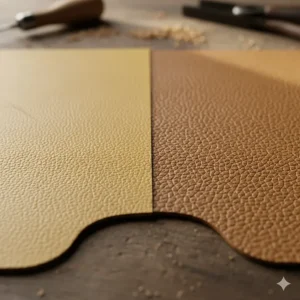
Goatskin possesses shorter, tighter interwoven fibers compared to cowhide’s longer, denser structure. This creates a material that naturally stretches and contracts with hand movement while maintaining incredible strength. Think of it like the difference between a steel cable and a high-tech synthetic rope—both are strong, but one offers significantly more flexibility.
The high lanolin content in goatskin (around 8-12% vs cowhide’s 2-4%) acts as a natural lubricant between leather fibers. This allows goatskin to bend without creasing or cracking, even after repeated wet-dry cycles. Cowhide, while extremely durable, requires extensive break-in and can become stiff when exposed to moisture without proper treatment.
Tactile Sensitivity: The Precision Advantage
Ever tried to pick up a dime wearing thick gloves? That frustration highlights the importance of tactile sensitivity in work gloves. When we compare goatskin work gloves vs cowhide for precision work, the results aren’t even close.
Goatskin can be split and shaved to weights as thin as 0.8mm while maintaining structural integrity—that’s about the thickness of heavy cardstock. This thinness allows nerve endings in your fingertips to receive more feedback about texture, temperature, and pressure. Professional TIG welders specifically choose goatskin for this reason, as they need to feel the temperature of the metal through their gloves.
Research from the National Institute for Occupational Safety and Health indicates that improved tactile sensitivity reduces workplace accidents by allowing workers to better gauge grip pressure and detect early warning signs of equipment malfunction. Cowhide, typically ranging from 1.2-1.8mm thickness, simply can’t match this level of sensitivity while maintaining adequate protection.
The practical impact? Goatskin lets you thread nuts onto bolts, feel wire textures, and manipulate small components without removing your gloves fifty times per hour. That’s not just convenience—it’s a significant safety and productivity advantage.
Abrasion Resistance: The Durability Showdown
Here’s where things get interesting in the goatskin work gloves vs cowhide debate. Most people assume thicker automatically means more abrasion resistant, but that’s not necessarily true.
Abrasion resistance depends on fiber structure, grain tightness, and tensile strength—not just thickness. Goatskin’s tightly packed grain structure with shorter fibers creates a surface that resists wear surprisingly well. Testing data shows goatskin can withstand 600+ abrasion cycles (EN388 level 2-3) despite being thinner than cowhide.
Cowhide brings raw mass to the fight, typically achieving EN388 level 3-4 abrasion ratings. The thicker hide provides more material to wear through before failure occurs. For heavy construction, demolition, or work involving constant contact with rough surfaces, cowhide’s additional bulk translates directly to longer glove life.
However, here’s the plot twist: goatskin’s natural oils help it resist degradation from repeated friction. As cowhide dries out from abrasion, it becomes more brittle and prone to cracking. Goatskin maintains flexibility longer, which paradoxically can extend useful lifespan in certain applications despite lower absolute abrasion ratings.
Water Resistance and Weather Performance
Natural water resistance represents one of goatskin’s secret weapons. The high lanolin content creates a hydrophobic barrier that causes water to bead and roll off the leather surface. This isn’t just marketing fluff—it’s basic chemistry in action.
Cowhide, while naturally somewhat water-resistant, lacks goatskin’s lanolin advantage. Most cowhide gloves require additional treatments like the Dryhide process or silicone coatings to achieve comparable water resistance. These treatments work well initially but degrade over time with washing and wear.
According to research from leather industry experts, goatskin maintains approximately 70-80% of its water-repellent properties even after extensive use, while treated cowhide drops to 30-40% effectiveness after comparable wear cycles.
The practical difference? Goatskin gloves that get wet during work will dry soft and supple, ready for the next day. Cowhide gloves that get soaked often dry stiff and uncomfortable without proper conditioning. For outdoor work, landscaping, or any job involving exposure to moisture, goatskin provides superior all-weather performance.
Heat Resistance: When Temperature Matters
This is where cowhide throws a knockout punch. When comparing goatskin work gloves vs cowhide for heat resistance, the thicker hide simply provides more insulation between your skin and heat sources.
Cowhide gloves can typically withstand intermittent contact with surfaces up to 350°F (177°C), making them ideal for stick welding, hot metal handling, and forge work. The dense fiber structure and greater thickness create more of a thermal barrier.
Goatskin performs respectably up to approximately 250°F (121°C), which suits TIG welding, light fabrication, and most general applications. The thinner profile that makes goatskin perfect for dexterity becomes a limitation when dealing with serious heat.
However, consider this nuance: many welders prefer goatskin for TIG work specifically because the thinner leather allows them to sense when they’re getting too close to dangerous heat levels. Cowhide’s superior insulation can sometimes mask temperature warnings your nerves are trying to send. It’s a classic case of different tools for different jobs.
Cost Analysis: Value for Money
Budget-conscious buyers often gravitate toward cowhide initially due to lower entry prices ($8-$25 for basic gloves). However, the goatskin work gloves vs cowhide cost comparison requires looking beyond the price tag.
Goatskin gloves typically range from $12-$45 depending on features and quality. Yes, that’s roughly 25% more expensive initially. But factor in these considerations:
Lifespan: Goatskin’s natural oils and flexibility often result in 2-3x longer service life for precision work applications. That initial premium quickly becomes a bargain when you’re not replacing gloves every month.
Productivity: The superior dexterity means less time removing gloves for detailed tasks. If you value your time at even minimum wage, the productivity gain pays for the price difference within days.
Comfort: Goatskin’s immediate comfort means no lost productivity during break-in periods. Cowhide can require weeks of uncomfortable wear before achieving optimal flexibility.
For heavy-duty applications where cowhide excels (demolition, rough construction, stick welding), the lower cost makes perfect sense. But for jobs requiring dexterity and all-day wear, goatskin delivers superior value despite higher upfront costs.
Best Applications for Each Leather Type
Choose Goatskin Work Gloves When:
- Precision and dexterity are priorities
- Working with small fasteners, wires, or detailed components
- TIG welding or light fabrication
- All-weather outdoor work
- Extended wear periods (8+ hours daily)
- Operating touchscreen devices
- Jobs requiring both protection and tactile feedback
Choose Cowhide Work Gloves When:
- Maximum abrasion protection is essential
- Working with extremely hot materials
- Heavy construction or demolition
- Stick or MIG welding
- Budget is primary concern
- Short-term or occasional use
- Disposable glove applications with heavy contamination
How to Choose the Right Goatskin Work Gloves
Selecting the best goatskin work gloves for dexterity requires evaluating several critical factors beyond just reading product descriptions.
Step 1: Assess Your Primary Hazards
Start by identifying the top three risks in your work environment. Are you facing cuts, abrasions, heat, chemicals, or impact injuries? This determines whether you need plain goatskin or specialized features like cut-resistant liners or impact protection.
Step 2: Determine Required Dexterity Level
Rate your work from 1-10 on the dexterity scale. Precision electronics assembly might be a 10, while general construction could be a 5. Higher dexterity needs favor thinner, unlined goatskin gloves.
Step 3: Consider Environmental Conditions
Will you work in extreme temperatures, wet conditions, or controlled environments? This affects whether you need insulated, waterproof, or basic unlined goatskin gloves.
Step 4: Evaluate Sizing and Fit Options
Goatskin gloves should fit snugly but not tight. Measure your hand circumference at the widest point (excluding thumb) and check manufacturer sizing charts. Many brands run slightly different sizes.
Step 5: Factor in Longevity and Replacement Cycle
Calculate total cost of ownership over 6-12 months. Premium goatskin leather gloves that last six months often cost less than cheap gloves replaced monthly.
Step 6: Test for Proper Thumb Construction
Look for keystone thumb or wing thumb designs that allow full range of motion. Straight thumb construction limits movement and causes fatigue.
Step 7: Verify Quality Indicators
Check for Kevlar stitching, reinforced high-wear areas, and full-grain (not split) leather. Quality goatskin shows minimal blemishes and consistent thickness.

Maintenance Tips for Extended Lifespan
Proper care dramatically extends the life of premium goatskin leather gloves. After each use, brush off debris and allow gloves to air dry away from direct heat sources. High heat breaks down natural oils and causes leather to become brittle.
Every 2-3 weeks, apply a leather conditioner specifically formulated for work gloves. This replenishes natural oils lost during use and maintains flexibility. Avoid standard shoe polish or treatments containing silicone, which can reduce breathability.
If gloves get wet, stuff them loosely with newspaper and let them dry at room temperature. Never use hair dryers, radiators, or direct sunlight. Once dry, apply conditioner to restore suppleness.
For heavily soiled gloves, spot clean with a damp cloth and mild soap. Avoid machine washing goatskin gloves unless specifically labeled as machine washable. Most goatskin work gloves should be hand washed gently and air dried.
Store gloves in a cool, dry location with good air circulation. Avoid storing in closed plastic bags, which can trap moisture and promote mildew growth. A mesh storage bag or open shelf works perfectly.
Safety Standards and Certifications
When evaluating goatskin work gloves vs cowhide options, understanding safety certifications helps ensure adequate protection for your specific hazards.
ANSI/ISEA 105 Cut Resistance Levels:
Ranges from A1 (lowest) to A9 (highest). Many premium goatskin gloves achieve A3-A5 ratings with appropriate liners. Cowhide typically rates A2-A4 without special treatments.
EN 388 European Standards:
Provides ratings for abrasion, cut, tear, and puncture resistance. Look for goatskin gloves rated 3X42 or higher for general work applications.
NFPA 1971 Flame Resistance:
Critical for welding applications. Both goatskin and cowhide can meet NFPA standards when properly treated, though cowhide naturally performs better at higher temperatures.
ASTM Impact Protection:
Newer gloves include TPR (thermoplastic rubber) protection on knuckles and fingers. These standards rate impact reduction levels, particularly important for construction and demolition work.
Always verify that your chosen gloves meet or exceed safety requirements for your specific industry. Check with your employer’s safety officer about workplace-specific requirements before purchasing.
FAQ: Your Burning Questions Answered 🔥
❓ What makes goatskin better than cowhide for precision work?
❓ Do goatskin work gloves last as long as cowhide?
❓ Can you wash goatskin work gloves?
❓ Are premium goatskin leather gloves worth the extra cost?
❓ What's the best abrasion resistance level for general construction?
Conclusion: Making Your Choice
The goatskin work gloves vs cowhide decision ultimately depends on your specific needs, work environment, and priorities. Goatskin excels when dexterity, tactile sensitivity, and all-day comfort matter most. The natural lanolin, superior flexibility, and lightweight design make goatskin the clear winner for precision work, TIG welding, and jobs requiring extended wear.
Cowhide remains the champion for heavy-duty applications involving extreme heat, rough abrasion, or disposable use scenarios. The extra thickness and lower cost make cowhide perfect for stick welding, demolition, and situations where gloves take severe punishment.
For most professionals who value their hands and productivity, investing in quality goatskin work gloves delivers superior long-term value. The initial premium pays dividends through enhanced comfort, longer lifespan, and significantly better performance in the dexterity department.
Remember—your hands are your most valuable tools. Choose gloves that protect them without sacrificing the precision and feel that makes you good at your job.
Recommended for You
- 7 Best Cowhide Leather Work Gloves for Heavy Duty Work 2025
- 7 Best Boxing Gloves and Wraps for Ultimate Hand Protection 2025
- 7 Best Boxing Gloves for Punching Bag (2025 Expert Guide)
Disclaimer: This article contains affiliate links. If you purchase products through these links, we may earn a small commission at no additional cost to you.
✨ Found this helpful? Share it with your friends! 💬🤗
