
In This Article
Have you ever wondered what separates a minor workplace scratch from a career-ending injury? The answer often comes down to the gloves you’re wearing. When you’re handling sharp metal edges, broken glass, or operating cutting machinery, standard work gloves just don’t cut it—literally.
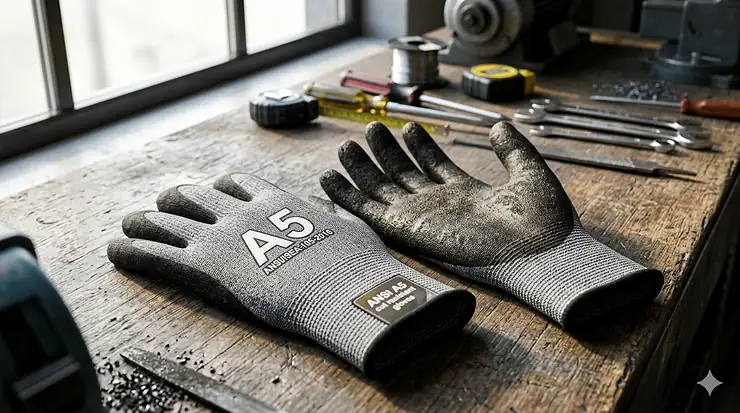
ANSI A5 cut resistant gloves represent a critical threshold in hand protection, designed for workers facing serious cutting hazards on a daily basis. These gloves can withstand between 2,200 to 2,999 grams of cutting load, which translates to real-world protection against some of the sharpest materials you’ll encounter in industrial settings. Whether you’re in metal fabrication, glass manufacturing, or construction, level A5 cut protection offers that sweet spot between maximum safety and workable dexterity.
According to data from the American National Standards Institute, the updated 2024 standards have made it easier than ever to identify the right protection level for specific hazards. The new nine-level classification system helps workers and safety managers match gloves to actual job requirements instead of guessing. In this comprehensive guide, I’ll walk you through everything you need to know about selecting, using, and maintaining ANSI A5 cut resistant gloves that’ll keep your hands safe without compromising your ability to work efficiently.
Quick Comparison Table: Top 7 ANSI A5 Cut Resistant Gloves at a Glance
| Product Name | Cut Level | Key Features | Best For | Price Range |
|---|---|---|---|---|
| DEX FIT Cru553 | A5 (EN388 Level 5) | Touchscreen, foam nitrile, food-safe | Kitchen & precision work | $12-18/pair |
| TitanFlex A5 Work Gloves | A5 | Sandy nitrile, 3D comfort fit, breathable | General industrial use | $14-20/pair |
| COOLJOB A5 Nitrile Gloves | A5 | Bulk packs (3-12 pairs), microfoam coating | Budget-conscious buyers | $25-45/pack |
| Schwer CR3088 | A5 | PU coating, 12-pair packs, durable | Metal fabrication | $35-55/12 pairs |
| Ergodyne ProFlex 7251 | A5 (EN388 4X42D) | Fully coated, 21-gauge tungsten knit | Wet/oily conditions | $20-28/pair |
| Ergodyne ProFlex 7551 | A5 (EN388 4X43E) | Waterproof, thermal protection, winter liner | Cold weather work | $22-32/pair |
| Food Grade A5 Kitchen Gloves | A5 (EN388 ISO13997) | Food-safe HPPE, touchscreen compatible | Food processing | $15-22/pair |
💬 Just one click – help others make better buying decisions too!😊
Top 7 ANSI A5 Cut Resistant Gloves: Expert Analysis
1. DEX FIT Level 5 Cut Resistant Gloves Cru553 – Best Overall Value
The DEX FIT Cru553 has earned its reputation as one of the most trusted names in cut-resistant hand protection, and for good reason. This glove delivers professional-grade ANSI Cut Level A5 certification alongside CE EN 388 4X43D compliance, meeting the strictest international safety standards.
What sets these gloves apart is the proprietary 3D Comfort Fit Technology that actually molds to your hand’s natural movements. The 13-gauge HPPE and Spandex blend creates a “second skin” feeling that’s noticeably different from bulkier alternatives. Users consistently report being able to handle precision tasks—like threading nuts onto bolts or operating touchscreens—without removing the gloves, which is rare at this protection level.
The water-based foam nitrile coating deserves special mention. It’s passed FDA food contact certification, making these gloves versatile enough for both workshop and kitchen use. The coating maintains grip even when wet or oily, and the touchscreen compatibility on all fingers (not just thumb and index) is genuinely useful in modern work environments.
Price: $12-18 per pair
Sizes: XS to XL
✅ FDA food-safe certification
✅ Full-finger touchscreen capability
✅ Machine washable for extended life
❌ Coating may wear faster with heavy abrasive use
❌ Snug fit might feel restrictive initially
2. TitanFlex ANSI A5 Sandy Nitrile Work Gloves – Best for General Construction
TitanFlex brings industrial-grade protection with their sandy nitrile coating that delivers 50% better grip than standard coatings in challenging conditions. The high-density fiber construction provides reliable defense against metal shards, glass fragments, and severe abrasions commonly encountered in construction and woodworking.
Customer feedback highlights the breathable design as a major advantage during extended wear. The gloves don’t create that “sweaty greenhouse” effect you get with fully-coated options, which matters when you’re wearing them for 8-10 hour shifts. The reinforced palms and joints show thoughtful engineering for real-world durability in high-stress areas.
The 3D comfort fit adapts well to different hand shapes, and the long knit cuffs (extending past the wrist) provide additional protection and help keep debris out. These gloves excel in warehouse logistics, automotive repair, and outdoor DIY projects where you need protection without sacrificing feel.
Price: $14-20 per pair
Sizes: S to XL
✅ Enhanced sandy nitrile for superior wet/oil grip
✅ Breathable without compromising protection
✅ Reinforced high-wear areas
❌ Less suited for precision electronics work
❌ Sizing runs slightly large
3. COOLJOB ANSI A5 Nitrile Rubber Dipped Gloves – Best Budget Multi-Pack
For operations needing multiple pairs or frequent replacement, COOLJOB offers exceptional value with their 3-pack and 12-pack options. Don’t let the budget-friendly price fool you—these gloves meet full ANSI A5 specifications using a quality HPPE/glass fiber/steel blend.
The microfoam nitrile coating strikes an excellent balance: thick enough to provide oil resistance and durability, but not so heavy that you lose dexterity for detailed work. Users in protein processing, glass manufacturing, and warehouse environments report these gloves hold up well to daily use, with most getting 2-3 months from a single pair under normal conditions.
The stretch-fit base with elastic long cuffs addresses a common complaint about cut-resistant gloves—poor wrist protection. The extended cuff keeps dirt and metal filings from sliding down into the glove during overhead work. All ten fingers feature touchscreen capability, though it’s less sensitive than dedicated touchscreen gloves.
Price: $25-45 for 3-12 pair packs
Sizes: S to XL
✅ Excellent cost-per-pair value
✅ Bulk options reduce long-term costs
✅ Latex-free for sensitive users
❌ Touchscreen response adequate but not premium
❌ Less breathable than uncoated alternatives
4. Schwer 12 Pairs ANSI A5 Cut Resistant CR3088 – Best for Metal Fabrication
The Schwer CR3088 series is purpose-built for the demanding environment of metal shops and fabrication facilities. The PU (polyurethane) palm coating offers superior abrasion resistance compared to nitrile alternatives, which directly translates to longer glove life when handling sharp metal stampings and construction debris.
What metal workers appreciate most is the excellent balance between protection and tactile sensitivity. You can actually feel bolt threads and gauge material thickness through these gloves, which is crucial for quality work. The anti-slip coating performs exceptionally well in both wet and oily conditions—a common scenario when cutting fluids and lubricants are involved.
The 12-pair bulk packaging makes sense for shops where glove usage is high, and the price point allows for regular rotation without breaking safety budgets. Washing instructions are straightforward: machine or hand wash in warm water (not exceeding 160°F), tumble dry briefly at 150°F or less.
Price: $35-55 for 12 pairs
Sizes: XS to XL
Cut Level: ANSI A5
✅ PU coating exceptionally wear-resistant
✅ Maintains grip in machining fluid environments
✅ Bulk pricing ideal for team outfitting
❌ Heavier than lighter-duty alternatives
❌ PU coating stiffer in cold temperatures
5. Ergodyne ProFlex 7251 Fully Coated Nitrile – Best for Wet/Oily Conditions
When your work environment involves constant exposure to oils, solvents, or water, the Ergodyne ProFlex 7251 becomes the clear choice. The dual-layer WSX nitrile coating system creates a complete barrier—the base layer provides cut protection, while the outer anti-slip nitrile layer ensures you maintain control of slippery materials.
The 21-gauge seamless tungsten knit is engineering wizardry: it achieves ANSI A5 cut protection while remaining remarkably lightweight and flexible. This addresses one of the biggest complaints about high-protection gloves—that uncomfortable stiff, bulky feeling that makes precision work nearly impossible. The ProFlex 7251 maintains dexterity levels you’d expect from an A2 or A3 glove.
Reinforced thumb saddles target the area that typically wears out first on work gloves, extending usable life significantly. The touchscreen-capable fingertips work reliably even when the gloves are damp, and the gloves meet EN 388 4X42D standards for international jobsites.
Price: $20-28 per pair
Standards: ANSI A5, EN 388 4X42D
Gauge: 21-gauge tungsten knit
✅ Oil/water resistant fully coated design
✅ Exceptionally lightweight for A5 protection
✅ Enhanced thumb durability
❌ Premium pricing
❌ Full coating reduces breathability in hot conditions
6. Ergodyne ProFlex 7551 Waterproof Winter Gloves – Best Cold Weather Protection
The ProFlex 7551 solves a problem that frustrates outdoor workers every winter: how to get serious cut protection without frozen, numb fingers. This dual-layer design combines 13-gauge HPPE for A5 cut resistance with a 10-gauge brushed acrylic fleece liner that provides genuine warmth without excessive bulk.
The full waterproof latex dip keeps your hands completely dry, while the sandy nitrile palm coating (applied over the latex) maintains abrasion resistance and grip performance. This two-stage coating system means you’re not sacrificing durability for waterproofing—you get both. Users in cold-weather construction, winter maintenance, and outdoor utilities report comfortable hand temperature in conditions down to 10-15°F.
The gloves meet EN 388: 4X43E standards and deliver ANSI Level 5 contact heat protection (up to 606°F for brief contact), making them versatile for varied winter work scenarios. The dual-layer construction does add some thickness, so precision tasks become more challenging, but for material handling and general construction in cold climates, these are hard to beat.
Price: $22-32 per pair
Temperature Range: Effective to 10-15°F
Standards: ANSI A5, EN 388 4X43E
✅ Waterproof protection in winter conditions
✅ Thermal insulation without excessive bulk
✅ Sandy nitrile maintains grip when cold
❌ Reduced dexterity compared to summer gloves
❌ Too warm for indoor or moderate weather use
7. Food Grade ANSI A5 Kitchen Cut Resistant Gloves – Best for Food Processing
These Food-Grade A5 Gloves represent a specialized category designed specifically for food industry applications. The HPPE material contains thin metal wire to achieve A5 cut resistance without the steel or fiberglass that can contaminate food products. They’re rigorously tested to ensure zero harmful chemical residues that could transfer to food during handling.
The touchscreen feature using silver and stainless steel fiber in the three most-used fingers is genuinely practical—you can check recipes, respond to kitchen tablet orders, or take calls without removing gloves. This matters in commercial kitchens where contamination protocols are strict and re-gloving is time-consuming.
Users in meat cutting, oyster shucking, and mandoline slicing operations appreciate that these gloves are 4X stronger than leather and 10X stronger than steel by weight, yet remain thin enough for knife control. The tight-knit, lightweight construction means you retain tactile sensitivity necessary for precise cutting work.
Price: $15-22 per pair
Certifications: Food-safe, ANSI A5, EN388 ISO13997
Touchscreen: Three-finger capability
✅ 100% food-safe certified
✅ Thin profile for knife control
✅ Machine washable on cool cycle
❌ Less durable in non-food industrial settings
❌ Not suitable for extreme heat applications
Understanding the ANSI Cut Resistance Rating System
Before diving deeper into selection criteria, you need to understand what those A-numbers actually mean. The American National Standards Institute (ANSI) established the ANSI/ISEA 105 standard to create uniform metrics for assessing cut resistance across all protective glove manufacturers.
The Nine-Level Classification
The current system, updated in 2016 and refined in 2024, uses nine distinct protection levels ranging from A1 (lowest) to A9 (highest). Each level indicates how many grams of cutting force the material can withstand before being penetrated by a standardized blade. Here’s the breakdown:
A1: 200-499 grams – Light assembly work
A2: 500-999 grams – Packaging, general warehouse
A3: 1,000-1,499 grams – Automotive assembly, light metal handling
A4: 1,500-2,199 grams – Metal stamping, glass manufacturing
A5: 2,200-2,999 grams – Heavy metal fabrication, sharp material recycling
A6: 3,000-3,999 grams – Meat processing, metal recycling
A7: 4,000-4,999 grams – Extreme cutting hazards
A8: 5,000-5,999 grams – Maximum protection environments
A9: 6,000+ grams – Specialized ultra-hazard applications
Why A5 Represents the Sweet Spot
Level A5 cut protection sits at a crucial intersection of safety and usability. It provides substantial protection for serious cutting hazards—think precision metal cutting, glass handling, and sharp debris sorting—while maintaining enough flexibility for workers to perform detailed tasks. Lower levels (A1-A3) leave you vulnerable to common industrial sharp edges, while higher levels (A6-A9) often sacrifice too much dexterity and comfort for general use.
The testing methodology uses the TDM-100 (tomodynamometer) machine, which runs a fresh blade across the material under controlled conditions. This standardization means an A5 glove from one manufacturer should perform comparably to another manufacturer’s A5 glove—though quality, durability, and comfort features can vary significantly.
Complementary Ratings to Consider
Cut resistance isn’t the only metric that matters. The updated ANSI/ISEA 105-2024 standard introduced a pentagon pictogram that displays five key protection ratings in one label:
Abrasion Resistance: How well the material withstands friction (rated 0-6)
Cut Resistance: The A1-A9 scale we’ve discussed
Tear Resistance: Resistance to tearing forces (rated 1-4)
Puncture Resistance: Resistance to sharp point penetration (rated 1-5)
Impact Protection: Optional rating for back-of-hand impact (if applicable)
For comprehensive hand protection, look for gloves that balance all these metrics. A glove might be rated A5 for cuts but only level 1 for puncture resistance, which could leave you vulnerable in applications involving both hazards.
How to Choose the Right ANSI A5 Cut Resistant Gloves
Selecting appropriate hand protection involves more than matching the cut level to your job title. Let me walk you through a systematic approach that considers your specific work environment, task requirements, and comfort needs.
Step 1: Assess Your Actual Cutting Hazards
Start by identifying what you’re actually handling. Sharp metal stampings behave differently than broken glass, which differs from knife blades used in food processing. Make a list of the sharpest materials you routinely encounter and consider both frequency and severity. If you’re handling sharp materials continuously throughout your shift, you need gloves that balance protection with long-term wearability. For occasional sharp material exposure, you might prioritize maximum protection over all-day comfort.
Step 2: Consider Your Environment
Environmental factors dramatically affect glove performance. Are you working in wet, oily, or dry conditions? Temperature extremes? Ergodyne’s research on cut-resistant standards shows that the same glove can perform very differently depending on ambient conditions. Cold temperatures can stiffen coatings and reduce flexibility, while excessive heat might degrade certain materials faster.
Step 3: Match Coating to Application
The palm coating makes or breaks glove performance in real-world use:
Nitrile Coatings: Excellent oil resistance, good grip, moderate abrasion resistance. Ideal for machinery operation and metal fabrication.
Polyurethane (PU): Superior tactile sensitivity, good for precision work, less oil-resistant. Best for assembly and inspection tasks.
Sandy/Textured Nitrile: Enhanced grip on wet or smooth surfaces, higher abrasion resistance. Perfect for glass handling and outdoor construction.
Full Coating vs. Palm-Only: Fully coated gloves provide complete barrier protection but reduce breathability. Palm-coated options offer better ventilation while still protecting high-contact areas.
Step 4: Determine Required Dexterity Level
Glove gauge (stitching rows per inch) directly correlates with flexibility and dexterity. Higher gauge numbers mean finer knitting, more flexibility, and less bulk—but potentially lower abrasion resistance:
13-gauge: Standard for most A5 gloves, good balance of protection and dexterity
18-gauge: Enhanced flexibility for detailed work, thinner feel
21-gauge: Maximum dexterity available in A5 protection, premium options
For precision metal cutting, electrical work, or detailed assembly, prioritize 18-21 gauge options. For heavy material handling or construction, 13-gauge provides better durability.
Step 5: Factor in Secondary Features
Modern cut-resistant gloves offer features that significantly impact usability:
Touchscreen Compatibility: Essential if you operate machinery with digital controls or need to access tablets/phones during work.
Extended Cuffs: Longer cuffs (5+ inches) protect wrists and forearms while preventing debris from entering the glove during overhead work.
Color Coding: High-visibility colors improve safety awareness on multi-crew jobsites.
Washability: Machine-washable gloves reduce long-term costs and maintain hygiene in food processing or medical manufacturing.
Step 6: Test for Proper Fit
Ill-fitting gloves compromise both safety and productivity. A properly fitted cut-resistant glove should:
- Allow full finger extension without excess material at fingertips
- Fit snugly around the wrist without cutting off circulation
- Permit full thumb rotation and opposition
- Enable you to make a complete fist without strain
- Not bunch up between fingers when gripping
Many manufacturers provide detailed sizing charts. When between sizes, consider whether you need room for liner gloves underneath (for cold weather work) or prefer minimal material for maximum dexterity.
Step 7: Calculate Total Cost of Ownership
Don’t fall into the trap of buying based solely on per-pair price. Consider:
Durability: How long will the gloves last in your specific application?
Maintenance: Are they machine washable or dispose-only?
Productivity: Do they allow workers to maintain pace, or does reduced dexterity slow operations?
Compliance: Do they meet regulatory requirements for your industry?
A $25 glove lasting 3 months provides better value than a $10 glove failing after 2 weeks, plus the hidden cost of workers removing gloves for detailed tasks due to poor dexterity.

Comparing ANSI A5 vs. Other Protection Levels
| Feature | A3 Gloves | A4 Gloves | A5 Gloves | A6 Gloves |
|---|---|---|---|---|
| Cut Protection | 1,000-1,499g | 1,500-2,199g | 2,200-2,999g | 3,000-3,999g |
| Typical Gauge | 15-18 | 13-18 | 13-18 | 10-15 |
| Dexterity | Excellent | Very Good | Good | Moderate |
| Common Applications | Light assembly, packaging | Auto assembly, light glass | Metal fab, precision cutting | Meat processing, metal recycling |
| Average Cost/Pair | $8-12 | $10-16 | $12-25 | $18-35 |
| Comfort for All-Day | Excellent | Very Good | Good | Fair |
Essential Maintenance and Care Tips
Proper care extends glove life and maintains protection integrity. Follow these evidence-based practices:
Washing Procedures
Most ANSI A5 cut resistant gloves are machine washable, but specific parameters matter. Use warm water (never exceeding 160°F/71°C) with mild detergent. Avoid bleach or fabric softeners—they degrade the cut-resistant fibers and protective coatings. Tumble dry on low heat (under 150°F/67°C) for 10-15 minutes, or air dry completely before storage.
For heavily soiled gloves in food processing, hand washing with food-safe detergent and thorough rinsing prevents cross-contamination. Some manufacturers specify cool water washing only—always check the care label before first wash.
Inspection Protocol
Before each use, inspect gloves for:
- Cuts, tears, or abrasions in the shell material
- Worn or peeling palm coating
- Seam separation or fraying
- Loss of elasticity in cuff area
- Stiffness or unusual texture changes
Even small compromises in cut-resistant fibers can dramatically reduce protection. When in doubt, replace the gloves—hand injuries cost far more than new gloves.
Storage Best Practices
Store gloves in a cool, dry location away from direct sunlight and chemical exposure. UV radiation and certain chemicals accelerate material degradation. Hanging storage prevents creasing and allows air circulation. Never store contaminated gloves with clean ones—cross-contamination spreads oils and chemicals that weaken fibers.
For operations requiring sterile gloves, maintain separate sealed storage following food safety or clean room protocols.
Replacement Schedule
Establish a proactive replacement schedule rather than waiting for visible failure. Depending on usage intensity:
Light use (occasional sharp material contact): Replace every 3-4 months
Moderate use (daily sharp material handling): Replace every 6-8 weeks
Heavy use (continuous cutting operations): Replace monthly or bi-weekly
Track replacement dates and correlate with any hand injuries to identify if your schedule needs adjustment.
Safety Standards and Certifications Explained
Understanding certification marks helps you verify you’re getting genuine protection. Here’s what the labels mean:
ANSI/ISEA 105-2024
This is the current American standard for hand protection classification. Gloves tested to this standard display results for abrasion, cut, tear, puncture, and optional impact resistance. The 2024 update introduced the standardized pentagon pictogram making it easier to quickly assess multiple protection properties.
EN 388 European Standard
Many gloves sold in the US also carry EN 388 certification for international markets. The format shows four or five numbers (e.g., 4X43D):
First number: Abrasion resistance (1-4)
Second position: Cut resistance (X if only ISO tested, otherwise 1-5 from Coup test)
Third number: Tear resistance (1-4)
Fourth number: Puncture resistance (1-4)
Letter (if present): ISO 13997 cut test result (A-F)
The “X” in the second position is common for high cut levels—it indicates the Coup test blade dulled before completing the test, requiring the more precise ISO test.
Food Safety Certifications
For kitchen and food processing gloves, look for FDA CFR 175.300 compliance. This certifies that materials won’t leach harmful substances into food products. Some gloves also carry NSF certification or specific approval for meat handling.
Industry-Specific Requirements
Certain industries mandate specific certifications beyond basic ANSI ratings. Medical device manufacturing might require ISO Class 5 cleanroom compatibility. Pharmaceutical production could mandate specific chemical resistance. Always verify your industry’s regulatory requirements before purchasing.

Common Applications for ANSI A5 Cut Resistant Gloves
Level A5 cut protection addresses hazards across numerous industries. Here’s where these gloves excel:
Metal Fabrication and Machining
Sheet metal workers, machinists, and metal fabricators face continuous exposure to sharp edges during cutting, drilling, and finishing operations. A5 gloves protect against metal burrs, sharp stampings, and cutting fluid exposure while maintaining enough dexterity to operate precision equipment and measure tolerances.
Glass Manufacturing and Handling
Both flat glass production and bottle manufacturing present extreme cutting hazards from sharp edges and broken pieces. A5-rated gloves with enhanced grip coatings prevent slips that could drive glass shards through lesser protection while allowing workers to maintain control of heavy panels.
Construction and Demolition
Handling rebar, cutting metal studs, working with sharp roofing materials, and managing demolition debris all require superior cut resistance A5 provides. The combination of cut protection and abrasion resistance handles the varied sharp materials encountered on construction sites.
Automotive Assembly and Repair
Working with metal body panels, handling sharp trim pieces, and managing glass components during auto work demands A5 protection. The gloves need to balance protection with the dexterity required for fastener manipulation and precision alignment.
Warehouse and Logistics
Opening boxes with utility knives, handling metal banding, and managing products with sharp edges makes warehouses surprisingly hazardous. A5 gloves rated work gloves protect workers while maintaining the grip and flexibility needed for rapid material handling.
Food Processing and Commercial Kitchens
Meat cutting, fish filleting, mandoline slicing, and oyster shucking operations involve extreme cutting hazards combined with strict hygiene requirements. Food-grade A5 gloves protect workers while meeting sanitation standards.
HVAC Installation and Maintenance
Cutting ductwork, handling sharp sheet metal edges, and working with fiberglass insulation requires cut protection that doesn’t interfere with tool manipulation in tight spaces.
Price Range and Value Analysis
Understanding the cost structure helps you make informed purchasing decisions:
Budget Options ($10-15 per pair)
Entry-level A5 gloves typically feature basic HPPE construction with minimal coating. They provide adequate cut protection for intermittent use but sacrifice durability, comfort features, and advanced grip technology. Best for: occasional users, tight budgets, or applications where gloves need frequent replacement anyway.
Mid-Range Options ($15-25 per pair)
This sweet spot delivers reliable protection with enhanced features like better grip coatings, improved comfort, touchscreen compatibility, and superior durability. Most workers find optimal value here—the gloves last 2-3X longer than budget options while providing significantly better user experience. Best for: daily industrial use, general construction, food processing.
Premium Options ($25-35+ per pair)
Top-tier gloves feature advanced materials (tungsten knit, engineered composite yarns), specialized coatings for extreme conditions, enhanced ergonomic design, and maximum durability. The per-pair cost is substantially higher, but in demanding applications, they often prove most economical through extended life and superior protection. Best for: extreme cutting hazards, specialized applications, workers requiring maximum dexterity.
Bulk Purchasing Considerations
Many manufacturers offer significant discounts for 6-pack, 12-pack, or case quantities. While bulk buying reduces per-pair costs by 20-40%, consider storage requirements and whether you’ll use all pairs before they age out. For teams or high-turnover operations, bulk purchasing makes financial sense.

❓ FAQ: Your Top Questions About ANSI A5 Cut Resistant Gloves Answered
❓ How long do ANSI A5 cut resistant gloves typically last?
❓ Can I wash ANSI A5 cut resistant gloves in a regular washing machine?
❓ What's the difference between ANSI A5 and EN388 Level 5 cut ratings?
❓ Are ANSI A5 gloves suitable for electrical work?
❓ How do I know if my workplace requires ANSI A5 protection level?
Conclusion: Making the Right Choice for Your Hand Safety
Selecting the right ANSI A5 cut resistant gloves comes down to understanding your specific hazards, work environment, and performance requirements. These gloves represent a significant step up from lower protection levels, providing the serious cutting resistance needed for metal fabrication, glass handling, and other high-risk applications.
From this comprehensive review, the DEX FIT Cru553 stands out as the best overall value for most users, combining professional-grade protection with superior comfort and versatility. For specialized needs, the Ergodyne ProFlex 7551 dominates cold-weather applications, while the COOLJOB bulk packs deliver unbeatable economics for high-volume operations.
Remember that even the best gloves can’t protect you if they don’t fit properly or if you remove them for detailed work. The goal is finding gloves protective enough to prevent injuries while comfortable enough that you’ll actually wear them consistently. Invest in quality protection, maintain your gloves properly, and replace them before they fail—your hands are worth it. After all, no amount of productivity or cost savings justifies permanent hand injury.
Stay safe out there, and may your hands remain as capable at retirement as they were on day one.
Recommended for You
- 7 Best ANSI A4 Cut Resistant Gloves for Industrial Safety 2026
- 7 Best ANSI A3 Cut Resistant Gloves for 2026
- 7 Best ANSI A2 Cut Gloves That Actually Work (2026 Guide)
Disclaimer: This article contains affiliate links. If you purchase products through these links, we may earn a small commission at no additional cost to you.
✨ Found this helpful? Share it with your friends! 💬🤗
