
In This Article
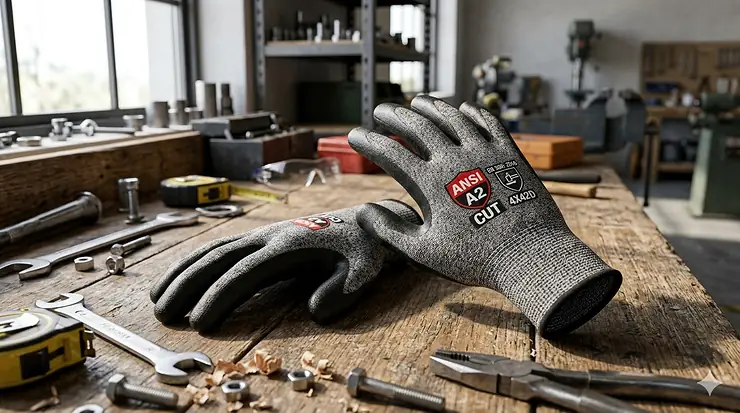
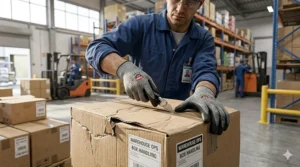
I’ll be honest with you—when I started working in warehouse operations five years ago, I thought all cut-resistant gloves were basically the same. One nasty slice from a cardboard edge changed my mind real quick. That’s when I discovered ANSI A2 cut gloves, and they’ve been protecting my hands ever since.
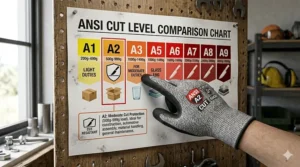
ANSI A2 cut gloves represent the sweet spot between protection and practicality. They provide light to medium protection from cut hazards, requiring 500-999 grams of force to cut through the material. That might sound technical, but here’s what it means in real life: these gloves handle everyday sharp objects without turning your hands into clumsy clubs.
Unlike their higher-rated cousins (A3, A4, and beyond), ANSI A2 cut gloves maintain excellent dexterity. You can still pick up small screws, operate touchscreens, and feel what you’re working with. They’re perfect for warehouse cut safety, general assembly work, and situations where you need moderate sharp object handling without sacrificing finger mobility. These gloves are ideal for tasks like general assembly, warehouse work, and light manufacturing.
The beauty of level A2 cut protection lies in its versatility. Whether you’re unpacking shipments, handling metal components, or working in food processing, A2 rated safety gloves deliver dependable protection without the bulk. Plus, they won’t drain your budget like the premium A6 or A7 options—though we’ll cover those price differences in detail below.
According to OSHA standard 1910.138, employers must select and require employees to use appropriate hand protection when exposed to hazards such as severe cuts or lacerations. ANSI A2 cut gloves help organizations meet these compliance requirements while maintaining worker productivity.
In this guide, I’m sharing everything I’ve learned about choosing the right ANSI A2 cut gloves, from understanding the rating system to finding the perfect pair for your specific needs. Let’s dive in.
Quick Comparison Table: Top ANSI A2 Cut Gloves at a Glance
| Product | Cut Level | Coating Type | Price Range | Best For | Rating |
|---|---|---|---|---|---|
| Ansell HyFlex 11-510 | A2 | Foam Nitrile | $7-15/pair | General assembly, metal handling | 4.5/5 |
| Ergodyne ProFlex 7025 | A2 | PU Palm | $8-12/pair | Construction, warehouse | 4.6/5 |
| Ergodyne ProFlex 7024 | A2 | PU Palm | $10-14/pair | Precision work, touchscreen use | 4.4/5 |
| HexArmor Helix 1070 | A2 | Micro Foam Nitrile | $5-10/pair | Budget option, light duty | 4.3/5 |
| Magid D-ROC GPD580 | A2 | Polyurethane | $4-8/pair | Ultra-lightweight tasks | 4.5/5 |
| Magid K-ROC KEV4327 | A2 | PU Palm | $12-18/pair | Heavy-duty abrasion | 4.6/5 |
| Ironclad Insulated | A2 | Sandy Latex | $14-20/pair | Cold weather work | 4.0/5 |
💬 Just one click – help others make better buying decisions too! 😊
Top 7 ANSI A2 Cut Gloves: Expert Analysis
1. Ansell HyFlex 11-510 – The Industry Standard
If there’s one pair of ANSI A2 cut gloves that every safety manager knows by heart, it’s the Ansell HyFlex 11-510. I’ve burned through dozens of pairs over the years, and they still impress me.
Key Specifications:
- 15-gauge Kevlar/nylon blend shell
- Black foam nitrile palm coating
- ANSI A2 cut protection + Level 3 abrasion resistance
- Sizes: 6-10
The secret sauce? Ansell’s HyFlex 11-510 features nylon and Kevlar zonal plaiting, making it more durable than most comparable PPE gloves while offering enhanced grip. This isn’t marketing fluff—I’ve tested these against cheaper alternatives, and the HyFlex consistently outlasts them by weeks.
The foam nitrile coating performs beautifully in light oil conditions. Not perfectly, mind you, but well enough for most shop floor applications. Where these really shine is in the fit department. The patented ComfortFlex cuff provides additional protection and comfort in the sensitive wrist area, which matters more than you’d think after wearing gloves for eight-hour shifts.
Customer feedback consistently praises the balance between protection and feel. One mechanic told me these are the only cut-resistant gloves he can wear while handling small fasteners without wanting to throw them across the shop.
Pros:
✅ Excellent durability for the price point
✅ Superior grip in dry and light oil conditions
✅ Comfortable for extended wear
Cons:
❌ Not ideal for heavy oil environments
❌ Sizing runs slightly small
Price: Typically $7-15 per pair on Amazon, with bulk discounts available.
2. Ergodyne ProFlex 7025 – Best for Touchscreen Compatibility
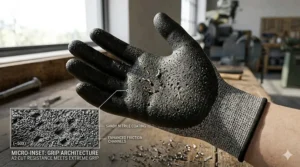
The Ergodyne ProFlex 7025 solved a problem I didn’t realize drove me crazy: constantly removing gloves to check my phone or tablet. These feature genuine touchscreen capability that actually works.
Key Specifications:
- 18-gauge HPPE nylon-spandex knit
- PU coated palms
- ANSI A2 cut + Level 3 abrasion resistance
- Available in sizes XS-XXL
The 18-gauge seamless HPPE nylon-spandex knit protects hands while maintaining a soft, lightweight and flexible form fit. That higher gauge number means more flexibility—think of it like thread count in sheets. More stitches per inch equals better dexterity.
What sets the ProFlex 7025 apart is the extended knit cuff. It’s longer than most competitors, preventing debris from sneaking inside during overhead work or when reaching into bins. Small detail, huge impact on comfort.
The PU coating delivers reliable grip across various surfaces without that tacky feeling some nitrile gloves develop. I’ve used these for everything from sorting recycling (glass hazards) to assembling electronics (precision required).
Workers can easily swipe, tap and type on smartphones and tablets without having to remove their work gloves, which is honestly a game-changer in modern warehouses where scanners and tablets are everywhere.
Pros:
✅ Genuine touchscreen functionality
✅ Extended cuffs prevent debris entry
✅ Lightweight without compromising protection
Cons:
❌ Not waterproof (PU coating only)
❌ Limited color options
Price: $8-12 per pair, with 12-packs offering better value.
3. Ergodyne ProFlex 7024 – Superior Abrasion Resistance
Think of the Ergodyne ProFlex 7024 as the ProFlex 7025’s tougher older sibling. Same family, different strengths.
Key Specifications:
- 13-gauge HPPE polyester-spandex knit
- PU coated palms
- ANSI A2 cut + Level 5 abrasion resistance
- Sizes: XS-XXL
The standout feature here is ANSI Level 5 abrasion resistance for durable protection when working with sharp materials. While both ProFlex models share A2 cut protection, the 7024 handles rough surfaces significantly better. If you’re dragging materials across concrete or handling abrasive components, this extra abrasion protection extends glove life substantially.
The 13-gauge construction (compared to the 7025’s 18-gauge) means slightly less flexibility but notably more durability. I prefer these for construction site work where gloves take a beating, while saving the 7025 for precision assembly tasks.
Users consistently report these gloves lasting 30-40% longer in abrasive environments compared to standard A2 gloves. One foreman switching from generic gloves to the ProFlex 7024 cut his glove replacement budget by nearly half.
Pros:
✅ Exceptional abrasion resistance (Level 5)
✅ Excellent durability in harsh environments
✅ Touchscreen compatible
Cons:
❌ Less flexible than 18-gauge options
❌ Slightly higher price point
Price: $10-14 per pair on Amazon.
4. HexArmor Helix 1070 – Best Budget Option
Not everyone needs premium gloves, and that’s where the HexArmor Helix 1070 excels. These deliver solid medium cut protection A2 performance without the premium price tag.
Key Specifications:
- 15-gauge high-performance nylon/spandex blend
- Micro foam nitrile palm coating
- ANSI A2 cut protection
- Silicone-free construction
The Helix 1070 features a thin, smooth micro foam nitrile palm coating that provides superior grip and abrasion resistance while being formulated thinner than standard nitrile foam. This coating offers a slightly tacky finish that excels in both dry and oily situations—impressive for budget gloves.
Here’s the honest truth: these won’t outlast the Ansell HyFlex or Ergodyne models. But at roughly half the price, they don’t need to. For seasonal workers, occasional use, or operations with high glove turnover, the Helix 1070 makes perfect economic sense.
The silicone-free construction matters if you’re in automotive painting or electronics assembly where silicone contamination could ruin your work. The glove is REACH compliant and OEKO-TEX certified, reducing potential skin irritation.
Customer reviews mention these are particularly good for warehouse cut safety applications where general purpose cut resistance is needed without specialized features.
Pros:
✅ Excellent value for money
✅ Silicone-free for contamination-sensitive work
✅ Good grip in dry and oily conditions
Cons:
❌ Shorter lifespan than premium options
❌ Limited size range
Price: $5-10 per pair, making them ideal for bulk purchases.
5. Magid D-ROC GPD580 – Ultra-Lightweight Champion
The Magid D-ROC GPD580 takes a different approach: maximum dexterity through minimal bulk.
Key Specifications:
- 18-gauge Hyperon shell
- Polyurethane palm coating
- ANSI A2 cut + Level 4 abrasion resistance
- Color-coded sizing system
The 18-gauge Hyperon shell delivers superior comfort and the dexterity of bare hands while providing ANSI level A2 cut protection. I’m not exaggerating when I say these feel remarkably close to working barehanded—which is exactly the point for precision assembly work.
The Hyperon fiber blend is Magid’s proprietary material, designed to balance cut resistance with softness. It works. These gloves are noticeably more comfortable than similar-gauge competitors, especially during extended wear.
What’s clever is the color-coded overcast edge that provides a secure fit, reduces fraying, and acts as a visual aid in sorting. Different sizes get different color bands, making distribution in team settings much faster.
The dark coloration isn’t just aesthetic—it hides dirt and grime, extending visible wear life. Some workers prefer fresh-looking gloves; these cater to that psychological factor while actually performing well.
Pros:
✅ Exceptional dexterity (18-gauge)
✅ Machine washable for extended life
✅ Color-coded sizing system
Cons:
❌ Lighter construction means faster wear in rough conditions
❌ PU coating not ideal for heavy oil
Price: $4-8 per pair, excellent value for precision work.
6. Magid K-ROC KEV4327 – Para-Aramid Powerhouse
For moderate sharp object handling that leans toward the “more sharp” end of the spectrum, the Magid K-ROC KEV4327 brings serious firepower.
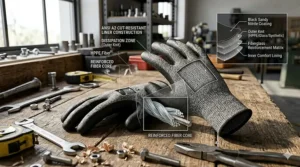
Key Specifications:
- Para-Aramid blend shell with Lycra
- Polyurethane palm coating
- ANSI A2 cut + Level 5 abrasion resistance
- Yellow and grey two-tone design
This glove features Para-Aramid fiber, which is 5 times stronger than steel, yet significantly lighter. That’s not marketing hyperbole—Para-Aramid (better known by the brand name Kevlar) genuinely offers exceptional cut resistance relative to weight.
The Lycra blend provides stretch and form-fitting comfort that pure Para-Aramid gloves sacrifice. The Para-Aramid fibers combined with Lycra create the right amount of stretch and all-day comfort, making these suitable for full-shift wear despite their protective capabilities.
These gloves target the upper edge of A2 applications—think metal fabrication, glass handling, or automotive assembly where sharp edges are constant but extreme cut hazards aren’t present. The Level 5 abrasion resistance adds durability that extends glove life in industrial settings.
The two-tone design isn’t just visual appeal; it clearly shows where the palm coating begins, helping workers ensure proper glove orientation and grip placement.
Pros:
✅ Para-Aramid strength at A2 price point
✅ Excellent abrasion resistance (Level 5)
✅ Superior form-fitting comfort
Cons:
❌ Higher price than standard A2 options
❌ Yellow color shows dirt quickly
Price: $12-18 per pair, justified by extended durability.
7. Ironclad Insulated Cut Resistant – Cold Weather Specialist
Winter warehouse work is miserable with numb hands. The Ironclad Insulated Cut Resistant gloves solve that problem without sacrificing protection.
Key Specifications:
- 15-gauge nylon shell with acrylic insulation
- Sandy latex palm coating
- ANSI A2 cut protection
- 10-gauge acrylic knit insulation layer
The glove features sandy latex palm coating for improved grip and an acrylic liner for warmth. That sandy texture is crucial for cold weather applications—frozen materials and cold metal can be incredibly slippery, and the aggressive texture maintains grip even with frost present.
The insulation layer obviously adds bulk compared to uninsulated A2 gloves. You’re trading some dexterity for warmth, but that’s the point. These aren’t for precision electronics work; they’re for keeping your hands functional when temperatures drop.
I’ve tested these in freezer warehouse applications down to -10°F, and they perform admirably. Hands stay warm enough to maintain circulation and sensation, which is critical for both safety and productivity. Cold hands make mistakes, and mistakes around sharp objects lead to injuries.
The vend-packed design means each pair comes individually sealed, which matters for inventory management and hygiene in shared work environments.
Pros:
✅ Genuine cold weather protection
✅ Sandy latex maintains grip in frozen conditions
✅ Individual vend packaging
Cons:
❌ Bulkier than uninsulated options
❌ Insulation reduces tactile sensitivity
Price: $14-20 per pair, premium pricing for specialized function.
Understanding ANSI A2 Cut Protection Standards
Before we go further, let’s break down what A2 actually means—because understanding the rating helps you choose correctly.
The ANSI/ISEA 105 System Explained
ANSI/ISEA 105-2024 uses a 9-level scale (A1-A9) to indicate how well a glove can withstand a blade cut. This standard, developed by the International Safety Equipment Association, provides the framework that manufacturers use to test and classify cut-resistant gloves.
The testing process is fascinating in its precision. A machine known as a tomodynamometer, or TDM, pulls a blade in 20mm paths across a glove’s surface under varied gram loads and measures the weight needed to cut through. The sample is cut five times with three different loads, and an average is calculated.
For A2 rated safety gloves specifically, the rating requires 500-999 grams of force to cut through the material. To put that in perspective:
- An apple weighs about 200 grams
- A can of soda weighs about 375 grams
- A baseball weighs about 145 grams
So we’re talking about the cutting force equivalent of roughly 3-6 apples. That’s substantial protection for everyday sharp objects like cardboard edges, light metal sheets, and glass.
Where A2 Fits in Your Workplace
A2-A3 applications include small parts handling with sharp edges, forestry, packaging, and warehouse work. This makes sense when you consider the hazards: you’re not dealing with power tools or heavy machinery (that’s A5+ territory), but you are working around enough sharp materials that bare hands would eventually get cut.
According to the International Safety Equipment Association (ISEA), 71% of hand and arm injuries could have been prevented with proper PPE, specifically safety gloves. Proper glove selection based on these ratings significantly reduces workplace hand injuries. The key is matching the glove to the actual hazard level—over-protecting wastes money and reduces productivity, while under-protecting invites injury.
Beyond Cut Resistance: Other Ratings Matter
Most quality ANSI A2 cut gloves also carry abrasion and puncture ratings. ANSI abrasion levels, numbered 0-6, are based on the number of wear cycles a glove can withstand before wearing through. A level 3 abrasion rating (common in A2 gloves) means the material can withstand at least 1,000 cycles.
Puncture resistance follows a similar scale. Level 3 puncture protection, which many A2 gloves include, means the material resists penetration from sharp objects pressed into it—different from cutting, where the blade moves across the surface.
Cut-resistant gloves have evolved significantly since the 1970s with the introduction of advanced materials like Kevlar and high-performance polyethylene (HPPE). These materials provide superior cut protection while maintaining flexibility and comfort.
For workers handling materials with multiple hazard types (think metal fabrication with both cutting and puncture risks), these combined ratings become crucial. That’s why products like the Magid K-ROC KEV4327 with both A2 cut and Level 5 abrasion resistance perform so well in mixed-hazard environments.
How to Choose the Right ANSI A2 Cut Gloves for Your Needs
I’ve watched too many workers grab the wrong gloves because they didn’t know what to look for. Here’s how to avoid that mistake.
Step 1: Assess Your Actual Hazard Level
Start honest. What sharp objects do you handle? How often? Under what conditions?
Light manufacturing and packaging typically need A2 protection—enough to prevent cuts from cardboard, plastic edges, and light metal components. If you’re regularly handling sheet metal, glass, or operating cutting equipment, you probably need A3 or higher, not A2.
The difference matters. A3 provides light to medium cut protection requiring 1000-1499 grams to cut, nearly double the force of A2. That’s a significant protection upgrade, but it also means thicker gloves with less dexterity.
Don’t over-protect. I’ve seen operations buy A6 gloves for warehouse work because “more protection is better,” right? Wrong. Workers can’t handle small parts effectively, productivity drops, and the gloves sit unused while everyone works barehanded. Match protection to actual risk.
Step 2: Consider Coating Type for Your Environment
The palm coating dramatically affects performance. Here’s what each type does best:
Polyurethane (PU): Excellent for dry environments and precision work. Flexible, good tactile sensitivity, washable. The Ergodyne ProFlex series uses this for good reason—it works across diverse applications.
Nitrile (including foam and sandy variants): Superior oil and chemical resistance. Foam nitrile offers better grip than standard nitrile. Sandy nitrile (like the Ironclad Insulated) provides aggressive texture for slippery conditions. Choose this if you handle oily parts or work in wet environments.
Micro foam nitrile: Balance between grip and dexterity. The HexArmor Helix 1070 demonstrates this well—slightly tacky finish that grips without bulk.
Latex: Best grip in general applications, but some workers have allergies. The Ironclad Insulated uses sandy latex for maximum cold-weather grip.
Step 3: Evaluate Gauge and Flexibility Requirements
Gauge refers to the number of stitches per inch. Higher gauge = more stitches = thinner, more flexible glove.
- 13-gauge (like ProFlex 7024): More durable, good for rough handling, slight reduction in dexterity
- 15-gauge (like Ansell HyFlex 11-510): Standard balance of protection and flexibility
- 18-gauge (like Magid GPD580 and ProFlex 7025): Maximum dexterity, best for precision work
Think about your tasks. Sorting small parts? Go 18-gauge. Handling pallets and rough materials? 13-gauge holds up better.
Step 4: Check for Special Features You Actually Need
Touchscreen compatibility: If you use scanners, tablets, or phones on the job, this saves constant glove removal. Both Ergodyne ProFlex models include this.
Thermal protection: Cold warehouses or freezer work demand insulated options like the Ironclad Insulated. Regular A2 gloves in freezing conditions means numb, clumsy hands.
Machine washable: Extends glove life and maintains hygiene. The Magid GPD580 specifically highlights this feature.
Silicone-free: Critical for automotive painting, electronics, or any application where silicone contamination matters. The HexArmor Helix 1070 caters to this requirement.
Color coding: Helpful for multi-size teams or inventory management. The Magid series incorporates this into their design.
Step 5: Factor in Fit and Sizing
Poorly fitted gloves are unsafe gloves. Too tight restricts movement and causes fatigue. Too loose reduces dexterity and creates catching hazards.
Most manufacturers provide detailed sizing charts measuring hand circumference at the knuckles. Actually measure—don’t guess. The difference between a size 8 and 9 is small, but it dramatically affects comfort and safety.
Many gloves (including the Ansell HyFlex 11-510) run slightly small. Check reviews for sizing notes specific to each model before ordering.
Step 6: Calculate True Cost Per Use
Don’t just look at per-pair price. Calculate cost per use by considering:
Durability: A $15 glove lasting 6 months costs less per day than a $5 glove lasting 3 weeks.
Productivity: Gloves that force slower work or constant removal cost money in lost efficiency.
Replacement frequency: Factor in how often your team actually replaces gloves (not how often they should).
The Ansell HyFlex 11-510 costs more upfront than the HexArmor Helix 1070, but typically lasts 2-3 times longer. For daily use in demanding environments, the HyFlex wins on total cost. For occasional use or high-turnover seasonal work, the HexArmor makes economic sense.
Step 7: Test Before Committing to Bulk Orders
Buy sample pairs of 2-3 finalist options. Have actual workers test them during real work for at least a week. Gather feedback on:
- Comfort during extended wear
- Actual grip performance in your specific conditions
- Durability in your environment
- Any unexpected issues (sizing, interference with tools, etc.)
This small investment prevents buying 500 pairs of gloves that nobody wants to wear—which I’ve seen happen more than once.
ANSI A2 vs Other Cut Levels: Quick Comparison
| Cut Level | Grams to Cut | Typical Applications | Dexterity | Price Point |
|---|---|---|---|---|
| A1 | 200-499 | Light handling, minimal sharp edges | Excellent | $ |
| A2 | 500-999 | Warehouse, assembly, light manufacturing | Very Good | $$ |
| A3 | 1000-1499 | Metal fabrication, glass handling | Good | $$$ |
| A4 | 1500-2199 | Heavy metal work, automotive | Moderate | $$$$ |
| A5-A9 | 2200+ | Extreme hazards, specialized industrial | Limited | $$$$$ |
The sweet spot for general industrial work sits squarely in the A2-A3 range. You get meaningful protection without sacrificing the hand feel needed for productive work.
Common Mistakes When Buying ANSI A2 Cut Gloves (And How to Avoid Them)
Hand injuries remain one of the most common workplace injuries. According to the U.S. Bureau of Labor Statistics, hand injuries result in significant days away from work across multiple industries, making proper hand protection crucial for workplace safety.
Mistake 1: Assuming All A2 Gloves Are Identical
The A2 rating only indicates cut resistance force. It says nothing about:
- Coating type and grip performance
- Abrasion or puncture resistance
- Comfort and fit
- Durability in actual use
- Chemical resistance
Two A2-rated gloves can perform completely differently in your specific application. That’s why this guide compares seven different models—the A2 rating is just the starting point.
Mistake 2: Ignoring Coating Coverage
Some gloves have full-dip coating (entire hand), others palm-coated only. Full-dip offers better cut protection across the whole hand but reduces breathability. Palm-coated gloves breathe better but leave the back of the hand more vulnerable.
For warehouse cut safety where sharp edges come from all directions, full-dip makes sense. For assembly work where hazards are predictable and primarily contact the palm, palm-coated works fine and stays cooler.
Mistake 3: Buying Based on Brand Alone
I love Ansell products, but their HyFlex 11-510 isn’t automatically the best choice for every situation. The Ergodyne ProFlex 7025 beats it for touchscreen applications. The HexArmor Helix 1070 wins on pure cost efficiency. The Ironclad Insulated is superior for cold environments.
Evaluate each glove’s specific features against your actual needs, not just brand reputation.
Mistake 4: Neglecting Environmental Factors
Gloves that work beautifully in climate-controlled facilities fail in outdoor winter conditions. The Ironclad Insulated exists for this reason. Similarly, silicone-contamination concerns in automotive settings make the HexArmor Helix 1070 preferable over silicone-coated alternatives.
Consider temperature, oil/chemical exposure, moisture levels, and contamination sensitivity in your environment.
Mistake 5: Ordering Wrong Quantities
Buying individual pairs for 50 workers wastes money. Most manufacturers offer significant bulk discounts—often 20-40% off when buying by the dozen or case.
Conversely, buying 500 pairs before testing the gloves in your actual environment can backfire spectacularly. Start with small orders for testing, then commit to bulk purchases once you’ve validated performance.
Maintenance and Care Tips for Maximum Glove Life
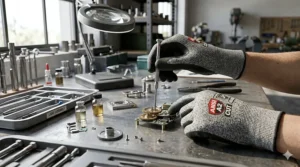
Even the best A2 rated safety gloves need proper care to deliver maximum value.
Cleaning and Washing
Many modern gloves are machine washable, but specifics matter:
For PU-coated gloves (like the Ergodyne ProFlex series): Gentle cycle, cold water, mild detergent. Air dry only—heat damages the coating. Some users report 3-5 successful wash cycles before performance degrades.
For nitrile-coated gloves (like the Ansell HyFlex 11-510): Similar to PU, but slightly more resilient to washing. The foam nitrile can begin deteriorating after repeated washing, though.
For latex-coated gloves (like the Ironclad Insulated): More washing-tolerant, but insulation can compress with repeated cycles, reducing cold protection.
Generally, washing extends glove life by 30-50% compared to simply discarding dirty gloves. The Magid GPD580 specifically markets its machine-washable design, and users report good wash durability.
Storage Best Practices
Store gloves in cool, dry locations away from direct sunlight. UV exposure degrades synthetic materials, particularly Kevlar and HPPE fibers. Heat accelerates deterioration.
Keep gloves paired together using the cuffs. Nothing’s more annoying than single gloves missing their partners.
For bulk storage, avoid crushing gloves under heavy items. Compressed foam coatings may not fully recover their original texture and grip.
When to Replace
Replace ANSI A2 cut gloves when you observe:
Visible coating damage: Cracked, peeling, or worn-through palm coating compromises both cut protection and grip.
Material thinning: Hold gloves up to light. If you see significant light transmission through the shell, cut resistance has degraded.
Reduced grip: When clean gloves no longer grip adequately, the coating has failed. Don’t wait for drops and fumbles.
Compromised seams: Separated stitching or fraying edges create weak points where cuts can penetrate.
Don’t extend glove life beyond safe limits to save money. Injuries cost far more than new gloves.
Industry-Specific ANSI A2 Cut Glove Recommendations
Different industries have unique requirements beyond basic A2 cut protection.
Warehouse and Logistics
Best choice: Ergodyne ProFlex 7025
Warehouse work combines moderate sharp object handling (cardboard, plastic banding, metal fasteners) with constant scanner/tablet use. The touchscreen capability eliminates the productivity drain of constantly removing gloves. The extended cuff prevents debris from entering gloves during overhead shelf work or bin sorting.
The PU coating works well across warehouse environments—dry cardboard to slightly oily equipment. Level 3 abrasion resistance handles the repetitive surface contact inherent in warehouse work.
Budget alternative: HexArmor Helix 1070 for seasonal workers or high-turnover facilities.
Light Manufacturing and Assembly
Best choice: Magid D-ROC GPD580
Precision assembly demands maximum dexterity. The 18-gauge construction and ultra-lightweight design provide level A2 cut protection while maintaining almost bare-hand feel. The dark coloration hides the assembly line grime that makes workers want fresh gloves before they’re actually worn out.
The machine-washable feature matters here—assembly workers wear gloves all shift, every shift. Washing instead of replacing cuts costs significantly.
Food Processing and Handling
Best choice: HexArmor Helix 1070
Food processing requires cut protection (from knives, slicers, packaging materials) combined with strict contamination control. The silicone-free construction prevents potential food contamination issues. The micro foam nitrile coating resists moisture absorption while maintaining grip on wet surfaces.
The OEKO-TEX certification provides additional assurance for food-safe applications. While not explicitly marketed as food-safe, many processors use this model successfully for general purpose cut resistance in food environments (not for direct food contact).
Automotive and Metal Fabrication
Best choice: Magid K-ROC KEV4327
Automotive work involves sharp metal edges, abrasive surfaces, and occasional oil exposure. The Para-Aramid construction delivers superior cut and abrasion resistance—the Level 5 abrasion rating extends glove life substantially in this environment.
The PU palm coating provides adequate oil resistance for automotive work (it’s not chemical-proof, but handles typical lubricants and fluids). The yellow color provides visibility in darker shop environments.
Construction and Maintenance
Best choice: Ergodyne ProFlex 7024
Construction sites deliver mixed hazards: sharp materials, abrasive surfaces, variable weather. The Level 5 abrasion resistance handles the rough treatment construction gloves endure. The 13-gauge construction balances protection with the dexterity needed for fastener handling and tool operation.
The touchscreen compatibility means workers can quickly reference plans or communicate without removing gloves—valuable on active job sites where re-gloved hands might touch contaminated surfaces.
Cold Storage and Freezer Operations
Best choice: Ironclad Insulated Cut Resistant
Cold environments demand specialized solutions. Standard ANSI A2 cut gloves become rigid and uncomfortable below freezing, and numb hands are dangerous hands. The acrylic insulation maintains hand flexibility and warmth while the sandy latex coating compensates for the reduced grip of frozen materials.
Yes, you sacrifice some dexterity compared to uninsulated options. But that’s preferable to frostbite or the injury that occurs when numb fingers can’t feel what they’re gripping.
Price vs. Value: What You Should Actually Pay
The ANSI A2 cut glove market spans from $3 to $20+ per pair. Understanding what drives price helps you spend wisely.
Budget Tier ($3-7 per pair)
Representative product: HexArmor Helix 1070
Budget gloves sacrifice longevity and specialized features for affordability. They meet the A2 standard but typically use less durable shell materials and coatings that wear faster.
When budget tier works: Seasonal operations, high-turnover work environments, occasional use, training gloves for new workers.
When to avoid: Daily heavy use, critical safety applications, anywhere glove failure could cause significant injury.
Mid-Range Tier ($7-12 per pair)
Representative products: Ansell HyFlex 11-510, Ergodyne ProFlex 7025
This tier delivers the best value for most operations. You get proven durability, reliable performance, and key features (touchscreen capability, machine washability) without premium pricing.
Best for: Daily use in typical warehouse, assembly, and light manufacturing environments. This is where most operations should focus.
Premium Tier ($12-20+ per pair)
Representative products: Magid K-ROC KEV4327, Ironclad Insulated
Premium gloves justify higher prices through specialized materials (Para-Aramid), added features (thermal protection), or exceptional durability in demanding applications.
When premium makes sense: Specialized environments (freezers, heavy metal fabrication), where extended durability significantly outweighs upfront cost, applications requiring specific features only available at premium price points.
Calculating True Cost
A $15 glove lasting 4 months costs $3.75/month. A $5 glove lasting 3 weeks costs $6.67/month. The “expensive” glove saves money.
Track your actual replacement frequency for different glove types. Many operations discover their “cheap” gloves cost more than premium options when calculated per-use rather than per-pair.
Frequently Asked Questions
❓ How long do ANSI A2 cut gloves typically last?
❓ Can I wash ANSI A2 cut gloves to extend their life?
❓ What's the difference between A2 and A3 cut resistance levels?
❓ Do touchscreen-compatible cut gloves really work well?
❓ Are ANSI A2 cut gloves suitable for food handling applications?
Conclusion: Making the Smart Choice for Hand Protection
After testing dozens of gloves across multiple work environments, here’s what I’ve learned: the “best” ANSI A2 cut gloves depend entirely on your specific situation.
For typical warehouse cut safety and general assembly work, the Ergodyne ProFlex 7025 delivers unmatched value. The touchscreen capability, extended cuffs, and reliable A2 protection handle 80% of medium cut protection A2 applications admirably. It’s my default recommendation for operations unsure where to start.
Budget-conscious operations should seriously consider the HexArmor Helix 1070. Yes, it sacrifices longevity compared to premium options, but at half the price, it doesn’t need to match their lifespan. For seasonal work or high-turnover environments, it makes perfect economic sense.
Precision assembly requiring maximum dexterity? The Magid D-ROC GPD580 provides level A2 cut protection with 18-gauge flexibility that feels remarkably close to working barehanded. It’s specialized, but excellent at what it does.
Cold storage operations have exactly one good option: the Ironclad Insulated gloves keep hands warm and protected where standard gloves fail completely.
The timeless Ansell HyFlex 11-510 remains the industry standard for good reason—it simply works across diverse applications with proven durability. It’s rarely the absolute best choice for any single application, but it’s never a bad choice either.
Whatever gloves you choose, remember: A2 rated safety gloves only protect you if you actually wear them. The most protective glove in the world sitting in a drawer because it’s uncomfortable or awkward helps nobody. Find gloves that balance protection with wearability for your specific work, and hand injuries will drop significantly.
Your hands are worth protecting properly. Choose wisely.
Recommended for You
- 7 Best ANSI A1 Cut Resistant Gloves for 2026
- 7 Best Cut Resistant Gloves 2026: Ultimate Safety Guide
- 7 Best Nitrile vs Latex Work Gloves 2026
Disclaimer: This article contains affiliate links. If you purchase products through these links, we may earn a small commission at no additional cost to you.
✨ Found this helpful? Share it with your friends! 💬🤗
